Text analysis Reading Worksheets for Ages 5-9
4 filtered results
-
From - To
Explore our engaging Text Analysis Reading Worksheets designed for children ages 5-9! These carefully crafted worksheets provide young learners with the skills to analyze and comprehend texts effectively. Whether your child is identifying main ideas or making connections, our interactive activities promote critical thinking and enhance reading comprehension. Each worksheet is age-appropriate, ensuring fun and enjoyable learning experiences that will foster a love for reading. Perfect for classroom use or at-home practice, these resources are ideal for helping early readers develop essential analytical skills. Dive into a world of literature and empower your child to become a confident, skilled reader today!
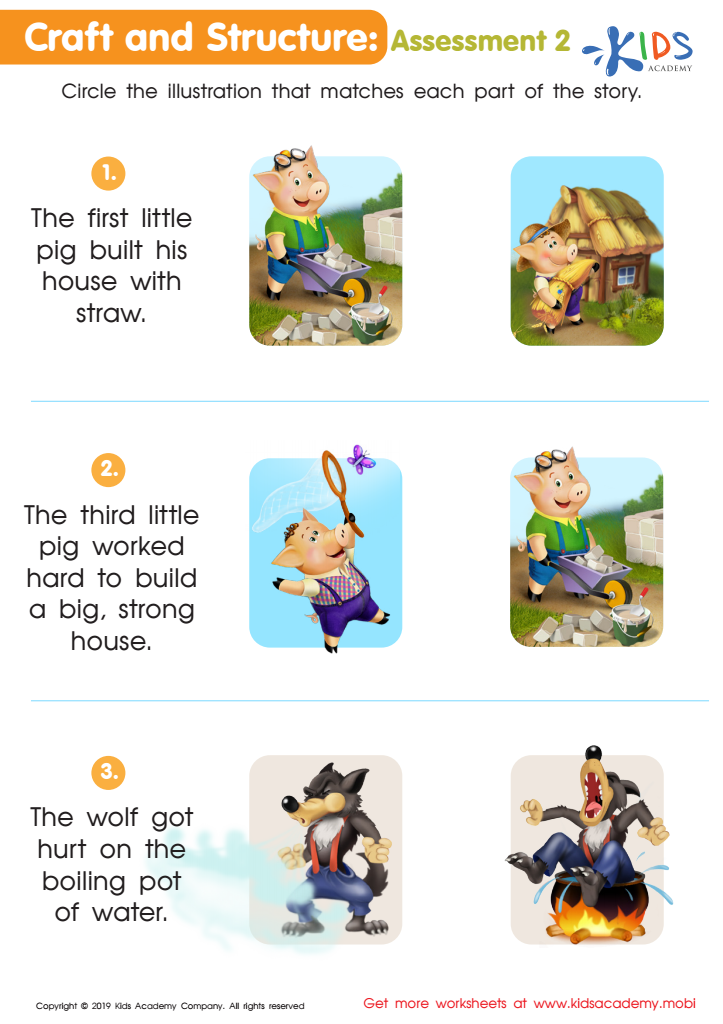
Craft and Structure: Assessment 2 Worksheet 2
 Assign to My Students
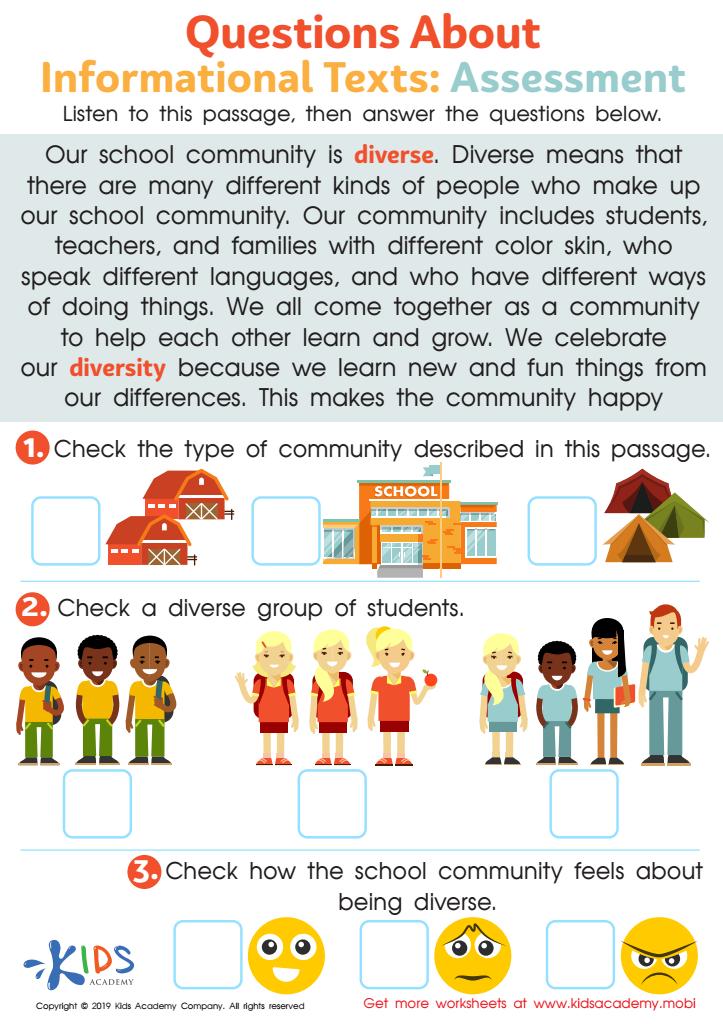
Questions About Informational Texts: Assessment 1 Worksheet
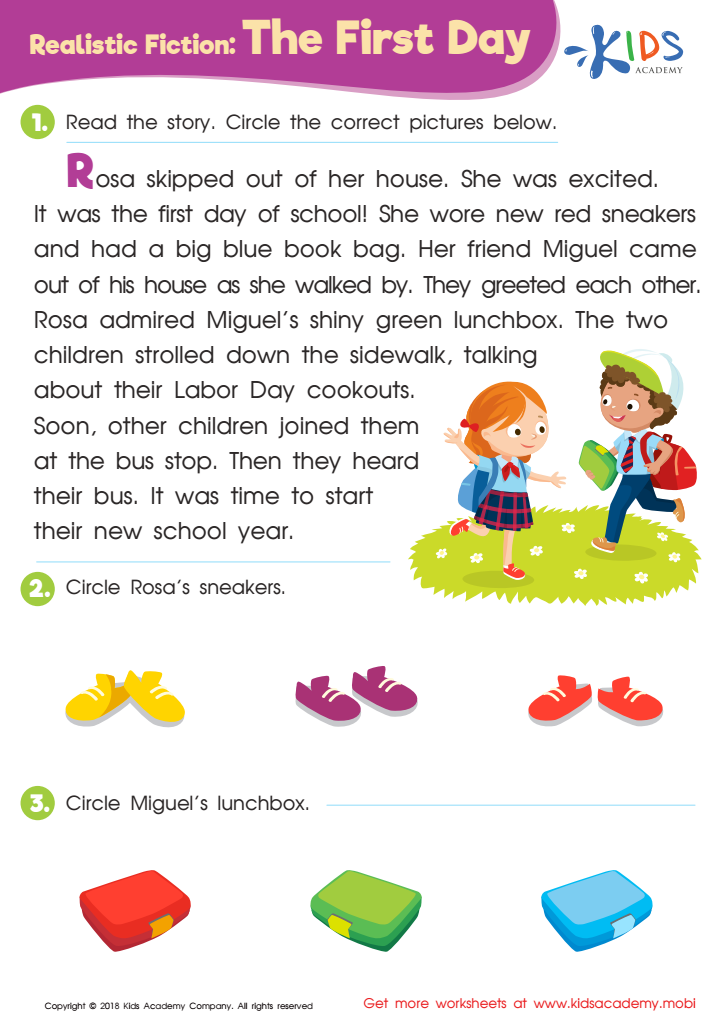
Realistic Fiction: The First Day Worksheet
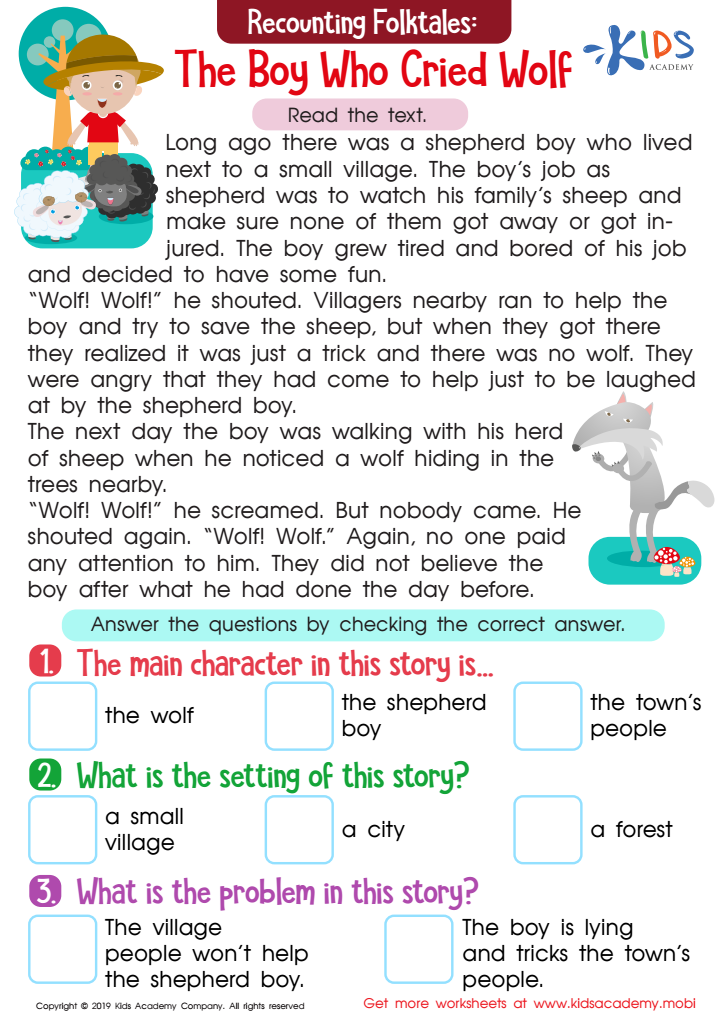
The Boy Who Cried Wolf Part 1 Worksheet







Text analysis reading for children aged 5-9 is essential for several reasons. First, it nurtures critical thinking skills, encouraging young readers to engage with texts more deeply rather than passively absorbing information. By analyzing story elements, themes, and characters, children develop the ability to interpret and question the media they consume, fostering a love for reading and learning.
Additionally, this stage of literacy development is crucial; children are transitioning from learning to read to reading to learn. Effective text analysis helps students make connections between the stories and their own experiences, thereby enhancing comprehension and retention. Parents and teachers should care about this because proficient reading skills correlate with academic success across subjects.
Moreover, cultivating an analytical mindset at a young age sets the groundwork for social-emotional development by encouraging empathy as children consider characters' motives and feelings. It also supports language development, expanding vocabulary and improving communication skills. By prioritizing text analysis, parents and educators equip children not just to excel in the classroom, but to become informed, thoughtful citizens who can navigate a complex world. Engaging with texts in this way creates lifelong readers who appreciate literature's power and relevance.








