Two-step Word Problems Worksheets for Ages 6-8
21 filtered results
-
From - To
Discover our engaging Two-Step Word Problems Worksheets for ages 6-8, designed to boost critical thinking and problem-solving skills. Perfect for young learners, these worksheets present fun, relatable scenarios that require two operations to find a solution. From addition and subtraction to simple multiplication, our activities challenge students in a stimulating way while reinforcing essential math concepts. Developed by expert educators, these worksheets are key to mastering multi-step math problems. Ideal for home or classroom use, they offer the perfect blend of learning and fun, promoting confidence and proficiency in mathematics. Download now to support your child's academic growth!
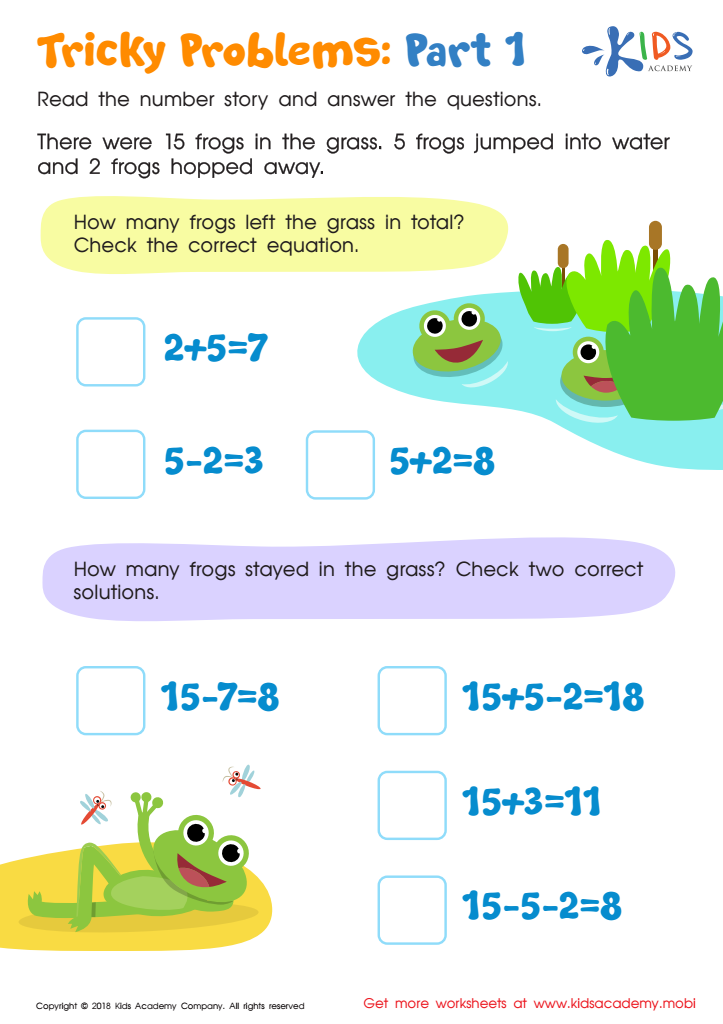
Tricky Problems Worksheet: Part 1
 Assign to My Students
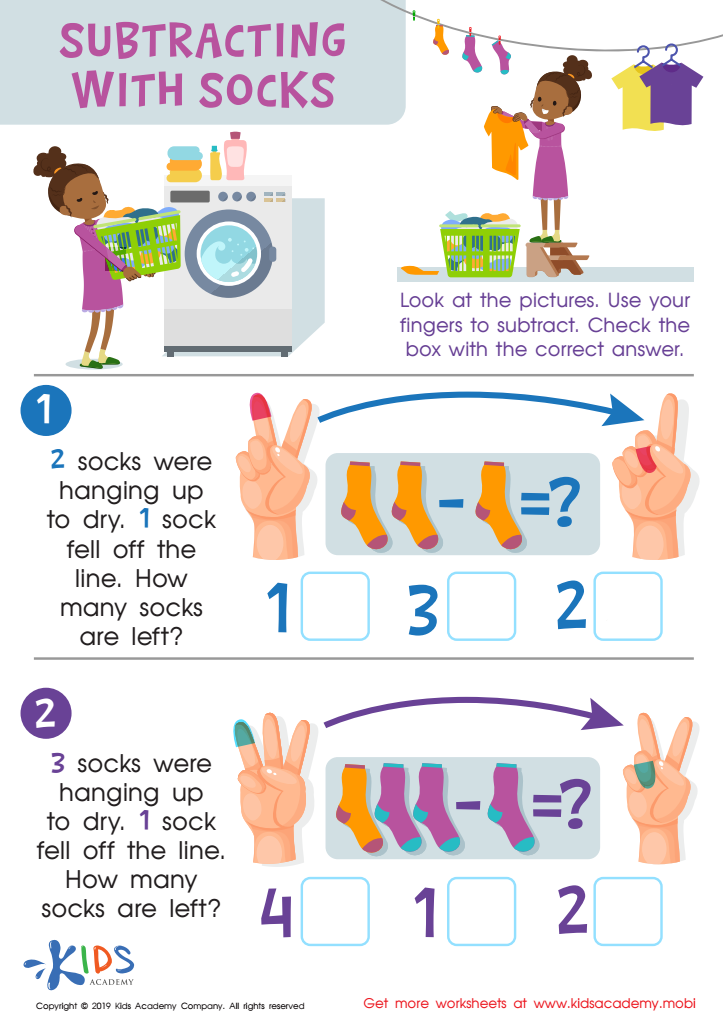
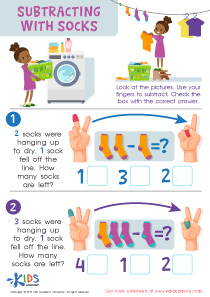
Subtracting Socks Worksheet
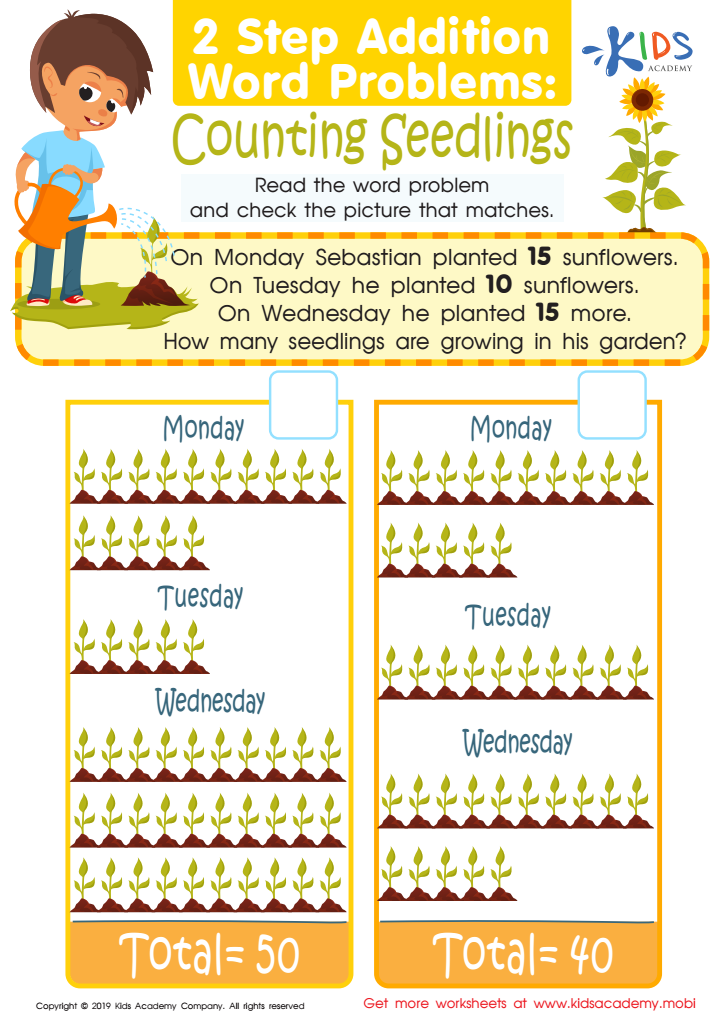
Counting Seedlings Worksheet
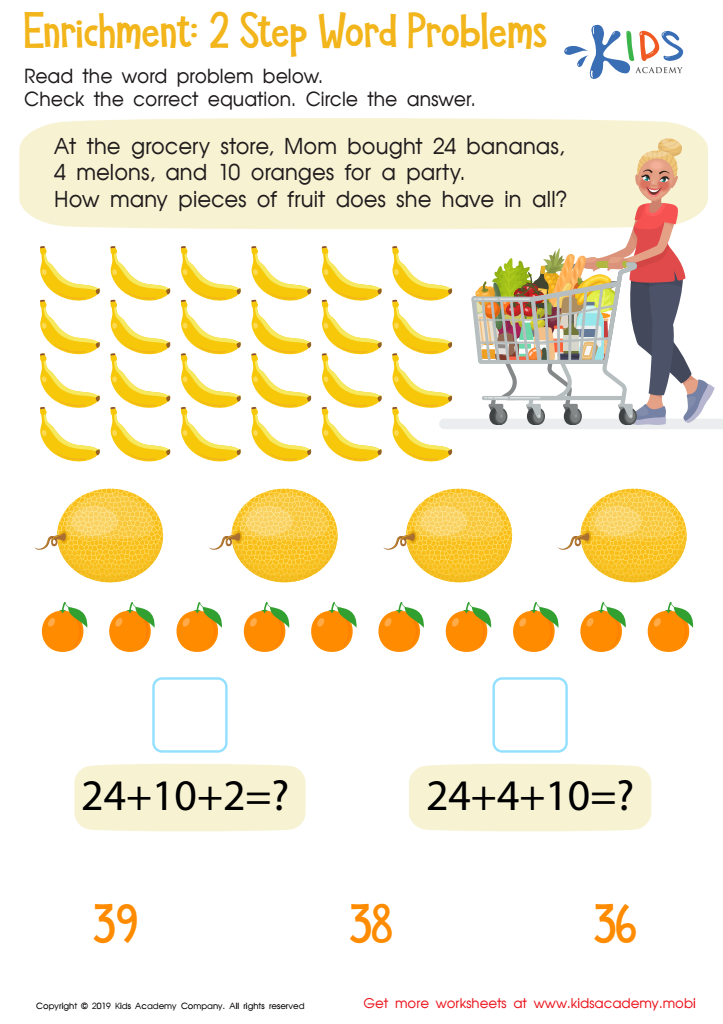
Enrichment -2 Step Word Problems Worksheet
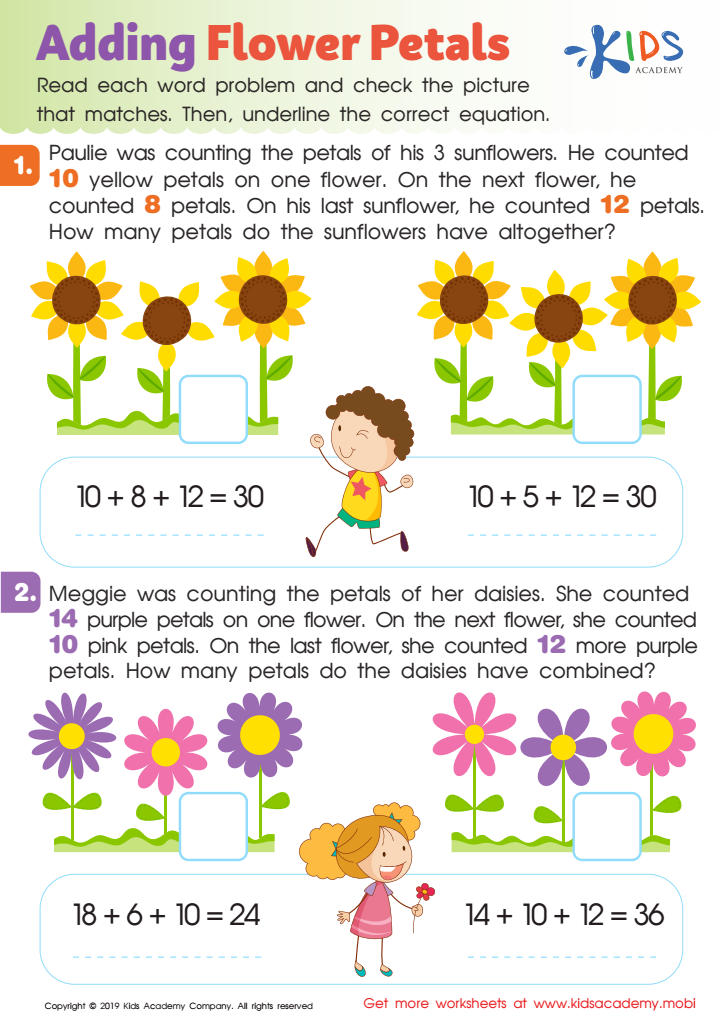
Adding Flower Petals Worksheet
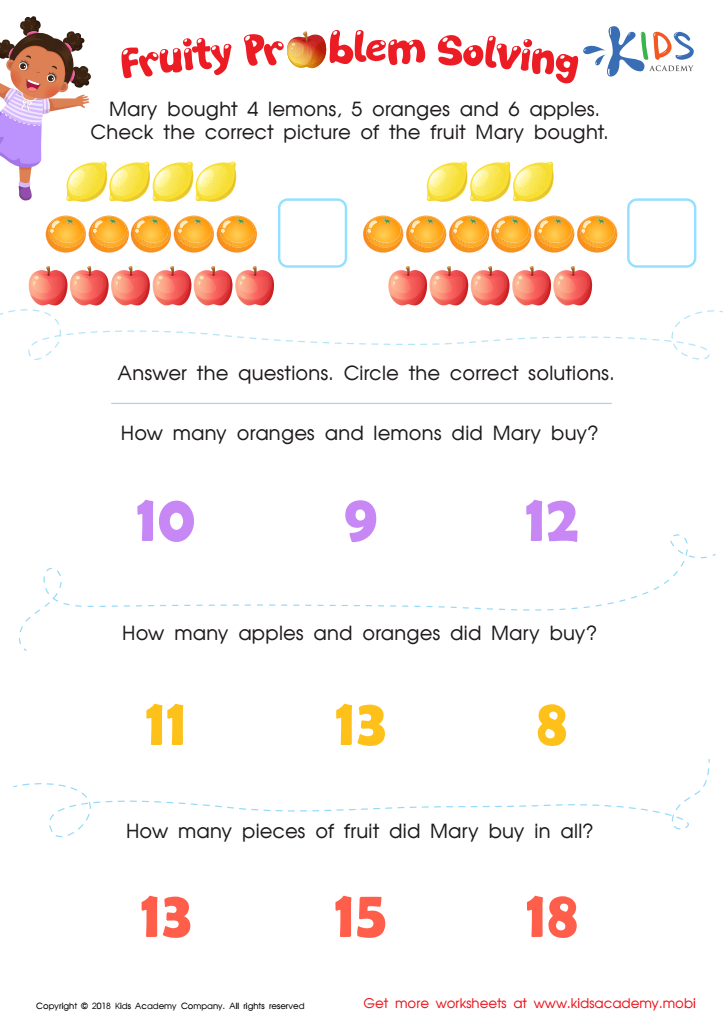
Fruity Problem Solving Worksheet
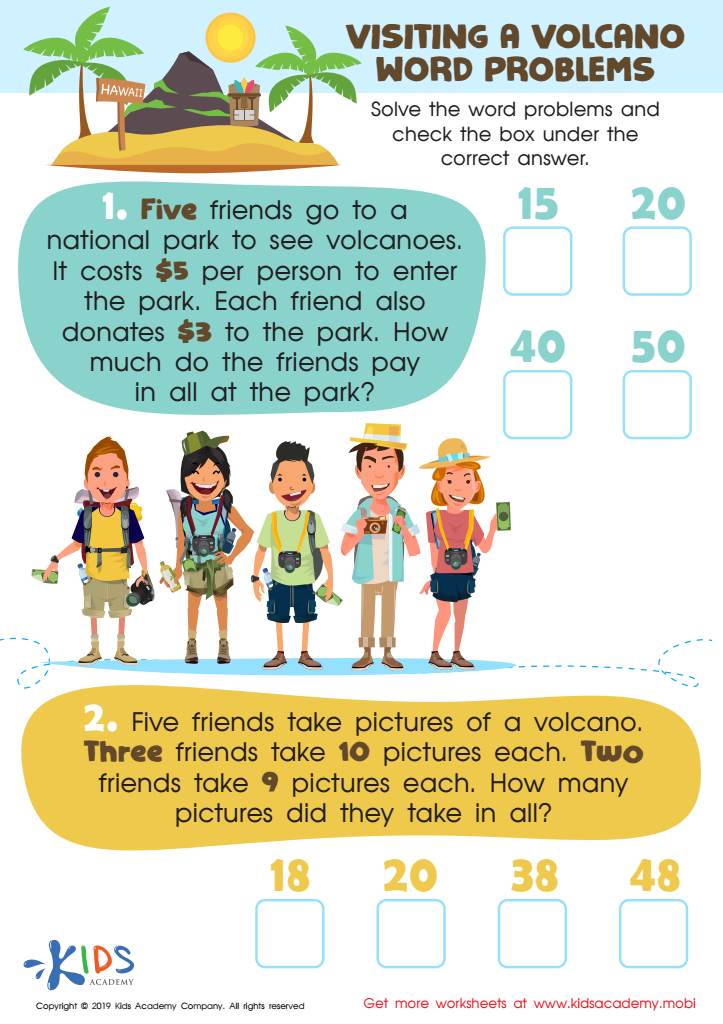
Visiting a Volcano Word Problems Worksheet
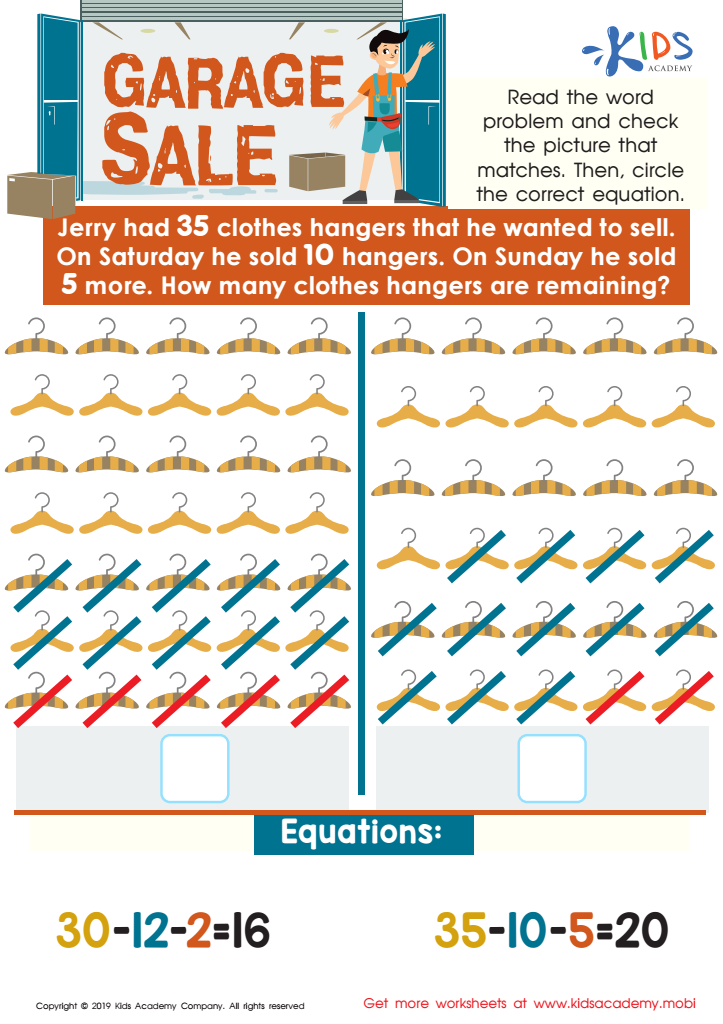
Garage Sale Worksheet
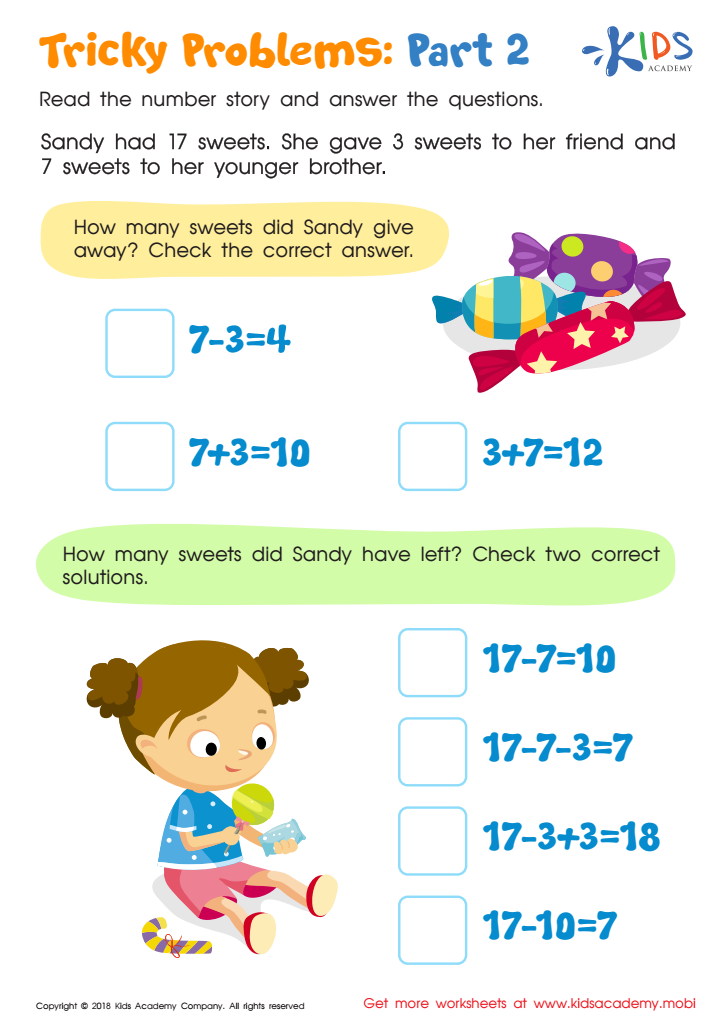
Tricky Problems Worksheet: Part 2
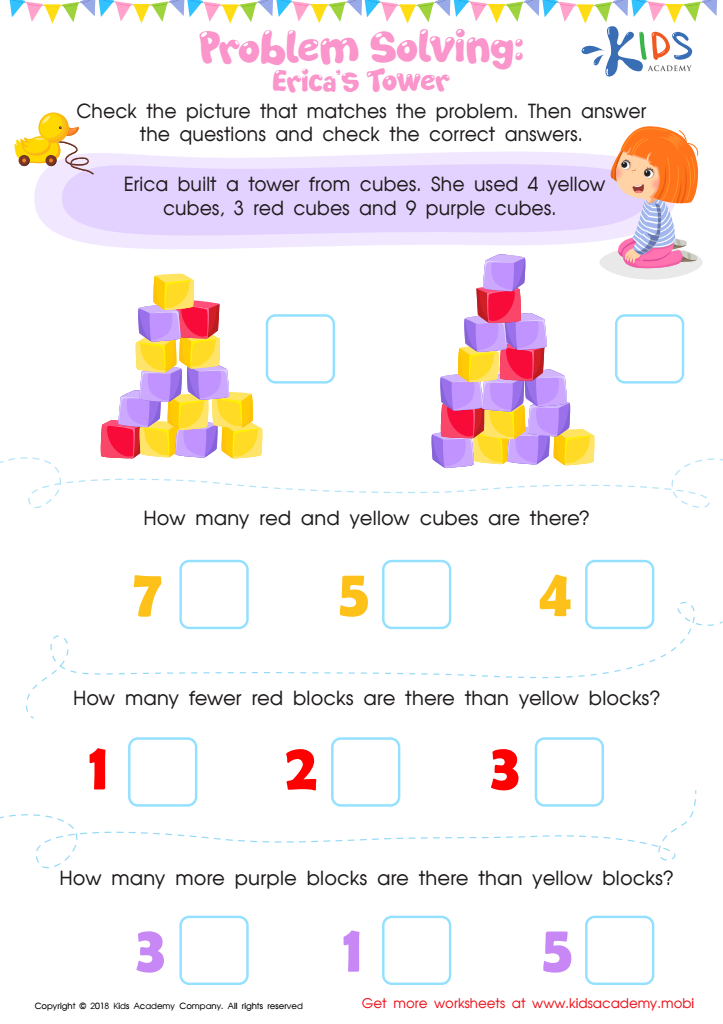
Problem Solving: Erica's Tower Worksheet
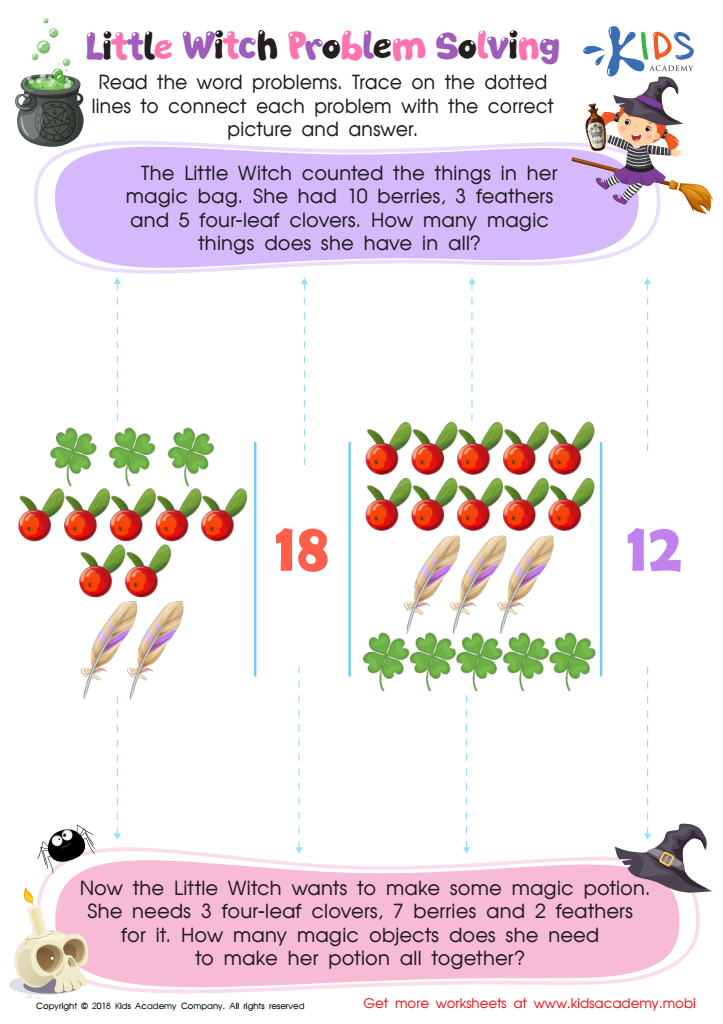
Little Witch Problem Solving Worksheet
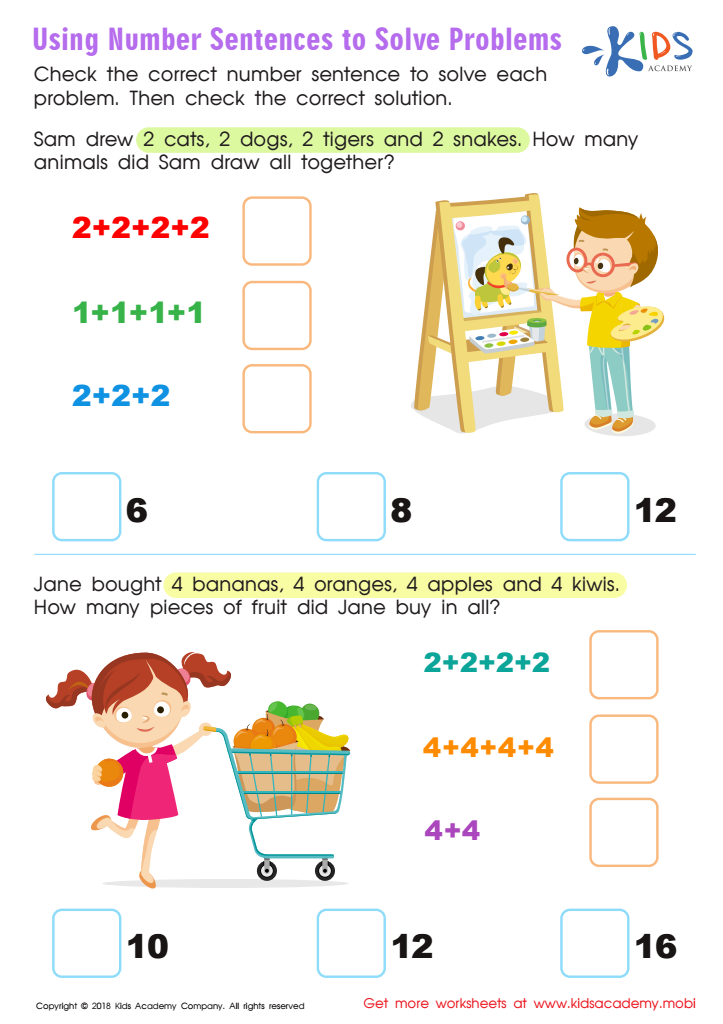
Using Number Sentences to Solve Problems Worksheet
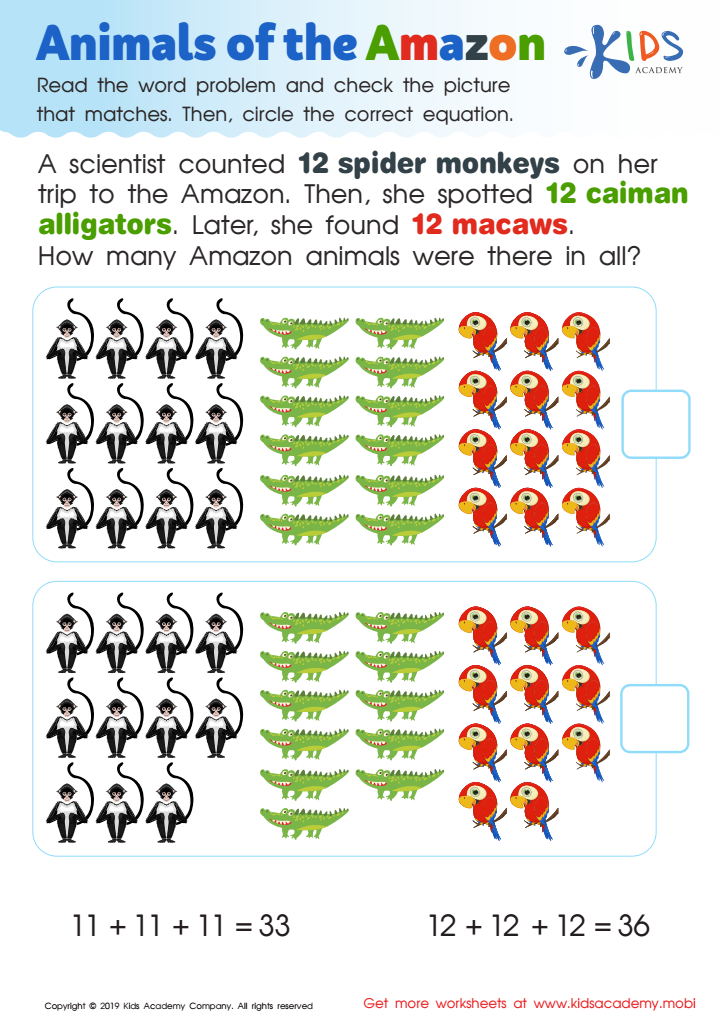
Animals of Amazon Worksheet
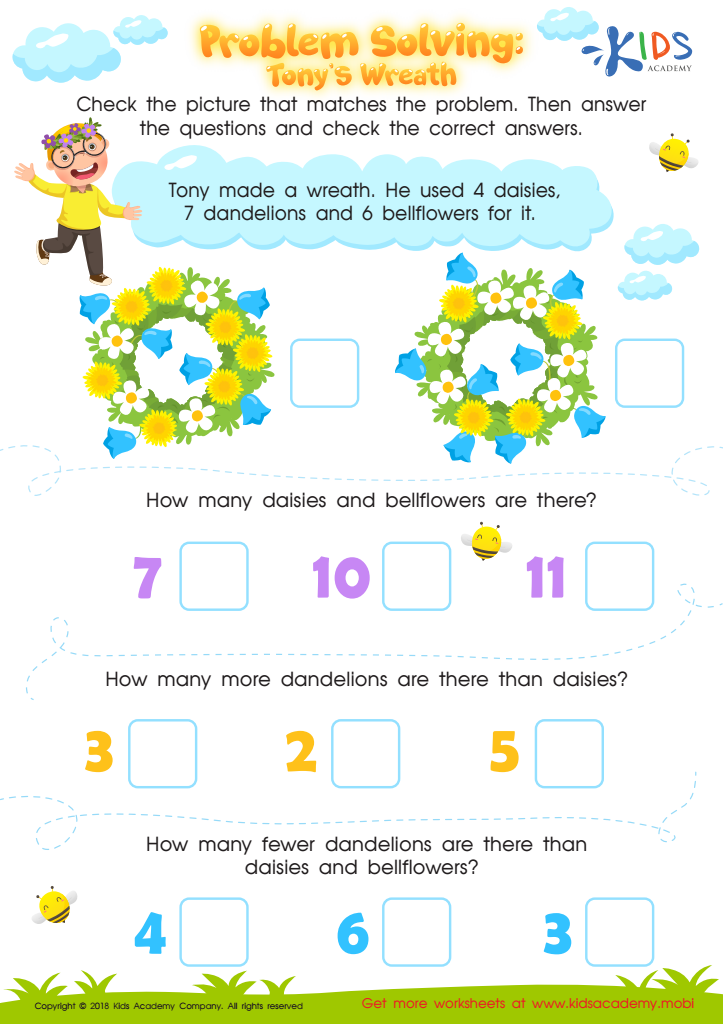
Problem Solving: Tony's Wreath Worksheet
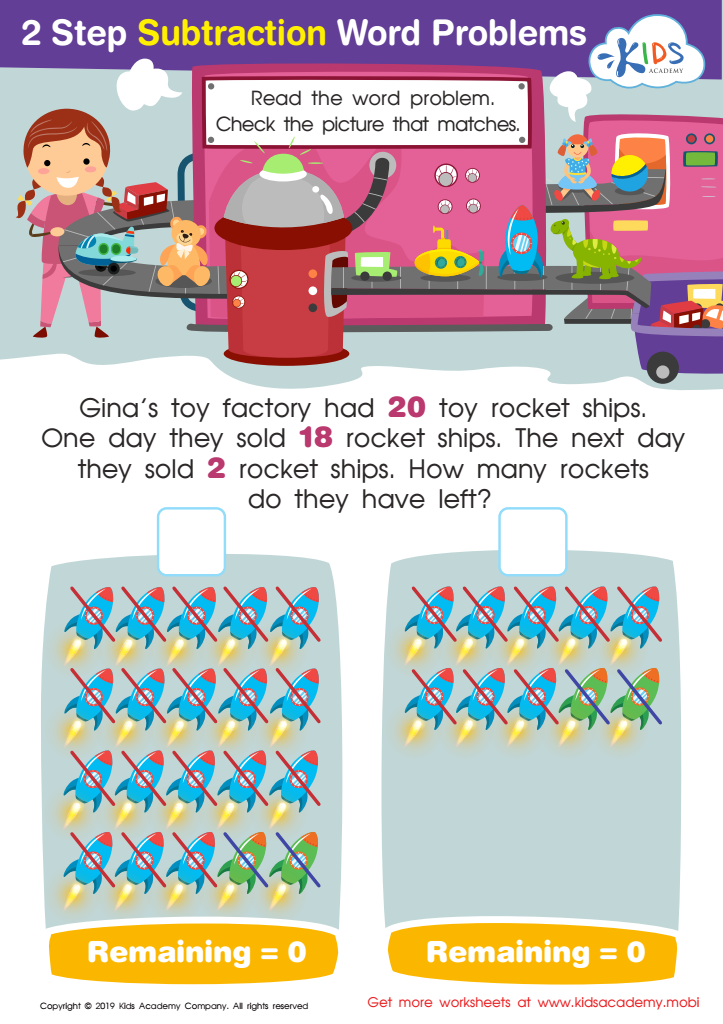
Step Subtraction Word Problems Worksheet
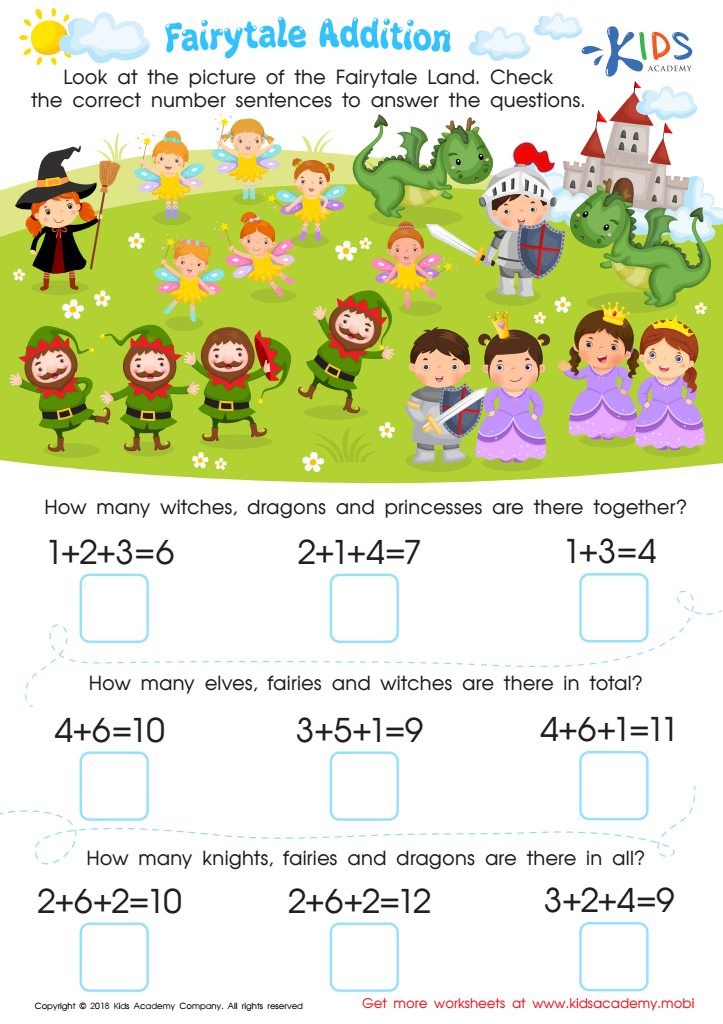
Fairytale Addition Worksheet
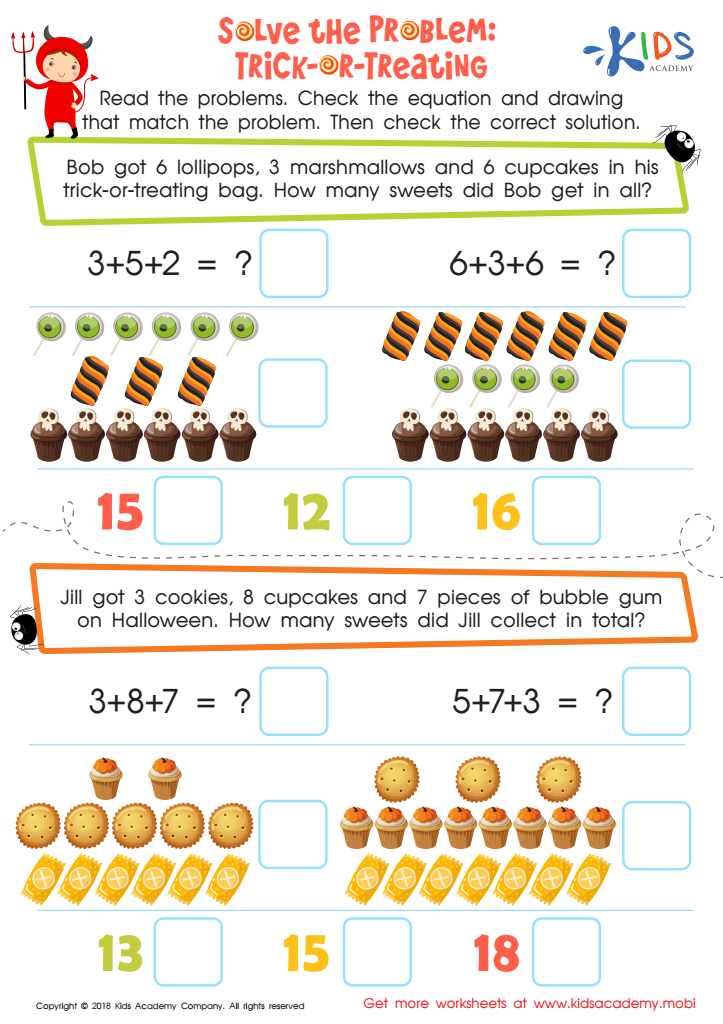
Solve the Problem: Trick–or–treating Worksheet
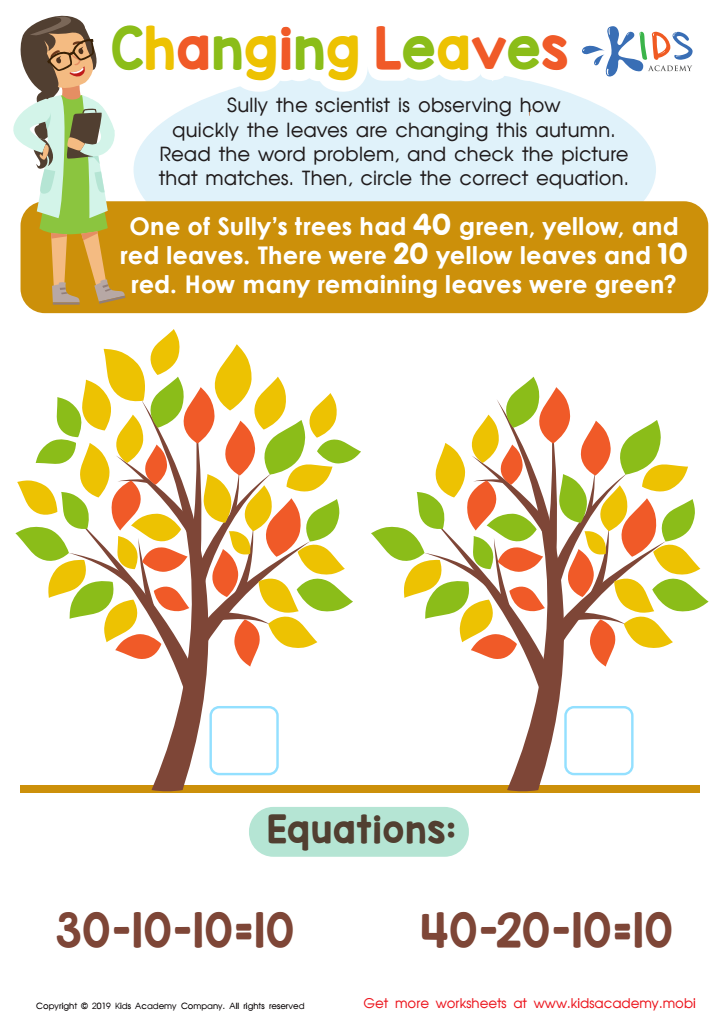
Changing Leaves Worksheet
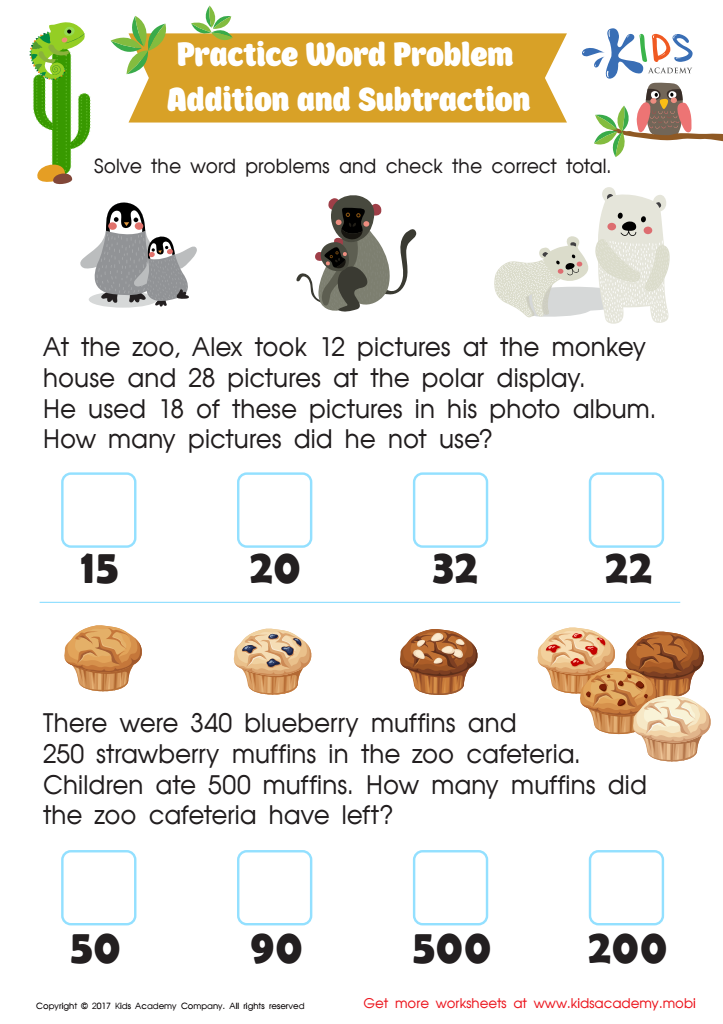
Addition and Subtraction: Word Problems Worksheet
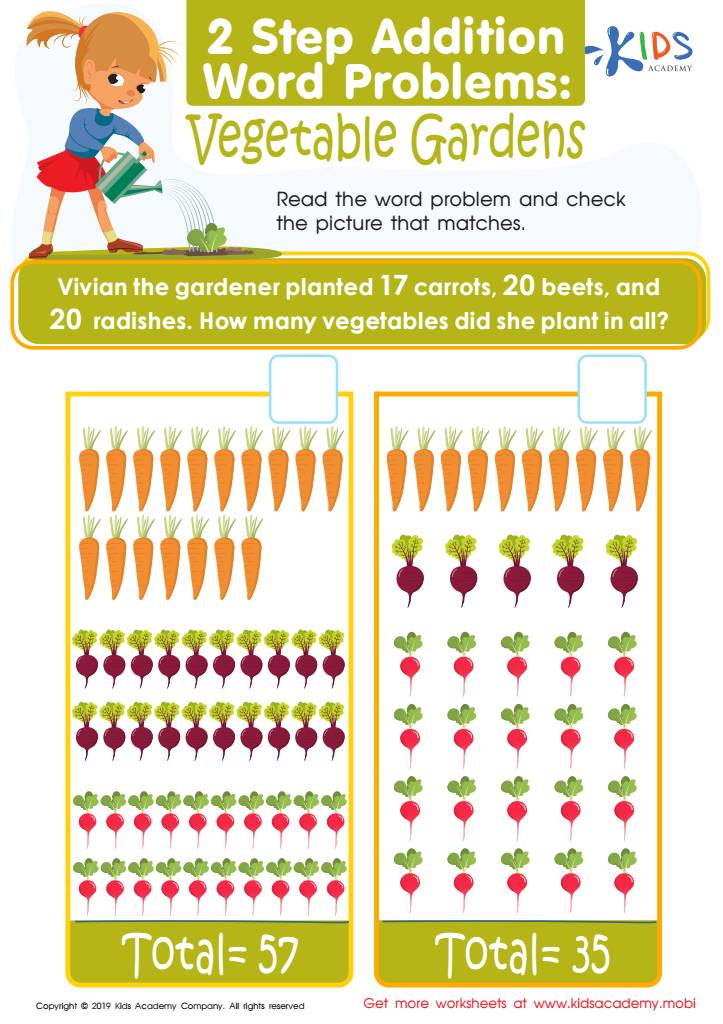
Vegetable Gardens Worksheet
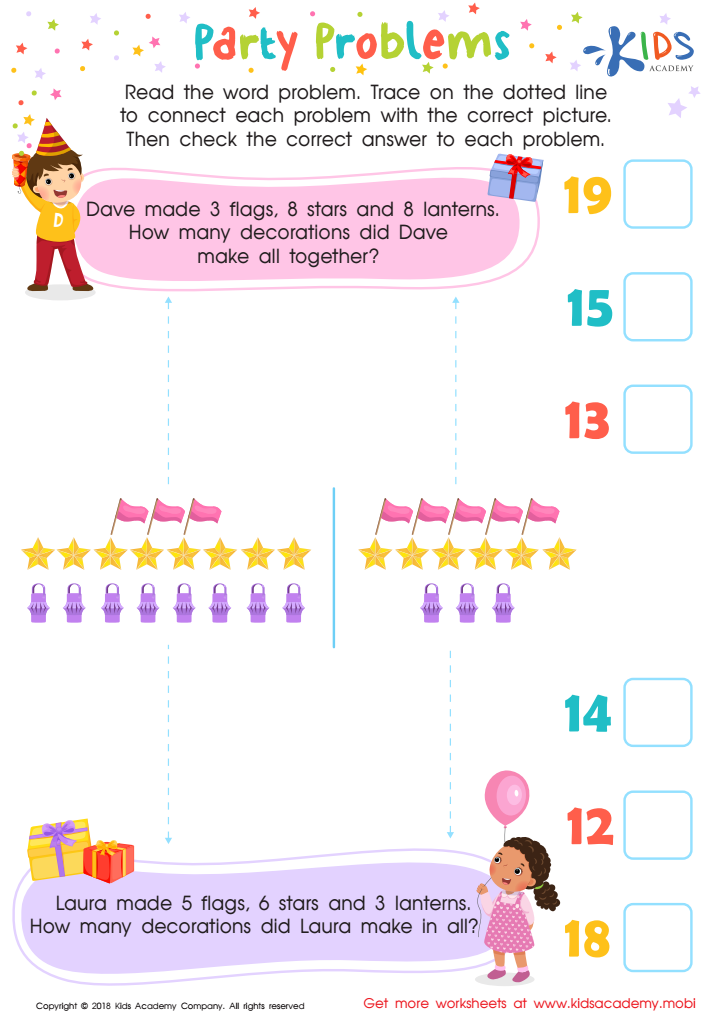
Party Problems Worksheet



Two-step word problems are fundamental for children aged 6-8 as they foster critical cognitive development and build essential mathematical skills. At this age, children are transitioning from concrete operational thought to more complex abstract thinking. Two-step word problems require them to process and manipulate information in a sequential manner, which enhances their problem-solving abilities and logical reasoning.
These problems necessitate understanding the key elements of a math problem and determining the correct steps to find a solution. This, in turn, reinforces comprehension skills, as children must identify pertinent details within a narrative, distinguishing between necessary information and extraneous content. Additionally, solving these problems encourages perseverance and patience, valuable traits in both academic and life contexts.
From an educational standpoint, proficiency in two-step word problems lays a robust foundation for more advanced math concepts introduced later in the curriculum. It aids in cementing basic arithmetic operations—addition, subtraction, multiplication, and division—by consistently applying them in varied contexts.
Parents and teachers should prioritize these exercises because they are instrumental in developing a child's numerical literacy and confidence in mathematics. Success in these foundational skills often translates to improved performance and a positive attitude towards more complex mathematics in higher grades and everyday situations.