
Text analysis Reading Comprehension Worksheets for Ages 6-8
4 filtered results
Difficulty Level
Grade
Age
-
From - To
Subject
Activity
Standards
Discover our engaging Text Analysis Reading Comprehension Worksheets designed specifically for children aged 6-8! These worksheets focus on enhancing critical thinking and reading skills through fun and interactive text analysis activities. Your young learners will explore various texts, develop their understanding of language, and improve their ability to interpret information. Each worksheet is tailored to support different learning styles, ensuring an enjoyable experience while building essential comprehension skills. Perfect for both classroom use and home practice, our resources will inspire a love for reading and foster valuable analytical skills. Start enhancing your child's literacy journey with our thoughtfully crafted worksheets today!
Favorites
With answer key
Interactive
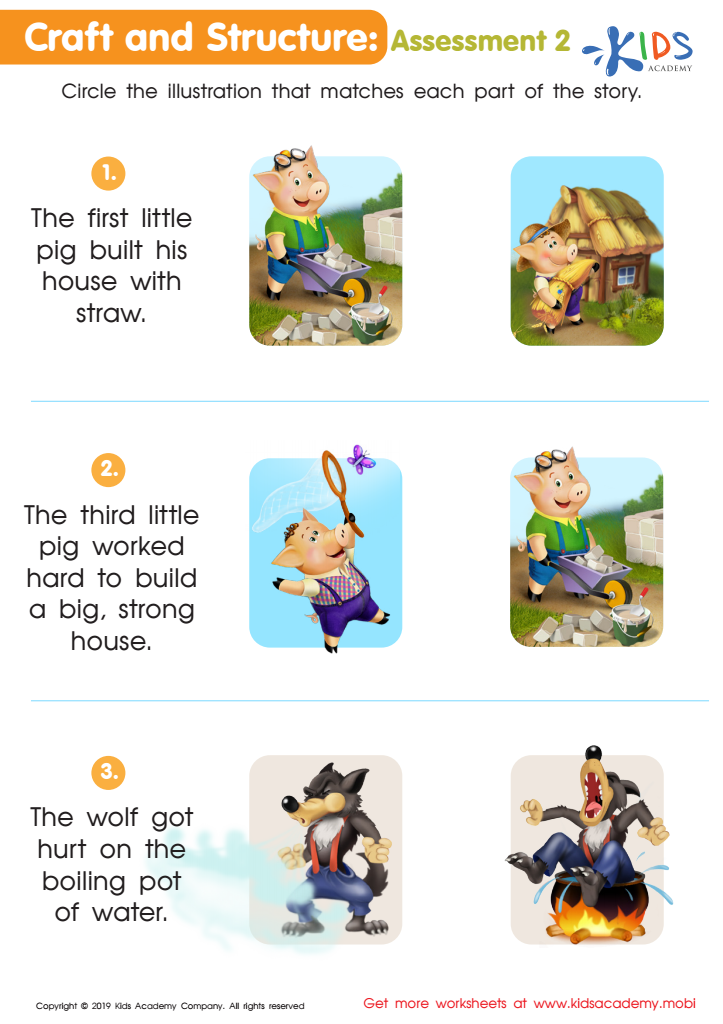
Craft and Structure: Assessment 2 Worksheet 2
This fun printout with colorful illustrations will assess how much your kids pay attention to story time. Go through the pictures and help them circle the ones that match each part of the story. Stimulate their brains and have fun in the process!
 Assign to My Students
Craft and Structure: Assessment 2 Worksheet 2
Worksheet
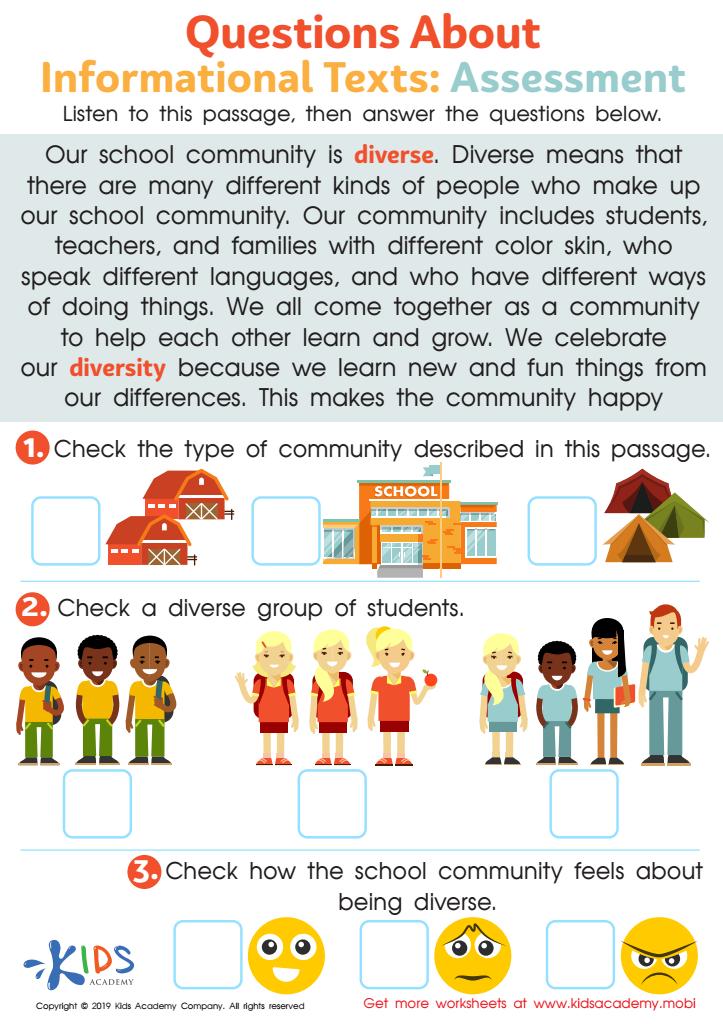
Questions About Informational Texts: Assessment 1 Worksheet
Ask your students: What comes to mind when we talk about a community? What different habits do people practice? What do fellow students do that seems strange? Read this passage aloud to your kindergartners and make sure they understand it. Then, answer the questions at the bottom of the page. (80 words)
Questions About Informational Texts: Assessment 1 Worksheet
Worksheet
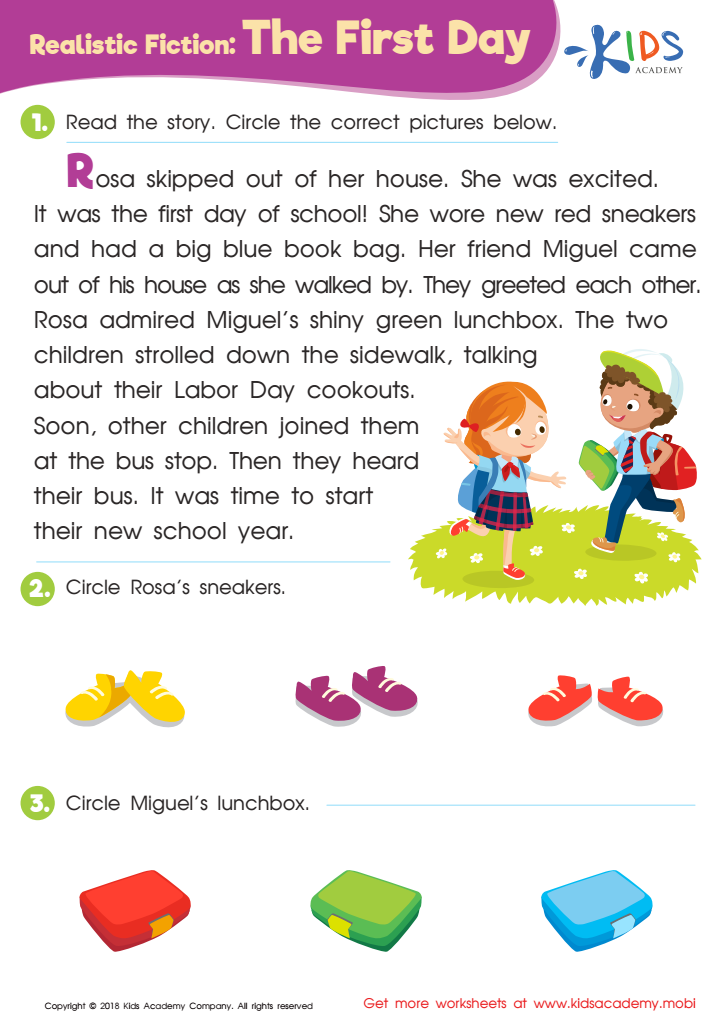
Realistic Fiction: The First Day Worksheet
Fiction is made-up events, so story-writing is fiction writing. In this worksheet, there's a short story about Rosa, her friend Miguel, and their first day back at school. Read the story aloud to your kids and help them circle the right pictures to the questions. Repeat if needed.
Realistic Fiction: The First Day Worksheet
Worksheet
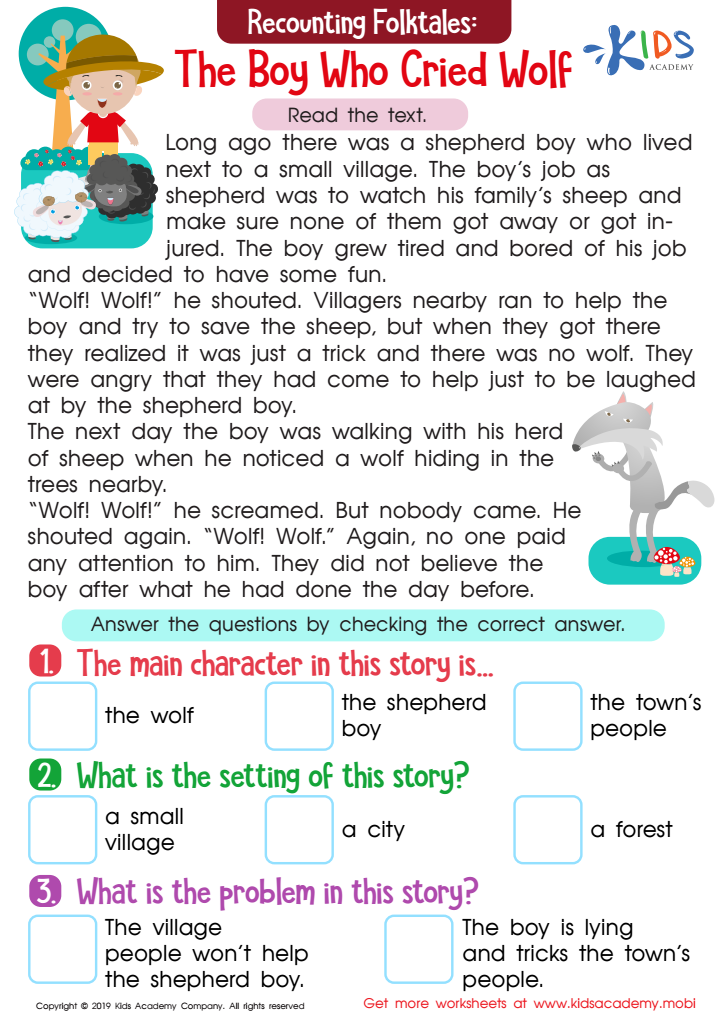
The Boy Who Cried Wolf Part 1 Worksheet
Storytime can be your kid's favorite part of the day. Ask them what their favorite stories are, then read the text in the printout. Read along with them, making sure they understand each word. At the end, go over the questions and have them check the correct answers.
The Boy Who Cried Wolf Part 1 Worksheet
Worksheet
Join Kids Academy for Free
Who is primarily going to use this learning content?






.jpg)
.jpg)
Text analysis and reading comprehension are crucial components of literacy development for children aged 6-8. During this formative stage, children are transitioning from learning to read to reading to learn. Effective text analysis enables young learners to go beyond surface-level understanding, fostering critical thinking skills essential for academic success and everyday life.
Parents and teachers should prioritize reading comprehension strategies as they are foundational for overall educational achievement. Improved comprehension skills help children grasp complex concepts, follow narratives, and solve problems. This skill enhancement also builds a child's vocabulary, improves writing, and encourages a love for reading—all of which are vital for lifelong learning.
Engaging in text analysis helps children learn to infer meanings, understand character motivations, and identify themes, which enrich their reading experience. Moreover, these skills empower students to express their thoughts more clearly and confidently in both spoken and written forms.
By consciously investing time in teaching these skills, parents and teachers not only support academic growth but also inspire curiosity and creativity. Ultimately, prioritizing reading comprehension is a pathway to equipping children with the tools they need to navigate an increasingly complex world, fostering well-rounded individuals prepared to face future challenges.








