Information retention Science Worksheets for Ages 6-8
3 filtered results
-
From - To
Discover our engaging Information Retention Science Worksheets tailored for children aged 6-8! Designed to enhance memory and learning skills, these thoughtfully crafted worksheets make science fun and interactive. Young learners will explore exciting topics through activities that promote critical thinking, problem-solving, and analytical skills. Our worksheets encourage students to connect new information with prior knowledge, ensuring better understanding and retention. Perfect for teachers and parents alike, these resources can supplement classroom instruction or be used at home for extra practice. Foster a love for science and bolster cognitive development with our vibrant and challenging worksheets today!
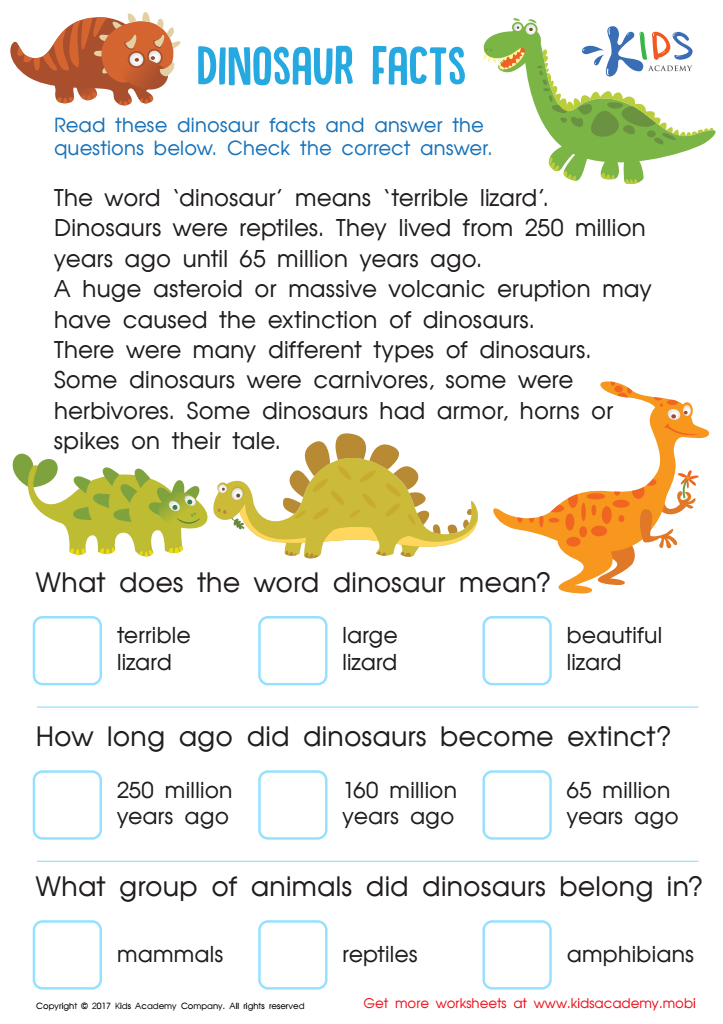
Dinosaur Facts Worksheet
 Assign to My Students
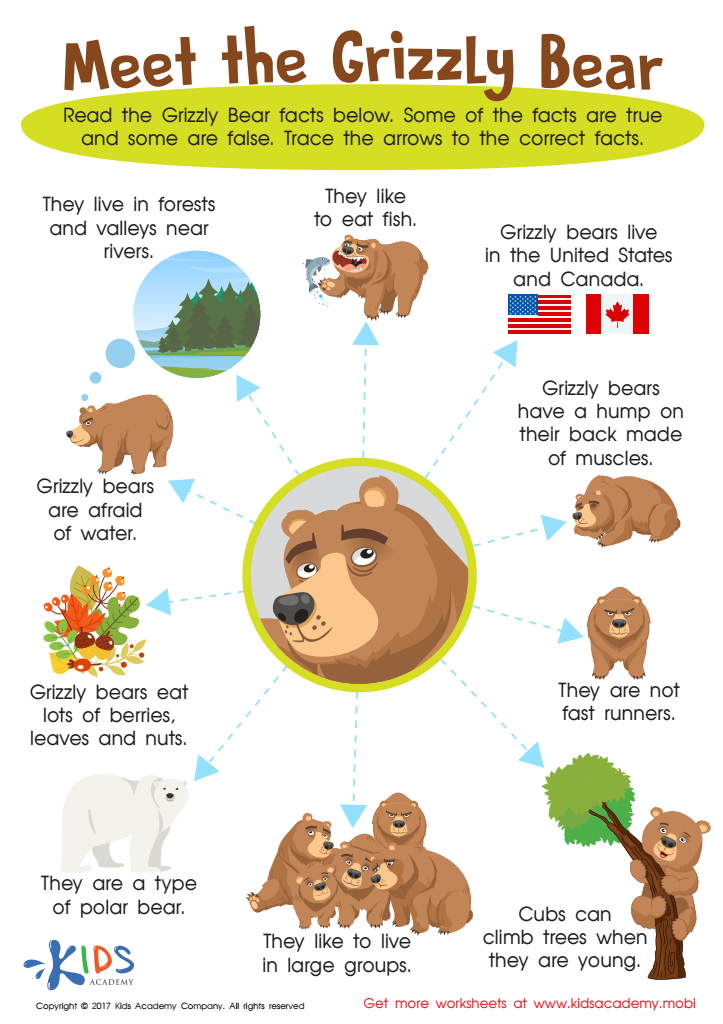
Grizzly Bear Facts Worksheet
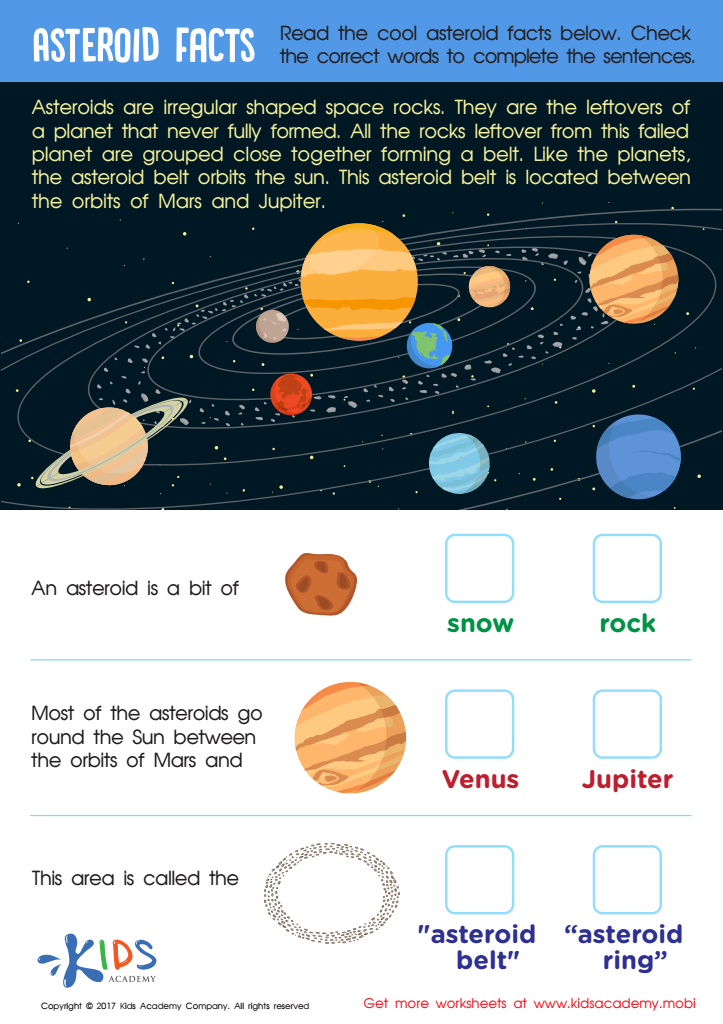
Asteroid Facts Worksheet







Understanding Information Retention Science is crucial for parents and teachers of children aged 6-8, as it provides insights into how young minds process, store, and recall information. During this stage of development, children's brains are highly receptive and rapidly forming connections. By applying principles of information retention, educators can enhance teaching strategies, making learning more effective and engaging.
For instance, techniques such as spaced repetition and playful learning can significantly improve memory retention. Parents can support this learning at home by incorporating fun review activities, games, and discussions, reinforcing what children learn in school. The knowledge of how information retention works enables adults to create supportive learning environments, enhance children's curiosity, and develop critical thinking skills.
Additionally, understanding these concepts helps teachers design curricula that align with children's cognitive abilities, ensuring of building a strong foundation for future learning. This not only fosters a love for learning but also boosts confidence, making students more likely to succeed academically. Ultimately, recognizing the science behind information retention empowers parents and educators to guide children effectively, paving the way for lifelong learning habits. Emphasizing how children learn can lead to better outcomes in their educational journeys and beyond.







