
Punctuation Worksheets for Ages 6-8
21 filtered results
Difficulty Level
Grade
Age
-
From - To
Subject
Activity
Standards
Discover our engaging punctuation worksheets designed for children ages 6-8! These printable resources help young learners master the fundamentals of punctuation, including periods, question marks, exclamation points, commas, and quotation marks. Each worksheet is filled with fun exercises that promote essential writing skills through interactive activities. Kids will enjoy completing sentences, correcting punctuation errors, and enhancing their understanding of sentence structure. Perfect for home or classroom use, our worksheets support educators and parents in fostering confidence and creativity in young writers. Explore our collection and empower your child to express themselves clearly and effectively in their writing!
Favorites
With answer key
Interactive
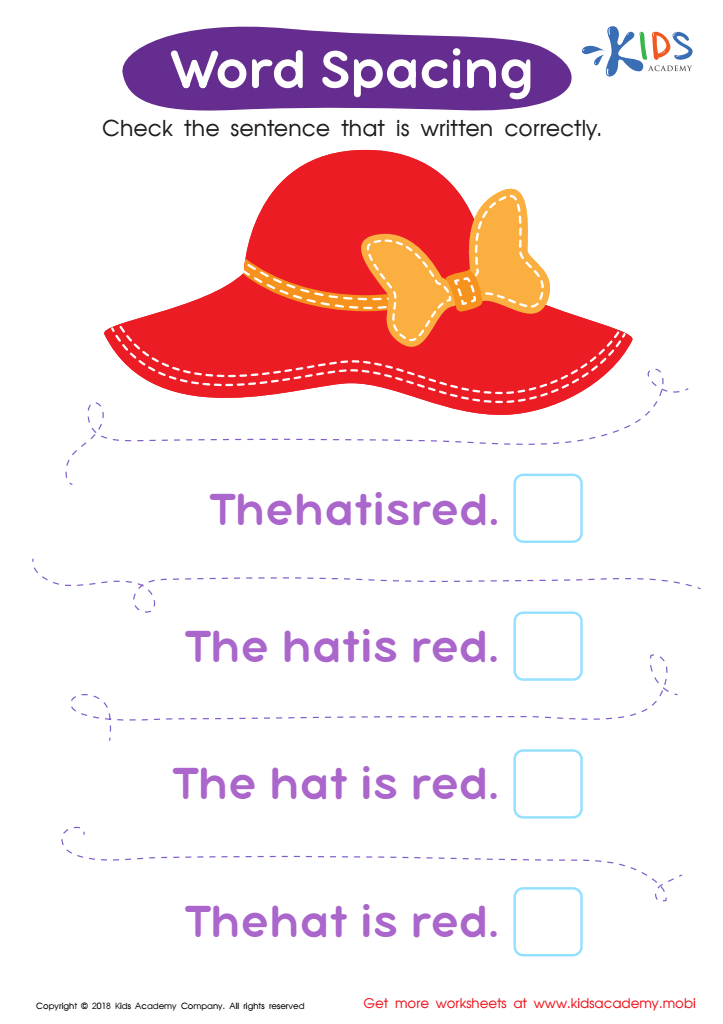
Word Spacing Worksheet
Can your child read and write simple sentences? Test their skills with this easy worksheet. Point to the four sentences under the picture; each conveying the same message but with different word spacing. Ask your child to select the sentence with proper spacing.
 Assign to My Students
Word Spacing Worksheet
Worksheet
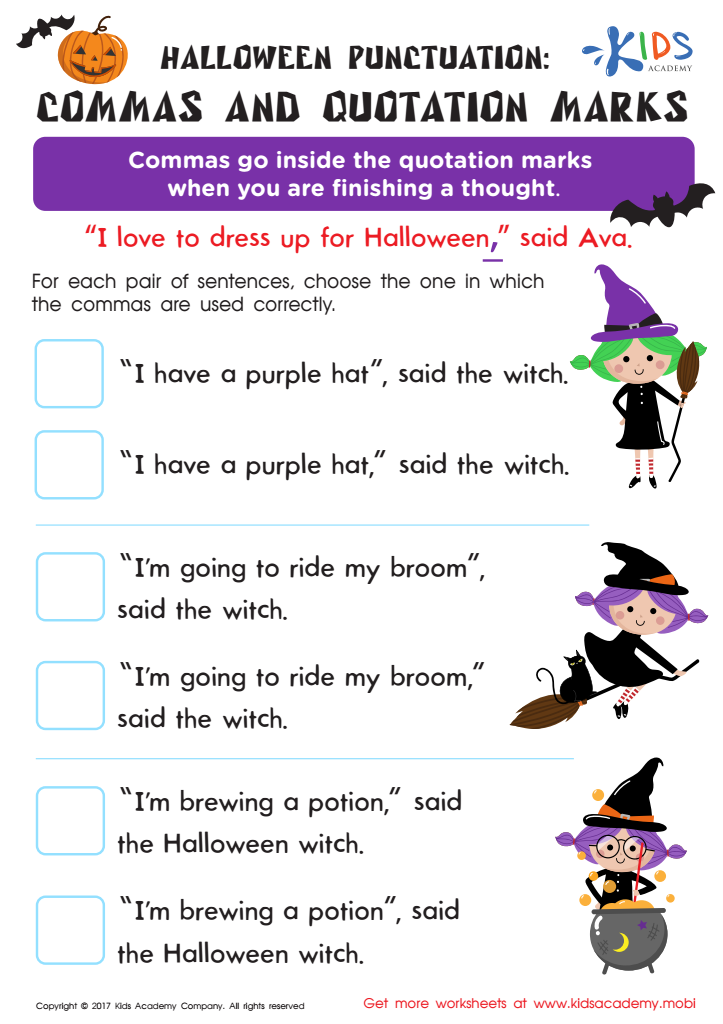
Quotation Marks Worksheet
This funny Halloween-themed worksheet has kids practice punctuation by identifying where the comma goes - inside or outside quotation marks. Delight your child with the witch's thoughts and hone their writing conventions!
Quotation Marks Worksheet
Worksheet
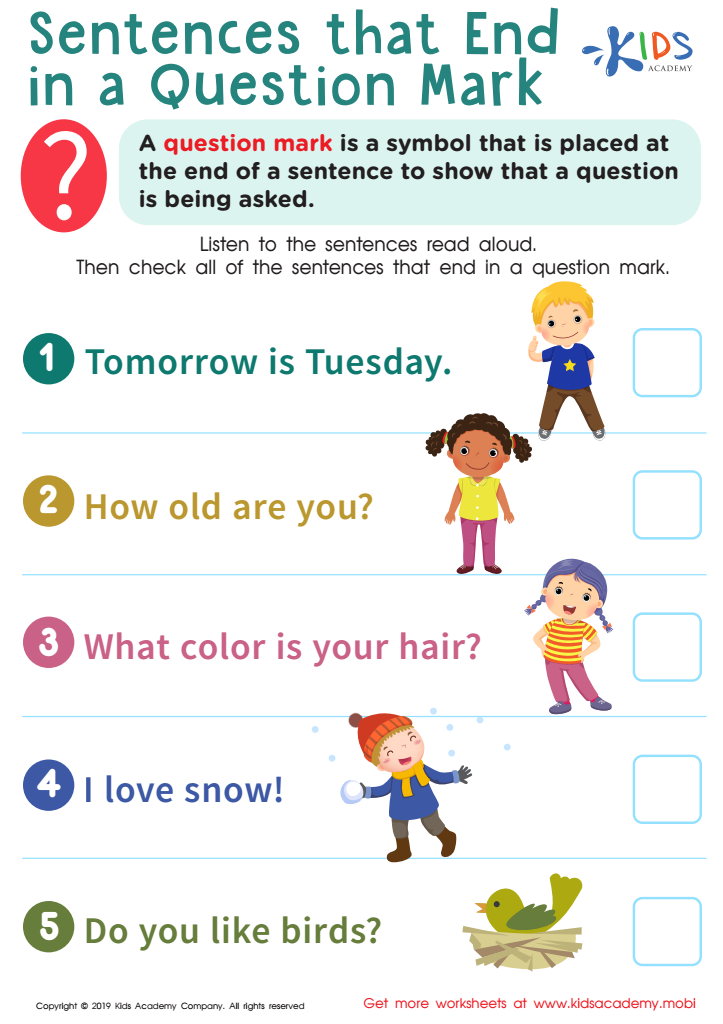
Sentences That End in an Question Mark Worksheet
Teach your students about the four most common punctuation marks - period, comma, question mark, and exclamation mark - with this worksheet. Show them how to use the question mark to indicate a sentence is a question. Then, have them check all sentences that end in a question mark.
Sentences That End in an Question Mark Worksheet
Worksheet
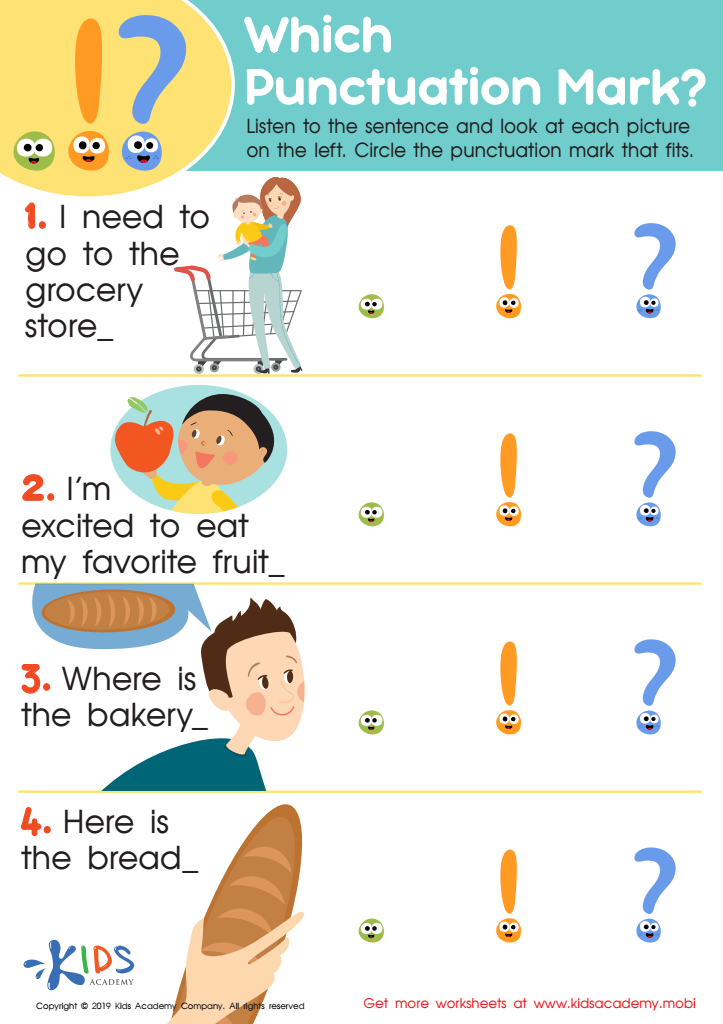
Which Punctuation Mark Worksheet
Punctuation marks are essential for expressing what we say. This worksheet asks your kindergarten student to circle the correct punctuation mark for each sentence. Read each sentence aloud and help them identify the expression needed. A picture accompanies each sentence. Enjoy! (79 words)
Which Punctuation Mark Worksheet
Worksheet
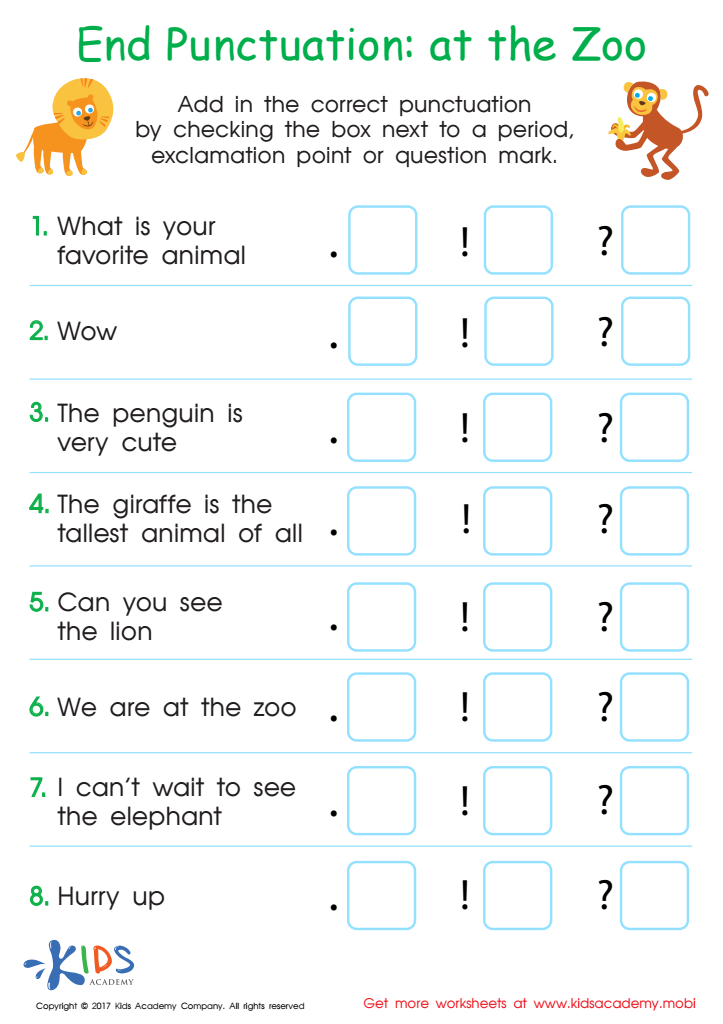
End Punctuation: At the Zoo Worksheet
Let your kid hone their sentence and punctuation skills with this cute At the Zoo worksheet. Read it out loud to provide guidance if needed, and help your child find the right punctuation mark for each sentence.
End Punctuation: At the Zoo Worksheet
Worksheet
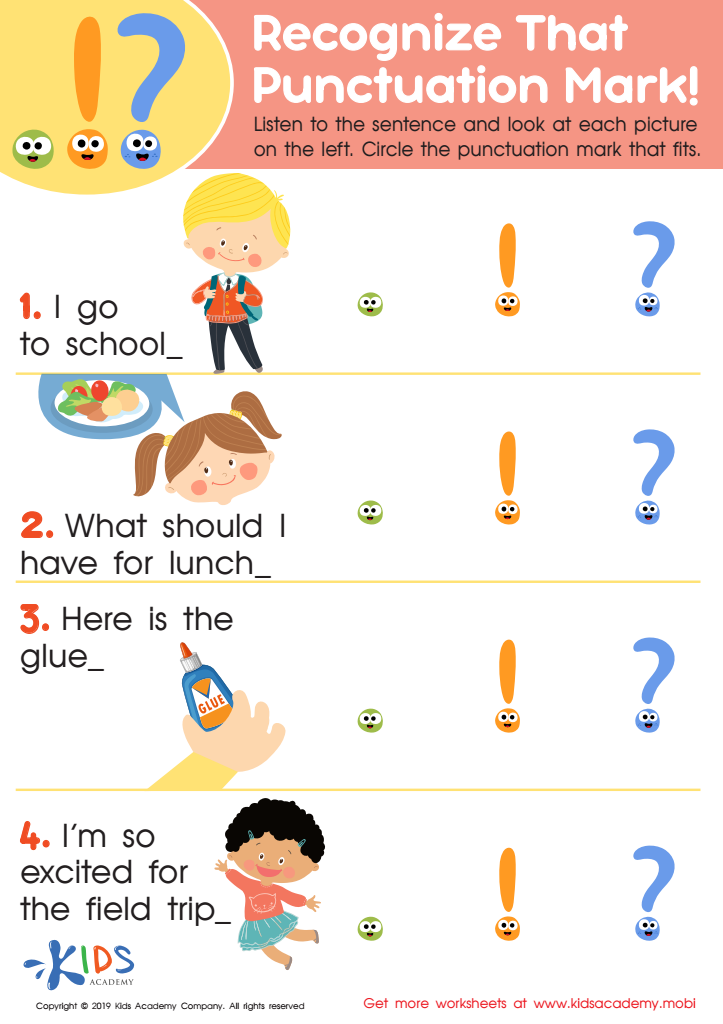
Recognize Punctuation Marks Worksheet
Before beginning the worksheet, ask your students to name punctuation marks they know and what they mean. Common punctuation marks are full stop, question mark and exclamation mark. Point out each one in the picture and read the sentences, helping them circle the right punctuation.
Recognize Punctuation Marks Worksheet
Worksheet
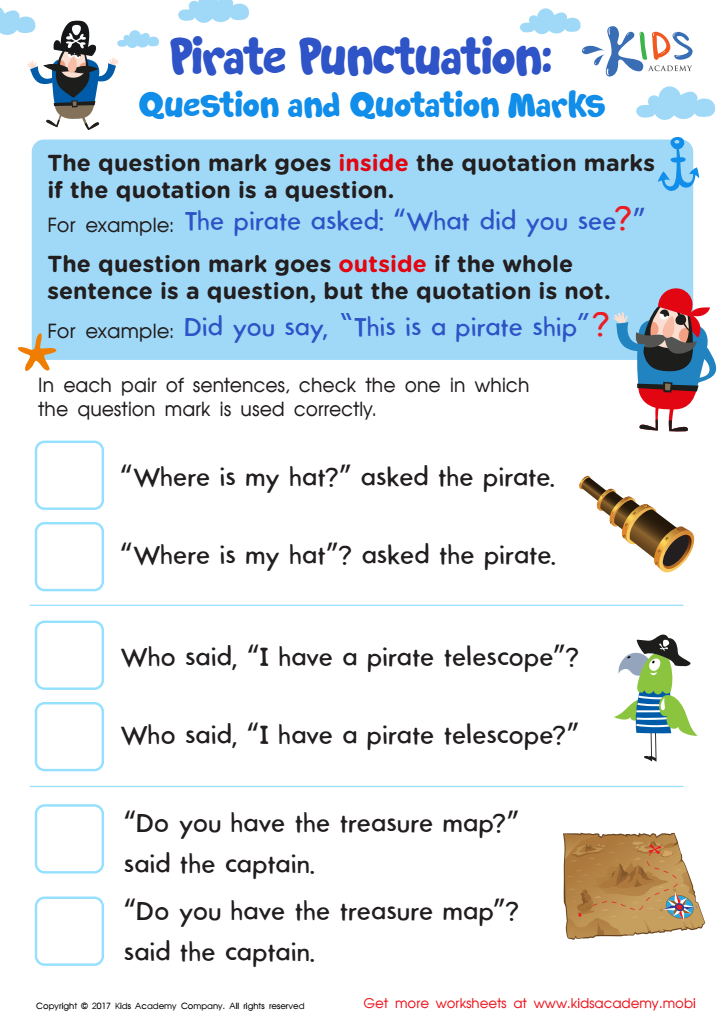
Question and Quotation Marks Worksheet
Adults often struggle to remember the rules for placement of question marks with quotation marks. This practice worksheet can help build the writing conventions needed.
Question and Quotation Marks Worksheet
Worksheet
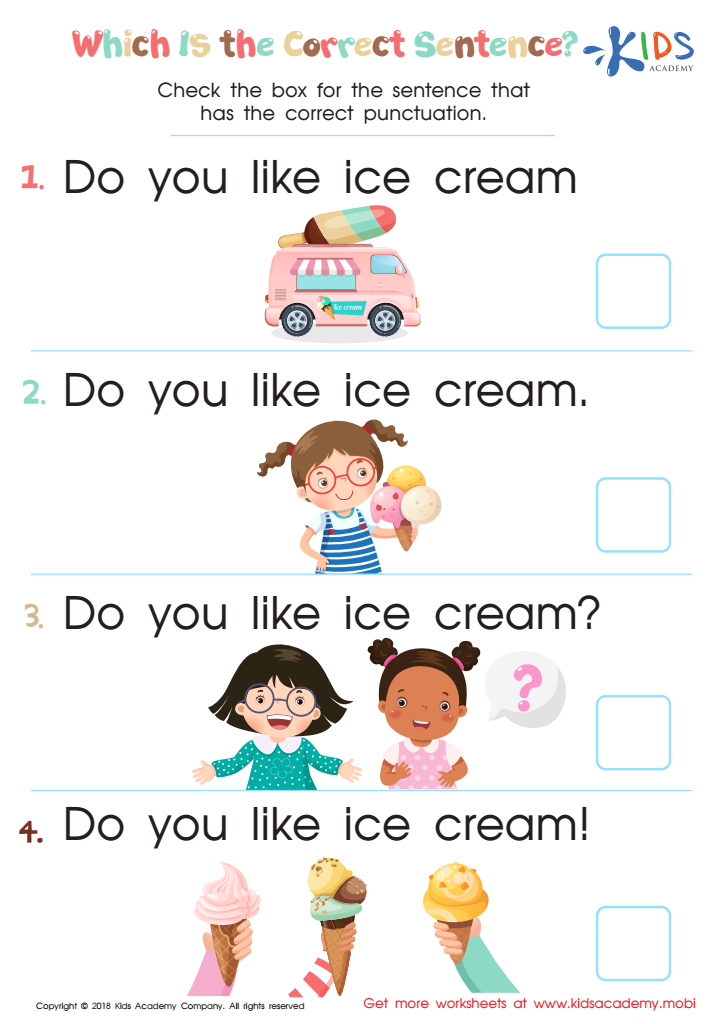
Which is the Correct Sentence? Worksheet
Punctuation is crucial in sentence formation. If your kid still doesn't grasp it, bigger hurdles await when writing sentences. Get them to read simple sentences, then ask if they know the right punctuation. Assist them in selecting the sentence that has the accurate punctuation.
Which is the Correct Sentence? Worksheet
Worksheet
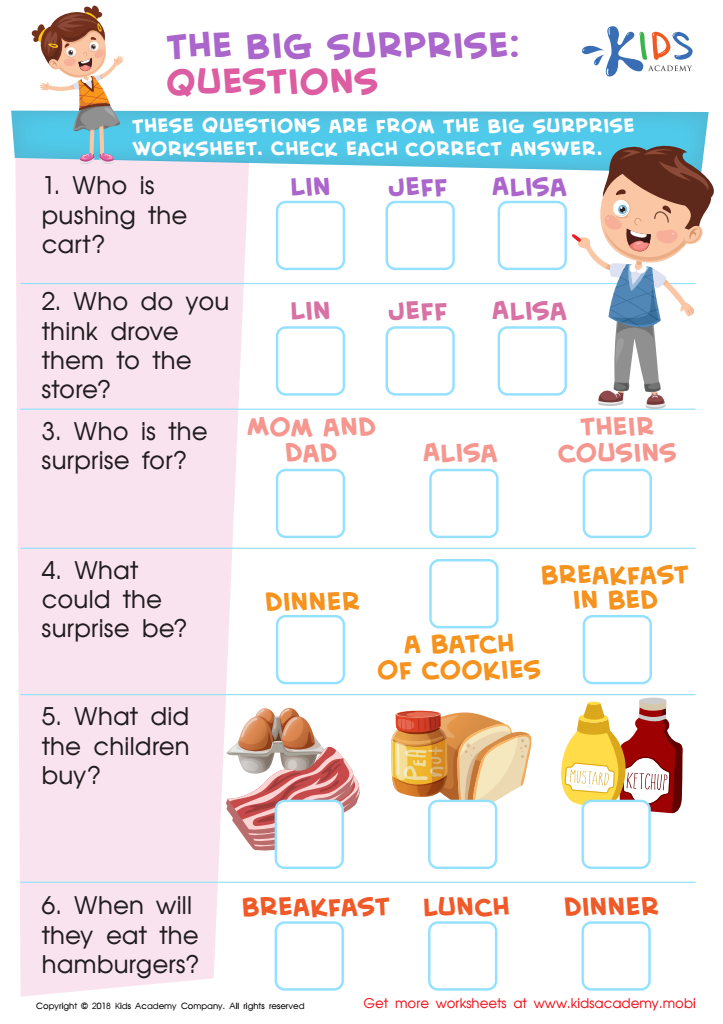
The Big Surprise: Questions Worksheet
Have your child read or listen to The Big Surprise. Ask them the questions in the printable, help check the answers and discuss the story. Keep it to 80 words.
Have your child read or listen to The Big Surprise, then ask them the questions in the printable. Discuss the story and help them check the answers.
The Big Surprise: Questions Worksheet
Worksheet
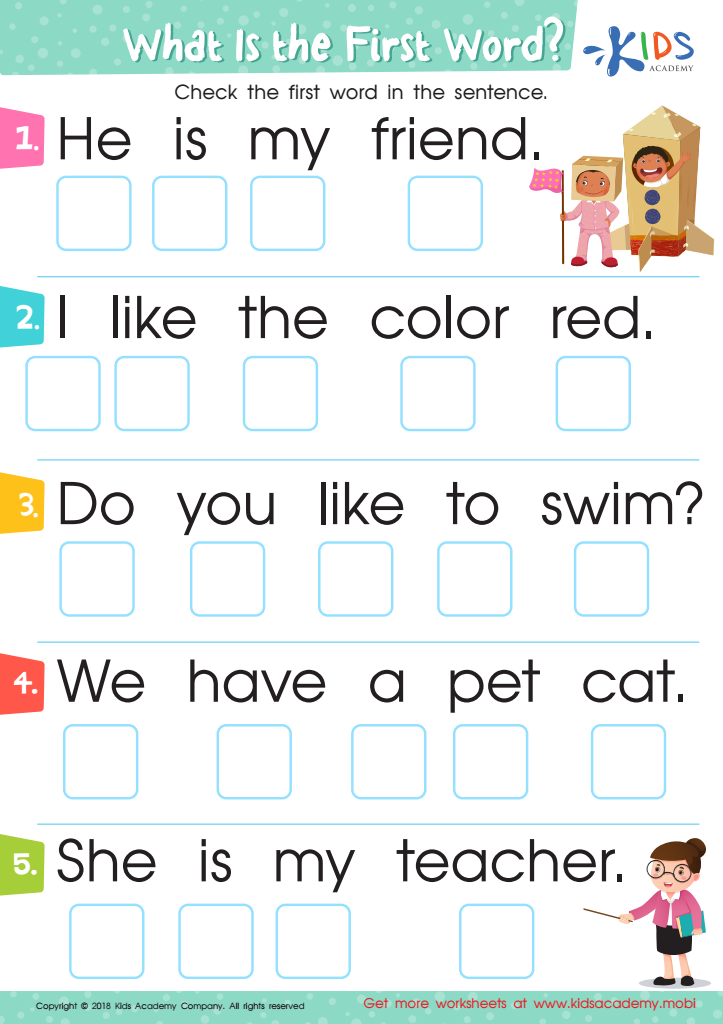
What is the First Word? Worksheet
Help your students test their sentence-reading skills with this printout! After teaching the alphabet, have them identify and write the first word in each sentence. With this exercise, they'll gain reading proficiency and be better prepared to write their own sentences.
What is the First Word? Worksheet
Worksheet
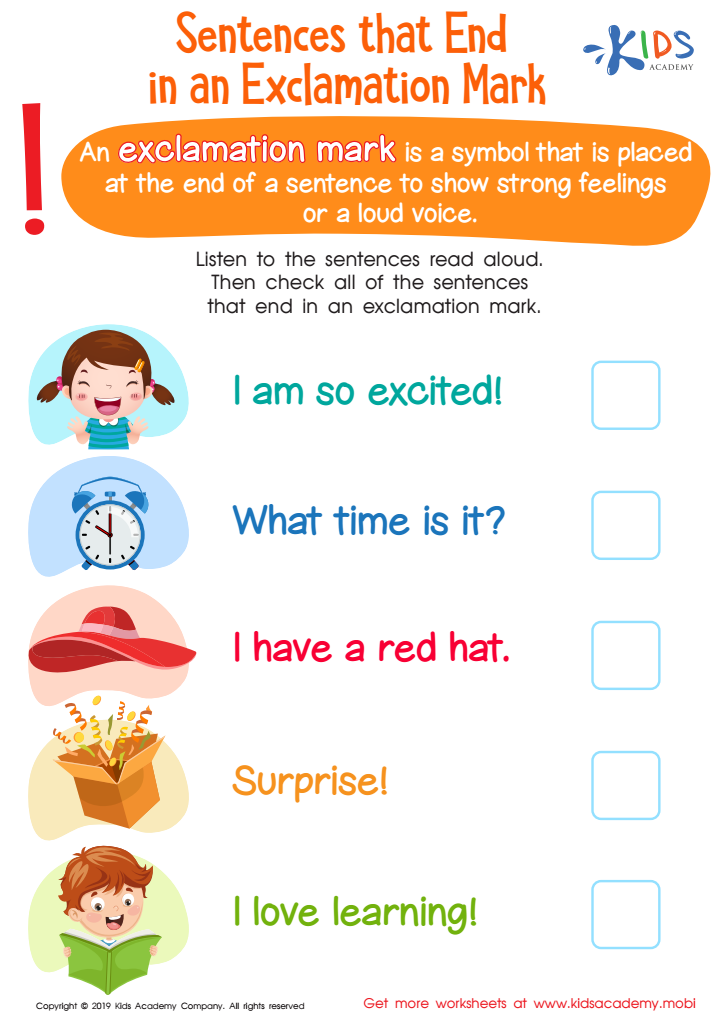
Sentences That End in an Exclamation Mark Worksheet
This worksheet is a great way to brush up kids' punctuation skills. Period, comma, question mark and exclamation mark are the first four punctuation marks they should learn. Exclamation marks show strong emotion or a noise. Use this printout to teach and test kids' understanding of exclamation marks.
Sentences That End in an Exclamation Mark Worksheet
Worksheet
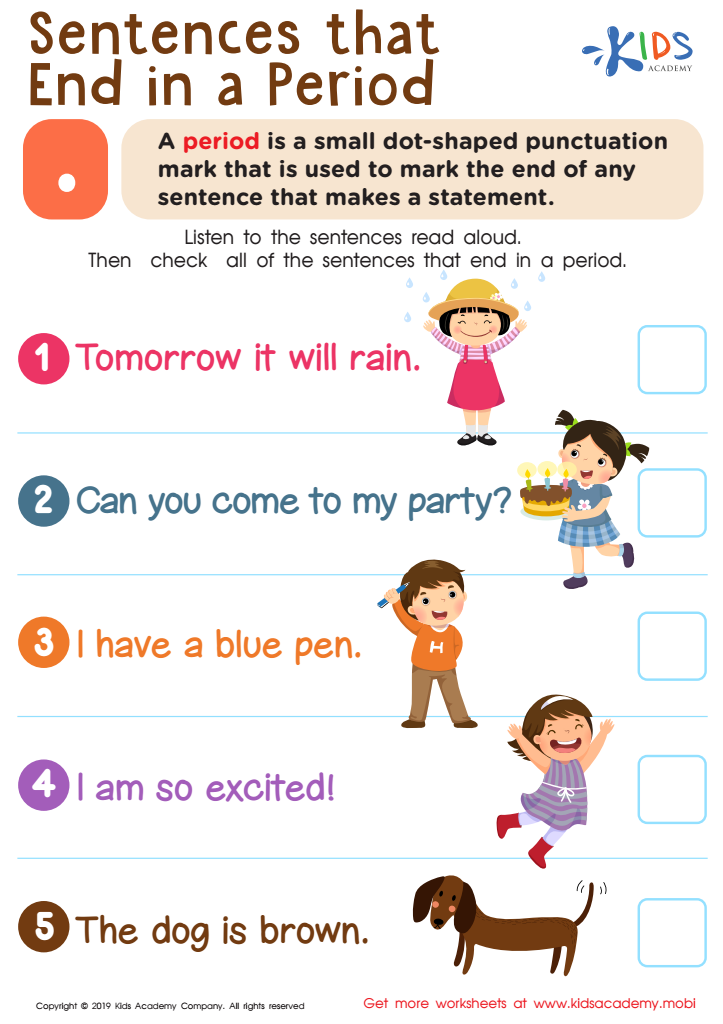
Sentences That End in a Period Worksheet
Before beginning, ask your kids if they know what punctuation marks are and can name a few. Common examples are the period (a small dot-shaped mark at the end of sentences), comma, question mark, and exclamation mark. Help practice their use with questions in the worksheet.
Sentences That End in a Period Worksheet
Worksheet
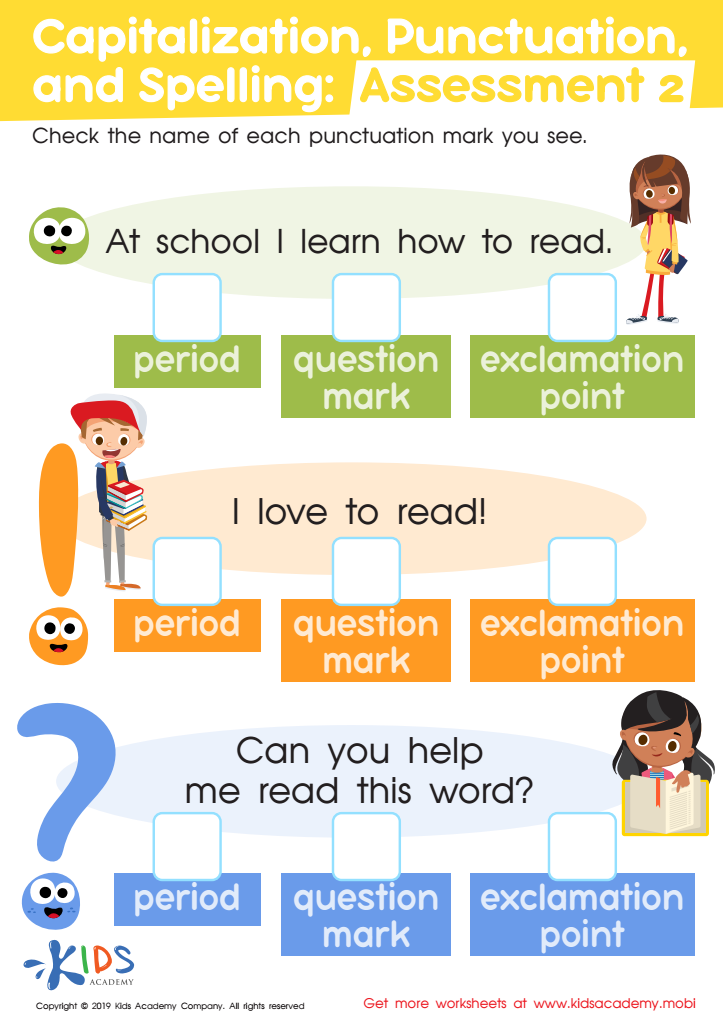
Capitalization. Punctuation. Spelling: Assessment 2 Worksheet
Teach your kids the basics of punctuation. Ask them to name the punctuation marks they know and review a worksheet together. Start with the full stop, question mark and exclamation mark. Show them examples and explain the differences between a comma and semi colon. Teaching proper use of punctuation marks is key to their development.
Capitalization. Punctuation. Spelling: Assessment 2 Worksheet
Worksheet
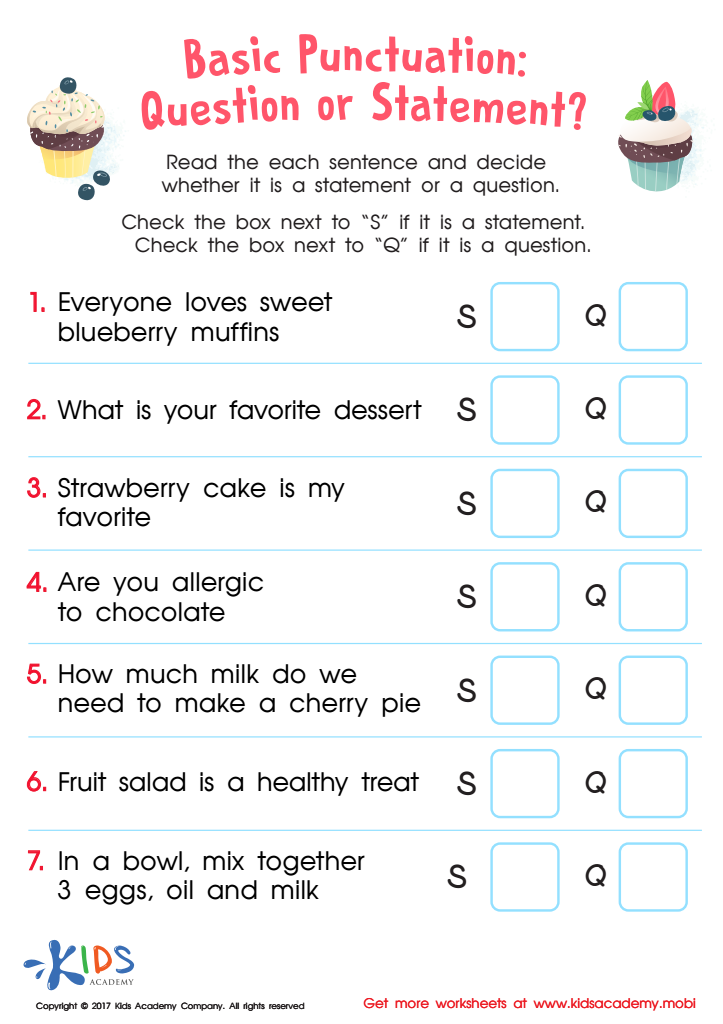
Basic Punctuation: Question or Statement Printable
Once kids can read and write, it's time to learn punctuation. With this fun worksheet, your child can practice distinguishing questions and statements using candy-themed examples. Question or Statement?
Basic Punctuation: Question or Statement Printable
Worksheet
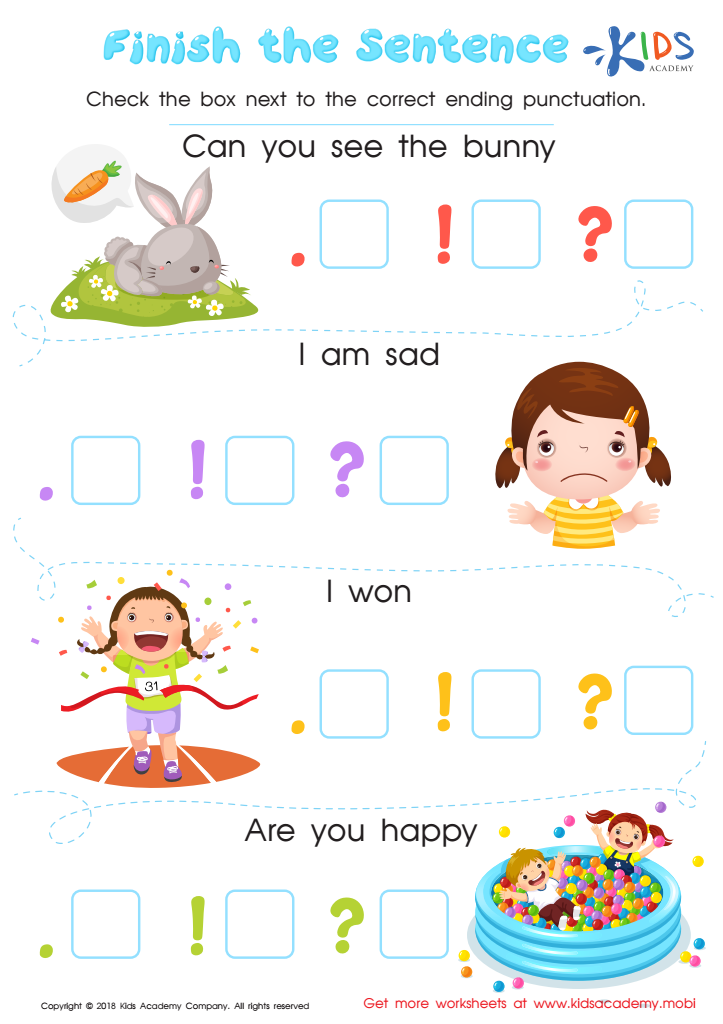
Finish the Sentence Worksheet
If your students have difficulty with punctuation, have them read sentences aloud and check the box next to the correct ending punctuation with this simple worksheet. Punctuation signals the tone and meaning of sentences. It helps students understand what is being communicated.
Finish the Sentence Worksheet
Worksheet
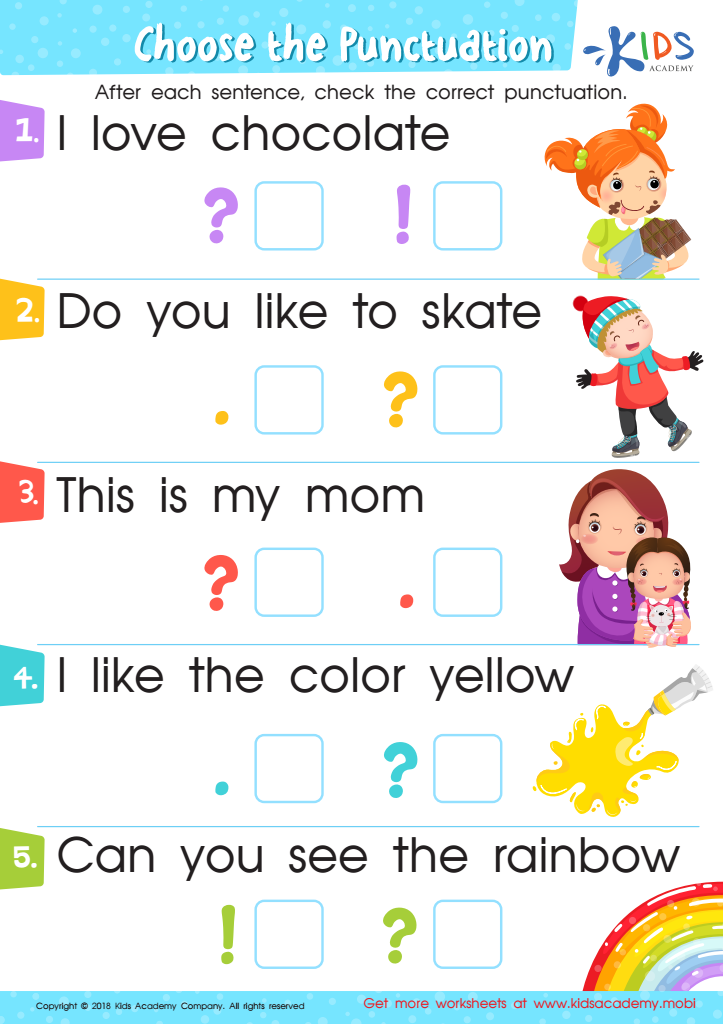
Choose the Punctuation: Assessment Worksheet
Does your child know punctuations? Found at the end of words, they signify the tone of the sentence. Ask them which punctuations they use daily. With your little one, look at a worksheet. Read each sentence aloud and ask them to identify the two punctuations given. Instruct them to choose the correct one. 80 words.
Choose the Punctuation: Assessment Worksheet
Worksheet
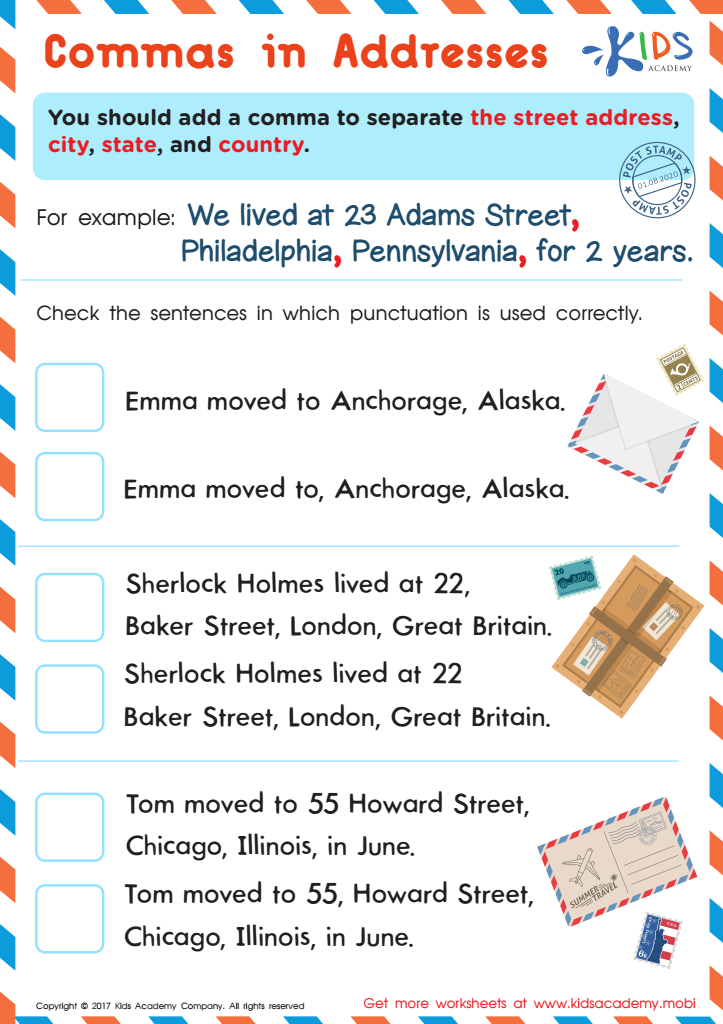
Commas in Addresses Worksheet
Learning comma rules can be tough for kids. Help make it easier with free worksheets, like this fun letter-themed exercise. It'll teach them the rules in isolation and keep them engaged.
Commas in Addresses Worksheet
Worksheet
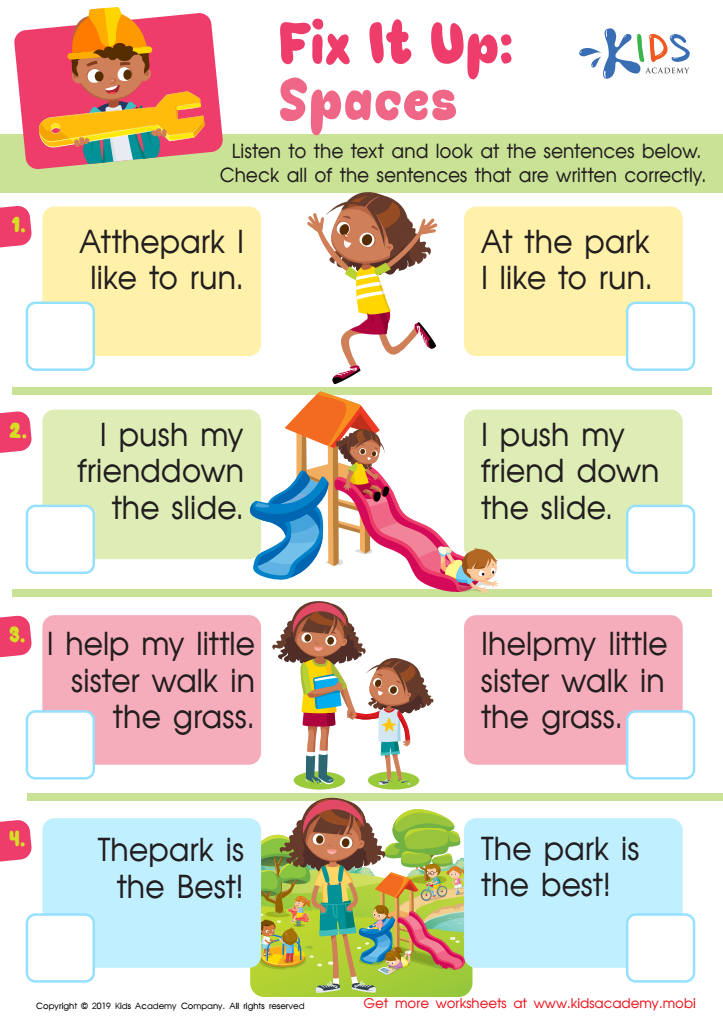
Fix Spaces Worksheet
Encourage kids to check sentences in the worksheet for proper spacing. Explain that clear, orderly writing needs spaces between words, otherwise words can become jumbled and hard to understand. Show them how to identify correctly spaced sentences.
Fix Spaces Worksheet
Worksheet
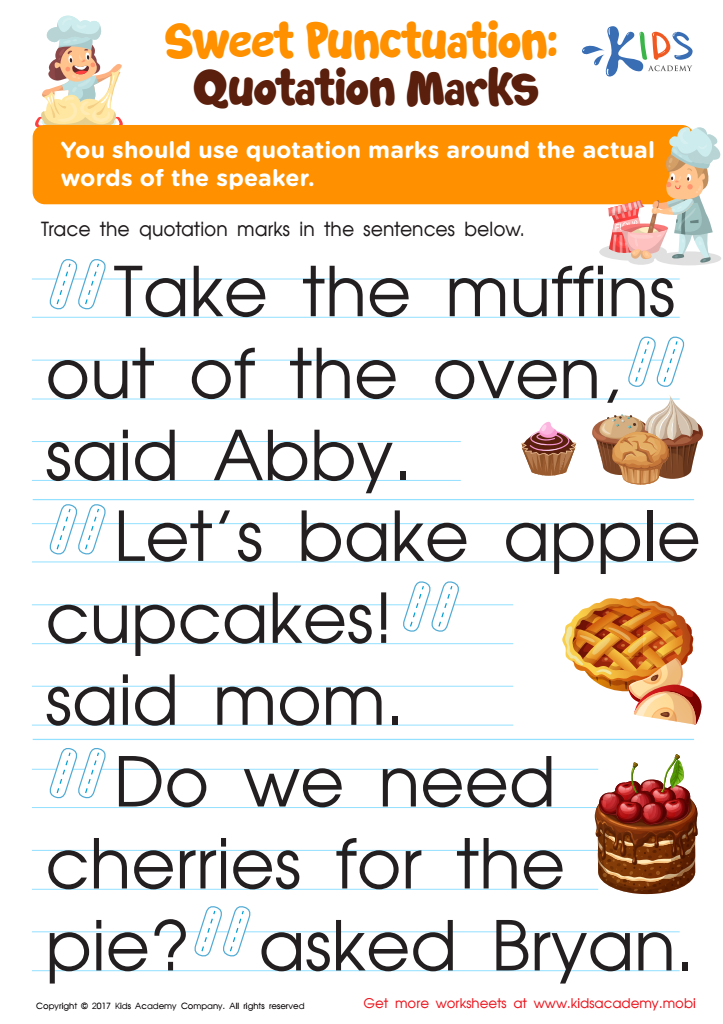
Commas and Quotation Marks Worksheet
This 3rd grade quotation marks worksheet introduces kids to using quotation marks in dialogue. Kids trace the quotation marks around each character's dialogue, learning to punctuate dialogue accurately.
Commas and Quotation Marks Worksheet
Worksheet
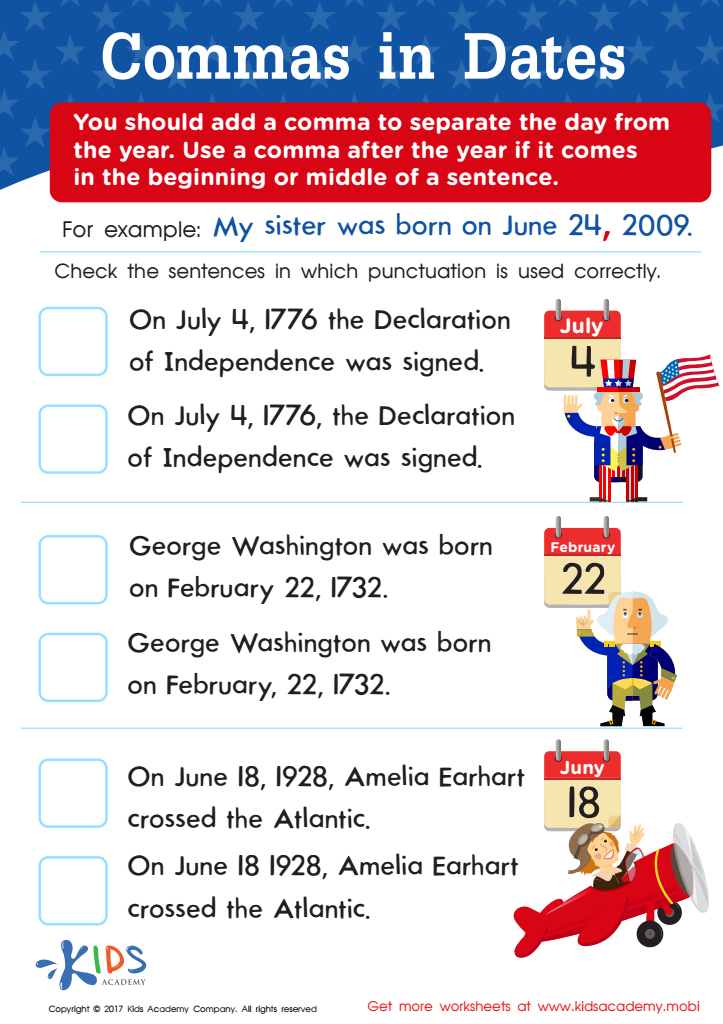
Commas in Dates Worksheet
With included PDFs, kids learn to use commas correctly in dates, discovering the most important days in U.S. history along the way.
Commas in Dates Worksheet
Worksheet
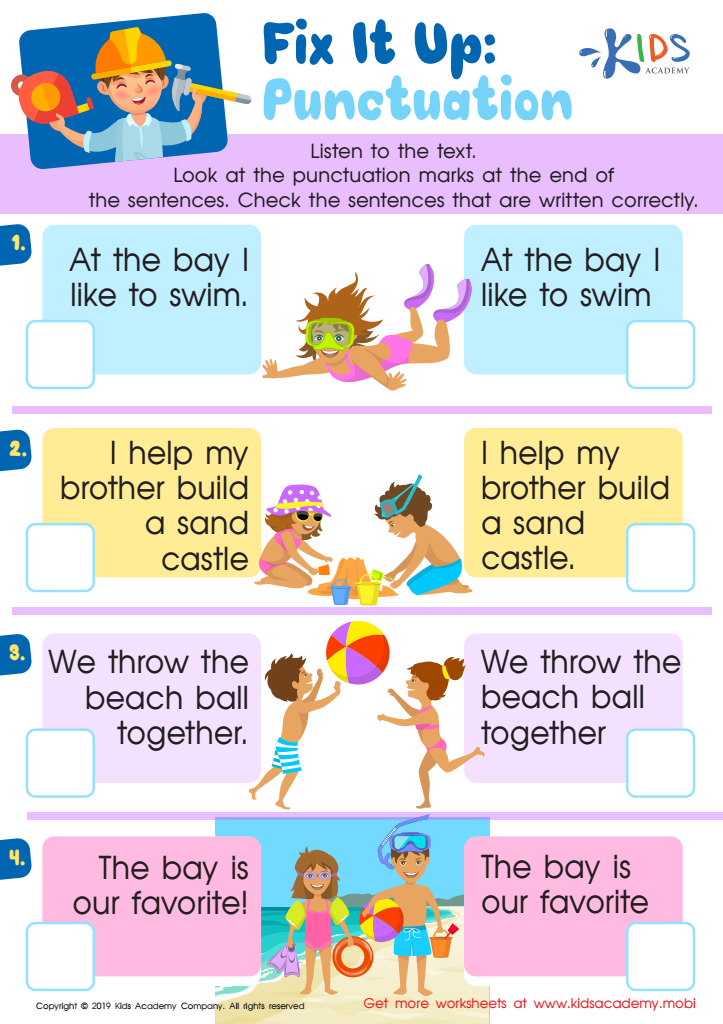
Fix Punctuation Worksheet
Have your kids tell you which punctuation marks they know before using this colorful worksheet. Read the sentences together and ask them to identify which are correctly punctuated. Guide them to check their answers. This simple activity helps teach kids to use punctuation correctly.
Fix Punctuation Worksheet
Worksheet
Join Kids Academy for Free
Who is primarily going to use this learning content?


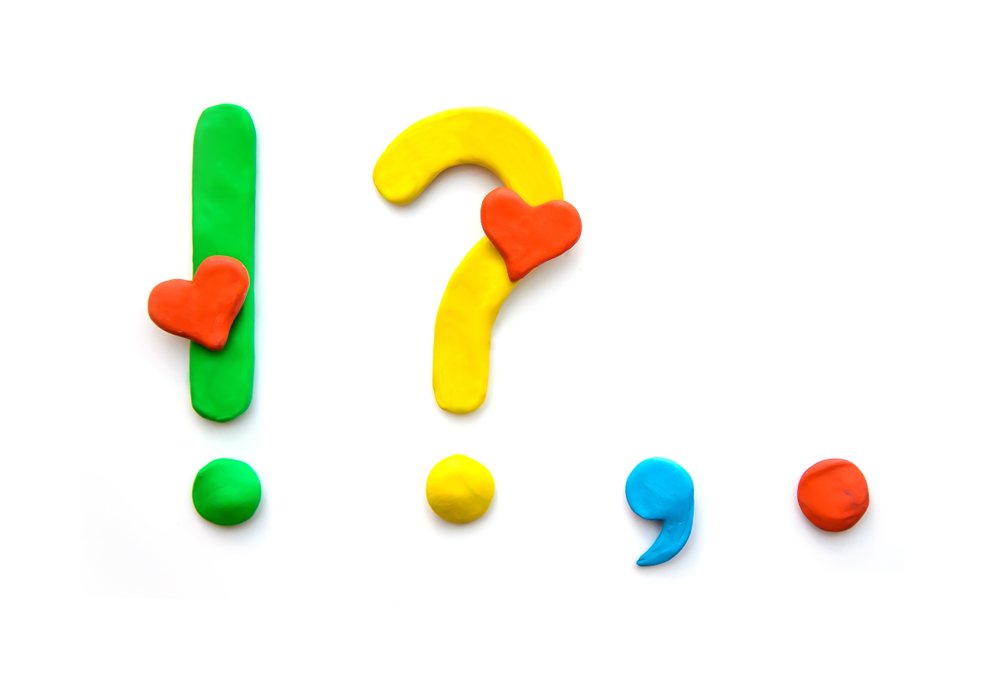
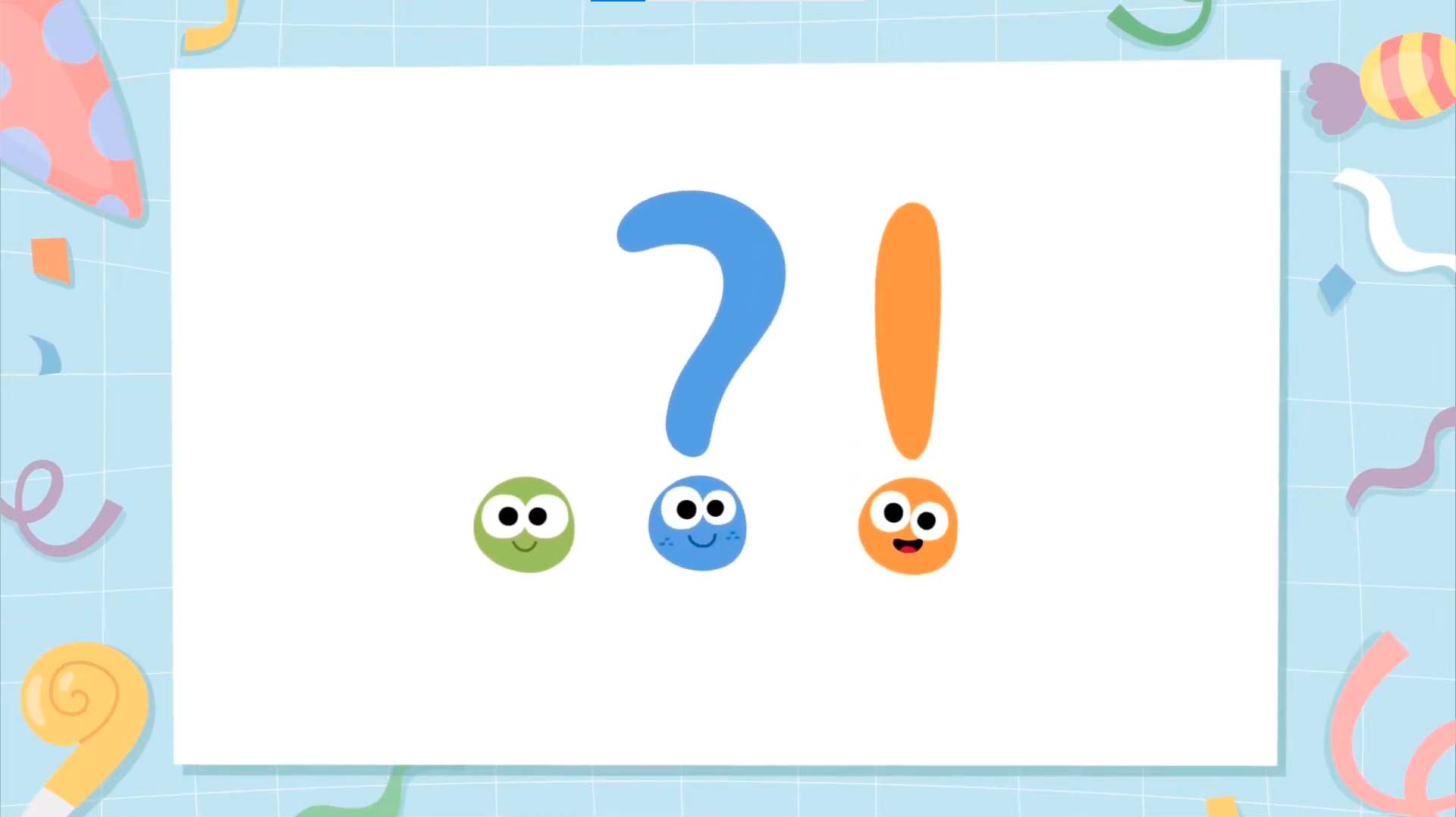
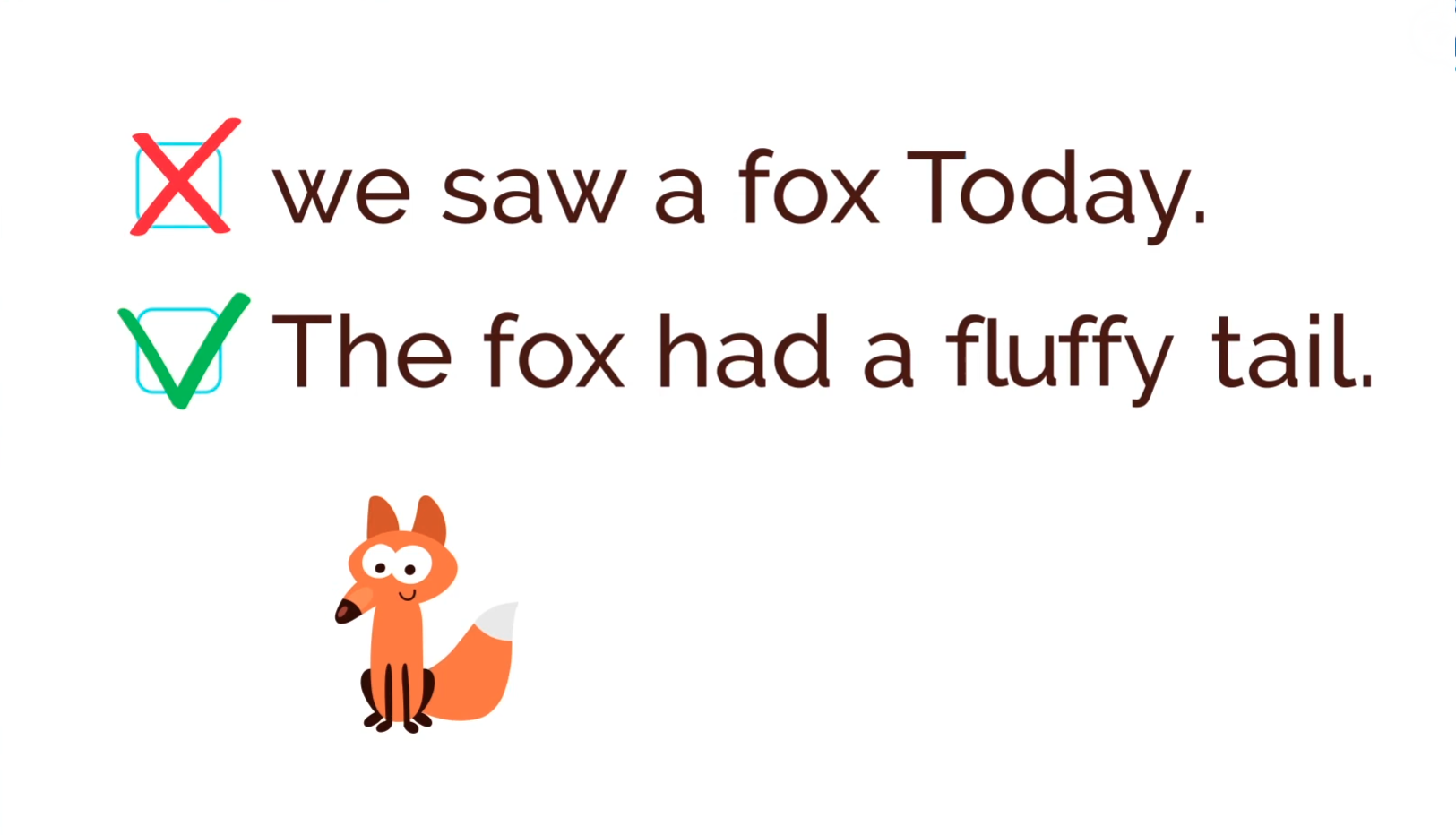


Punctuation is a crucial aspect of communication that significantly impacts the reading and writing skills of children aged 6-8. During these formative years, children begin to grasp the basics of language, and understanding punctuation plays a vital role in their literacy development. Proper punctuation helps convey meaning, clarify ideas, and enhance comprehension. For instance, a simple sentence like “Let’s eat, Grandma!” versus “Let’s eat Grandma!” illustrates how punctuation can totally change a message.
Parents and teachers should prioritize punctuation because it lays a strong foundation for effective communication. It aids in the development of critical thinking skills; children learn to analyze and organize their thoughts better. Teaching punctuation also promotes creativity as children explore different ways to express themselves in writing.
Moreover, early mastery of punctuation boosts confidence in young learners. It prepares them for more complex reading and writing tasks as they progress in education. As needing punctuation becomes increasingly essential in digital communication, instilling this knowledge early on will empower children to navigate both traditional and modern forms of writing effectively. Ultimately, caring about punctuation fosters a love for language, ensuring children become articulate individuals capable of conveying their thoughts clearly.








