Fractions of Shapes Worksheets for Ages 6-9 - Page 2
38 filtered results
-
From - To
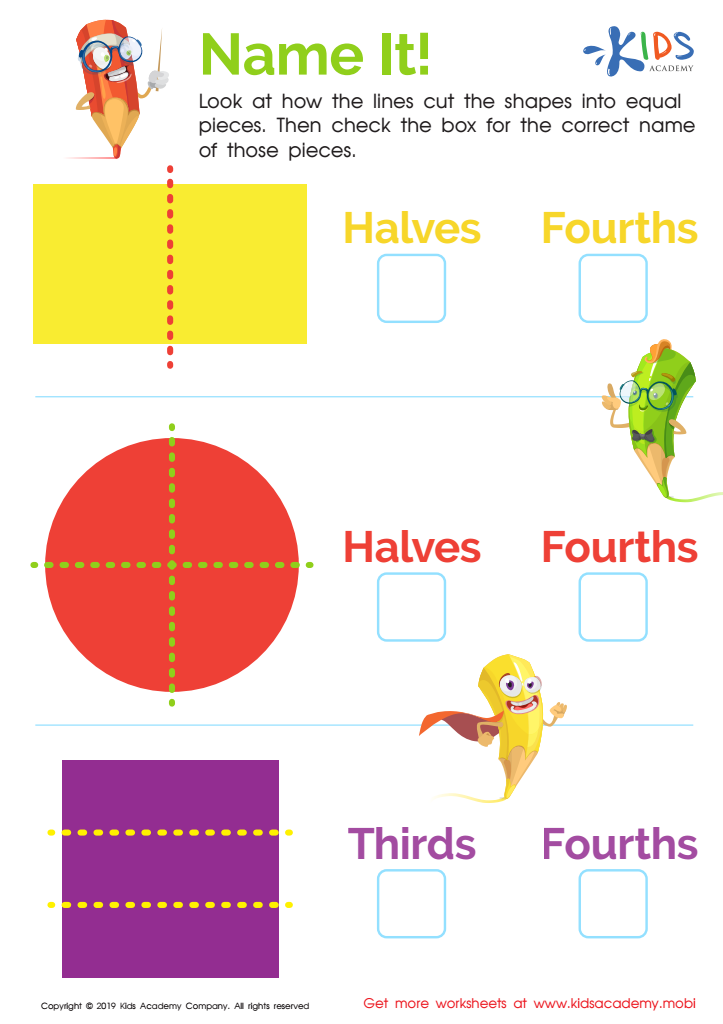
Name It! Worksheet
 Assign to My Students
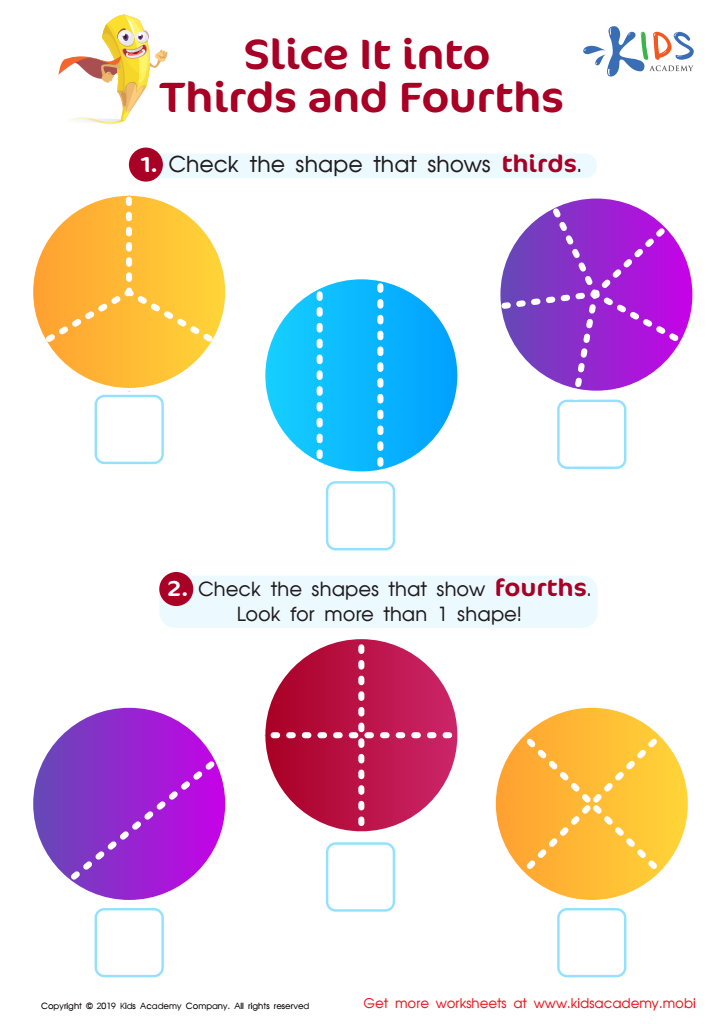
Slice in Thirds Fourths Worksheet
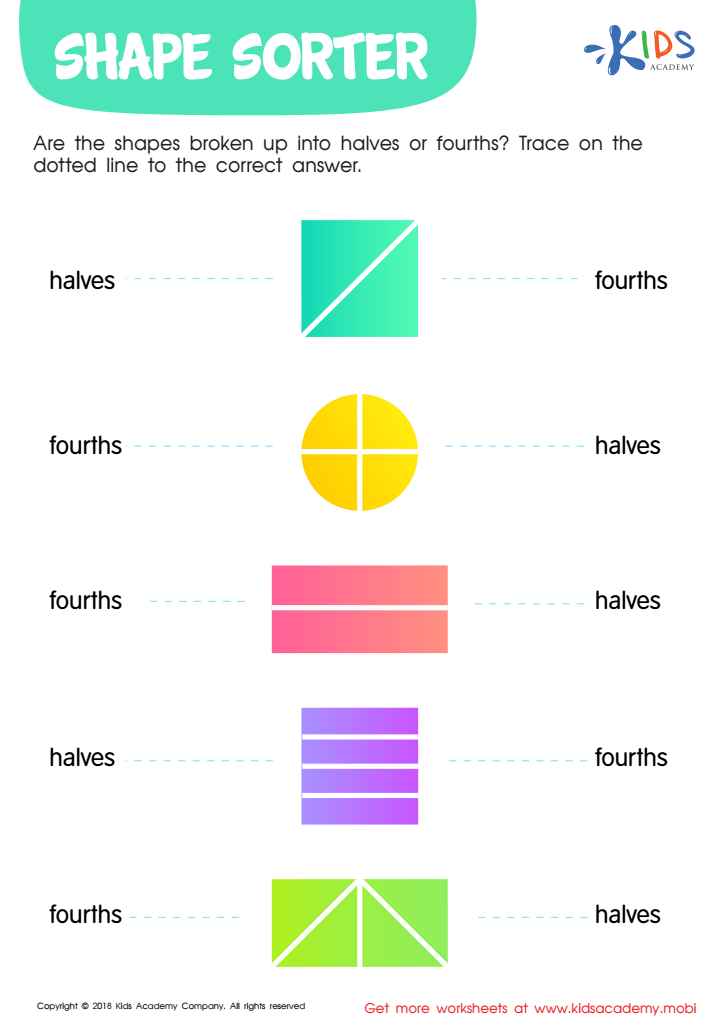
Shape Sorter Worksheet
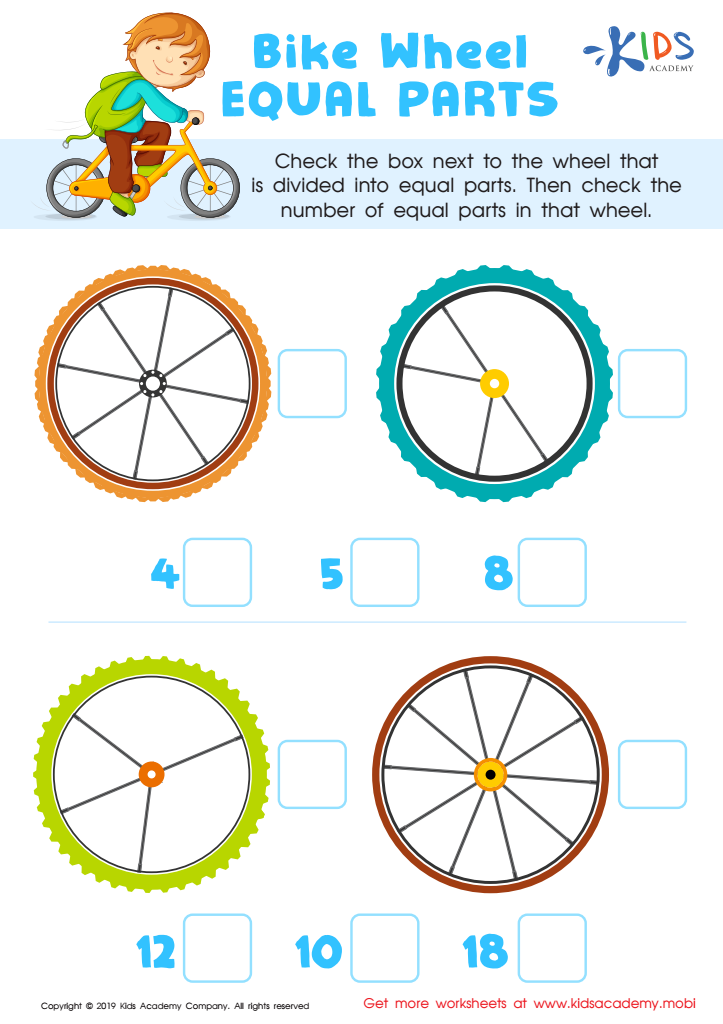
Bike Wheel Equal Parts Worksheet
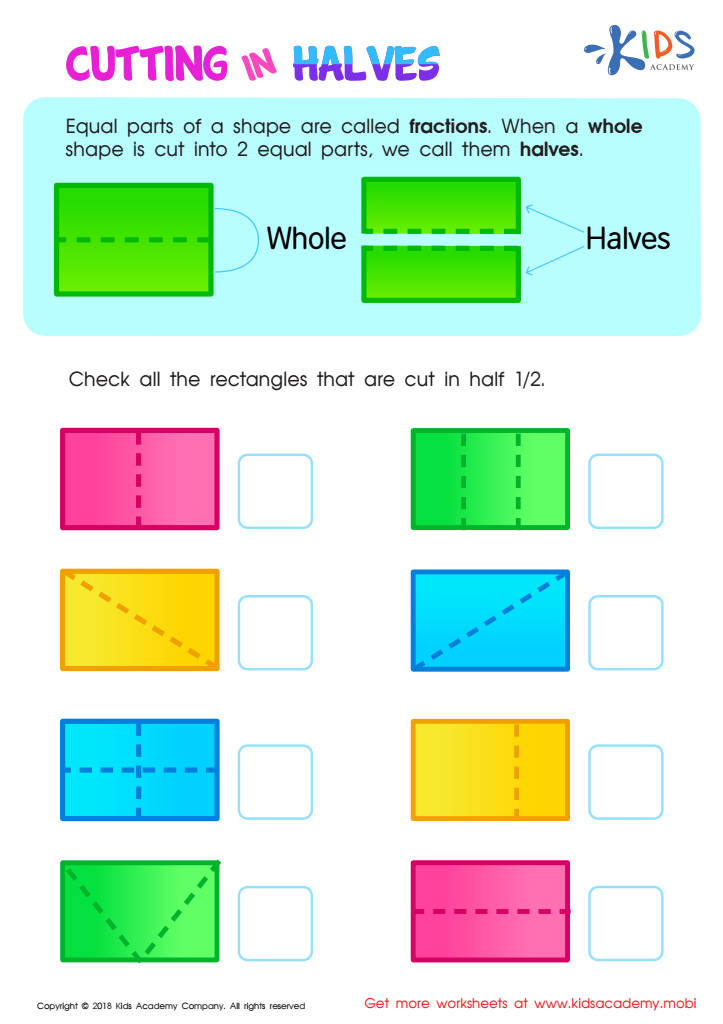
Cutting in Halves Worksheet
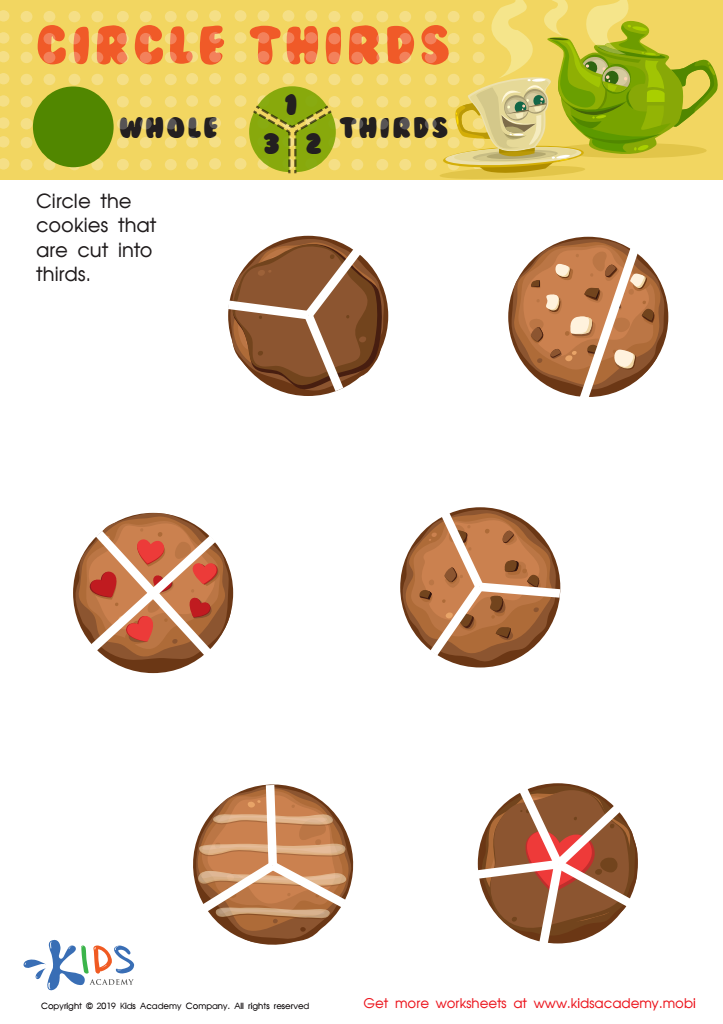
Circle Thirds Worksheet
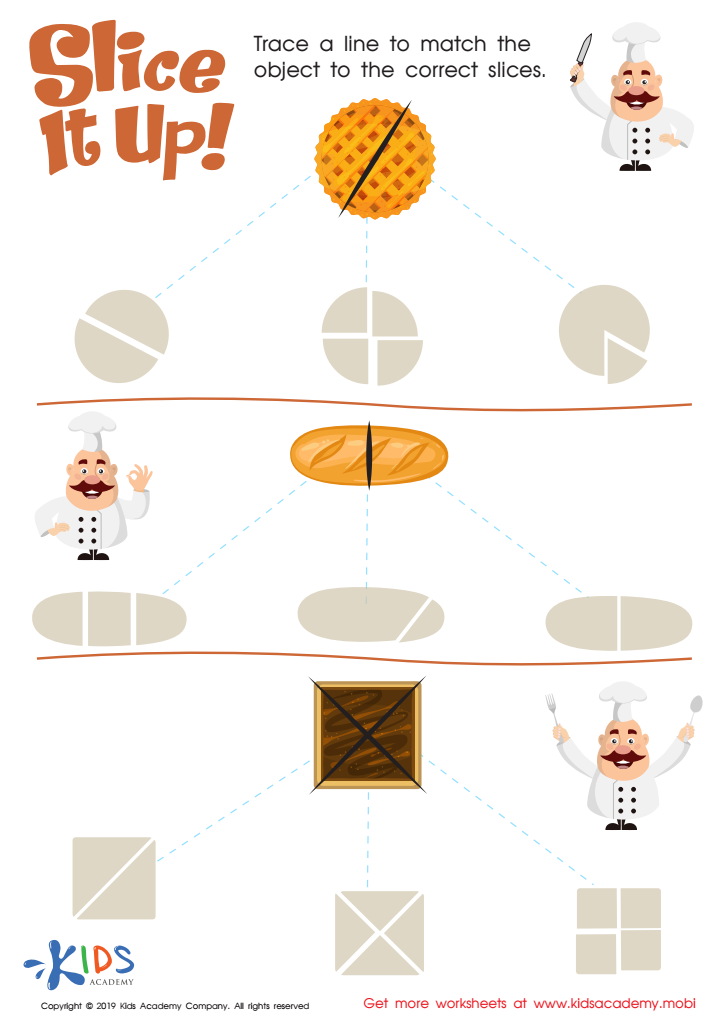
Slice It Up Worksheet
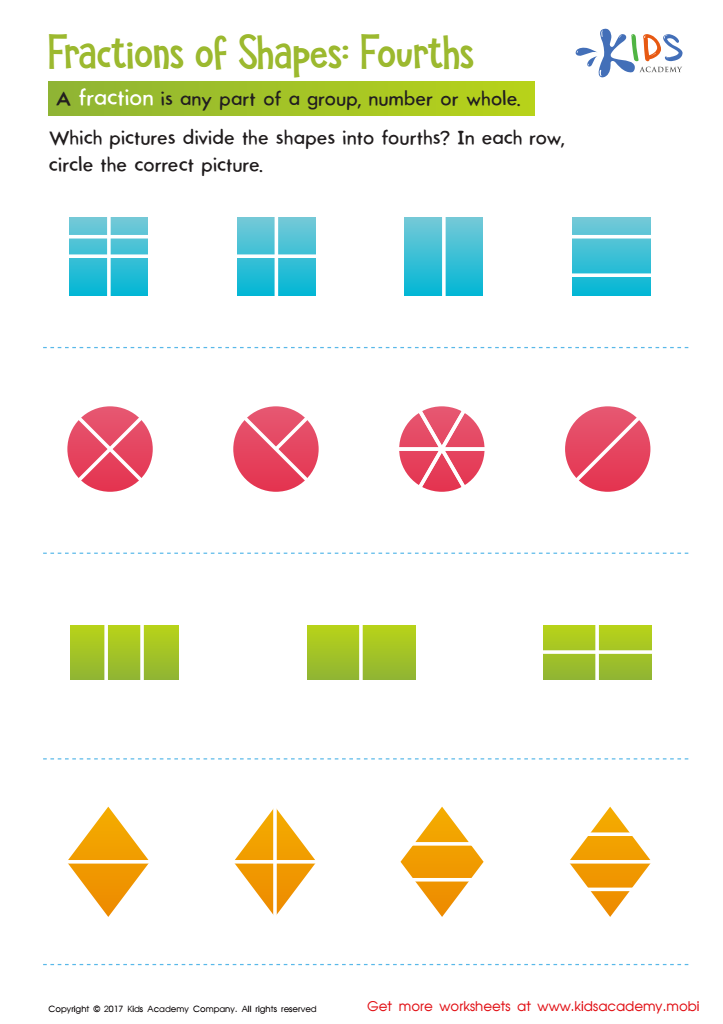
Fractions of Shapes Worksheet
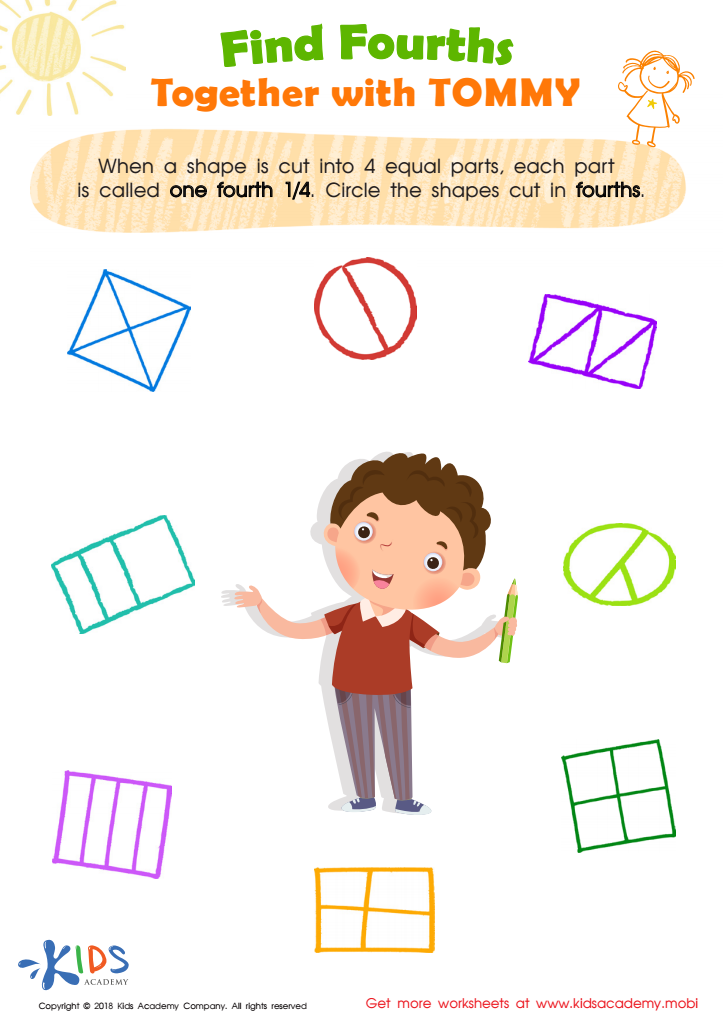
Find Fourths Together with Tommy Worksheet
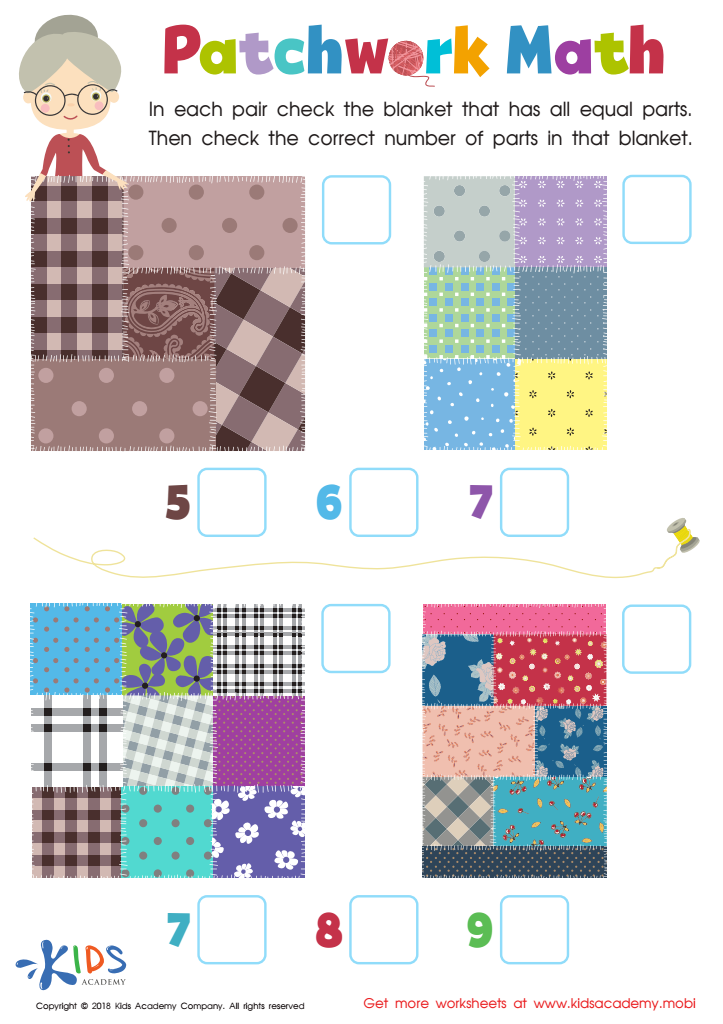
Patchwork Math Worksheet
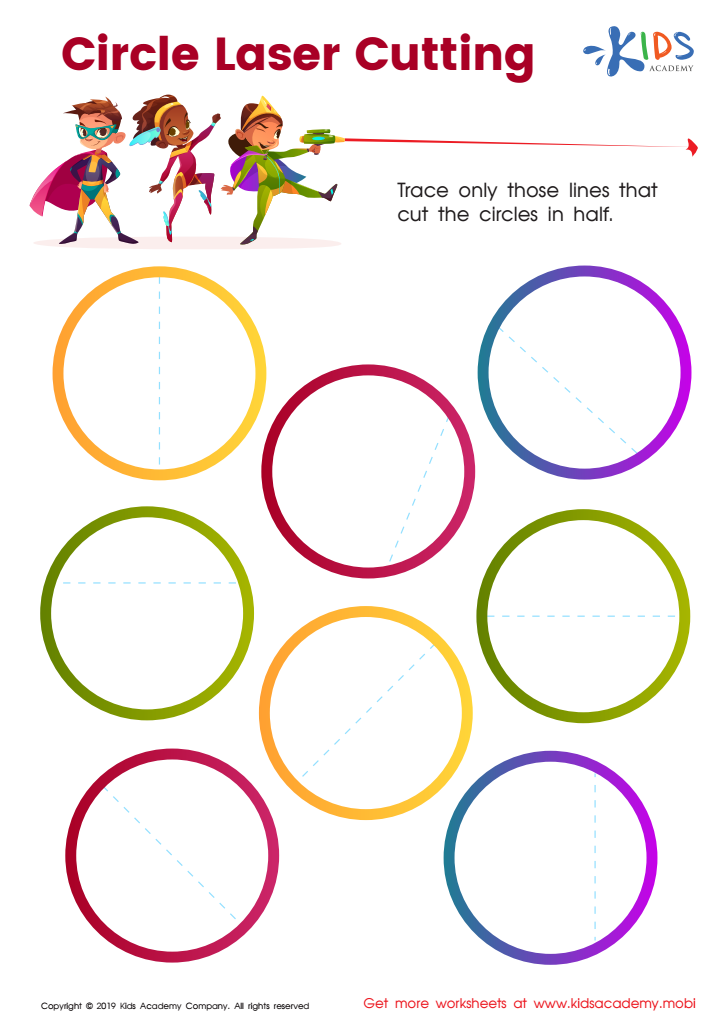
Circle Laser Cutting Worksheet
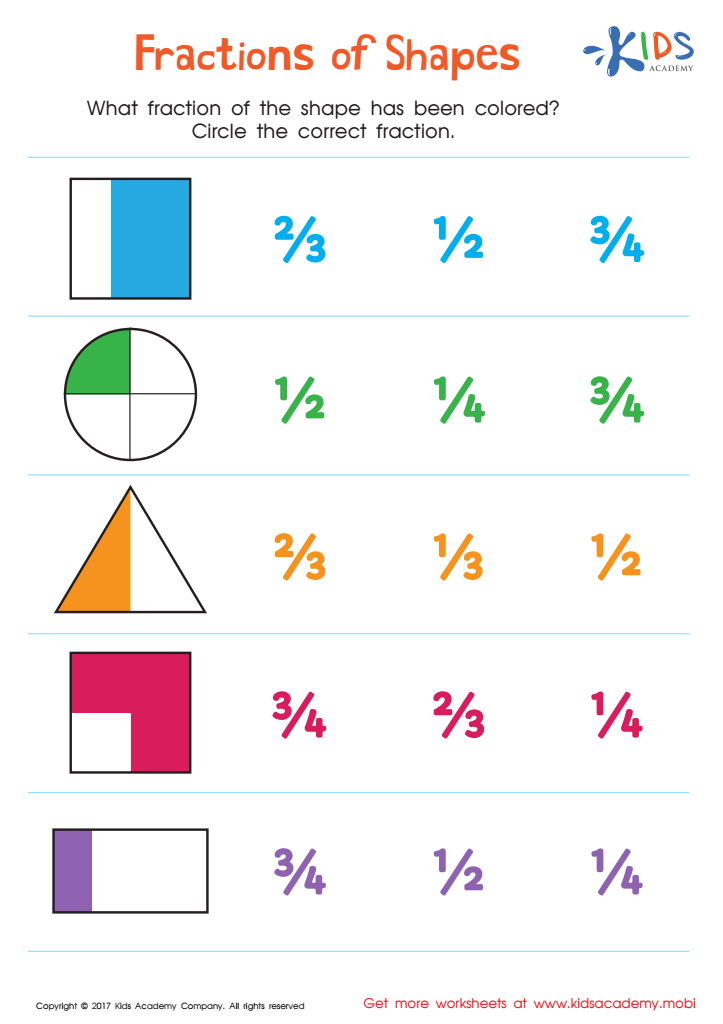
Fractions of Shapes: Math Concept Worksheet
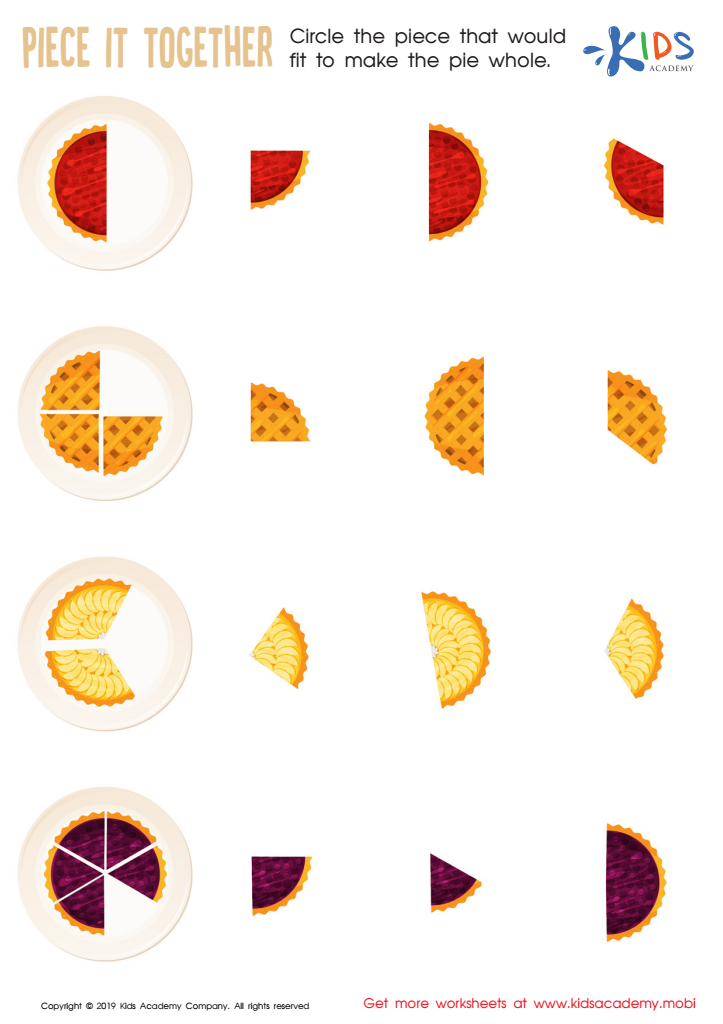
Piece it together Worksheet
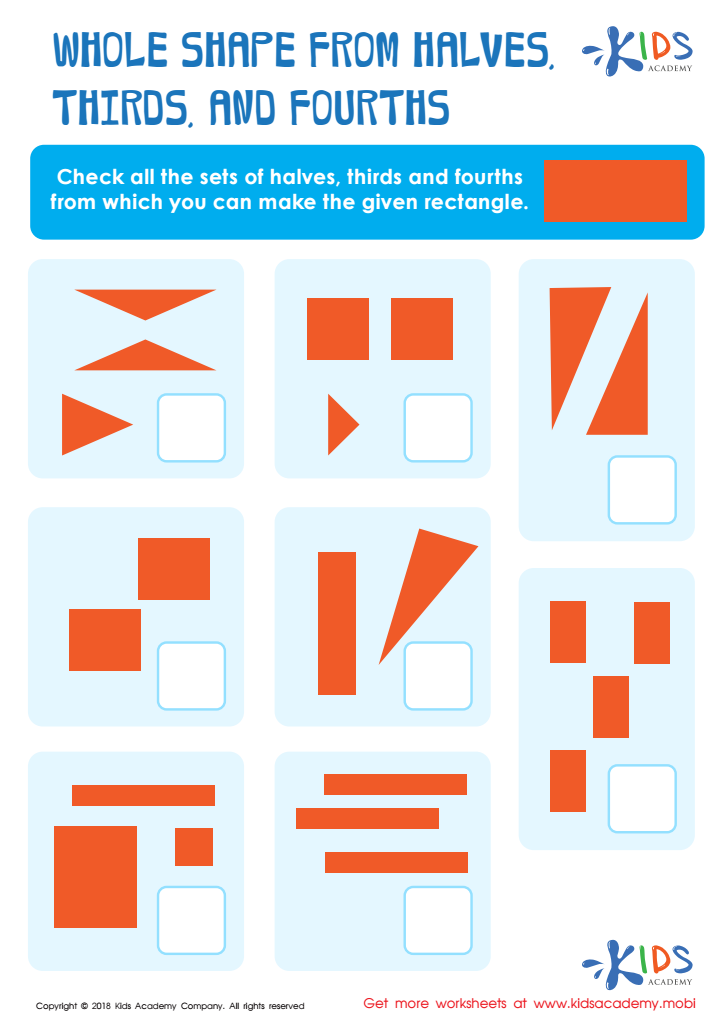
Whole Shape from Halves, Thirds and Fourths Worksheet







Understanding fractions of shapes is essential for children aged 6-9 as it builds a foundational math skill that is critical for their cognitive development. At this age, children begin learning about division and proportions, making fractions an ideal concept to explore. By grasping fractions, children enhance their ability to visualize parts of a whole—an essential skill for everyday problem-solving.
Mathematically, learning to recognize and manipulate fractions of shapes aids in the understanding of more complex concepts later on, such as percentages, ratios, and algebra. It allows children to make connections between different forms of representation, reinforcing conceptual understanding.
Moreover, fractions are often visually represented, providing a concrete way for young learners to grasp an abstract idea. Activities involving cutting shapes, coloring parts, or using fraction tools make learning interactive and enjoyable. This nurturing of critical thinking fosters creativity and promotes a positive attitude towards math.
In social contexts, fractions arise in cooking, sharing pieces of cake, or distributing resources, teaching children the importance of fairness and equality. Ultimately, fostering an early understanding of fractions positively impacts a child's mathematical literacy and confidence, equipping them with essential life skills.