Reading Fiction Worksheets for Ages 6-9 - Page 7
145 filtered results
-
From - To
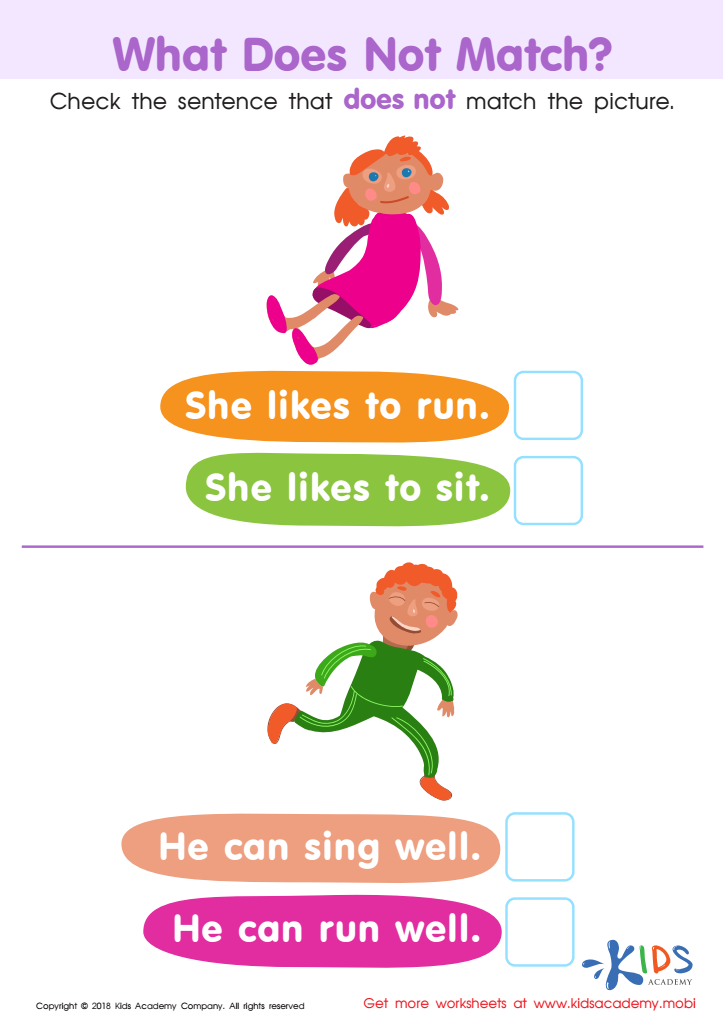
What Does Not Match? Worksheet
 Assign to My Students








Reading fiction for ages 6-9 is crucial in developing a child's emotional, social, and cognitive skills. At this age, children are particularly impressionable, and engaging with fictional stories helps them understand different perspectives and feelings. This early exposure to characters' experiences fosters empathy, allowing children to relate to others and navigate social situations more effectively.
Moreover, reading fiction enhances literacy skills, laying a strong foundation for future academic success. As children encounter varied vocabulary, narrative structures, and writing styles, they improve their comprehension and critical thinking abilities. Fiction also stimulates imagination and creativity, encouraging children to express themselves and potentially inspiring them to pursue their own storytelling.
Importantly, these shared reading experiences can strengthen the bond between parents, teachers, and children. Engaging with a story together opens the door to meaningful conversations and deeper connections, reinforcing the child’s love for reading.
By prioritizing fiction reading, parents and teachers cultivate a safe, stimulating environment that nurtures essential life skills. Ultimately, advocating for fiction in a child's reading routine leads to well-rounded individuals who are not only literate but also empathetic and imaginative thinkers.








