Understanding fractions Addition & Subtraction Worksheets for 6-Year-Olds
5 filtered results
-
From - To
Welcome to our "Understanding Fractions Addition & Subtraction Worksheets" designed specifically for 6-year-olds! These engaging worksheets will help young learners build a strong foundation in fractions as they explore adding and subtracting them in a fun, interactive way. With colorful visuals and age-appropriate exercises, children can grasp essential math concepts while strengthening their critical thinking skills. Each worksheet offers a variety of problems that encourage kids to practice and apply their knowledge in real-life contexts. Ideal for both home and classroom learning, these resources make fraction learning enjoyable and effortless. Start your child’s mathematical journey today!
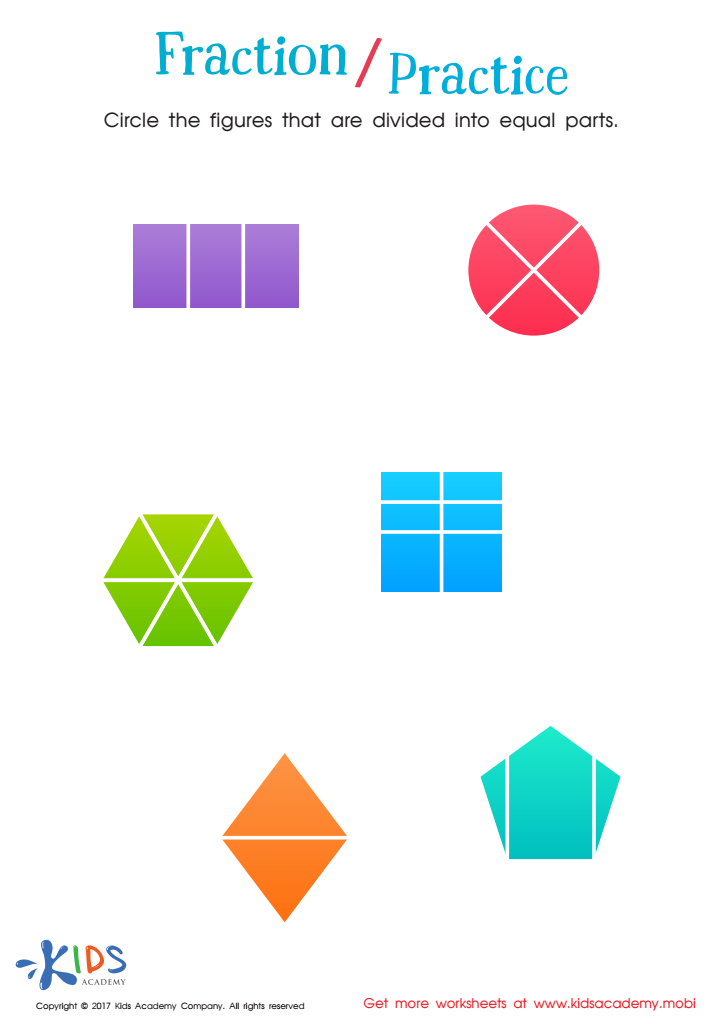
Fractions: Shapes Worksheet
 Assign to My Students
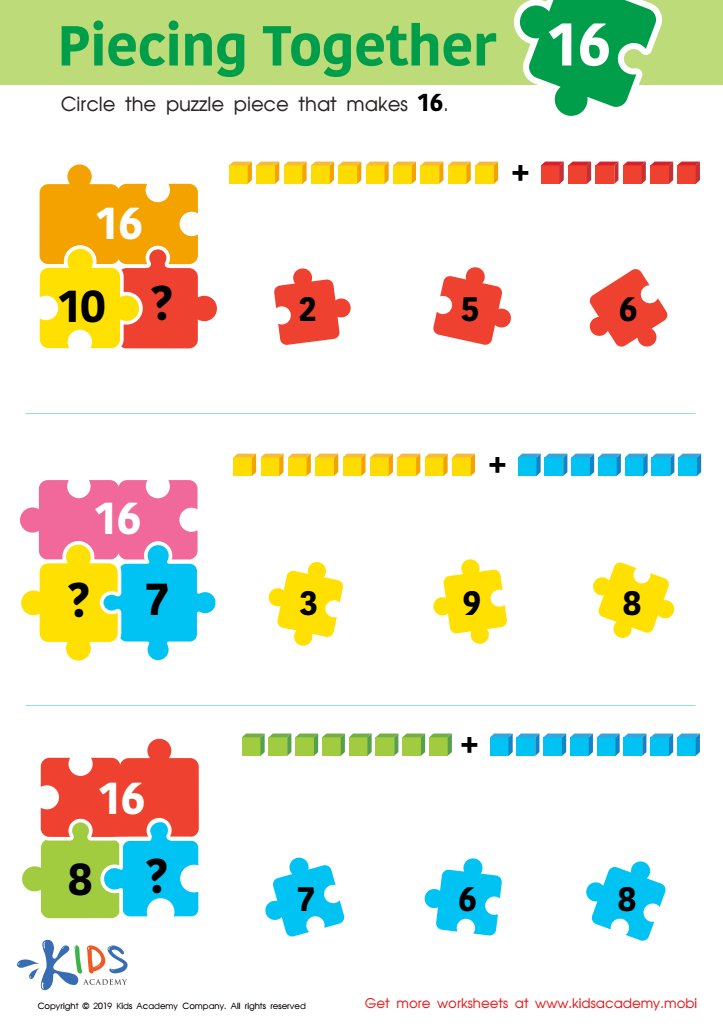
Piecing Together 16 Worksheet
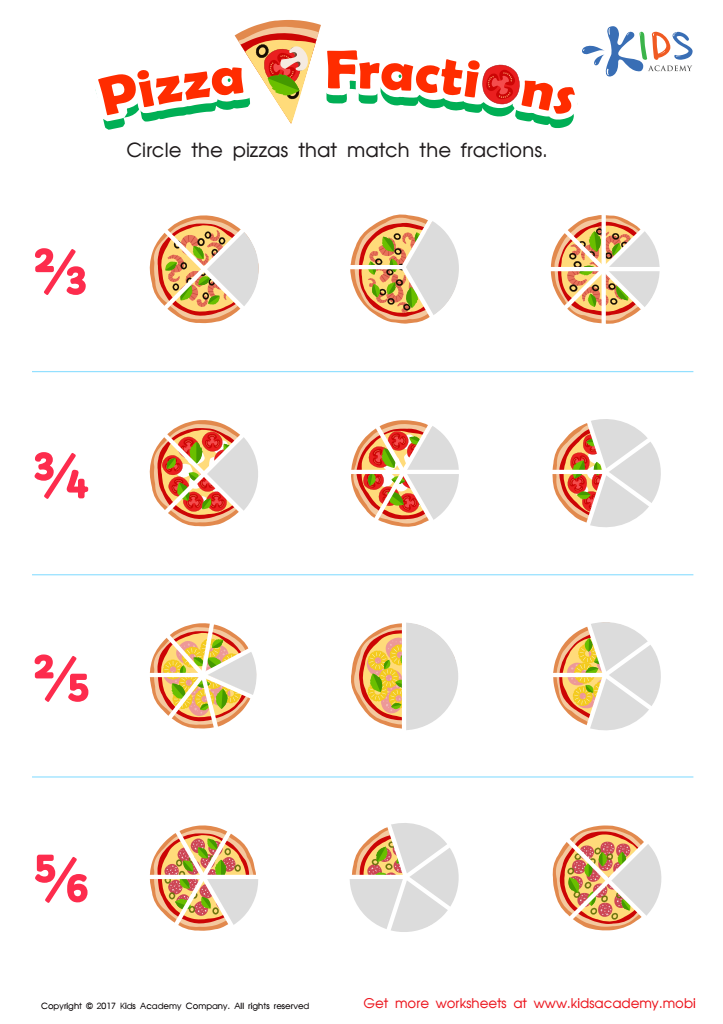
Fractions: Pizza Printable
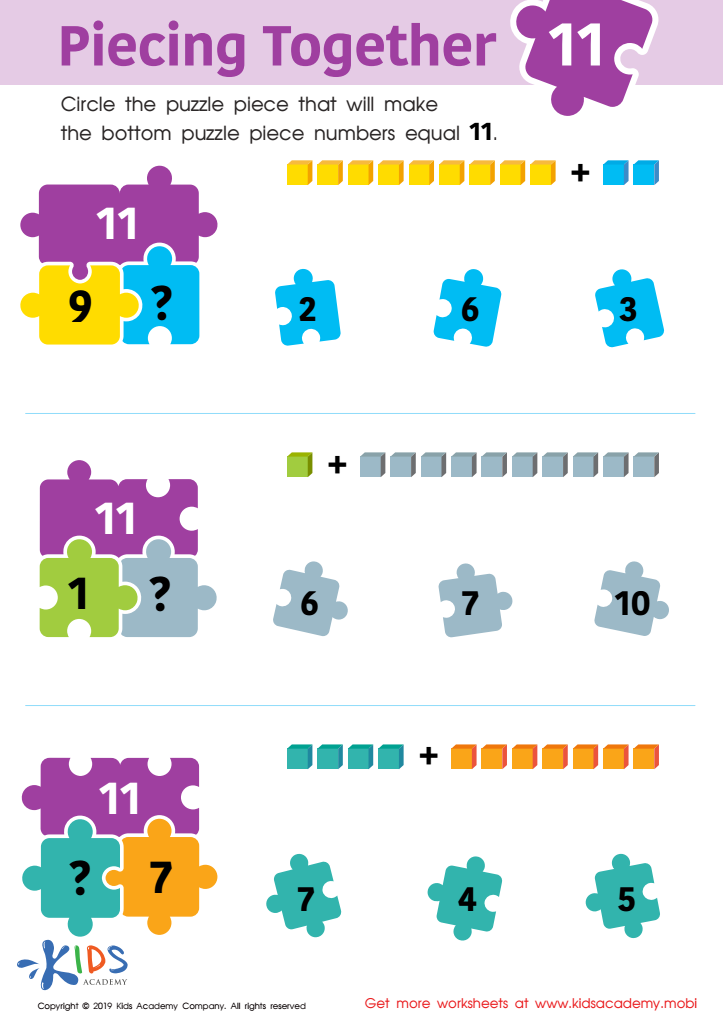
Piecing Together 11 Worksheet
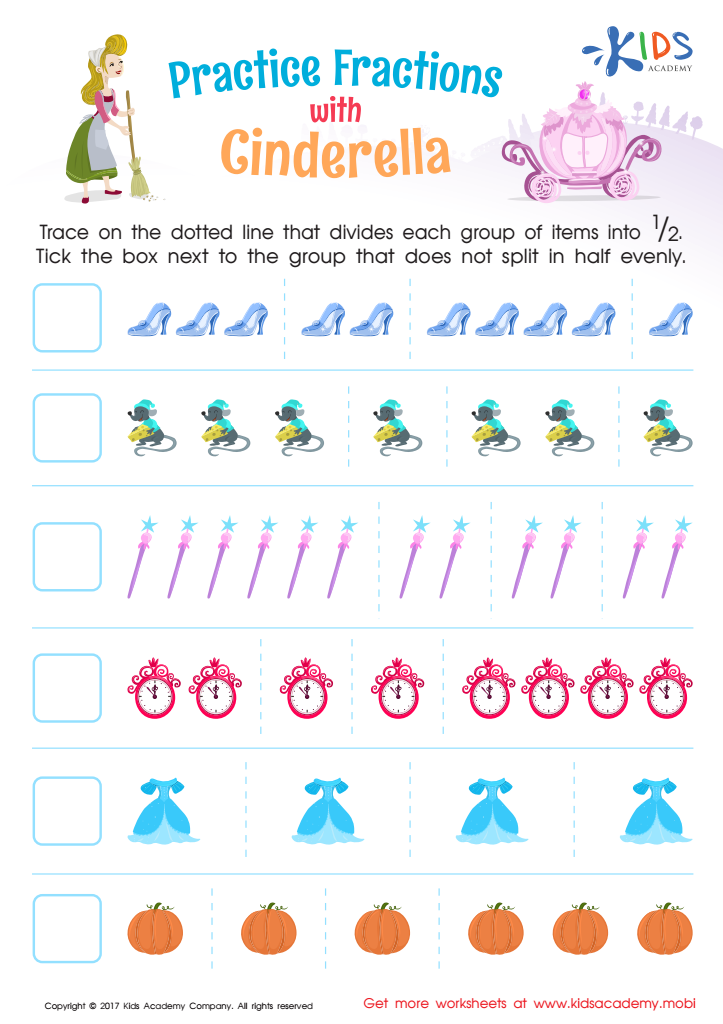
Fractions: Cinderella Printable








Understanding fractions, particularly addition and subtraction, is a foundational skill for 6-year-olds that lays the groundwork for future math concepts. At this age, children are beginning to grasp the idea of part-whole relationships, which is crucial for their mathematical development. When parents and teachers prioritize understanding fractions, they foster critical thinking, problem-solving abilities, and essential numeric concepts.
First, mastering fractions helps children understand how to divide things into equal parts, which is vital for concepts like sharing, cooking, and telling time. When kids learn to add and subtract fractions, they develop a richer sense of quantity and proportion. This foundational knowledge is a precursor to mastering more complex mathematical operations later on, like decimals, ratios, and percentages.
Moreover, engaging with fractions through interactive activities can enhance children's enthusiasm for math, making it a joyful experience rather than a tedious one. It promotes a positive attitude toward learning and boosts confidence in their abilities. By integrating real-world contexts, teachers and parents can assist students in seeing the relevance of fractions, connecting mathematics to everyday situations, and ultimately nurturing a lifelong love of learning in their children. Investing in their understanding now supports their future academic success in math and beyond.








