Problem-Solving Skills Chess Worksheets for Ages 7-9
22 filtered results
-
From - To
Unlock your child's critical thinking with Problem-Solving Skills Chess Worksheets designed for ages 7-9! Our expertly crafted PDFs combine the timeless game of chess with engaging puzzles to enhance logical reasoning, strategic planning, and decision-making abilities. Each worksheet is tailored to captivate and challenge young minds, encouraging them to solve problems and think multiple steps ahead. Ideal for beginners and intermediate players alike, these activities foster confidence and a love for chess while building essential problem-solving skills. Elevate learning and play with our fun and educational chess worksheets at Kids Academy!
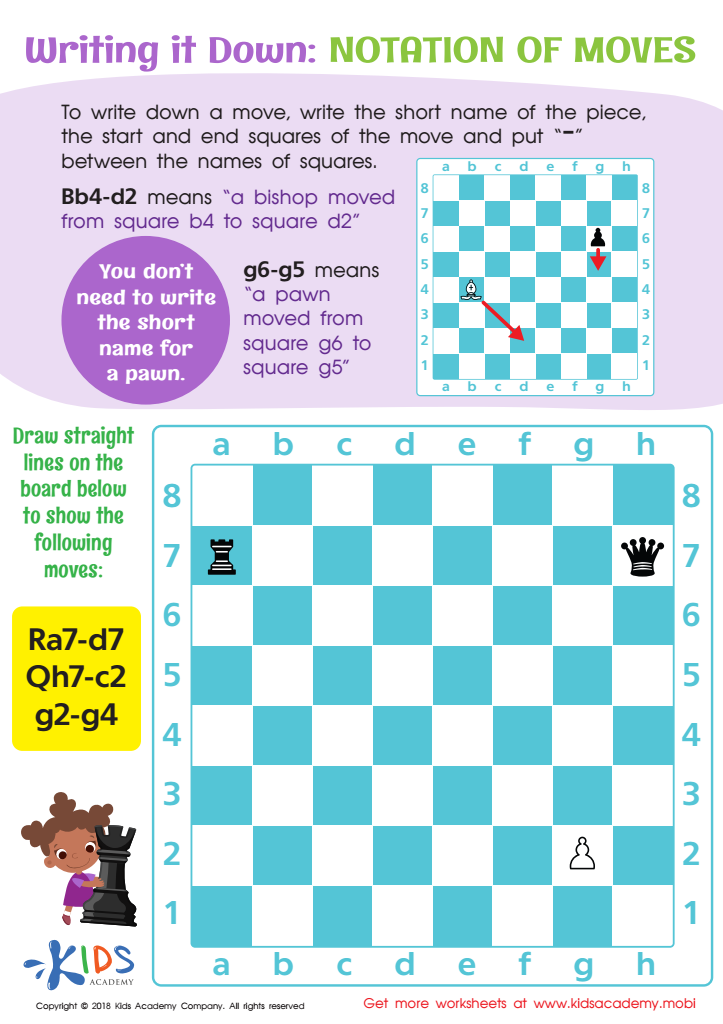
Notation of Moves Writing it Down Worksheet
 Assign to My Students
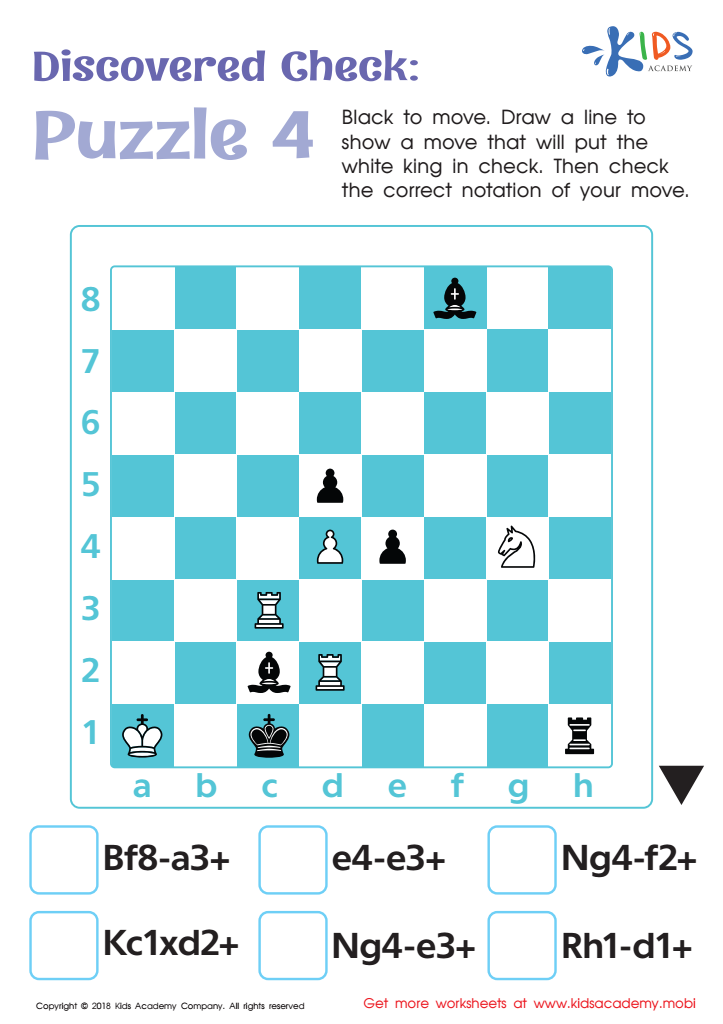
Discovered Check: Puzzle 4 Worksheet
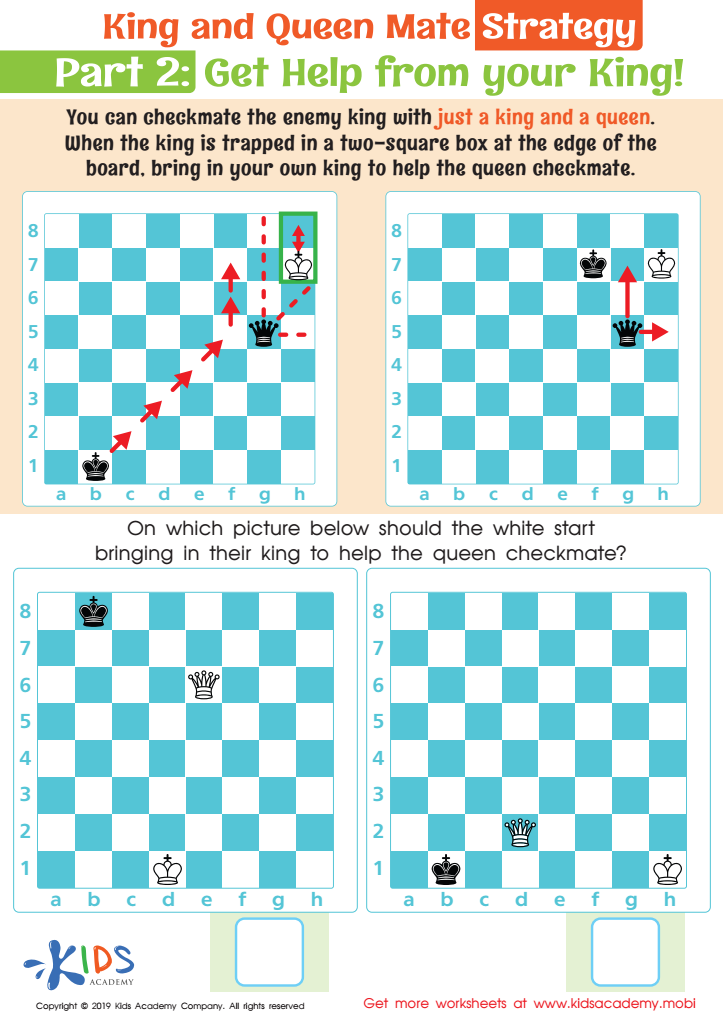
King and Queen Mate Strategy: Part 2 Worksheet
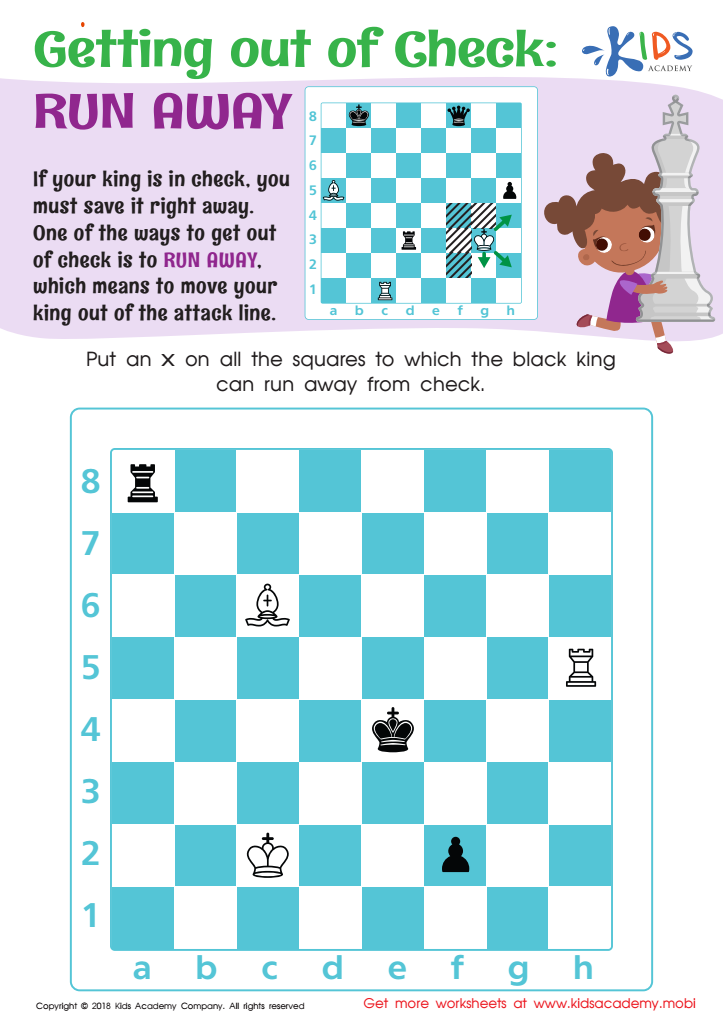
Getting out of Check: Run Away Worksheet
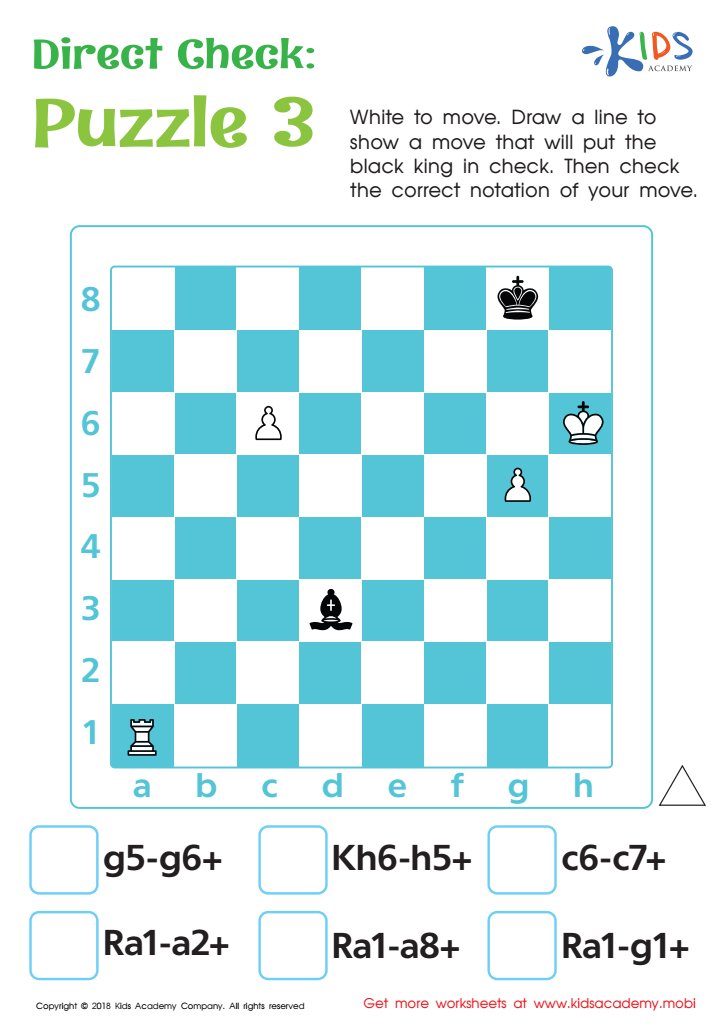
Direct Check: Puzzle 3 Worksheet
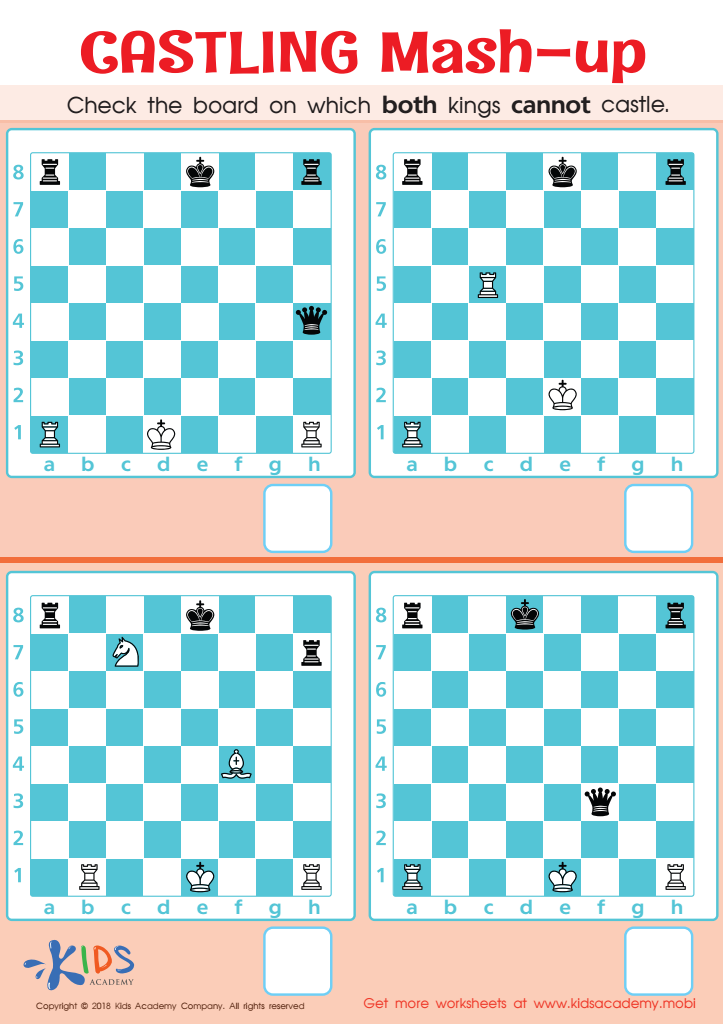
Castling Mash–up Worksheet
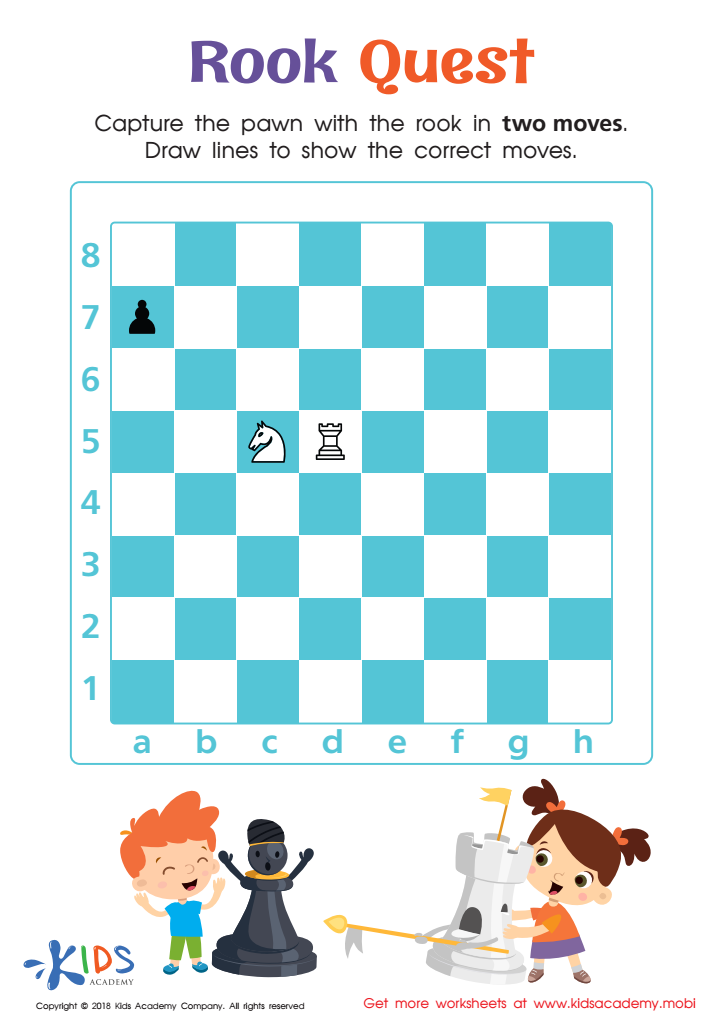
Rook Quest Worksheet
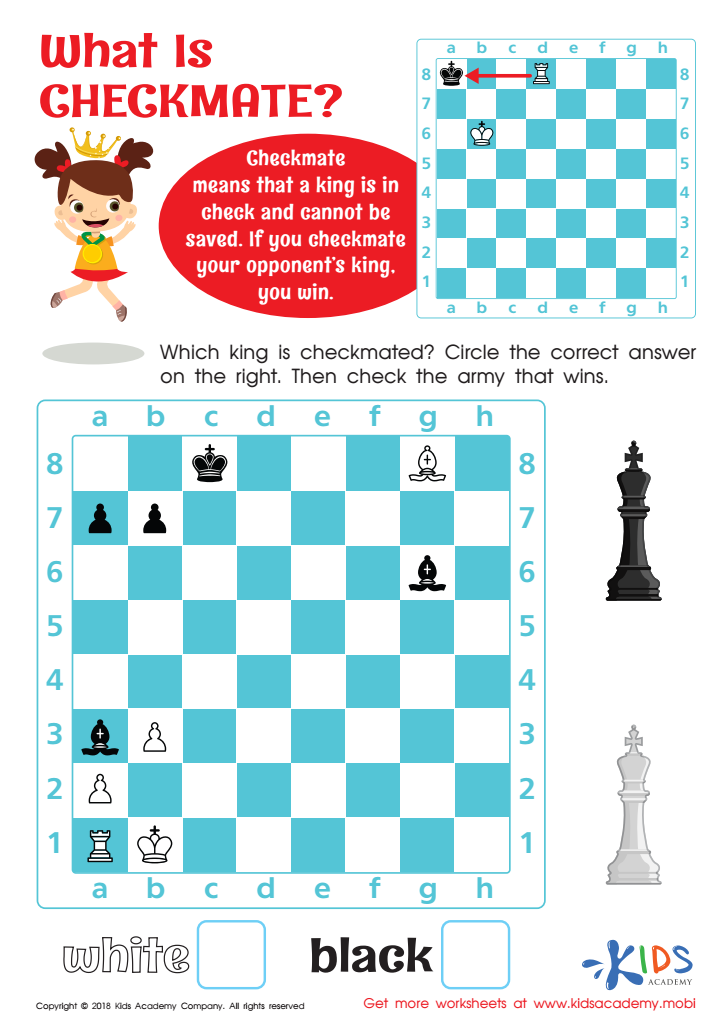
What is Checkmate? Worksheet
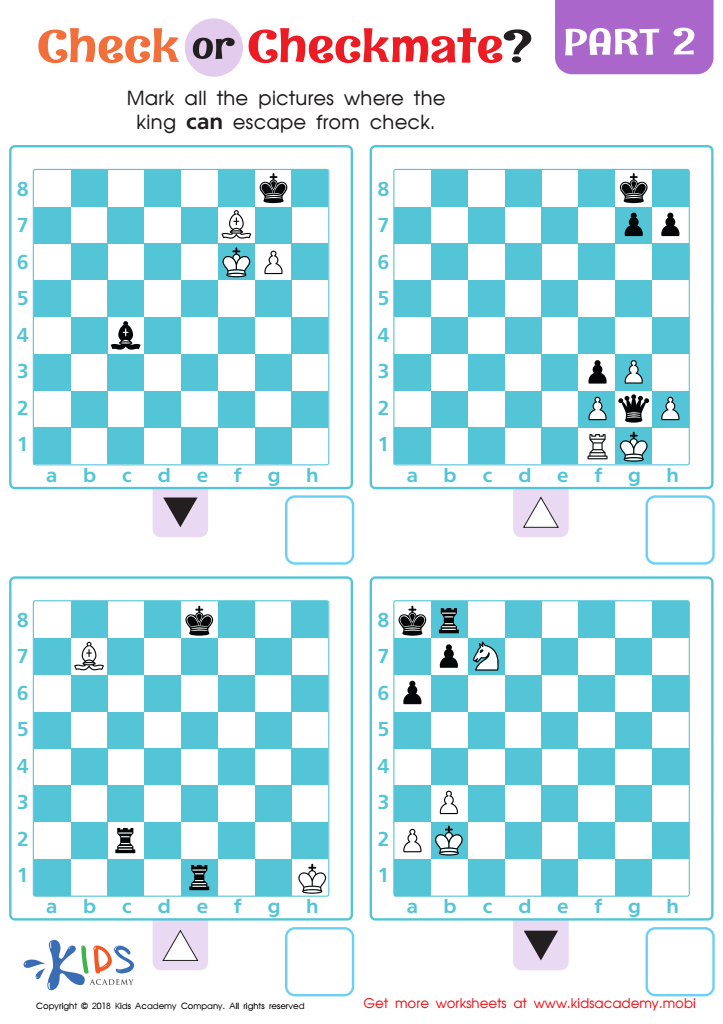
Check or Checkmate: Part 2 Worksheet
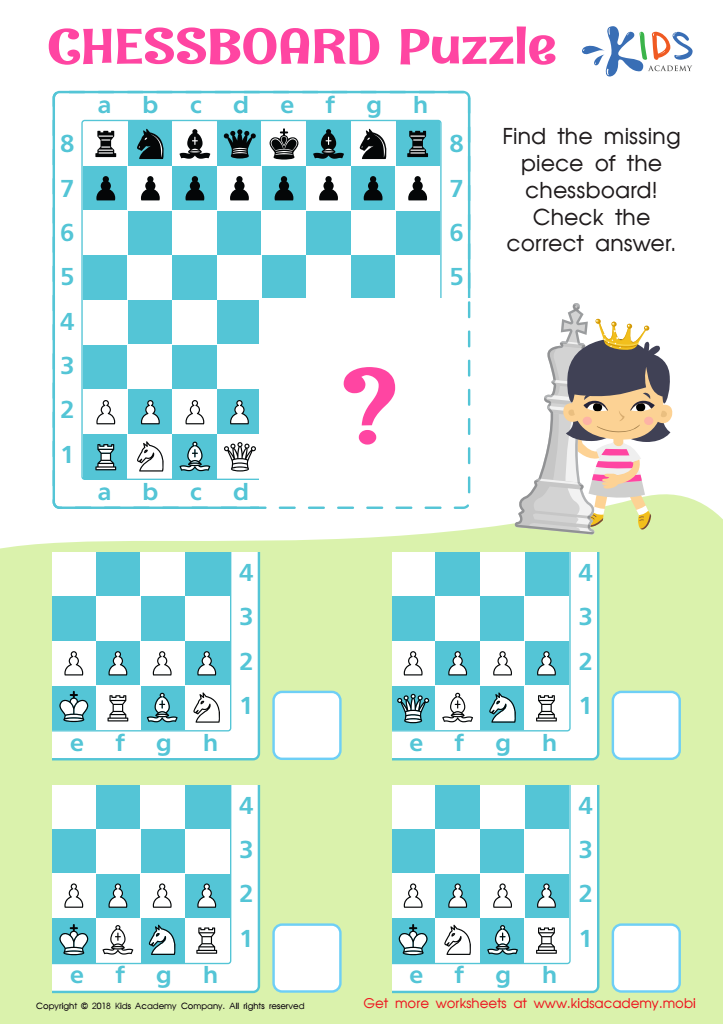
Chessboard Puzzle Worksheet
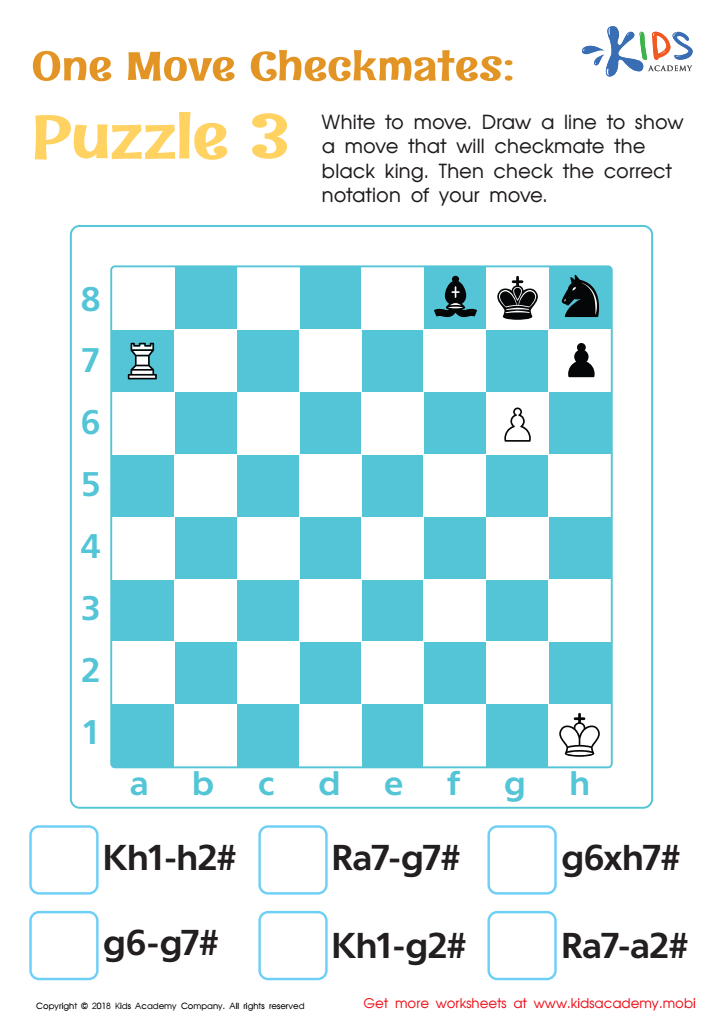
One Move Checkmates: Puzzle 3 Worksheet

Discovered Check: Puzzle 2 Worksheet
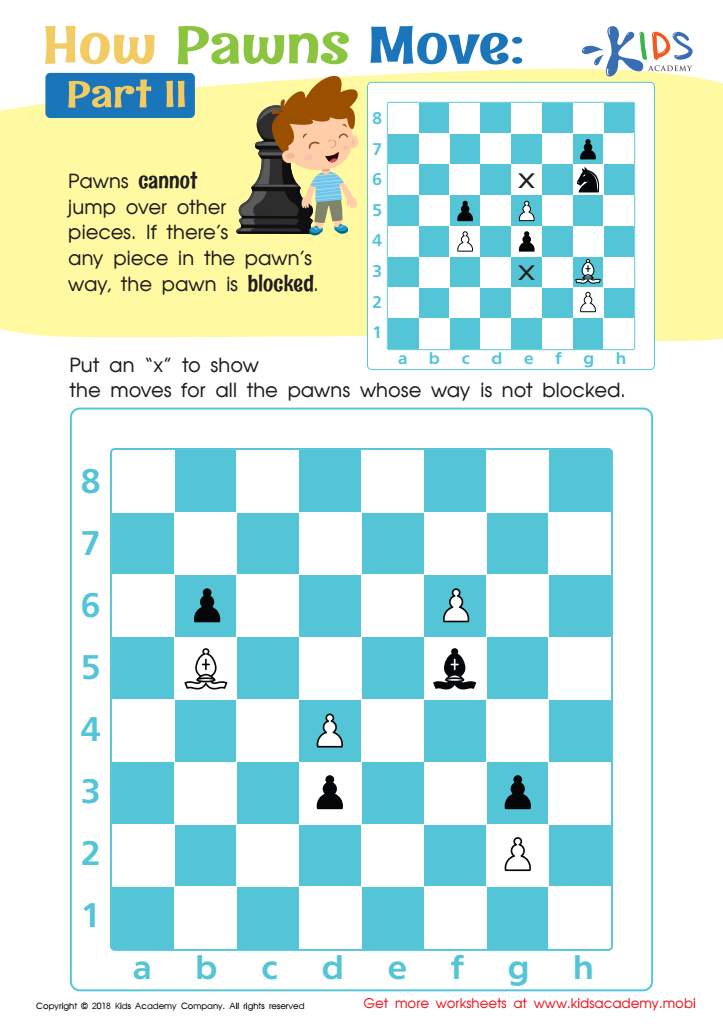
How Pawns Move: Part II Worksheet
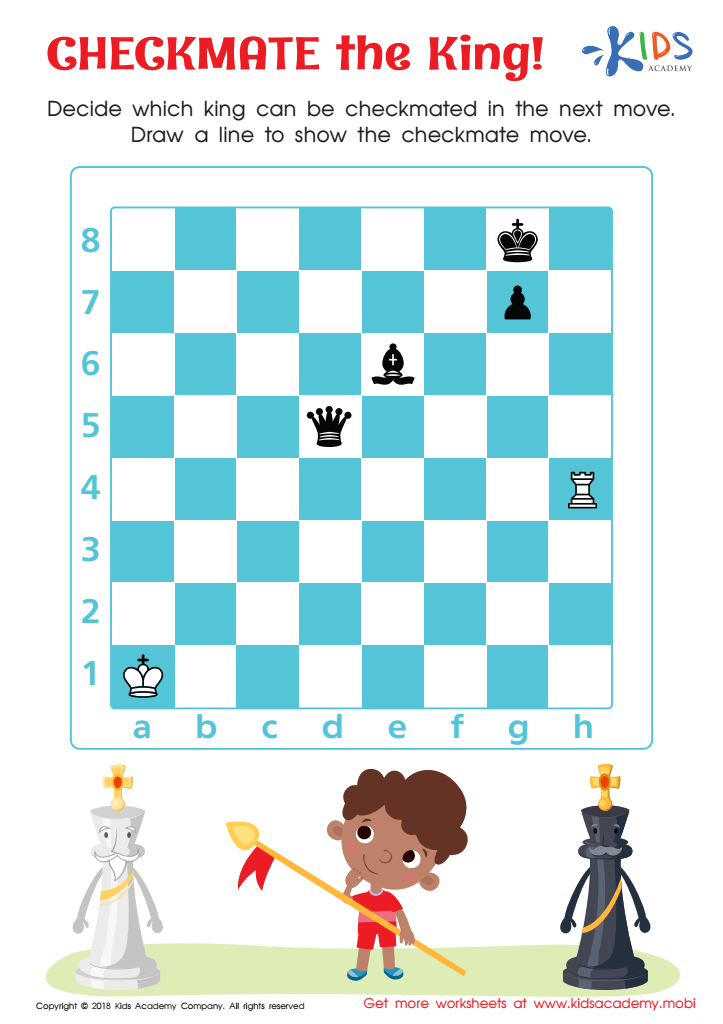
Checkmate the King Worksheet
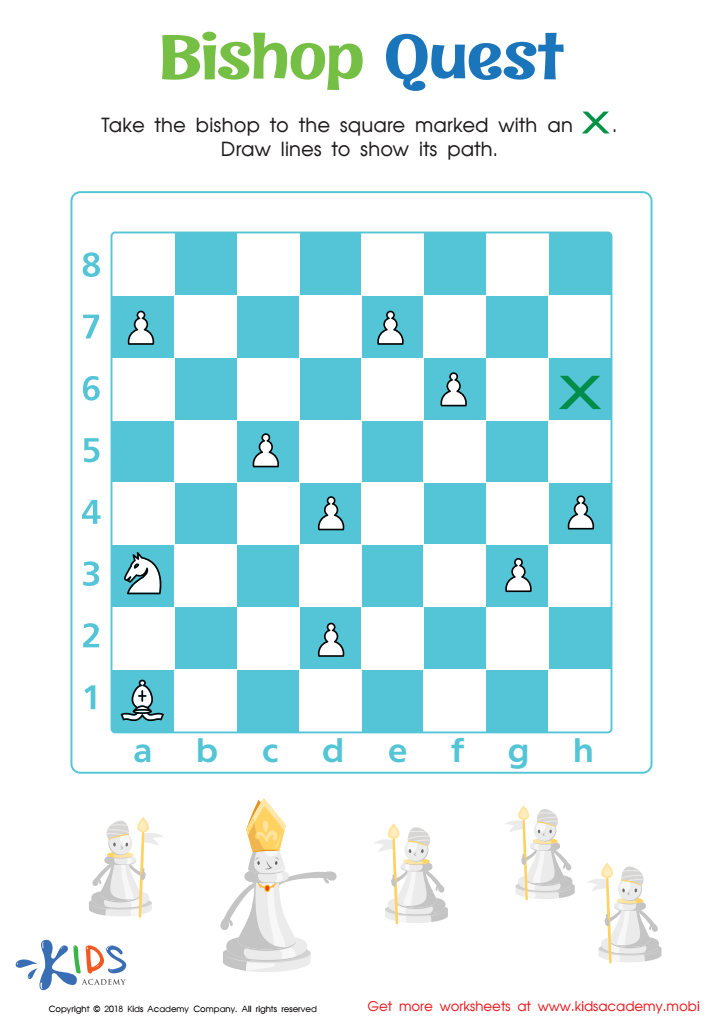
Bishop Quest Worksheet
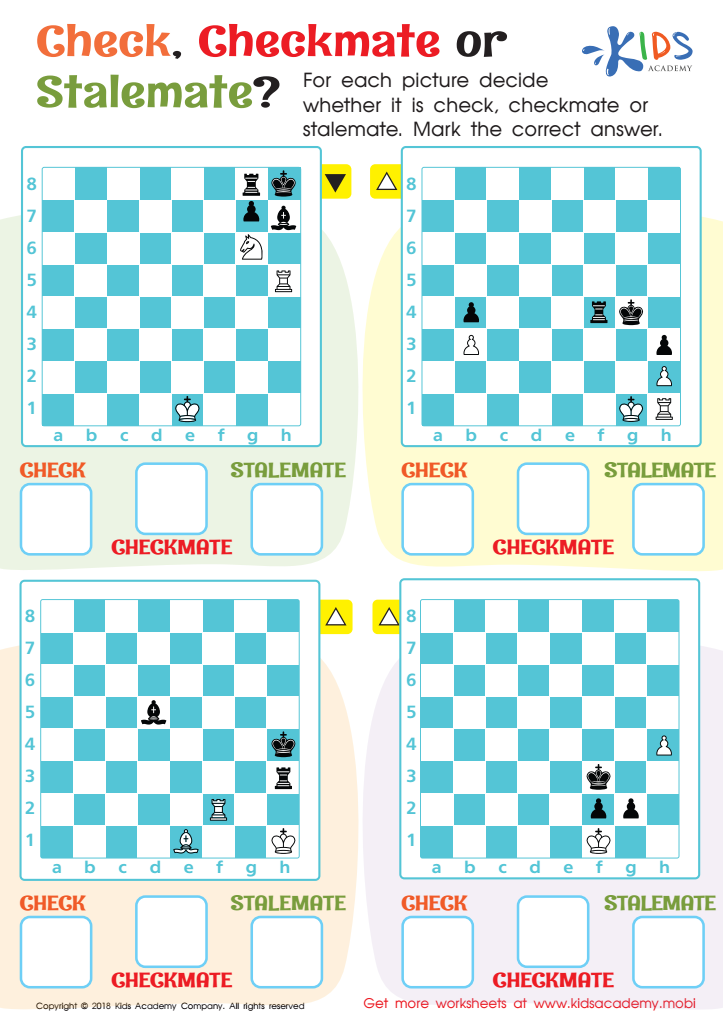
Check. Checkmate or Stalemate? Worksheet
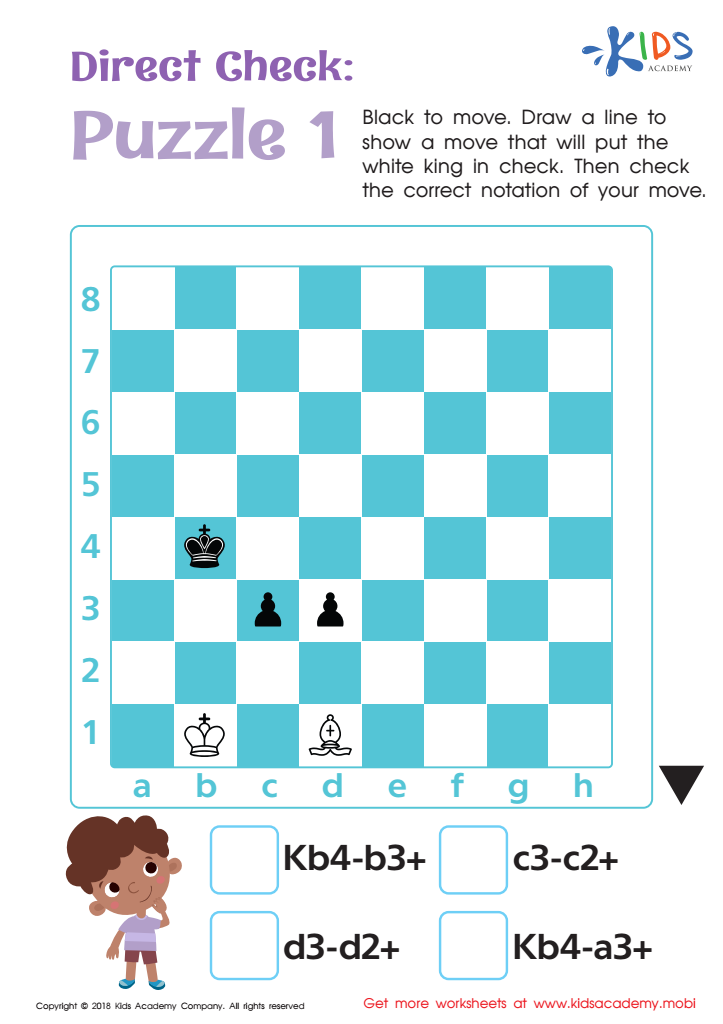
Direct Check: Puzzle 1 Worksheet
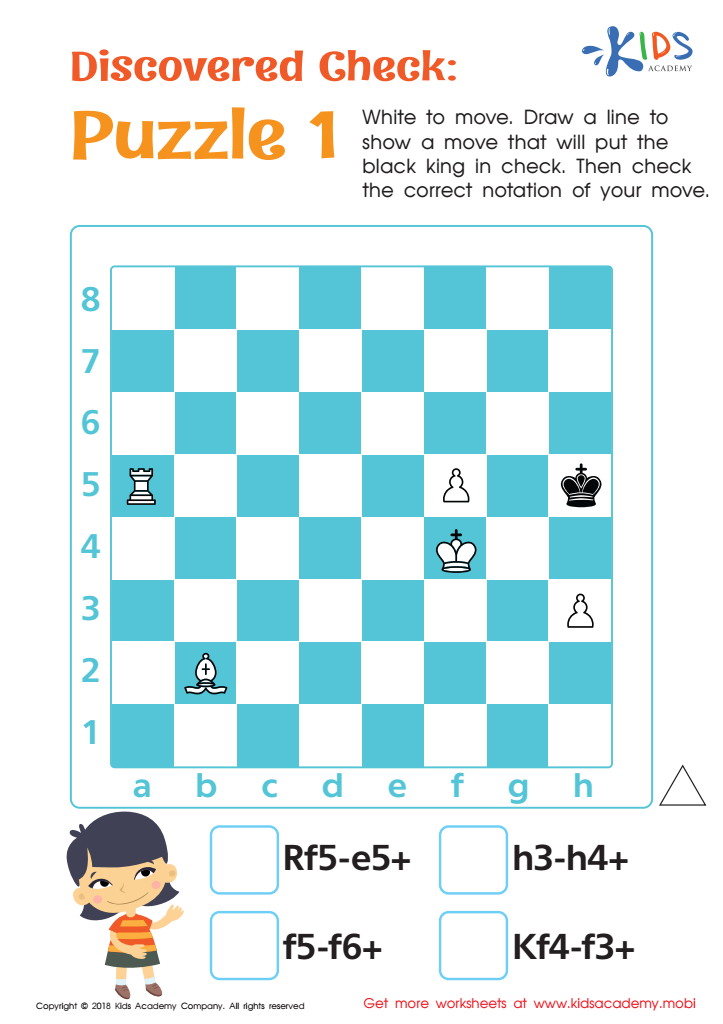
Discovered Check: Puzzle 1 Worksheet
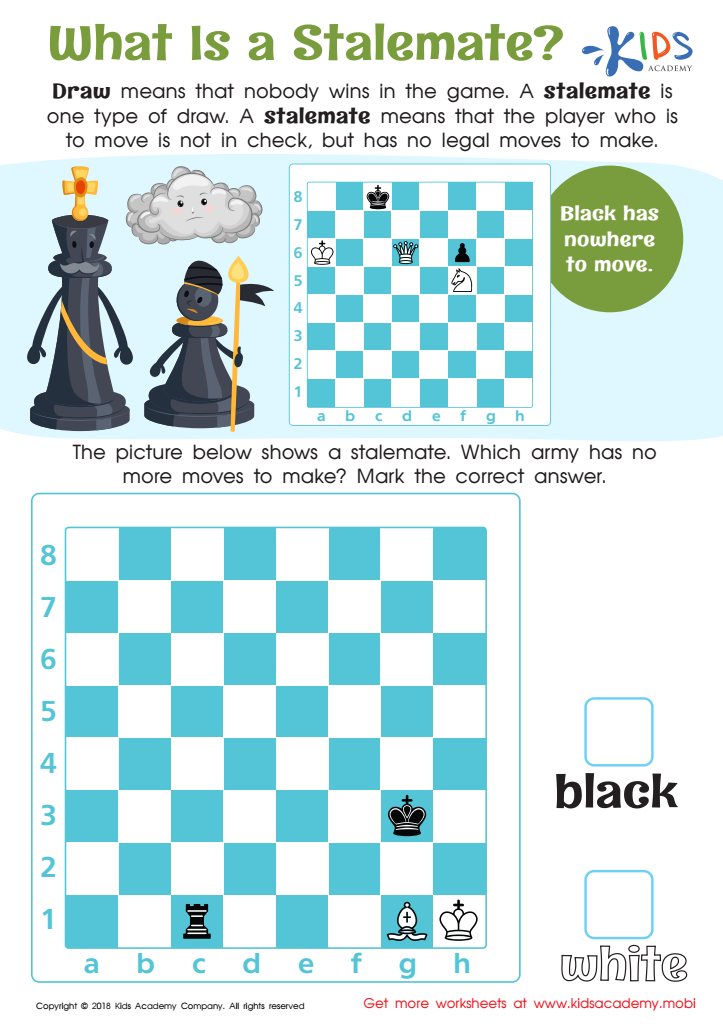
What Is a Stalemate? Worksheet
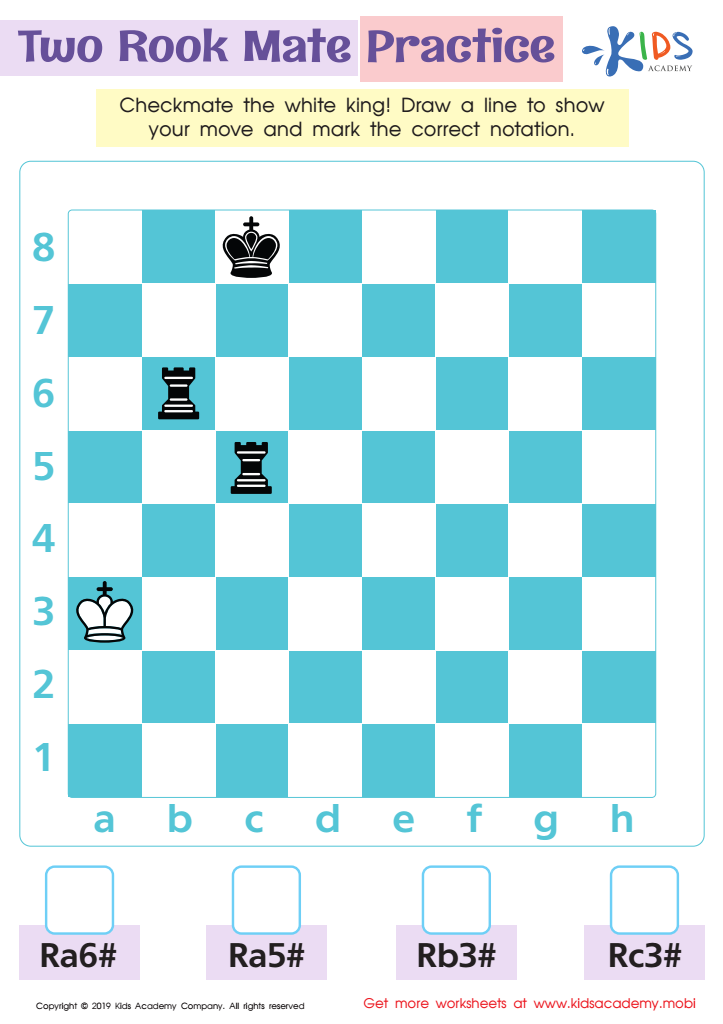
Two Rook Mate Practice Worksheet
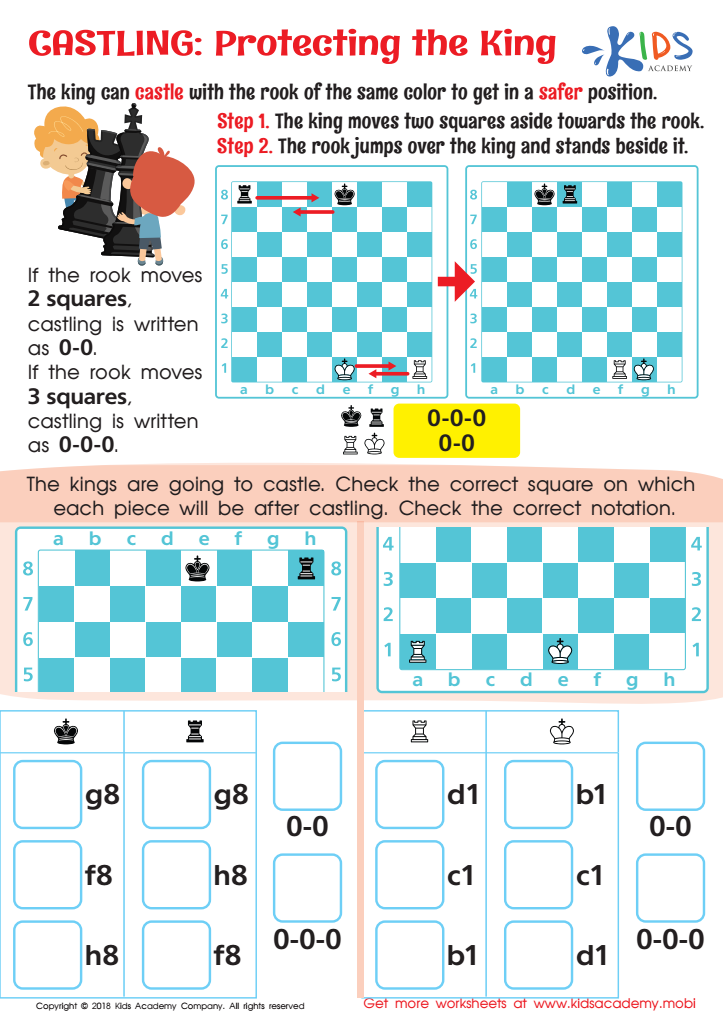
Castling: Protecting the King Worksheet
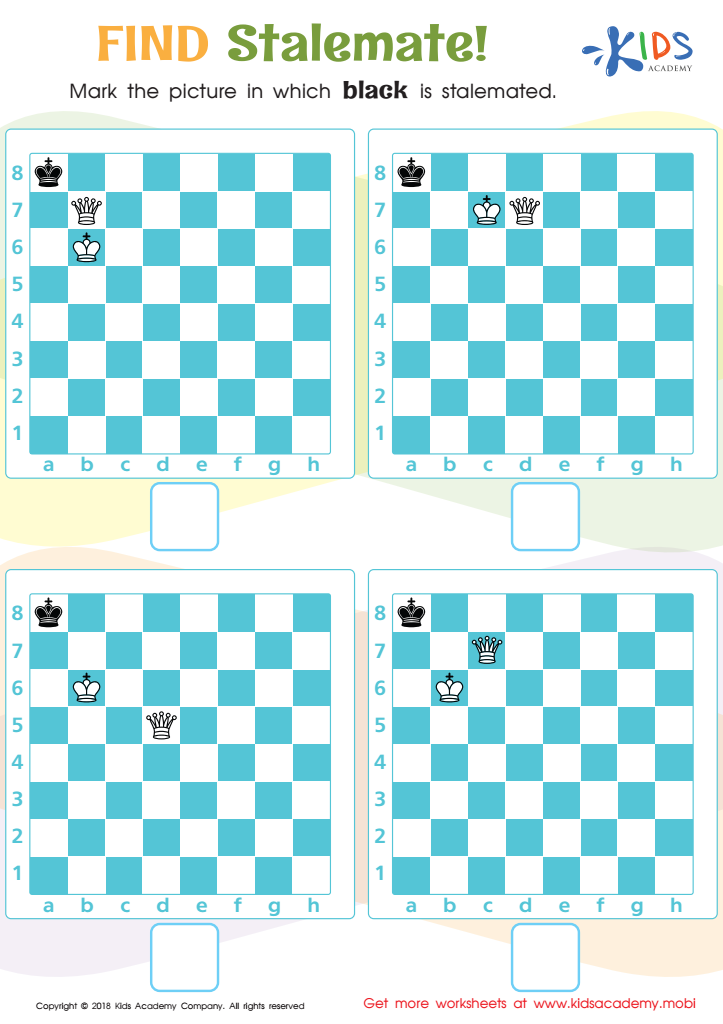
Find Stalemate! Worksheet




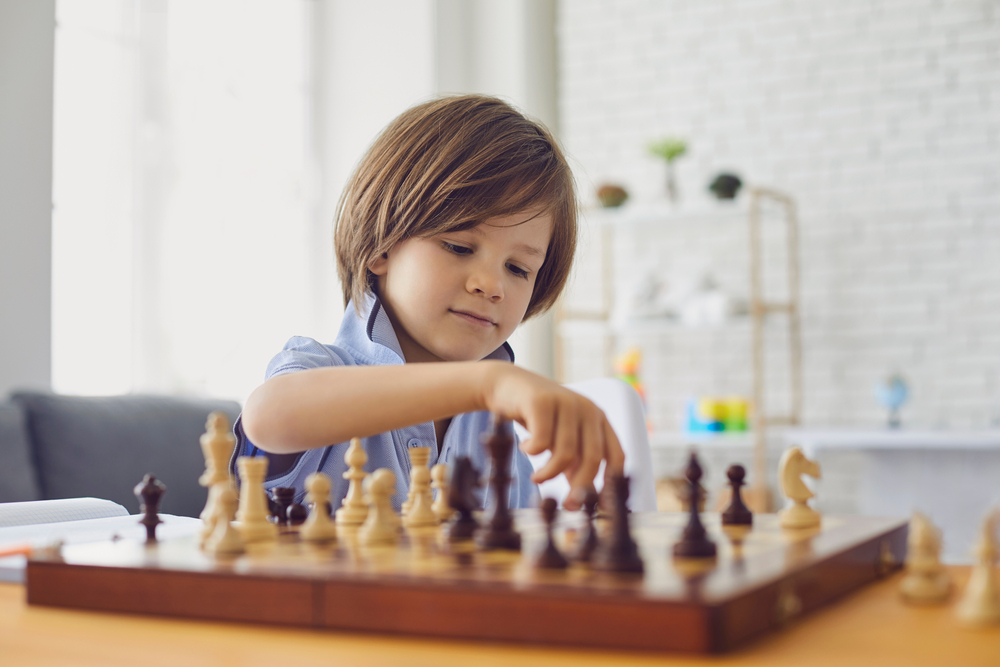


Parents and teachers should care about problem-solving skills chess for ages 7-9 because it significantly enhances cognitive development and critical thinking abilities during a pivotal stage in a child's life. At this age, kids are like sponges, quickly absorbing new information and adapting to various intellectual challenges. Chess teaches them to plan ahead, recognize patterns, and anticipate consequences, skills that are crucial across academic subjects and everyday life.
Engaging in chess fosters concentration and patience, encouraging children to spend time thinking deeply about their moves, rather than seeking instant gratification. This mental discipline translates well into their schoolwork, improving focus and performance in subjects like math and reading. Moreover, chess involves both creative and logical processes, stimulating both hemispheres of the brain and supporting balanced intellectual growth.
Furthermore, problem-solving in chess helps instill confidence as children learn to face challenges and develop resilient perseverance. They understand that mistakes are valuable learning tools, enabling them to better handle academic setbacks and life’s difficulties. Socially, the game cultivates sportsmanship and respect for others, as students learn the importance of both winning graciously and losing gracefully.
Overall, incorporating problem-solving chess into the learning routine for 7-9-year-olds can have lasting benefits, shaping well-rounded, sharp, and confident young minds.