Comparing Fractions Worksheets for Ages 7-9
120 filtered results
-
From - To
Introducing our "Comparing Fractions Worksheets for Ages 7-9," a fantastic resource designed to enhance your child's math skills! These engaging worksheets help young learners understand and compare fractions easily and effectively. With a variety of exercises, kids will practice identifying larger and smaller fractions, and use visual aids to develop a strong conceptual understanding. Tailored for ages 7 to 9, these worksheets make learning fun, interactive, and accessible. Ideal for classroom use or at-home practice, our materials foster confidence in math. Watch your child excel as they master comparing fractions with our thoughtfully-designed worksheets! Get started today!
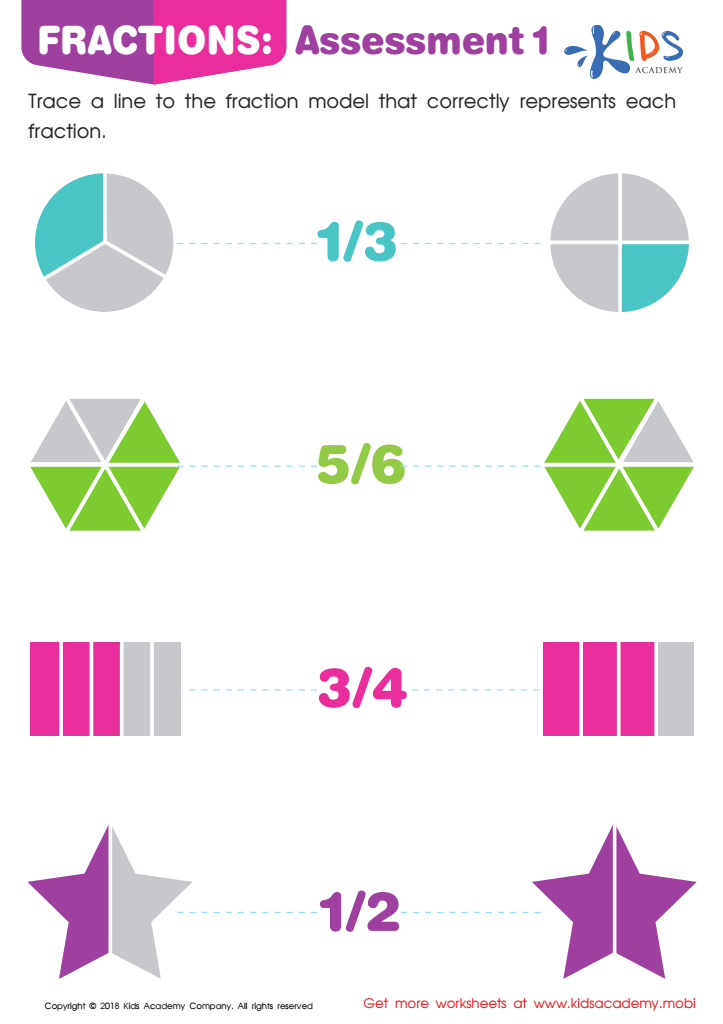
Fractions: Assessment 1 Worksheet
 Assign to My Students
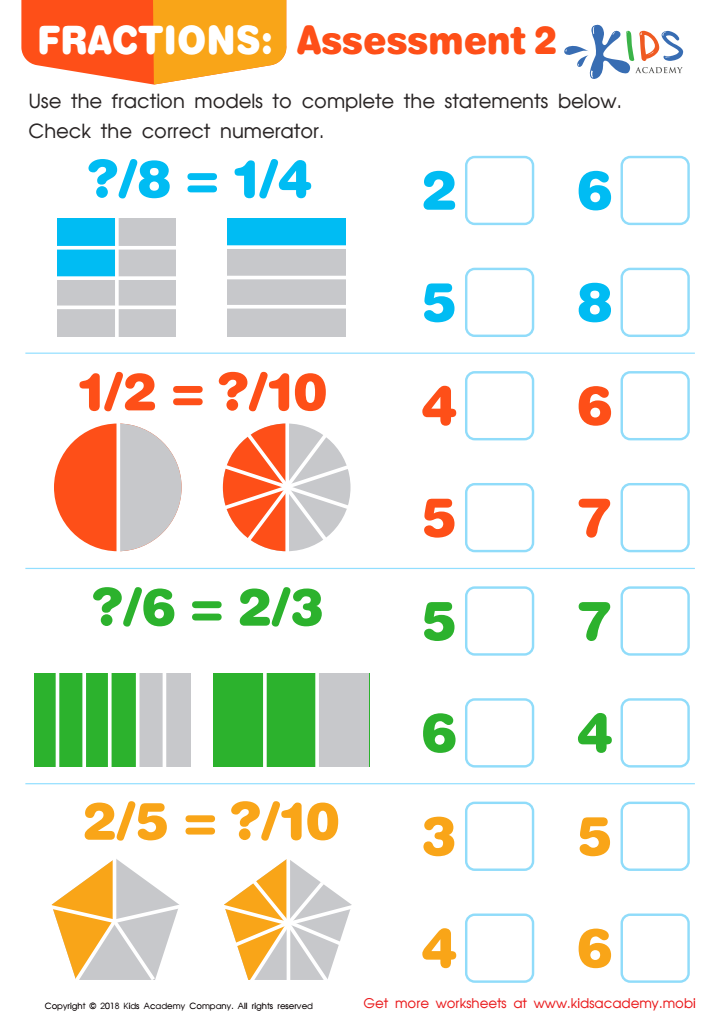
Fractions: Assessment 2 Worksheet
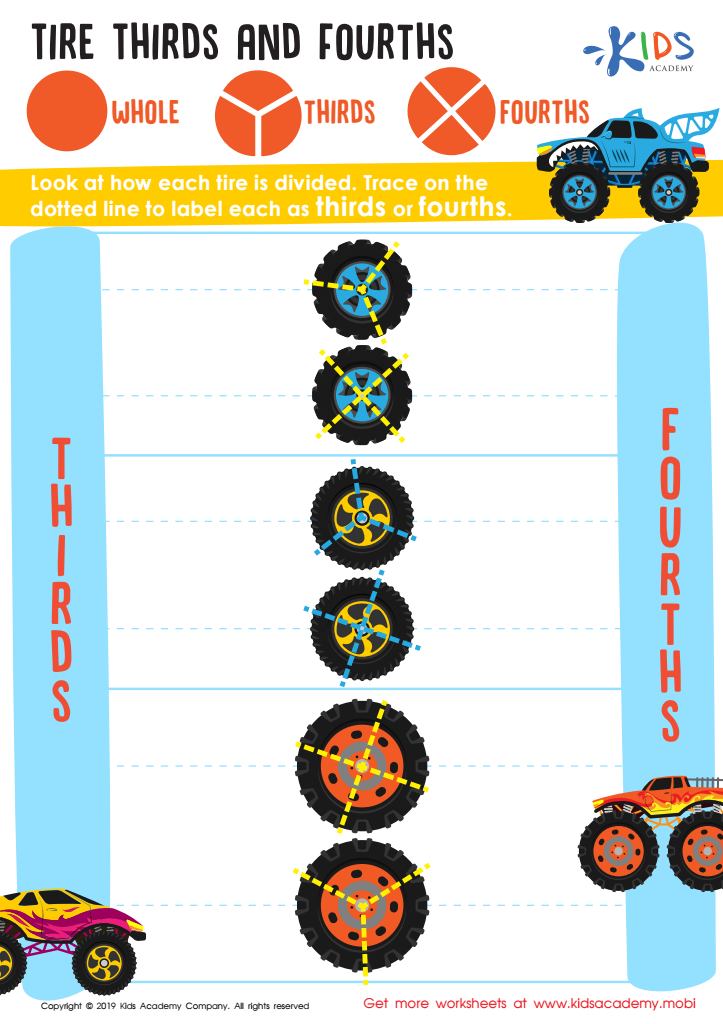
Tire Thirds and Fourths Worksheet
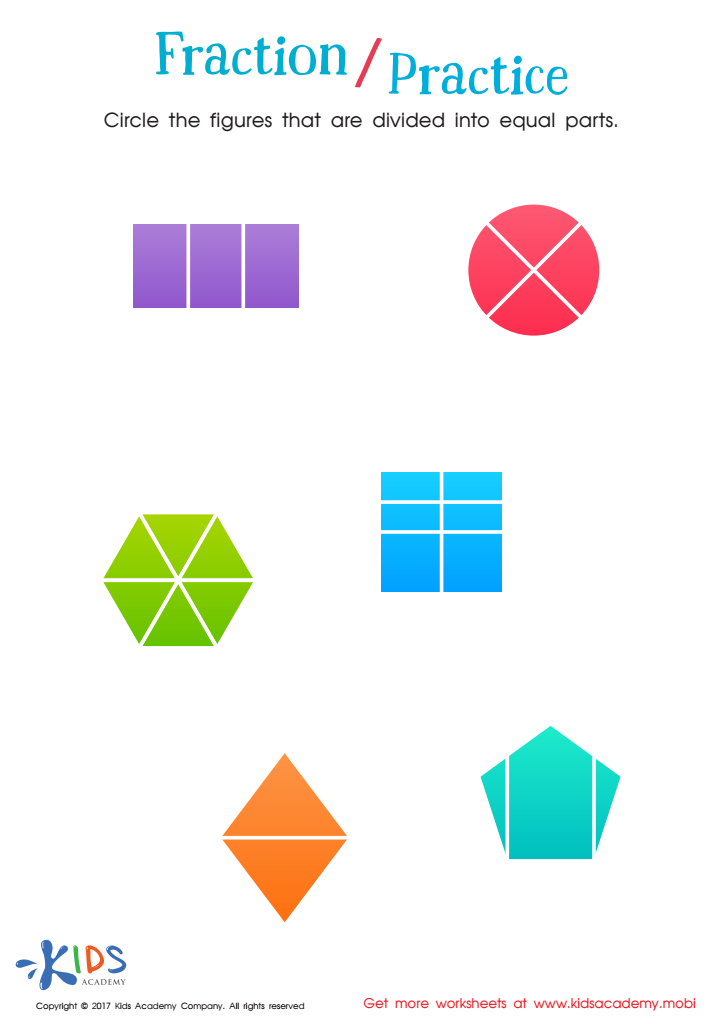
Fractions: Shapes Worksheet
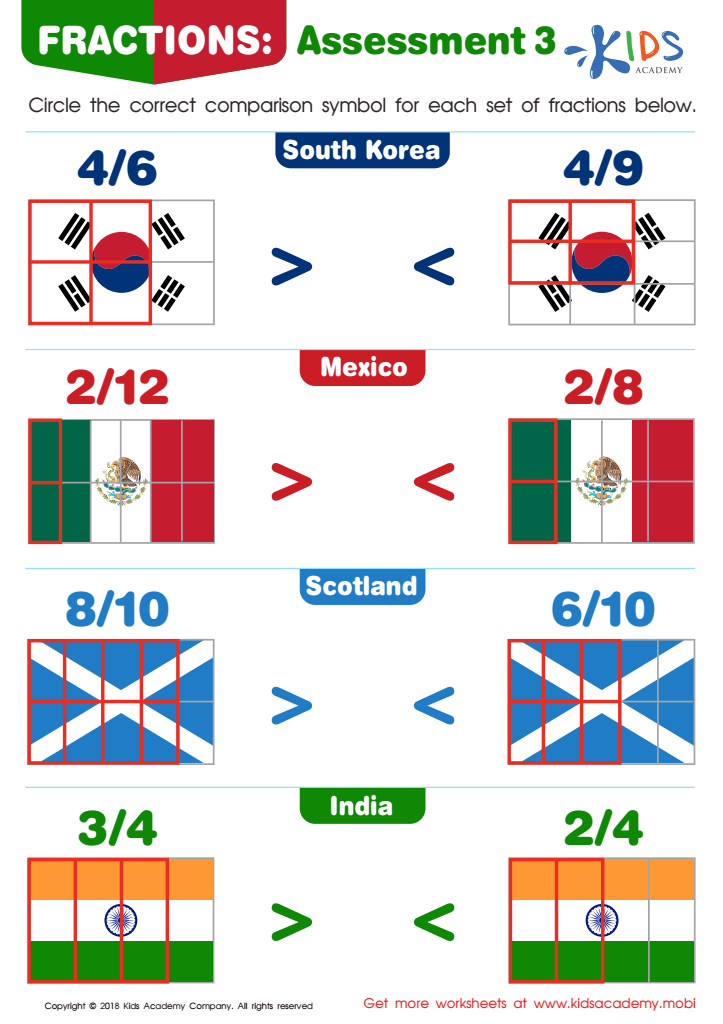
Fractions: Assessment 3 Worksheet
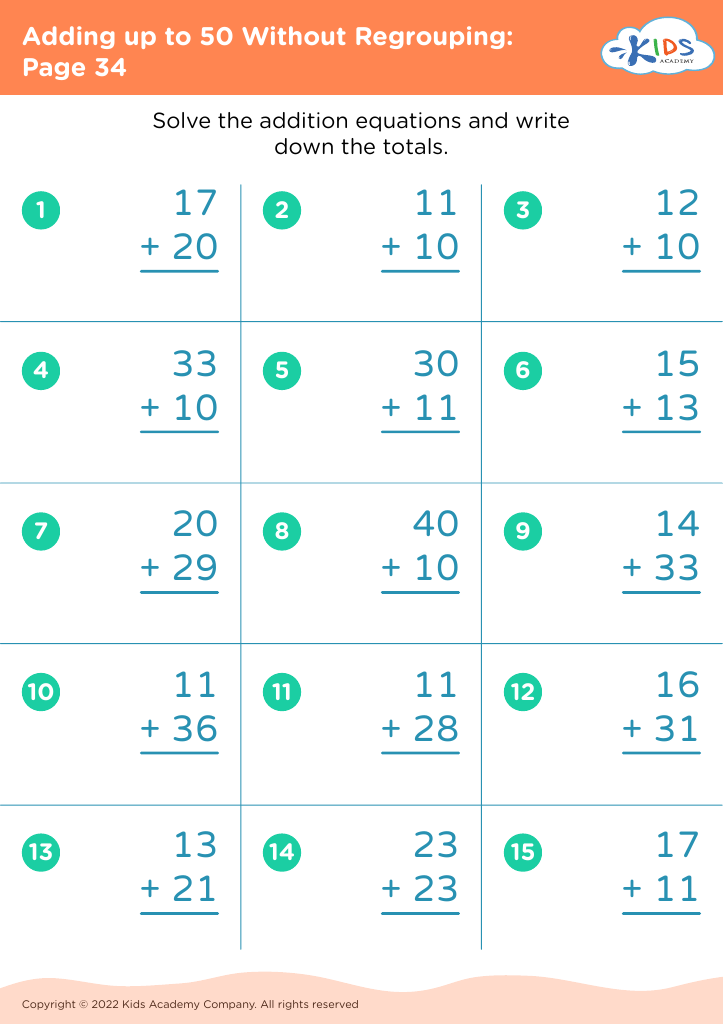
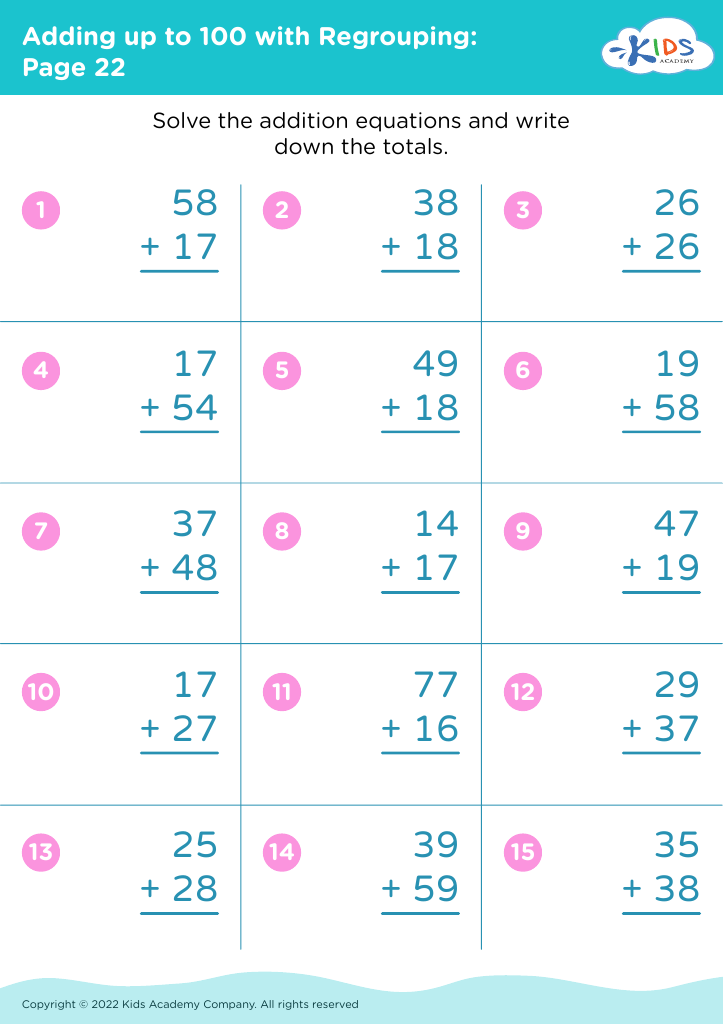
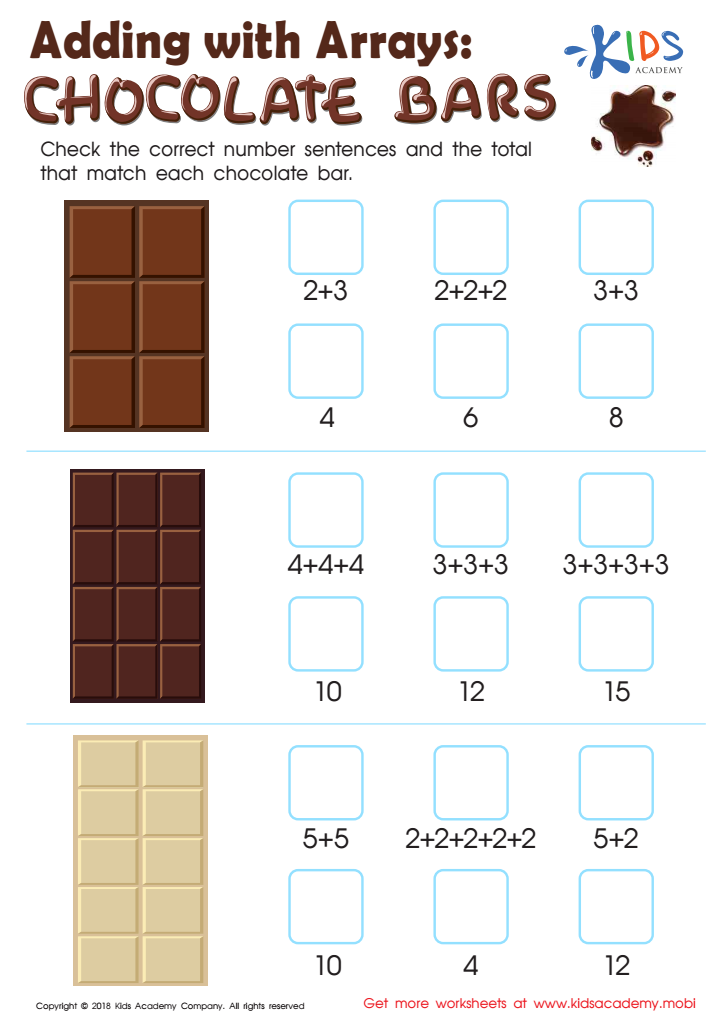
Adding with Arrays: Chocolate Bars Worksheet
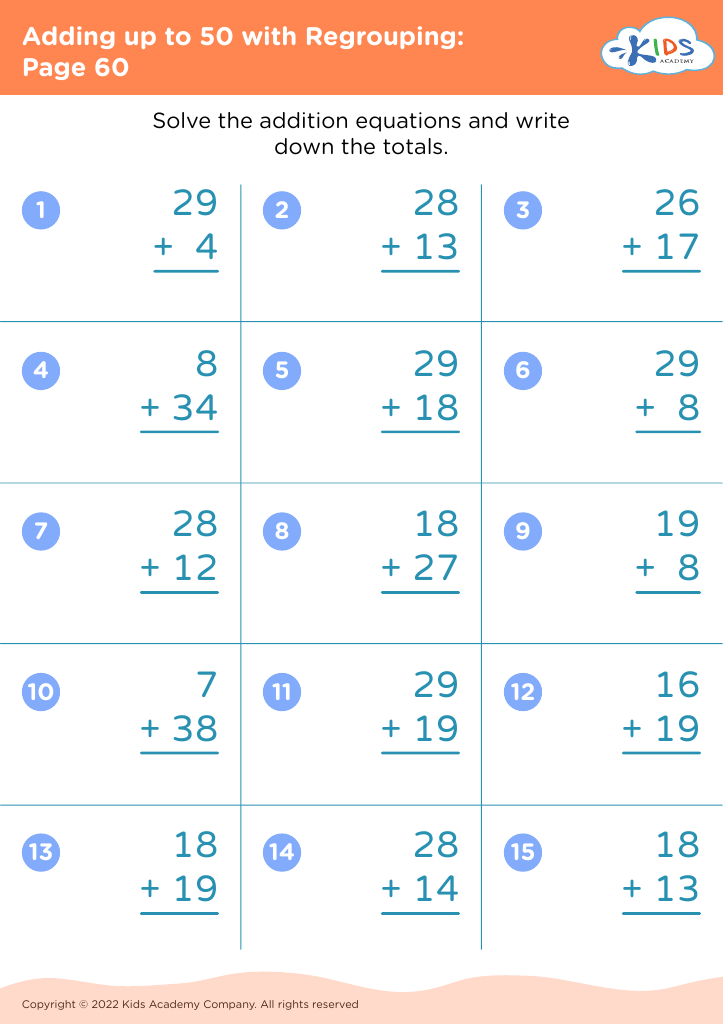





Comparing fractions is a foundational skill critical for young learners aged 7-9, as it strengthens their understanding of basic math concepts. At this age, children are transitioning from recognizing simple fractions to manipulating and comparing them, which lays the groundwork for more advanced mathematical operations.
Parents and teachers should care about this subject because mastering fractional comparison fosters critical thinking and problem-solving skills. When children learn to compare fractions, they not only grasp the size and value of different quantities but also develop logical reasoning as they identify relationships between numbers.
Understanding fractions is essential for everyday situations, such as cooking or shopping, where measurement and division are key. Moreover, this skill prepares students for future topics, such as adding, subtracting, and multiplying fractions, thus ensuring a solid foundation for continued success in mathematics.
Additionally, proficiency in comparing fractions can build confidence in young learners, making them more engaged with math. Encouraging a positive attitude toward math from an early age creates lifelong learners who see math as a valuable and enjoyable skill. Ultimately, recognizing the importance of comparing fractions helps parents and teachers support children in becoming competent and confident mathematicians.








