Discover our engaging Simplifying Fractions Worksheets, designed for children ages 7-9. These user-friendly resources help young learners master the basics of reducing fractions to their simplest form. Packed with fun exercises and visuals, our worksheets make fraction simplification enjoyable and easy to grasp. Each printable is expertly crafted to bolster comprehension, enhance critical thinking skills, and build confidence in math. Ideal for home or classroom use, they offer a step-by-step approach to ensure children understand and excel in fractions. Give your child the tools for success in math with our Simplifying Fractions Worksheets today!

Check out this FREE "Simplifying Fractions" Trial Lesson for age 7-9!

Making a Whole from Fractions

Favorites
With answer key
Interactive
  • 7-9
  • Simplifying Fractions
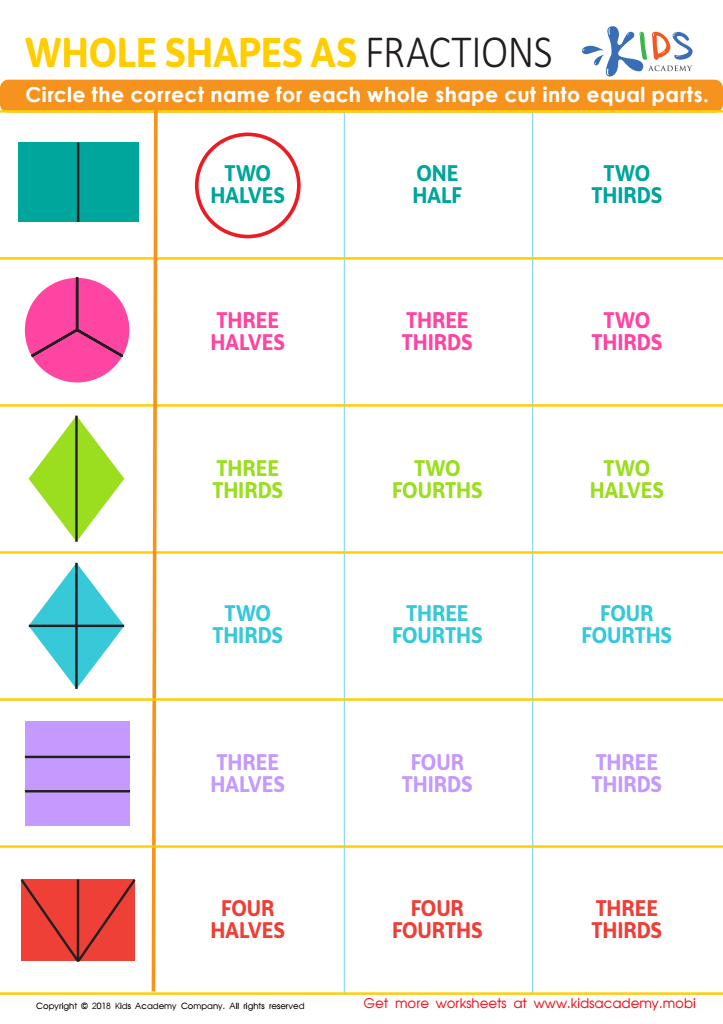
Whole Shapes as Fractions Worksheet

Whole Shapes as Fractions Worksheet

Introduce your child to fractions! After they can draw whole shapes, have them represent them as fractions using a simple worksheet. This will help improve their understanding of naming whole shapes cut into equal parts.
Whole Shapes as Fractions Worksheet
Worksheet
Fractions: Assessment 1 Worksheet

Fractions: Assessment 1 Worksheet

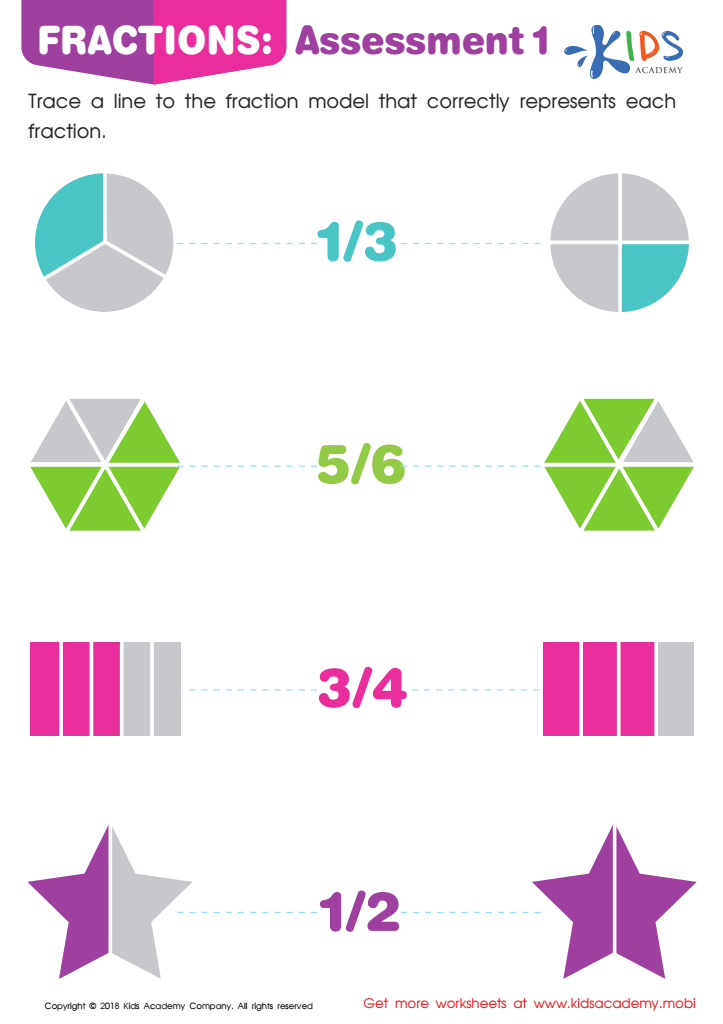
Master fractions easily with this worksheet! It has four sets of fraction models and fraction equations with two models each. Guide your kids to trace a line to the correct fraction model for each equation.
Fractions: Assessment 1 Worksheet
Worksheet
Adding 2-digit Numbers: Page 53

Adding 2-digit Numbers: Page 53

Adding 2-digit Numbers: Page 53
Worksheet
Adding up to 50: Page 21

Adding up to 50: Page 21

Adding up to 50: Page 21
Worksheet
Adding up to 50: Page 3

Adding up to 50: Page 3

Adding up to 50: Page 3
Worksheet
Fractions: Assessment 2 Worksheet
Fractions: Assessment 2 Worksheet

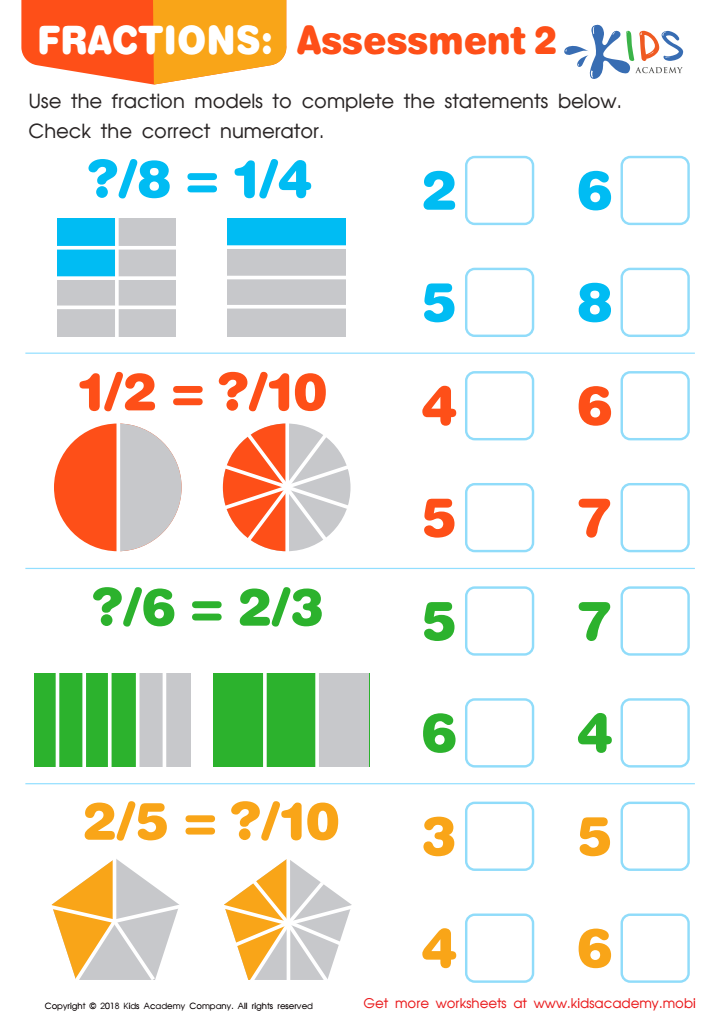
Help your kids understand fractions better with this worksheet. Ask them to complete the fraction statements using the fraction models on the left and then check the correct numerators. This can help clear up any confusion they may have with fractions and fraction models.
Fractions: Assessment 2 Worksheet
Worksheet
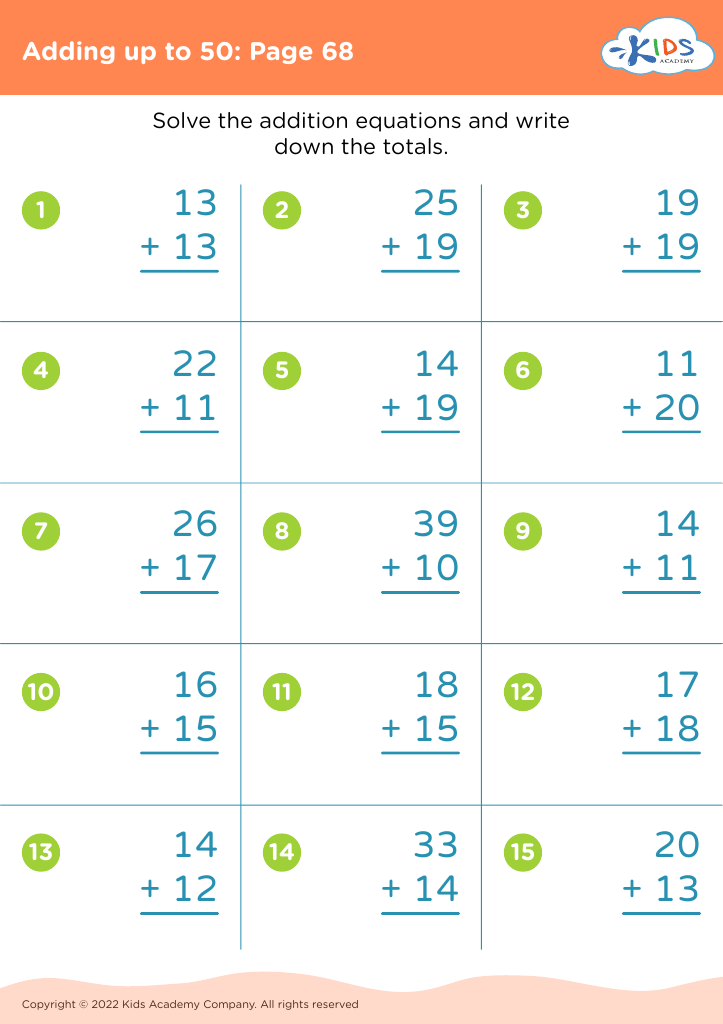
Adding up to 50: Page 68

Adding up to 50: Page 68

Adding up to 50: Page 68
Worksheet
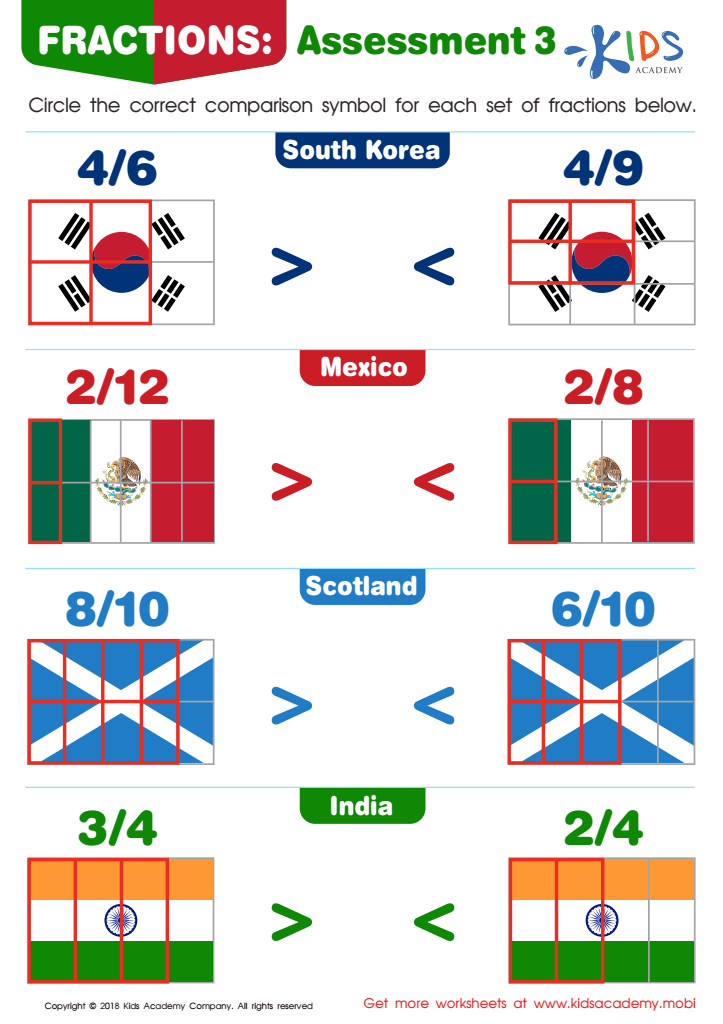
Fractions: Assessment 3 Worksheet
Fractions: Assessment 3 Worksheet
This worksheet helps teach kids about fractions and introduces them to countries and their flags. Have them read the country names and point to the flags. Then help them assess the fractions, and ask them to circle the symbol that shows their values.
Fractions: Assessment 3 Worksheet
Worksheet
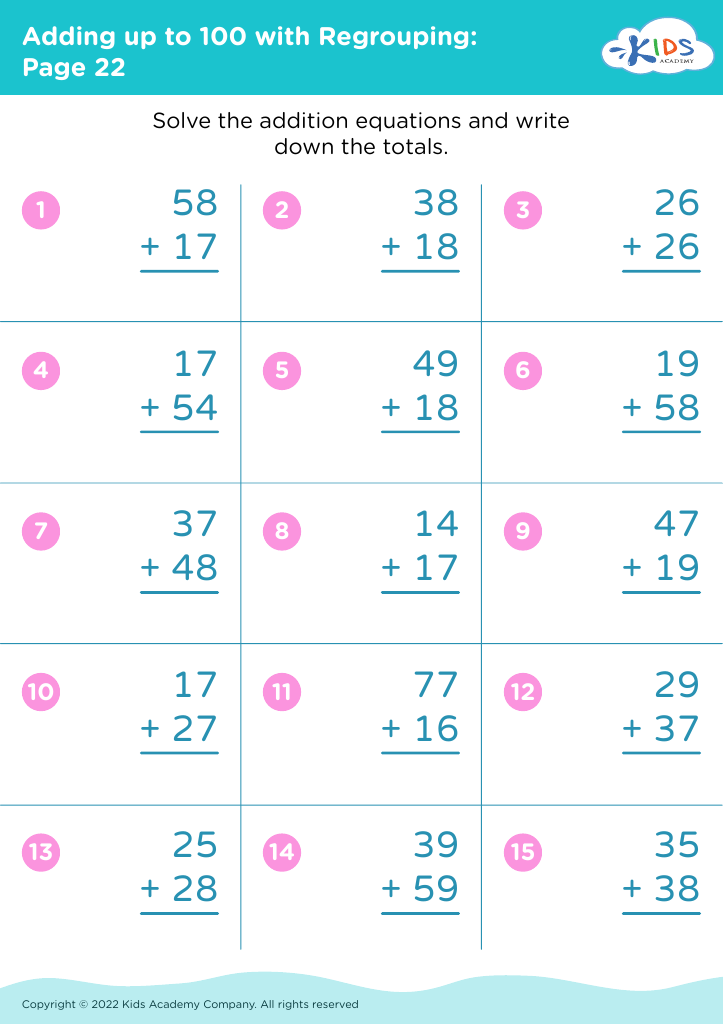
Adding up to 100 with Regrouping: Page 22
Worksheet
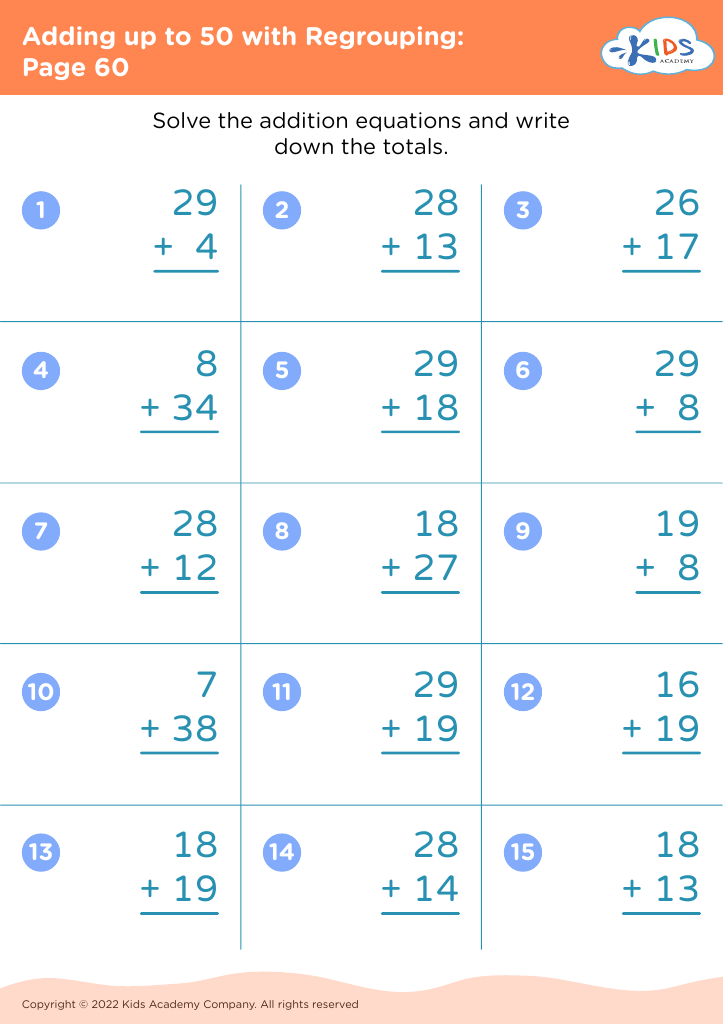
Adding up to 50 with Regrouping: Page 60
Worksheet
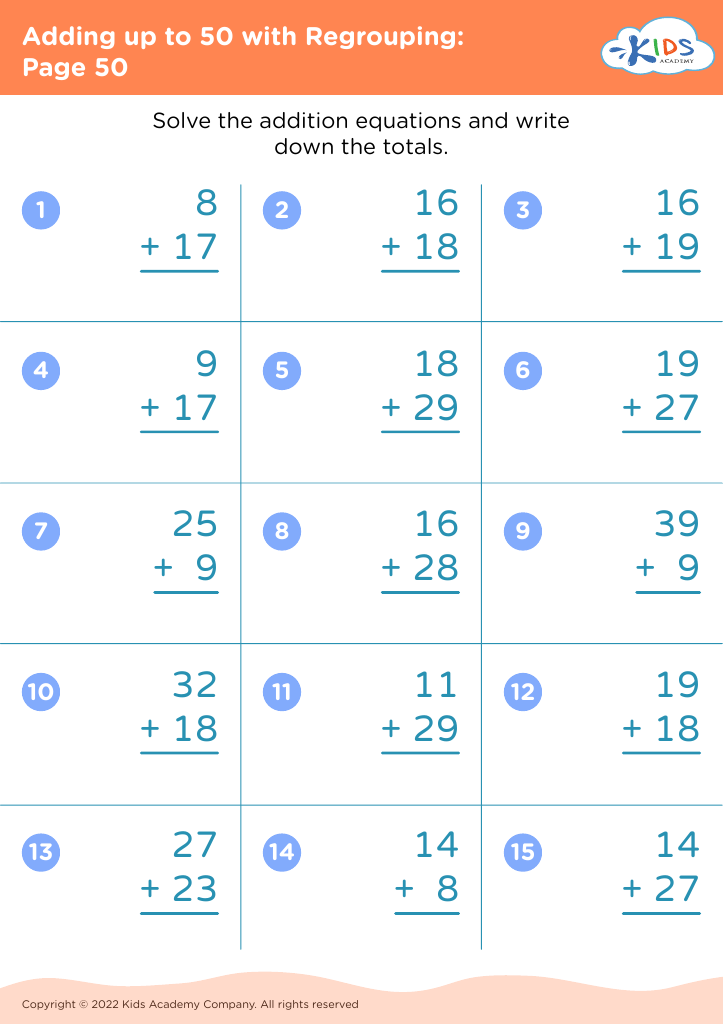
Adding up to 50 with Regrouping: Page 50
Worksheet
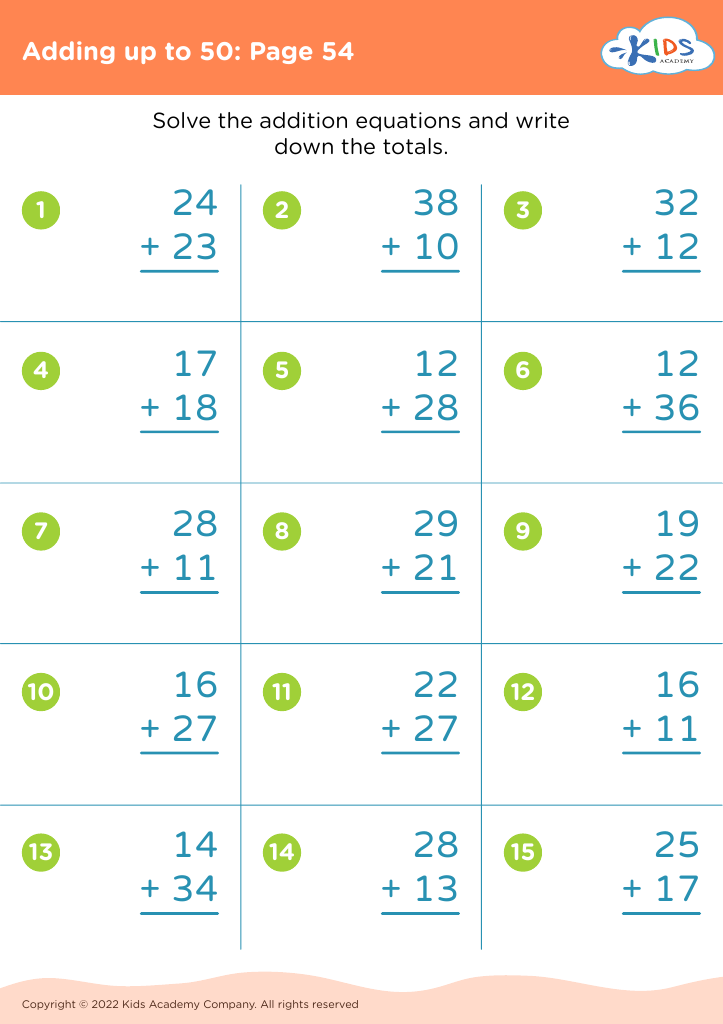
Adding up to 50: Page 54

Adding up to 50: Page 54

Adding up to 50: Page 54
Worksheet
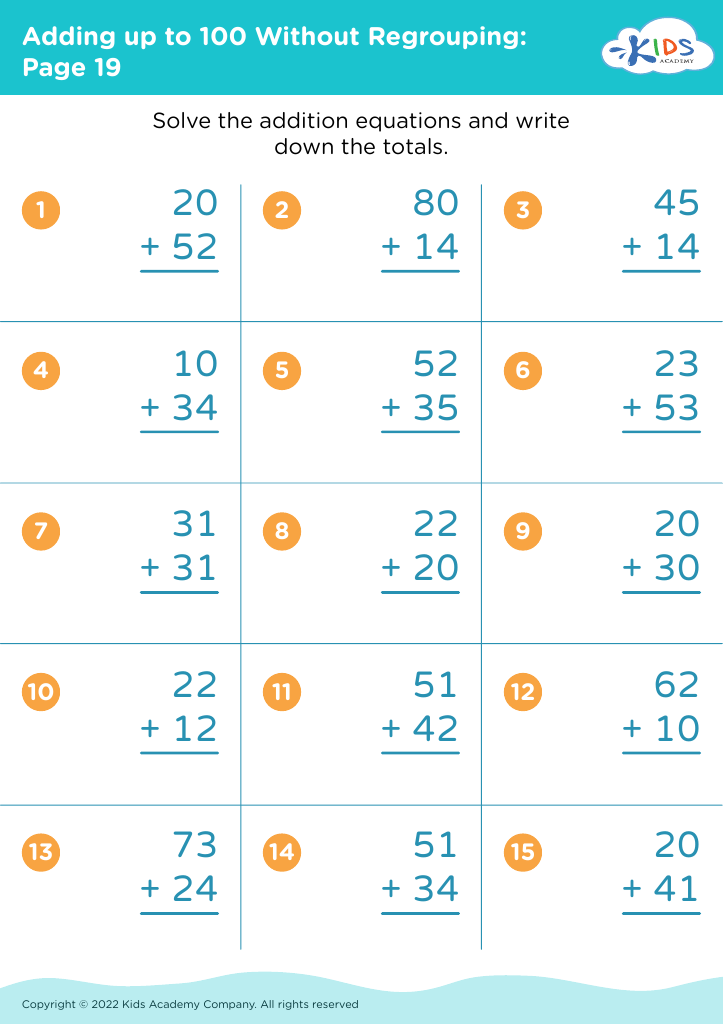
Adding up to 100 Without Regrouping: Page 19
Worksheet
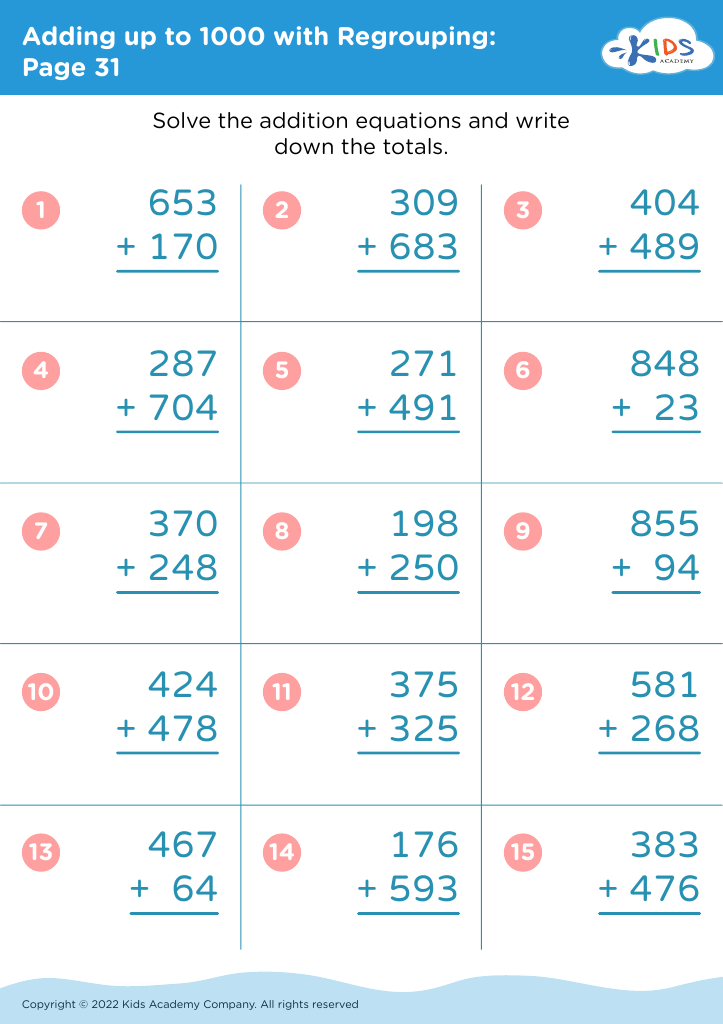
Adding up to 1000 with Regrouping: Page 31
Worksheet
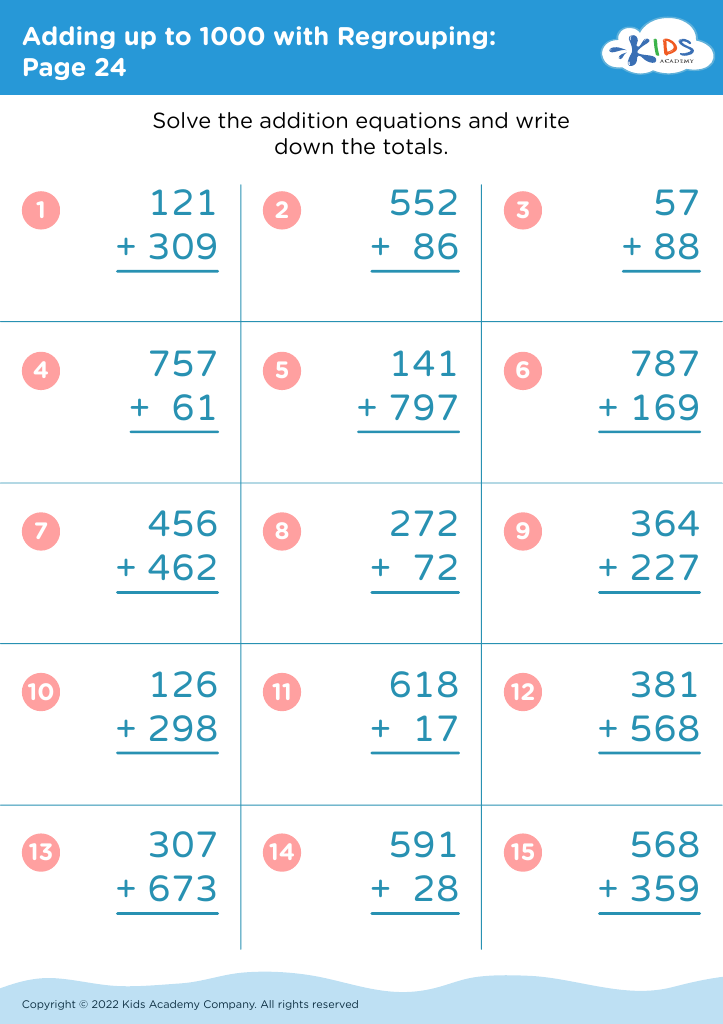
Adding up to 1000 with Regrouping: Page 24
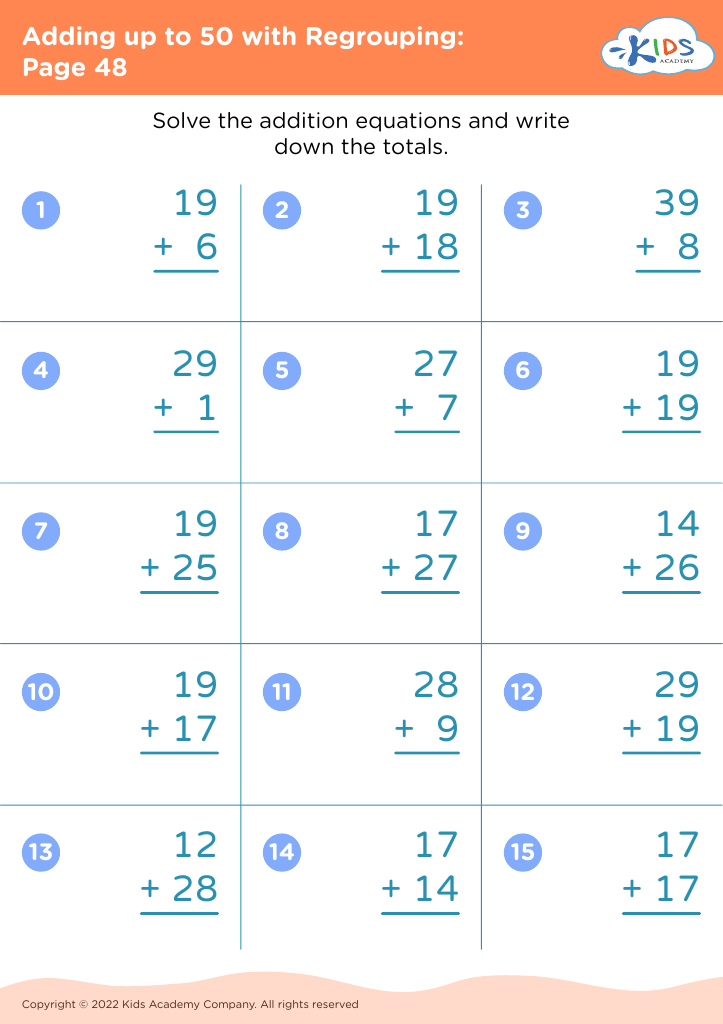
Worksheet
Adding up to 50 with Regrouping: Page 48
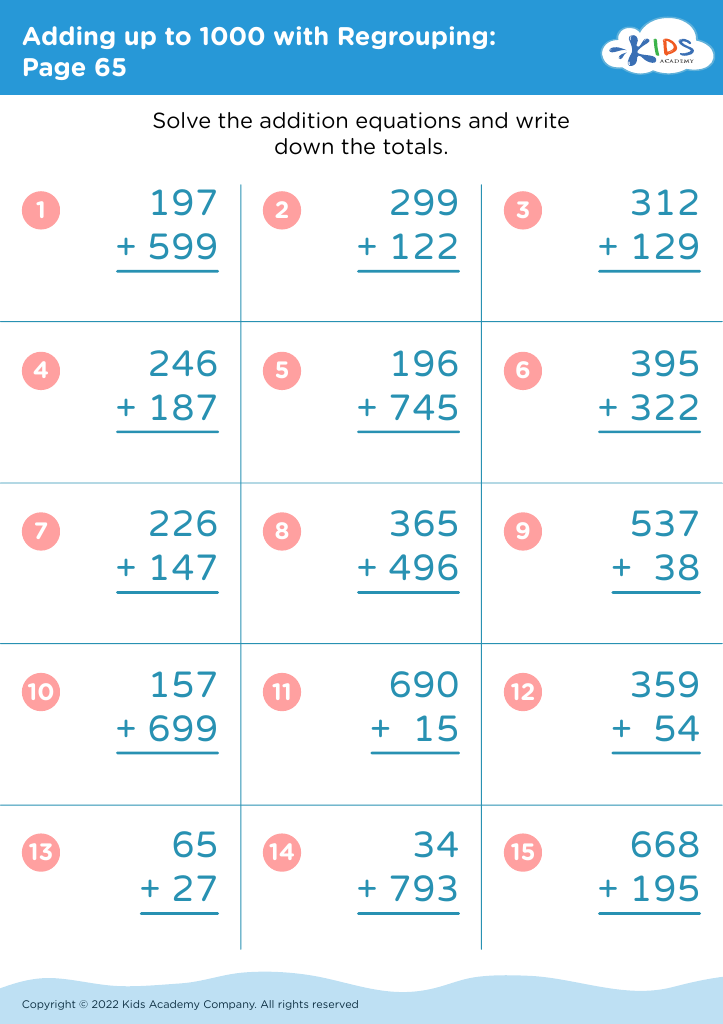
Worksheet
Adding up to 1000 with Regrouping: Page 65
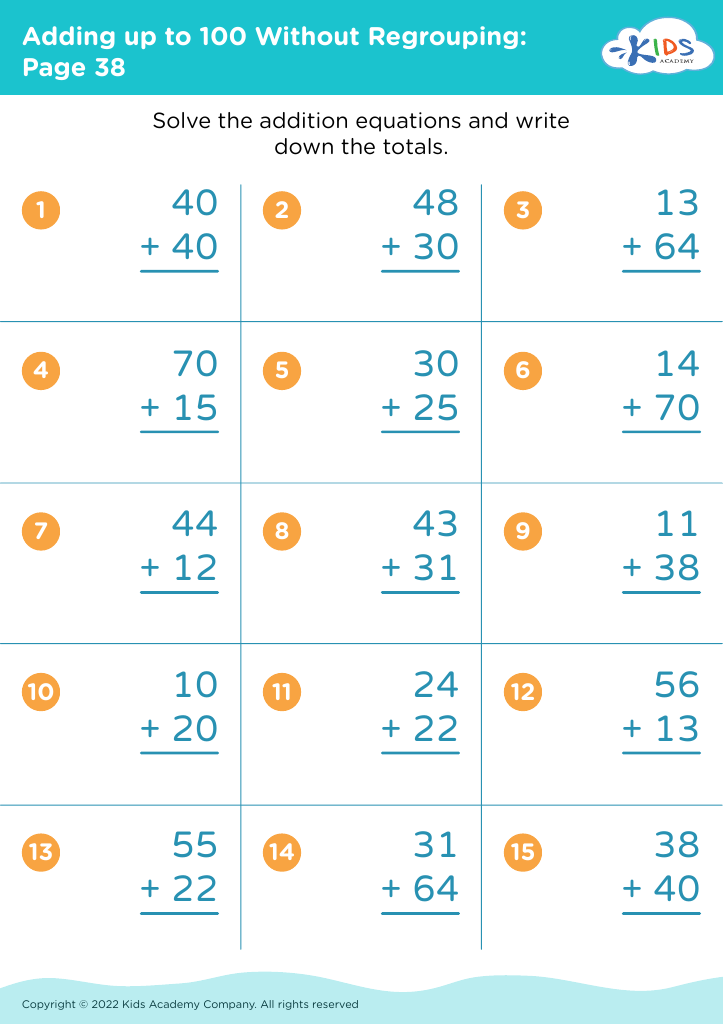
Worksheet
Adding up to 100 Without Regrouping: Page 38
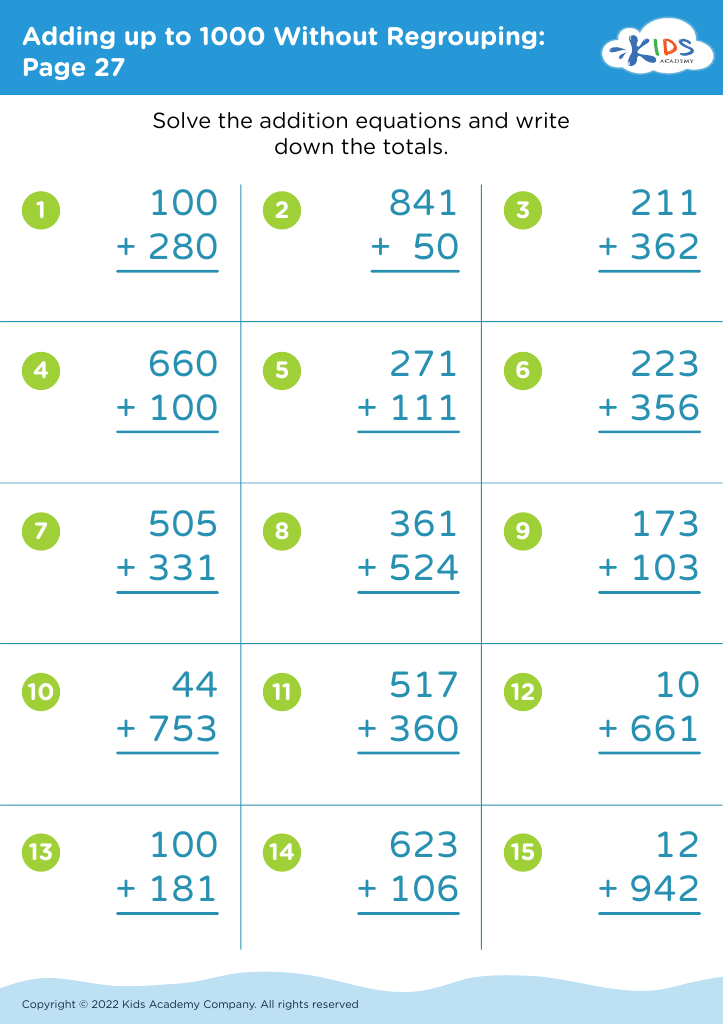
Worksheet
Adding up to 1000 Without Regrouping: Page 27
Worksheet
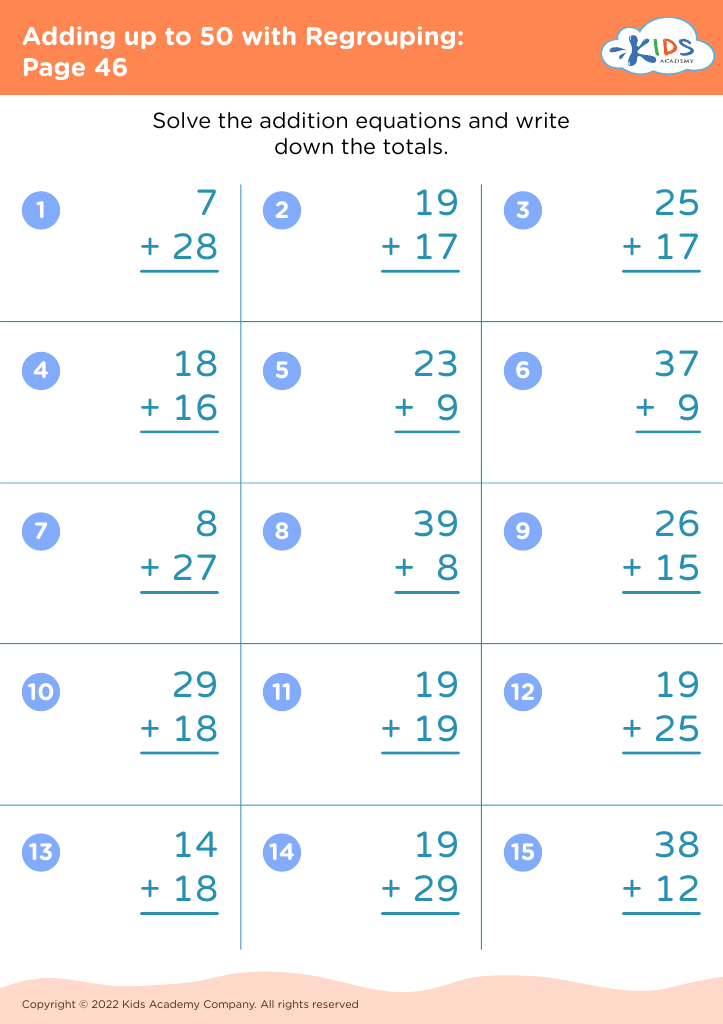
Adding up to 50 with Regrouping: Page 46
Worksheet
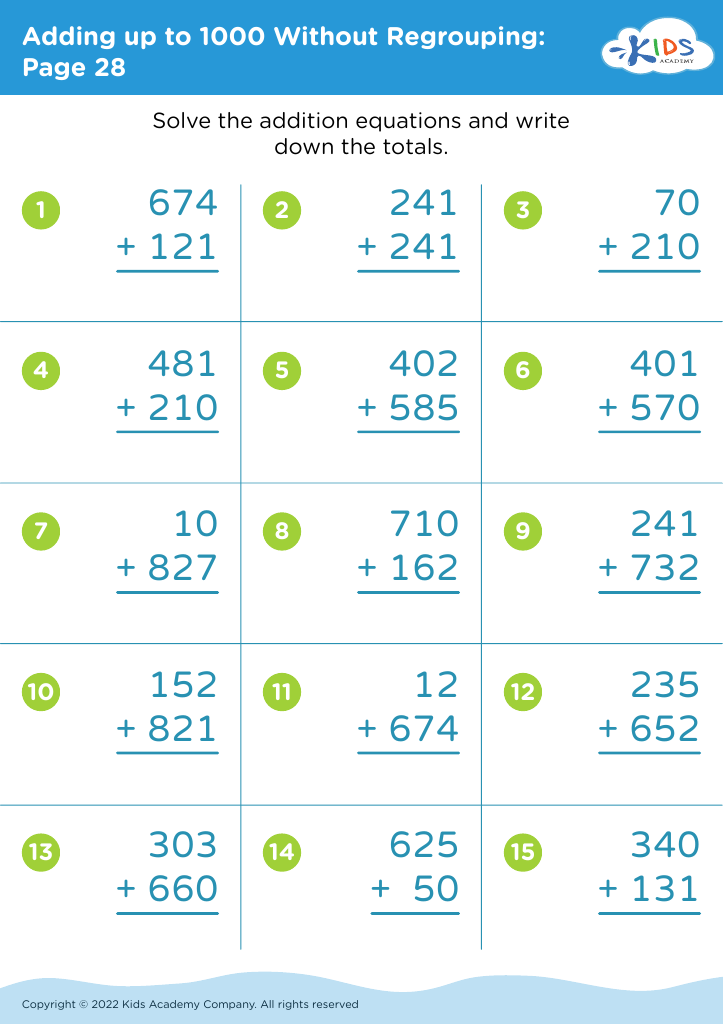
Adding up to 1000 Without Regrouping: Page 28
Worksheet
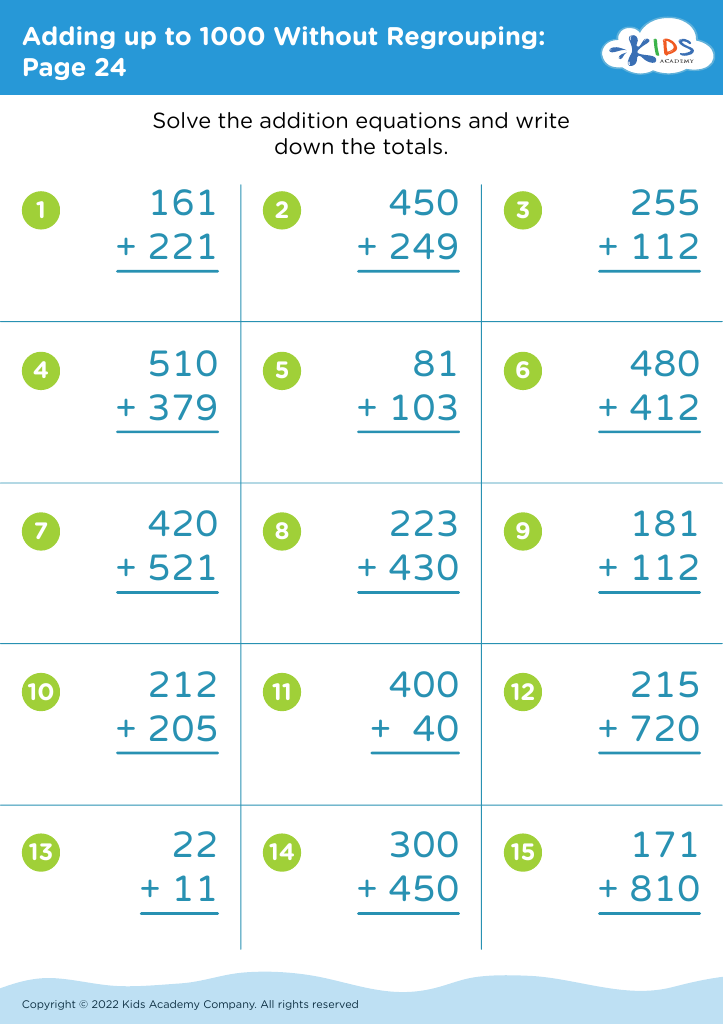
Adding up to 1000 Without Regrouping: Page 24
Worksheet
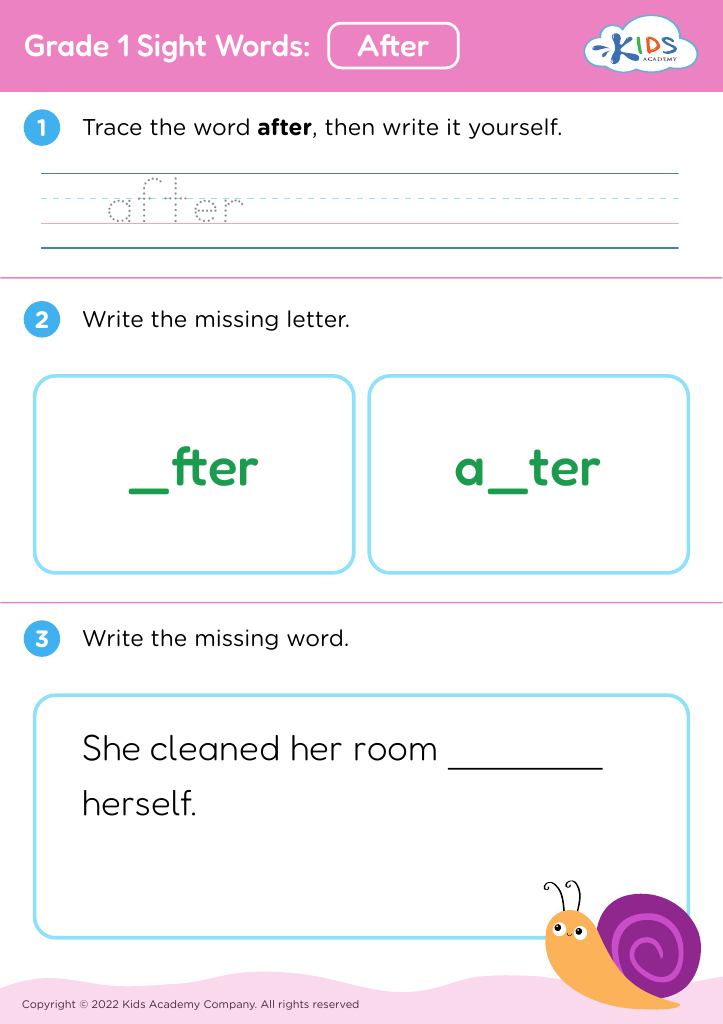
Grade 1 Sight Words: After

Grade 1 Sight Words: After

Grade 1 Sight Words: After
Worksheet
Grade 2 Sight Words: Which

Grade 2 Sight Words: Which

Grade 2 Sight Words: Which
Worksheet


Simplifying fractions for children aged 7-9 lays a pivotal foundation for future mathematical skills and comprehension. At this age, children's cognitive abilities are expanding, giving them the capacity for grasping abstract concepts with proper guidance. Simplifying fractions enables them to develop a solid understanding of equivalences, proportional thinking, and fundamental arithmetic operations.

Firstly, understanding simplified fractions makes fractions more comprehensible. When fractions are simplified to their lowest terms, evaluating the size and comparing different fractions becomes easier, alleviating intimidation and confusion. This skill is necessary for solving higher-level math problems in later years, such as when working with ratios, decimals, and percents.

Secondly, it promotes logical reasoning and critical thinking. Simplifying fractions entails recognizing common factors, an exercise that builds their number sense and mental math capabilities.

Lastly, confidence builds mastery in math. When students successfully simplify fractions independently, it boosts their self-esteem and encourages a positive attitude towards math. Teachers and parents should recognize its long-term importance, valuing its skill absorption just as vitally as reading basics, to solidify mathematical proficiency.

Early mastery of such core concepts significantly impacts academic success, helping children not only excel in mathematics but open doors for Science, Technology, Engineering, and Mathematics (STEM) disciplines later. By nurturing these competencies, they support holistic development, fostering lifelong learners equipped for real-world problem-solving.