Word Problems Worksheets for Ages 7-9 - Page 6
123 filtered results
-
From - To
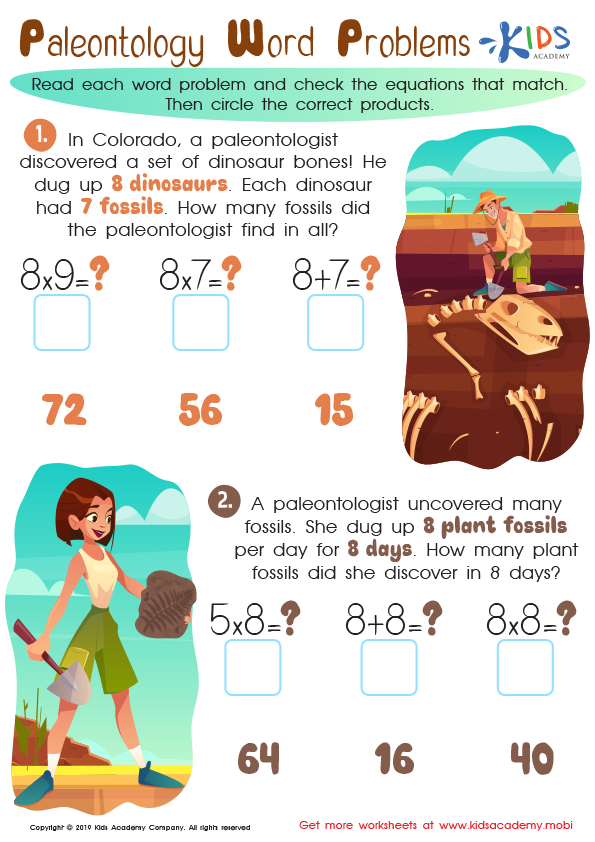
Archeology Word Problems Worksheet
 Assign to My Students
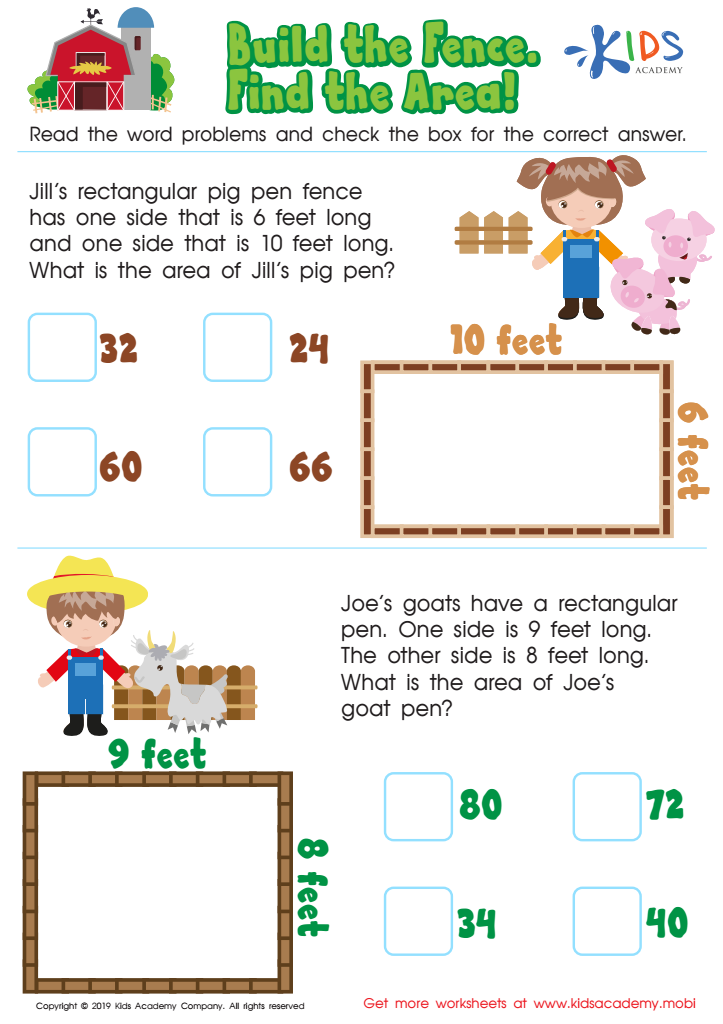
Build the Fence, Find the Area Worksheet
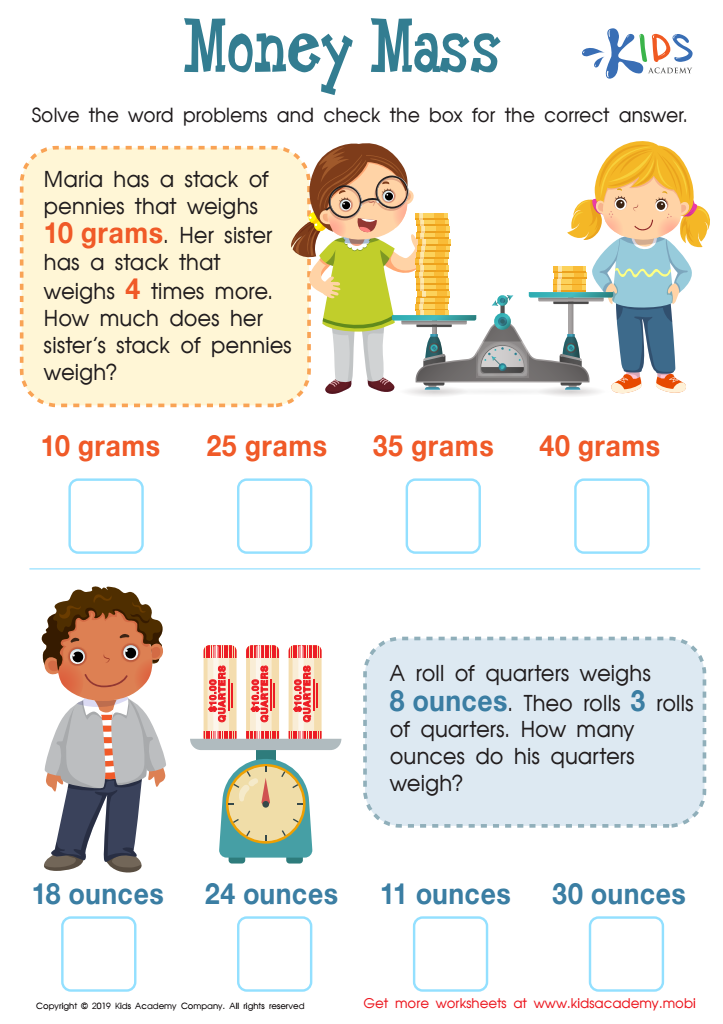
Money Mass Worksheet








Word problems are essential in developing mathematical skills for children ages 7-9, and both parents and teachers should prioritize them for several reasons. First, they enhance critical thinking and problem-solving abilities; children learn to analyze situations, identify relevant information, and apply appropriate mathematical operations. This process fosters logical reasoning and helps them tackle real-world challenges.
Second, word problems bridge the gap between abstract concepts and practical application. Young learners start to see mathematics not just as numbers but as a language that describes everyday situations—like sharing snacks or measuring ingredients for a recipe. This makes math relatable and enjoyable, fostering a positive attitude toward the subject.
Furthermore, working on word problems promotes literacy skills as children must read and comprehend texts to extract mathematical meanings. This dual benefit strengthens both math and language arts skills.
Lastly, regular practice with word problems builds confidence. As children gain proficiency, they become more willing to tackle more complex problems in the future. For these reasons, encouraging engagement with word problems nurtures young learners into competent, confident problem-solvers, preparing them for advanced math and critical thinking in later years.








