Categorizing objects Science Worksheets for Ages 7-9
3 filtered results
-
From - To
Engage young learners in the fascinating world of Science with our "Categorizing Objects Worksheets" designed for ages 7-9. These printable worksheets bolster critical thinking and observational skills as children sort and classify various objects. Through fun exercises, students learn to recognize patterns and relationships between objects, fostering a deeper understanding of the natural world. Ideal for both classrooms and homeschooling, these expertly crafted worksheets combine learning with play, keeping kids curious and motivated. Discover a comprehensive collection tailored to enhance cognitive development and scientific inquiry at Kids Academy's carefully curated resources.
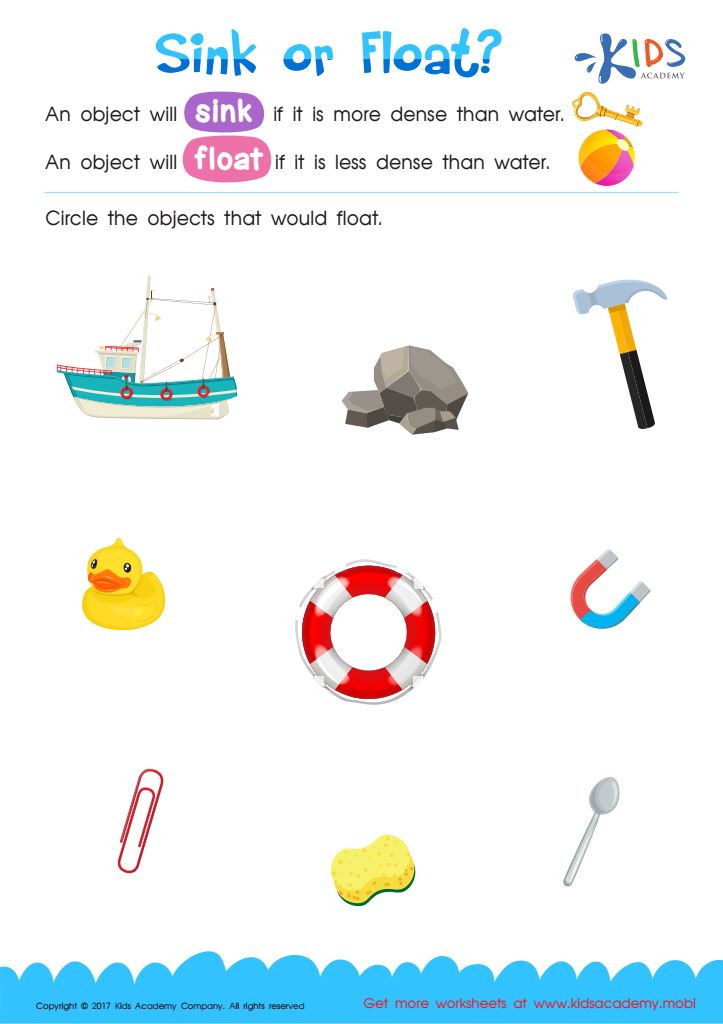
Sink or Float Printable
 Assign to My Students
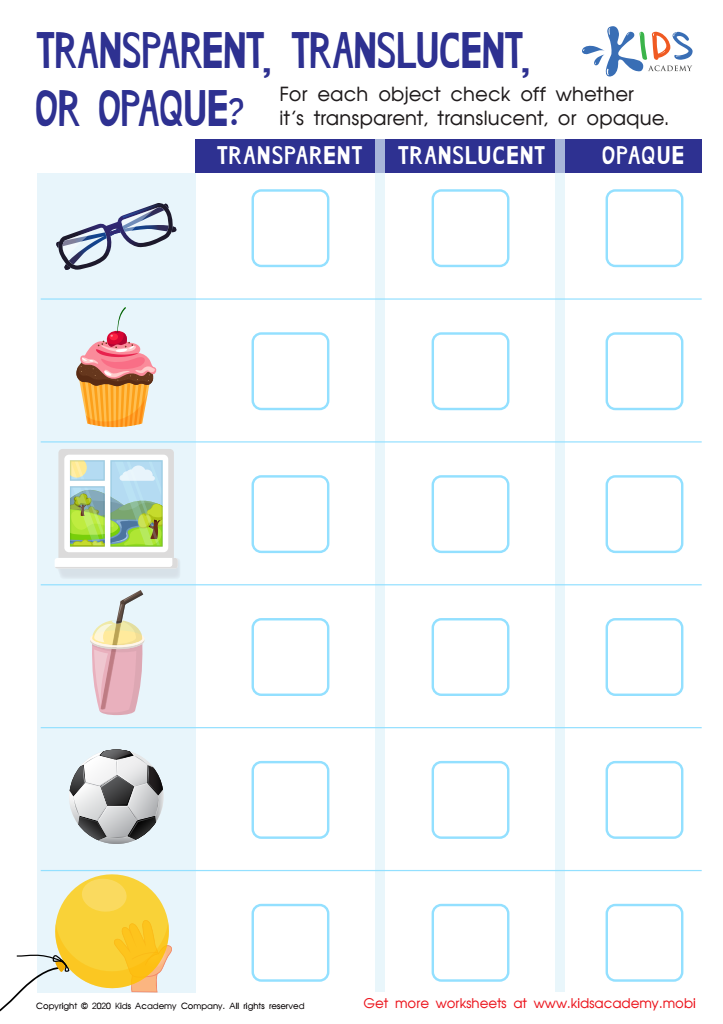
Transparent, Translucent, or Opaque Worksheet
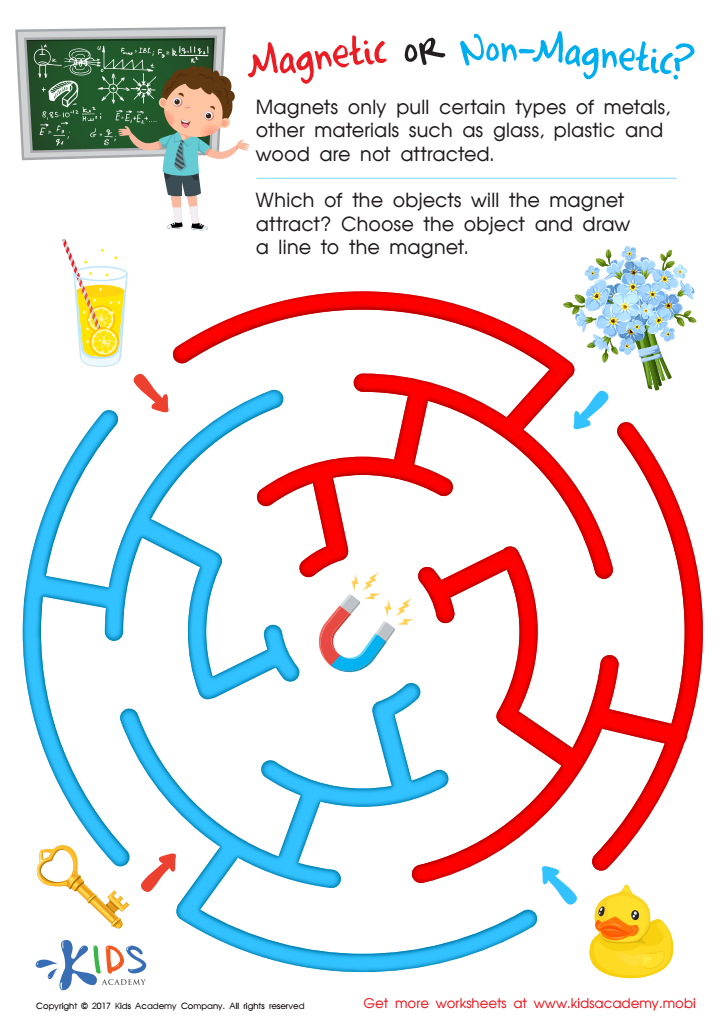
Magnetic or Non–Magnetic Worksheet







Categorizing objects, a fundamental scientific skill, is crucial for children aged 7-9 because it significantly enhances their cognitive development, organizational abilities, and understanding of the world. At this age, children are naturally curious and eager to make sense of their environment. Categorization helps them to distinguish and organize various attributes, such as size, shape, color, or function, making complex information more manageable and less overwhelming.
For parents and teachers, focusing on categorization can facilitate children's critical thinking and problem-solving skills. When children learn to categorize, they start recognizing patterns and relationships between different objects, which is an essential foundation for sophisticated reasoning and scientific inquiry. This ability to classify also supports vocabulary development, allowing them to understand and use descriptive language more effectively.
Moreover, categorizing objects aligns with interdisciplinary learning, naturally connecting subjects such as math, science, and language arts. For example, grouping insects by characteristics can enhance both biological knowledge and data organization skills. Engaging in hands-on classification activities can also foster collaborative skills, as children work in groups to sort and discuss their findings.
By actively involving children in categorization exercises, parents and teachers help lay the groundwork for future academic success and empower them to approach the world with a more discerning and informed perspective.







