Number Recognition Tracing Numbers Worksheets for Ages 8-9
19 filtered results
-
From - To
Discover our engaging Number Recognition Tracing Numbers Worksheets, specially designed for children aged 8-9! These worksheets help young learners master number recognition while enhancing their fine motor skills. Each activity encourages children to trace and write numbers, reinforcing their understanding through repetition and practice. Tailored to complement their education, our worksheets make learning fun and interactive. Ideal for homes, classrooms, or after-school practice, these resources support early math skills development. With vibrant designs and age-appropriate challenges, your child will gain confidence and proficiency in recognizing and writing numbers. Explore our interactive worksheets today and set your child on a path to math success!
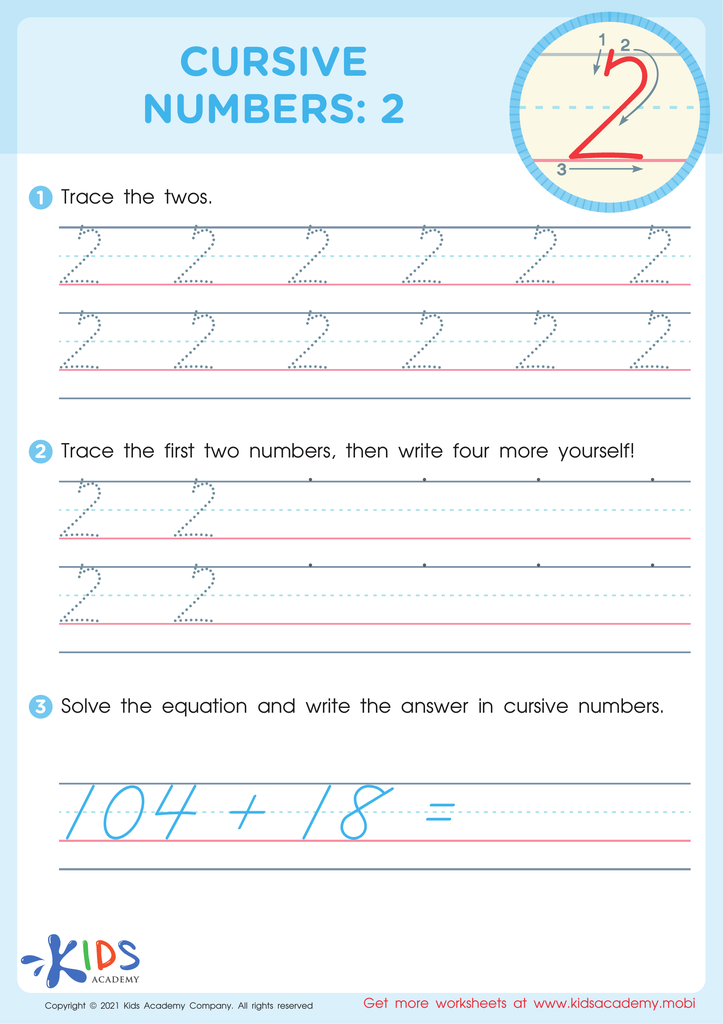
Cursive Numbers: 2 Worksheet
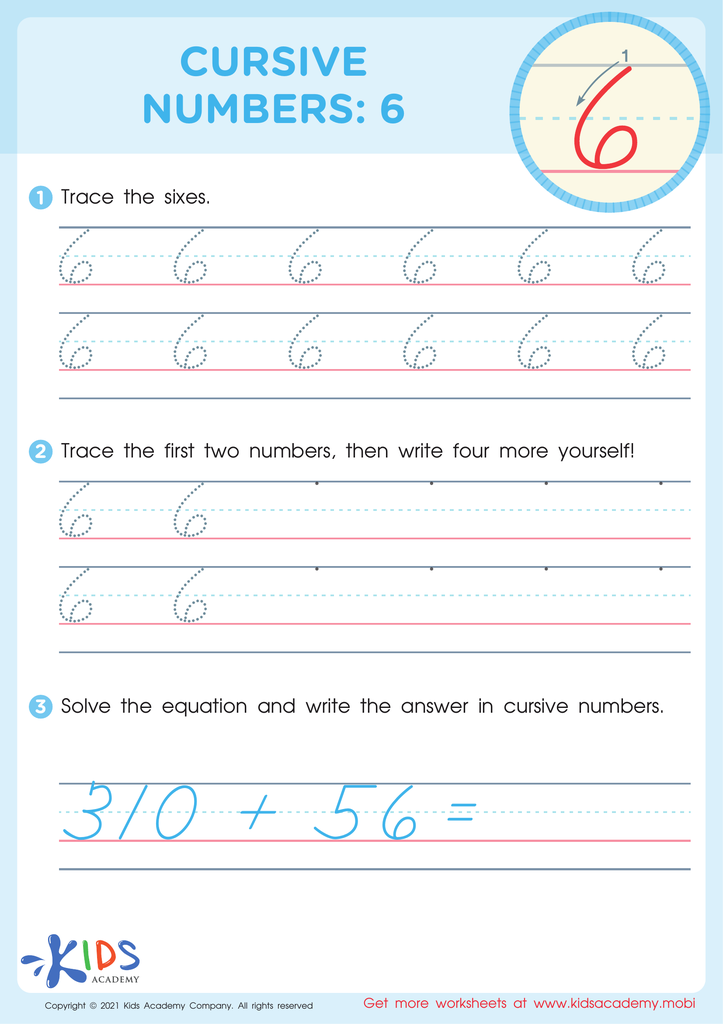
Cursive Numbers: 6 Worksheet
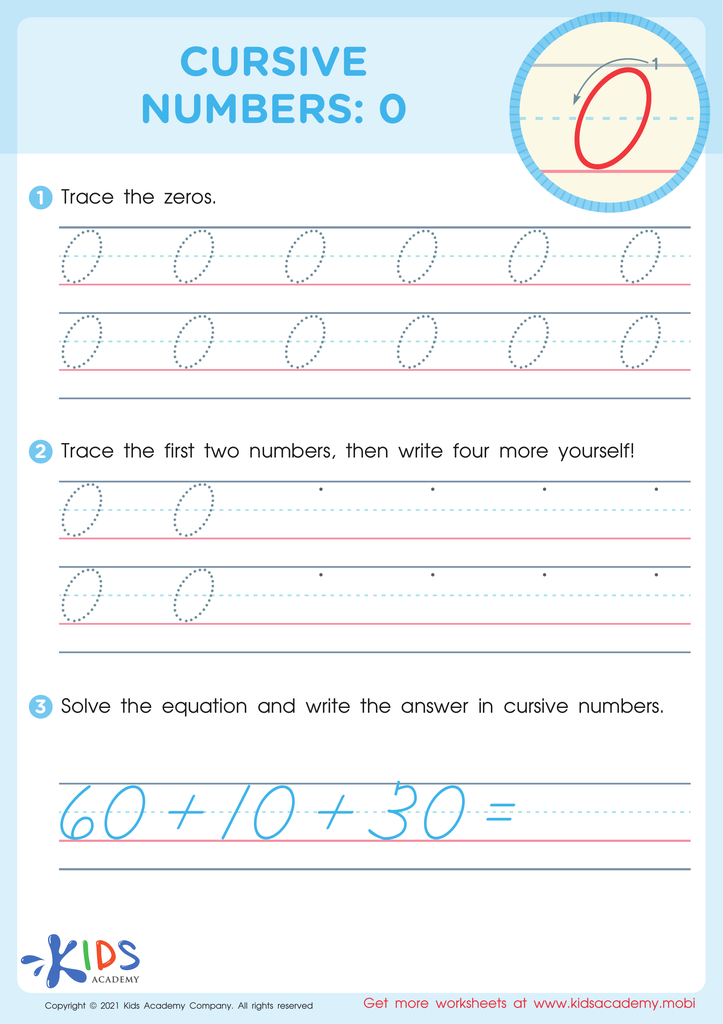
Cursive Numbers: 0 Worksheet
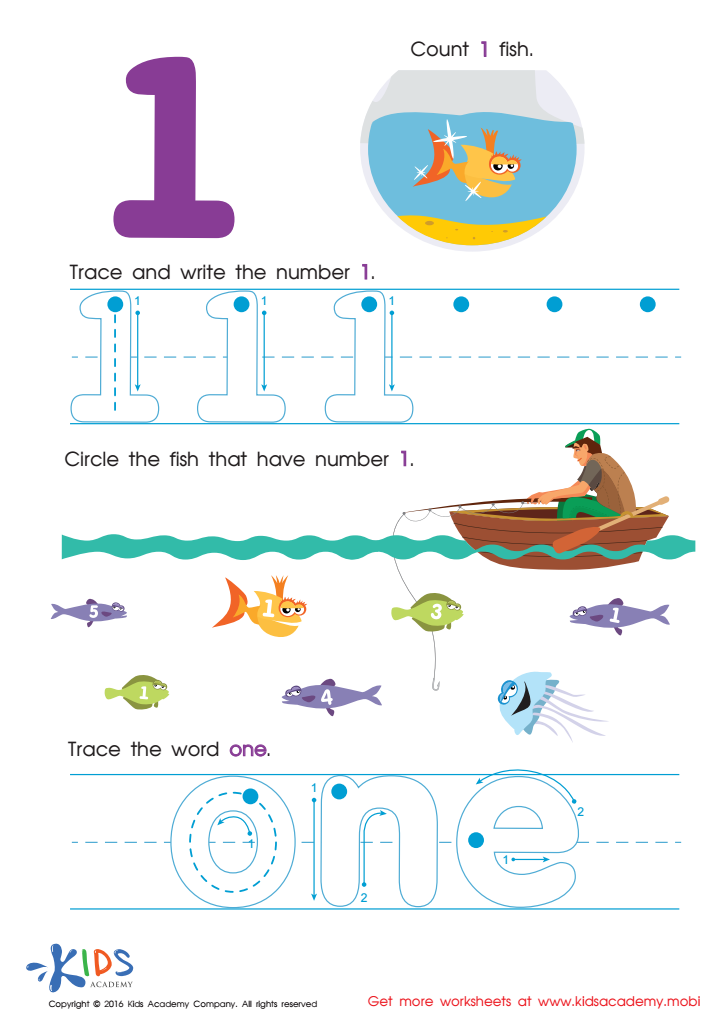
Learning to Write 1 Worksheet
 Assign to My Students
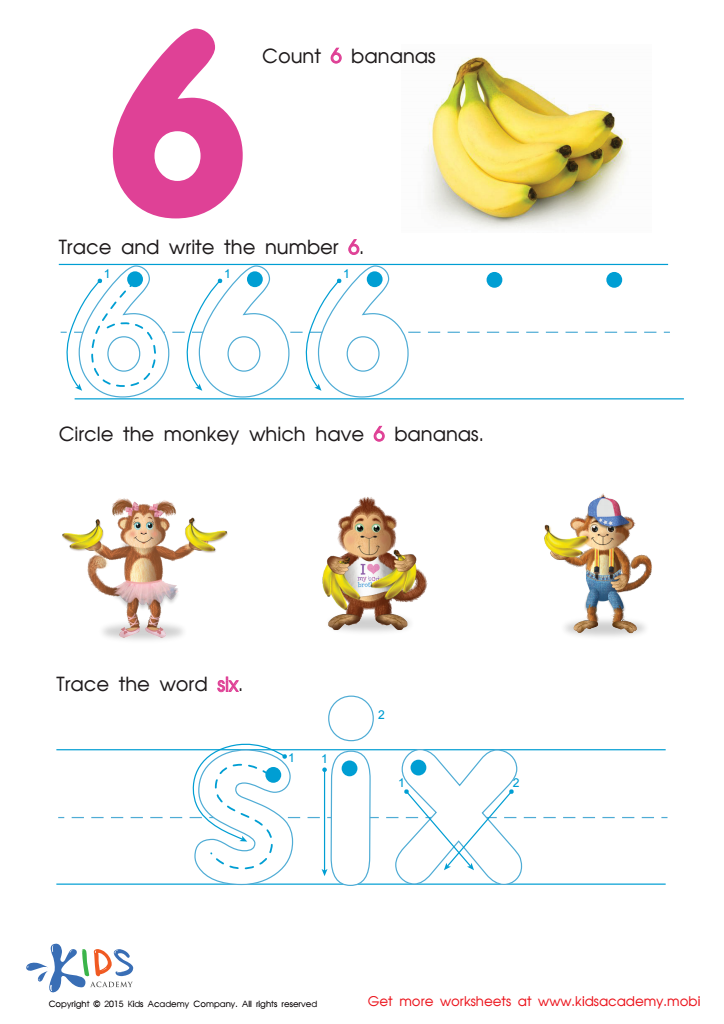
Tracing And Writing Number 6 Worksheet
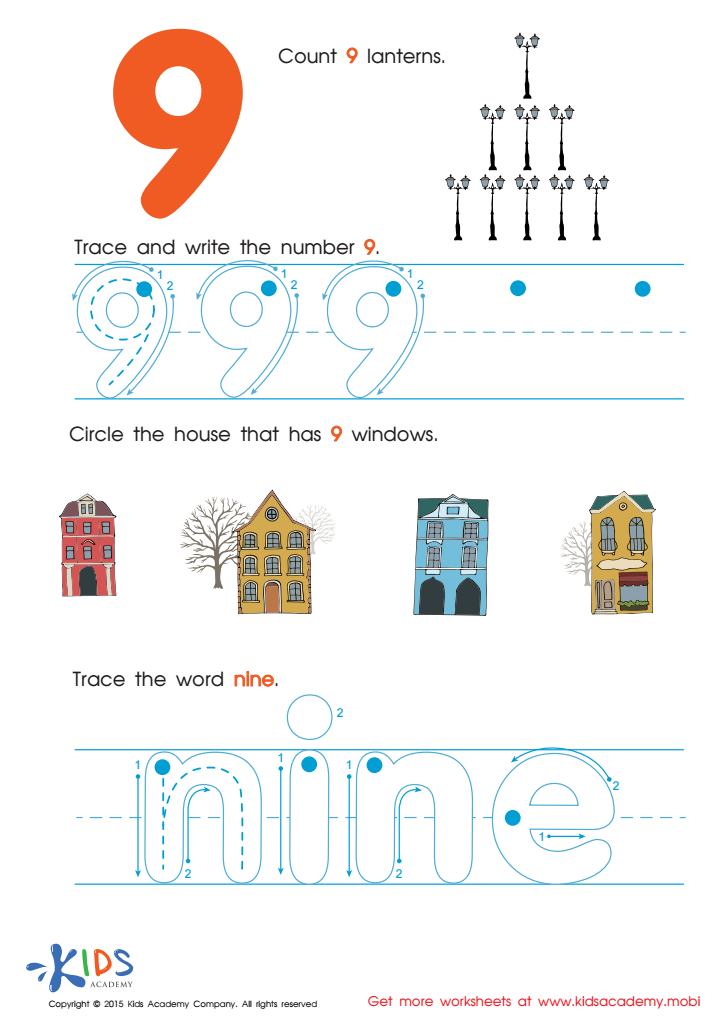
Tracing And Learning to Write Number 9 Worksheet
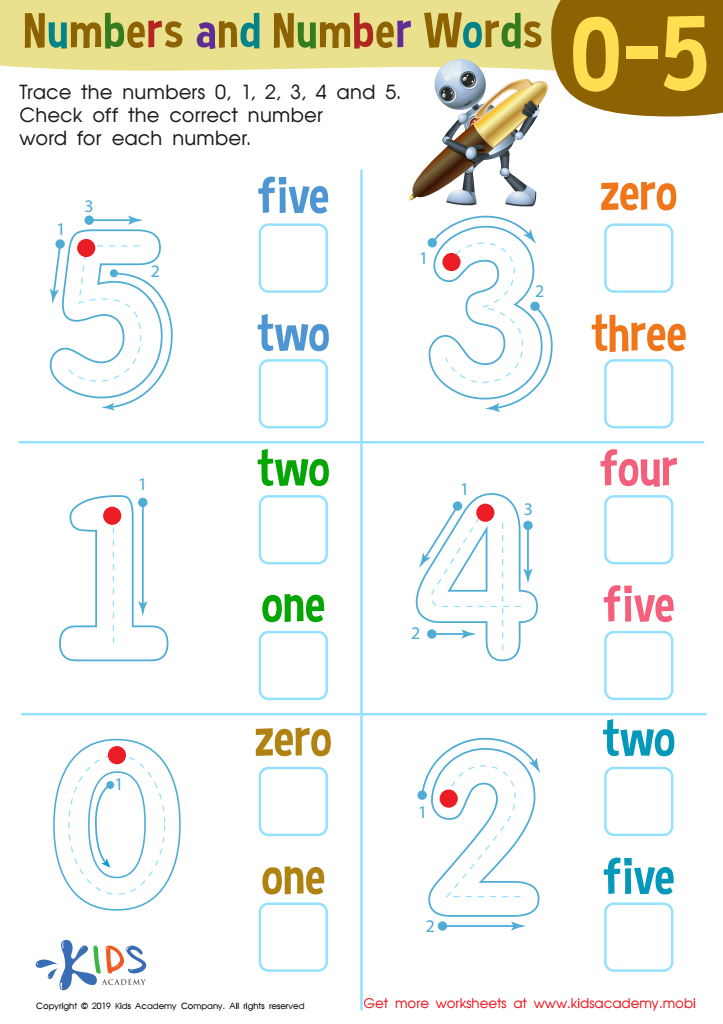
Numbers and Number Words Worksheet
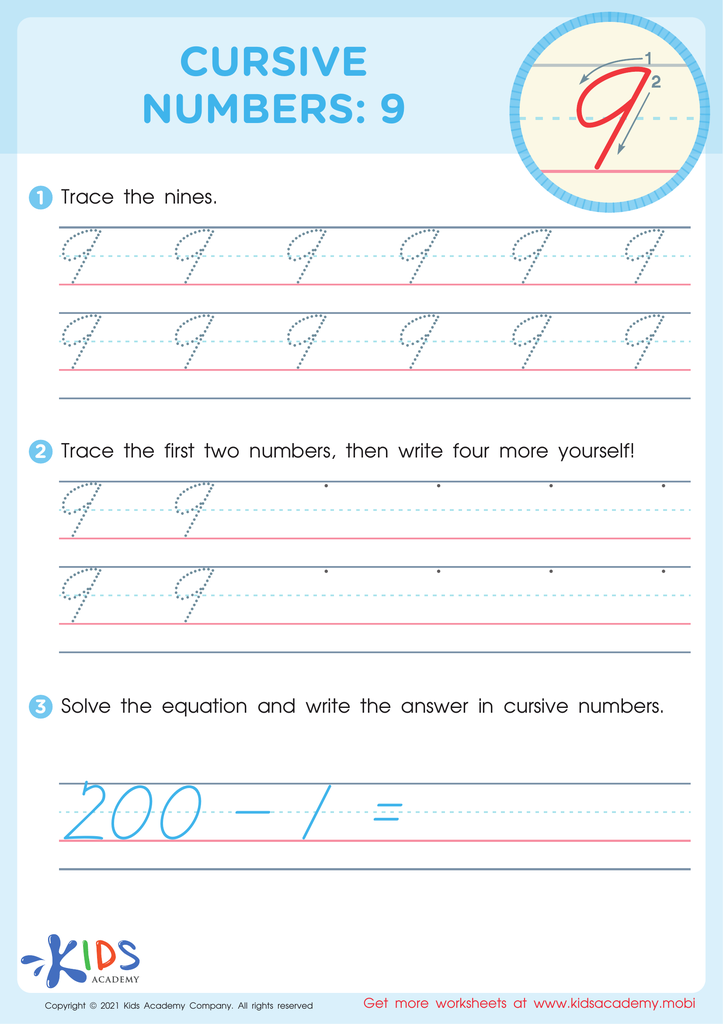
Cursive Numbers: 9 Worksheet
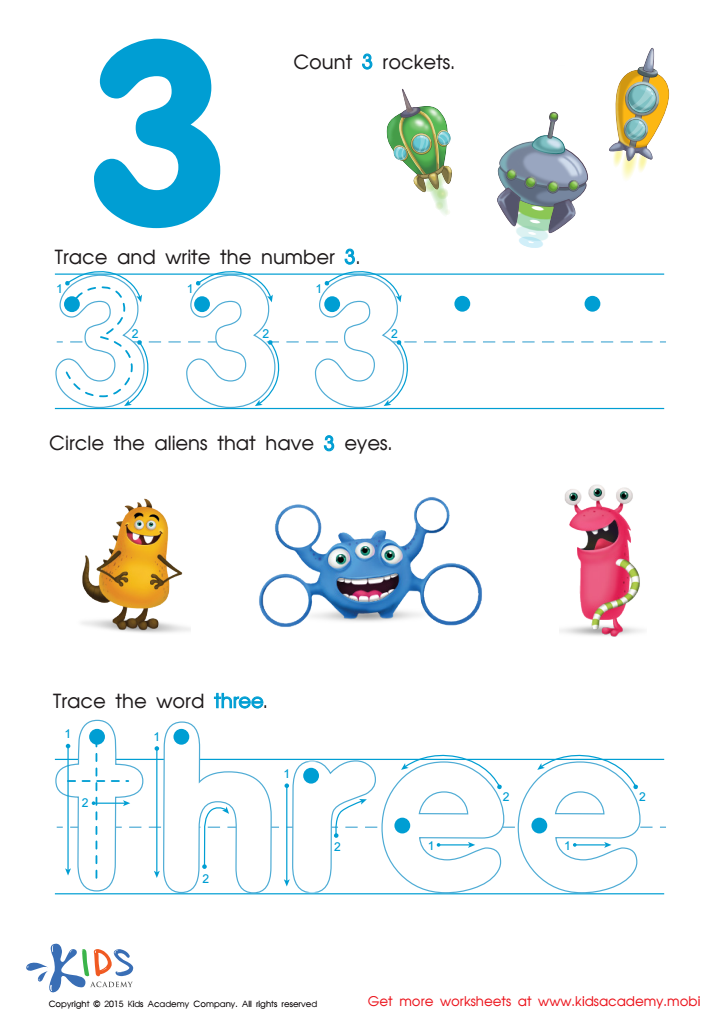
Learning Number Three Worksheet
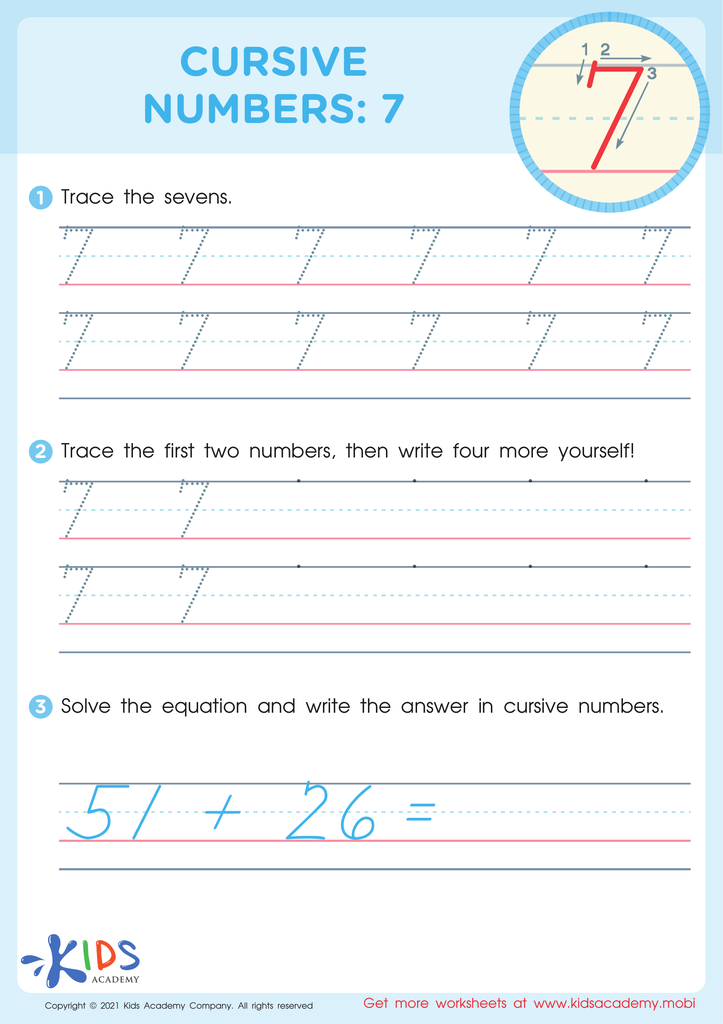
Cursive Numbers: 7 Worksheet
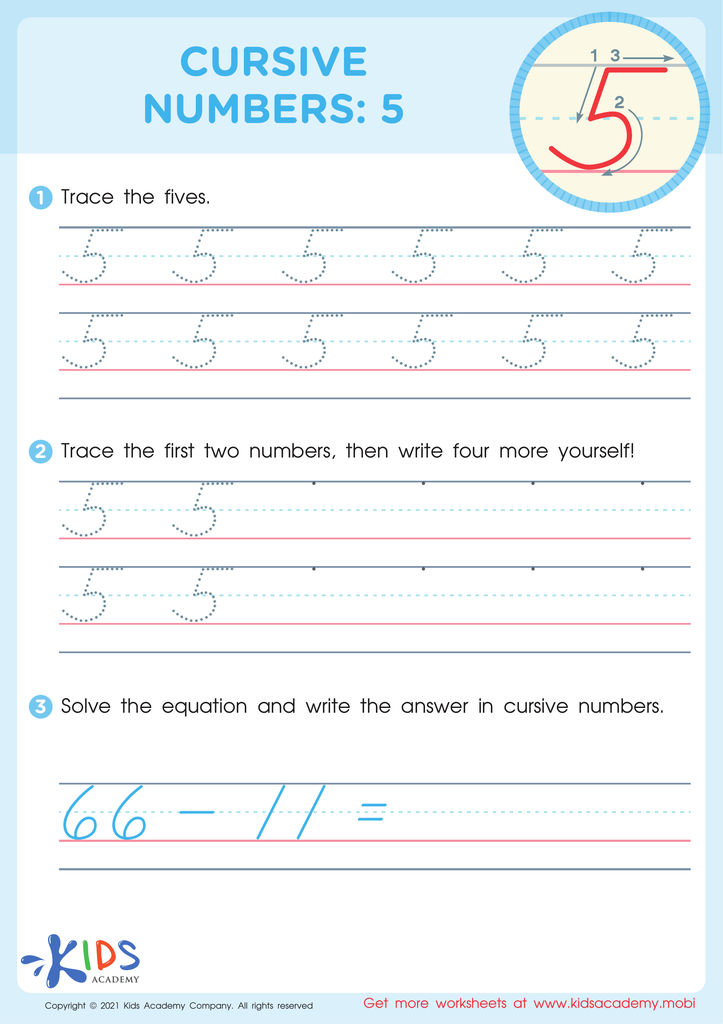
Cursive Numbers: 5 Worksheet
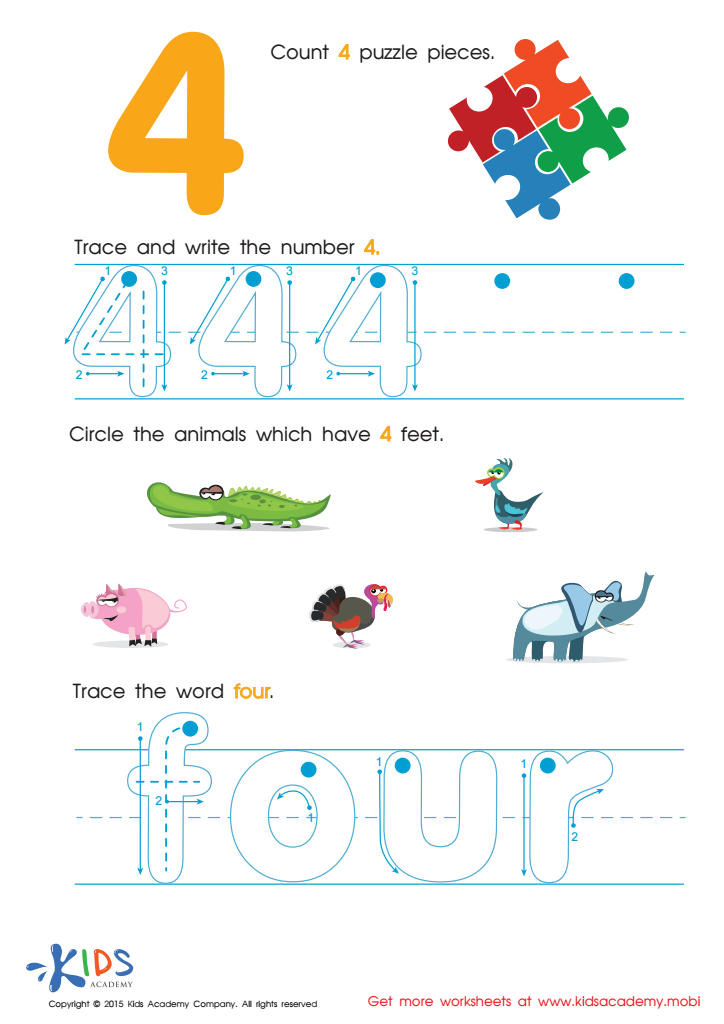
Teaching Children to Write Number 4 Worksheet
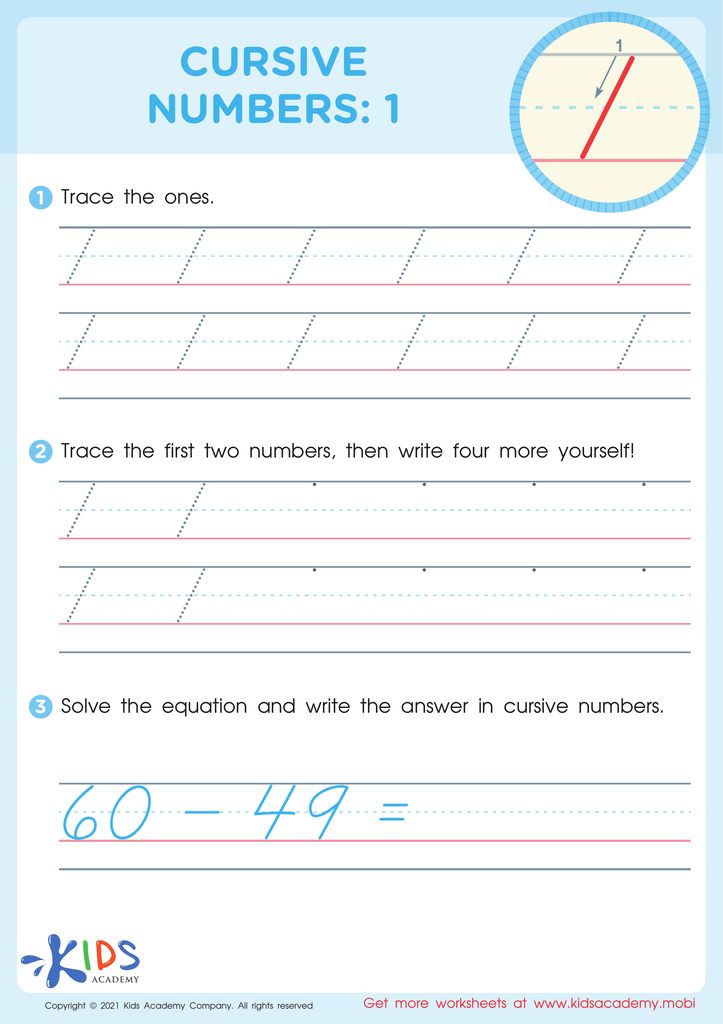
Cursive Numbers: 1 Worksheet
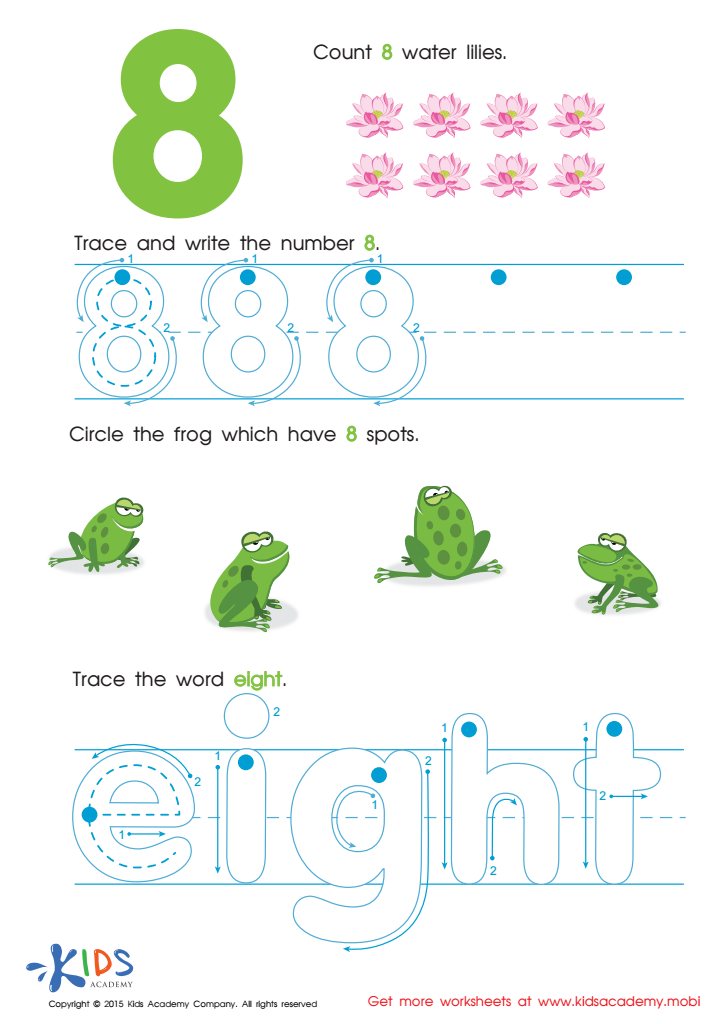
Learn Number 8 Easily Worksheet
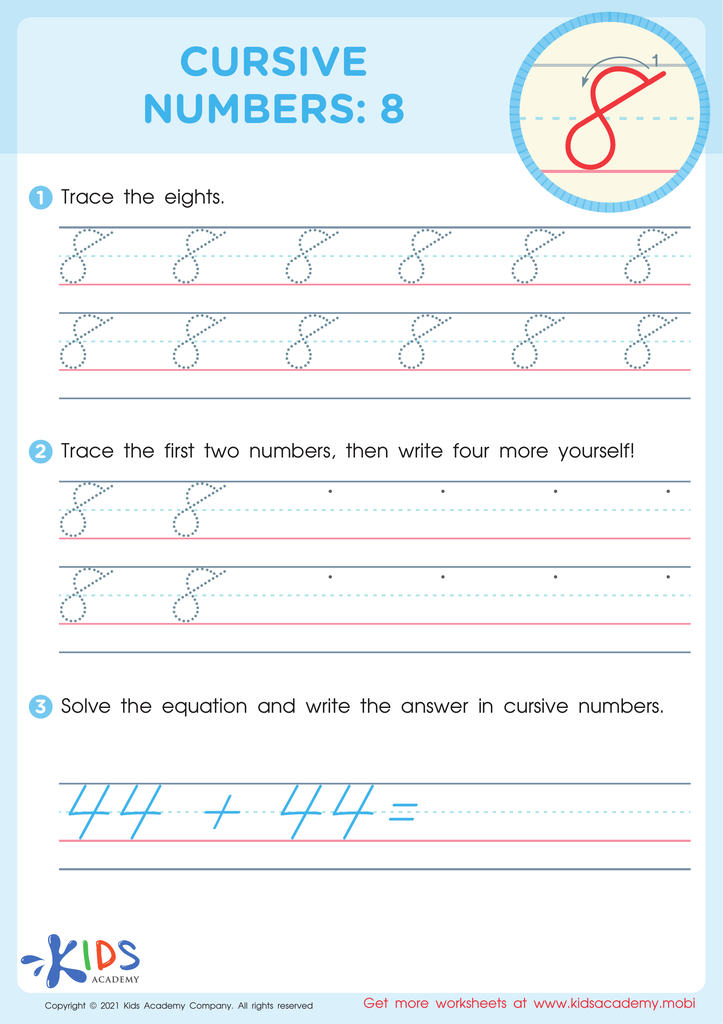
Cursive Numbers: 8 Worksheet
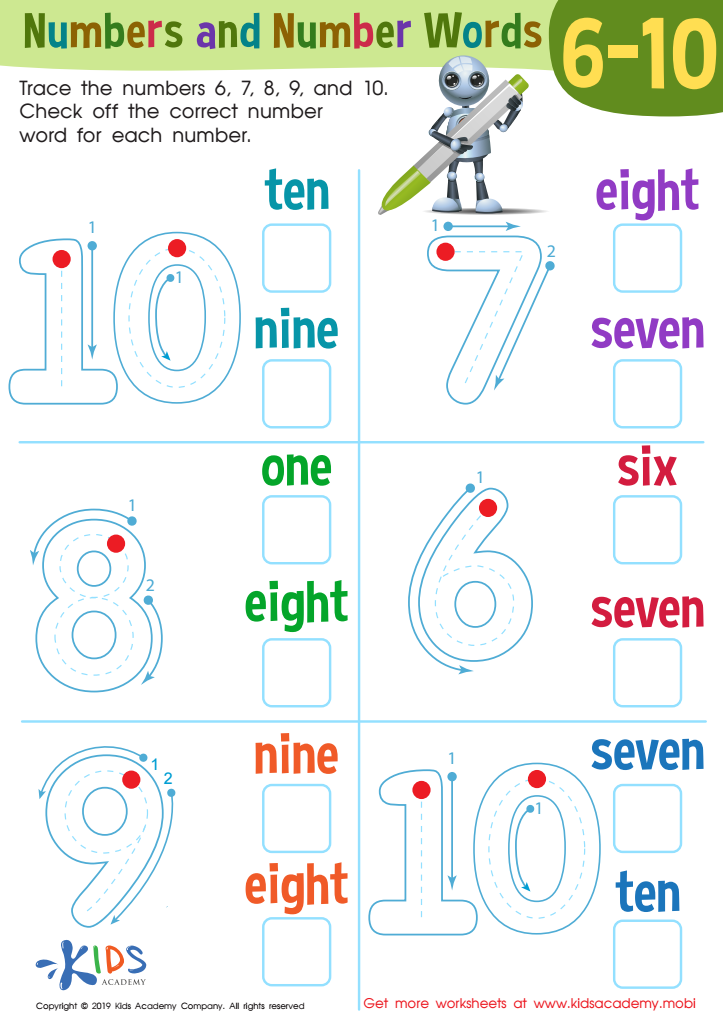
Numbers and Number Words 6–1 Worksheet
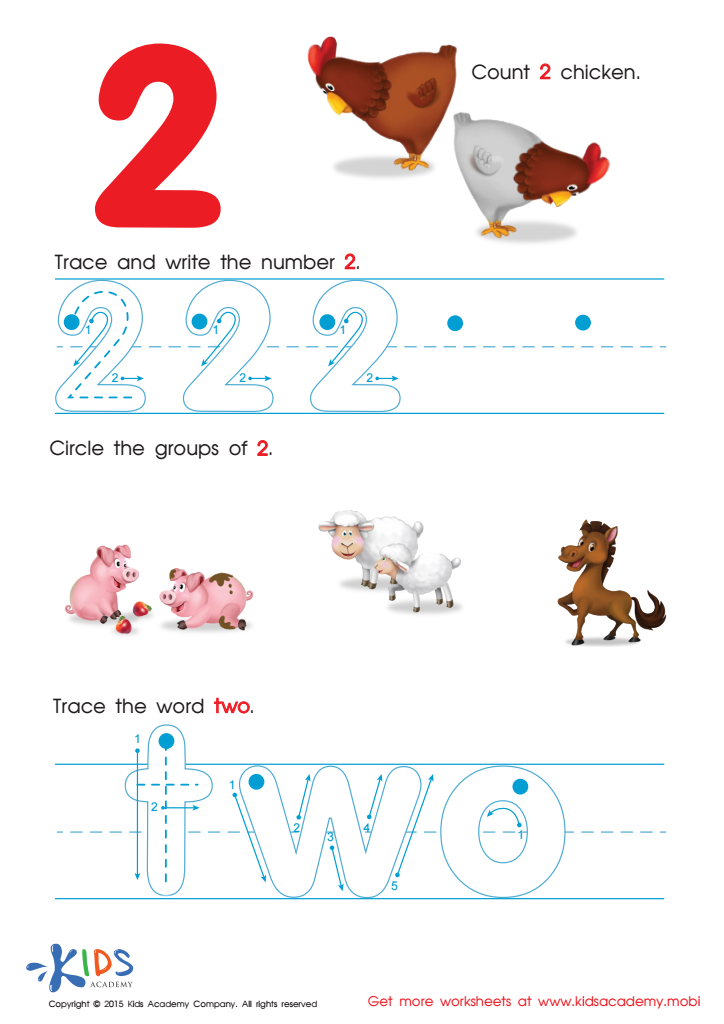
Learn to Write the Number 2 Worksheet
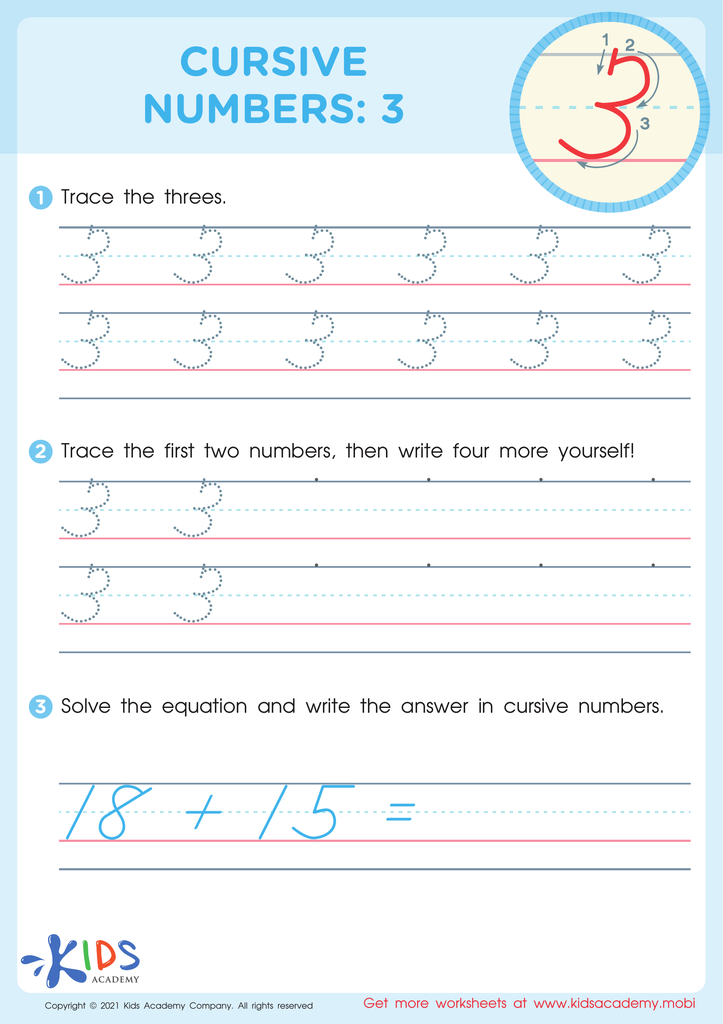
Cursive Numbers: 3 Worksheet
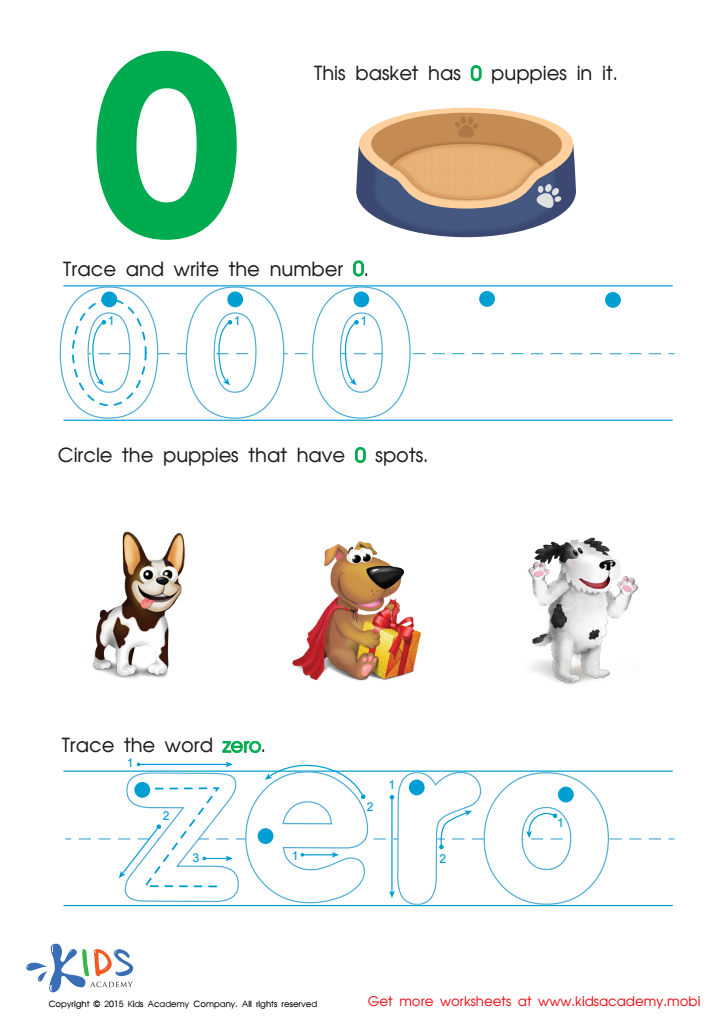
Trace And Write Number 0 Worksheet








Number recognition and tracing are foundational skills for children ages 8-9, essential for their overall mathematical development and academic success. At this age, students begin to engage more deeply with mathematical concepts, and a strong grasp on numbers enhances their ability to perform arithmetic operations such as addition, subtraction, multiplication, and division.
For parents and teachers, fostering number recognition ensures that children can easily identify and understand numbers in various contexts, from reading clocks to managing money. Tracing numbers aids in developing fine motor skills, as the physical act of writing reinforces memory through active engagement. Furthermore, tracing provides an opportunity for children to visualize numbers, linking the physical representation with their abstract understanding.
Additionally, proficiency in number recognition contributes to greater confidence in mathematics, reducing math anxiety and fostering a positive attitude toward learning. As students progress, these skills play a crucial role in rekindling a sense of curiosity about numbers, encouraging exploration and critical thinking. Ultimately, strong number recognition and tracing techniques establish a solid foundation, preparing children for more complex mathematical learning in higher grades and equipping them with essential lifelong skills. Hence, both parents and teachers should prioritize this critical stage in development.