The 5 Senses Worksheets for Ages 8-9
5 filtered results
-
From - To
Unlock the world of discovery with our "5 Senses Worksheets for Ages 8-9"! Designed to engage young learners, these worksheets provide fun and interactive activities that explore the five senses—sight, hearing, touch, taste, and smell. Perfect for enhancing science lessons, each worksheet encourages critical thinking and creativity while helping children connect sensory experiences to the world around them. Whether in the classroom or at home, these educational tools foster curiosity and make learning enjoyable. Dive into exciting exercises that will inspire your child’s understanding of the senses and enhance their observational skills today! Explore with us and ignite a passion for science!
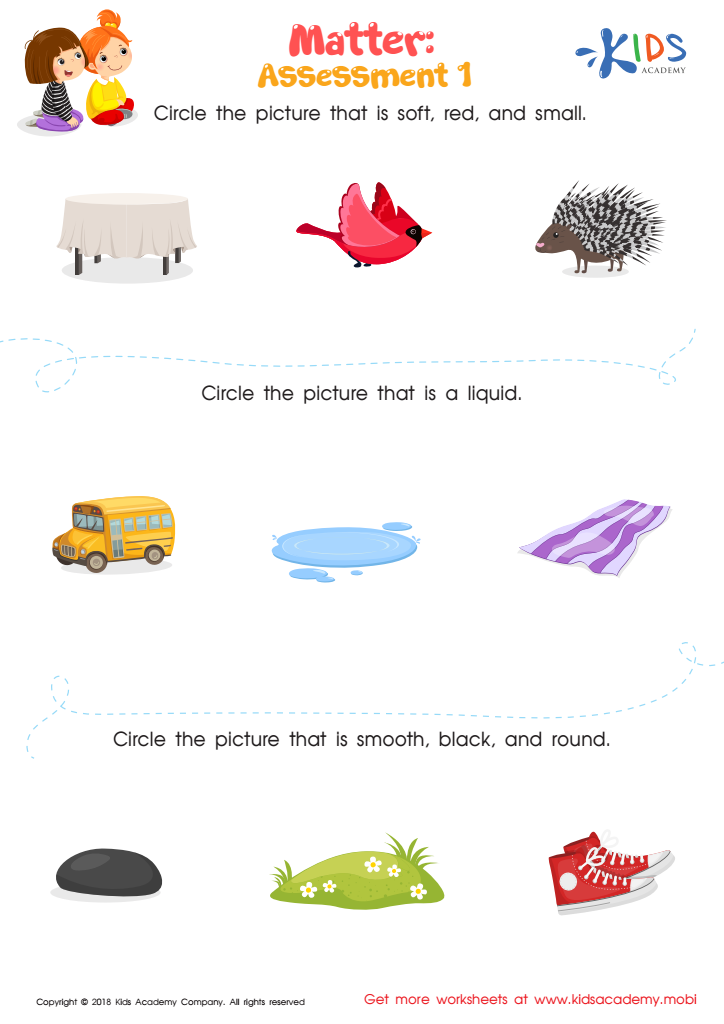
Matter: Assessment 1 Worksheet
 Assign to My Students
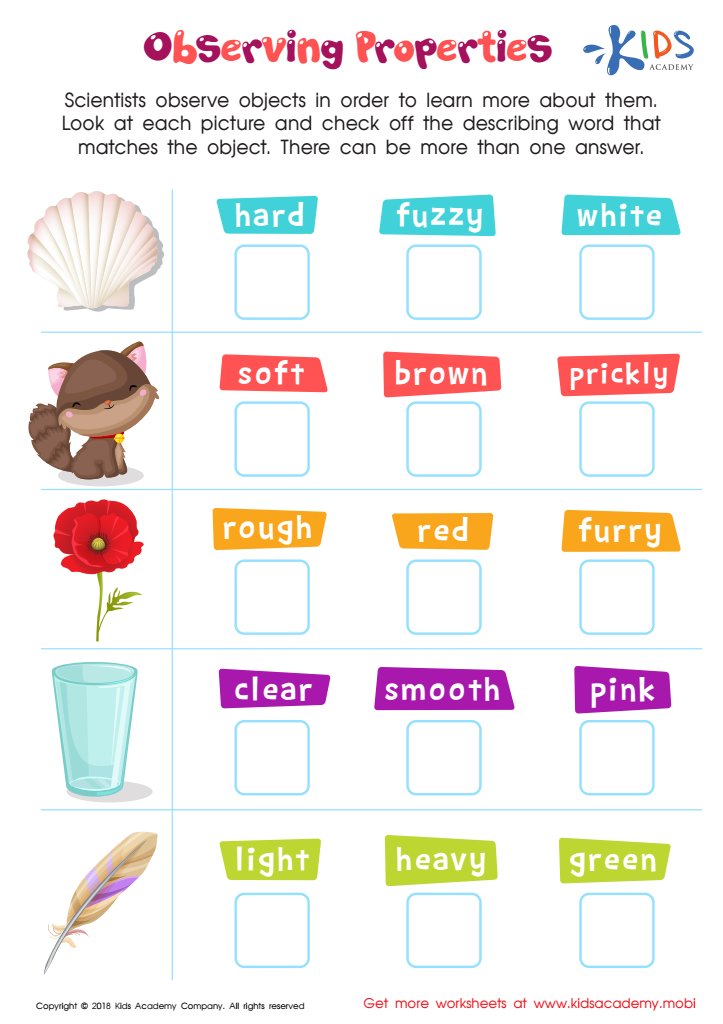
Observing Properties Worksheet
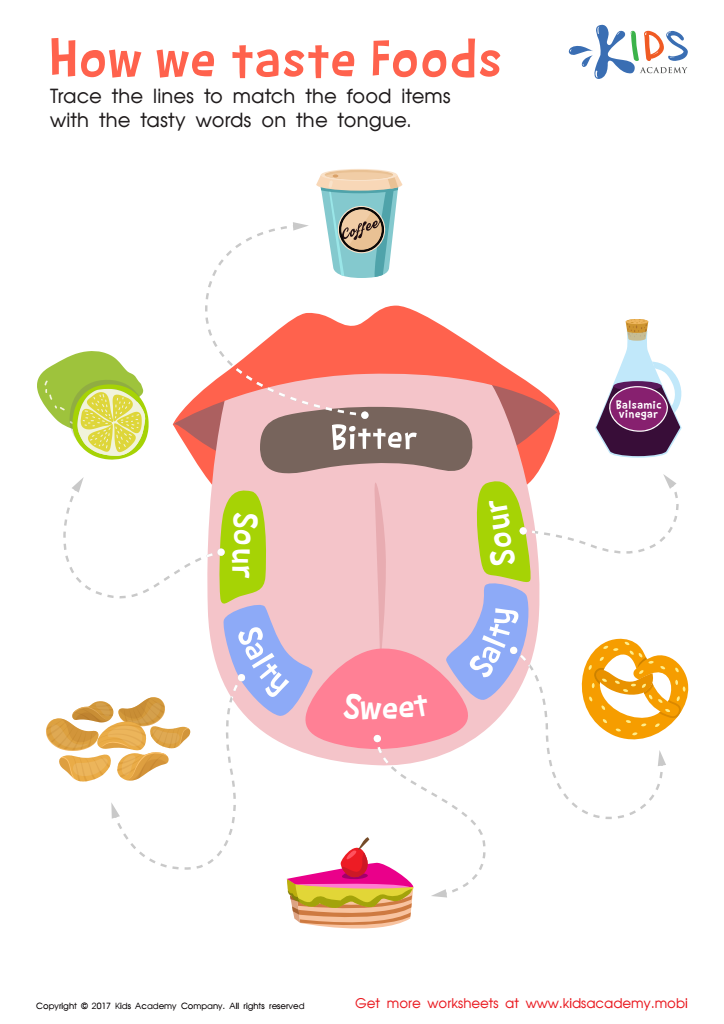
How We Taste Foods Worksheet
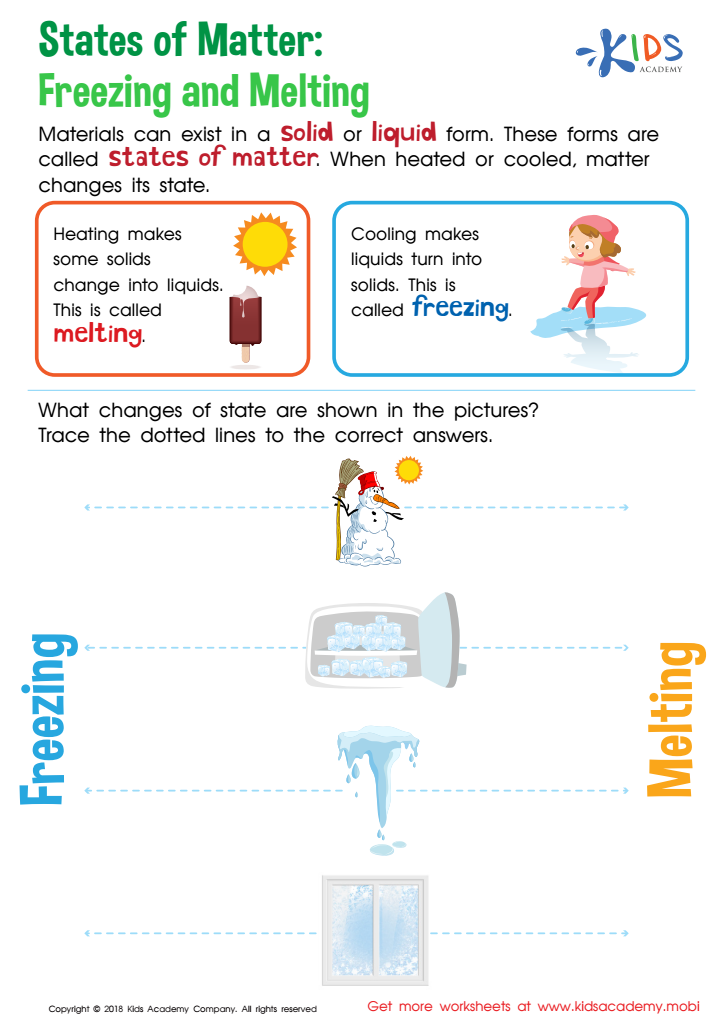
States of Matter: Freezing and Melting Worksheet
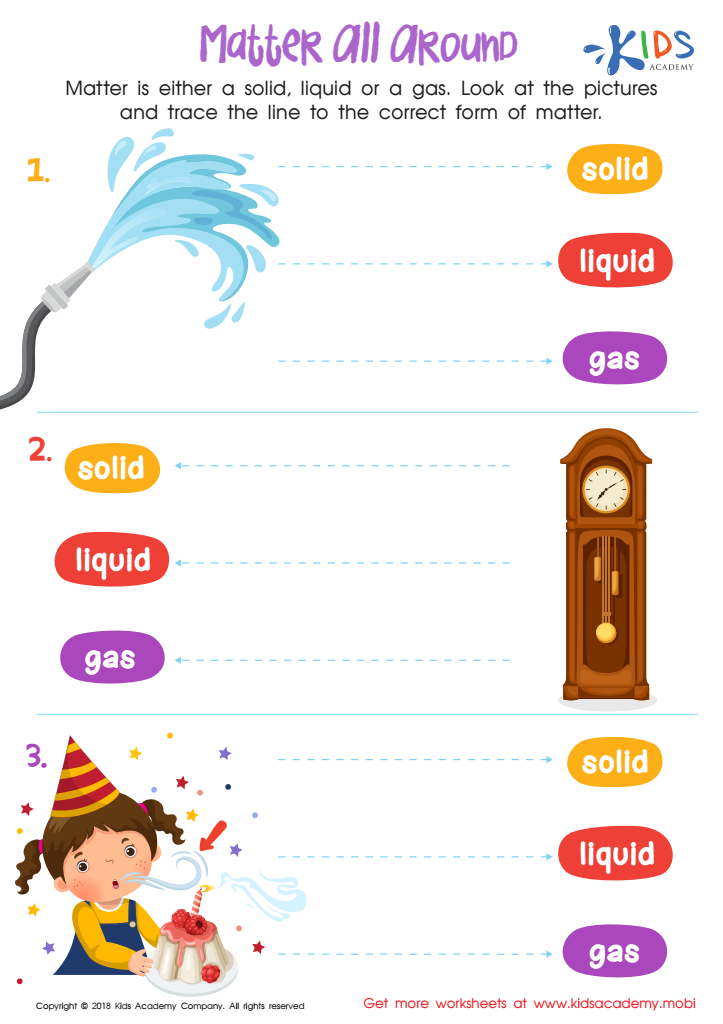
Matter all Around Worksheet



Understanding the five senses is crucial for children aged 8-9 as it lays the foundation for their cognitive development and enhances their learning experiences. At this age, children are naturally curious and eager to explore the world around them. The five senses—sight, hearing, taste, touch, and smell—are essential tools they use to gather information about their environment. Educators and parents should emphasize their importance because sensory exploration encourages scientific thinking, observation skills, and critical thinking.
By engaging with the five senses in various subjects—be it science, art, or literature—children can connect abstract concepts to tangible experiences, fostering deeper understanding. For instance, experiments can be set up to explore how different smells influence taste, or activities can promote good listening skills. Additionally, awareness of the senses will aid children in expressing emotions and navigating social situations, as they learn to interpret cues from others.
Furthermore, incorporating sensory activities can support diverse learning styles, helping all children engage meaningfully. Ultimately, equipping children with a strong understanding of their senses enriches their knowledge, enhances their creativity, and instills a lifelong love of learning. Thus, investing time in teaching about the five senses can profoundly impact a child’s overall development.







