Shape Recognition Geometry Worksheets for 8-Year-Olds
24 filtered results
-
From - To
Our "Shape Recognition Geometry Worksheets for 8-Year-Olds" offer a fun and educational way for kids to enhance their understanding of geometric shapes. Designed to engage young minds, these worksheets help children identify, compare, and categorize various shapes, boosting their cognitive and visual-spatial skills. Each activity is crafted to align with curriculum standards, ensuring that your child gains a strong foundation in geometry. Perfect for both classroom and at-home learning, these worksheets make mastering shape recognition enjoyable and interactive. Give your child the tools they need to excel in math with our expertly designed worksheets!
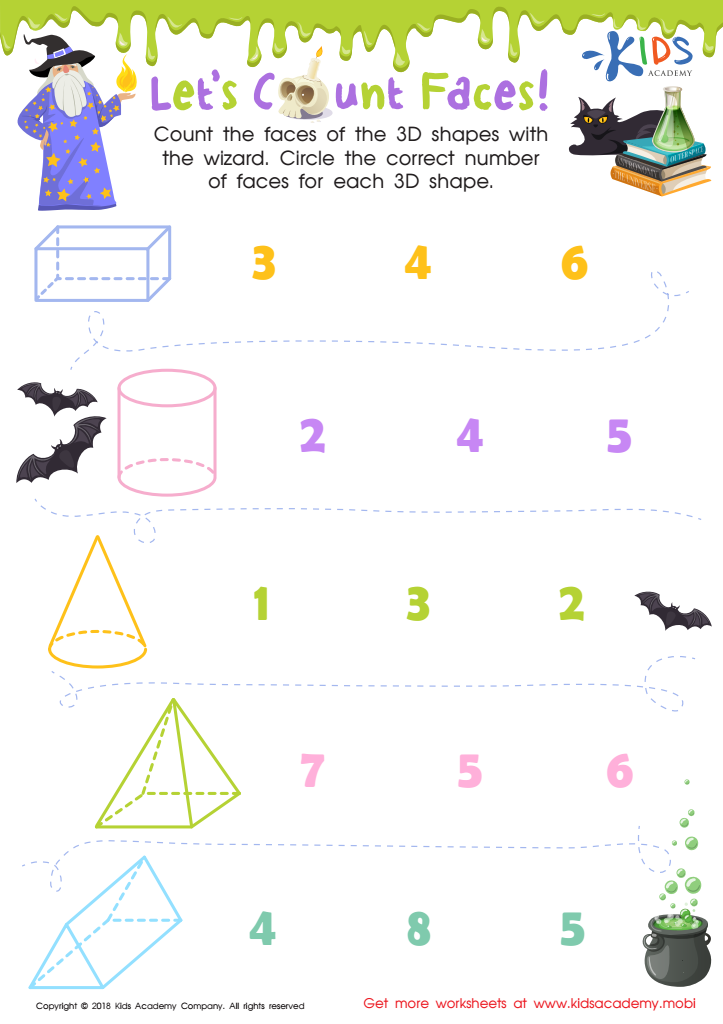
Let's Count Faces! Worksheet











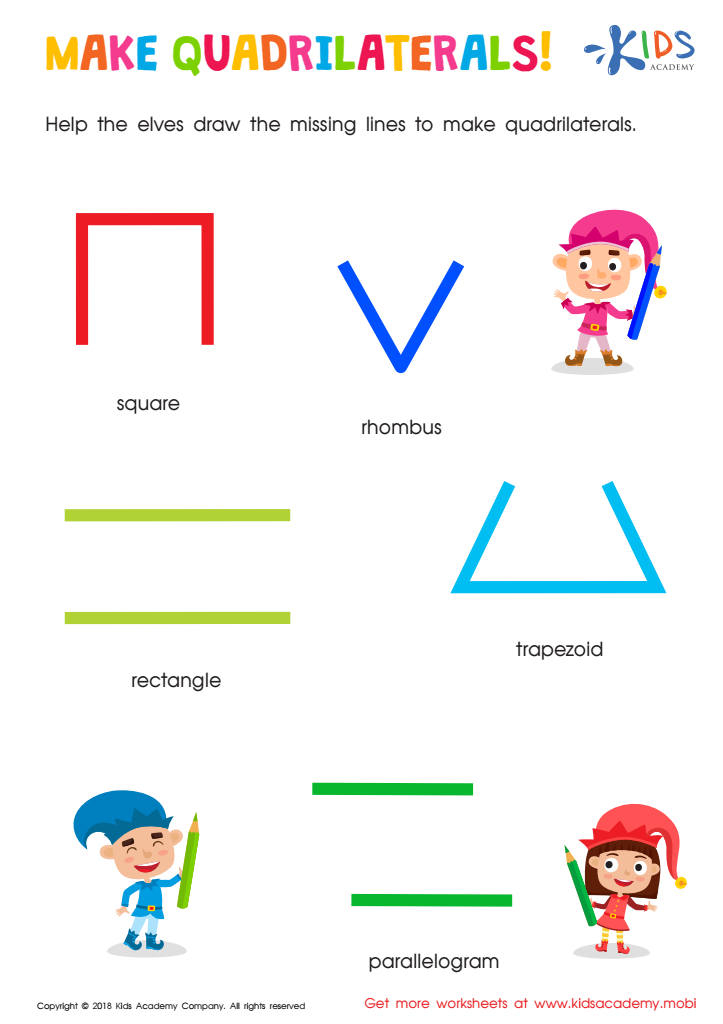
Make Quadrilaterals Worksheet
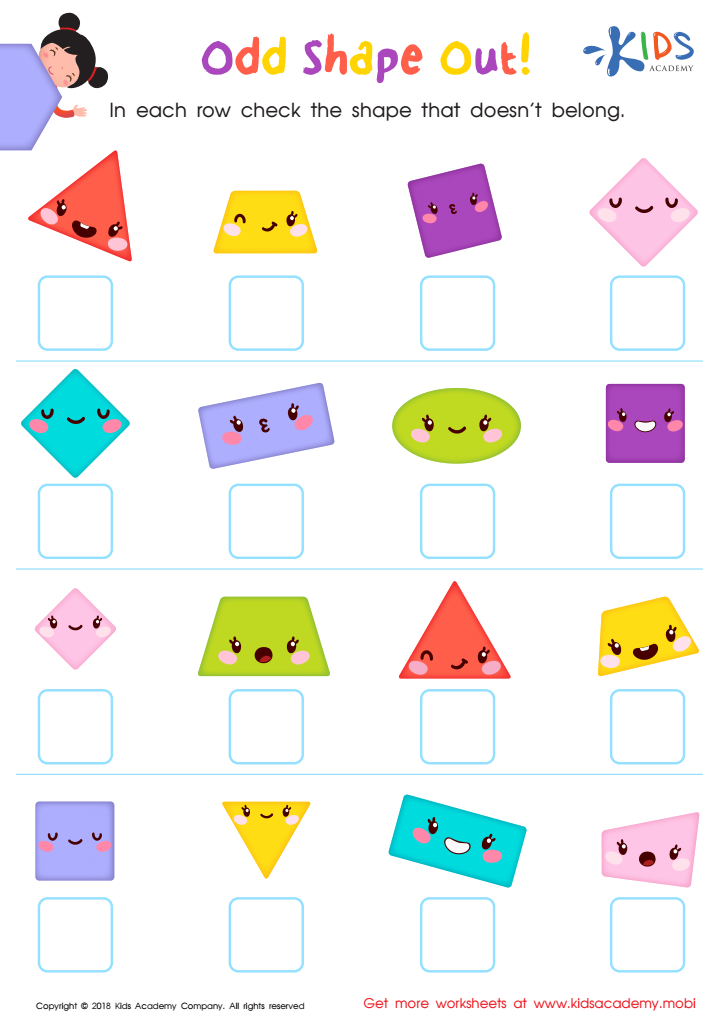
Odd Shape Out Worksheet for Grade 3
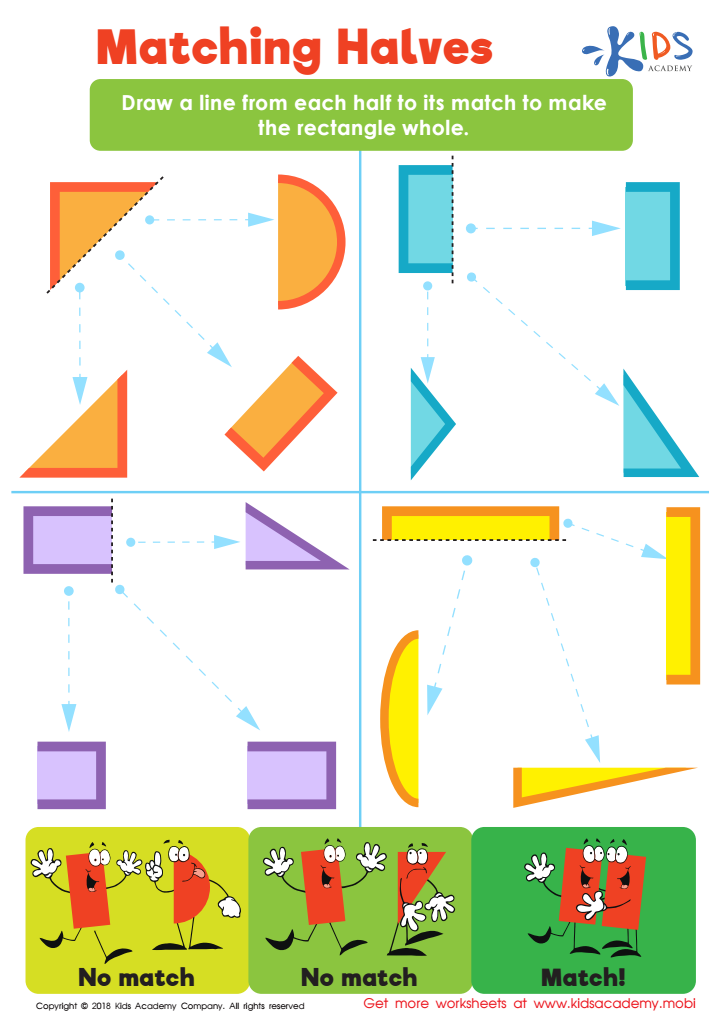
Matching Halves Worksheet
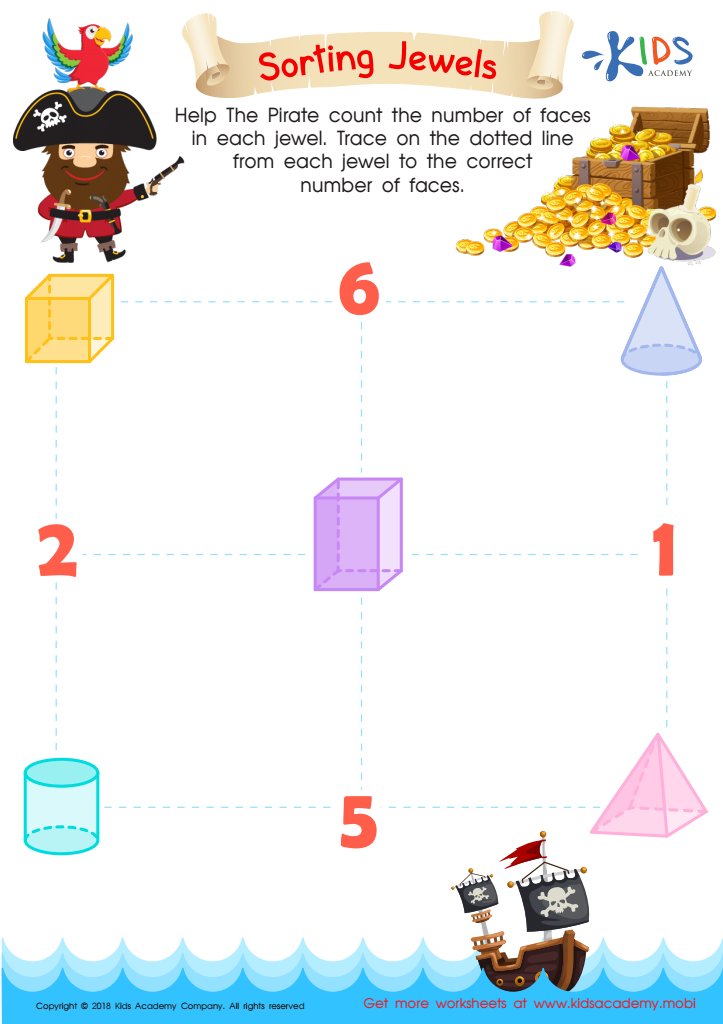
Sorting Jewels Worksheet
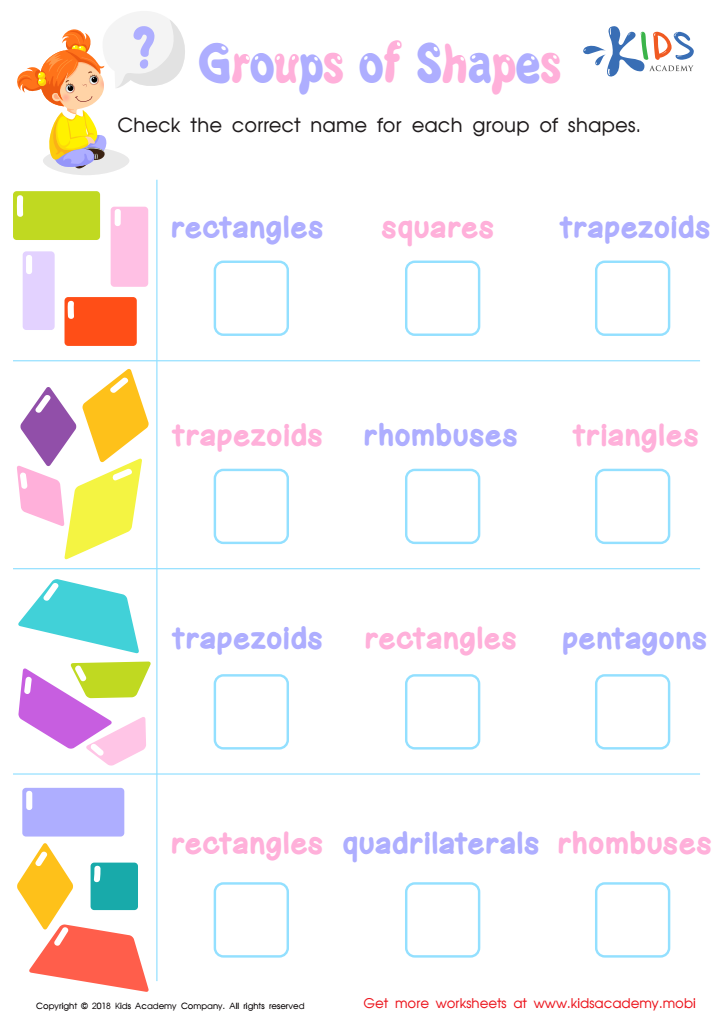
Groups of Shapes Worksheet
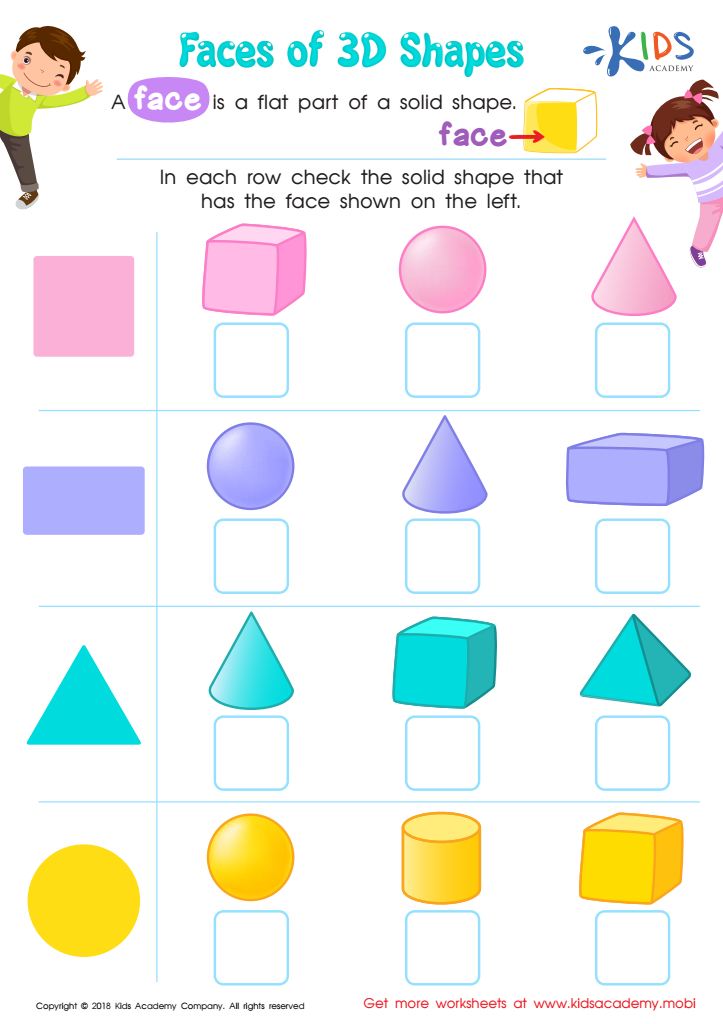
Faces of 3D Shapes Worksheet
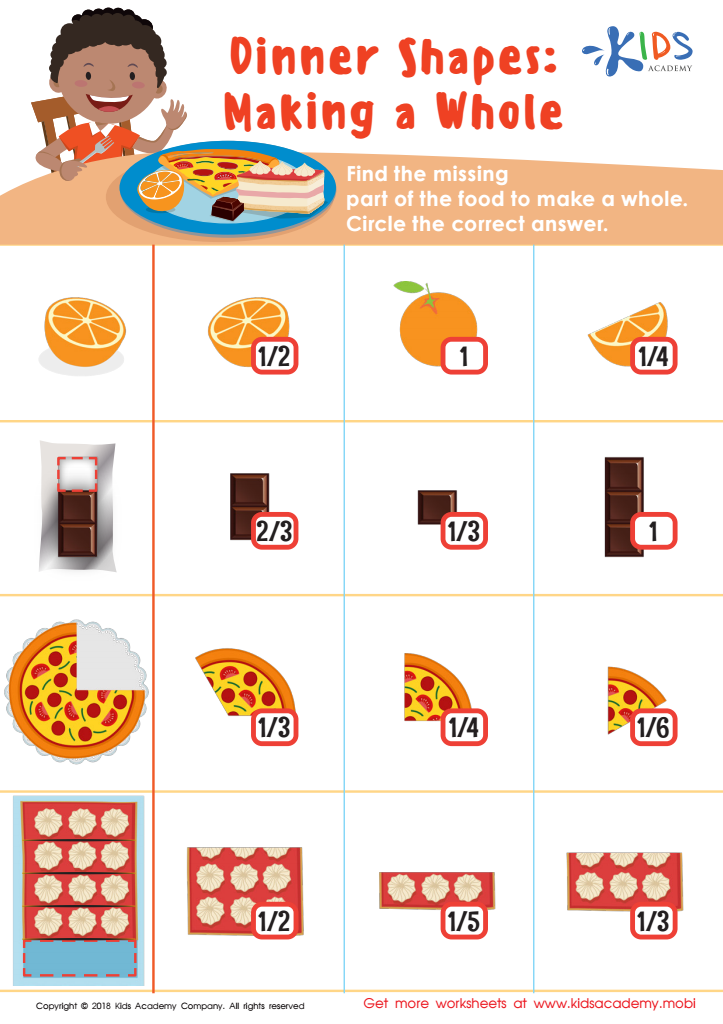
Dinner Shapes: Making a Whole Worksheet
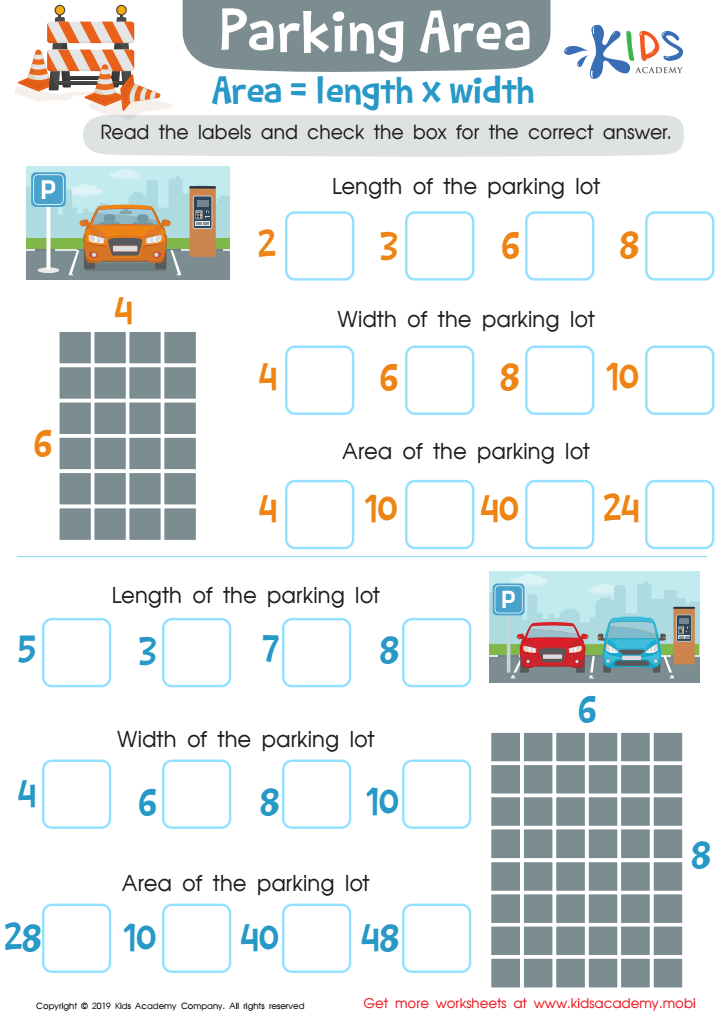
Parking Area Worksheet
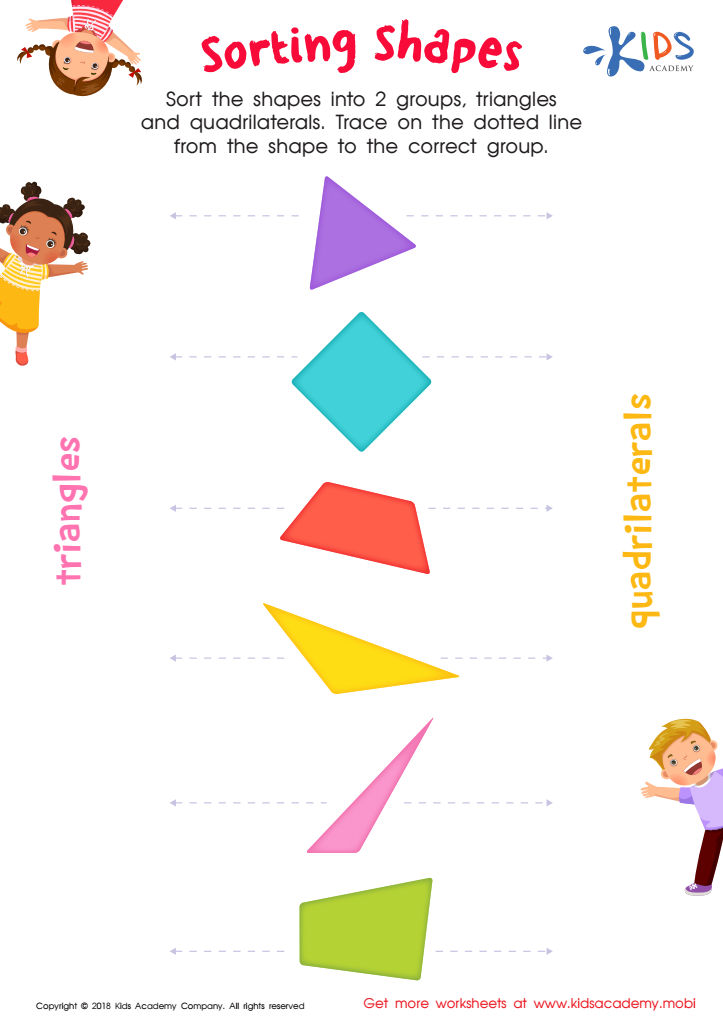
Sorting Shapes Worksheet
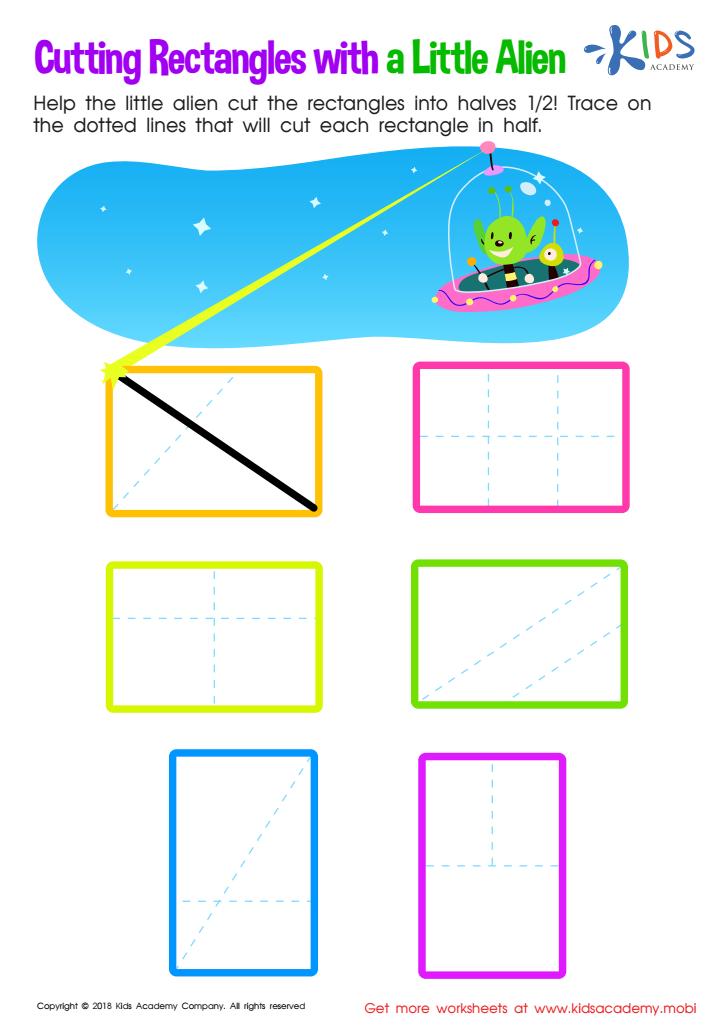
Cutting Rectangles with Alien Worksheet
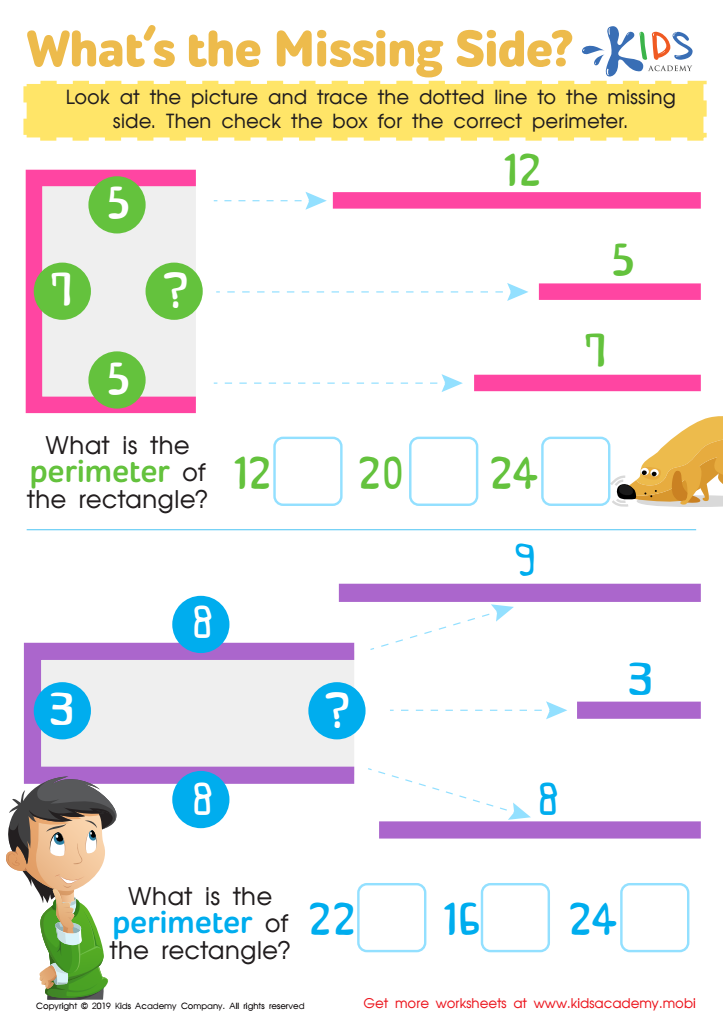
What's the Missing Side Worksheet
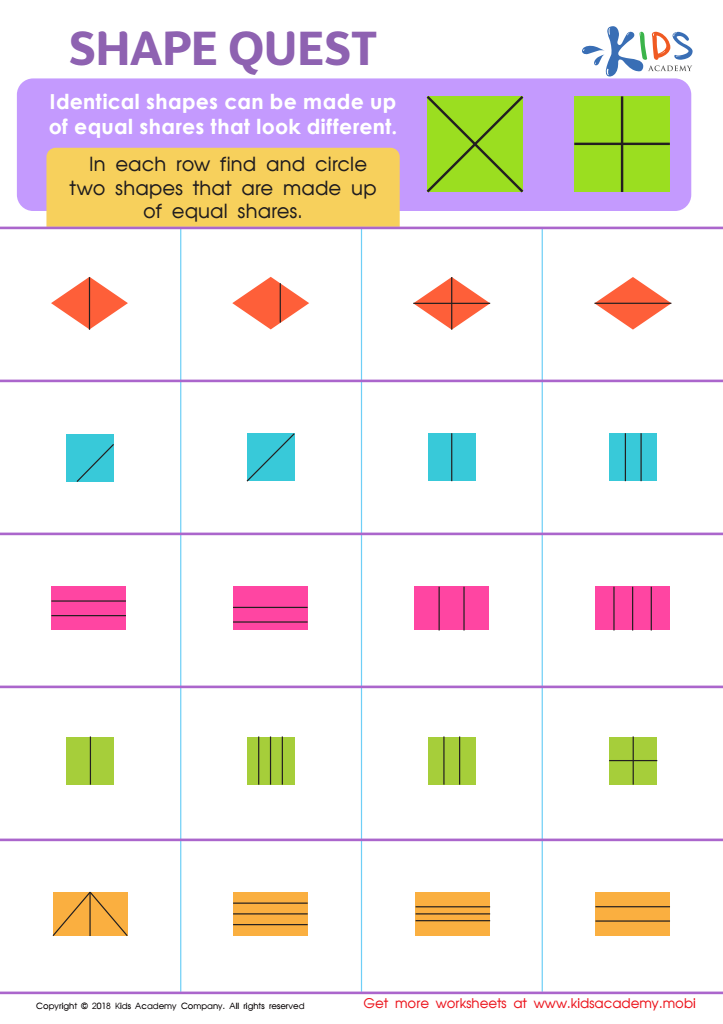
Shape Quest Worksheet
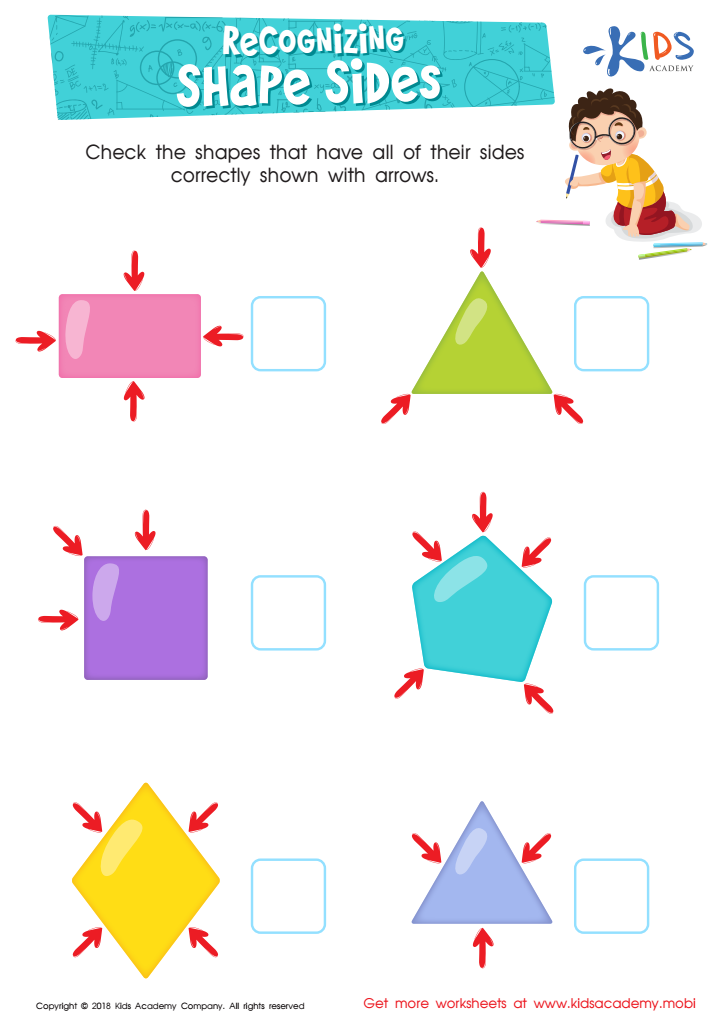
Recognizing Shape Sides Worksheet
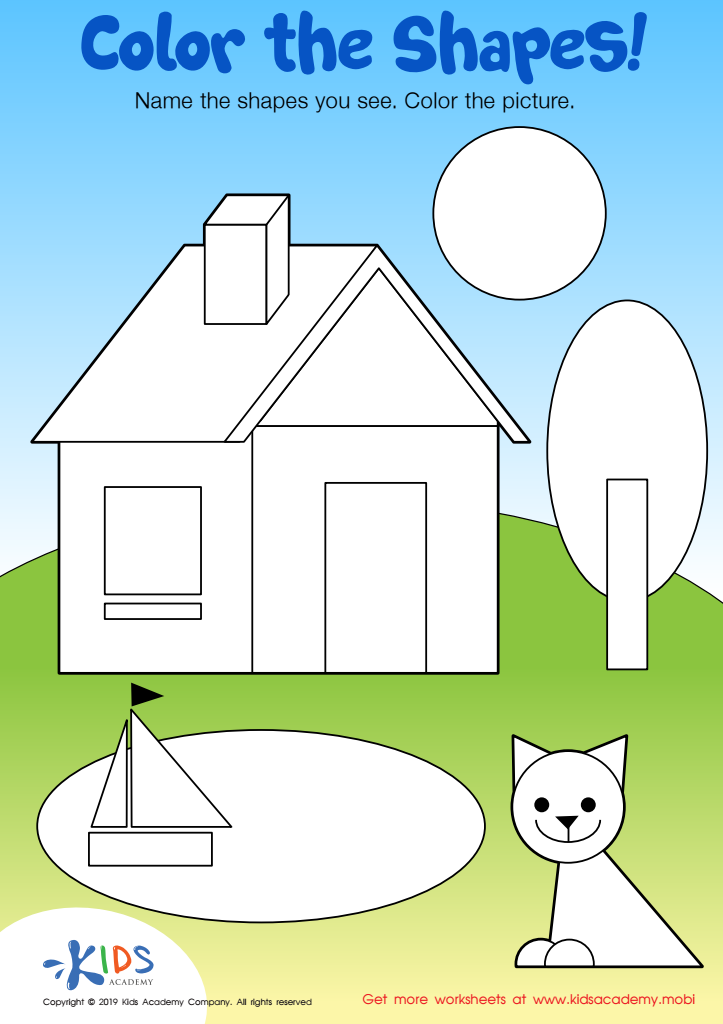
Color the Shapes Worksheet
 Assign to My Students
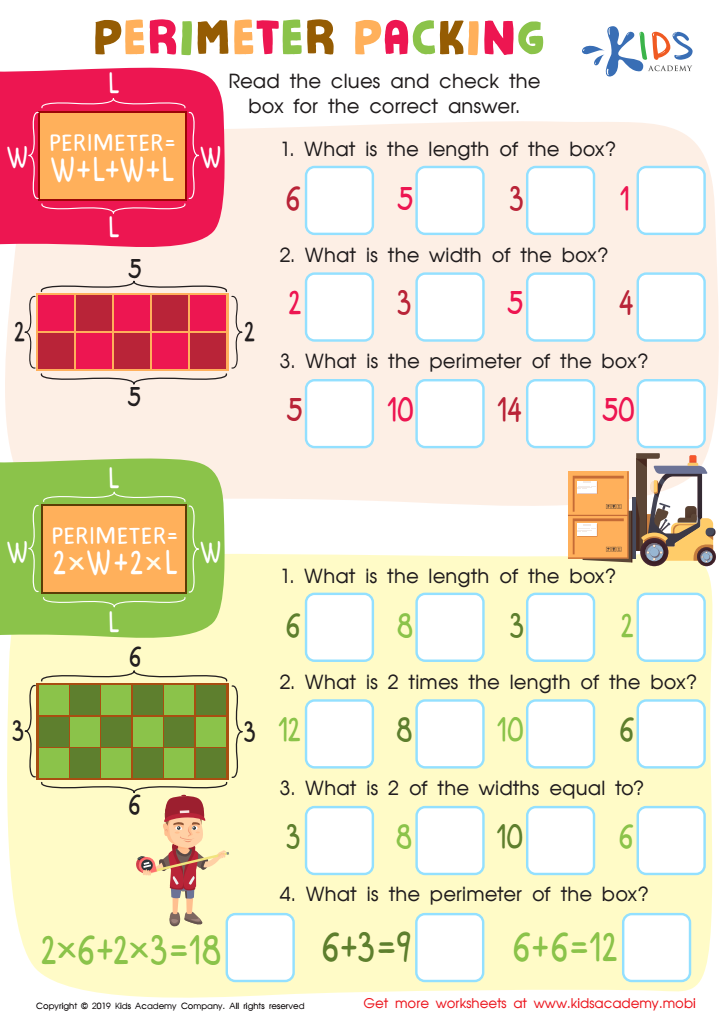
Perimeter Parking Worksheet
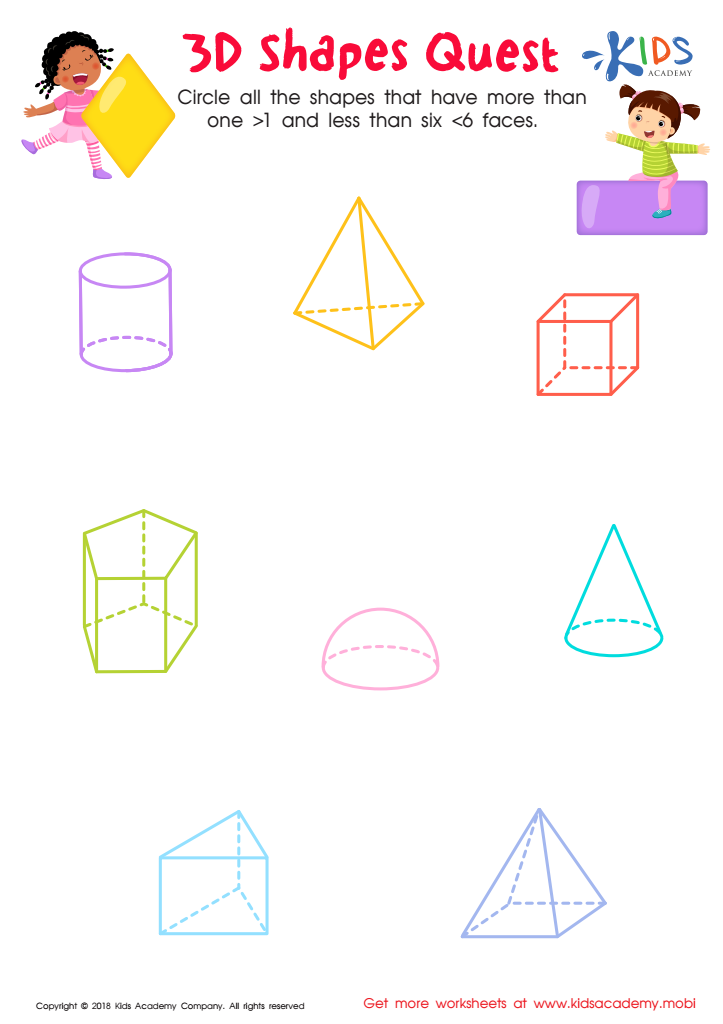
3D Shapes Quest Worksheet
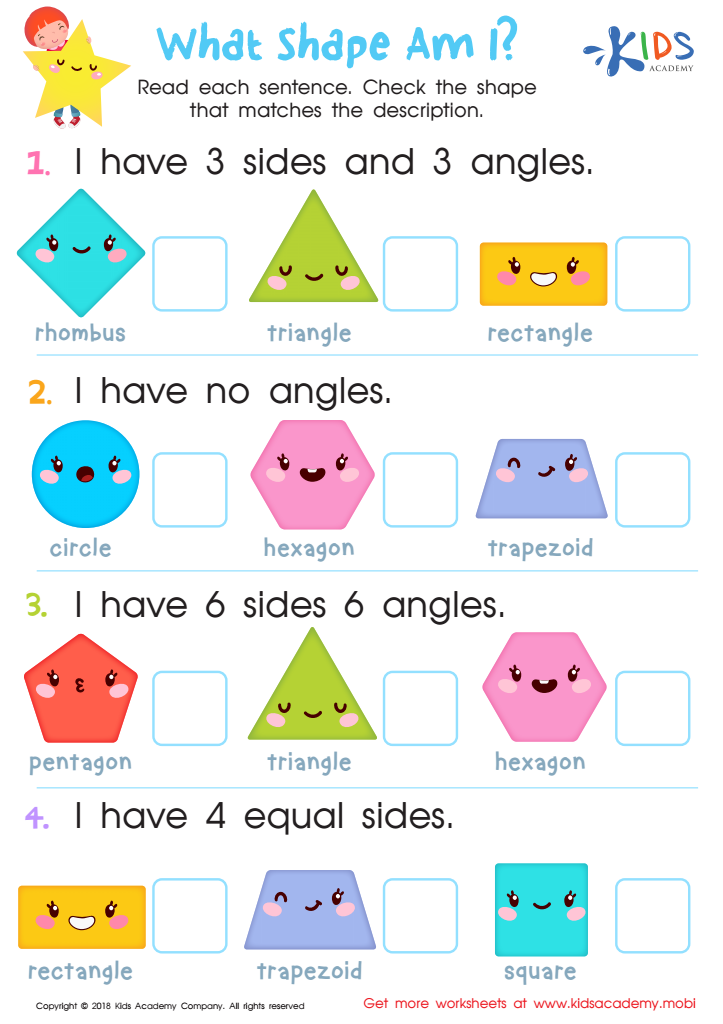
What Shape Am I? Worksheet
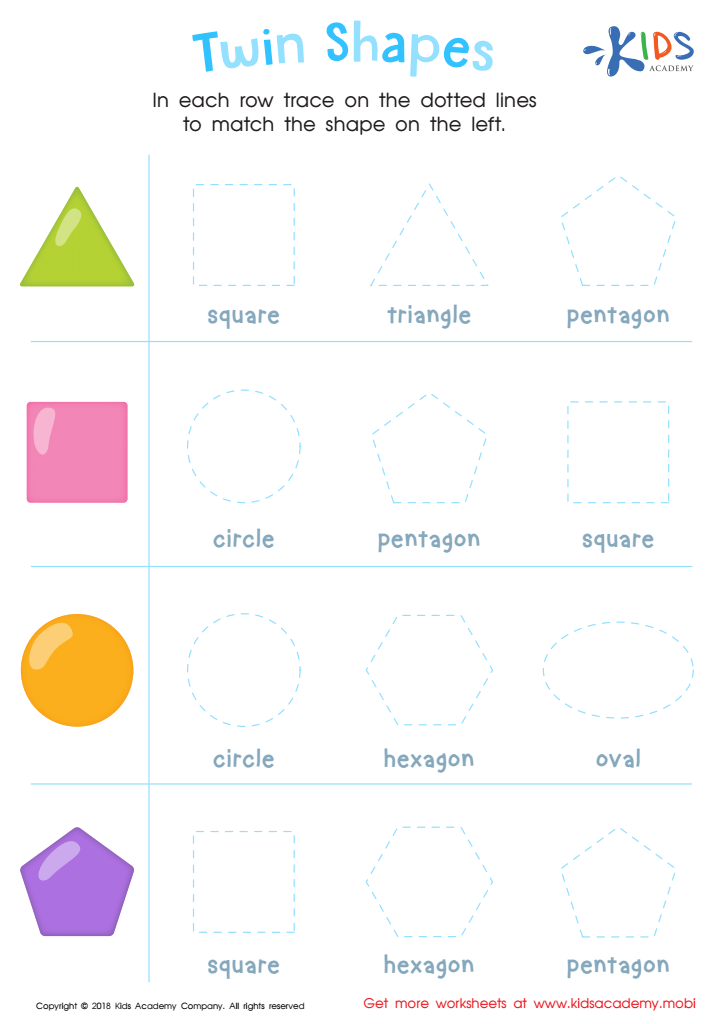
Twin Shapes Dot-to-Dot Worksheet
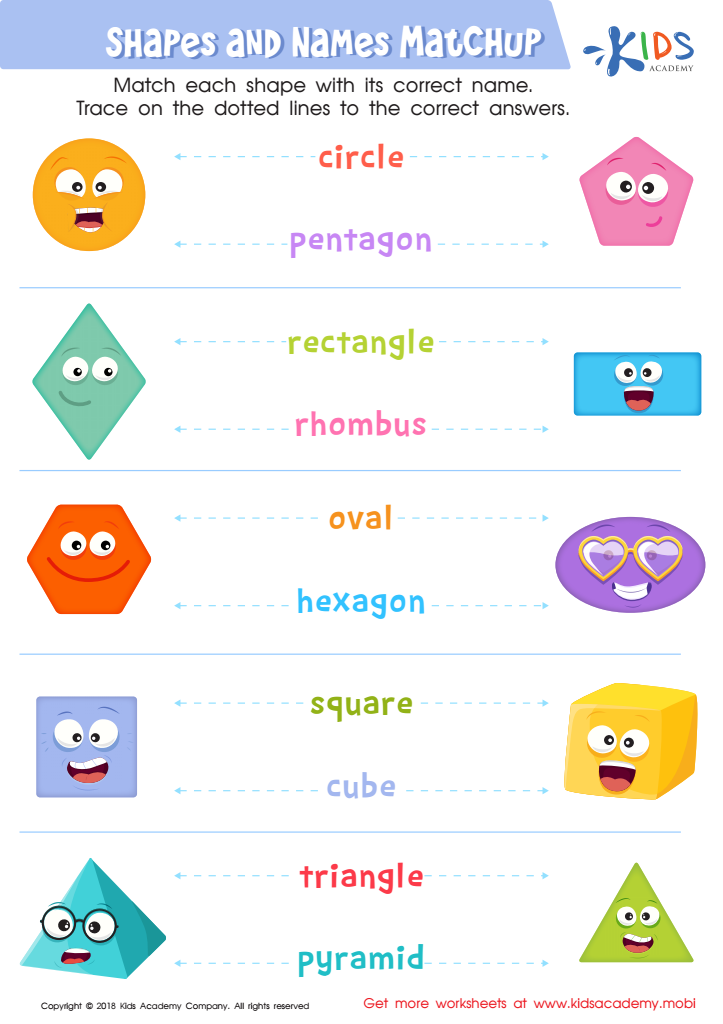
Shapes and Names Matchup Worksheet
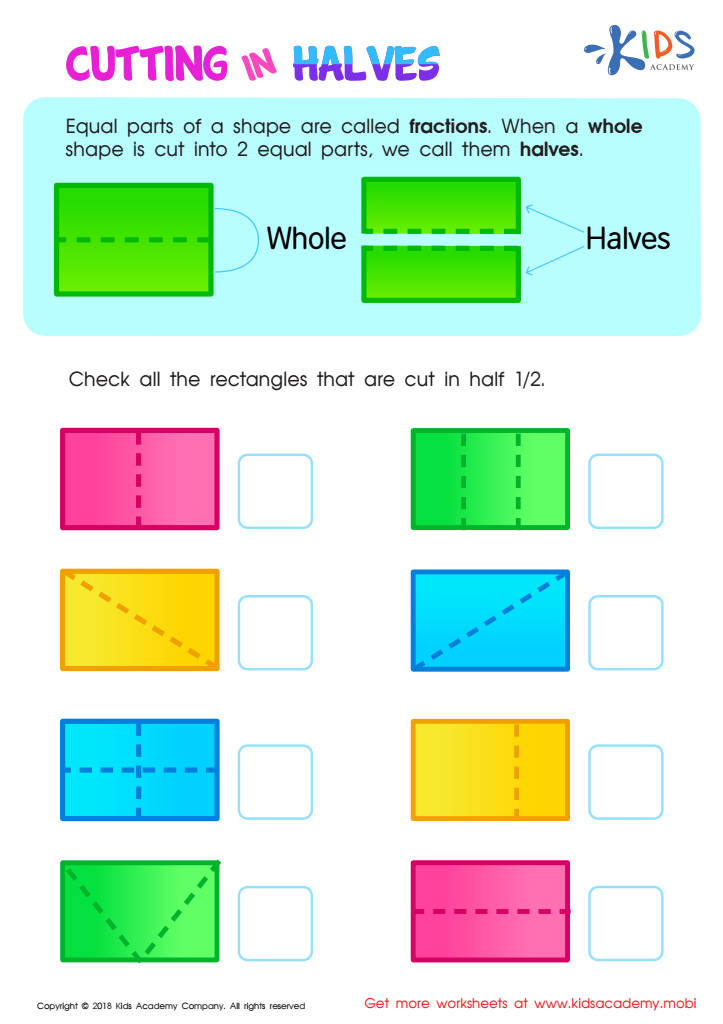
Cutting in Halves Worksheet
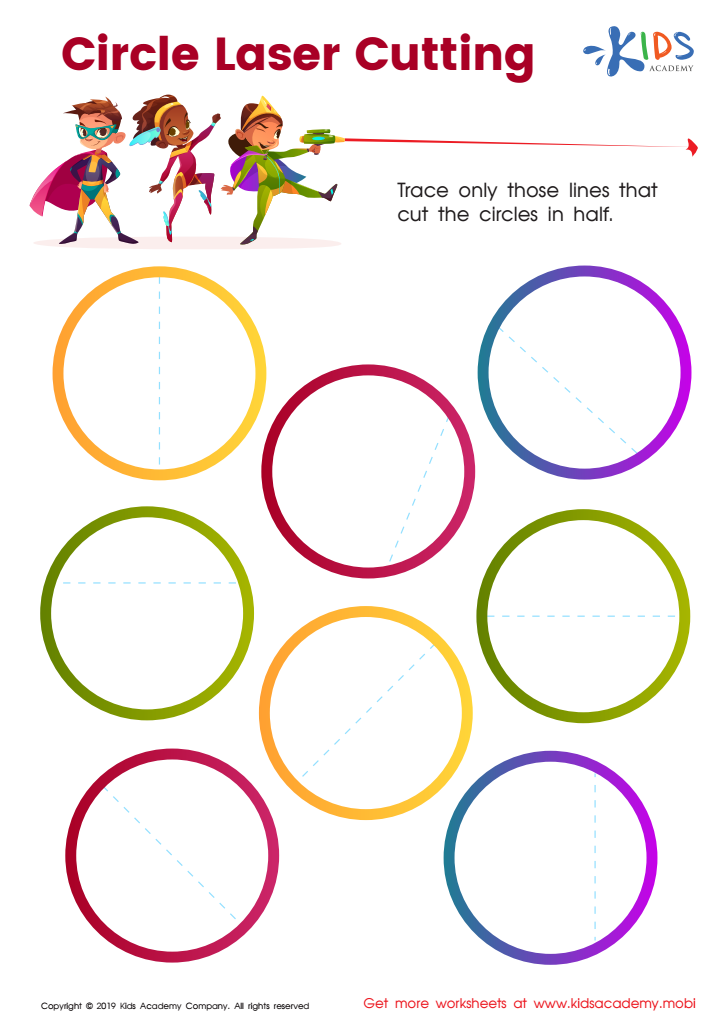
Circle Laser Cutting Worksheet
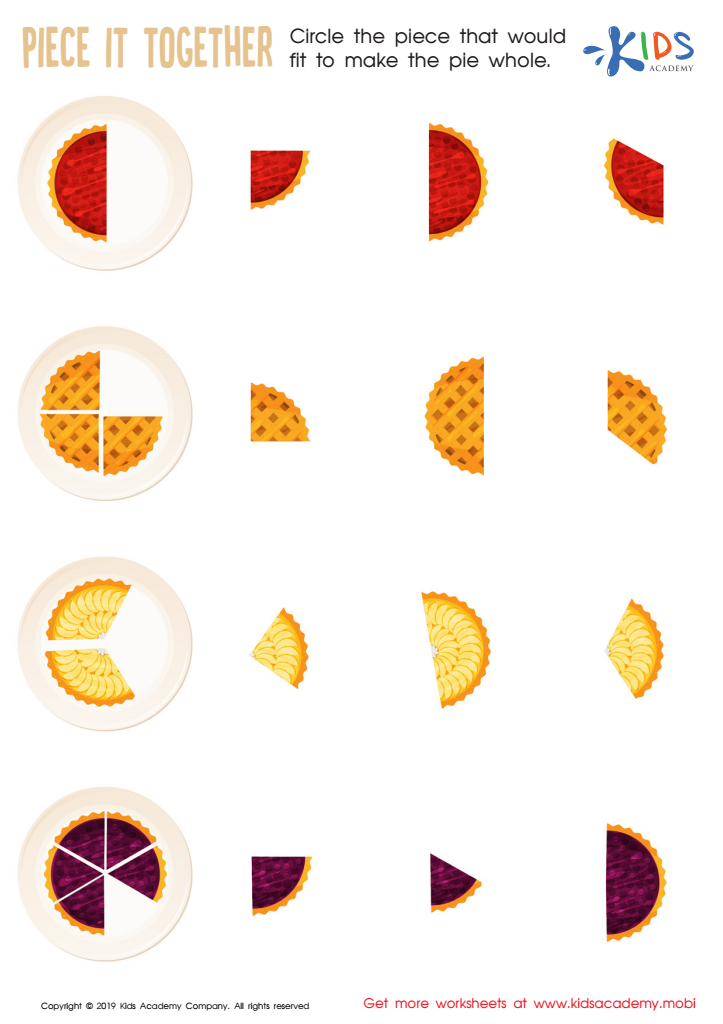
Piece it together Worksheet
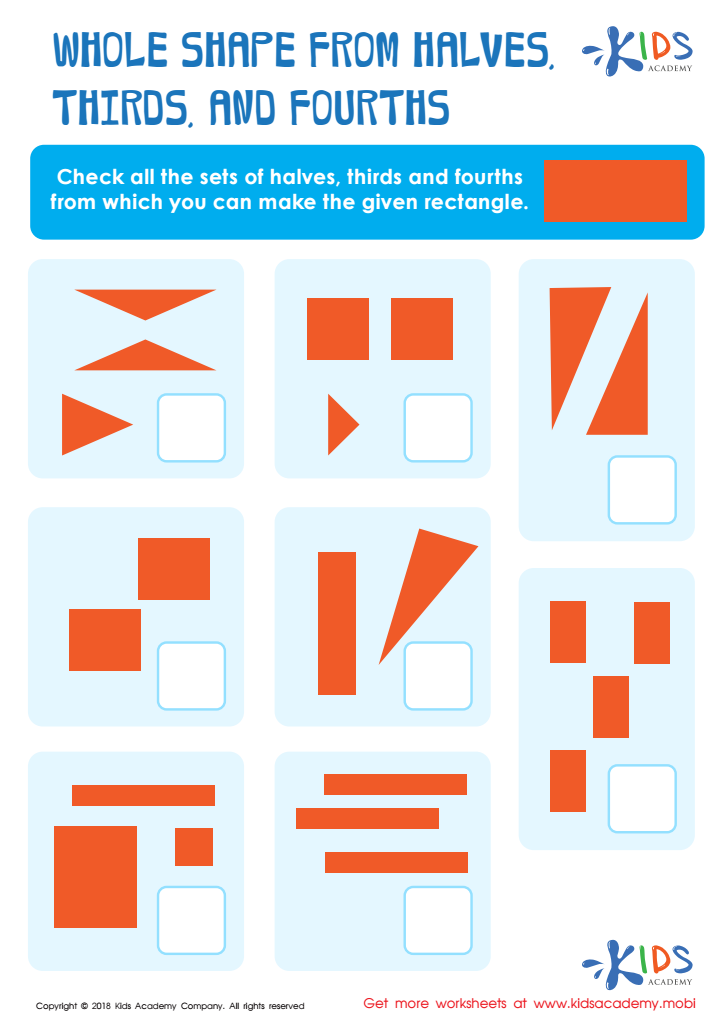
Whole Shape from Halves, Thirds and Fourths Worksheet








Shape recognition geometry is a crucial skill for 8-year-olds, as it serves as a building block for more complex mathematical concepts and everyday problem-solving. Parents and teachers should prioritize this learning phase for several reasons. Firstly, it enhances spatial reasoning, allowing children to better navigate their physical world. Recognizing shapes and understanding their properties helps kids develop the ability to visualize and manipulate objects in their mind, a skill integral to tasks ranging from building with blocks to solving puzzles.
Secondly, early exposure to geometry supports mathematical thinking. Understanding shapes and their attributes sets the stage for grasping more advanced geometry, measurement, and even algebra in later academic years. Moreover, geometry is inherently integrated into various subjects including art, engineering, and computer programming, thus a strong foundational knowledge opens doors to interdisciplinary learning.
Additionally, recognizing shapes is essential for honing observational skills. Children learn to notice details, patterns, and symmetries within their environments, improving both their analytical and creative thinking. Whether it is recognizing a triangular road sign or understanding patterns in nature, shape recognition equips children with essential tools for interpreting and interacting with the world around them.
Ultimately, by valuing and fostering shape recognition geometry, parents and teachers can nurture a child's cognitive development, academic readiness, and confidence in tackling diverse intellectual challenges.








