
Simplifying Fractions Math Worksheets for 8-Year-Olds
22 filtered results
Difficulty Level
Grade
Age
-
From - To
Subject
Activity
Standards
Discover our engaging "Simplifying Fractions Math Worksheets for 8-Year-Olds" tailored to make learning fractions fun and effective. Our worksheets are designed to help young learners grasp the concept of simplifying fractions through colorful, interactive exercises. Suitable for classroom or home use, these printable resources offer a variety of problems, from basic reductions to more challenging tasks. Each worksheet fosters comprehension and confidence, ensuring children develop strong fraction skills. Perfect for supplementing their math curriculum, these worksheets turn complex ideas into easily understandable lessons. Start simplifying fractions with your child today and watch their math abilities flourish!
Favorites
With answer key
Interactive
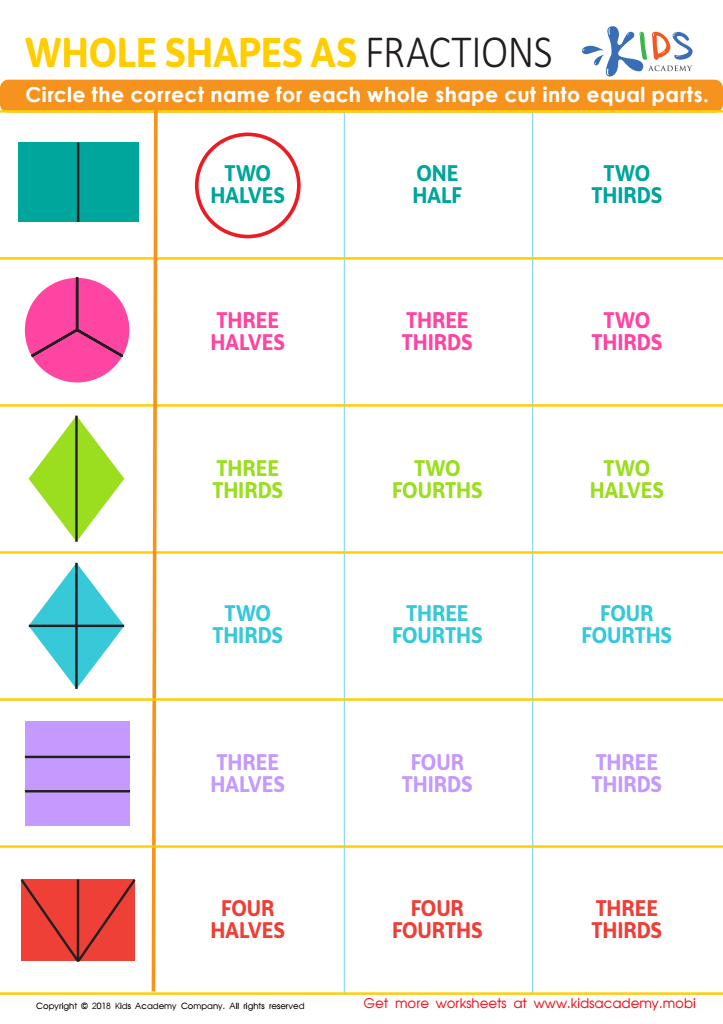
Whole Shapes as Fractions Worksheet
Introduce your child to fractions! After they can draw whole shapes, have them represent them as fractions using a simple worksheet. This will help improve their understanding of naming whole shapes cut into equal parts.
 Assign to My Students
Whole Shapes as Fractions Worksheet
Worksheet
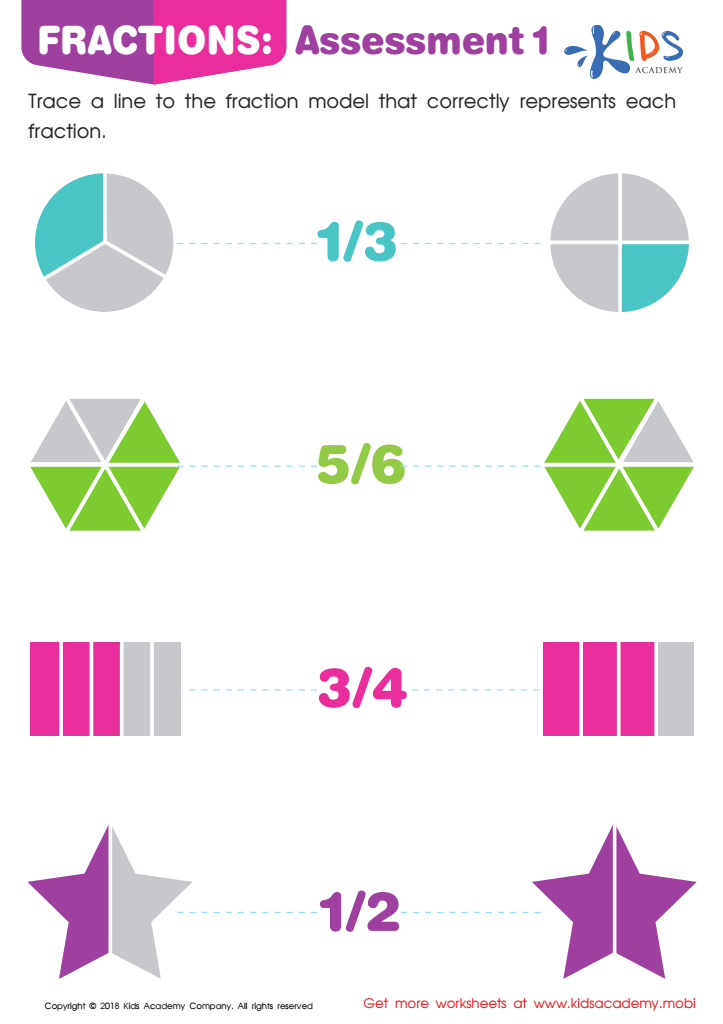
Fractions: Assessment 1 Worksheet
Master fractions easily with this worksheet! It has four sets of fraction models and fraction equations with two models each. Guide your kids to trace a line to the correct fraction model for each equation.
Fractions: Assessment 1 Worksheet
Worksheet
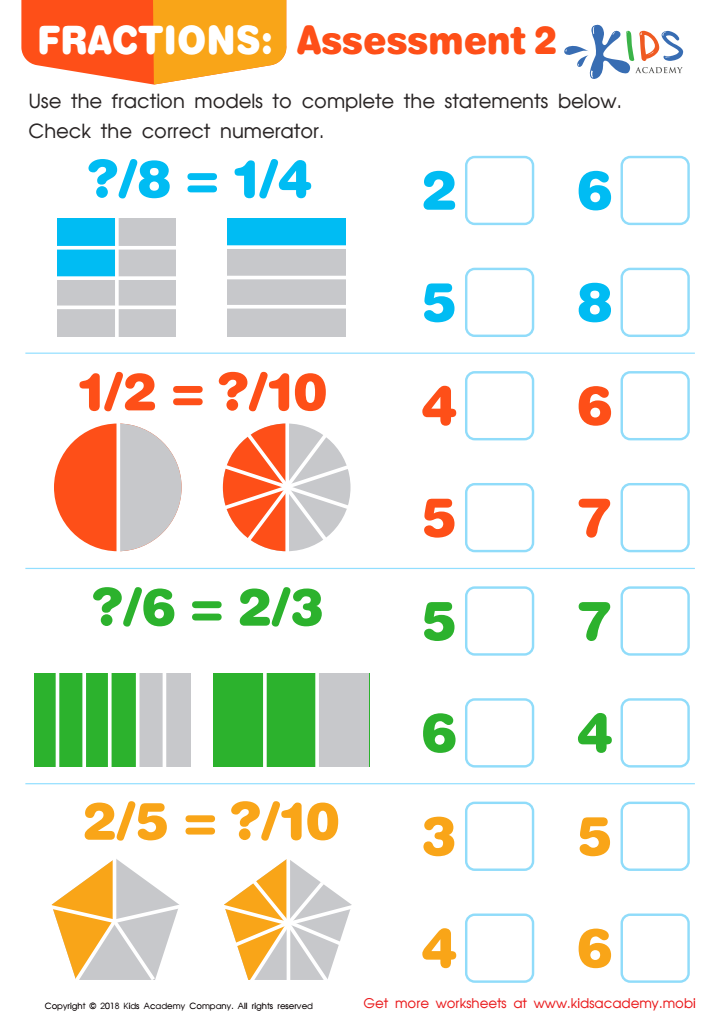
Fractions: Assessment 2 Worksheet
Help your kids understand fractions better with this worksheet. Ask them to complete the fraction statements using the fraction models on the left and then check the correct numerators. This can help clear up any confusion they may have with fractions and fraction models.
Fractions: Assessment 2 Worksheet
Worksheet
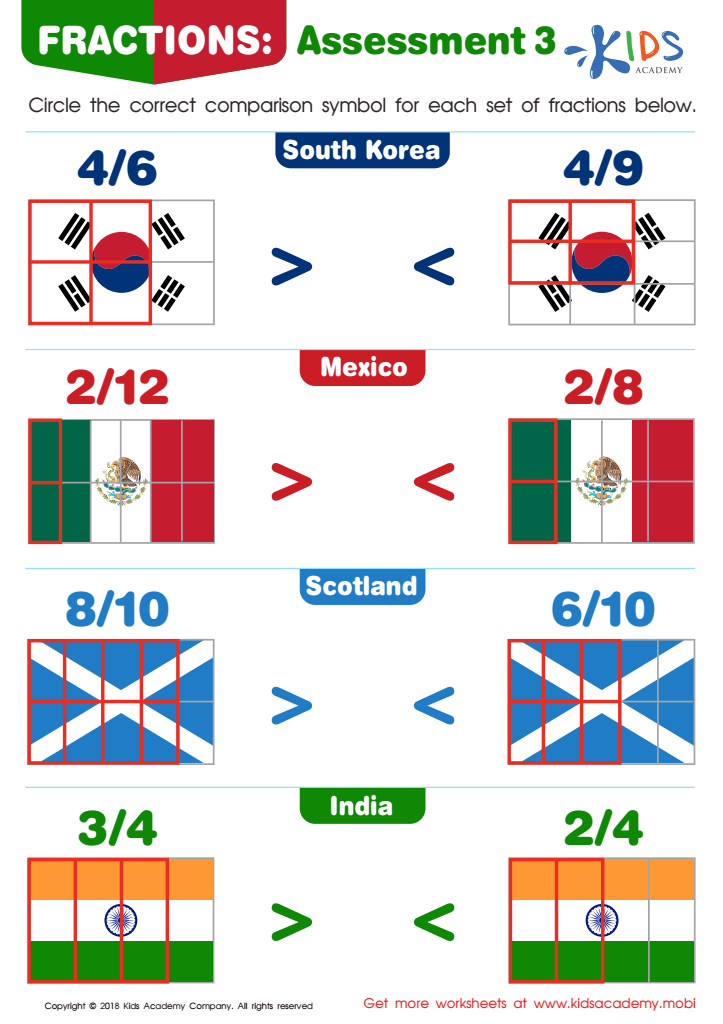
Fractions: Assessment 3 Worksheet
This worksheet helps teach kids about fractions and introduces them to countries and their flags. Have them read the country names and point to the flags. Then help them assess the fractions, and ask them to circle the symbol that shows their values.
Fractions: Assessment 3 Worksheet
Worksheet
Join Kids Academy for Free
Who is primarily going to use this learning content?







Parents and teachers should prioritize teaching 8-year-olds to simplify fractions because it builds a crucial foundation for their overall math skills. Simplifying fractions helps children understand the core concept of equivalency in math - that different fractions can represent the same value. This understanding is fundamental for more complex mathematical operations they will encounter in later grades.
When children grasp how to simplify fractions, it boosts their confidence in handling numbers and operations. Confidence is key in math since a positive attitude towards the subject can reduce anxiety and foster a willingness to tackle challenging problems. Additionally, simplifying fractions enhances problem-solving skills. It encourages logical thinking as students must identify common factors to reduce fractions to their simplest form. This process develops critical analytical skills that are useful beyond math, in everyday decision-making and academic pursuits.
Moreover, simplifying fractions is essential for performing arithmetic with fractions, such as addition, subtraction, multiplication, and division. Mastering these skills early ensures a smoother transition to more advanced math topics like algebra and geometry. By helping children understand and apply the concept of simplifying fractions, parents and teachers are setting them up for long-term academic success, which opens the door to future educational and career opportunities.








