Cognitive Development Tracing Numbers Worksheets for 8-Year-Olds
5 filtered results
-
From - To
Enhance your 8-year-old's cognitive development with our engaging tracing numbers worksheets! Designed to make learning fun, these worksheets focus on developing fine motor skills, number recognition, and early math concepts. As children trace numbers, they improve their hand-eye coordination and concentration, paving the way for a solid mathematical foundation. Our thoughtfully crafted activities encourage creativity and critical thinking, empowering kids to learn at their own pace. With vibrant designs and easy-to-follow instructions, these worksheets transform number practice into an enjoyable experience. Explore our resources and support your child's cognitive growth while boosting their confidence in math! Start tracing today!
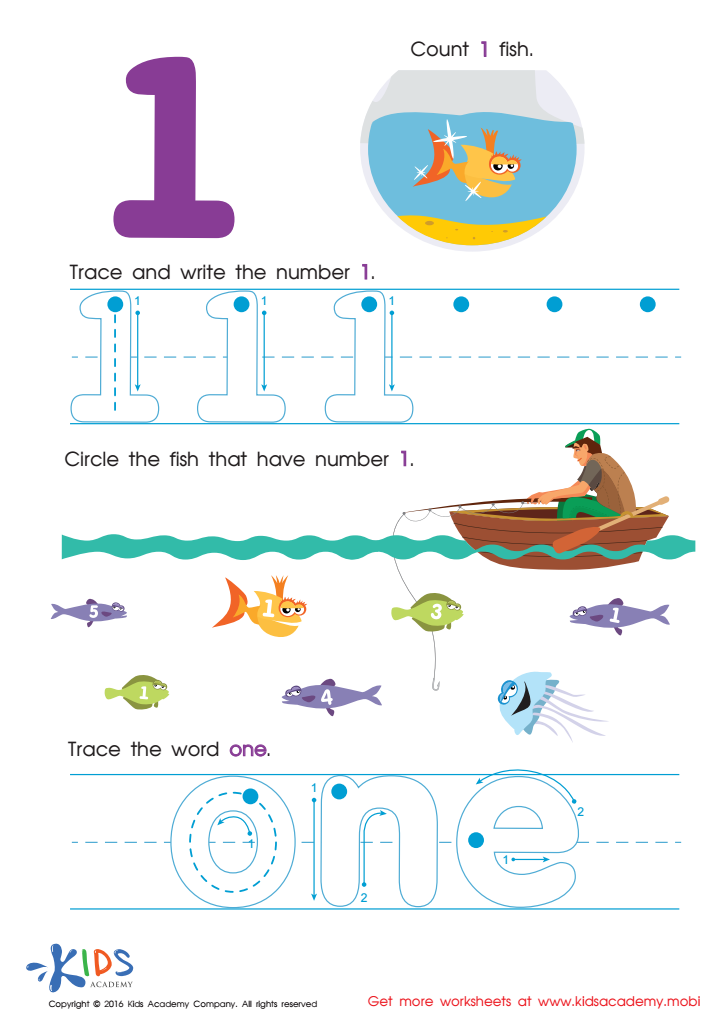
Learning to Write 1 Worksheet
 Assign to My Students
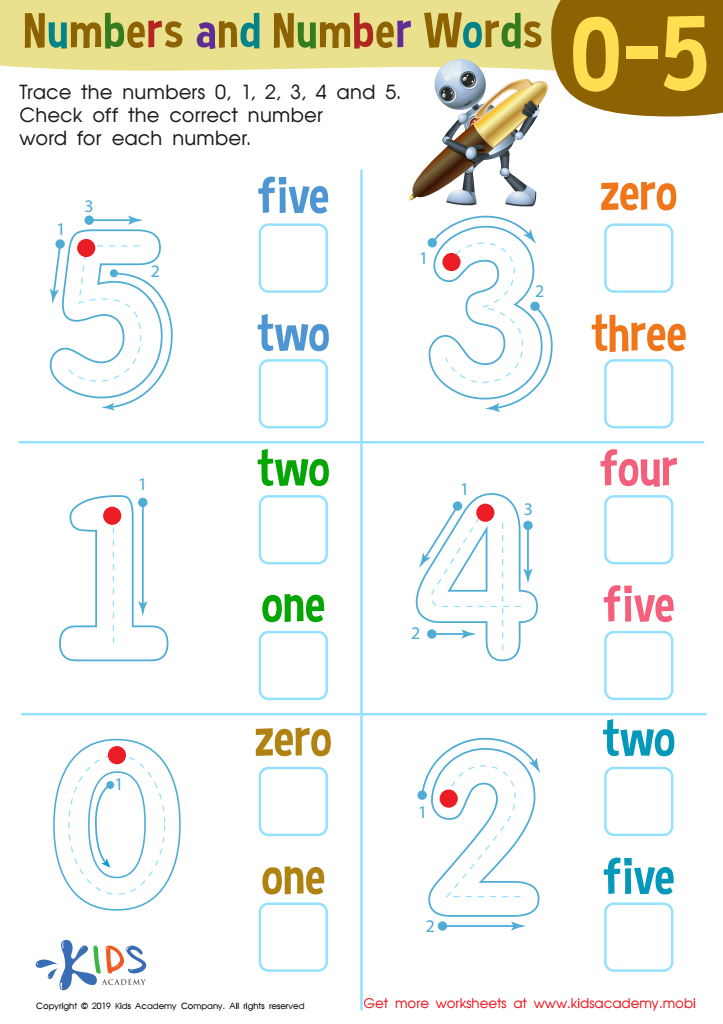
Numbers and Number Words Worksheet
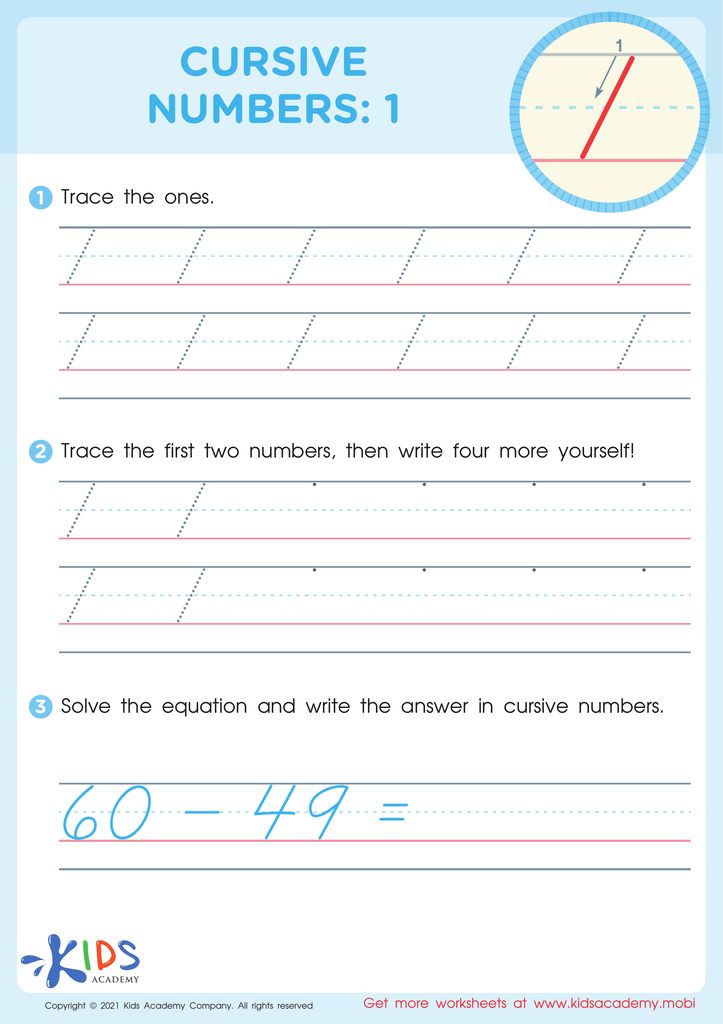
Cursive Numbers: 1 Worksheet
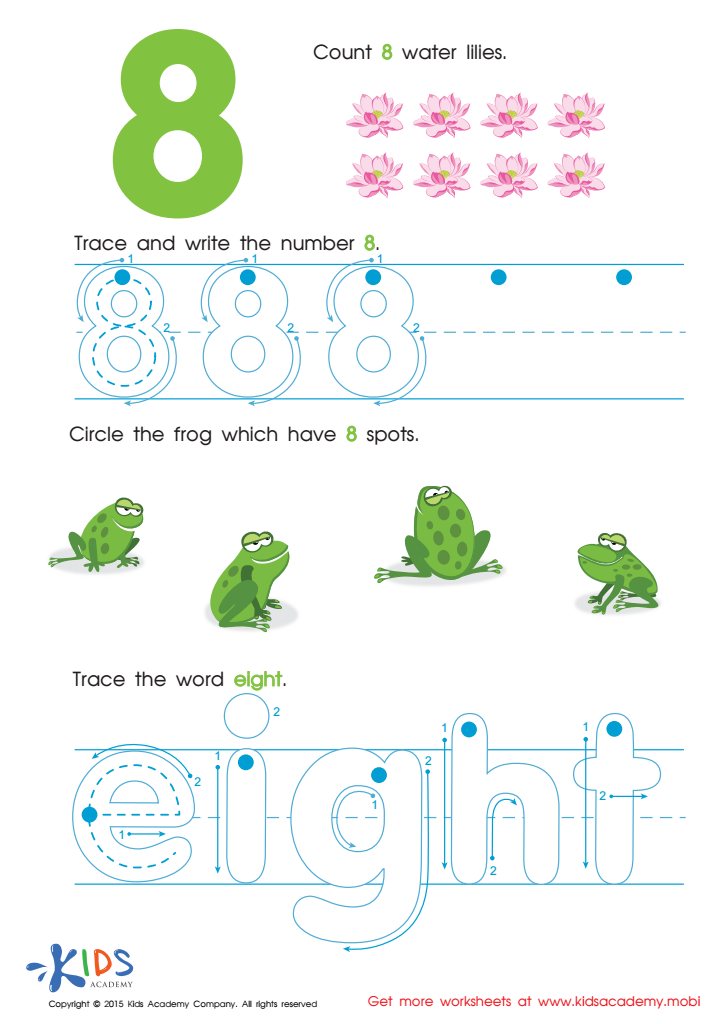
Learn Number 8 Easily Worksheet
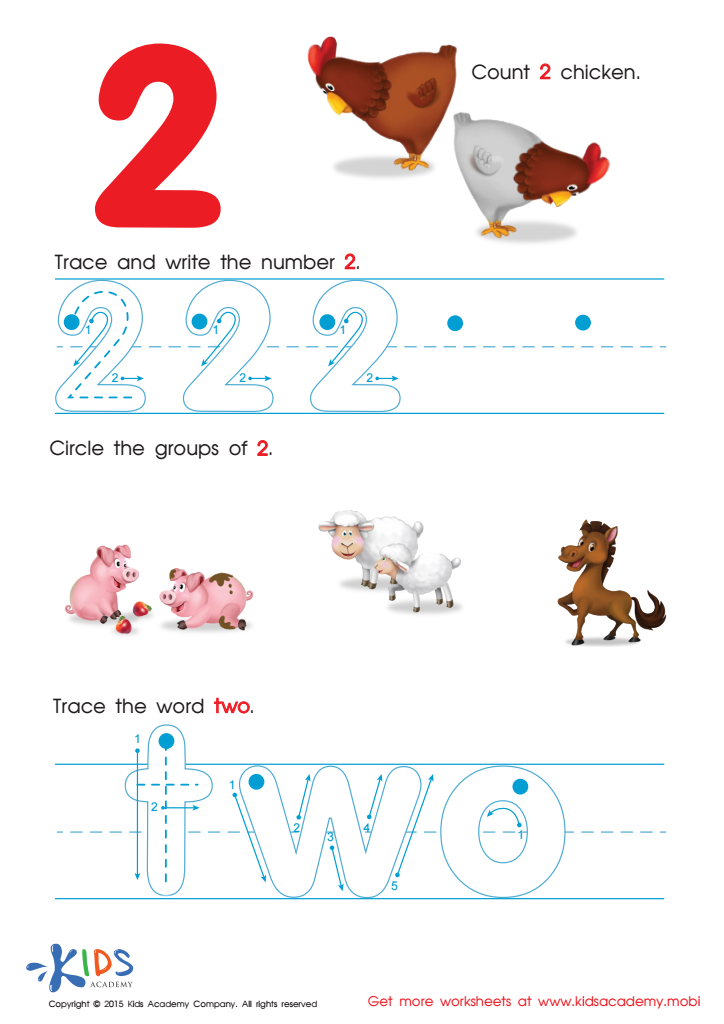
Learn to Write the Number 2 Worksheet








Cognitive development is crucial for children, especially around the age of 8, when they are refining their skills in critical thinking, problem-solving, and logical reasoning. Tracing numbers is an effective activity during this stage, making it essential for parents and teachers to prioritize it.
Firstly, tracing numbers enhances fine motor skills, a foundation for writing, drawing, and other daily tasks. As children use pencils to follow the curves and lines of numbers, they learn to control their hand movements, which translates into better handwriting and coordination in other activities.
Secondly, this exercise promotes number recognition and understanding of numerical values. By tracing, children engage kinesthetically, reinforcing their visual memory of numbers, and helping them grasp basic math concepts like sequencing and addition/subtraction.
Moreover, tracing numbers can be a gateway to discussions about mathematical patterns, fostering critical thinking. Parents and teachers can incorporate fun activities around tracing, creating a positive learning environment that encourages exploration and curiosity.
Ultimately, prioritizing cognitive development activities like tracing numbers equips children with essential skills that influence their academic performance and shape their learning experiences. Supporting this foundation means investing in their confidence and success in future math-related endeavors.








