Alphabet Worksheets Activities With Answers for Ages 3-7 - Page 2
25 filtered results
-
From - To
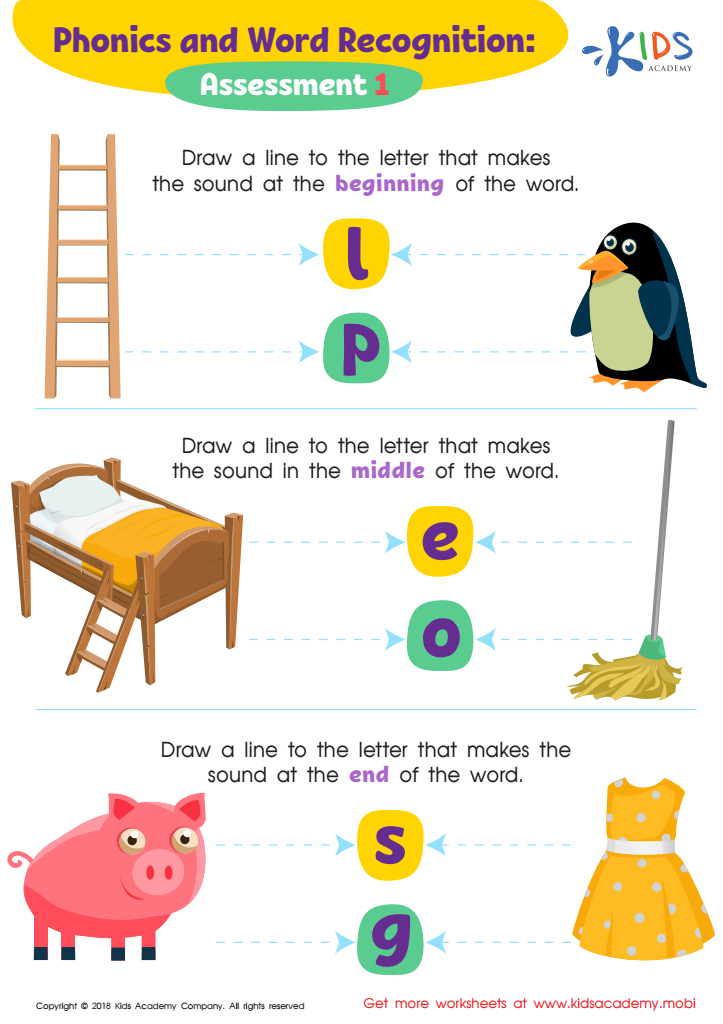
Phonics and Word Recognition: Assessment 1 ELA Worksheet
 Assign to My Students








Parents and teachers should prioritize alphabet activities for children ages 3-7 because they lay the foundation for literacy and cognitive development. During these formative years, children are naturally curious and eager to explore language; engaging them with fun, interactive alphabet activities can significantly enhance their learning.
Alphabet activities—such as letter tracing, matching games, and storytelling—help children recognize and remember letters, understand their sounds, and develop early reading skills. These activities also support fine motor skills, as children practice writing and manipulating letters through various craft materials. Additionally, incorporating playful learning fosters a positive attitude towards education, encouraging lifelong literacy habits.
Moreover, alphabet activities promote a social component, often involving cooperative play with peers or family members, which nurtures social skills and emotional development. Featuring hands-on, visually appealing tasks can also make learning more effective, ensuring that students remain engaged and motivated.
Overall, prioritizing alphabet activities creates a solid literacy foundation for children, equipping them with essential skills for future academic success and enhancing their cognitive abilities through active, constructive play. This investment during ages 3-7 has enduring benefits as children progress in their educational journey.








