Normal Phonics Worksheets Activities With Answers for Ages 7-8
5 filtered results
-
From - To
Discover engaging Normal Phonics Worksheets tailored for children aged 7-8! These activities are designed to enhance phonics skills, crucial for reading and writing development. Each worksheet offers fun exercises, including sound recognition, blending, and vocabulary building, ensuring learners grasp essential phonetic concepts. With included answer keys, teachers and parents can easily assess student progress and encourage independent learning. Perfect for classroom use or at-home practice, these worksheets support early literacy and foster a love for reading. Explore our collection today and empower your child's phonics journey with creative, effective activities that make learning enjoyable and productive!
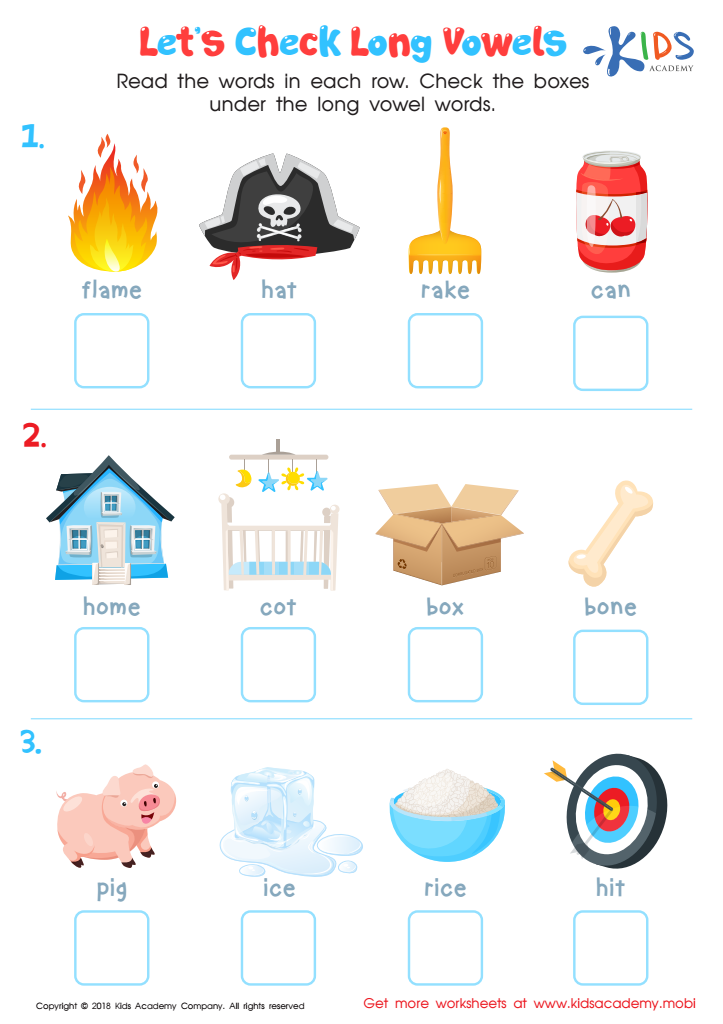
Let's Check Long Vowels: Assessment Worksheet
 Assign to My Students
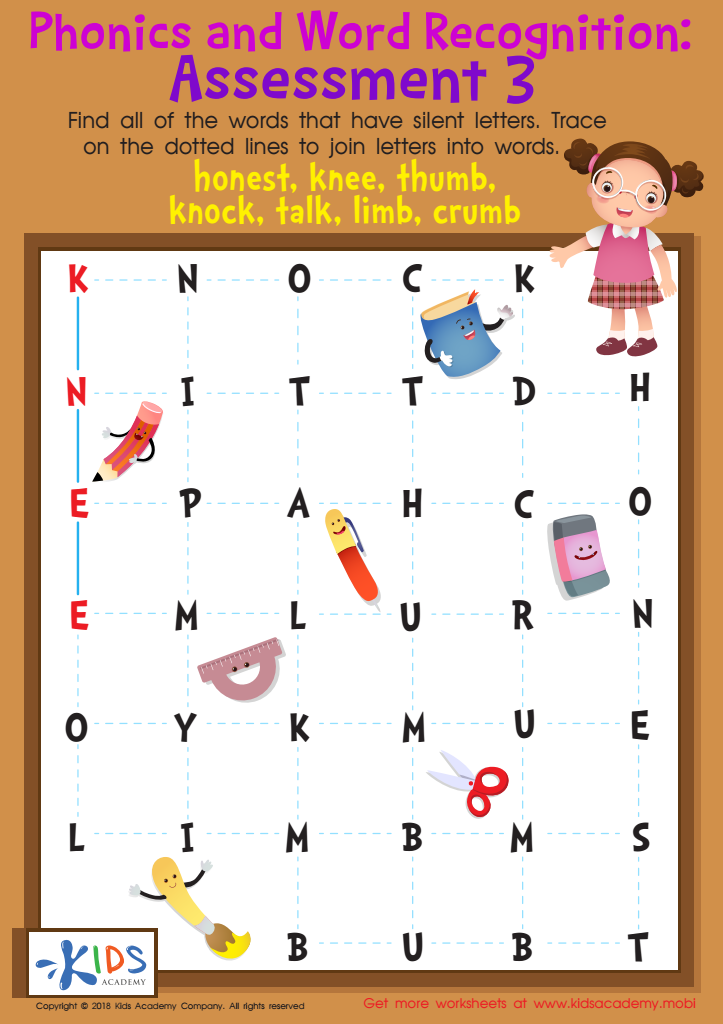
Phonics and Word Recognition: Assessment 3 Worksheet
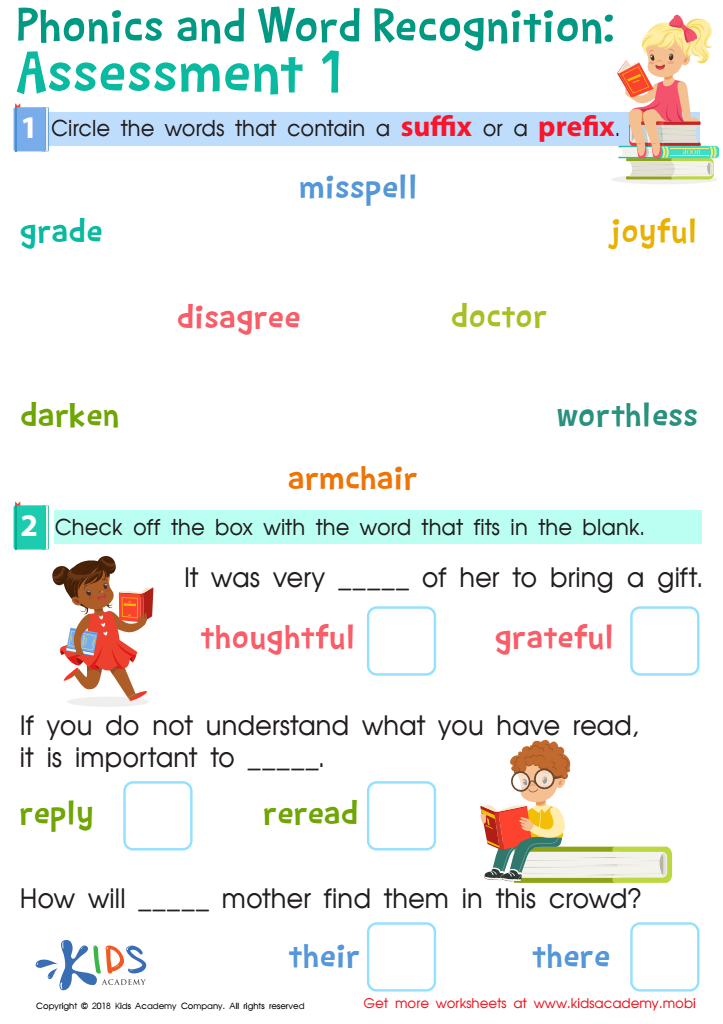
Phonics and Word Recognition: Assessment 1 Worksheet
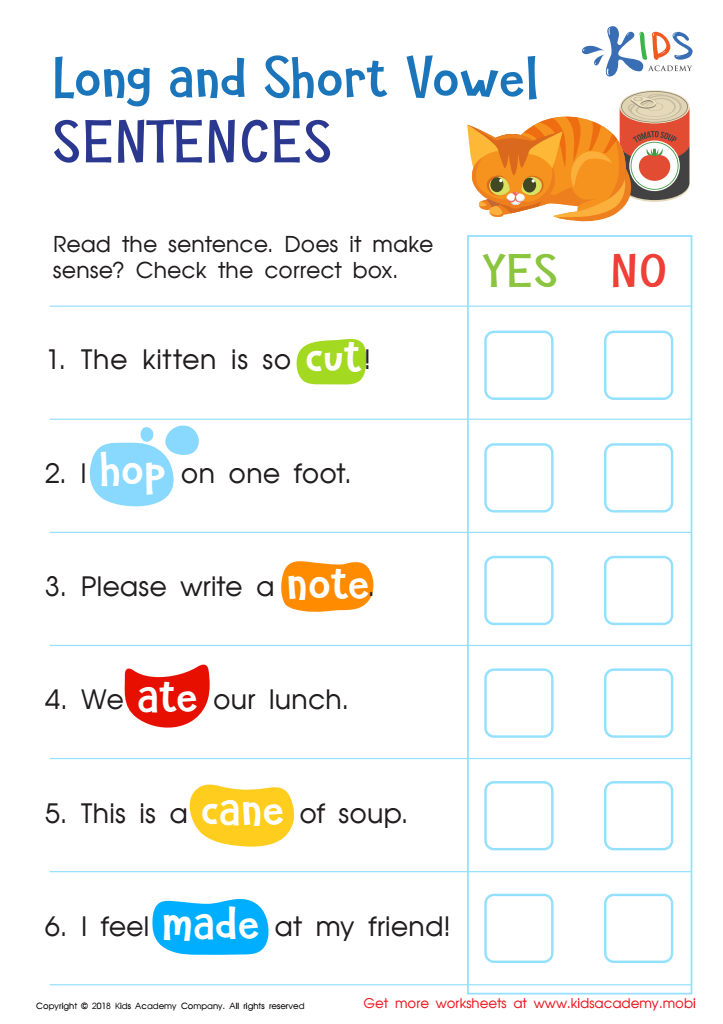
Long and Short Vowel Sentences: Assessment Worksheet
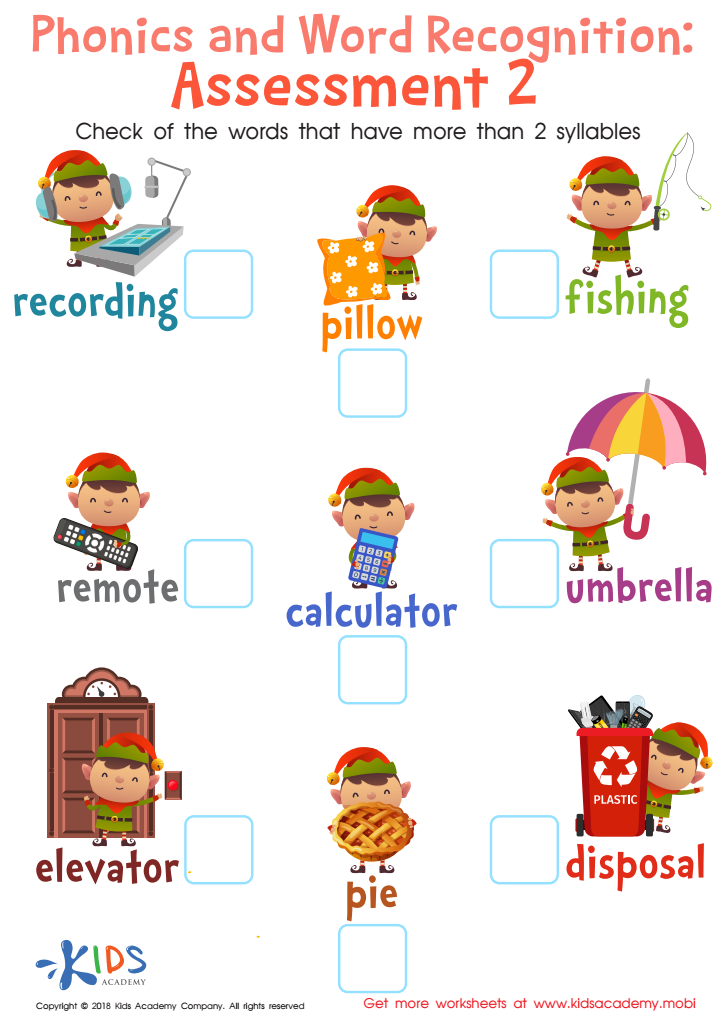
Phonics and Word Recognition: Assessment 2 Worksheet







Parents and teachers should prioritize Normal Phonics Activities for children aged 7-8 because these activities significantly enhance literacy skills at a crucial developmental stage. At this age, children are transitioning from learning to read to reading to learn, making it essential to reinforce phonics as a foundation for comprehensive reading proficiency. Engaging in phonics activities helps children recognize and manipulate sounds in spoken language, which is fundamental for decoding words and improving spelling.
Moreover, incorporating structured activities provides children with interactive and enjoyable learning experiences, fostering a positive attitude toward reading. Activities that come with answers allow for immediate feedback, enabling both educators and parents to gauge a child's understanding and progress effectively. This feedback loop can direct further instruction and additional support where it’s needed.
Additionally, building phonics skills can lead to improved confidence in students, encouraging them to read more widely and independently, which supports overall academic achievement. In essence, investing time in Normal Phonics Activities empowers children to develop essential literacy skills, paving the way for lifelong learning and success.








