Filters

102 filtered results

Clear all filters
Favorites
With answer key
Interactive

102 filtered results

Difficulty Level

Grade


Check out this FREE Trial Lesson on Reading Fiction for age 3-6!

Context Clues

Favorites
With answer key
Interactive
  • 3-6
  • With answer key
  • Reading Fiction
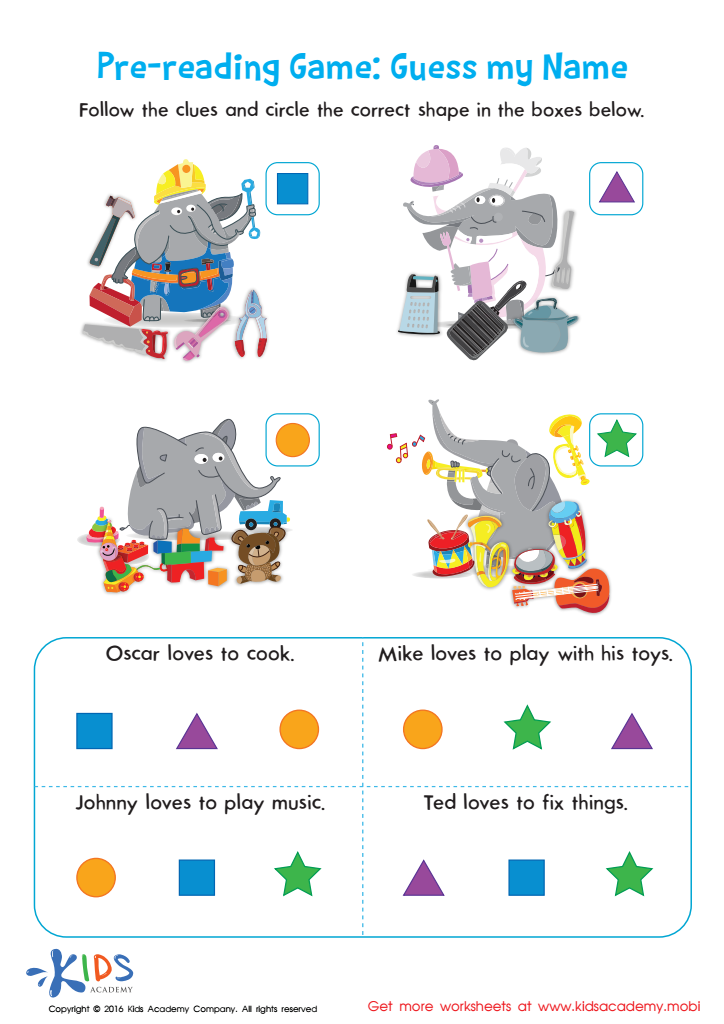
Pre reading worksheet guess my name

Pre Reading Worksheet Guess My Name

Guess My Name is a fun way to practice inference skills. Guess My Name is a fun pre-reading game to help your child practice drawing inferences from clues. With colorful illustrations, they'll use clues to match each elephant with its sentence and sharpen their inference skills.
Pre Reading Worksheet Guess My Name
Worksheet
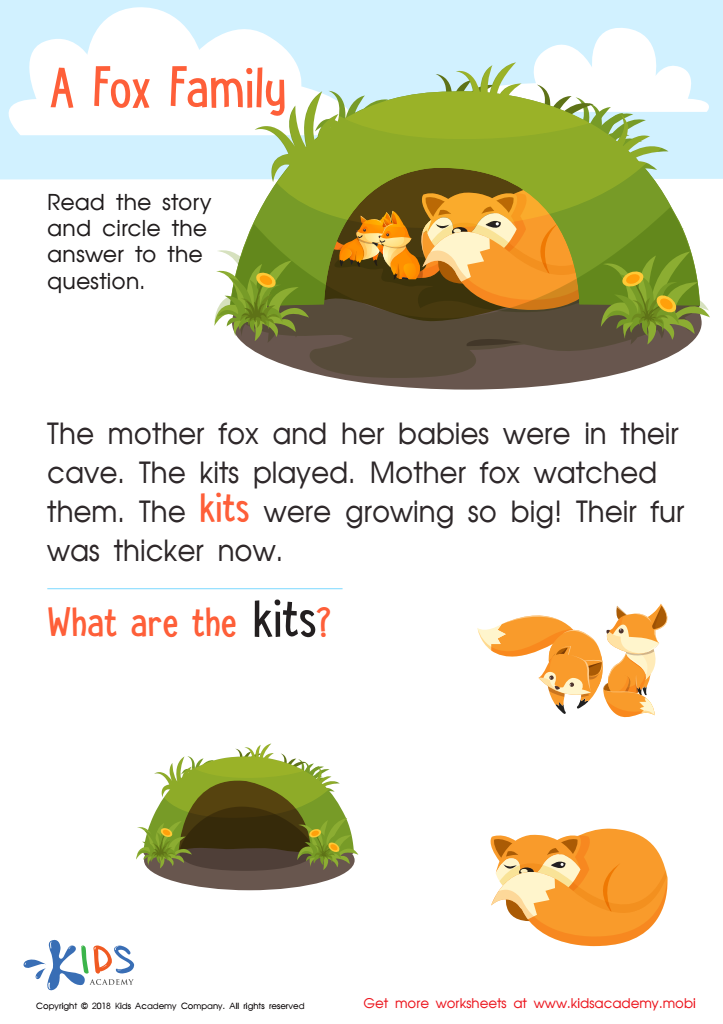
A Fox Family Worksheet

A Fox Family Worksheet

Reading is an easy way to learn new words. This worksheet introduces an interesting story about a fox family, teaching your child that "kits" refers to baby foxes. Read the text together and circle the picture to answer the question.
A Fox Family Worksheet
Worksheet
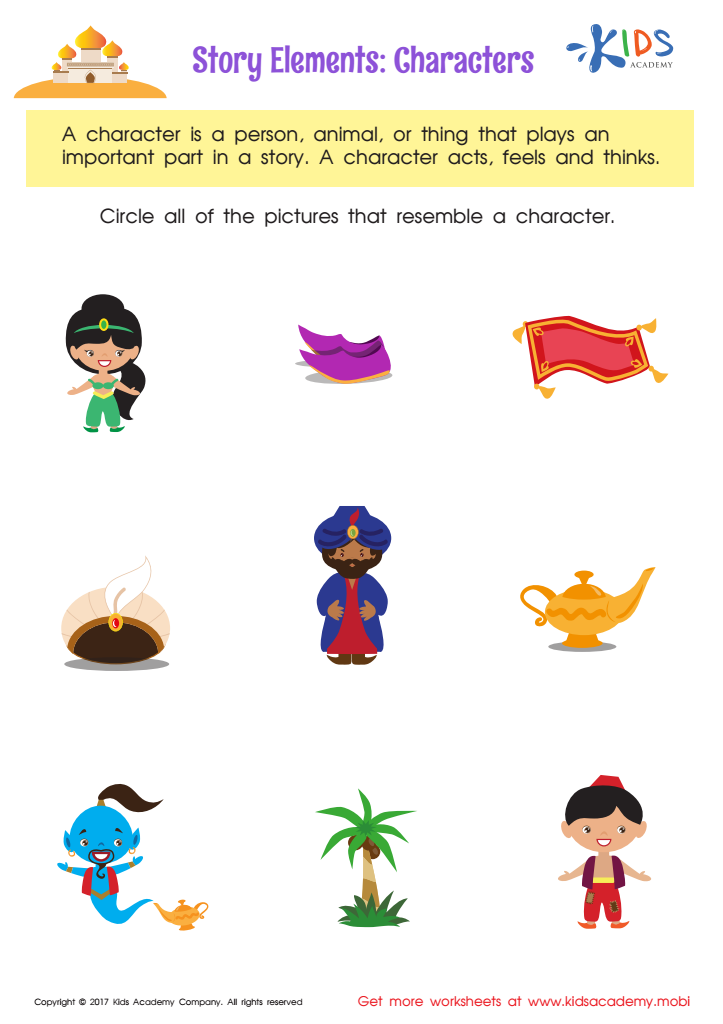
Reading Comprehension Worksheet: Aladdin

Story Elements Printable

Read the text and review the characters, settings and plot in a guided discussion. Take your child on a journey to the Middle East and review the characters, settings and plot of their favorite childhood stories with this Aladdin-themed worksheet! It'll help them master early analysis skills and learn about characterization. Enjoy a fun, guided discussion with your child as you review important story elements.
Story Elements Printable
Worksheet
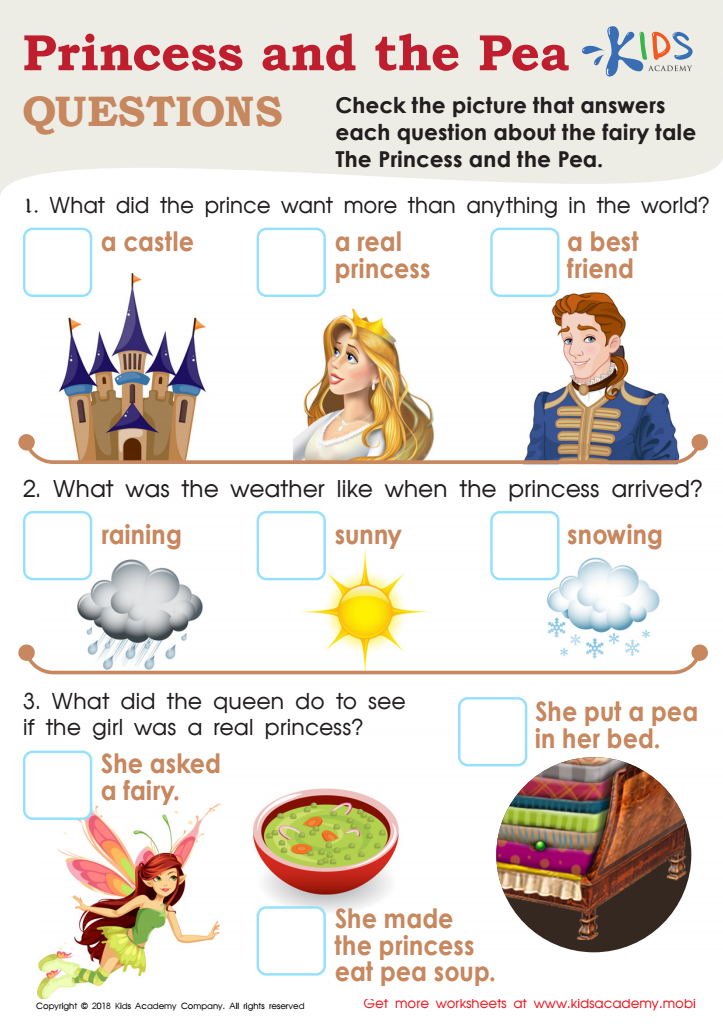
Princess and the Pea Questions Worksheet

Princess and the Pea Questions Worksheet

Your kid knows The Princess and the Pea inside-out? Test their knowledge with this worksheet. Ask your little one to read the questions and match each one to the picture. It's a fun way to see just how much attention they've paid to their bedtime story.
Princess and the Pea Questions Worksheet
Worksheet
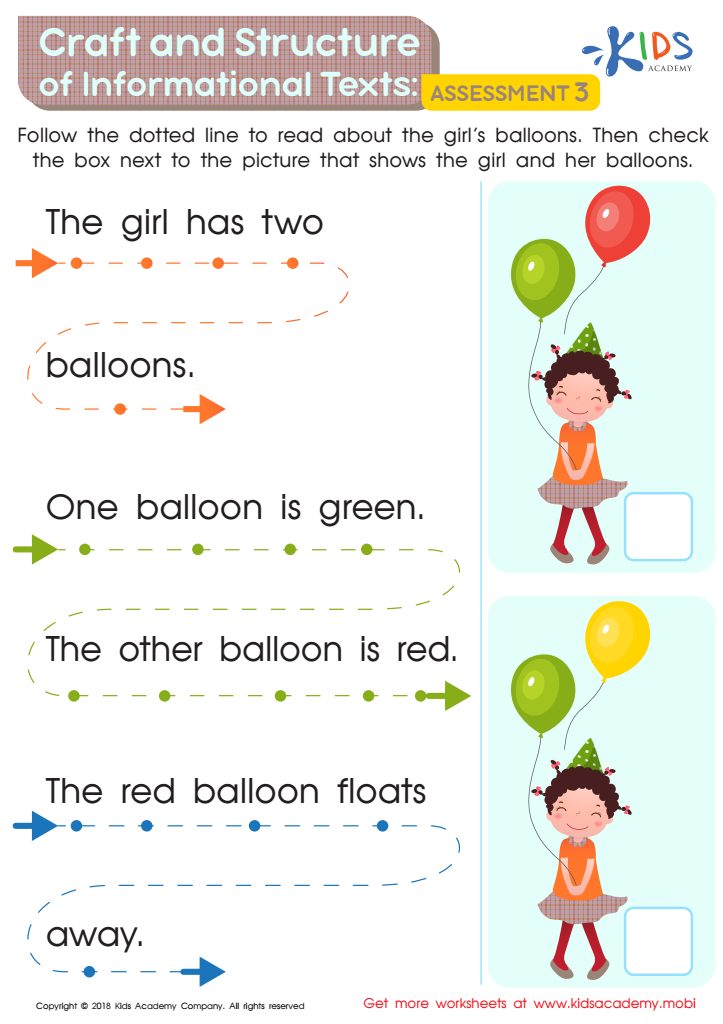
Craft and Structure of Informational Texts: Assessment 3 Worksheet

Craft and Structure of Informational Texts: Assessment 3 Worksheet

Test your beginning reader's understanding of left-to-right directionality and use of details from informational texts with this fun worksheet. Follow the traceable paths to find the right picture for each sentence. This will help your child gain confidence and be successful as a reader.
Craft and Structure of Informational Texts: Assessment 3 Worksheet
Worksheet
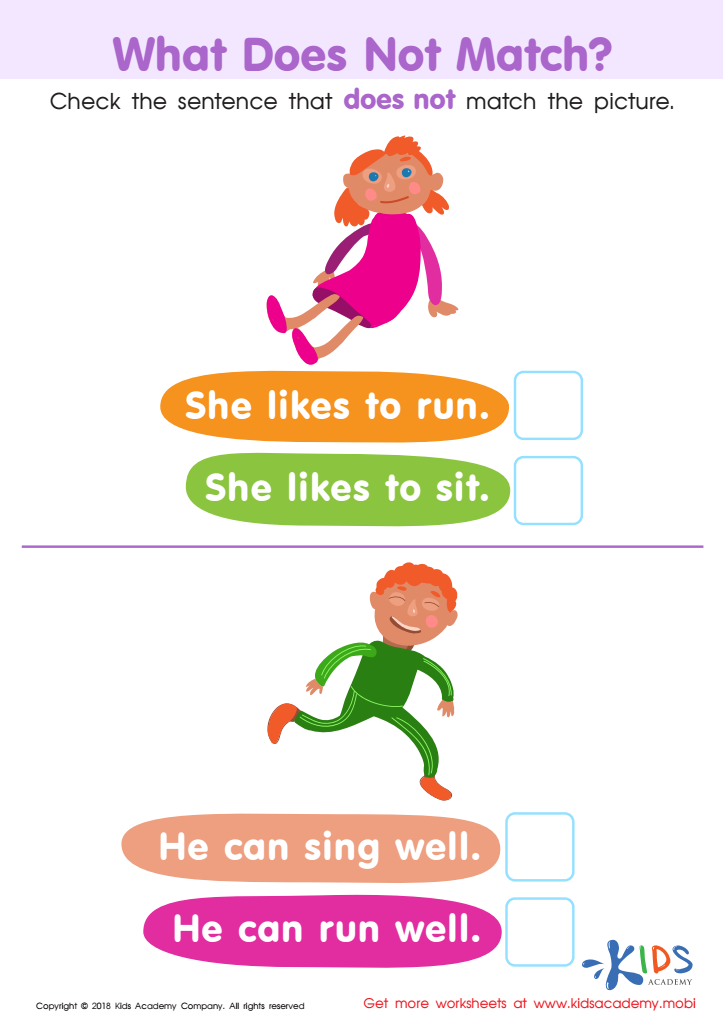
What Does Not Match? Worksheet


What Does Not Match? Worksheet

Emerging readers need to practice using visual cues and repetitive text. This colorful PDF provides them with an opportunity to look at pictures, use discrimination and discern which phrase does not match. It also enables them to gain familiarity with high-frequency words to aid decoding longer sentences.
What Does Not Match? Worksheet
Worksheet


... 4 5

Reading fiction to children aged 3-6 is crucial for several reasons. Firstly, it enhances language development. During these formative years, kids are like sponges, absorbing vocabulary, sentence structures, and expressions. Stories introduce them to new words and phrases in a meaningful context, which can significantly expand their linguistic skills. Secondly, fiction ignites imagination and creativity. When children visualize characters, settings, and events, they develop skills in abstract thinking and creative problem-solving.

Fiction also fosters emotional development. Stories often present challenges, emotions, and moral dilemmas that help children understand feelings and empathy. They learn to relate to characters' experiences and emotions, which promotes social-emotional intelligence. Moreover, shared reading time strengthens the bond between parents and children. It creates opportunities for discussions and interactions that are critical for emotional connection and communication.

Cognitive skills benefit, too. Listening to stories improves attention, memory, and comprehension, as kids follow plots and remember details. Lastly, developing a love for reading at an early age instills lifelong learning habits. Fiction makes reading fun and enjoyable, making children more likely to continue the habit as they grow older. Therefore, investing time in reading fiction to young children is a significant and beneficial endeavor.