Filters

31 filtered results

Clear all filters
Favorites
With answer key
Interactive

31 filtered results

Difficulty Level

Grade


Subject

    Check out this FREE Trial Lesson on Consonants for age 3-7!

    The Letter M Sound

    Favorites
    With answer key
    Interactive
    • 3-7
    • With answer key
    • Consonants
    Matching Consonant Sounds - Part 2 Worksheet Preview
    Matching Consonant Sounds - Part 2 Worksheet Preview

    Matching Consonant Sounds: Part 2 Worksheet

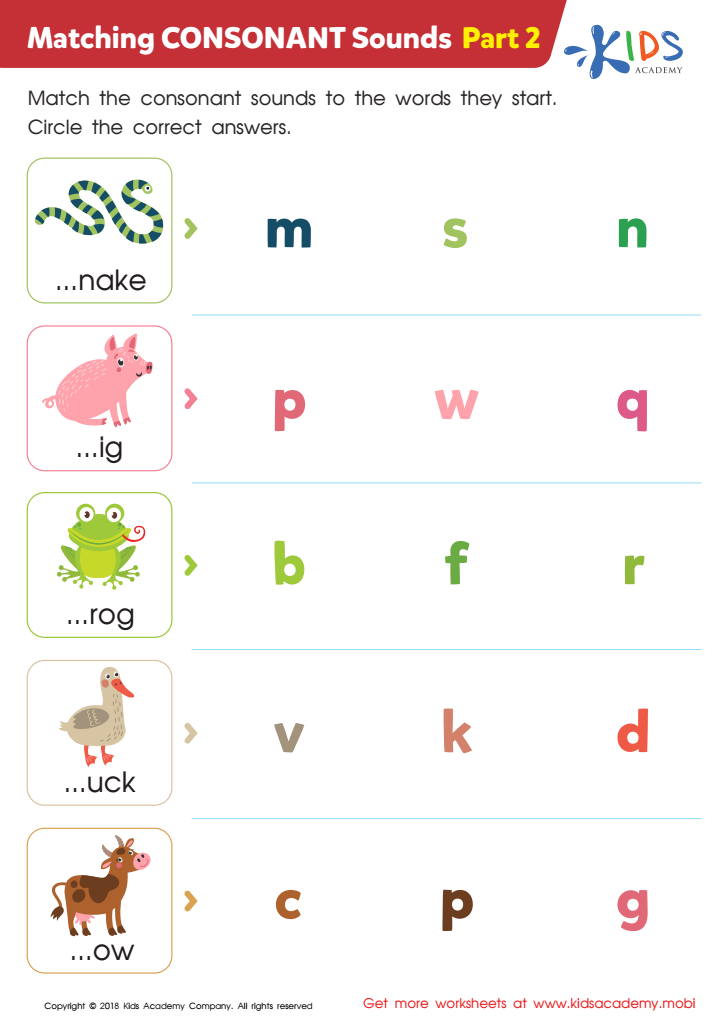
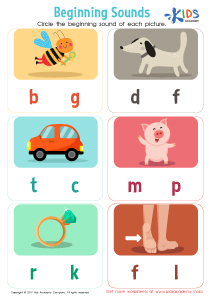
    Look at the picture, say the word and match the consonant sound with the letter. Coach your child to name the animal and complete the word. For extra challenge, write the missing letter in the box! This PDF worksheet helps kids learn to read words with familiar animal pictures.
    Matching Consonant Sounds: Part 2 Worksheet
    Worksheet
    Words with sound f Reading Worksheet
    Words with sound f Reading Worksheet

    Words with sound f Reading Worksheet

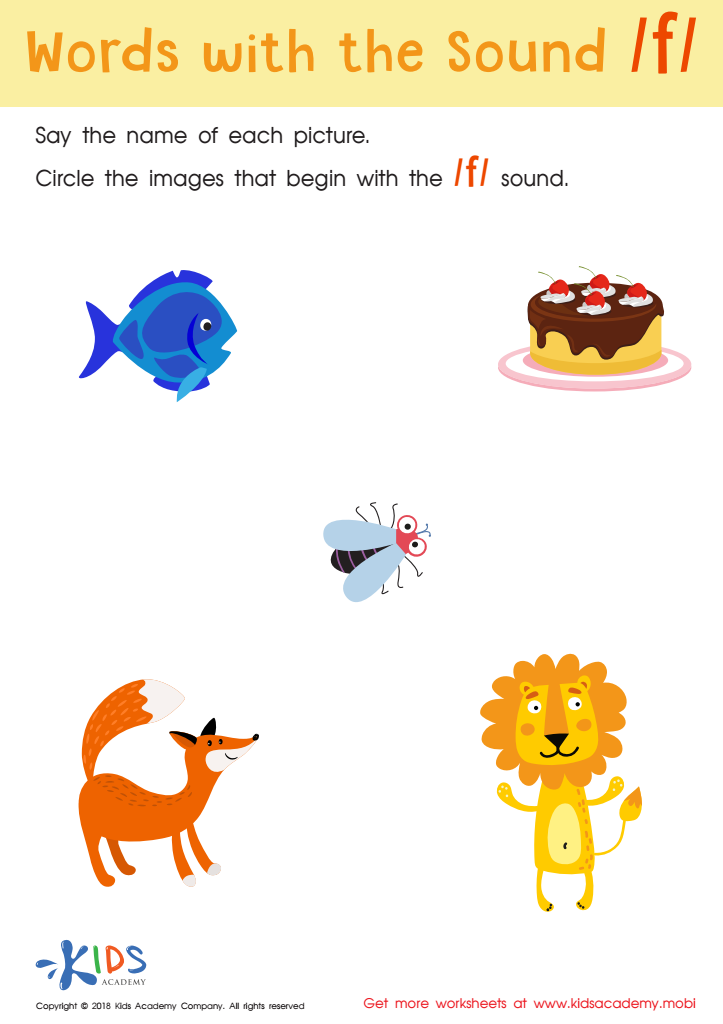
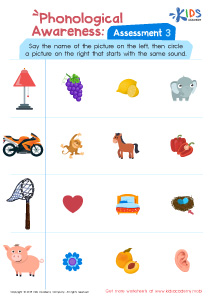
    This illustrated phonics worksheet is ideal for preschool or kindergarten. It helps boost learners' literacy skills with a focus on the letter "f". Ask your child to name all the pictures, listening for that sound. Examples are fish, fox, lion, bug. When they can identify which words start with "f", have them circle the images. Congratulate them on a job well done!
    Words with sound f Reading Worksheet
    Worksheet
    Matching Consonant Sounds - Part 1 Worksheet Preview
    Matching Consonant Sounds - Part 1 Worksheet Preview

    Matching Consonant Sounds: Part 1 Worksheet
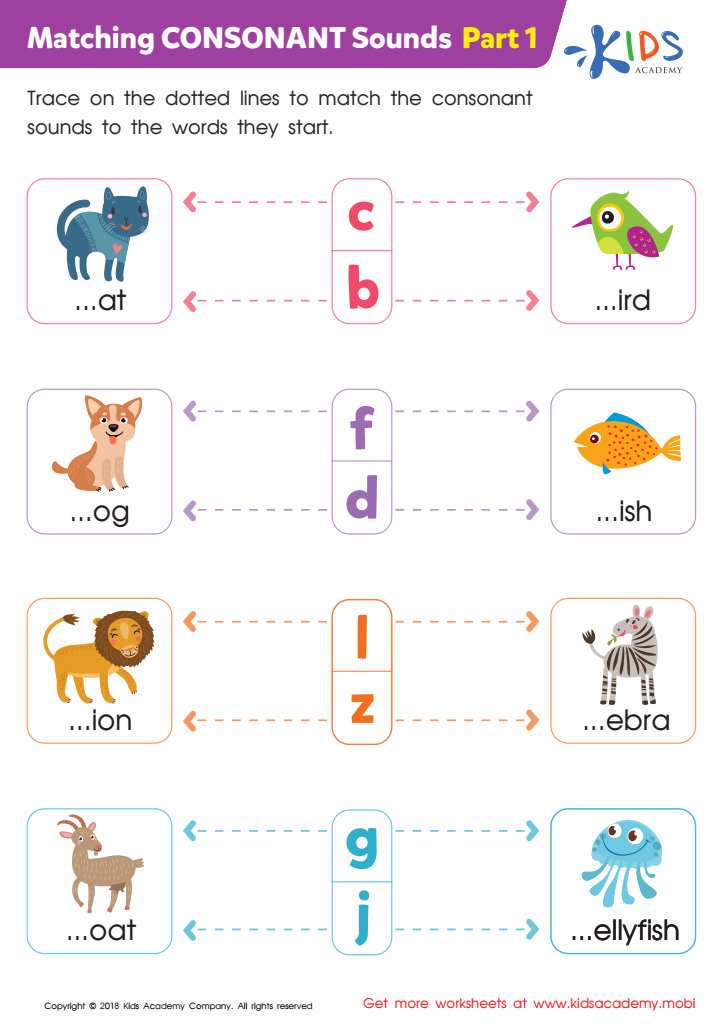
    Decide which letter matches each word and picture in this fun phonics worksheet. Slide your finger over each word, trying out each letter to check for matches. Once each pair is solved, trace the dotted lines with pencil to complete the printable. Who knew learning could be so enjoyable?
    Matching Consonant Sounds: Part 1 Worksheet
    Worksheet
    Consonant Blend Dr and Tr Printable Worksheet
    Consonant Blend Dr and Tr Printable Worksheet

    Consonant Blends: "Dr" and "Tr" Printable
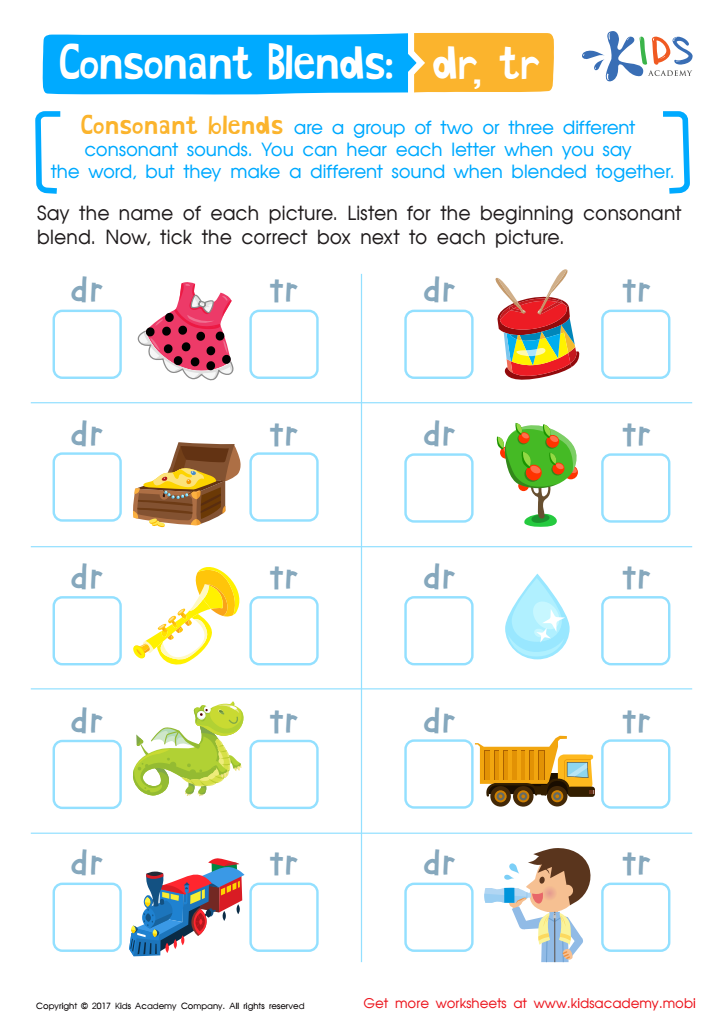
    Pictures of the words provide a visual cue, and sound-outs help with auditory cues.
    Consonant Blends: "Dr" and "Tr" Printable
    Worksheet
    Words with Sound M Reading Worksheet
    Words with Sound M Reading Worksheet

    Words with Sound M Reading Worksheet

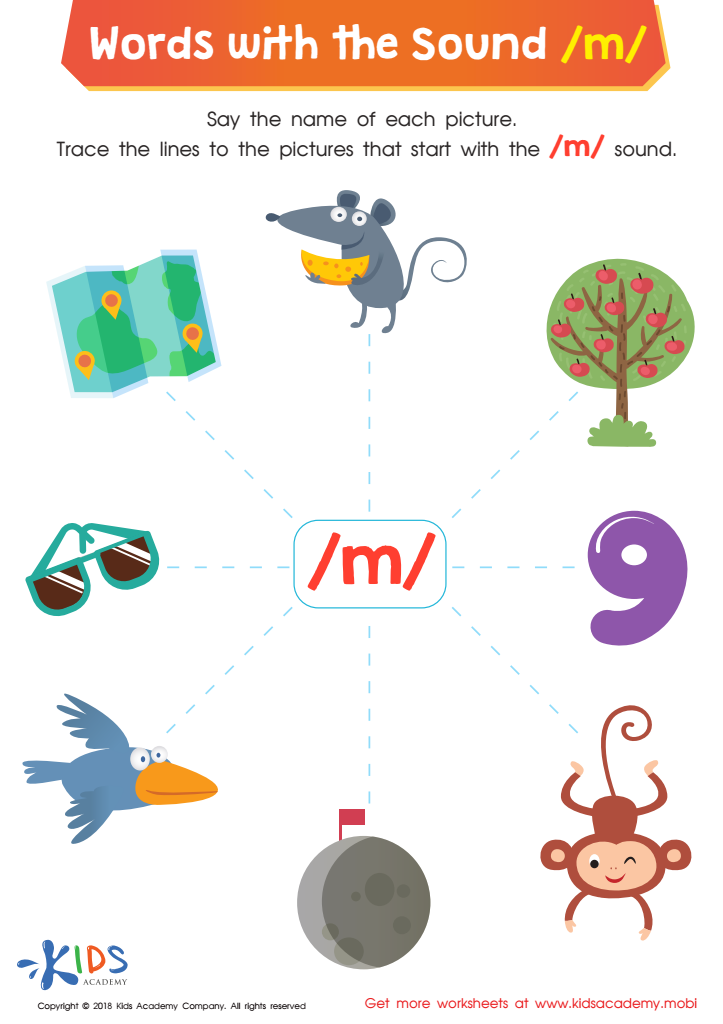
    Emerging readers will use this traceable worksheet to name and trace pictures with the letter sound «m». Bright, engaging pictures make this fun and build confidence while strengthening fine motor skills. They won't even know they're also working on reading skills!
    Words with Sound M Reading Worksheet
    Worksheet
    Review the Blends Worksheet
    Review the Blends Worksheet

    Review the Blends Worksheet

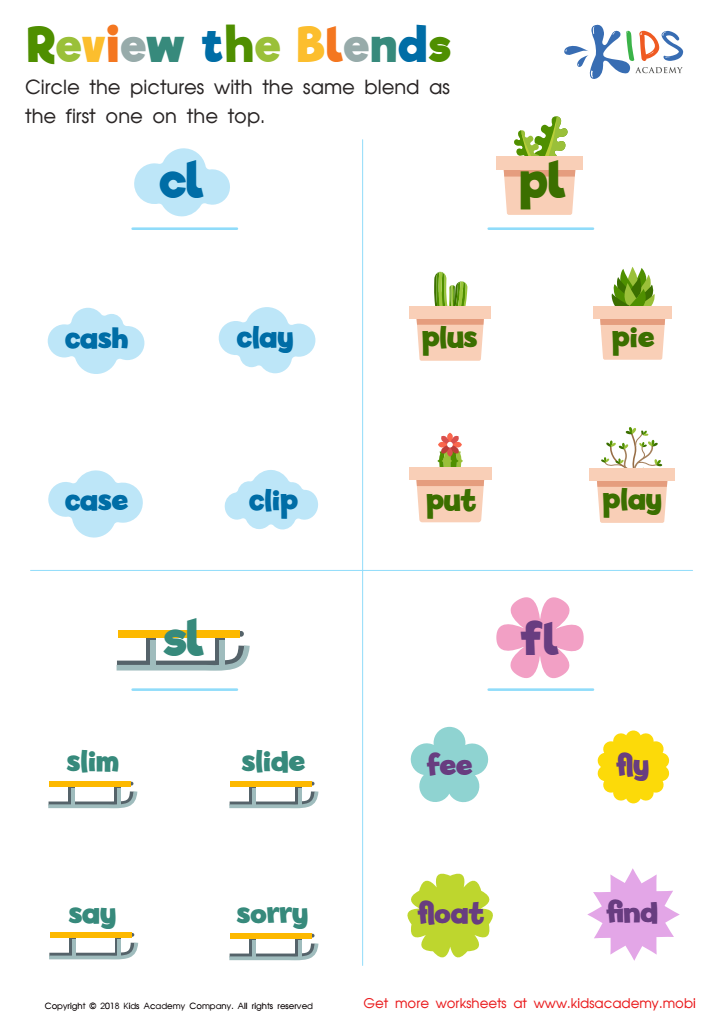
    Consonant blends are two or three consonants that make a sound when pronounced together. L-blends like cl, bl, sl, fl and 3-letter blends like str, slp are common. This phonics worksheet helps early readers identify words containing two letter L-blends. Students must circle the words then read them aloud.
    Review the Blends Worksheet
    Worksheet
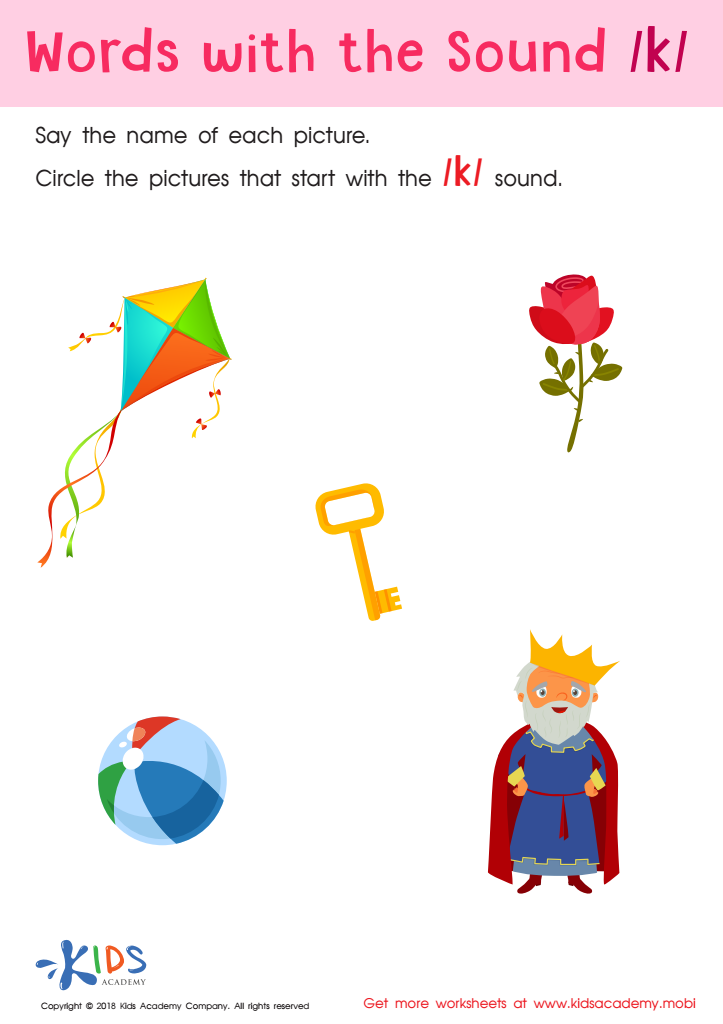
    Words with sound k Reading Worksheet

    Words with sound k Reading Worksheet

    Words with sound k Reading Worksheet

    Help your preschooler master the hard "k" sound with this fun worksheet from Kids Academy! Ask your child to say each picture aloud and circle only the pictures that start with "k". This early reading exercise will boost phonics skills and is sure to be loved by your little learner!
    Words with sound k Reading Worksheet
    Worksheet


    Understanding consonants is crucial for children aged 3-7 as it lays the foundation for becoming proficient readers and writers. During these formative years, kids' brains are highly receptive to language acquisition. Consonants, which constitute the majority of the letters in the alphabet, form the basic building blocks of words and enable effective communication.

    When parents and teachers focus on consonants, they help children develop phonemic awareness—the ability to hear, identify, and manipulate individual sounds in words. This awareness is a key predictor of later reading success. By learning to recognize and pronounce consonant sounds, children improve their ability to decode words, which is essential for reading fluency.

    Rich exposure to consonant sounds also aids in vocabulary development. Children start identifying patterns, such as how certain consonant sounds appear at the beginning, middle, or end of words. This recognition supports their spelling and writing abilities, encouraging them to experiment with new words and sentences.

    Furthermore, early mastery of consonant sounds boosts children's confidence. When they see that they can read and write simple words, they become more motivated and engaged learners. Therefore, dedicating time and attention to consonant learning through songs, games, and interactive activities is essential for any early childhood education program, sowing seeds for future academic achievements.