Filters

5 filtered results

Clear all filters
Favorites
With answer key
Interactive

5 filtered results

Difficulty Level

Grade


Subject

    Discover our engaging Letter I worksheets designed specifically for children ages 3 to 7! Perfect for early learners, these worksheets provide an array of fun activities that promote letter recognition, sound awareness, and fine motor skills. From tracing and coloring activities to interactive games, each resource aims to make learning the letter I enjoyable and effective. Parents and teachers can easily access and print these worksheets, making them a convenient addition to any educational toolkit. Help your little ones master the letter I with our carefully crafted worksheets and watch their writing and cognitive skills flourish!

    Check out this FREE Trial Lesson on Letter I for age 3-7!

    I

    Favorites
    With answer key
    Interactive
    • 3-7
    • With answer key
    • Letter I
    Letter I worksheets
    Letter I worksheets

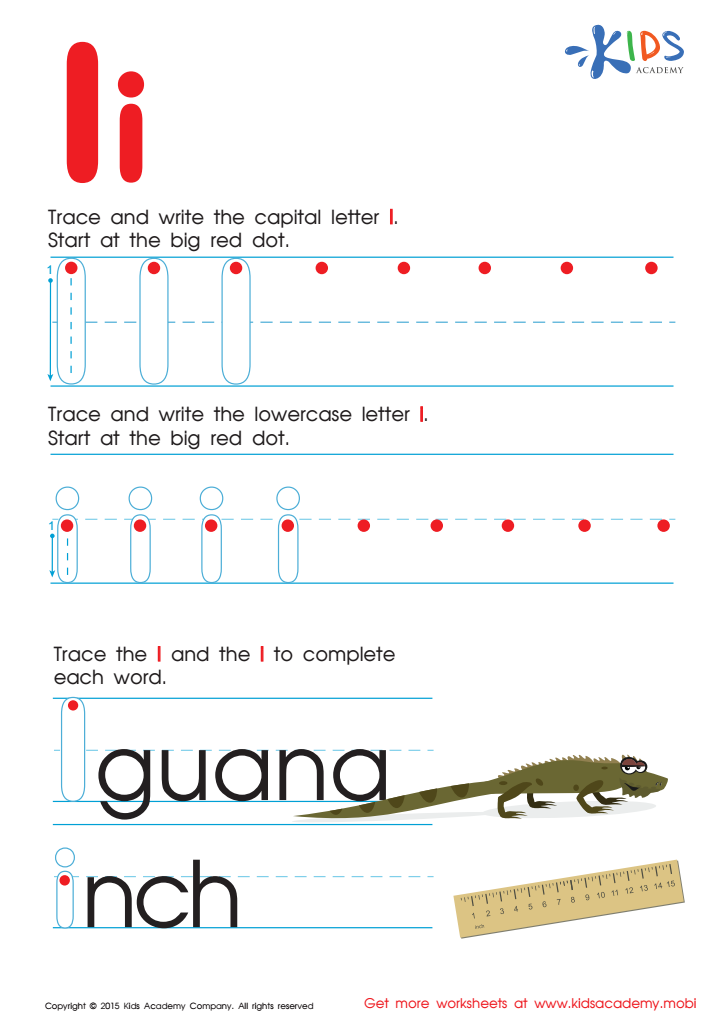
    Letter I Tracing Page

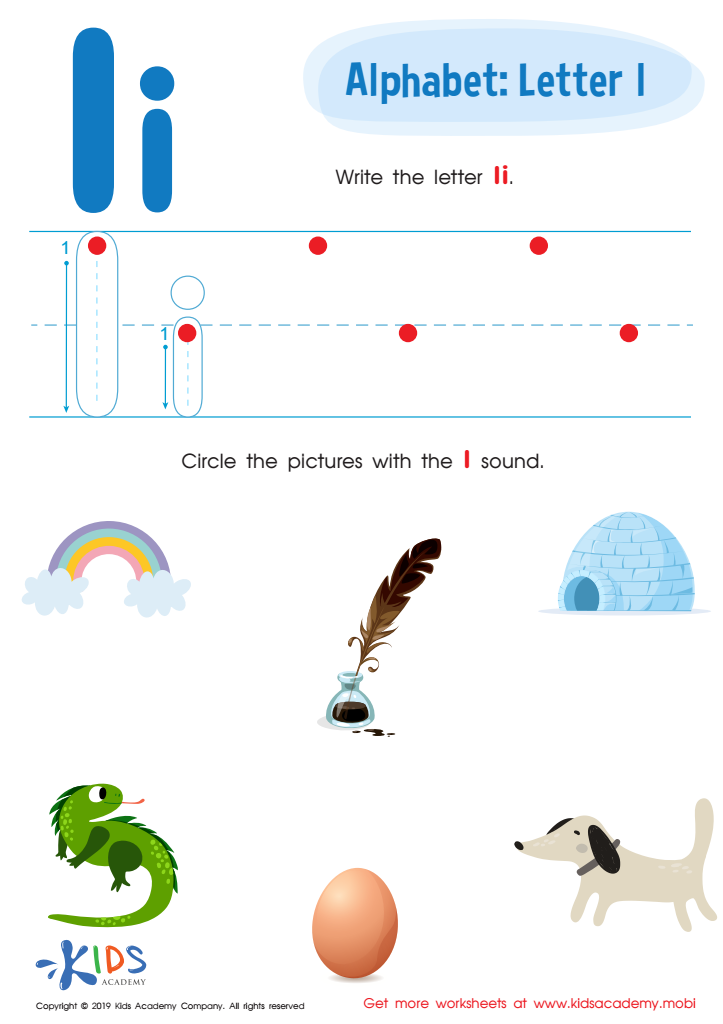
    Trace and write "I" uppercase and lowercase. An iguana's tail looks like the uppercase "I" and the lowercase "i" is as small as an inch. Make learning fun with Kids Academy worksheets.
    Letter I Tracing Page
    Worksheet
    Letter I Tracing Worksheet Preview
    Letter I Tracing Worksheet Preview

    Letter I Tracing Worksheet

    Kids can hone tracing, writing and identifying skills for the letter 'I' with this worksheet. Whether visual or reading/writing learners, every child can benefit from the tasks - tracing, writing and circling objects beginning with 'I'. This free sheet will soon get preschoolers confident with the 'I' letter!
    Letter I Tracing Worksheet
    Worksheet
    Letters G-L Worksheet Preview
    Letters G-L Worksheet Preview

    Letters G-L Worksheet

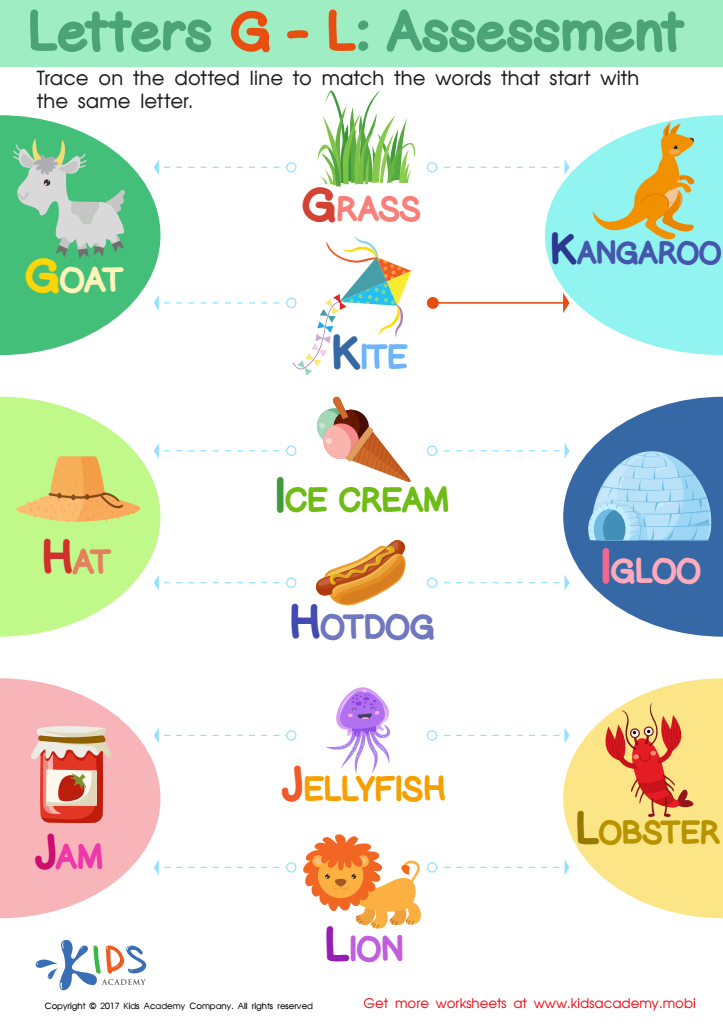
    This fun worksheet helps preschoolers develop reading and phonics skills. It gets kids to match G-L words that start with the same letter, making it engaging and educational.
    Letters G-L Worksheet
    Worksheet
    Recognize Letters l and i Worksheet
    Recognize Letters l and i Worksheet

    Recognize Letters l and i Worksheet

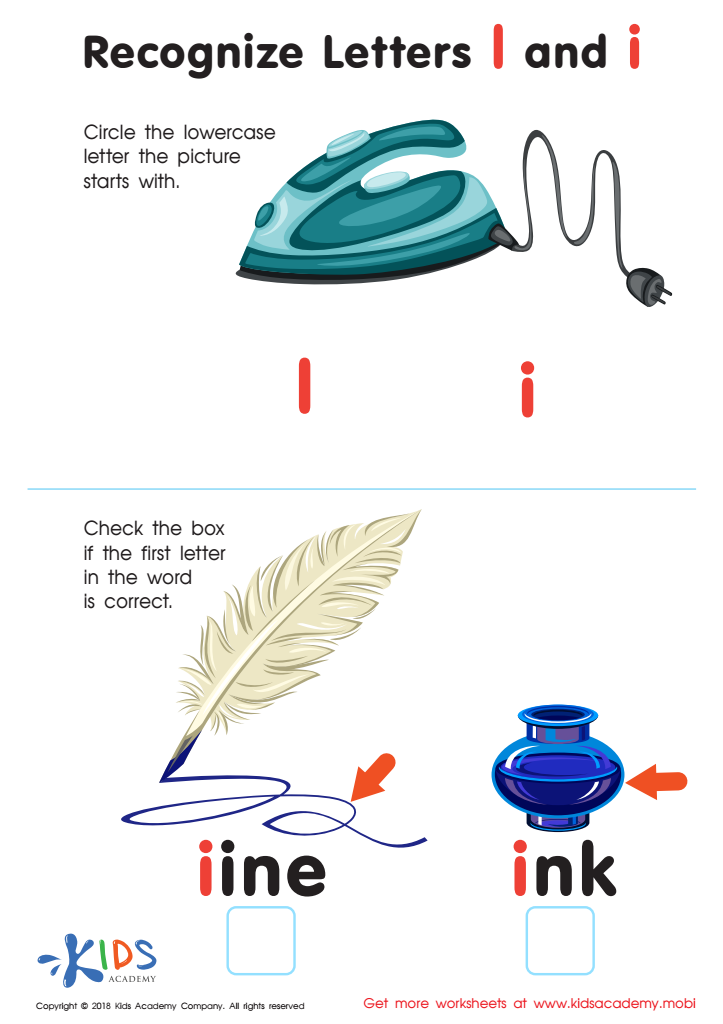
    Help your child become familiar with uppercase and lowercase letters. Have them look at the pictures in the worksheet and circle the lowercase letter the picture starts with. For example: which one is the lowercase "i", the capital "I" or the small "i"?
    Recognize Letters l and i Worksheet
    Worksheet
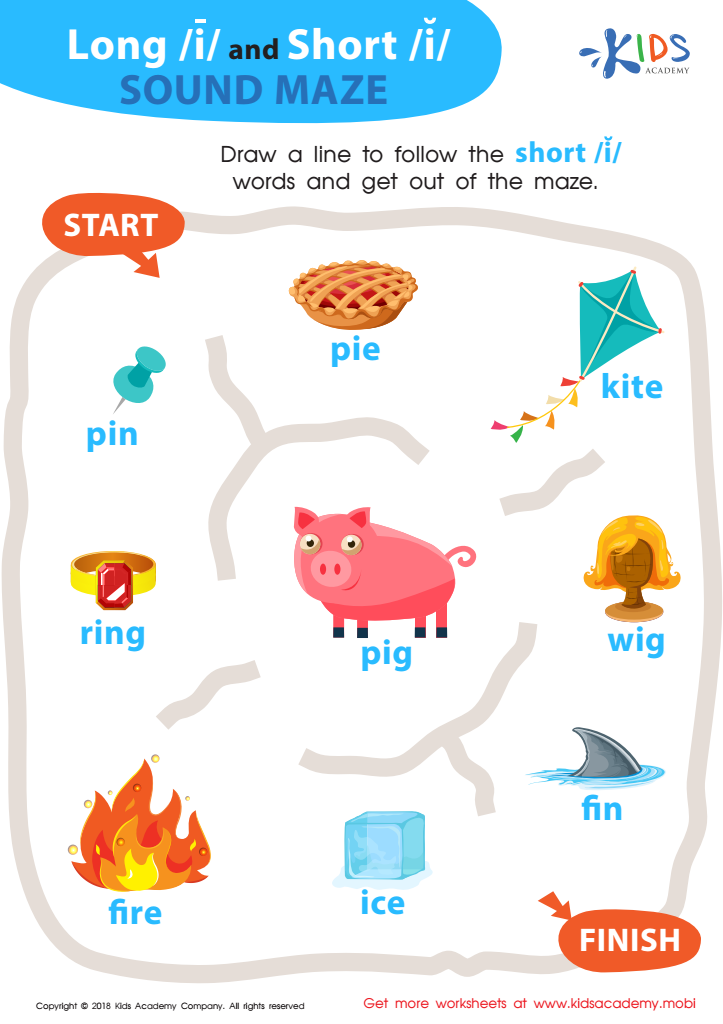
    Reading: Long I and Short I Sound Maze Worksheet

    Reading: Long I and Short I Sound Maze Worksheet

    Reading: Long I and Short I Sound Maze Worksheet

    Question your students if the worksheet is entertaining. They may respond negatively! Nonetheless, this activity will bring satisfaction while learning the distinction between a long and short I sound. Students read the words in the maze and only follow the words with the short I sound to finish the exercise. Grasping the difference between long and short vowels is demanding, but this worksheet helps students understand this reading skill.
    Reading: Long I and Short I Sound Maze Worksheet

    Worksheet


    The letter “I” is an essential building block in early literacy for children aged 3-7. Teaching the letter "I" helps children recognize letter shapes, sounds, and the concept of individuality, as it is often associated with the pronoun “I.” Understanding that “I” represents themselves fosters self-identity and language development.

    Introducing the letter “I” expands vocabulary through fun activities, such as identifying words like "ice," "igloo," and "insect." This exploration not only bolsters phonetic skills but also fosters creativity through storytelling and drawing activities centered around “I” words.

    Additionally, introducing the letter “I” through songs and games can make learning enjoyable. Engaging children in these hands-on experiences enhances memory retention and motivates them to explore further.

    Furthermore, understanding the importance of vowels begins with acknowledging “I,” paving the way for future reading and spelling accomplishments. By making phonics memorable and relatable, parents and teachers can empower children with essential language tools.

    Ultimately, caring about the letter “I” is a stepping stone towards fostering confident and capable young learners, instilling a love for language that can spark lifelong educational enthusiasm.