Word Problems Worksheets for Ages 4-9 - Page 6
123 filtered results
-
From - To
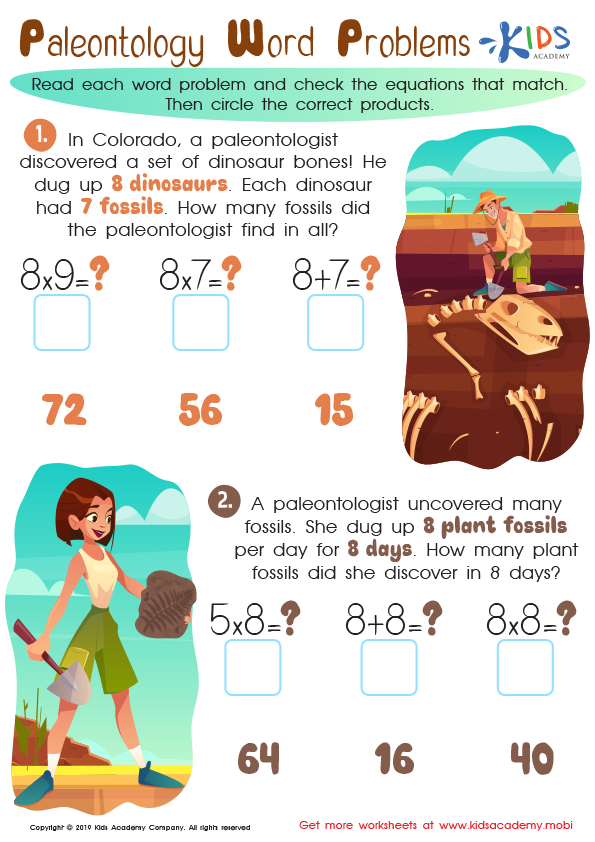
Archeology Word Problems Worksheet
 Assign to My Students
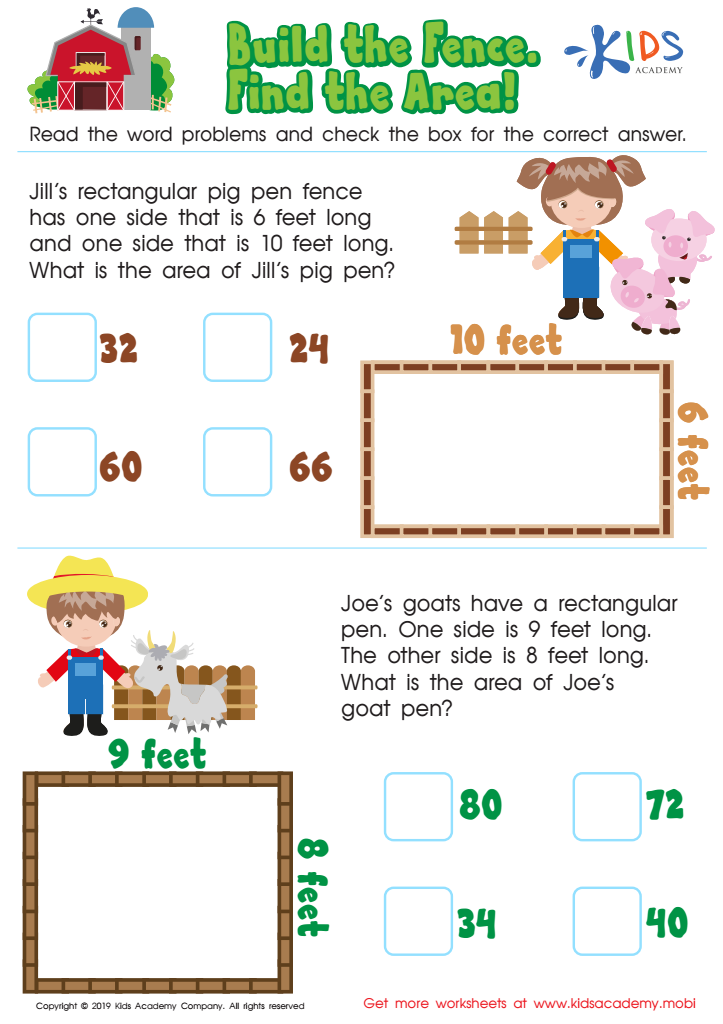
Build the Fence, Find the Area Worksheet
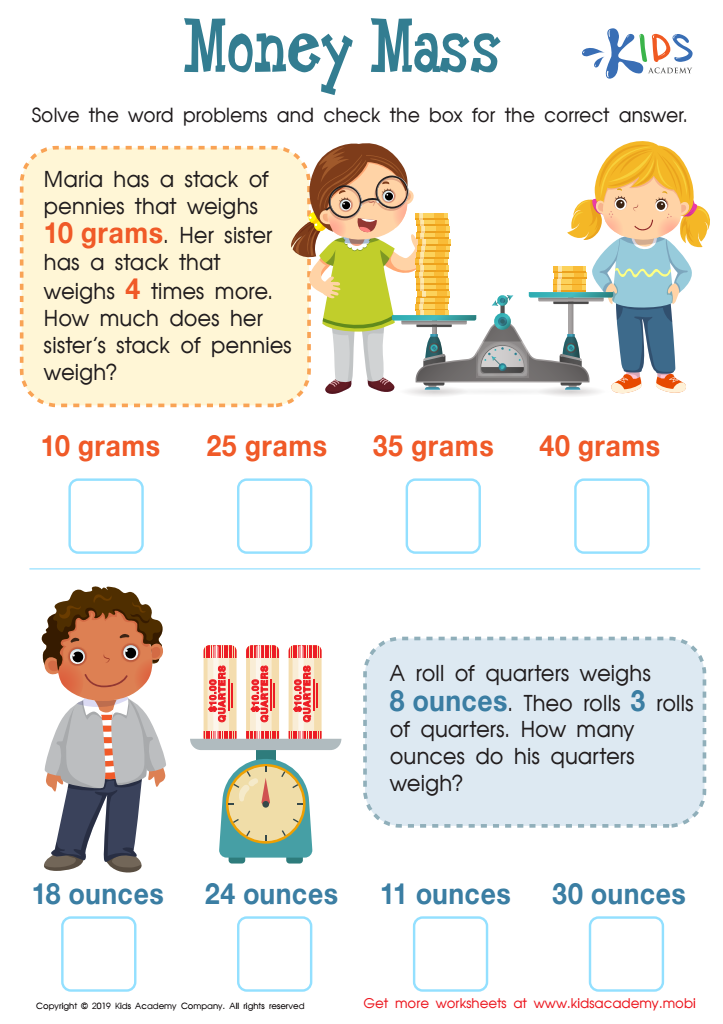
Money Mass Worksheet








Word problems are a critical component of early mathematics education for children aged 4-9, and both parents and teachers should prioritize them for several reasons. Firstly, word problems enhance critical thinking and problem-solving skills. By decoding mathematical vocabulary and understanding the context of a problem, children learn to analyze the situation and devise a solution, which is essential for their cognitive development.
Secondly, word problems help children connect mathematics to real-world situations. This practical application fosters a deeper understanding and appreciation of math, making lessons more engaging and relevant. When children see how math intersects with daily life—such as through shopping, cooking, or sharing—it's easier for them to grasp abstract concepts.
Moreover, word problems promote language development. As children read and discuss the problems, they build vocabulary and comprehension skills, facilitating better communication and understanding.
Lastly, working through word problems encourages perseverance and resilience, teaching children that encountering challenges aids growth. When parents and teachers emphasize word problems, they support not just mathematical skill development, but also essential life skills that children will carry into their future academic and personal lives.








