Addition and Subtraction Word Problems Worksheets for Ages 7-9 - Page 4
90 filtered results
-
From - To
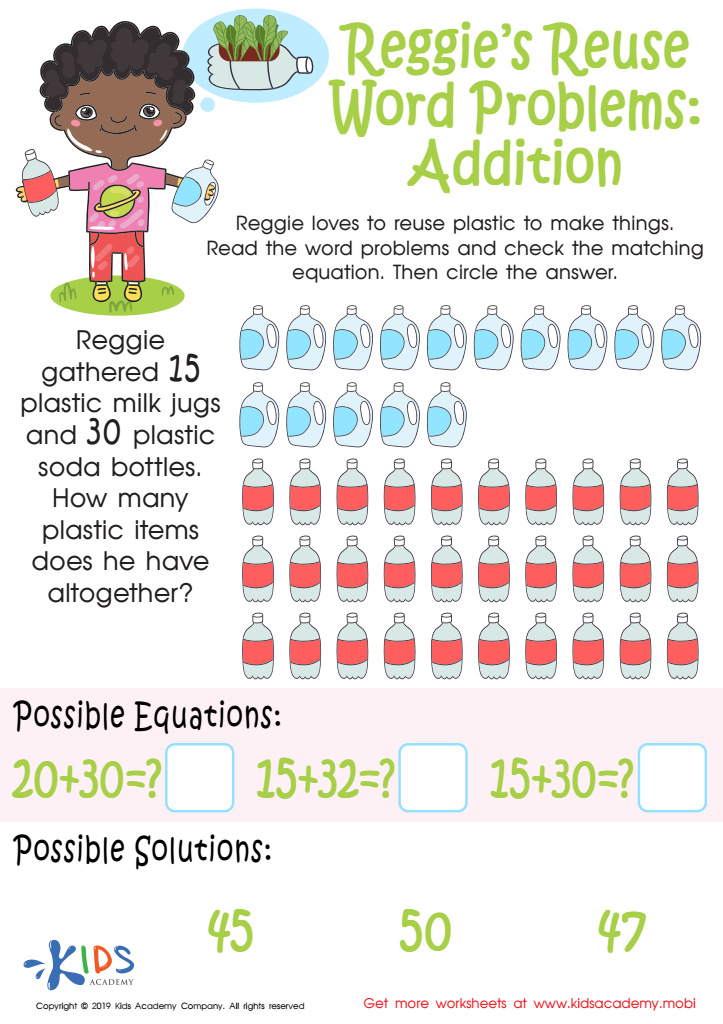
Reggie's Reuse Word Problems: Addition Worksheet
 Assign to My Students
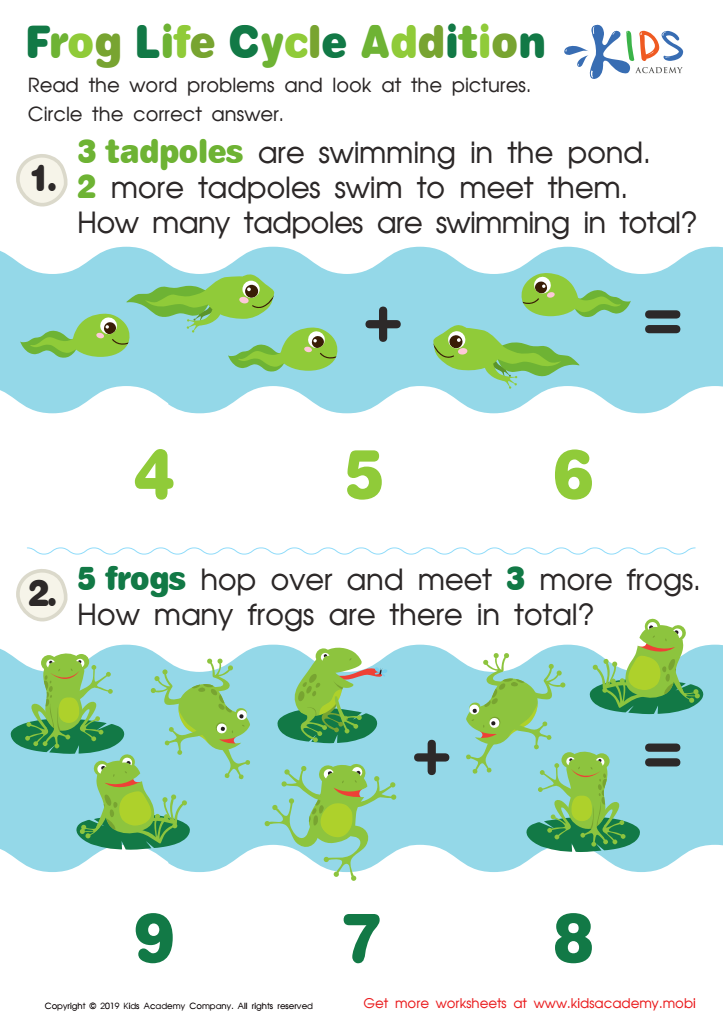
Frog Life Cycle Addition Worksheet
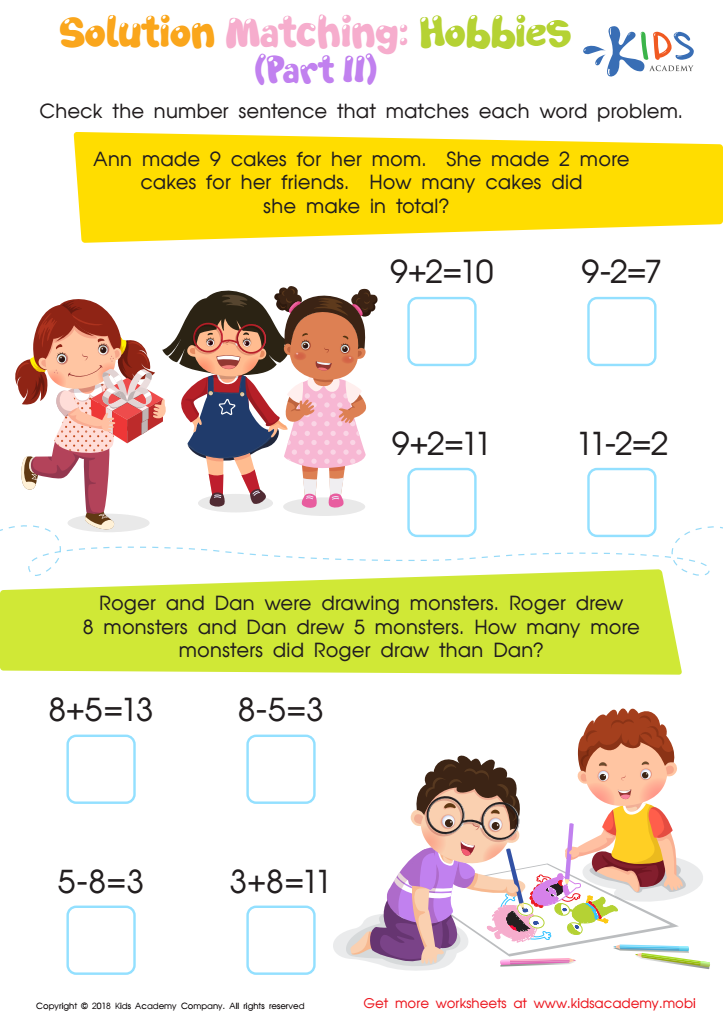
Solution Matching: Hobbies. Part 2 Worksheet
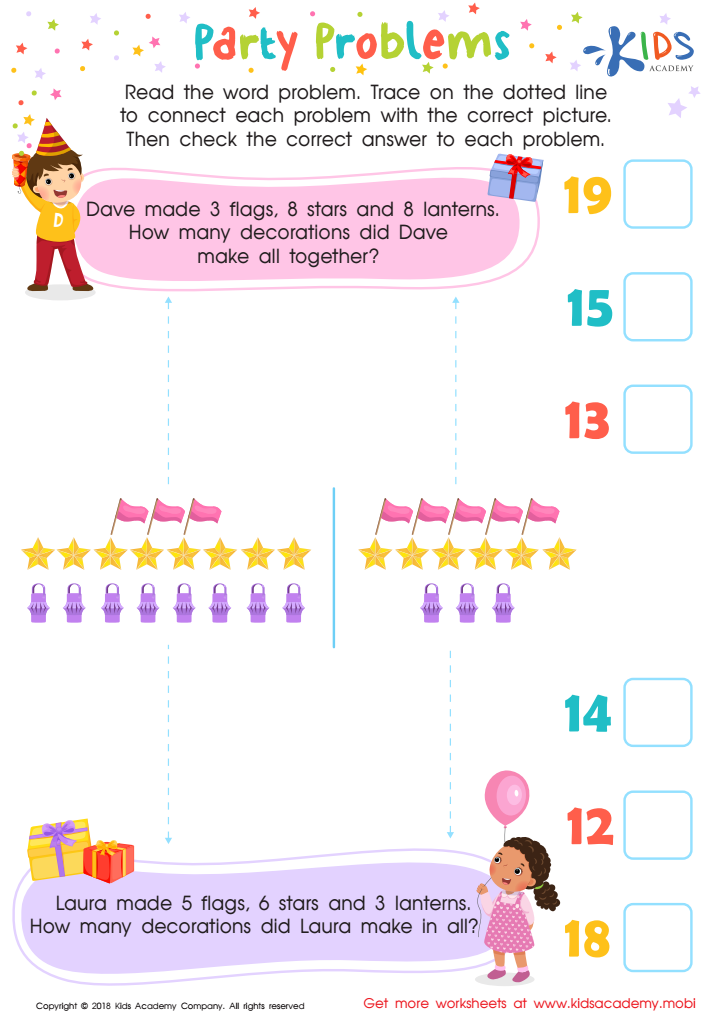
Party Problems Worksheet
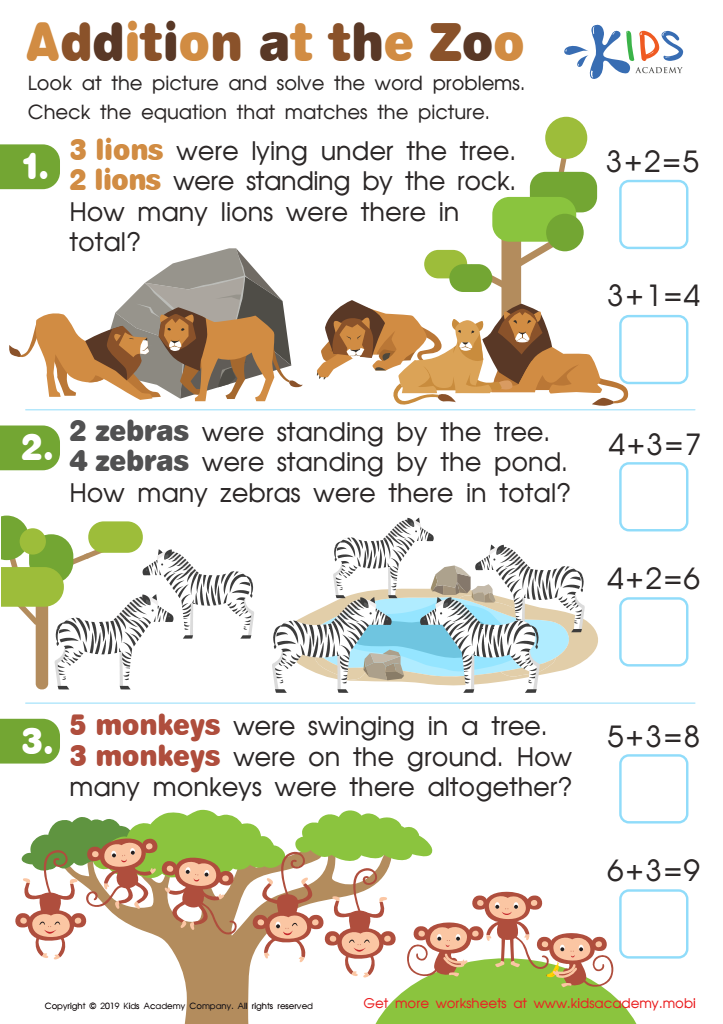
Addition at the Zoo Worksheet
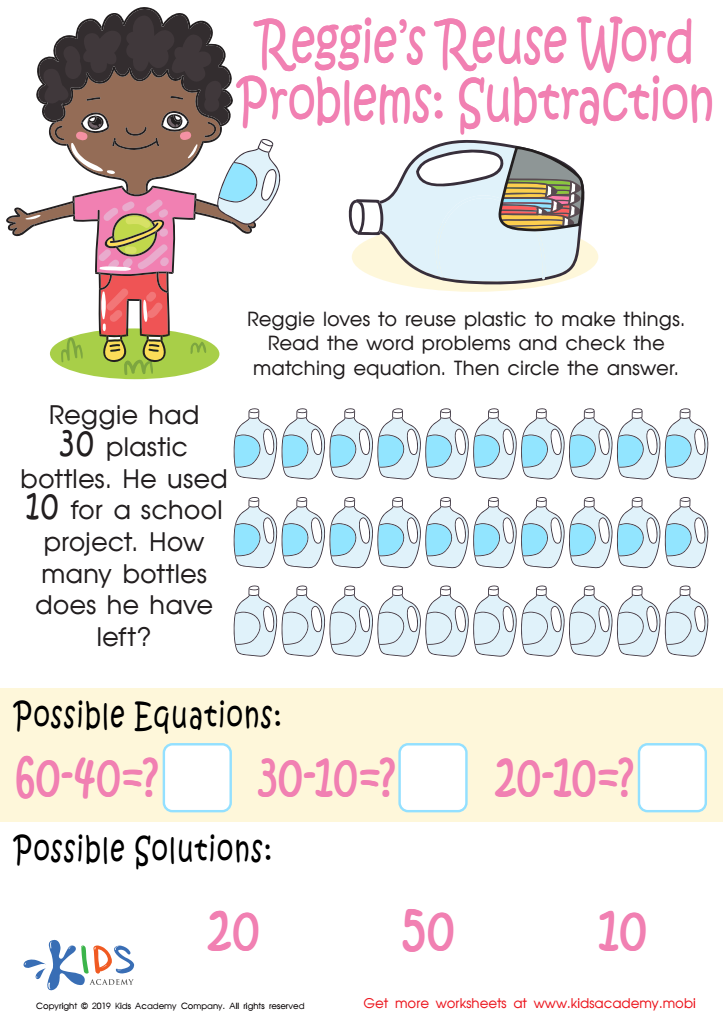
Reggie's Reuse Word Problems: Subtraction Worksheet
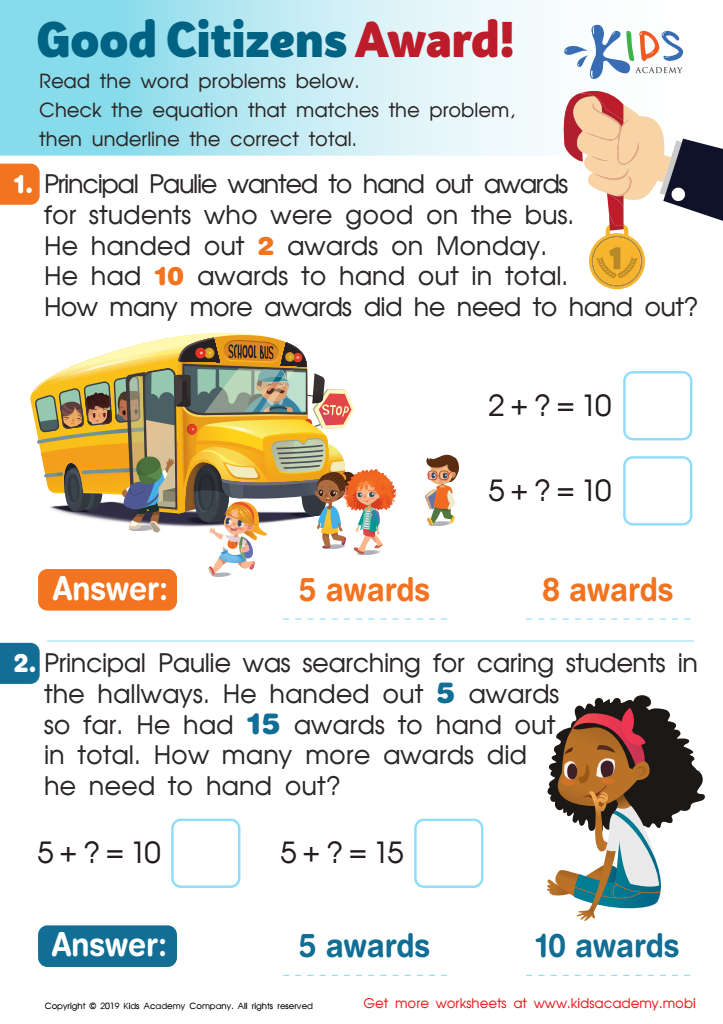
Good Citizens Award! Worksheet
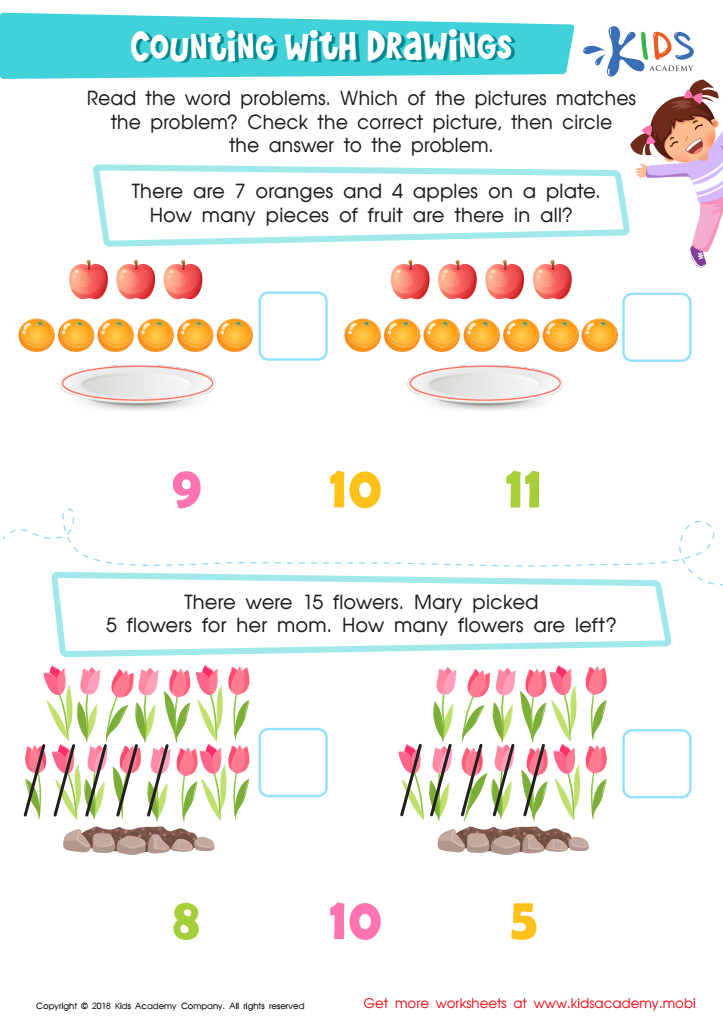
Counting with Drawings:Fruits & Flowers Worksheet
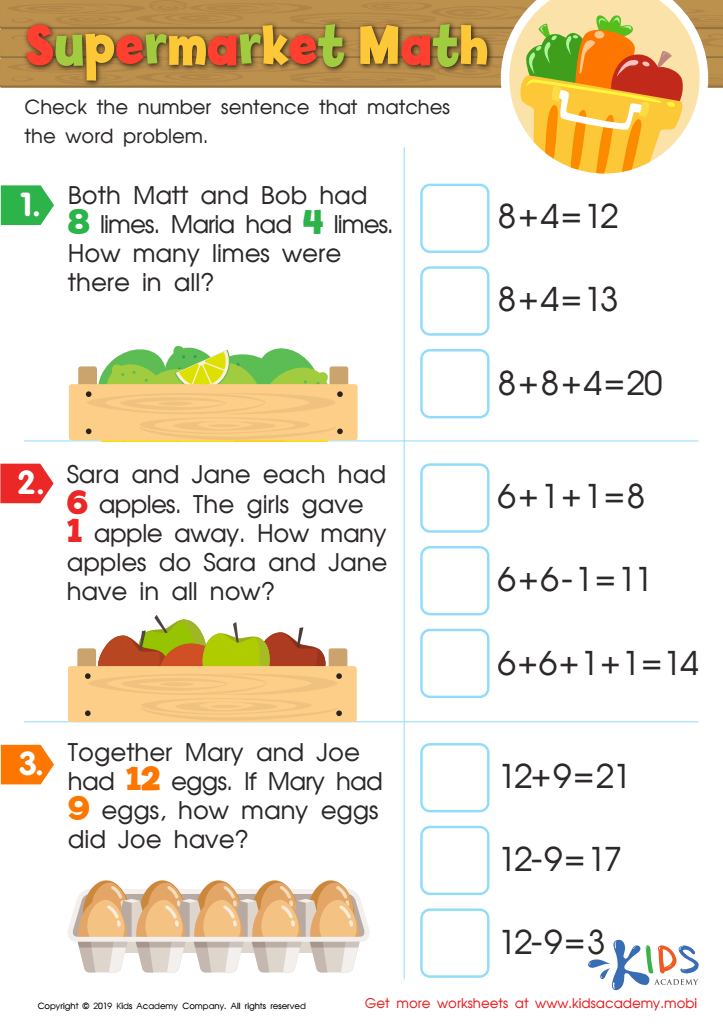
Supermarket Math Worksheet
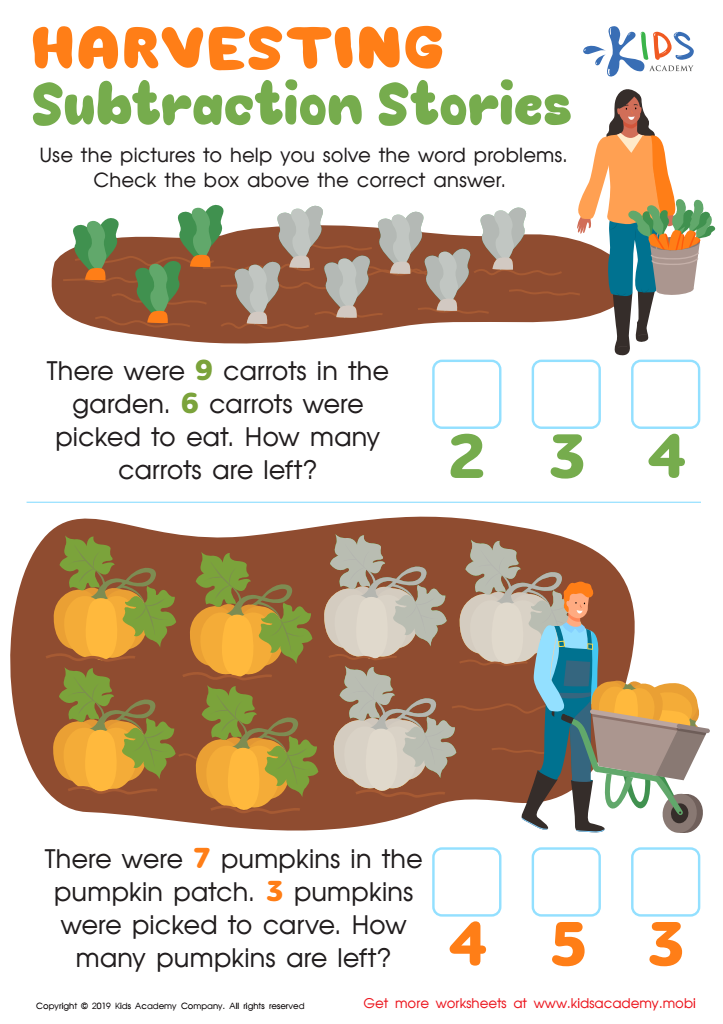
Harvesting Subtraction Stories Worksheet
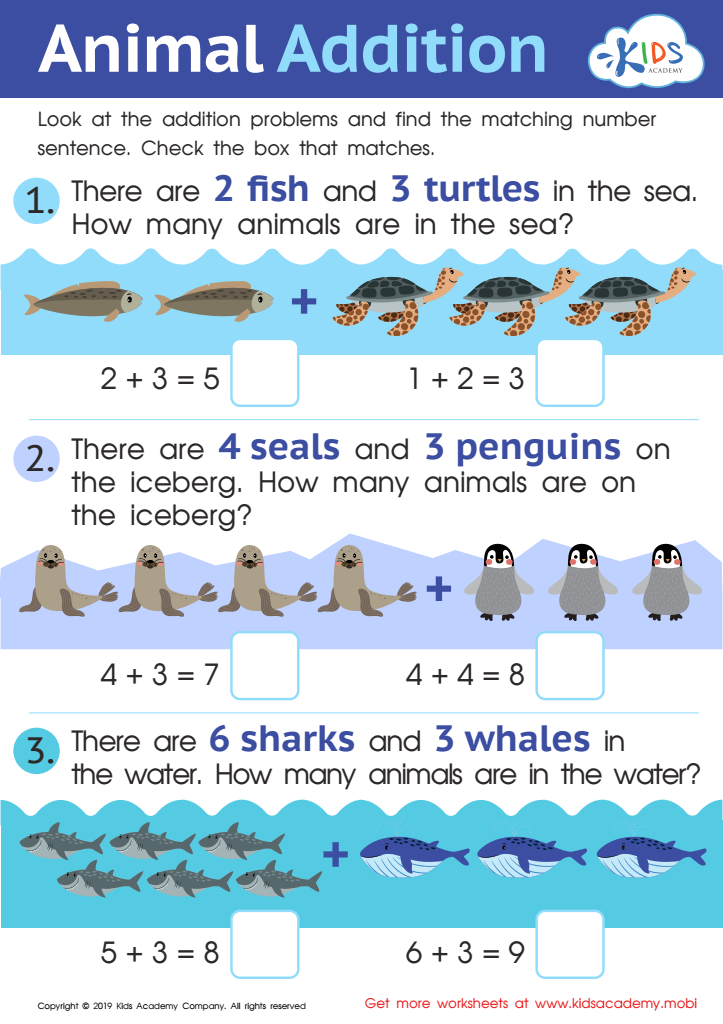
Animal Addition Worksheet
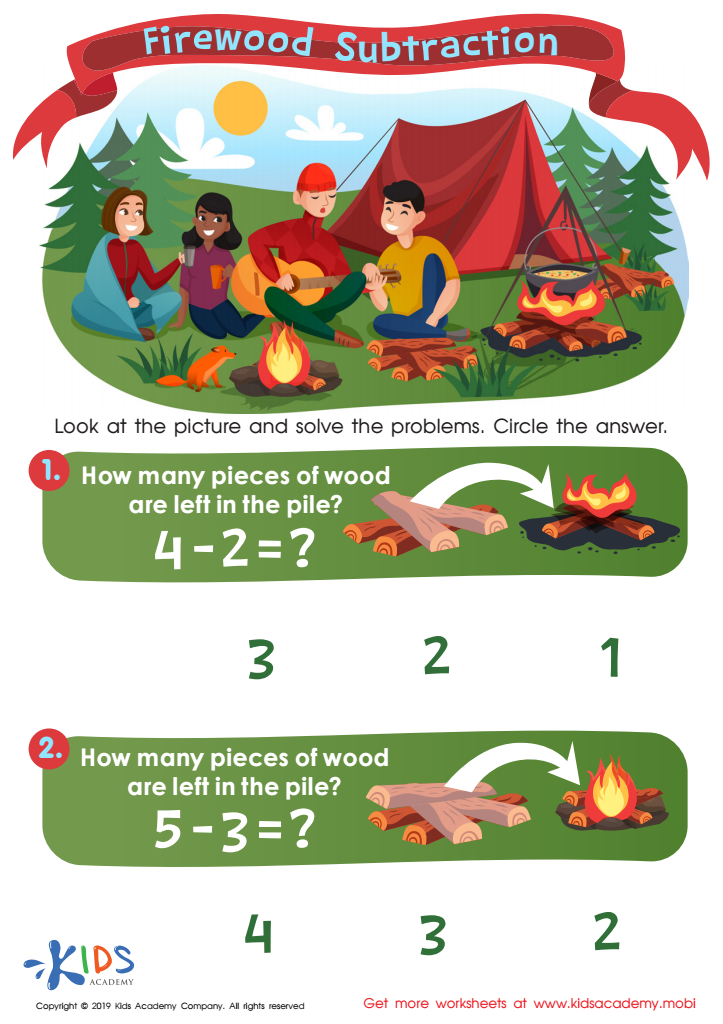
Firewood Subtraction Worksheet
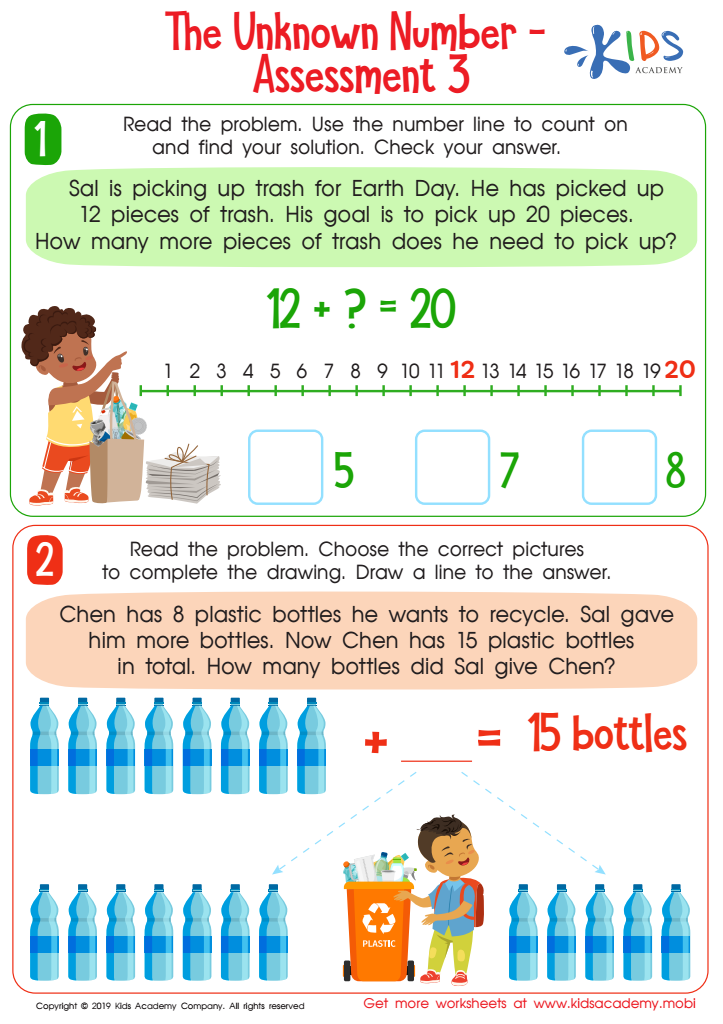
The Unknown Number - Assessment 3 Worksheet
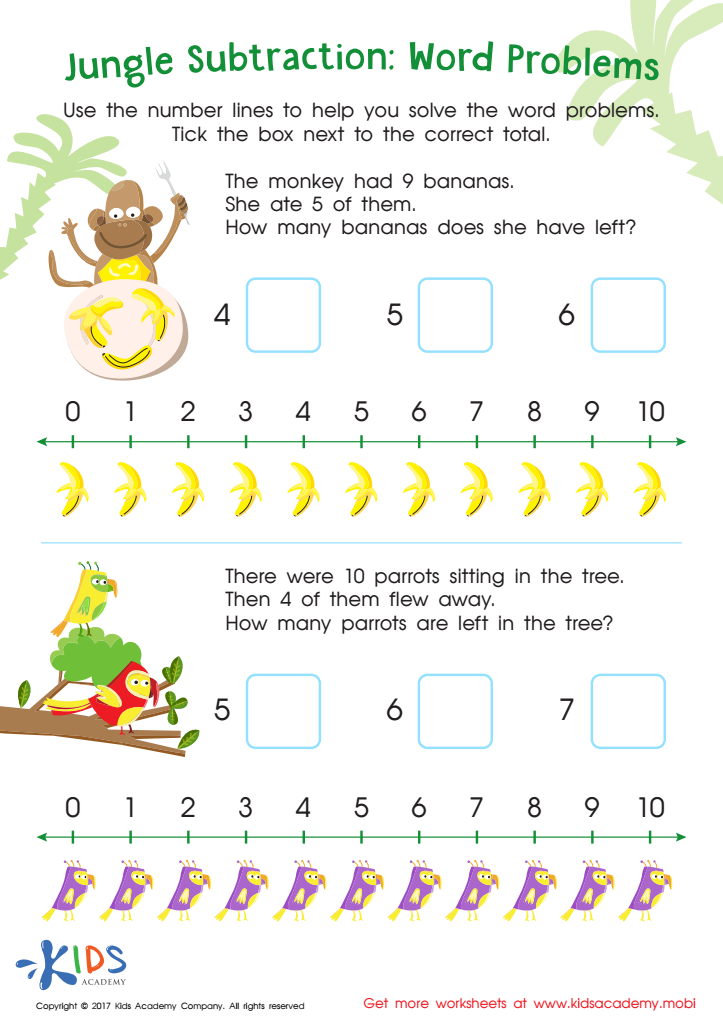
Jungle Subtraction Word Problems Substraction Worksheet
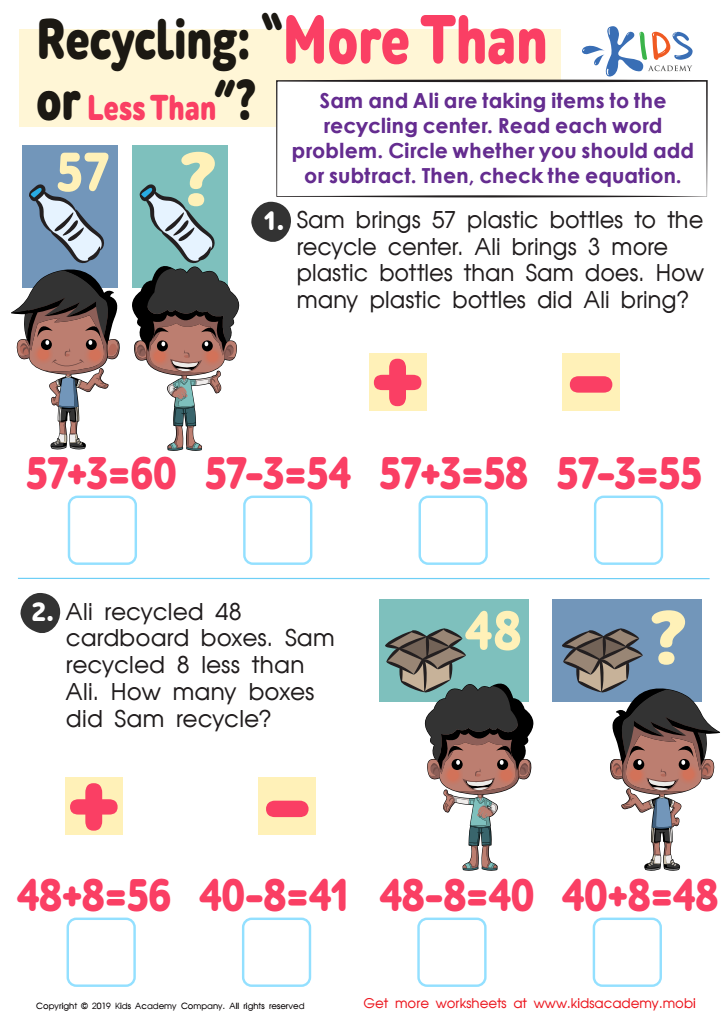
Recycling - More or Less Worksheet
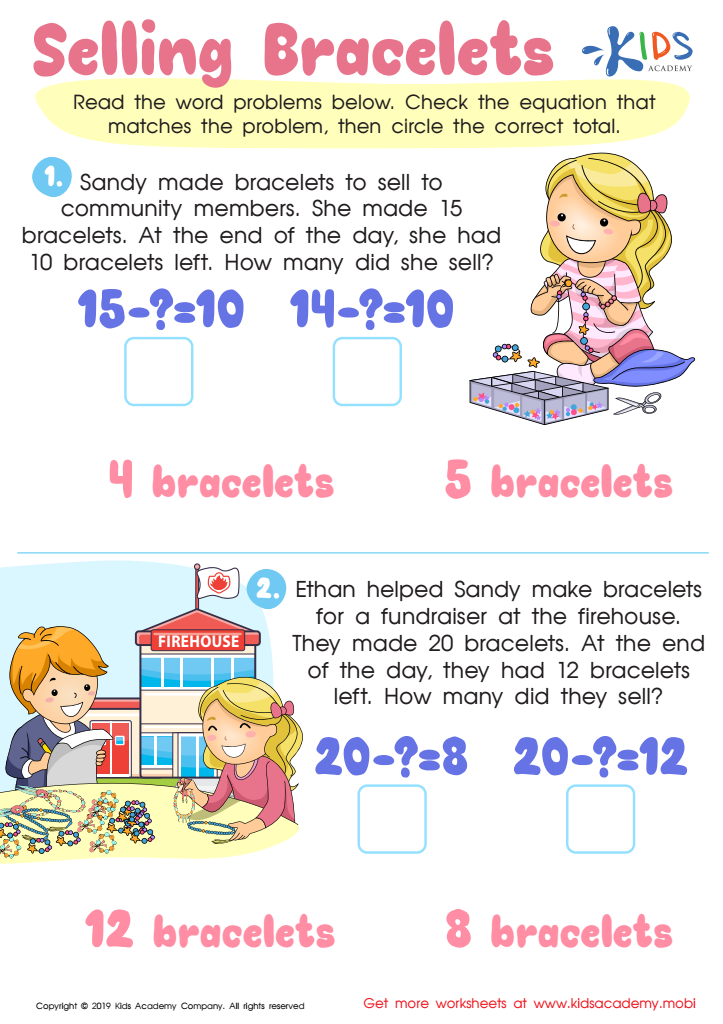
Selling the Bracelets Worksheet
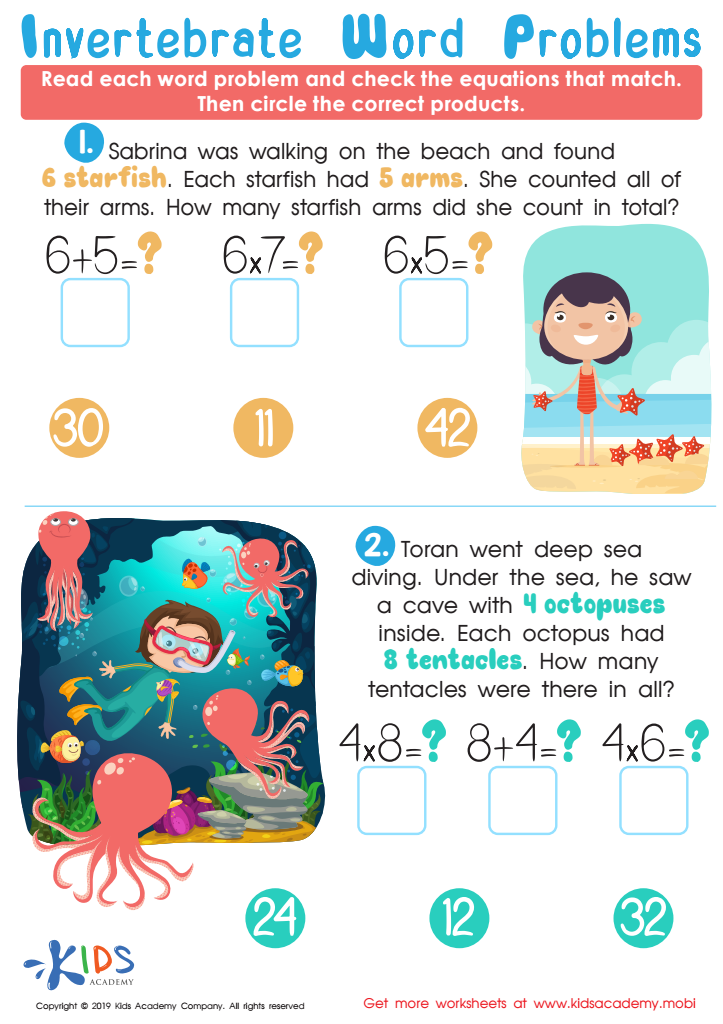
Invertebrate Problems Worksheet
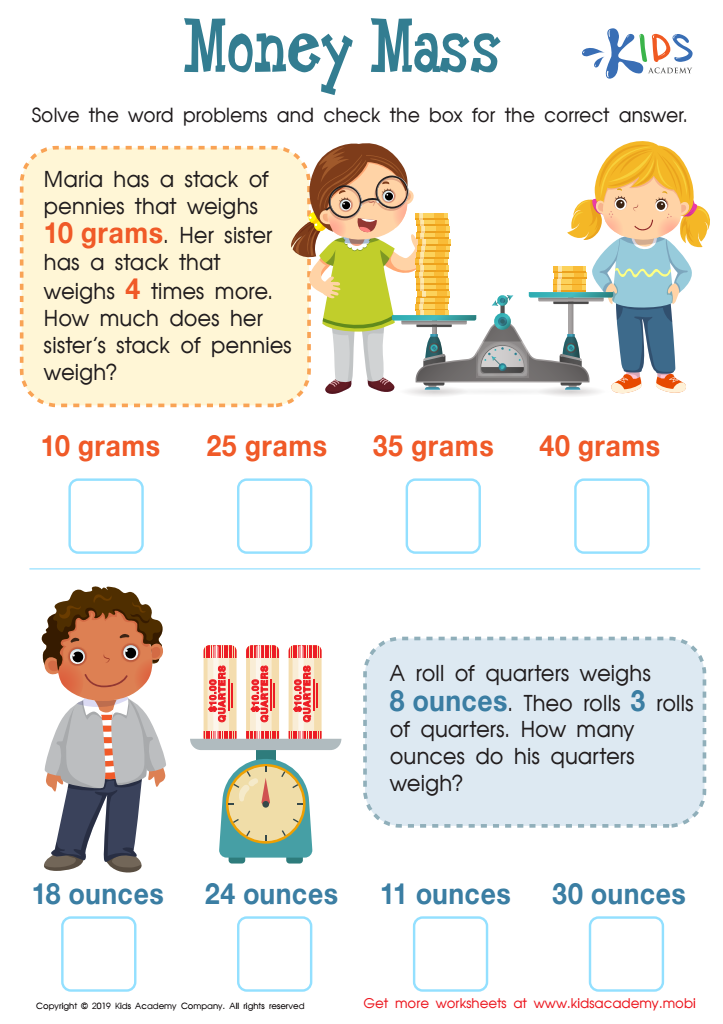
Money Mass Worksheet








Addition and subtraction word problems play a crucial role in the mathematical development of children aged 7 to 9. These problems not only teach basic arithmetic skills but also encourage critical thinking, problem-solving, and comprehension skills. At this age, children transition from concrete mathematical concepts to more abstract reasoning, and word problems provide the perfect platform for this growth.
When children tackle word problems, they learn to parse language, identify relevant information, and translate real-world situations into mathematical operations. This enhances their ability to think critically about everyday scenarios, fostering a deeper understanding of mathematics and promoting lifelong learning. Additionally, these exercises help bridge the gap between math and real life, highlighting the practicality of mathematics in daily tasks.
Moreover, engaging in word problem-solving can improve students’ confidence and perseverance when faced with difficult tasks, laying a solid foundation for more complex concepts in the future. For parents and teachers, emphasizing word problems can create a fun learning environment, encouraging collaboration and boosting verbal and mathematical fluency. Investing time in these activities not only fortifies fundamental math skills but also equips children with essential life skills that will benefit them in various academic and personal settings.