Filters

71 filtered results

Clear all filters
Favorites
With answer key
Interactive

71 filtered results

Difficulty Level

Grade


Check out this FREE Trial Lesson on Physical Science for age 7-9!

Science Topic

Favorites
With answer key
Interactive
  • 7-9
  • With answer key
  • Physical Science
What Are Solids? Worksheet

What Are Solids? Worksheet

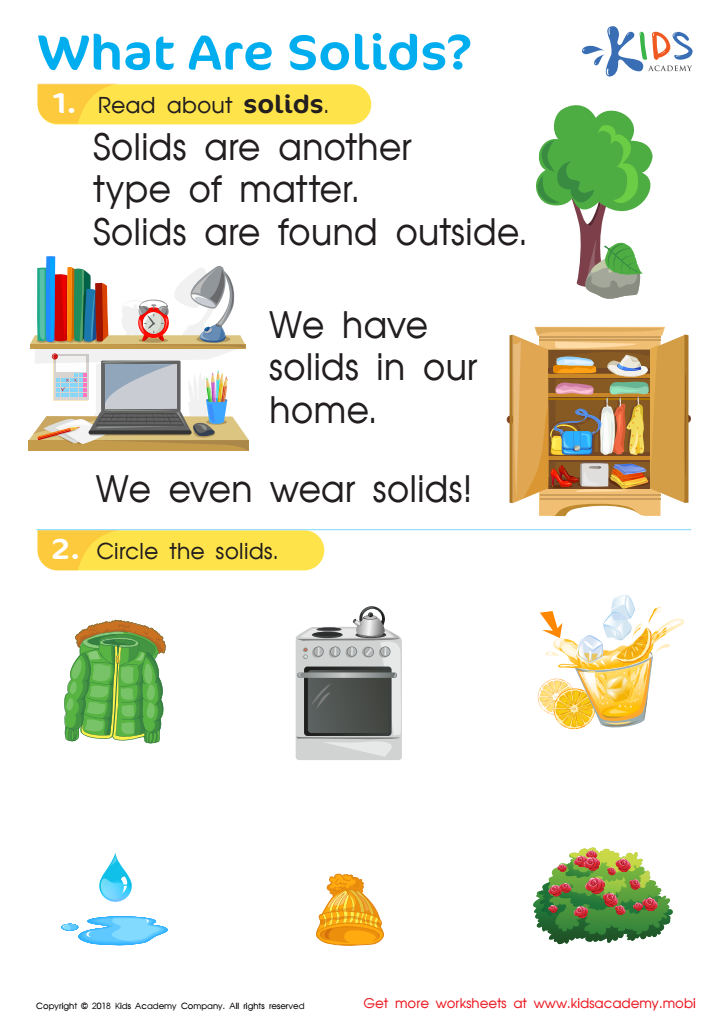
Help your kids understand matter's three forms - solid, liquid, and gas - with examples. Ask them to give their own and where to find them. Then, read and discuss the worksheet's facts about solids. Afterward, have them circle the solids among the provided objects.
What Are Solids? Worksheet
Worksheet
Physical properties of matter worksheet

Physical Properties Of Matter Worksheet
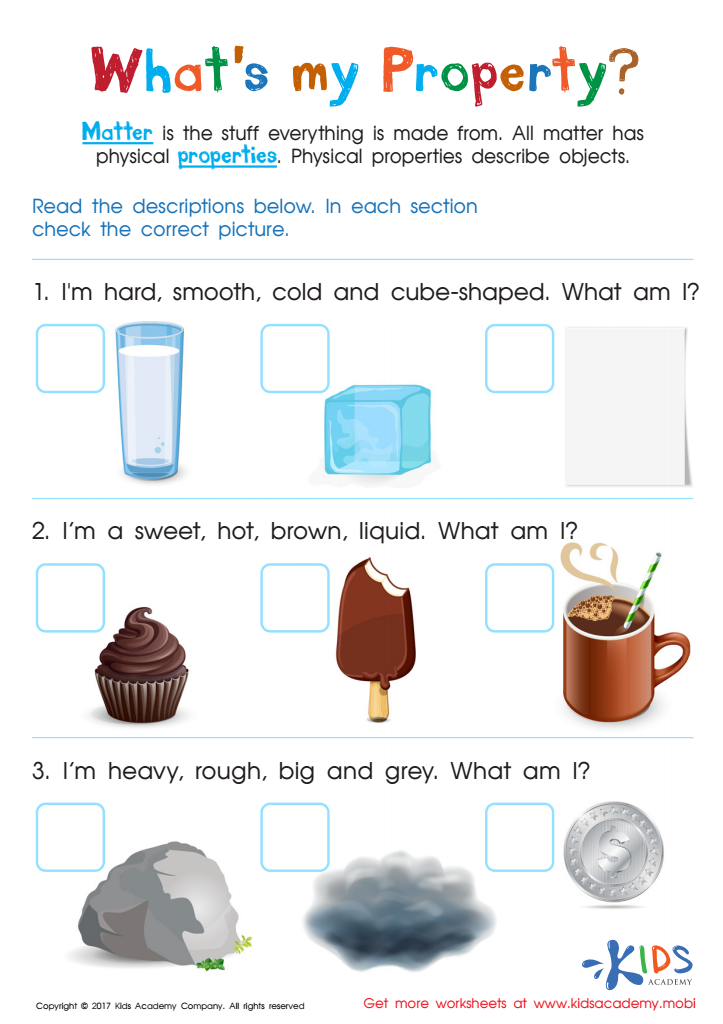
This physical properties of matter worksheet helps them explore liquids, gases and solids in an engaging way. Try it today! (80 words)
Physical Properties Of Matter Worksheet
Worksheet
Is It a Light Source? Worksheet

Is It a Light Source? Worksheet

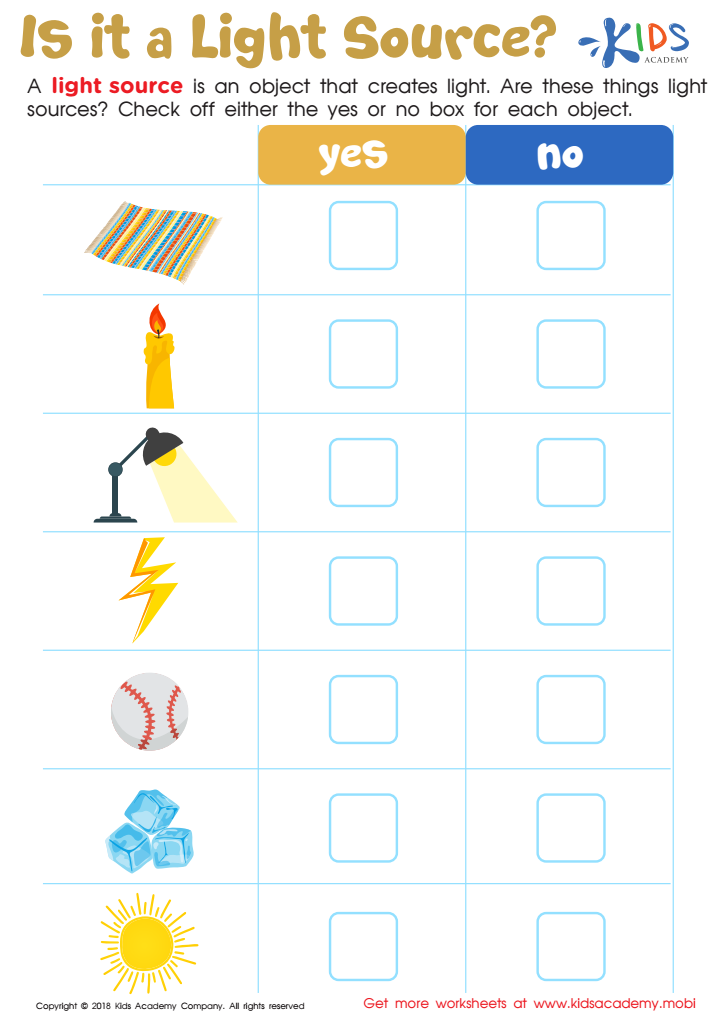
This worksheet is a fun way to teach kids about light sources. Children must identify natural sources like the sun and lightning, and man-made sources such as candles and lamps. Ask them to look at each object and check the box to indicate if it's a light source or not.
Is It a Light Source? Worksheet
Worksheet
Seeing and Hearing Worksheet

Seeing and Hearing Worksheet

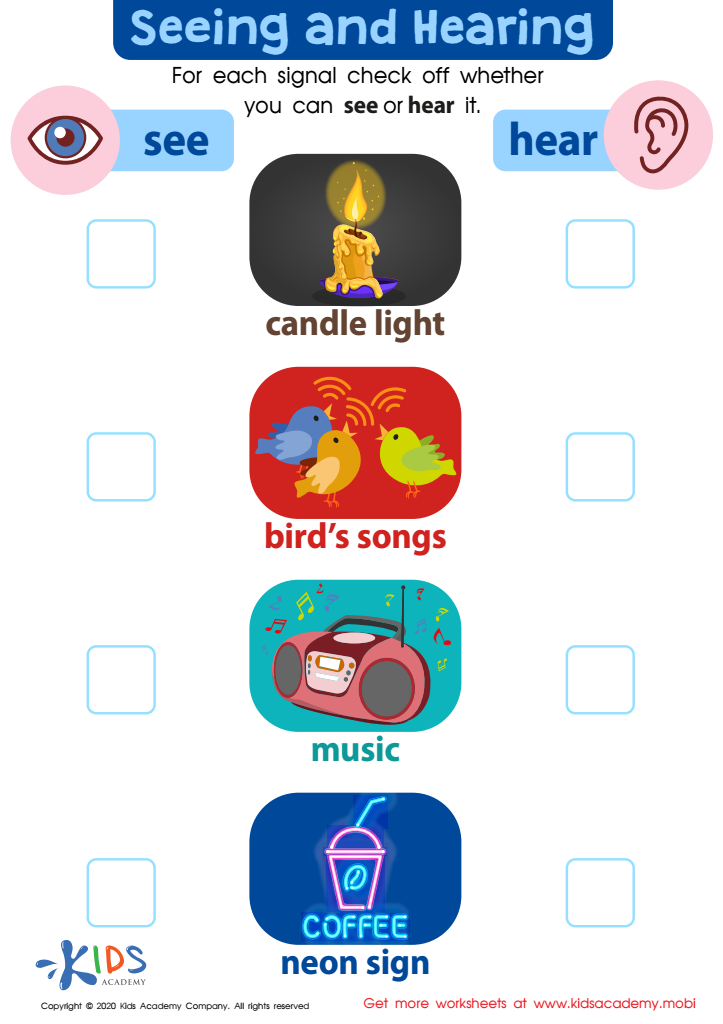
Before beginning this worksheet, ensure your students know that we have five senses: eyes (seeing), tongue (tasting), skin (feeling), nose (smelling), and ears (hearing). This worksheet will explore seeing and hearing - ask your students what they can see/hear in the picture and get them to check it off.
Seeing and Hearing Worksheet
Worksheet
Ben Franklin’s Invention Arrays Worksheet

Ben Franklin’s Invention Arrays Worksheet

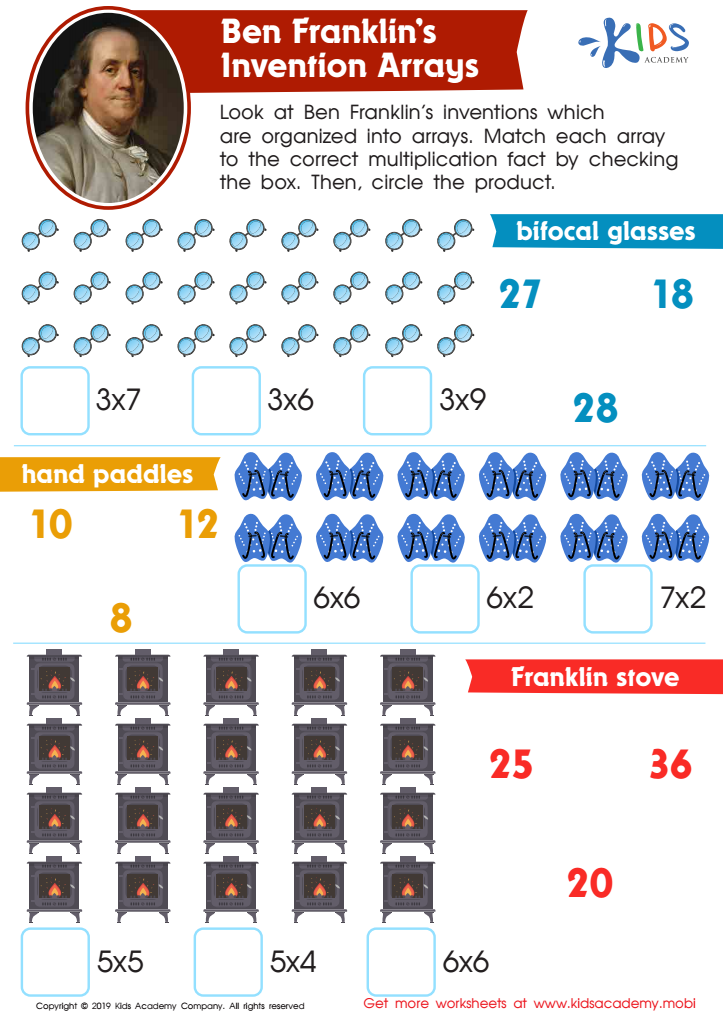
Have your child guess some of the inventors of the popular items we use today. For instance, the light bulb was invented by Thomas Edison. Look at Ben Franklin's inventions and help your kids match the arrays to the correct multiplication fact. Check the box and circle the product.
Ben Franklin’s Invention Arrays Worksheet
Worksheet
States of Matter: Freezing and Melting Worksheet

States of Matter: Freezing and Melting Worksheet

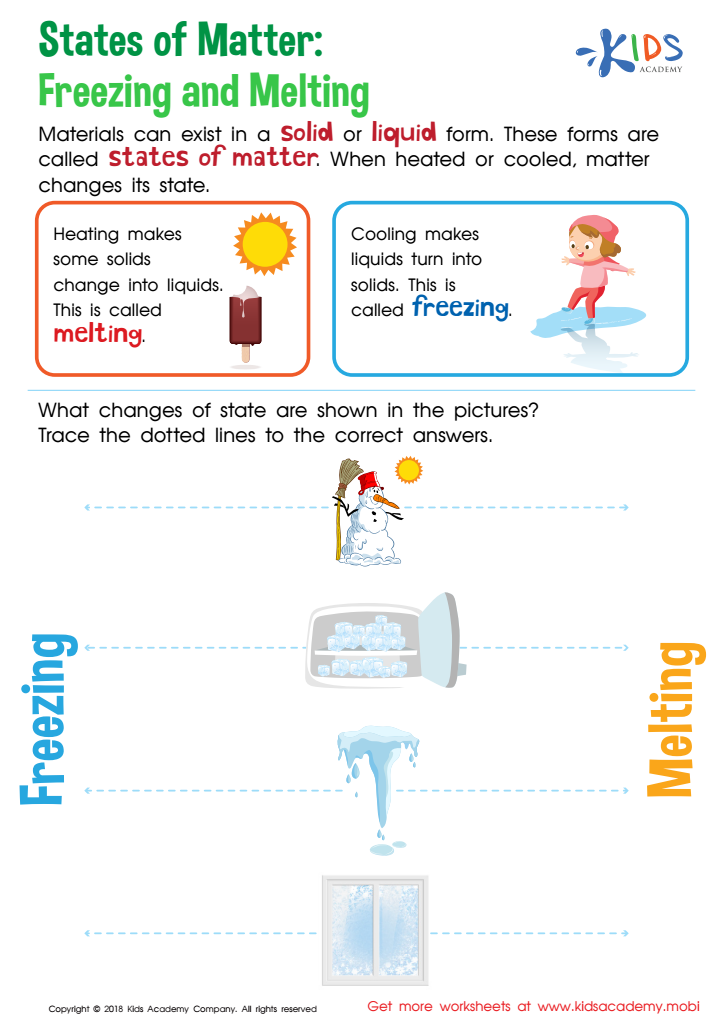
Have students look through the pics in the worksheet. Ask them what changes of state are shown, then trace the lines to the right answers. Matter can come in liquid or solid form, and changes between the two when heated or cooled (melting/freezing).
States of Matter: Freezing and Melting Worksheet
Worksheet
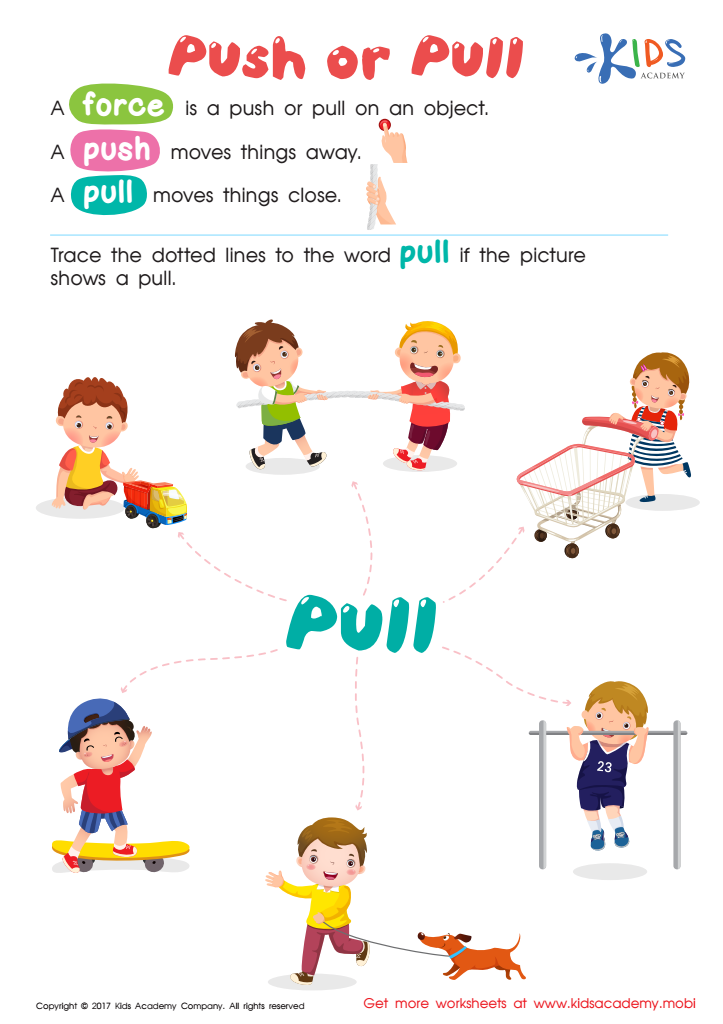
Worksheet: Push or Pull

Pull or Push Worksheet

With this fun worksheet, they'll explore physics by sorting objects into categories according to their mode of motion. It's a great way to get them interested in science.
Pull or Push Worksheet
Worksheet
Sounds Are Everywhere! Worksheet

Sounds Are Everywhere! Worksheet

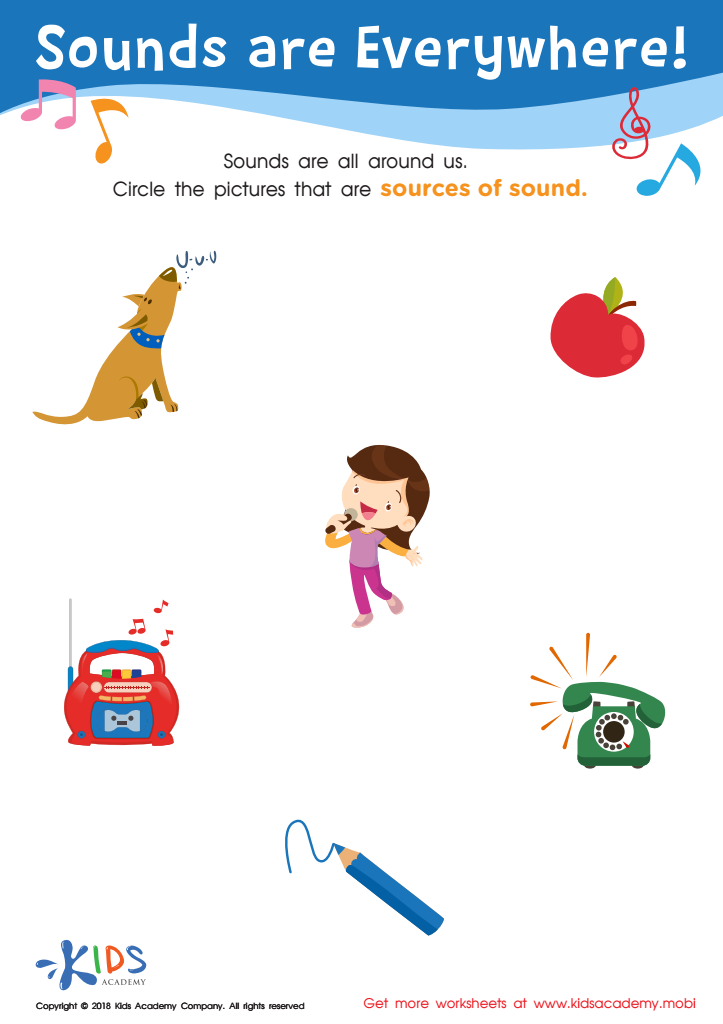
Ask your students to recall objects that make sound. Then, help them identify the sources of sound in the pictures of this worksheet.
Sounds Are Everywhere! Worksheet
Worksheet
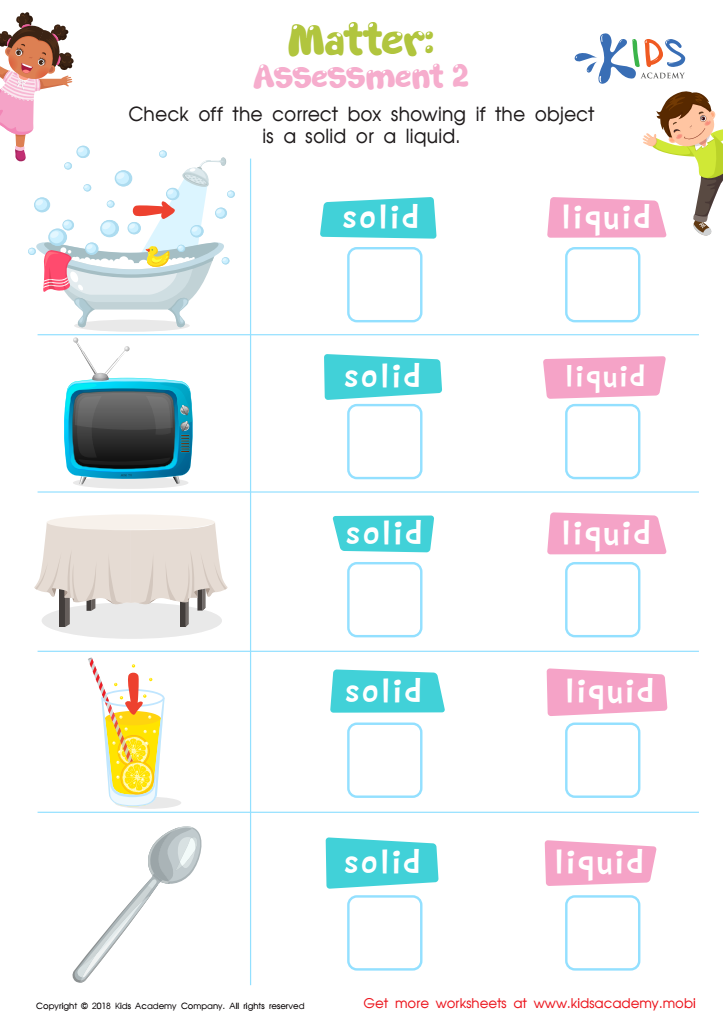
Matter: Assessment 2 Worksheet

Matter: Assessment 2 Worksheet

Identify the five objects in this worksheet as either solid or liquid. Ask your kids to check the correct box. Melting changes solids to liquids while freezing transforms liquids to solids.
Matter: Assessment 2 Worksheet
Worksheet
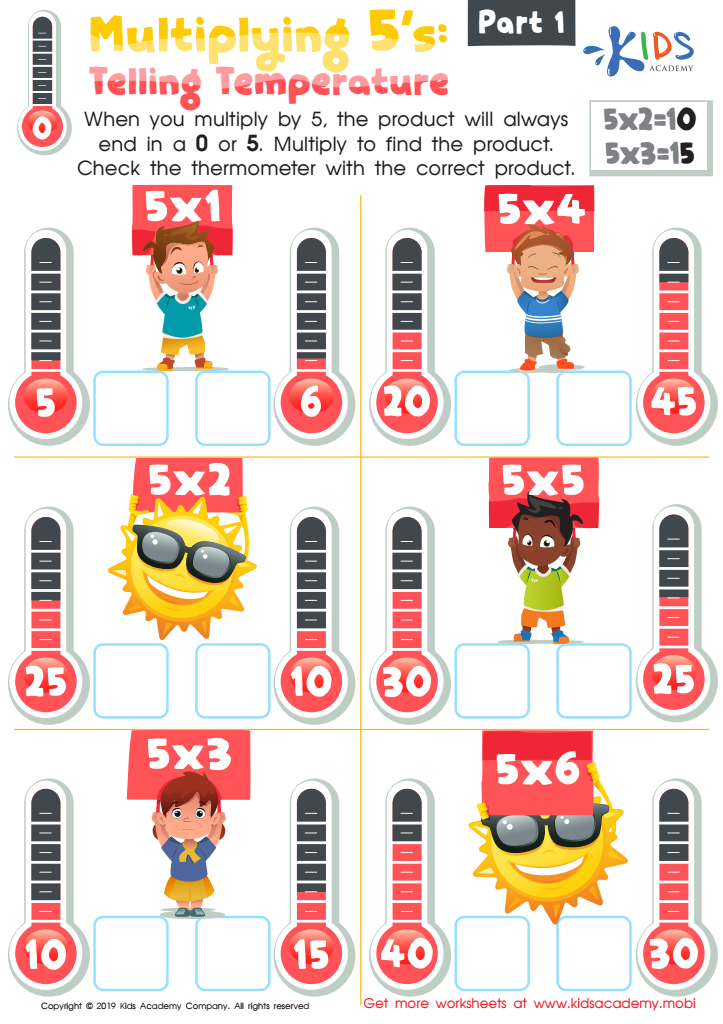
Multiplying 5’s: Telling Temperature Worksheet

Multiplying 5’s: Telling Temperature Worksheet

To help your child learn their times tables, here's two tips. When multiplying by 10s, the product always ends in a 0. When multiplying by 5s, the product will end in either 0 or 5. Have a look at the problems in this worksheet, help them find the product and check the thermometer to verify the answer.
Multiplying 5’s: Telling Temperature Worksheet
Worksheet
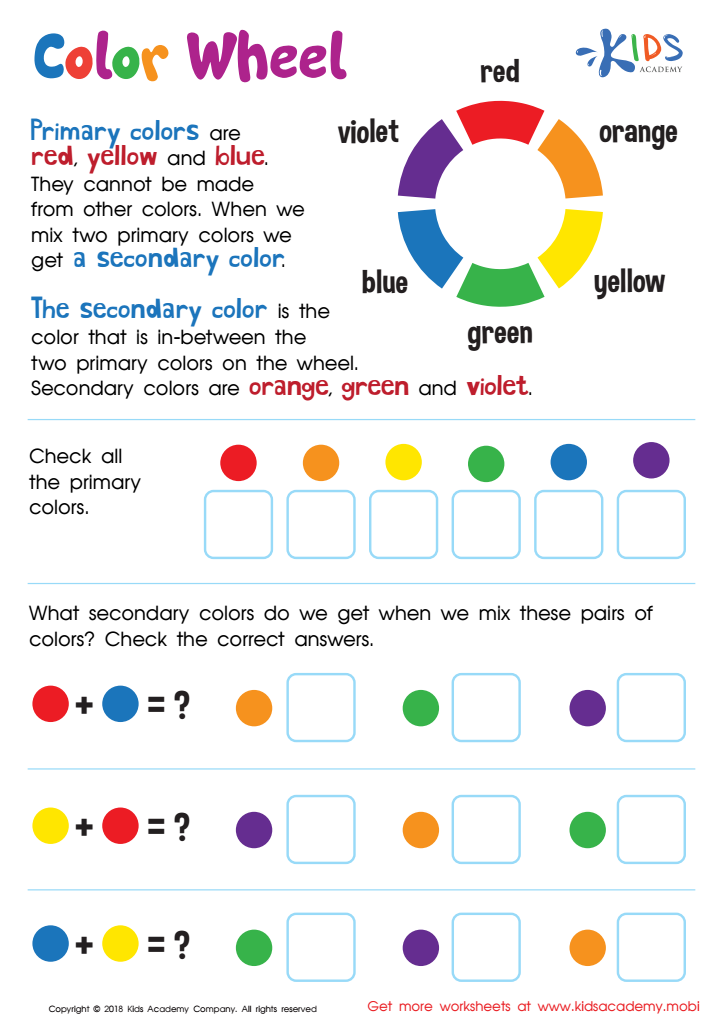
Primary and Secondary Colors Worksheet PDF

Primary and Secondary Colors Worksheet

Explore the color wheel with it. Print the worksheet and use it to discover all the colors the wheel has to offer! Learn the basics of color mixing while having fun.
Primary and Secondary Colors Worksheet
Worksheet
Moon Phases Worksheet

Moon Phases Worksheet

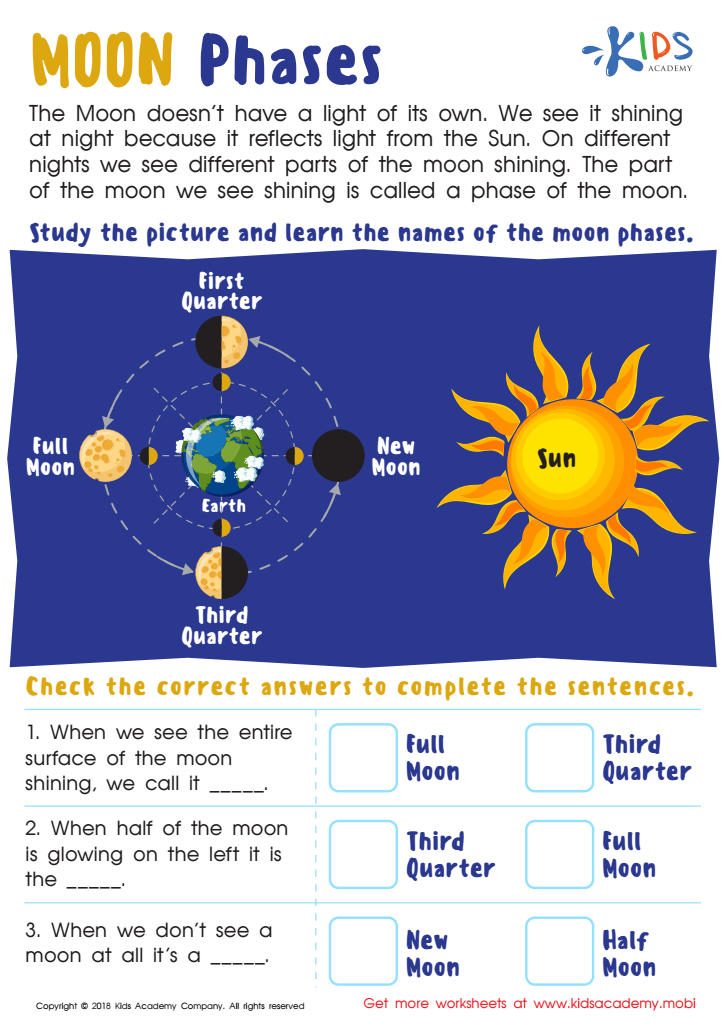
Gaze up at the night sky and the moon's appearance may change from night to night. Encourage your child to learn more about the sun, the moon, and space with this science worksheet. Have them read the text then study the picture. Finally, read the sentences and check the answers to identify the moon's phases.
Moon Phases Worksheet
Worksheet
Sources of Heat Energy Worksheet

Sources of Heat Energy Worksheet

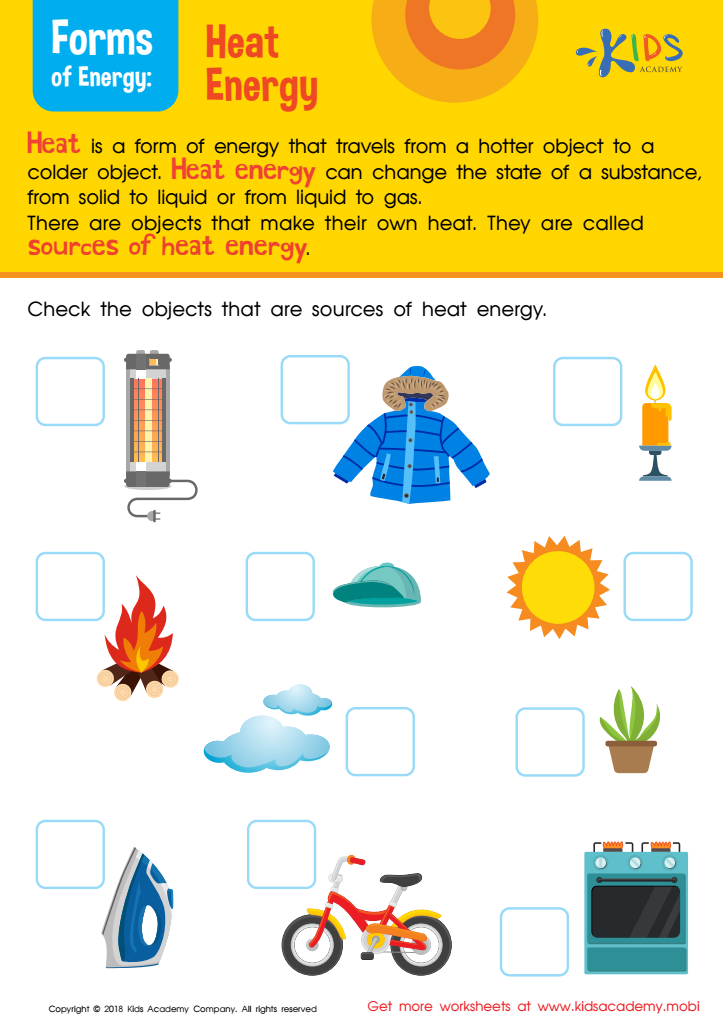
Heat energy is everywhere - from inside our homes to outside in the sun. Natural sources include the sun, geothermal energy, and volcanic activity. This worksheet helps kids identify and learn about these sources and more!
Sources of Heat Energy Worksheet
Worksheet
Static or magnetic printable worksheet

Static or Magnetic Printable Worksheet
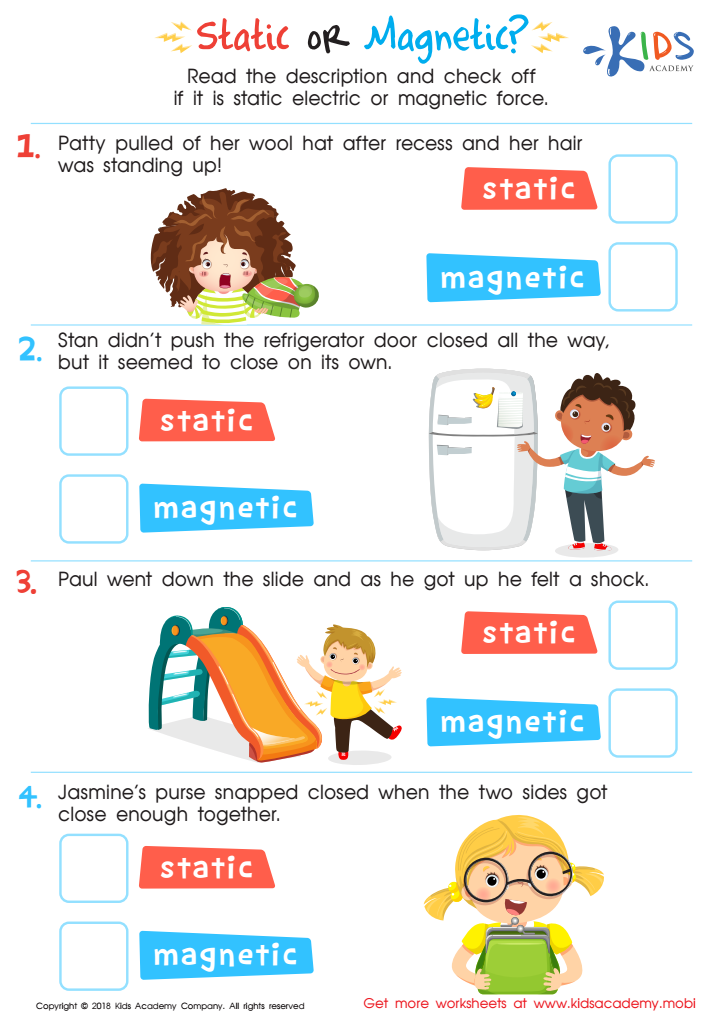
Ever wondered if a situation involved static or magnetic force? This printable worksheet has the answer! Read the scenarios and check out the illustrations to decide which force is in play for each. Learn about these two amazing forces with this fun activity!
Static or Magnetic Printable Worksheet
Worksheet
Light and Shadow Worksheet for Grade 3

Light and Shadow Worksheet for Grade 3

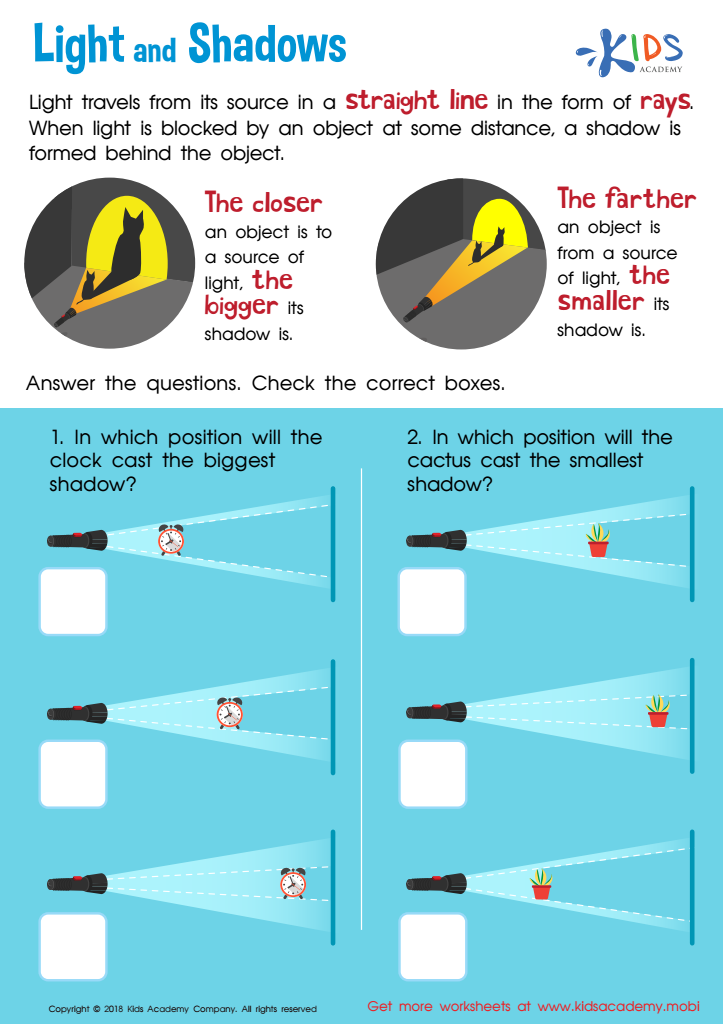
Kids are often scared of shadows, but they can learn that they're not so scary! This worksheet helps grade 3 kids understand how light rays and objects create shadows, and how they can be large or small. Teach your child with this interesting worksheet!
Light and Shadow Worksheet for Grade 3
Worksheet
Matter all Around Worksheet

Matter all Around Worksheet

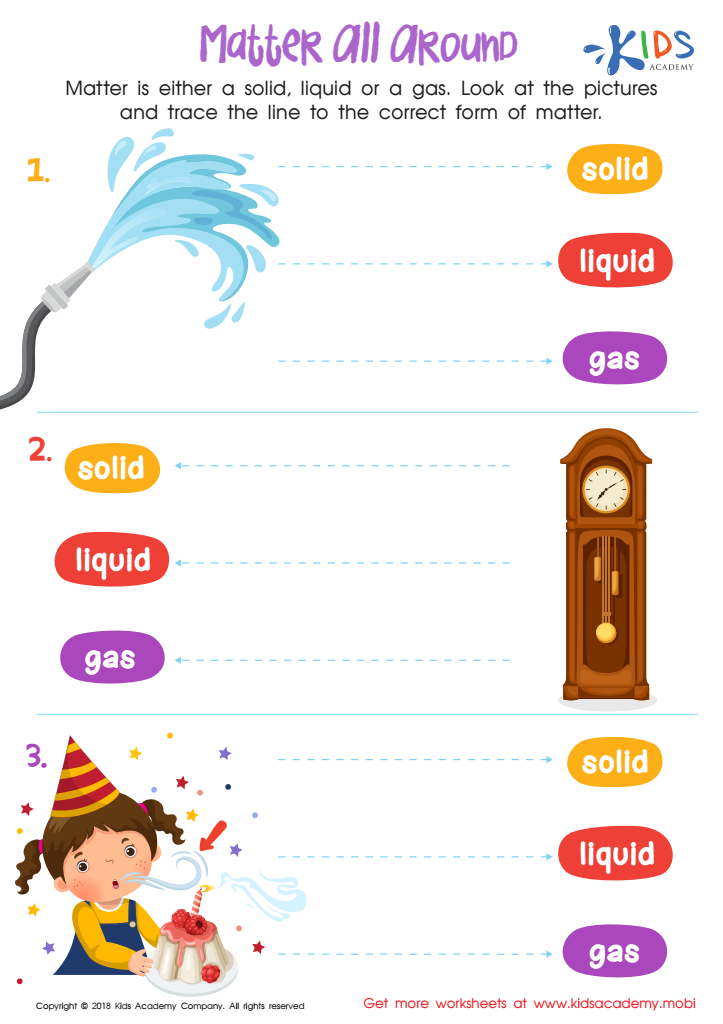
Have you taught your students about matter? Use this worksheet to help them understand that matter is anything that has weight and takes up space, either as a solid, liquid, or gas. Guide them to trace the line to the correct form of matter as they look at the pictures. This will be easy if they already know the topic, but it's also a great opportunity to teach them.
Matter all Around Worksheet
Worksheet
What Is Matter? Worksheet

What Is Matter? Worksheet

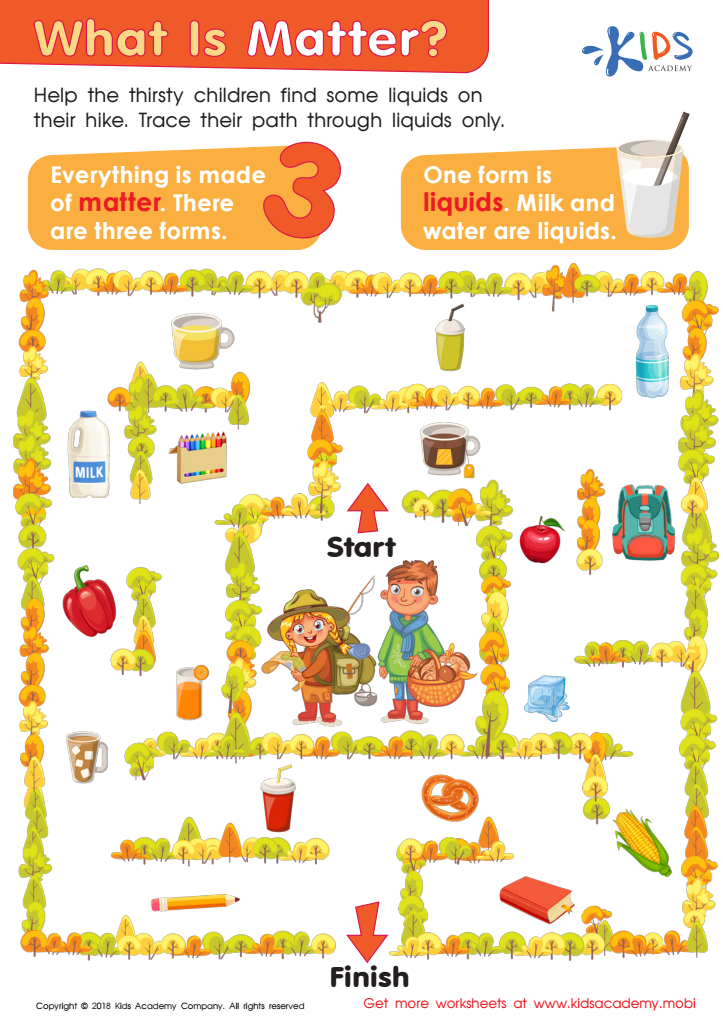
Matter is anything that occupies space and has weight. Show your child examples, like people, cars, food, animals, objects etc. Ask them to name more. Help the thirsty kids in the picture find liquids - have them trace the path in the tracing sheet.
What Is Matter? Worksheet
Worksheet
Energy sources worksheet PDF

Energy Sources Printable

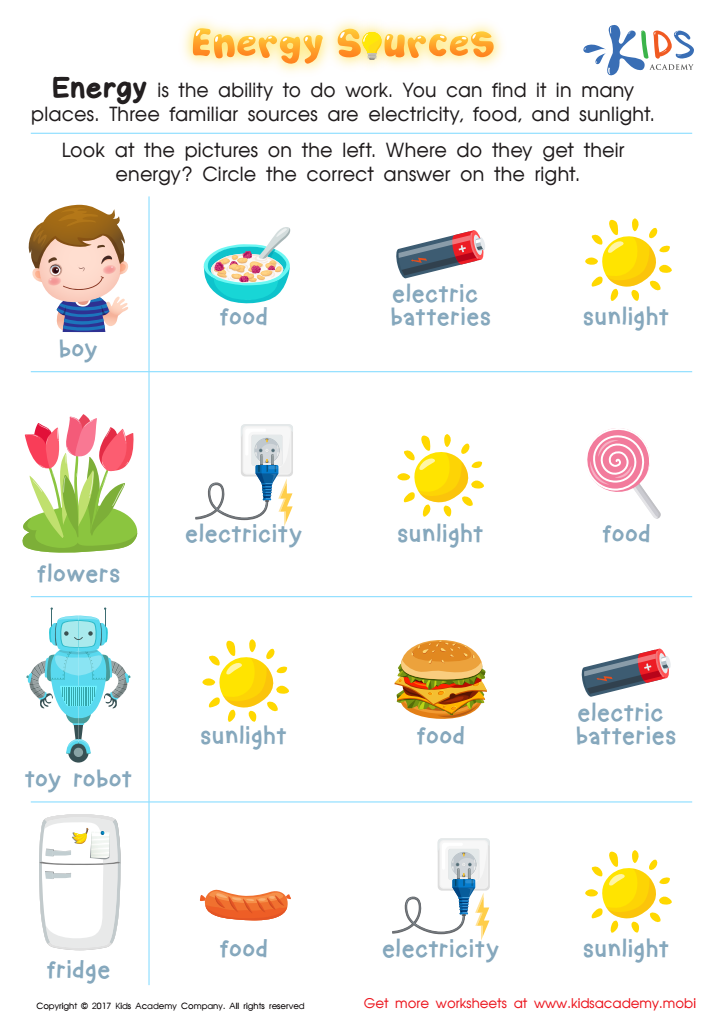
Introduce energy sources with this worksheet PDF — explore the sun, batteries, and more! Get your mini scientist excited about energy and power up their learning.
Energy Sources Printable
Worksheet
Magnet Poles Attract or Repel Worksheet

Magnet Poles Attract or Repel Worksheet

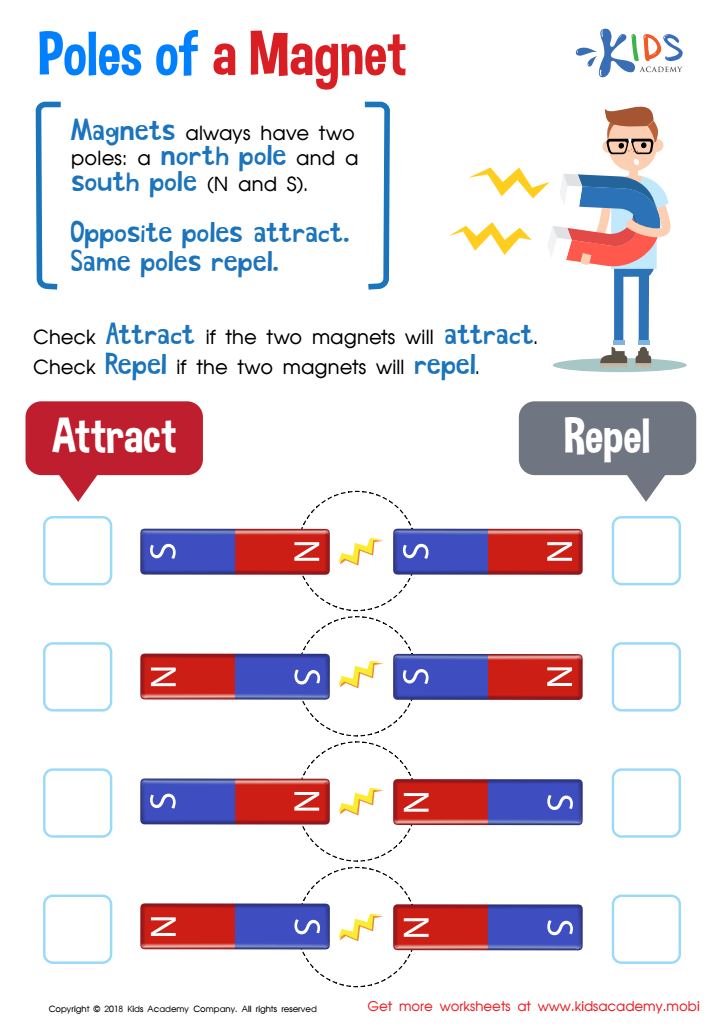
Kids can learn about magnets using this fun worksheet! They'll identify the polarities of magnets and see if they attract or repel. Pictures of magnets will help them understand the concept and get them excited about scientific exploration!
Magnet Poles Attract or Repel Worksheet
Worksheet
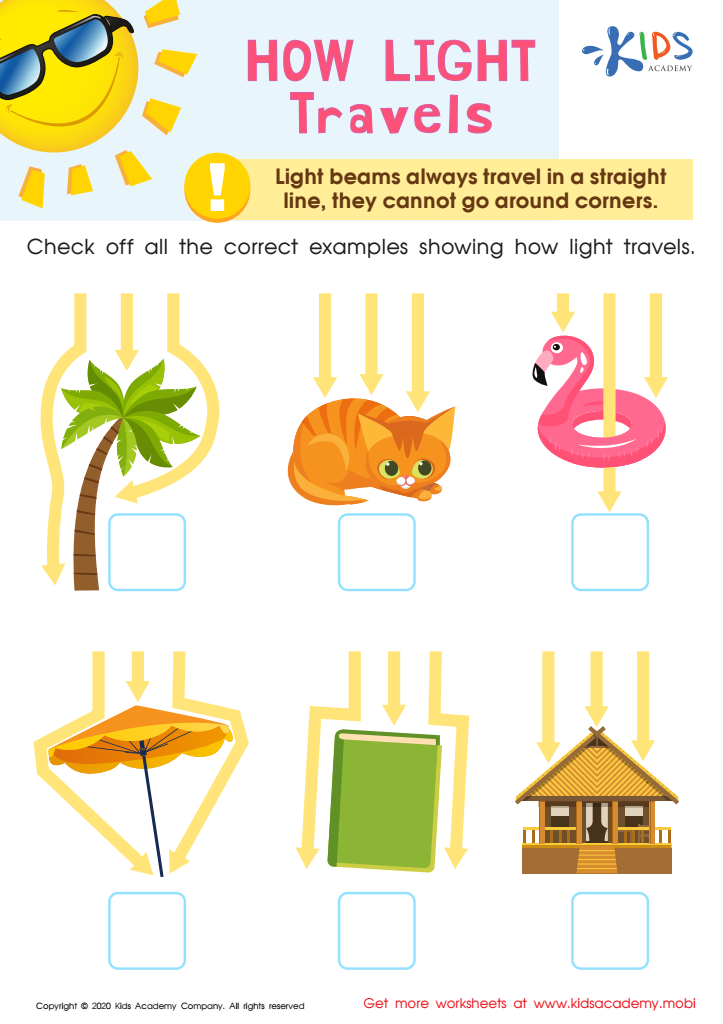
How Light Travels Worksheet

How Light Travels Worksheet

This colorful worksheet teaches students about light travel: beams move in a straight line and can't go around corners. Students view pictures and check off all the correct examples.
How Light Travels Worksheet
Worksheet
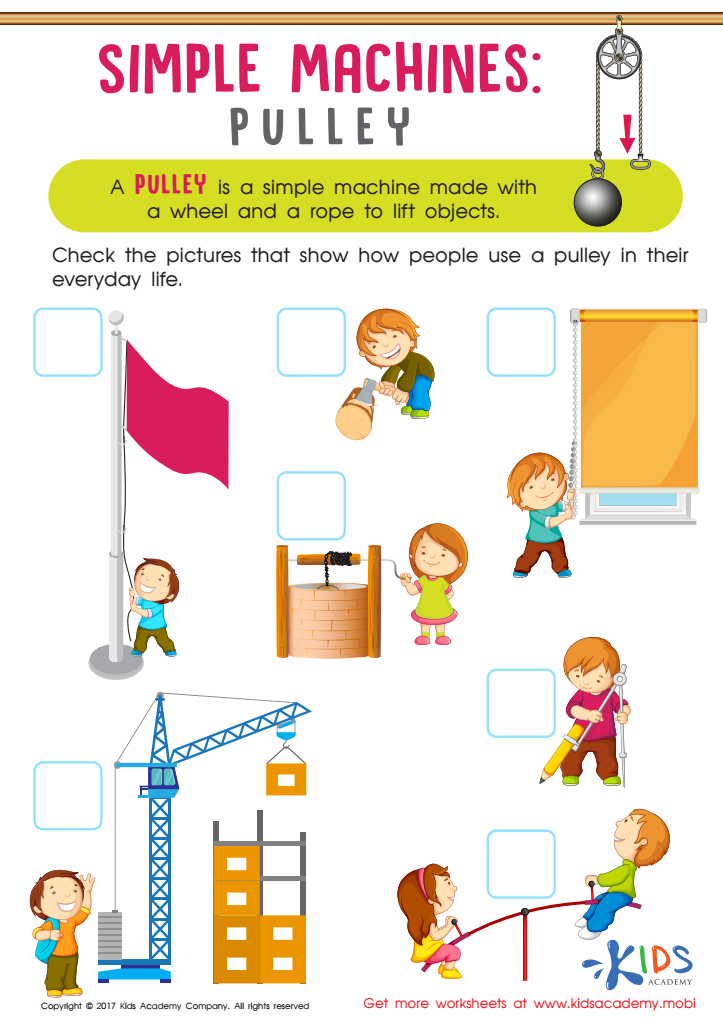
Simple machines pulley worksheet

Simple Machines Pulley Worksheet
Pulleys make everyday life easier, from flag poles to elevators. This worksheet helps kids recognize and appreciate how pulleys simplify our lives. They'll learn about the many practical uses for these simple rope and wheel systems.
Simple Machines Pulley Worksheet
Worksheet
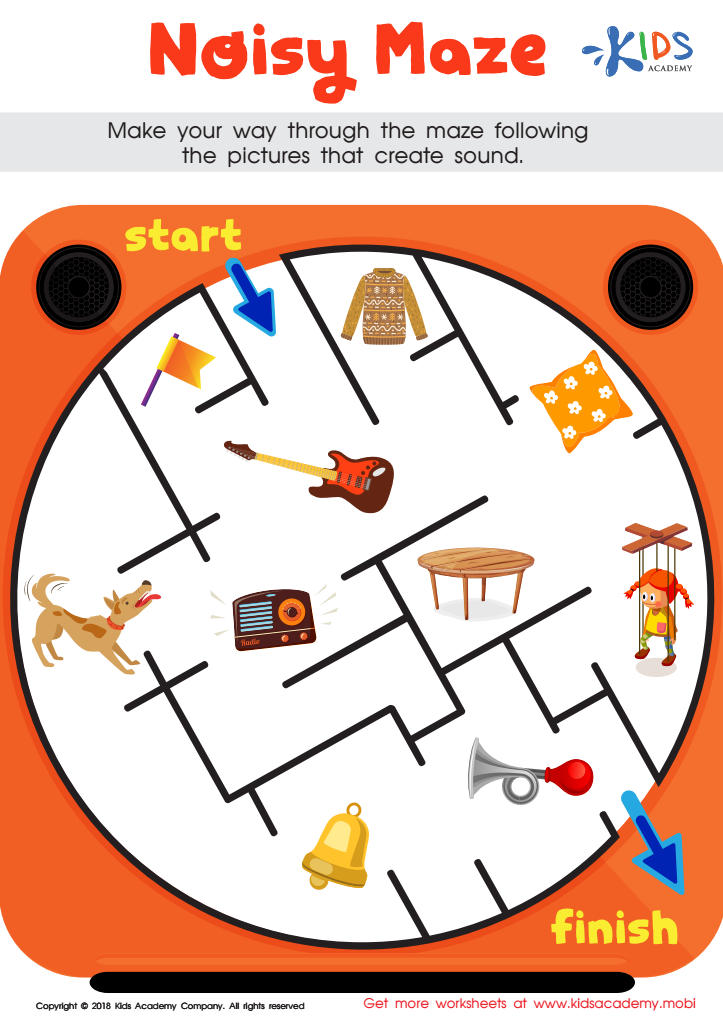
Noisy Maze Worksheet

Noisy Maze Worksheet

Have your kids name some objects that make noise? Then, look at the worksheet with them and help them identify each object. Guide them through the maze, following the sound-producing pictures.
Noisy Maze Worksheet
Worksheet
Multiplying 5’s: Telling Temperature Part 2 Worksheet


Multiplying 5’s: Telling Temperature Part 2 Worksheet

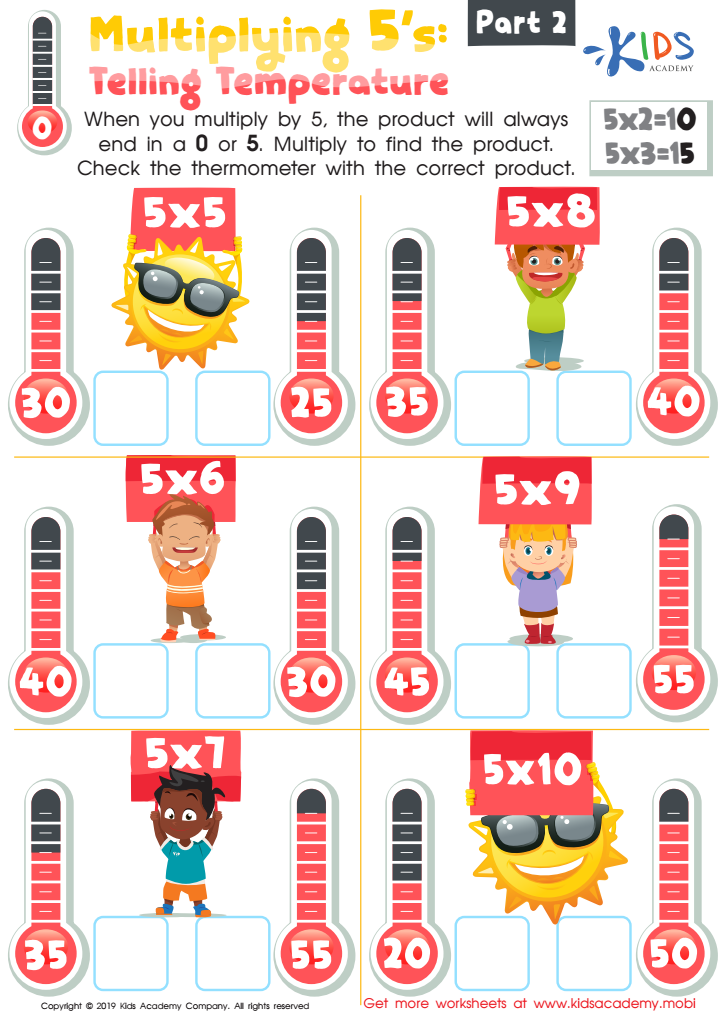
To help your child with multiplication, teach them some simple tricks. For example, when multiplying 10's the product always ends in a 0, and when multiplying by 5, the product will end in 0 or 5. Look at the problems in this worksheet and help your child find the product. Then, check the thermometer with the correct answer.
Multiplying 5’s: Telling Temperature Part 2 Worksheet

Worksheet


... 2 3

Parents and teachers should care about physical science for children ages 7-9 because it lays the foundation for critical thinking and problem-solving skills. At this developmental stage, children are naturally curious and eager to explore their surroundings. Introducing physical science concepts, such as matter, forces, and energy, can harness this curiosity, making learning both fun and engaging.

Studying physical science helps children understand the world around them, fostering a sense of wonder and discovery. It also encourages them to ask questions and seek answers, which promotes scientific inquiry and literacy. Concepts learned at this age support interdisciplinary learning, integrating subjects like math, technology, and even art, making education holistic.

Additionally, early exposure to physical science nurtures future interest in STEM (Science, Technology, Engineering, and Math) fields. As the demand for STEM-related careers continues to grow, helping children build a solid foundation can influence their educational trajectories and career choices.

Lastly, physical science education promotes a sense of responsibility toward the environment and sustainability, teaching young learners the importance of caring for our planet. Overall, investing in physical science education for young children shapes informed, inquisitive, and engaged citizens for the future.