Extra Challenge Comparison Worksheets for Ages 6-9
7 filtered results
-
From - To
Discover our "Extra Challenge Comparison Worksheets for Ages 6-9," designed to inspire young minds and boost arithmetic skills. Perfect for first to third graders, these worksheets offer engaging activities that challenge students to compare numbers, quantities, and objects. Featuring a blend of visually appealing graphics and thoughtfully crafted problems, our worksheets cater to various learning styles, ensuring a deeper understanding of comparison concepts. With progressive difficulty levels, kids can build confidence while having fun. Ideal for at-home practice or classroom use, give your young learners the extra challenge they crave, fostering a love for math from an early age.
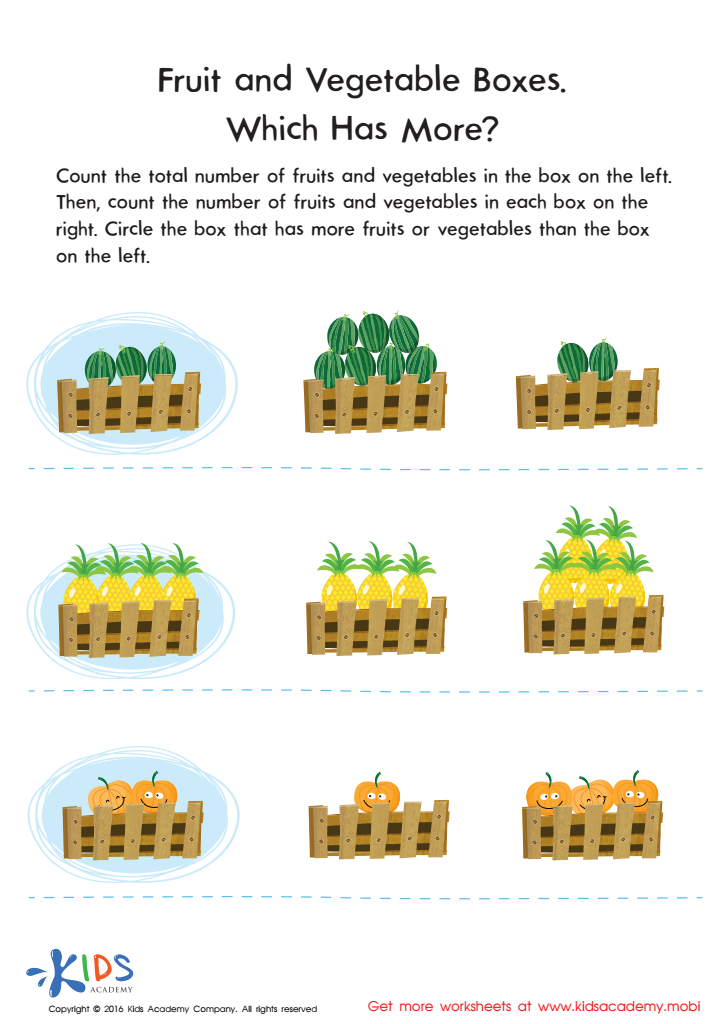
Which Has More? Size Worksheet
 Assign to My Students
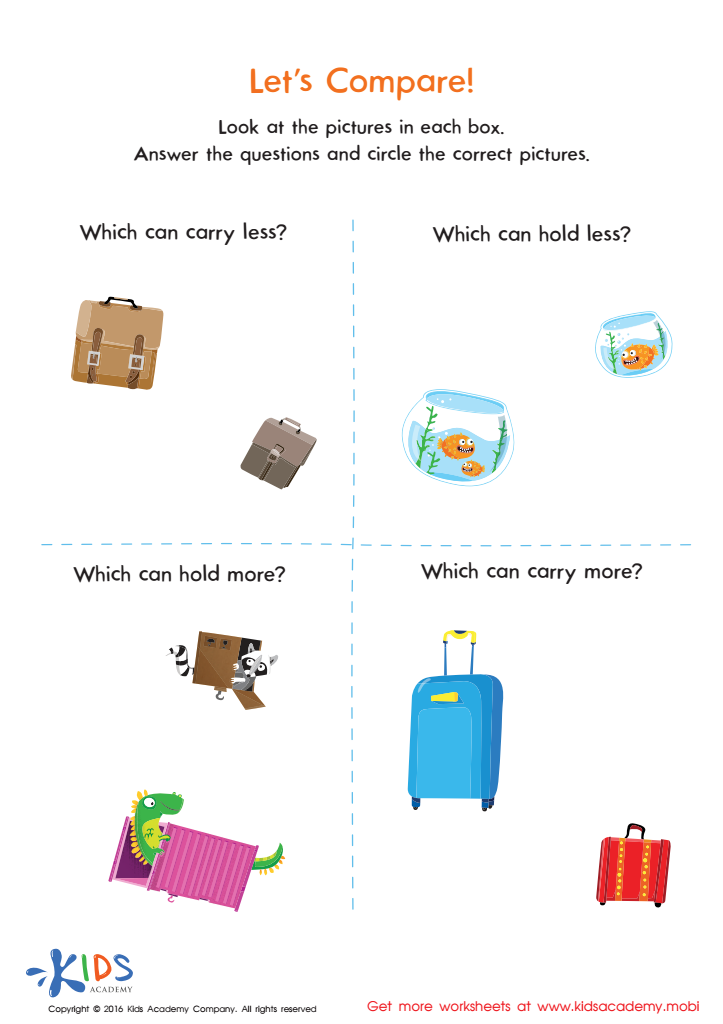
Let's Compare Worksheet: Big or Small
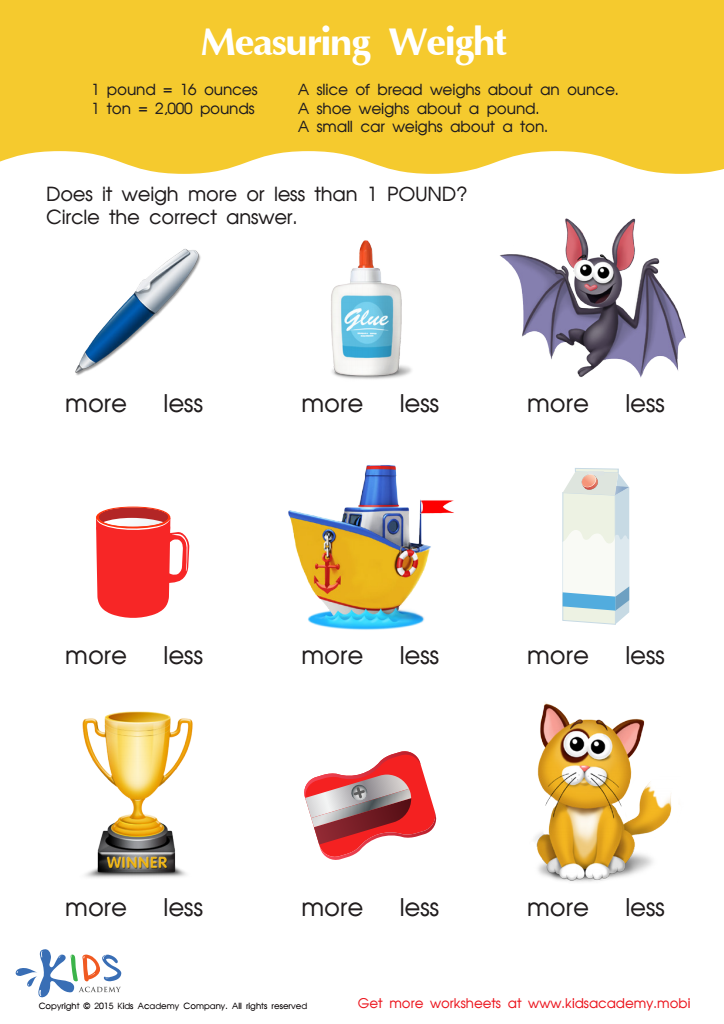
Measuring weight in pounds Worksheet
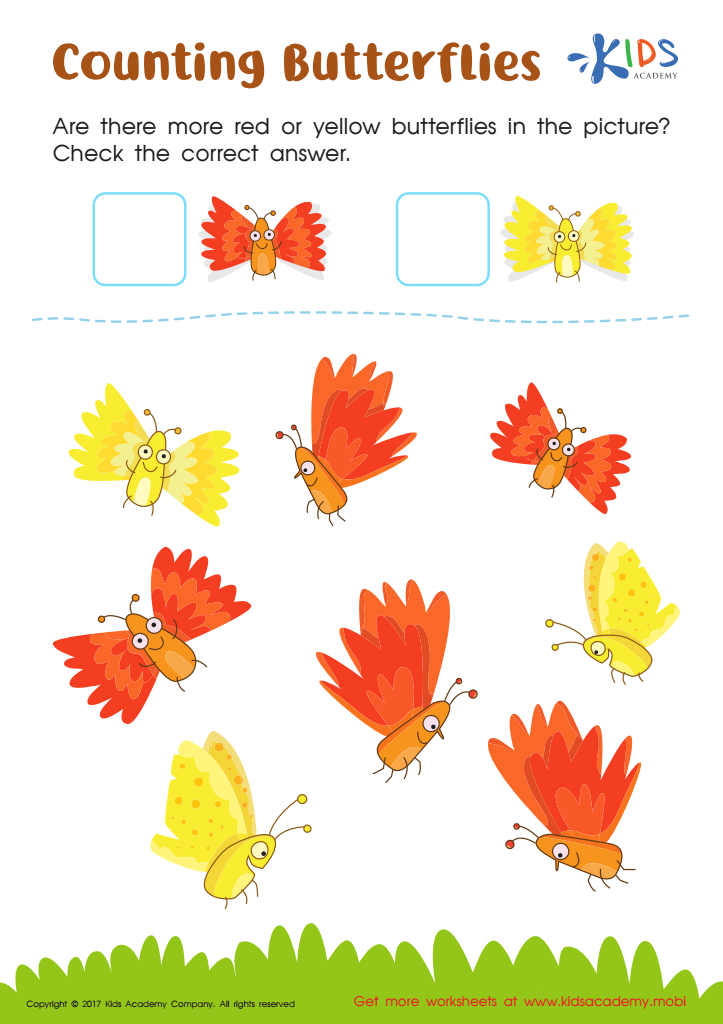
Counting Butterflies Worksheet
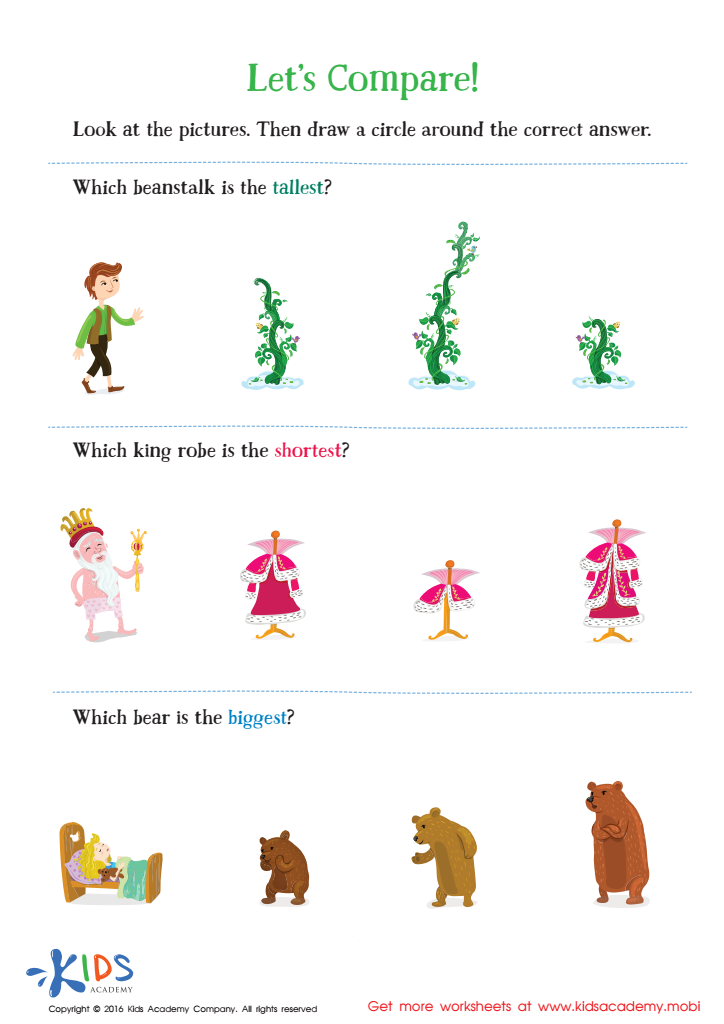
Fairy Tale Worksheet: Let's Compare
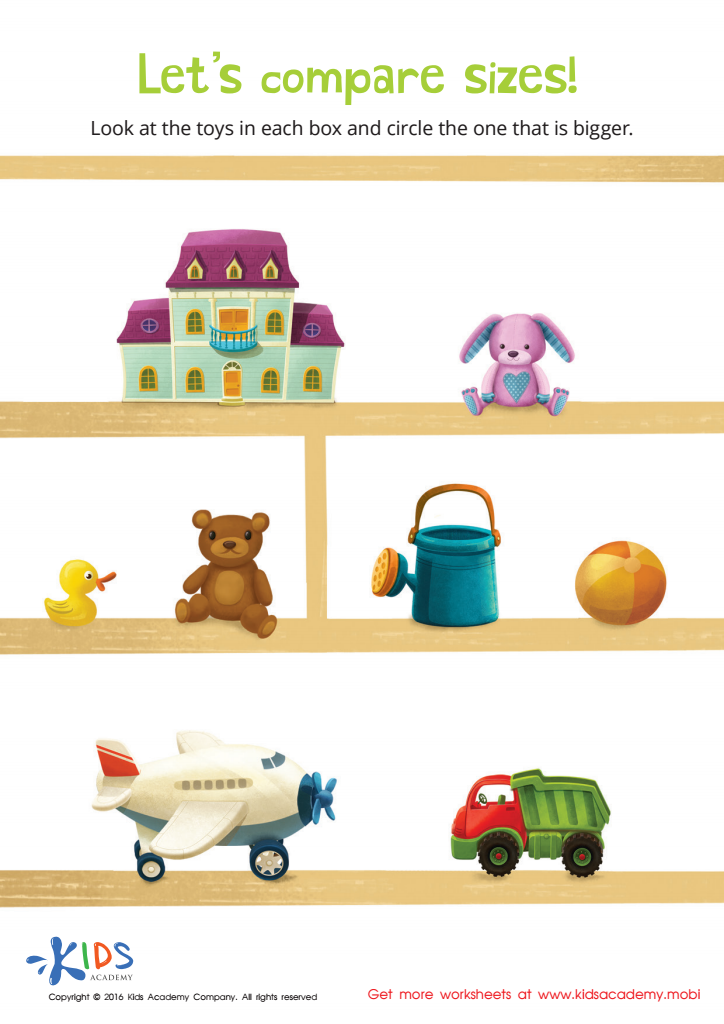
Classifying by Size Sorting Worksheet
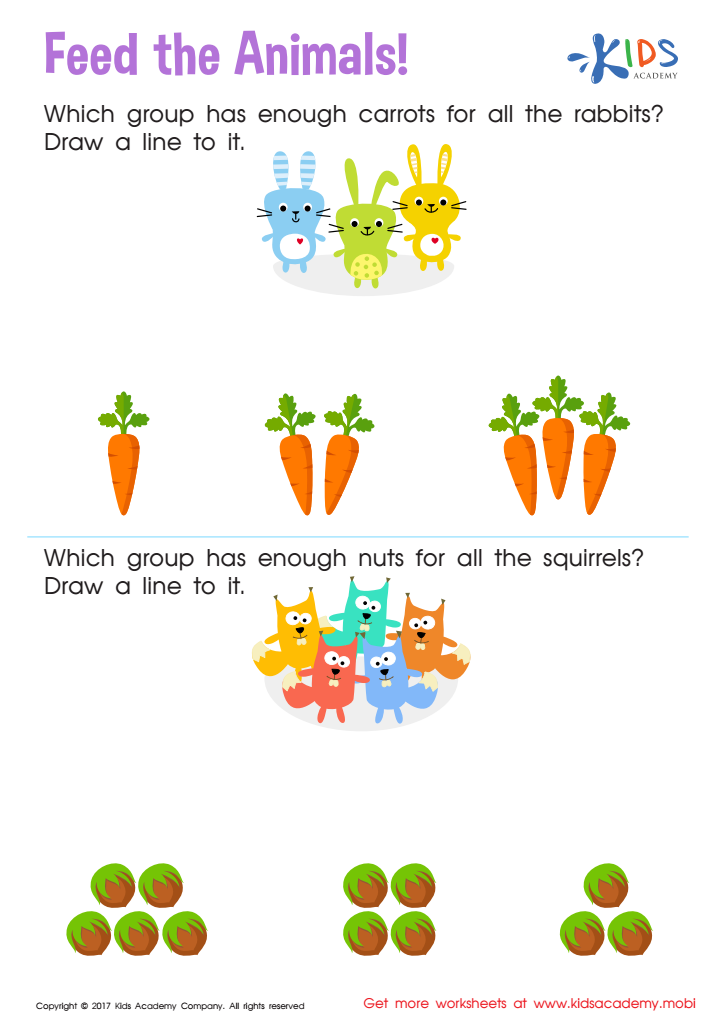
Count and Match: Feed the Animals Worksheet







Parents and teachers should care about Extra Challenge Comparison for children ages 6-9 because these activities foster critical cognitive and emotional development during a pivotal growth period. This comparative learning strategy encourages young minds to analyze similarities and differences, helping to build foundational skills in critical thinking and problem-solving. Engaging students in such challenges not only reinforces academic concepts but also nurtures adaptive learning behaviors.
In addition, Extra Challenge Comparisons promote attention to detail and improve observational skills. Younger children benefit from these tasks as they learn to discern subtle nuances in different scenarios, which can be instrumental across subjects like reading, math, and science. For example, comparing story elements enriches comprehension, while comparing numbers aids in numeracy skills.
Furthermore, these activities cultivate positive social interactions when done collaboratively, teaching kids essential teamwork and communication skills. When children discuss their thought processes and findings, they practice articulating their ideas and listening to others, which enriches classroom dynamics and fosters a supportive learning environment.
Overall, investing in Extra Challenge Comparison tasks equips young learners with essential tools to explore their world more thoughtfully, paving the way for academic success and well-rounded personal development. Therefore, their implementation is crucial in early childhood education settings.