Normal Rounding Worksheets for Ages 3-8
16 filtered results
-
From - To
Discover engaging and educational "Normal Rounding Worksheets for Ages 3-8" at Kids Academy! Our worksheets are designed to help young learners grasp the concept of rounding numbers in a simple and fun way. With a variety of activities tailored for early math skills development, children will find rounding to the nearest ten and hundred more manageable and intuitive. These colorful and interactive worksheets blend learning with play, making math practice enjoyable. Perfect for both classroom use and at-home learning, our rounding worksheets ensure kids build a strong math foundation. Boost your child's math confidence today with Kids Academy!
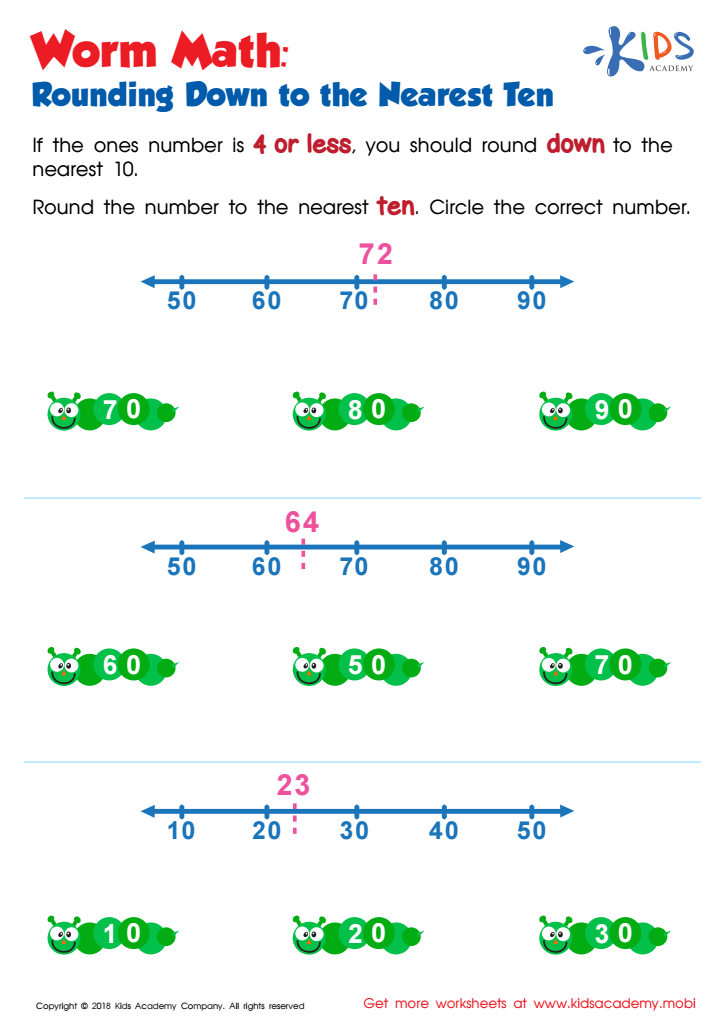
Worm Math Rounding Down to the Nearest Ten Worksheet
 Assign to My Students
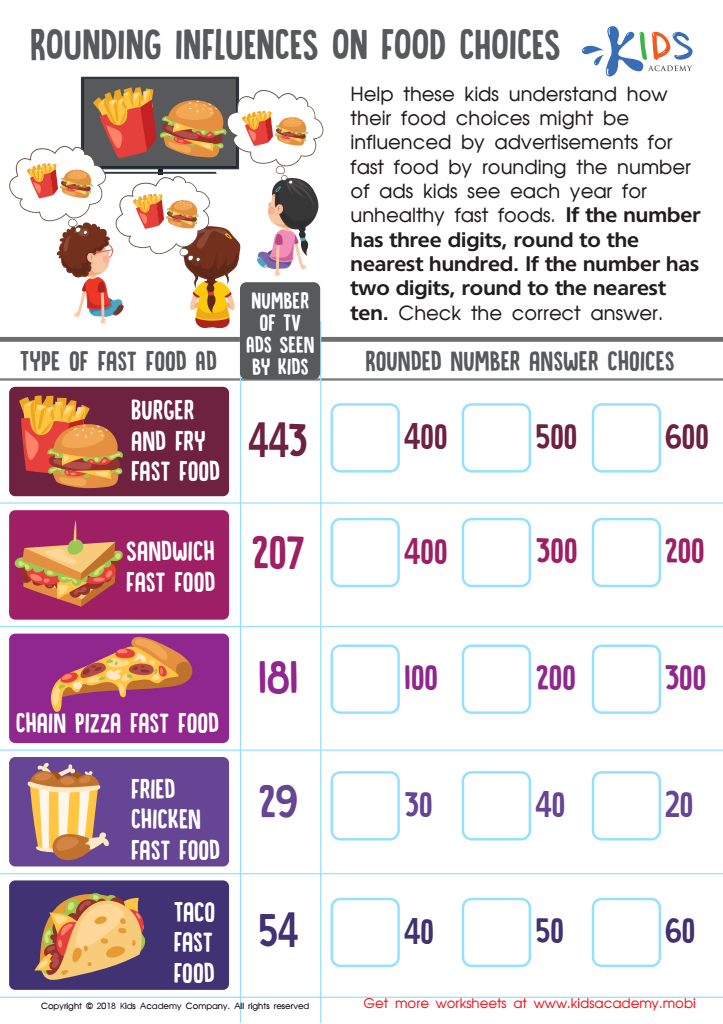
Rounding Influences Food Choices Worksheet
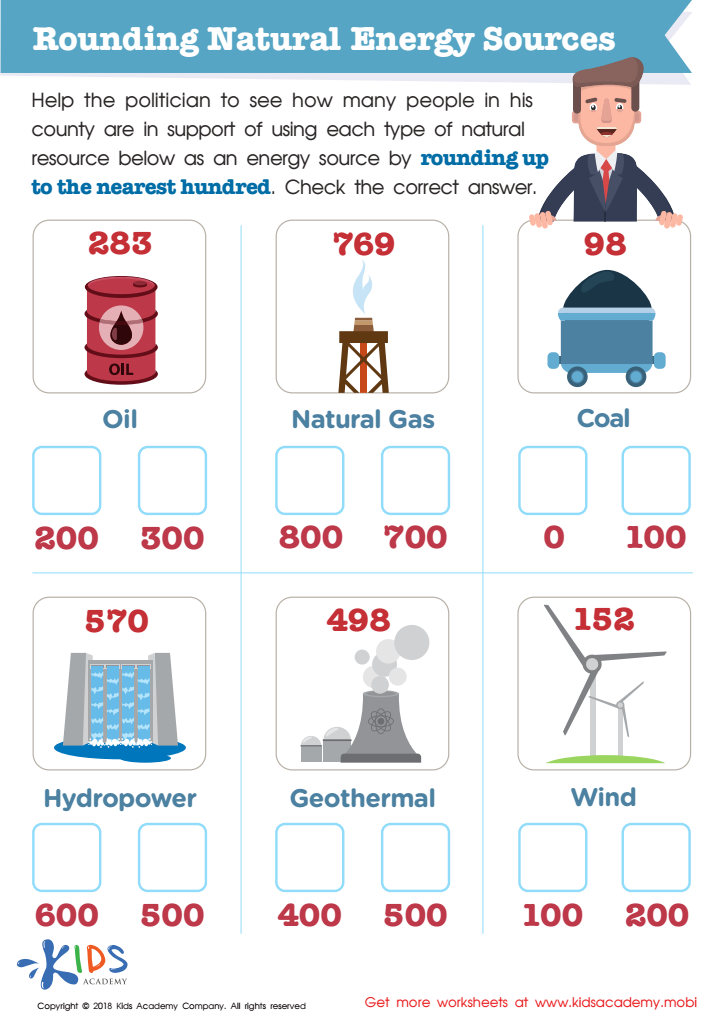
Rounding Natural Energy Sources Worksheet
Rounding Down Printable Worksheet
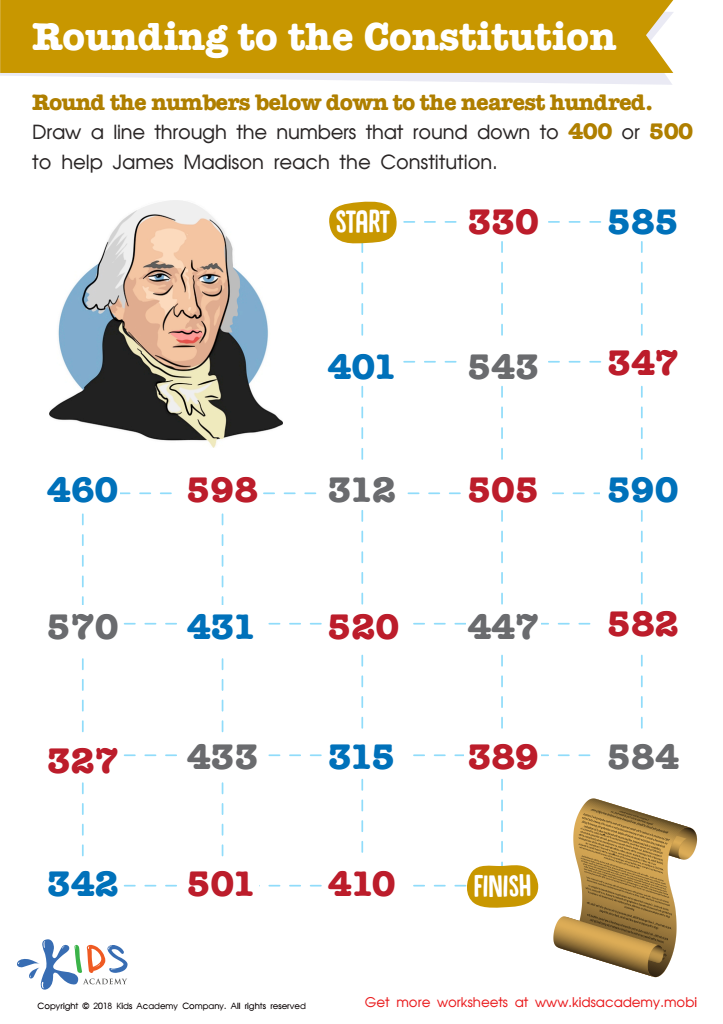
Rounding to the Constitution Worksheet
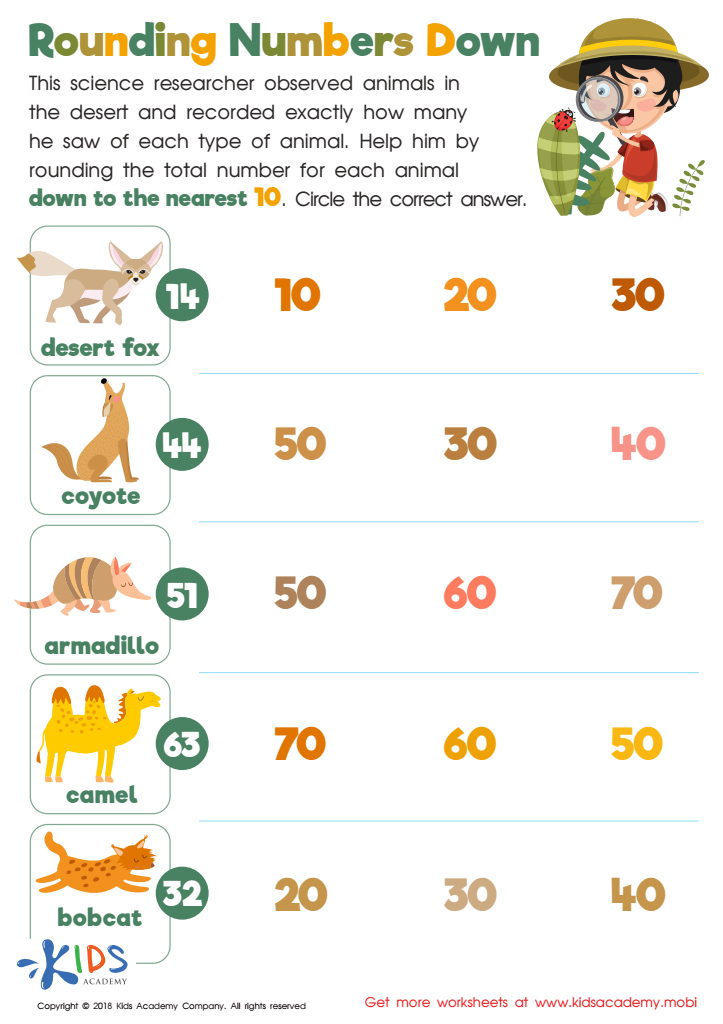
Rounding Numbers Down Worksheet
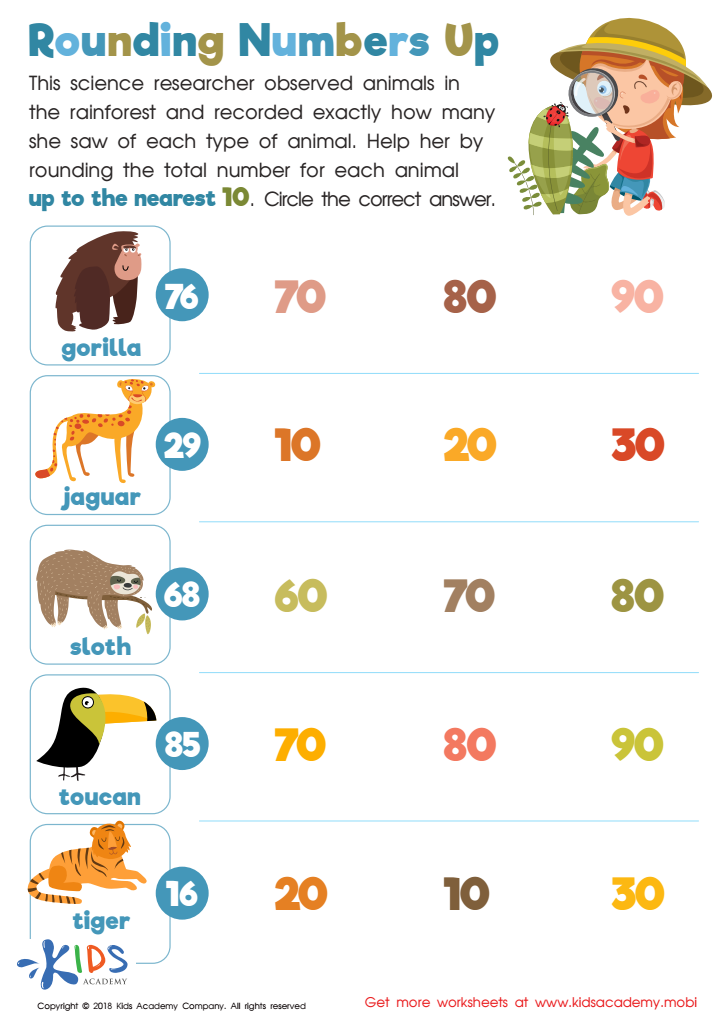
Rounding Numbers Up Worksheet
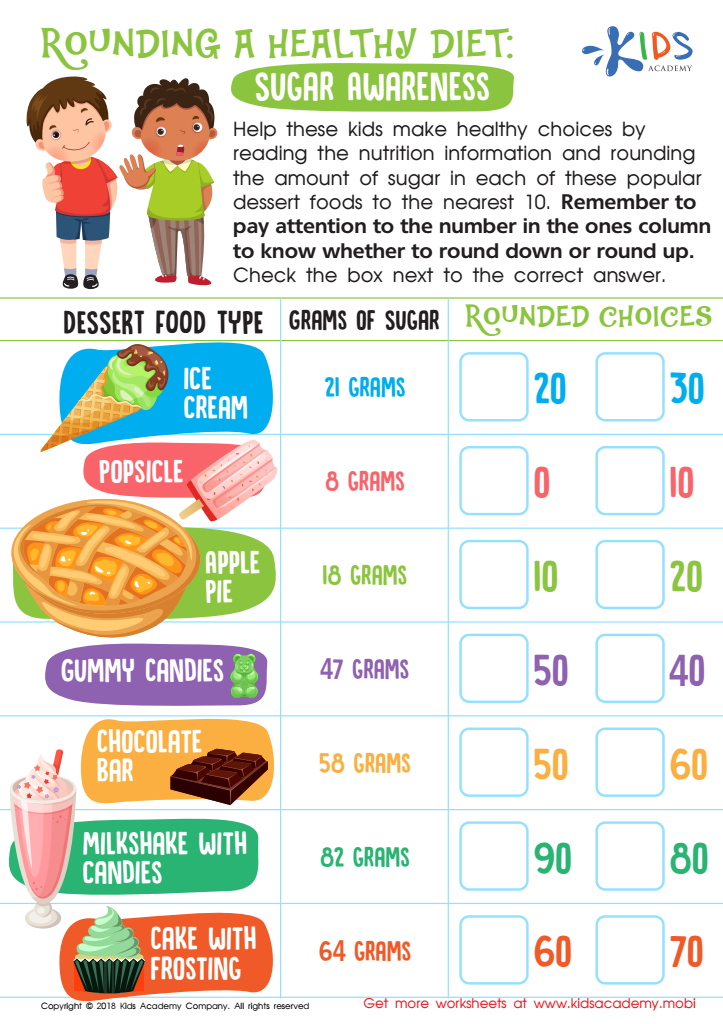
Rounding Healthy Diet Worksheet
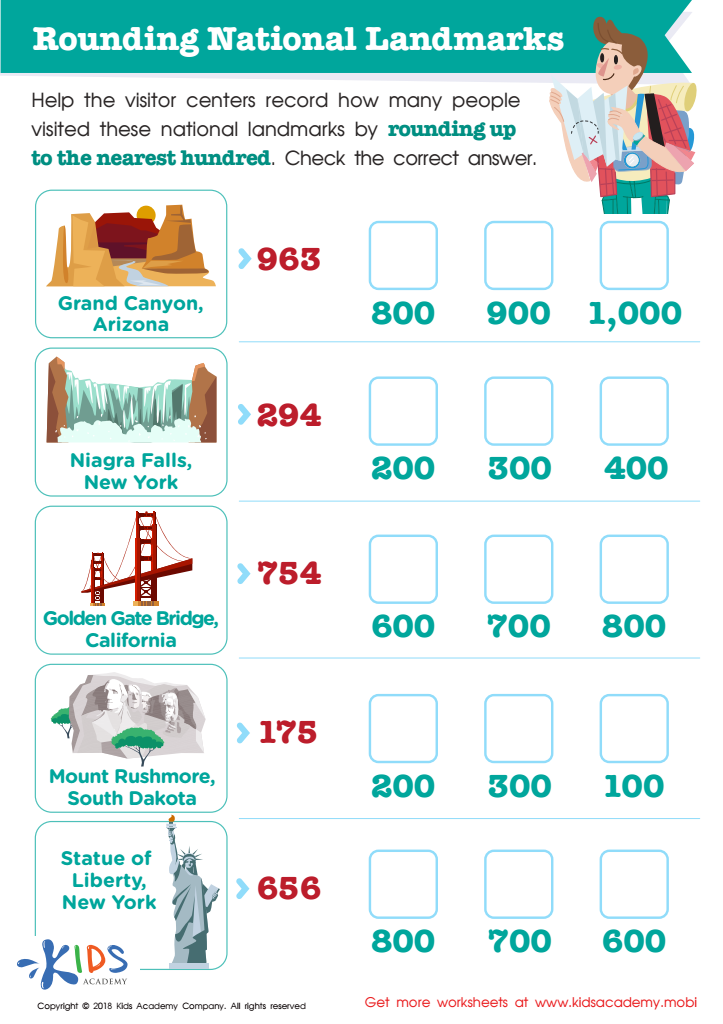
Rounding National Landmarks Worksheet
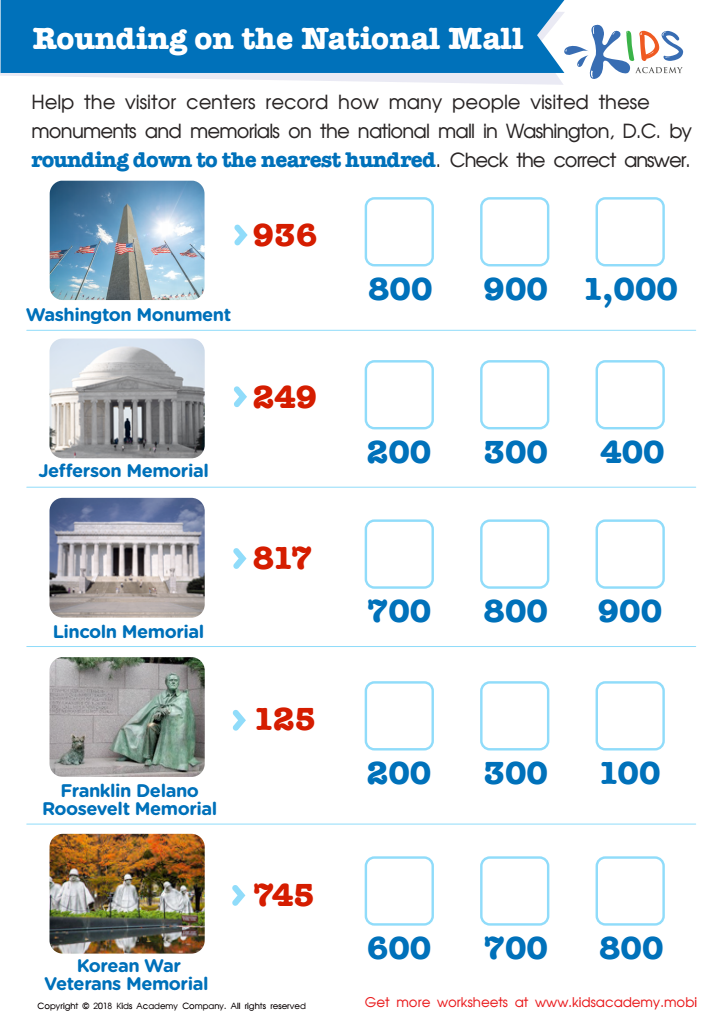
Rounding on the National Mall Worksheet
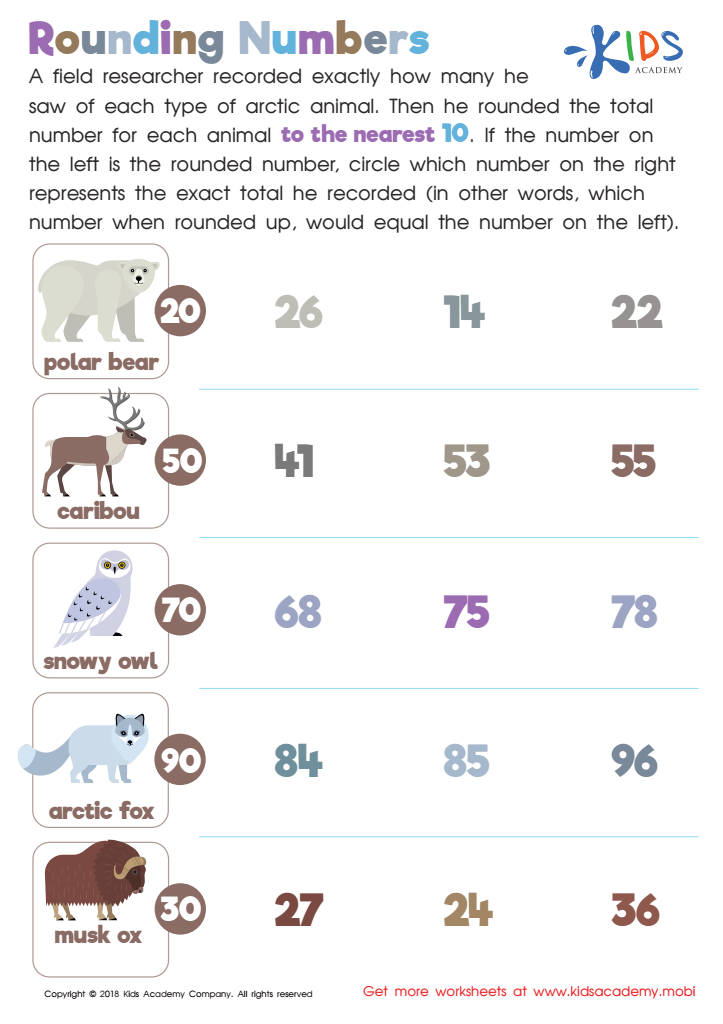
Rounding Numbers Worksheet
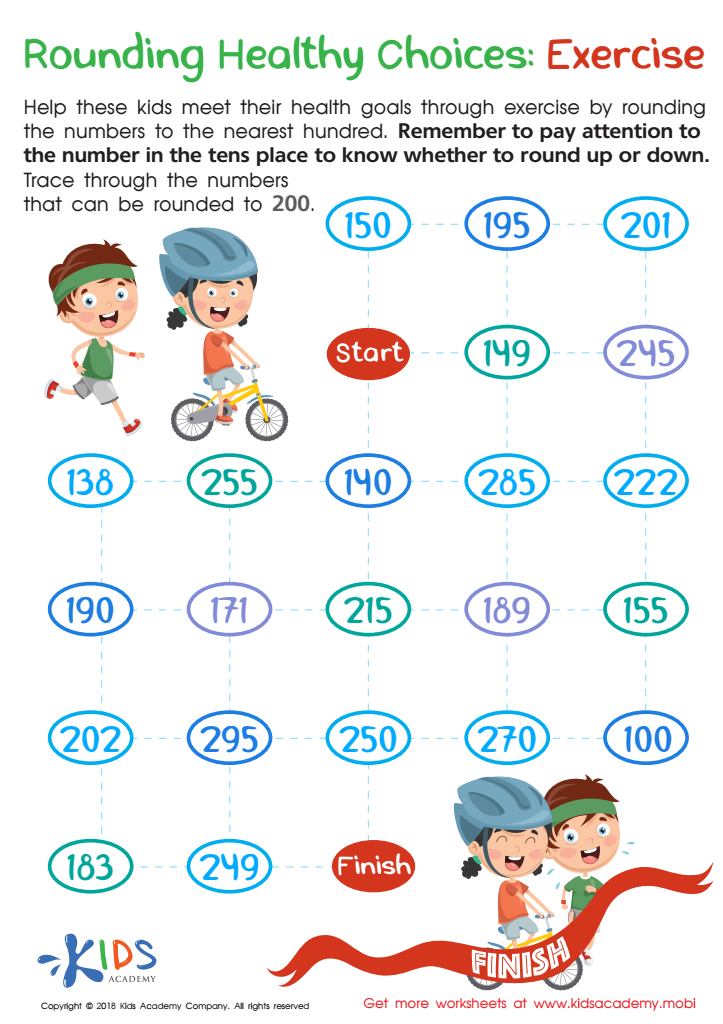
Rounding Healthy Choices Exercise Worksheet
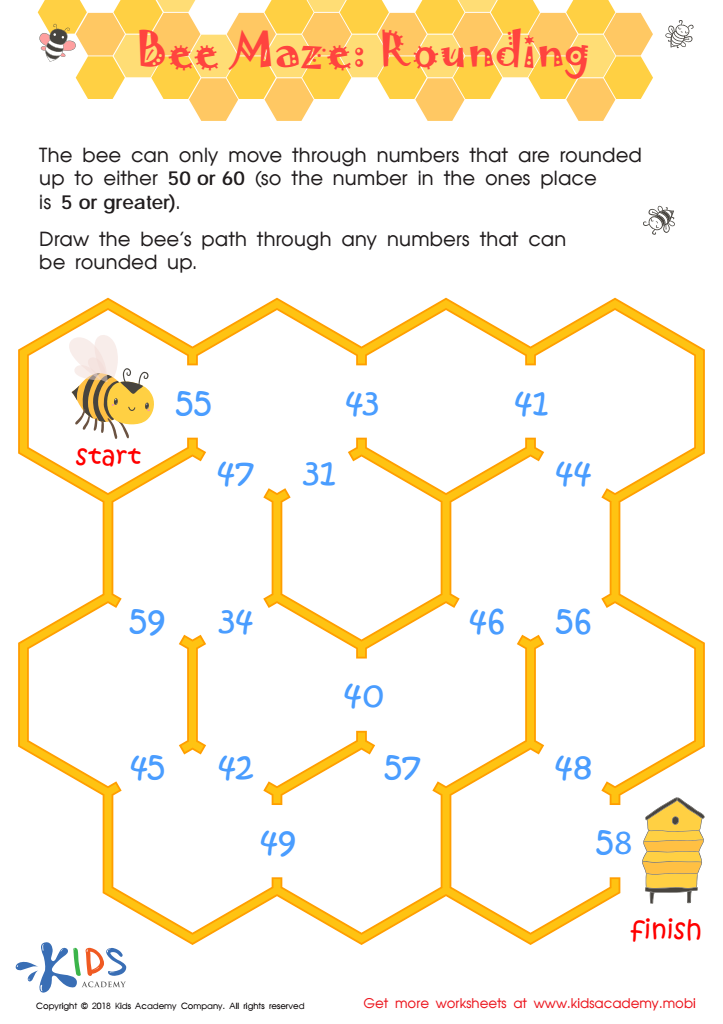
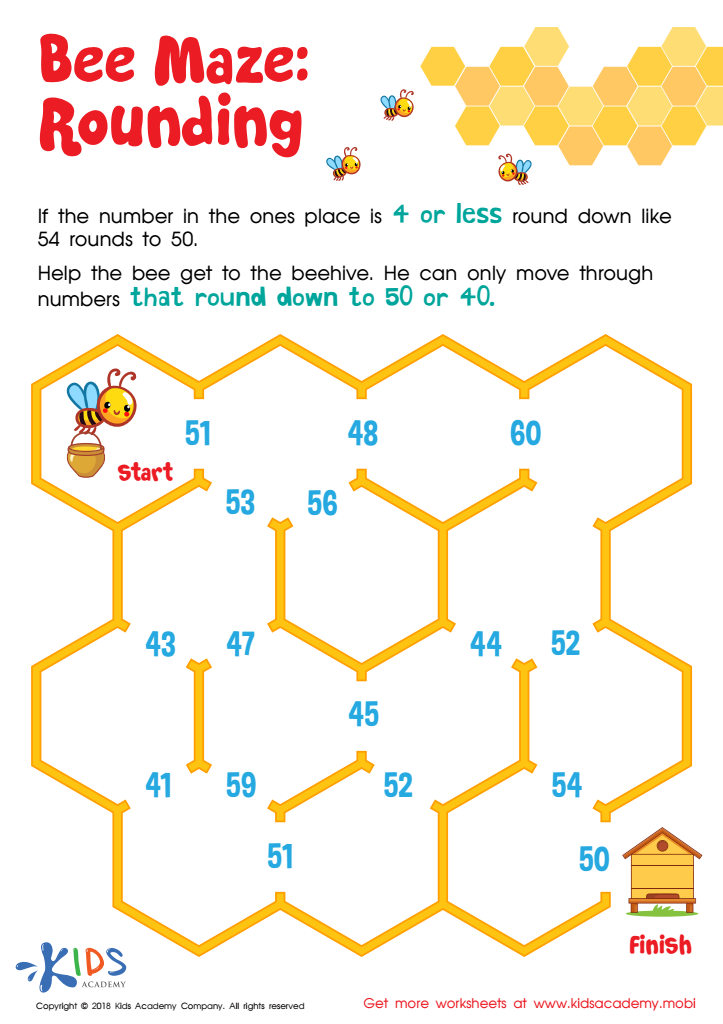
Bee Maze Rounding Worksheet
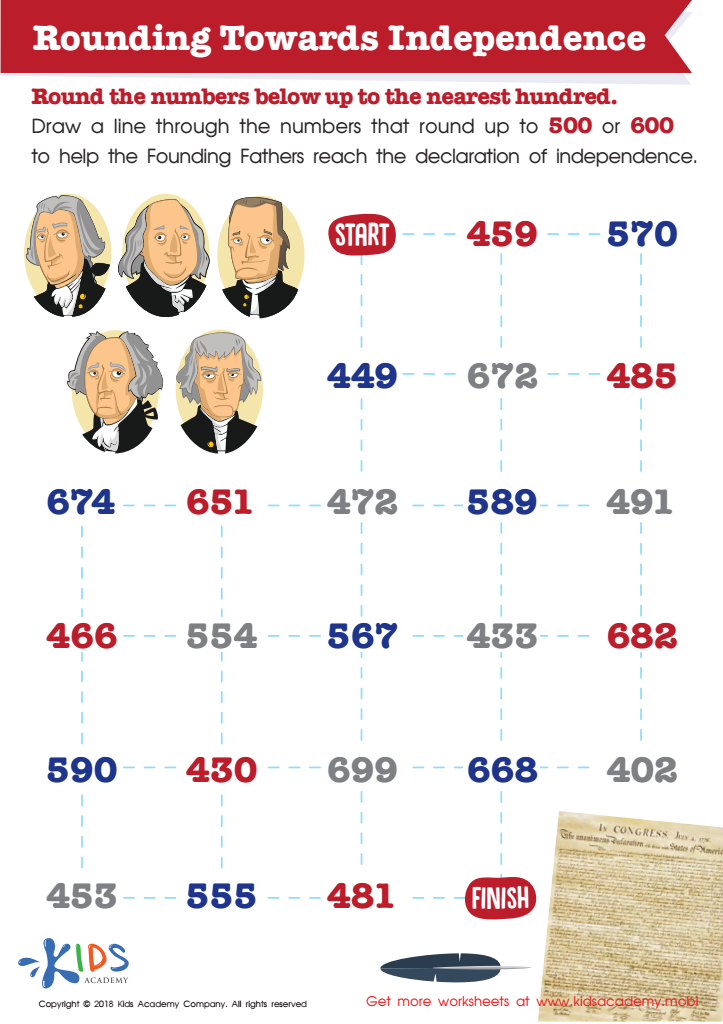
Rounding Towards Independence Worksheet
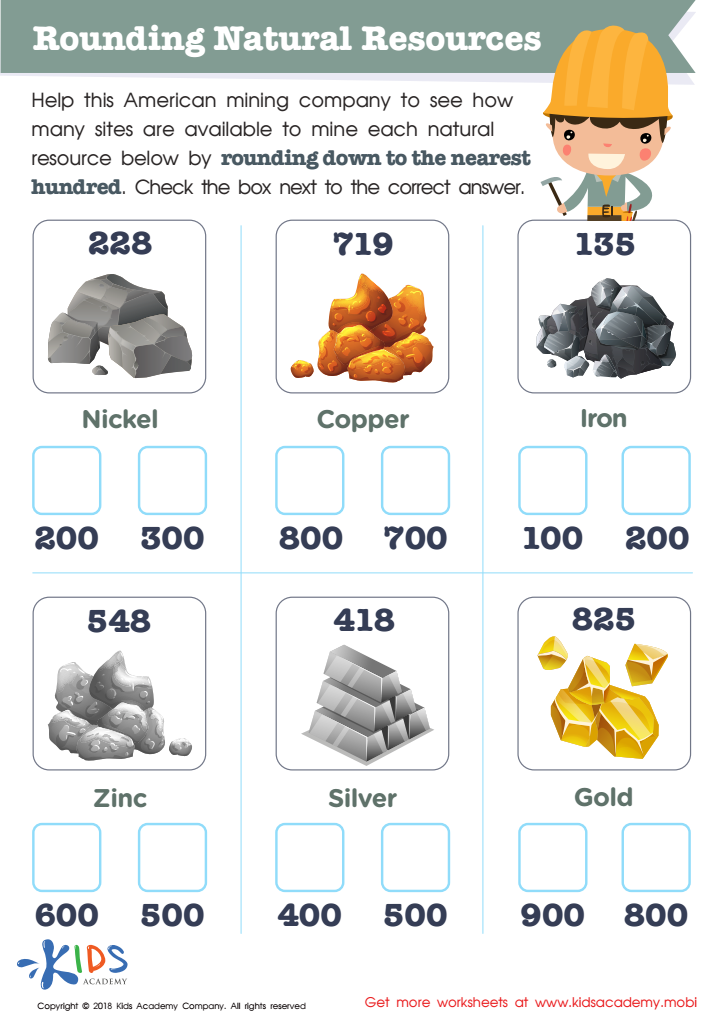
Rounding Natural Resources Worksheet
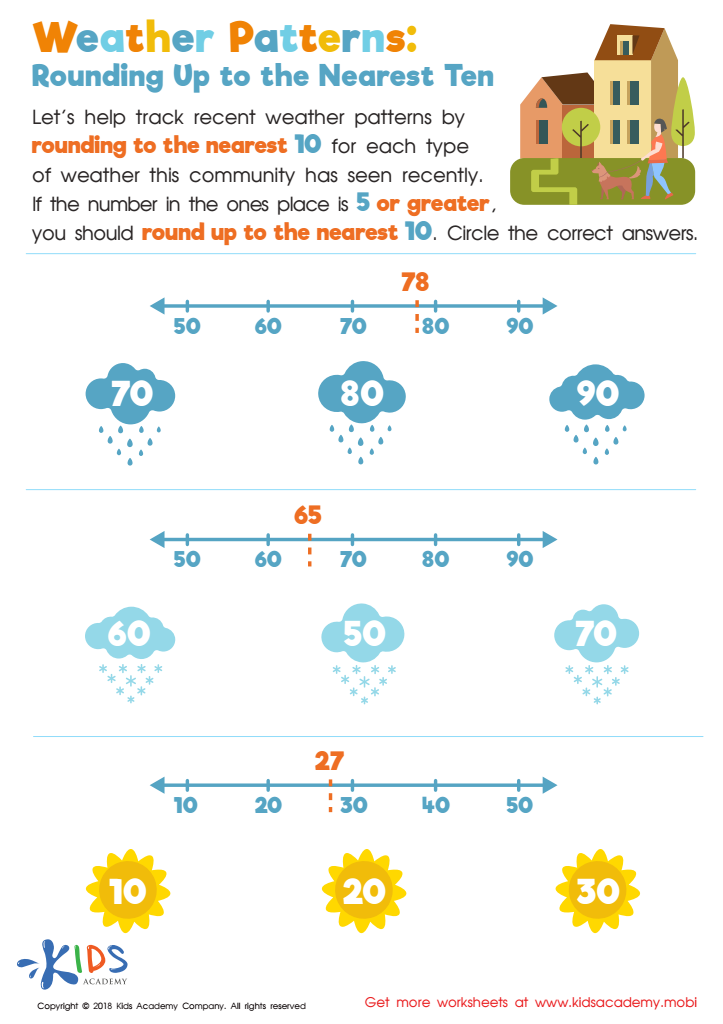
Weather Patterns Worksheet






Parents and teachers play an essential role in early childhood development, an age range that establishes foundational skills crucial for academic and life success. One such fundamental skill is normal rounding, an introductory concept within numerical understanding and mathematics.
Normal rounding refers to the process of adjusting numbers to the nearest ten, hundred, or specified place value, helping simplify complex mathematical operations. Its importance extends beyond just mathematical calculations. For children aged 3-8, learning to round numbers offers substantial developmental benefits. Firstly, it enhances number sense, allowing young learners to grasp that numbers represent quantities and can be approximated. This knowledge is critical for performing mental math efficiently.
Furthermore, understanding rounding aids cognitive development by improving problem-solving abilities and logical thinking. It encourages children to make strategic decisions when estimating amounts and learn to evaluate and reason mathematically, skills beneficial across various subjects. By mastering basic rounding, children build confidence and reduce anxiety associated with more advanced mathematics later on.
For parents and teachers, investing time to teach normal rounding means equipping young minds with tools that facilitate everyday tasks, like shopping or time management. Fostering these skills early guarantees that children develop a rounded, comprehensive understanding of mathematics—preparing them for academic challenges as they progress through school.