
Normal Skip Counting Worksheets for Ages 3-8
11 filtered results
Difficulty Level
Grade
Age
-
From - To
Subject
Activity
Standards
Discover our engaging collection of Normal Skip Counting Worksheets designed for children ages 3-8! These printable resources encourage early math skills through fun activities, helping young learners master the art of skip counting by twos, fives, and tens. Our worksheets are visually appealing and easy to understand, making learning enjoyable. Each page features vibrant illustrations and interactive exercises that promote numerical fluency and boost confidence. Ideal for use at home or in the classroom, these worksheets are a fantastic way to support your child's mathematical journey. Start cultivating a love for numbers today with our thoughtfully crafted skip counting resources!
Favorites
With answer key
Interactive
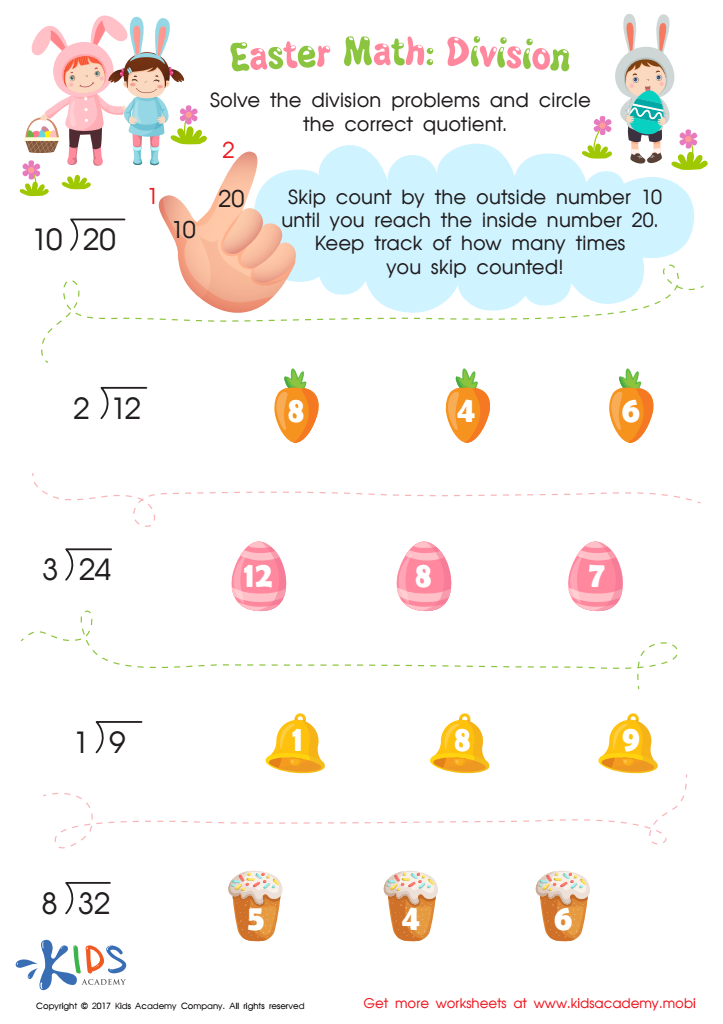
Division Worksheet
Try this Easter-themed PDF worksheet for grade 3: perfect for teaching division with a fun, new trick! It's full of bright, colorful pictures your child will love, and it's as easy as skip counting to solve the problems.
 Assign to My Students
Division Worksheet
Worksheet
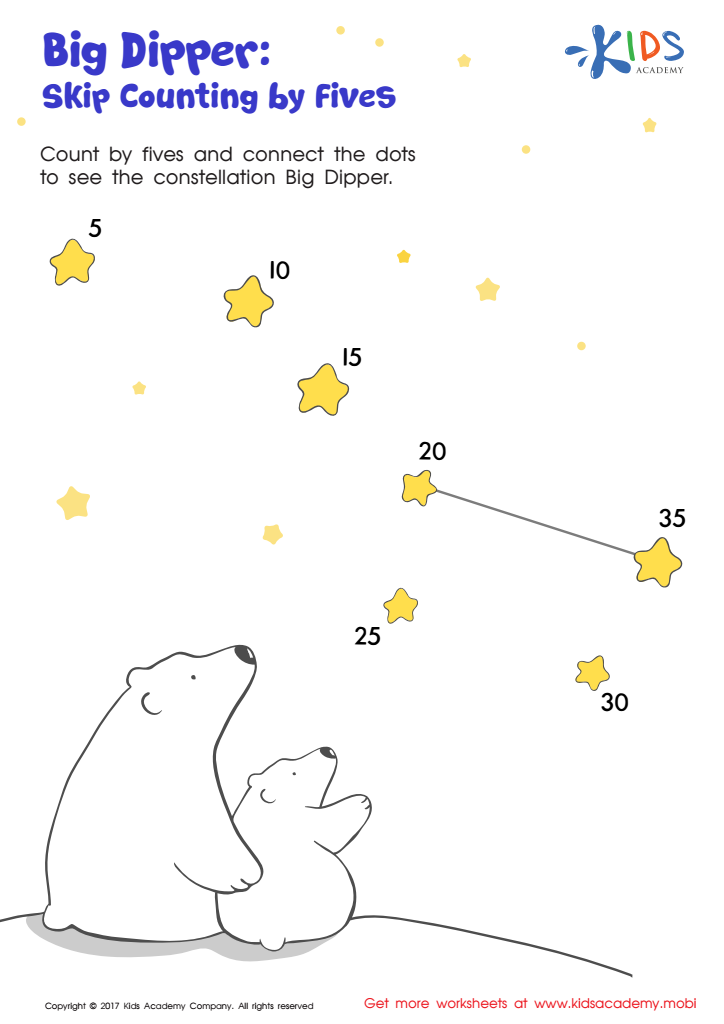
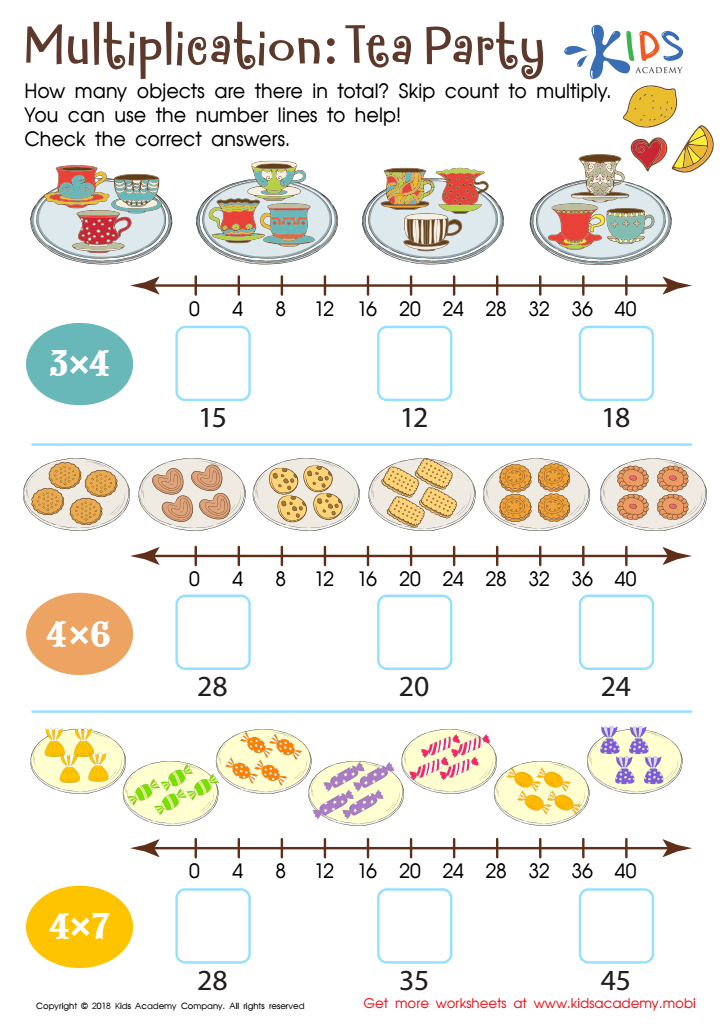
3rd Grade Math Worksheet Multiplication
Our 3rd-grade multiplication math worksheets are great fun! Kids practice using a number line and skip counting, and will feel like throwing a tea party after completing these! Perfect for honing in on multiplication skills.
3rd Grade Math Worksheet Multiplication
Worksheet
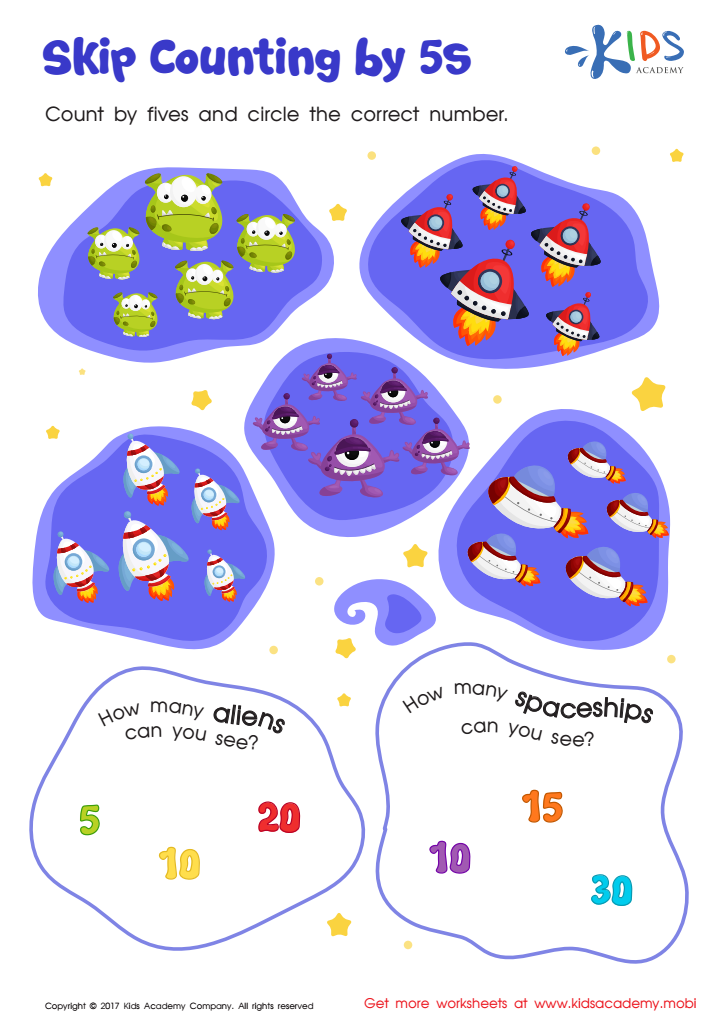
Skip Counting by 5s: Aliens and Spaceships Printable
Your child will love taking an intergalactic adventure as they practice skip counting by 5's with this worksheet! It'll help them identify and recognize large groups of numbers, categorize objects to count them, and prepare them for math concepts like multiplication. And with silly space graphics, they'll be motivated for more practice!
Skip Counting by 5s: Aliens and Spaceships Printable
Worksheet
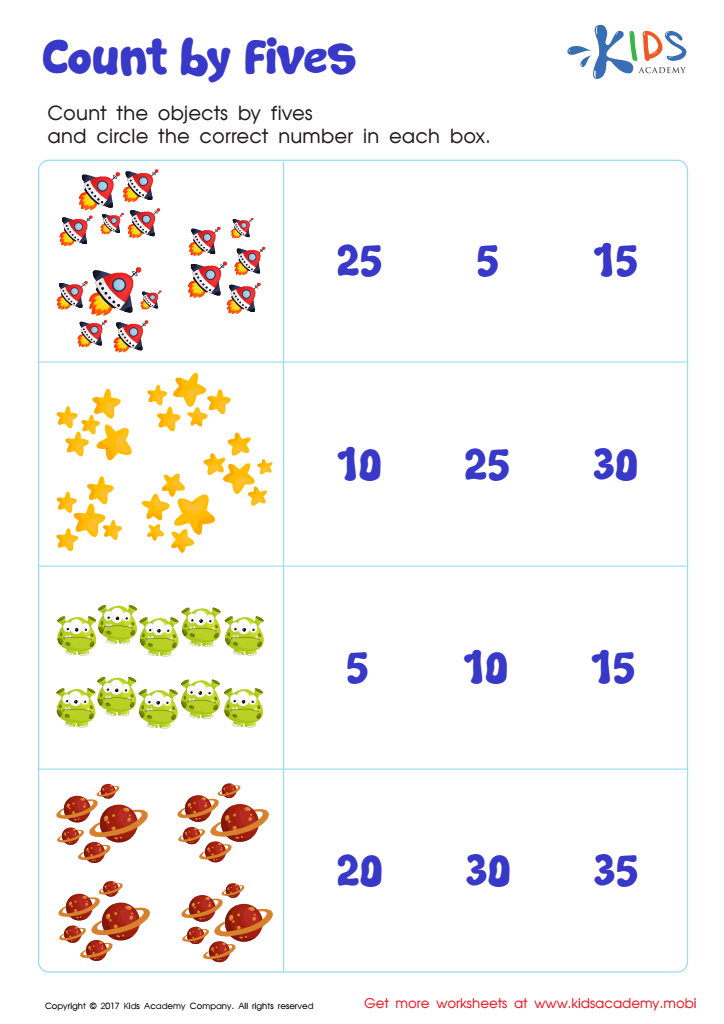
Skip Counting by 5s: Space Math Printable
This worksheet will provide your child with fun and practice counting by 5's. It'll help them visually count numbers, use problem solving skills and make connections between individual and groups of numbers. Counting money and various math concepts will become easier with this invaluable skill. Blast off with this fun and educational worksheet featuring space graphics.
Skip Counting by 5s: Space Math Printable
Worksheet
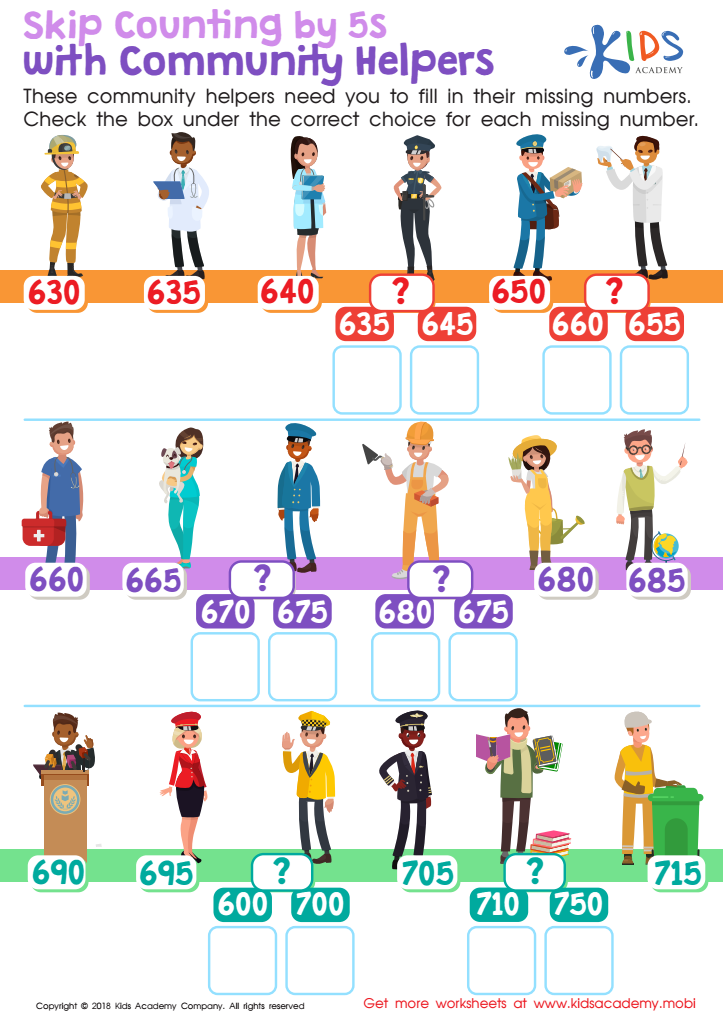
Skip Counting by 5s With Community Helpers Worksheet
This free worksheet combines social studies with math! Kids will practice counting by 5s, rounding numbers and honing their computation skills while also familiarizing themselves with community helpers. Develop your child's number sense and strengthen their math skills - all through a fun and interactive activity.
Skip Counting by 5s With Community Helpers Worksheet
Worksheet
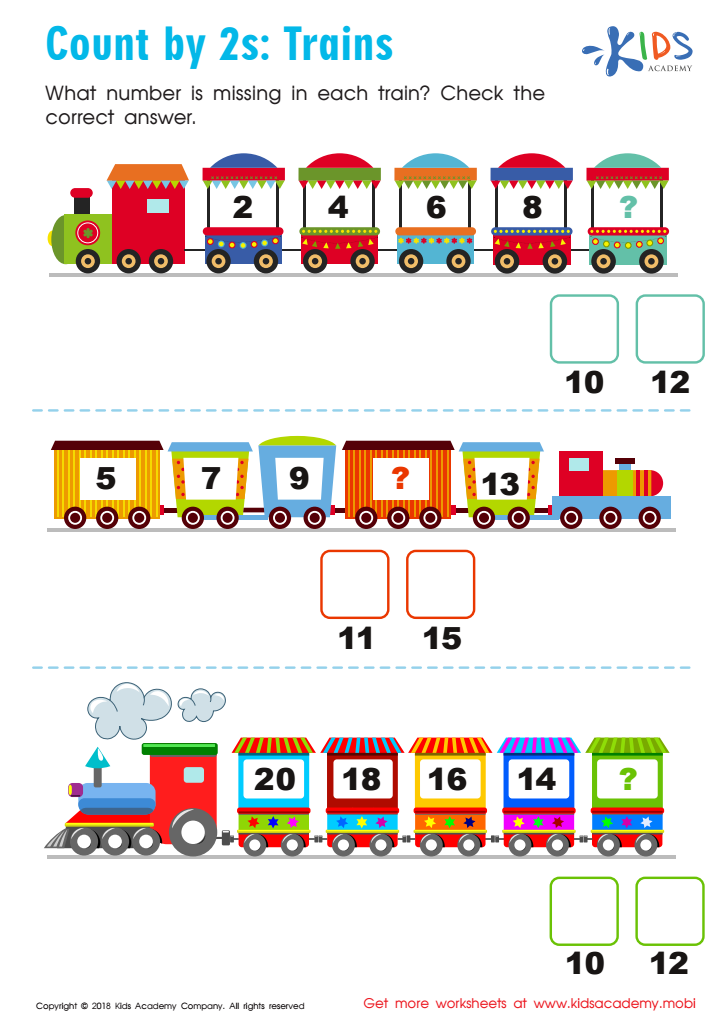
Count by 2's: Trains Worksheet
Teaching your kids quick computations? Get them skip-counting by 2s! They'll love filling in the colors of the train while counting, and it will help with 'counting up' or backward on paper or in their heads - essential for quick computations later.
Count by 2's: Trains Worksheet
Worksheet
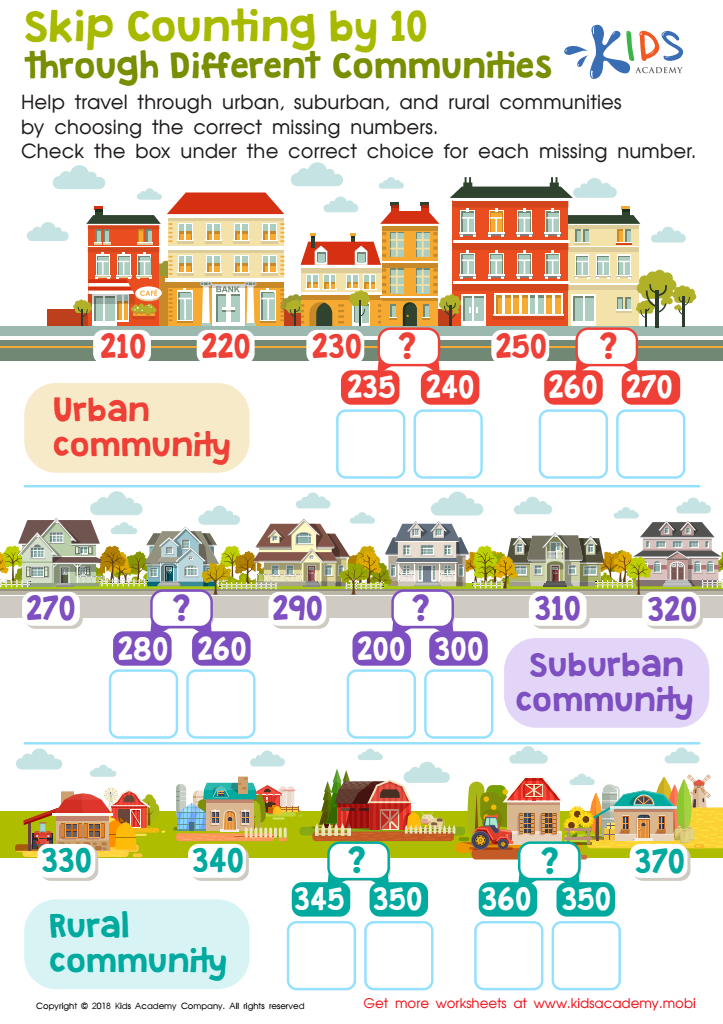
Skip Counting by 10 through Different Communities Worksheet
This free PDF worksheet helps students practice skip counting and 'making a ten', essential for math efficiency and accuracy. Students explore different types of communities (urban, suburban and rural) whilst honing their skills. A great combo of social studies and math!
Skip Counting by 10 through Different Communities Worksheet
Worksheet
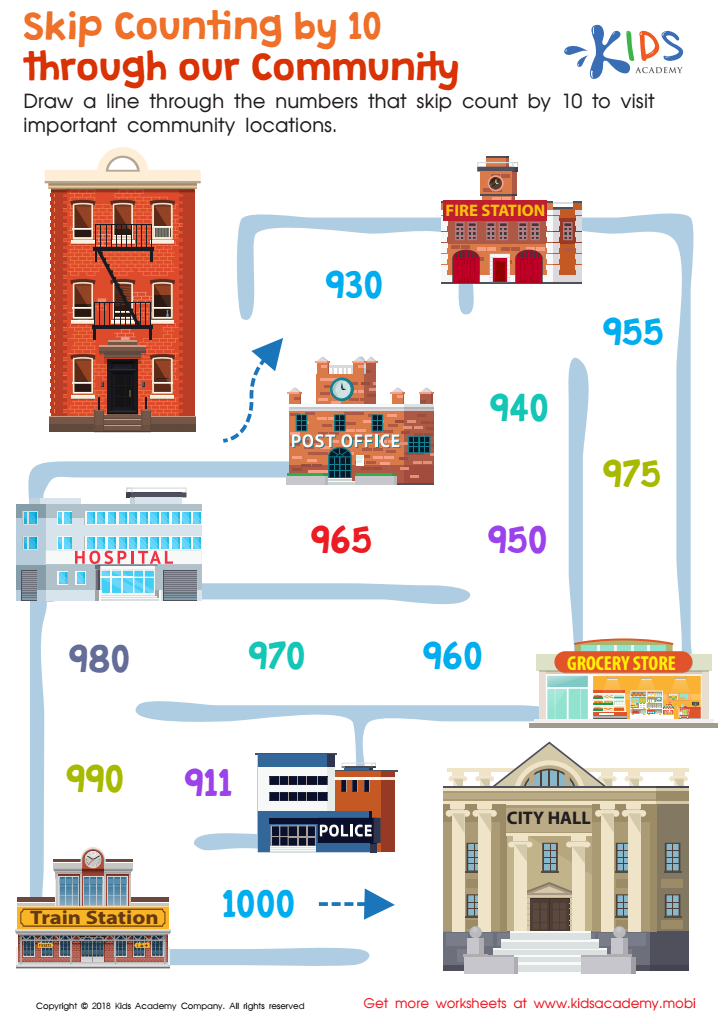
Skip Counting by 10 Through Our Community Worksheet
Our kids need to 'make a ten' and skip count by tens to boost their speed and accuracy in math. This cool, free worksheet takes them on a journey through their local community to practice counting by tens. They'll work on social studies and fine motor skills while having fun with the maze they get to count by tens in!
Skip Counting by 10 Through Our Community Worksheet
Worksheet
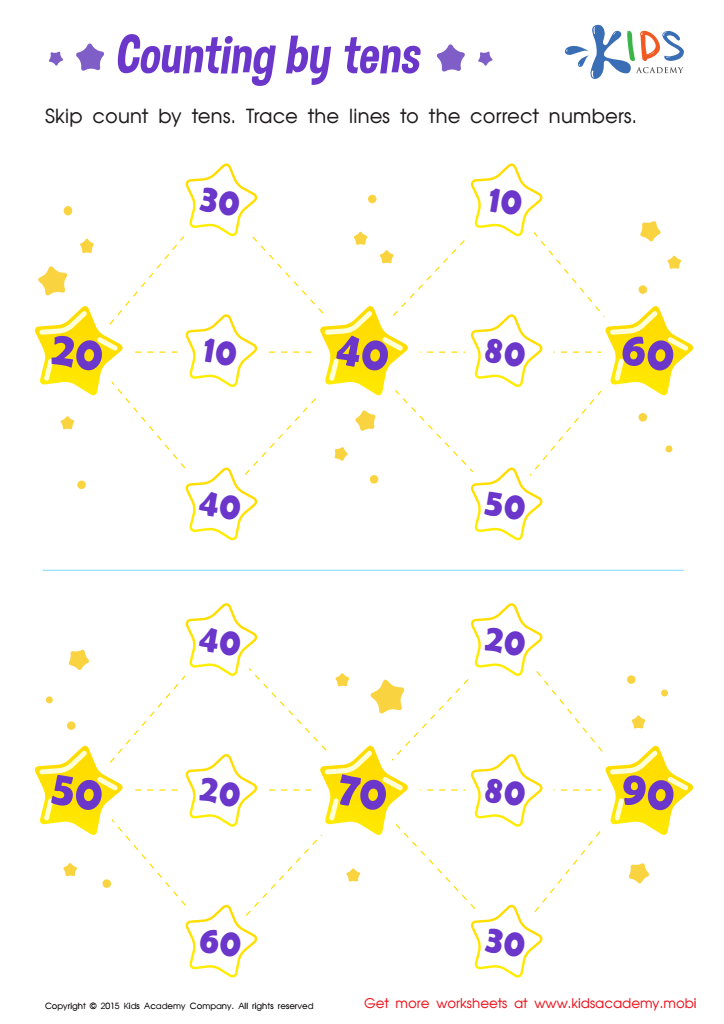
Learn Dozens: Counting by Tens Printable
Kindergartners need to learn skip counting - counting in number groups - to increase number sense and be ready for more advanced math. Our kindergarten worksheet featuring a starry trip to outer space will help your child practice this valuable skill. Your child will choose correct answers to trace the lines to the stars, building fluency in skip counting. They'll also strengthen problem solving and see the pattern it creates. Get your little learner to the next level with this skip counting worksheet!
Learn Dozens: Counting by Tens Printable
Worksheet
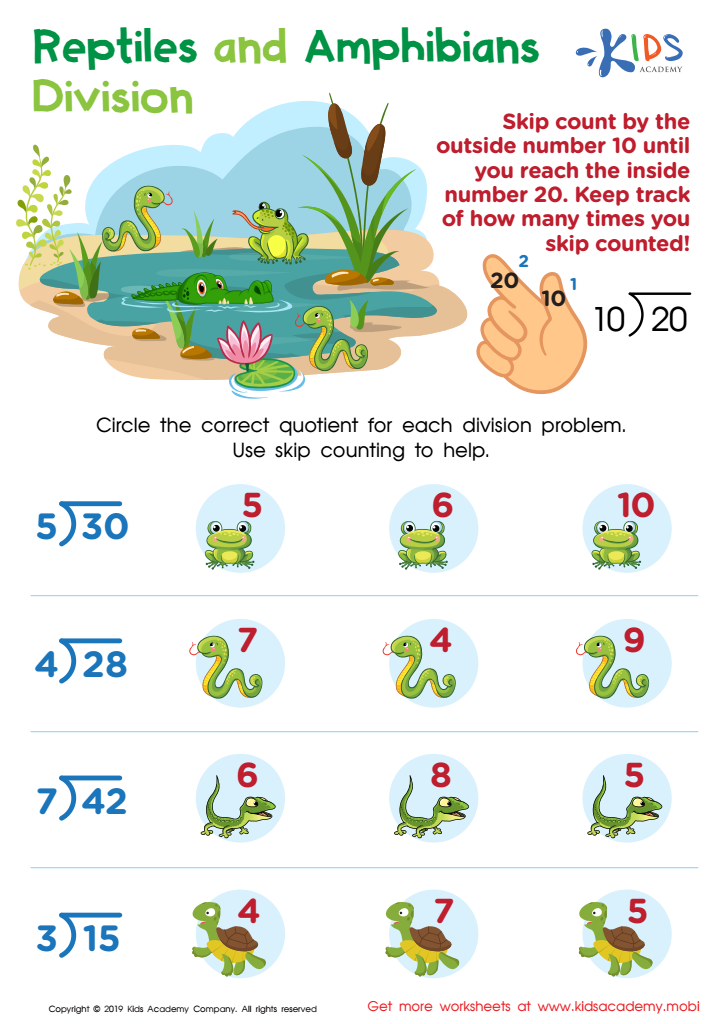
Reptile and Amphibians Division Worksheet
Skip counting is key in division. This PDF worksheet helps children practice this skill with fun reptile and amphibian friends. They must circle the right quotient among the choices given to reinforce their pattern recognition. Perfect for mastering division!
Reptile and Amphibians Division Worksheet
Worksheet
Join Kids Academy for Free
Who is primarily going to use this learning content?








Normal skip counting is a foundational mathematical skill that involves counting by specific increments, such as twos, threes, or fives. For children aged 3-8, mastering skip counting offers numerous benefits that parents and teachers should prioritize.
First and foremost, it enhances number sense. By skip counting, children strengthen their understanding of numerical relationships and patterns, which forms the basis for more complex arithmetic in the future. This skill also lays the groundwork for multiplication, as understanding how numbers work together helps them grasp times tables more easily.
Additionally, skip counting aids in mental math development. Children become quicker at calculating and estimating, as they learn to recognize numerical sequences rather than just counting one by one. This fosters confidence in their mathematical abilities.
Moreover, skip counting bolsters problem-solving skills. As children encounter real-world scenarios involving grouping or iteration, the ability to skip count equips them with effective strategies for tackling these challenges.
Incorporating engaging activities related to skip counting—songs, games, or visual aids—makes learning enjoyable and memorable. By focusing on this essential skill, parents and teachers can support children in becoming proficient and confident mathematicians.








