Normal Subtraction Worksheets for Ages 3-8 - Page 2
29 filtered results
-
From - To
 Assign to My Students
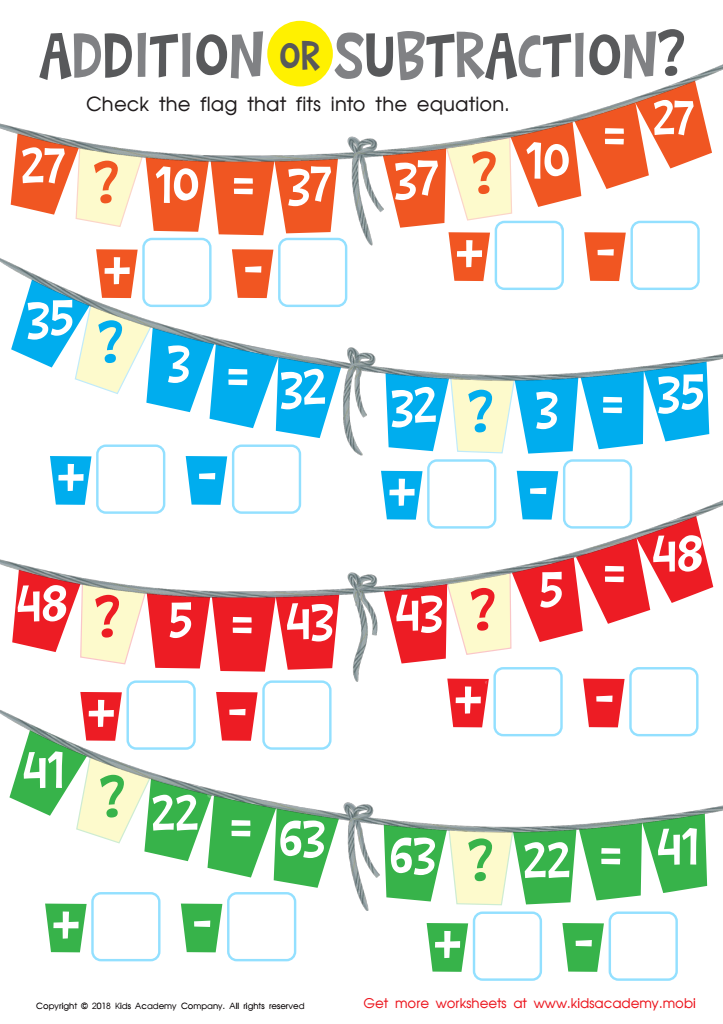
Addition or Subtraction? Worksheet
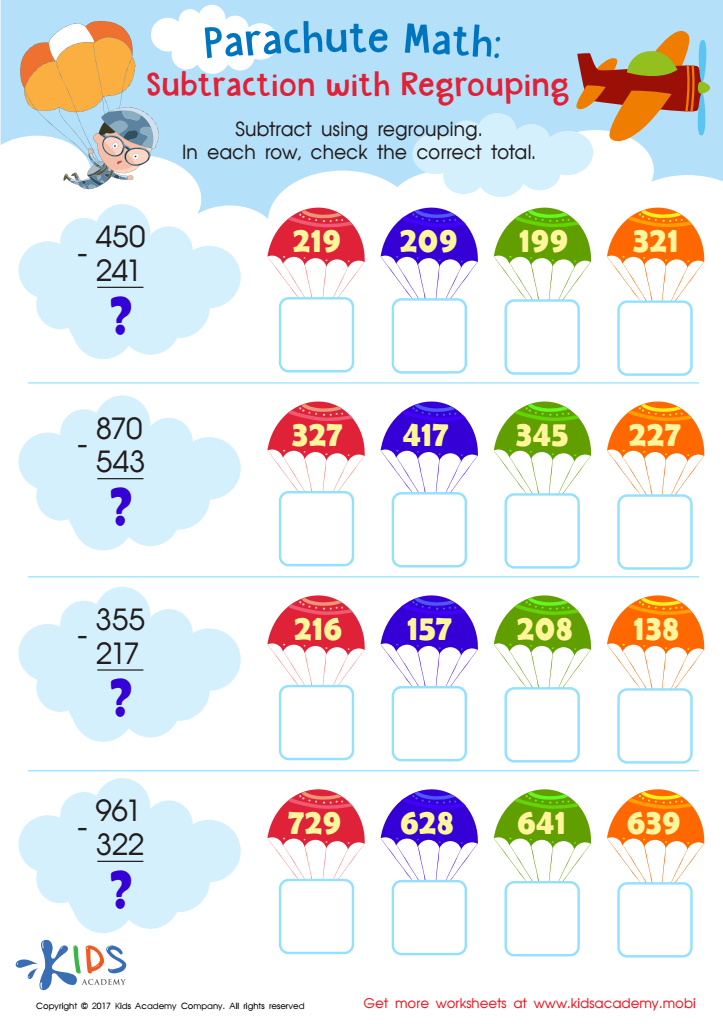
Subtraction with Regrouping for 3rd Grade Worksheet
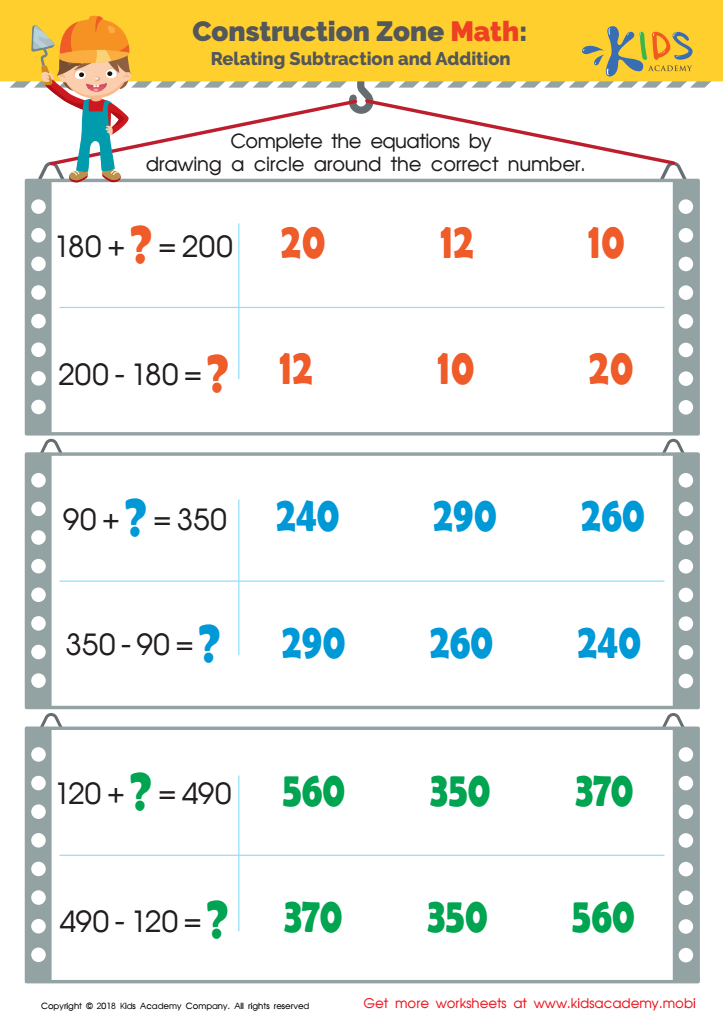
Construction Zone Math: Relating Subtraction and Addition Worksheet
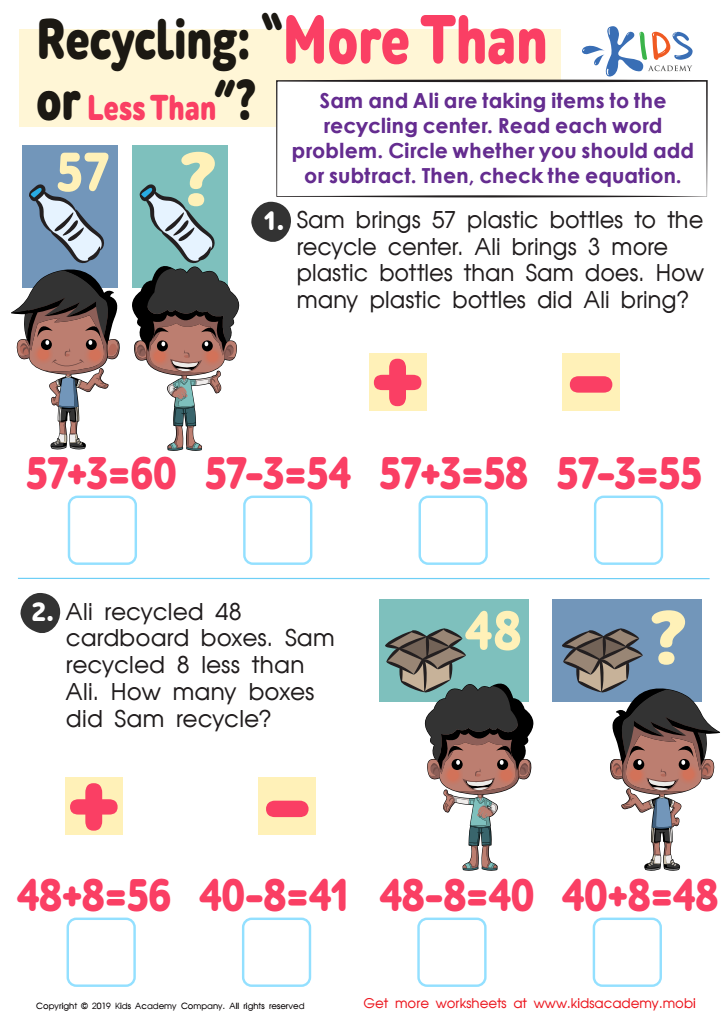
Recycling - More or Less Worksheet








Normal subtraction is an essential skill for children aged 3-8, forming a foundational element in their mathematical development. Understanding subtraction helps children grasp the concept of quantity, enabling them to solve everyday problems they encounter. Parents and teachers should care about normal subtraction because it encourages critical thinking and enhances cognitive skills, laying the groundwork for more complex mathematical concepts.
As children learn to subtract, they develop number sense and an understanding of relationships between numbers. For example, they learn how to take away or find the difference, which is vital not just in math studies but in life skills as well. Using relatable examples like sharing snacks or toys can make subtraction enjoyable and relevant, promoting engagement.
Moreover, mastering this skill boosts children's confidence, helping them tackle increasingly challenging math problems in future grades. The goal is not just to complete exercises but to cultivate a mindset of problem-solving. Furthermore, a solid understanding of normal subtraction supports literacy in other subjects, making it a critical component of holistic education. Through consistent practice and encouragement in both home and school environments, children's early experience with subtraction can pave the way for future academic success.