Normal Chess Worksheets for Ages 4-6 - Page 2
47 filtered results
-
From - To
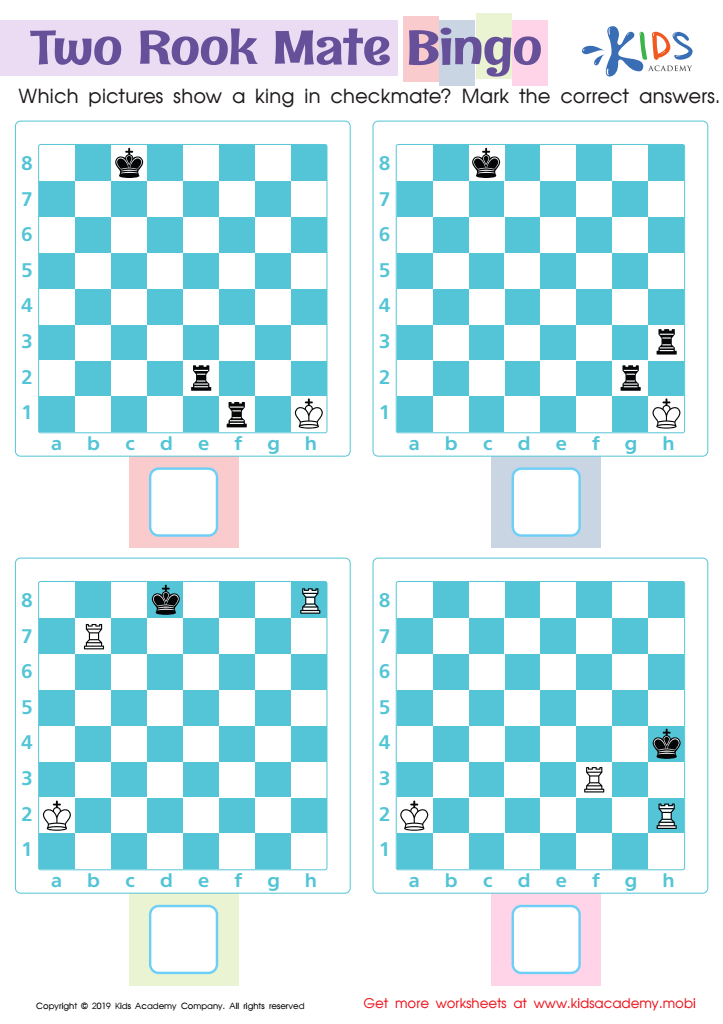
Two Rook Bingo Worksheet
 Assign to My Students
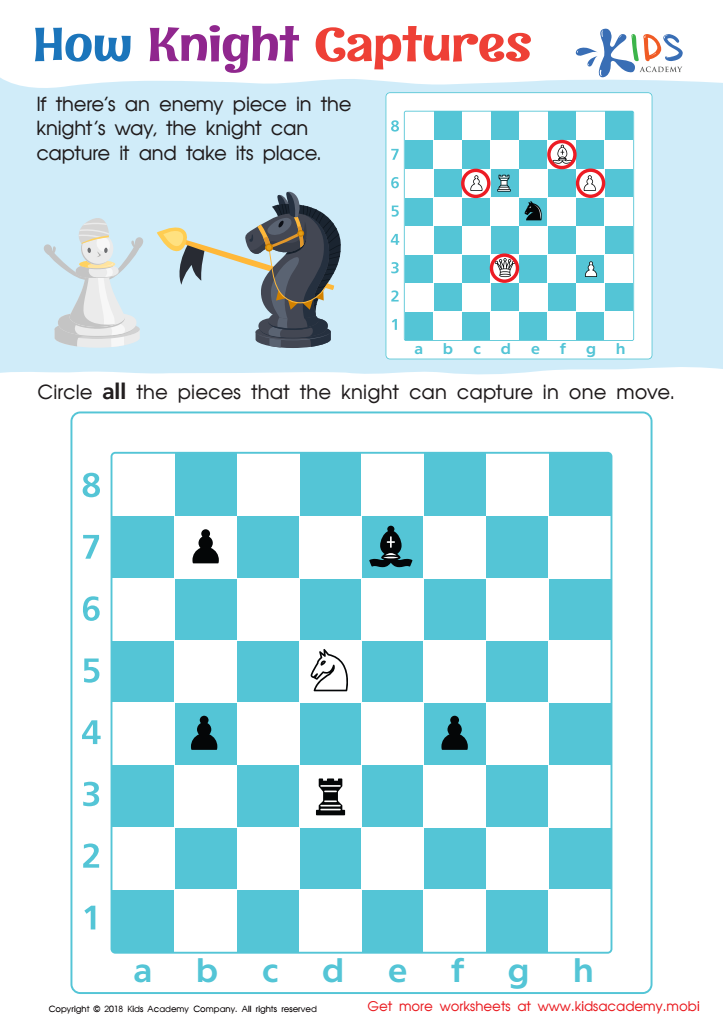
How Knight Captures Worksheet
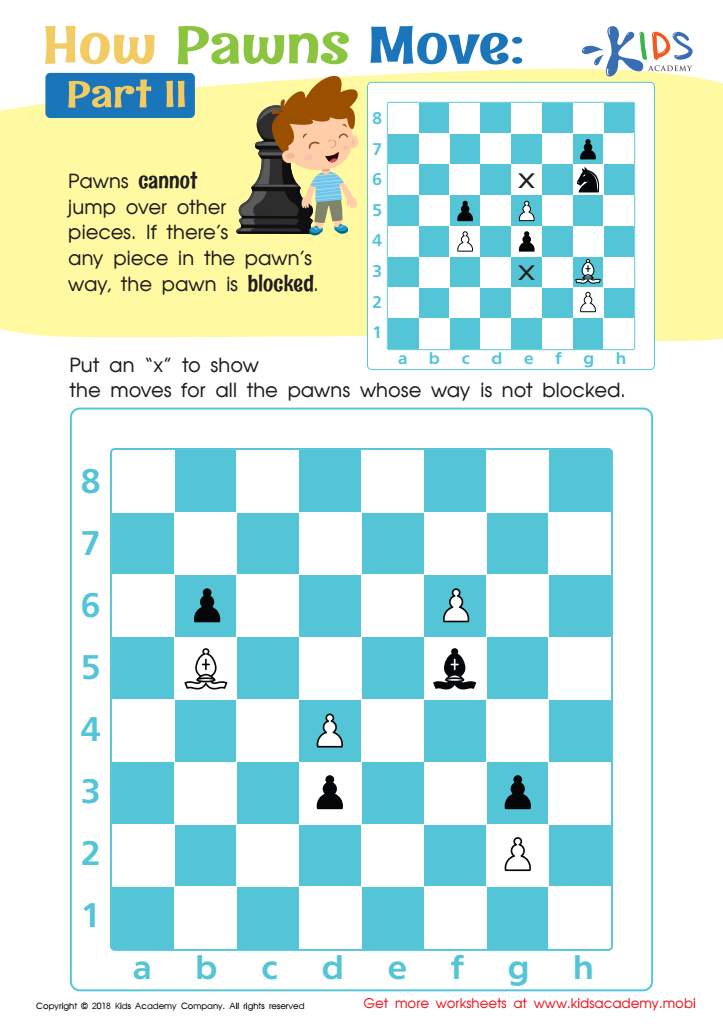
How Pawns Move: Part II Worksheet
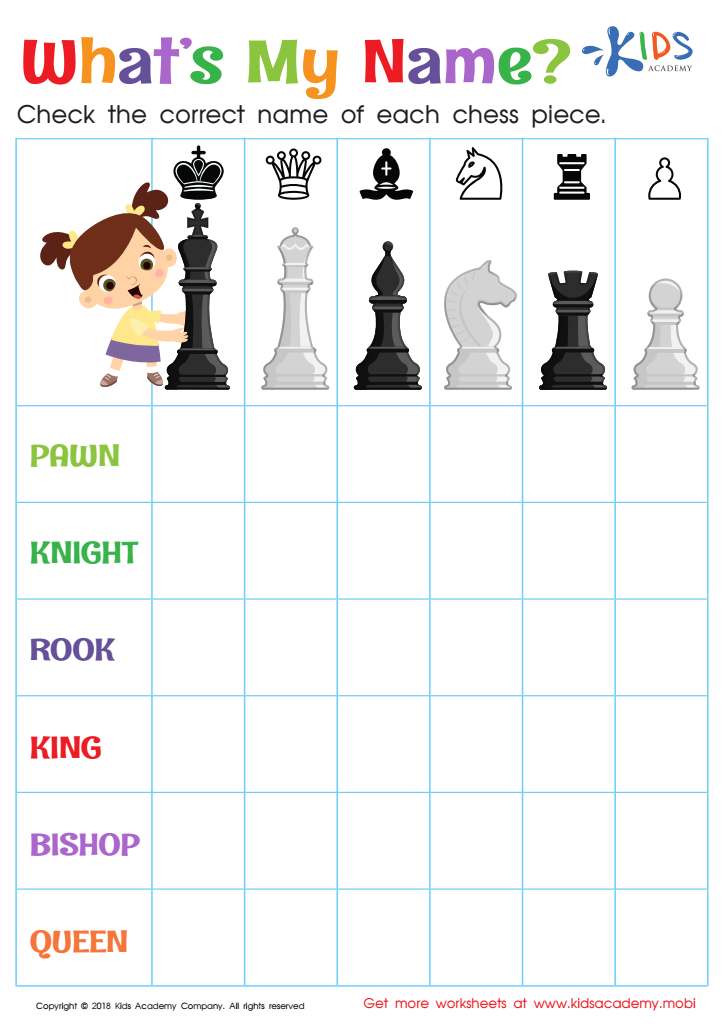
What's My Name? Worksheet
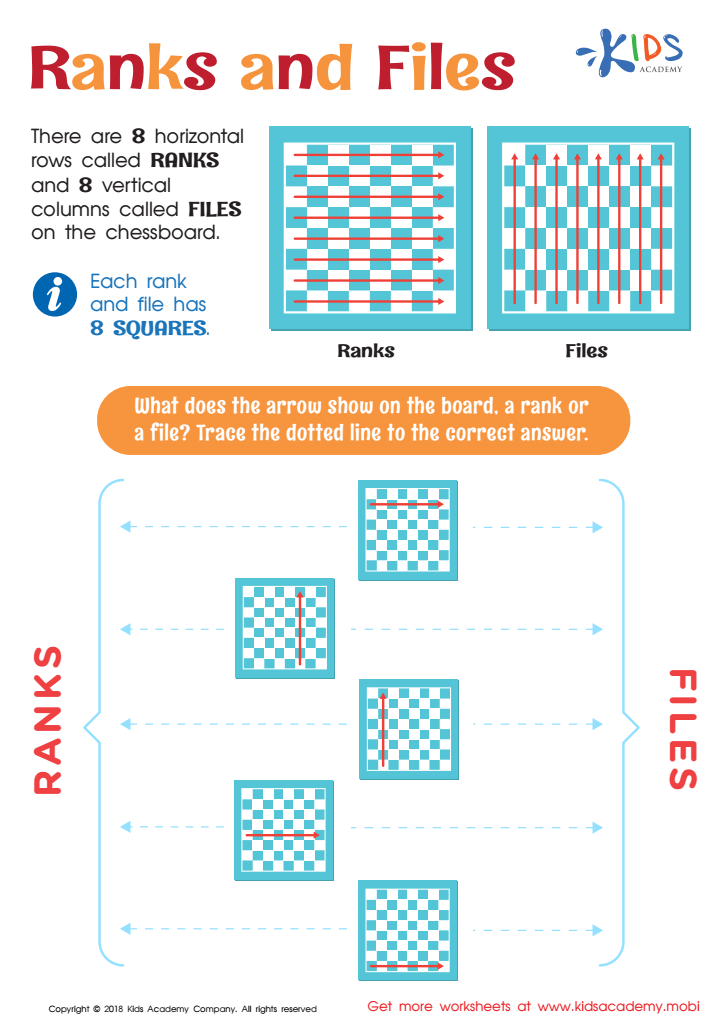
Ranks and Files Worksheet
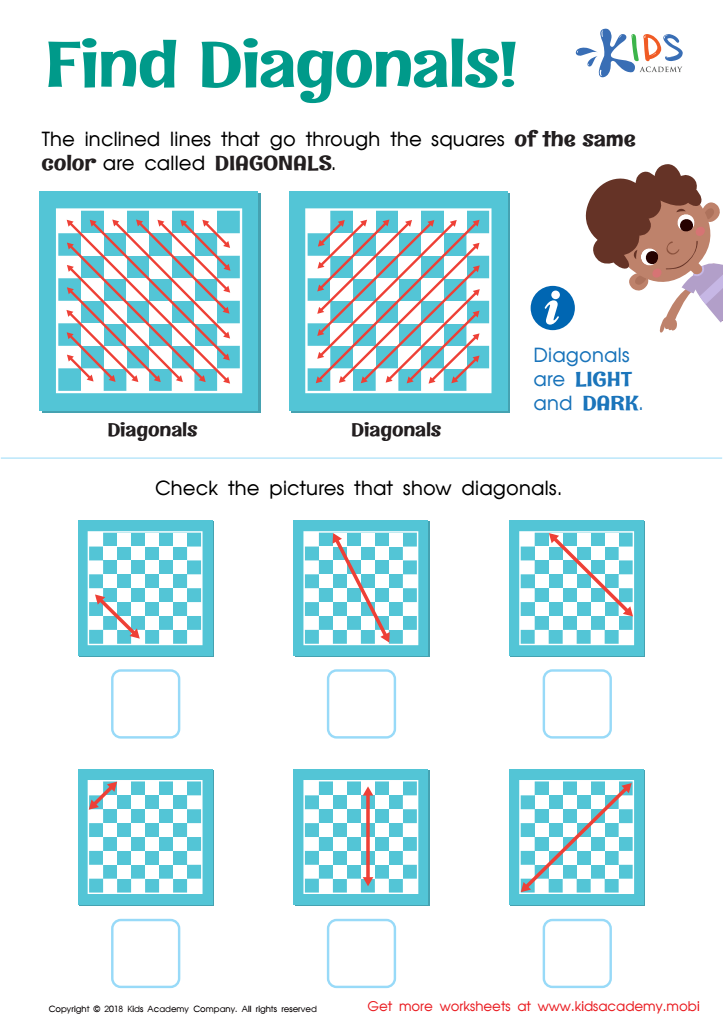
Find Diagonals Worksheet
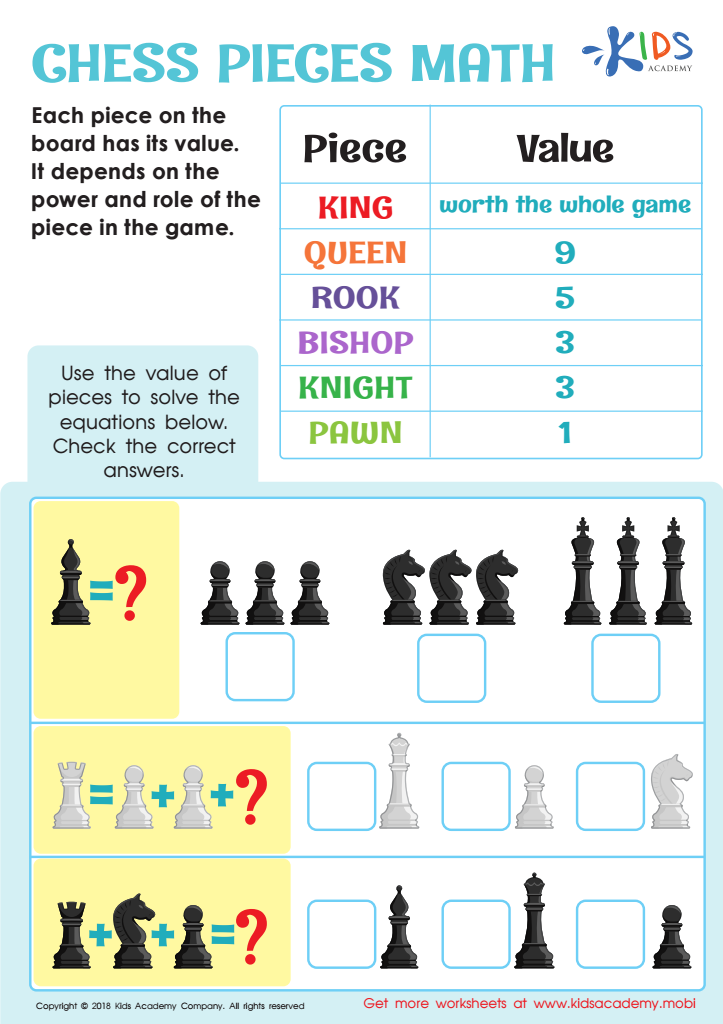
Chess Pieces Math Worksheet
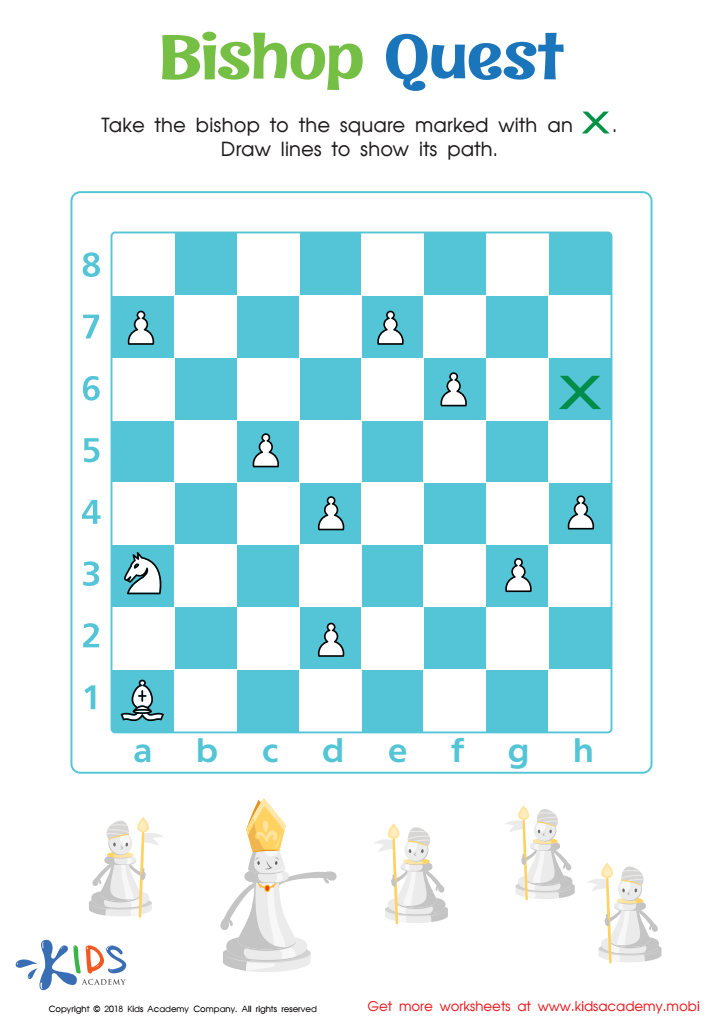
Bishop Quest Worksheet
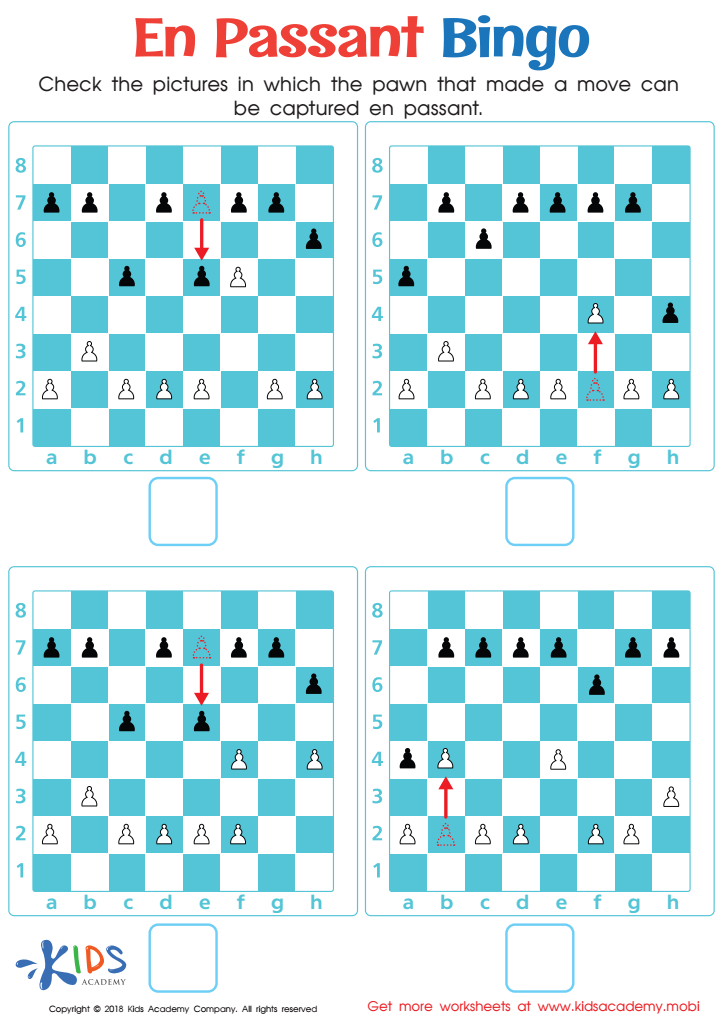
En Passant Bingo Worksheet
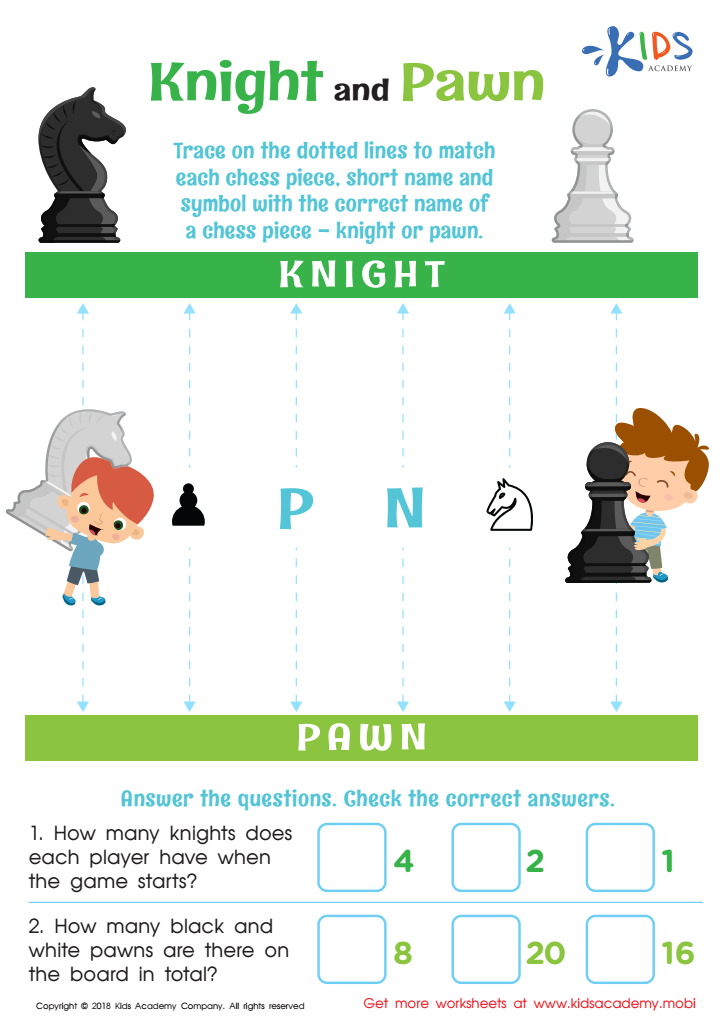
Knight and Pawn Worksheet
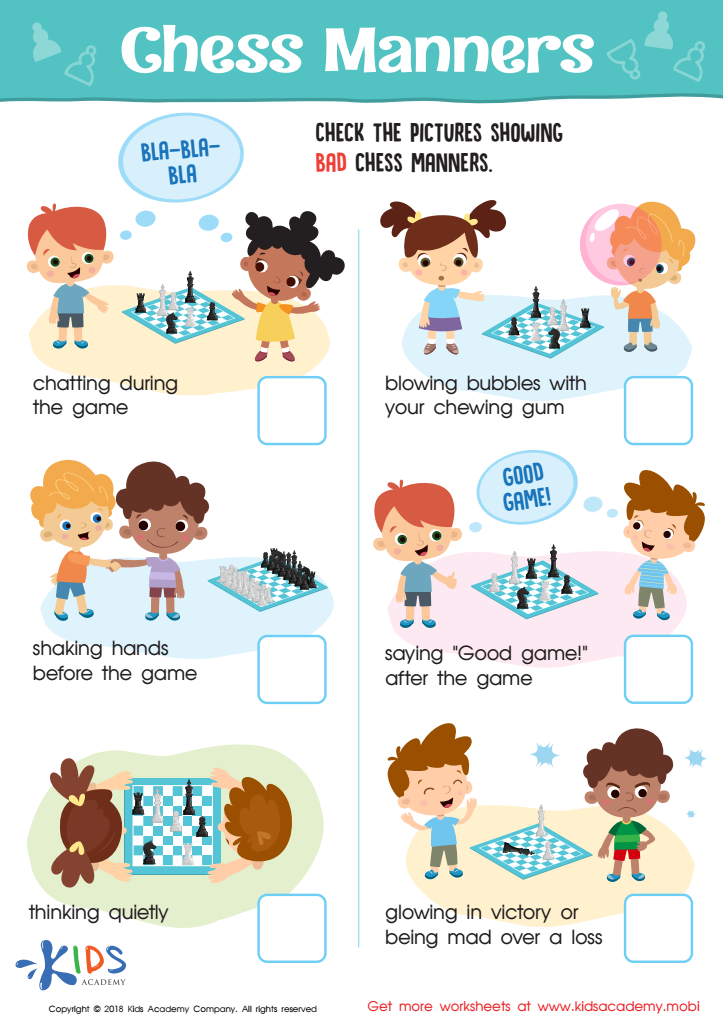
Chess Manners Worksheet
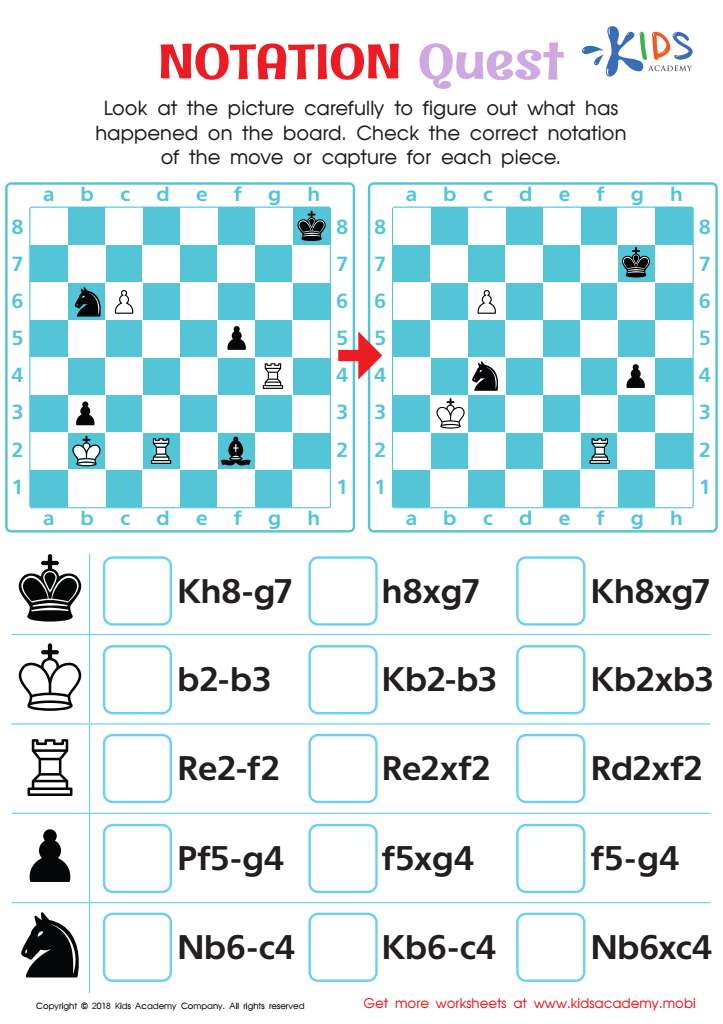
Notation Quest Worksheet
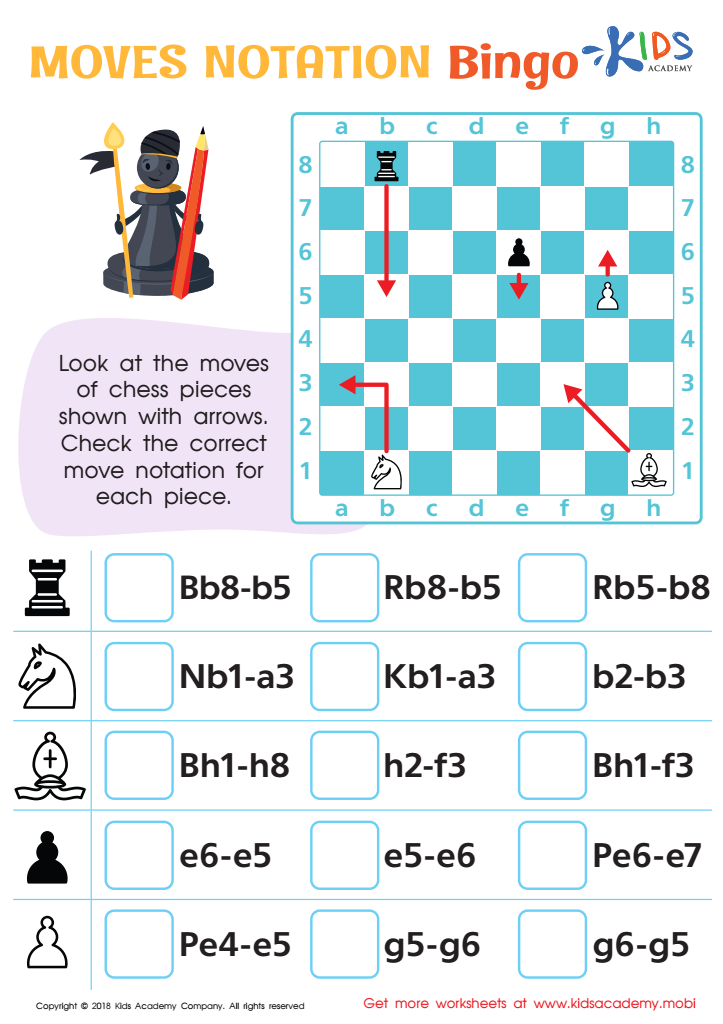
Moves Notation Bingo Worksheet
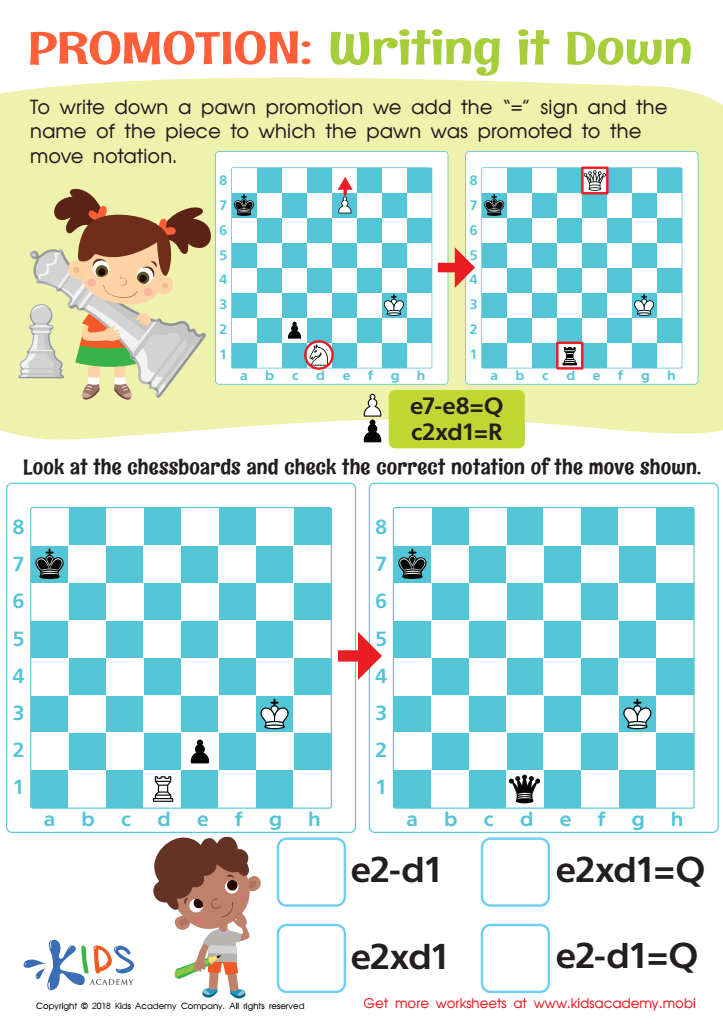
Writing it Down Worksheet
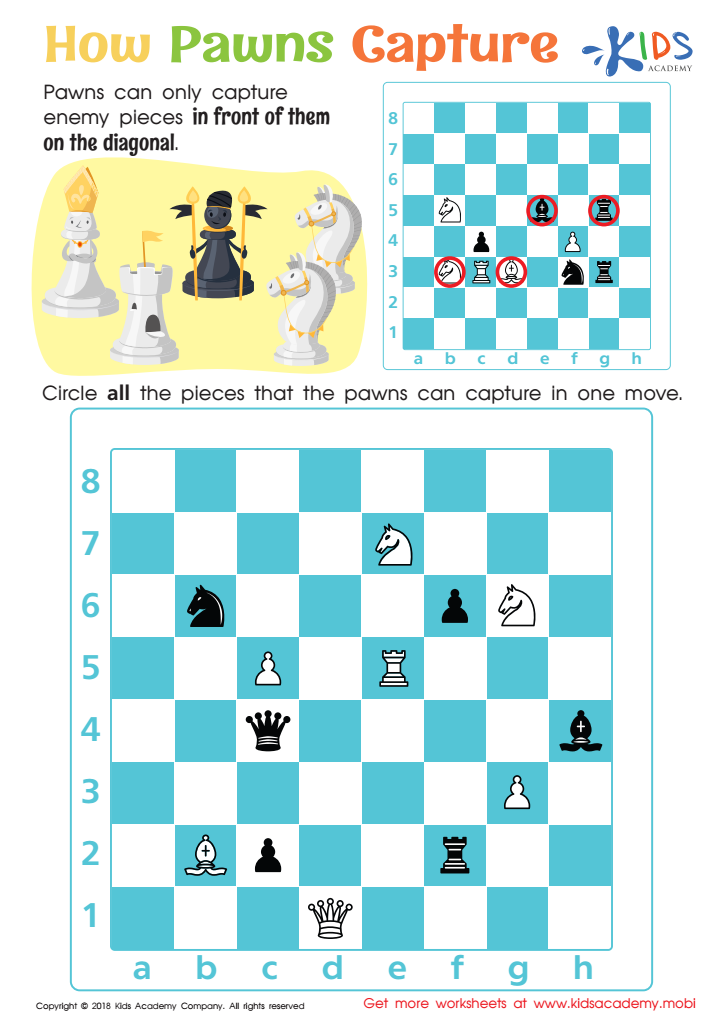
How Pawns Capture Worksheet
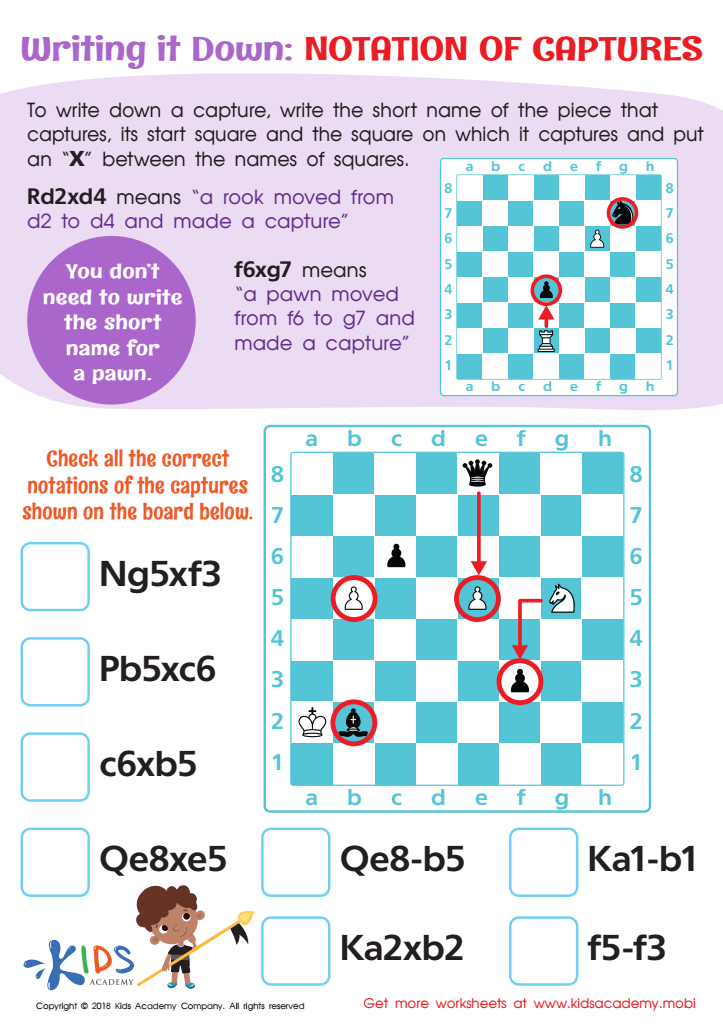
Notation of Captures Writing it Down Worksheet
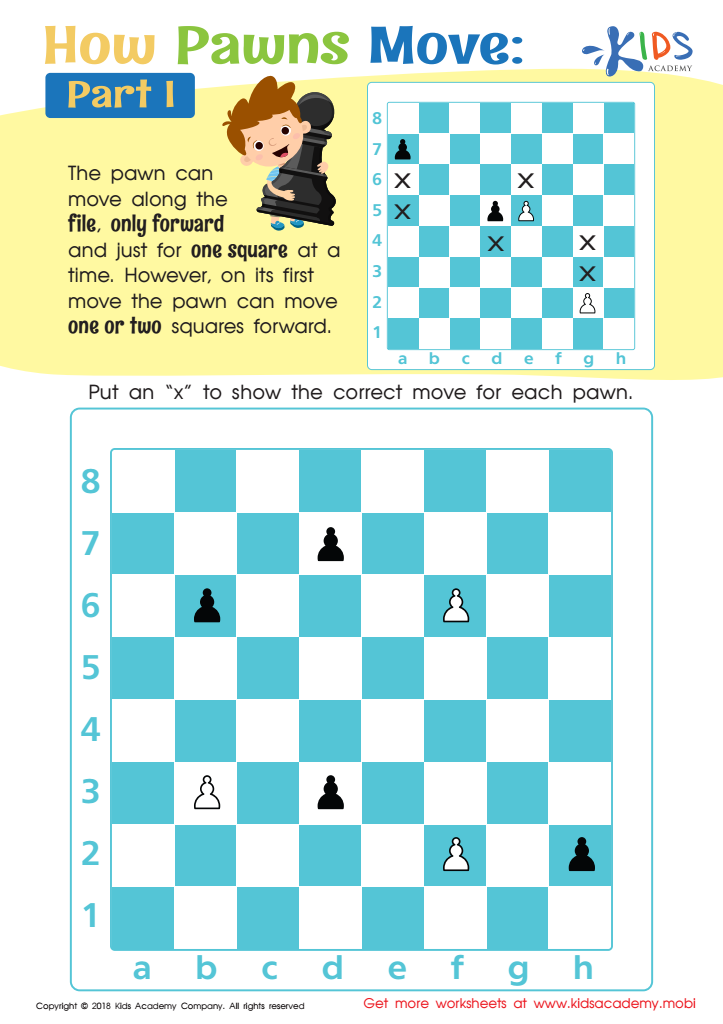
How Pawns Move: Part I Worksheet
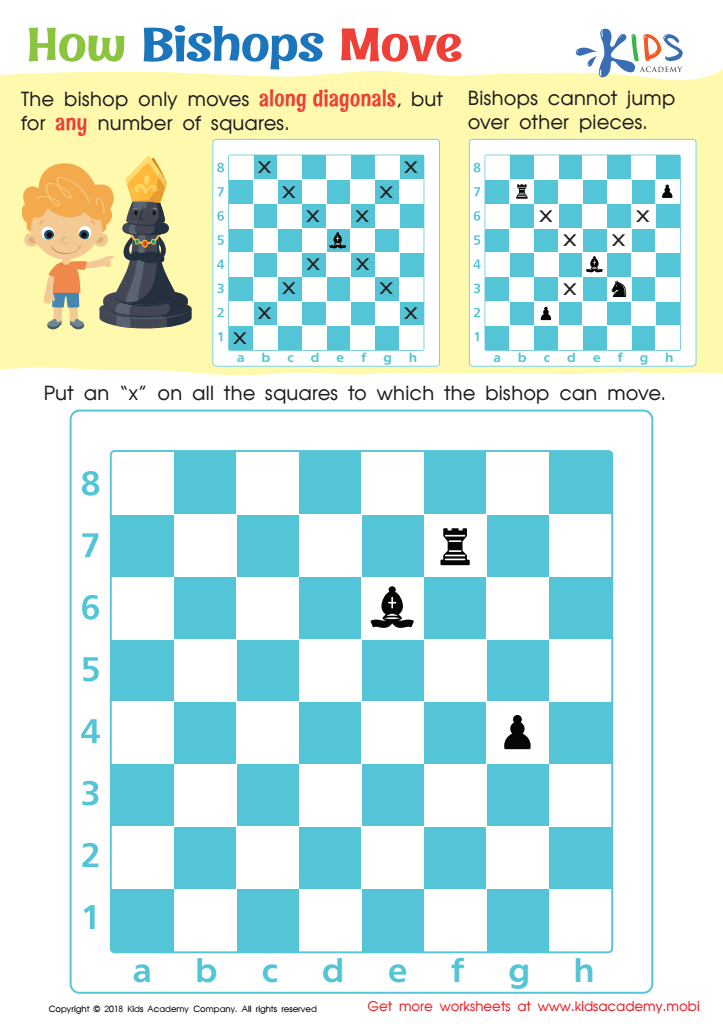
How Bishops Move Worksheet
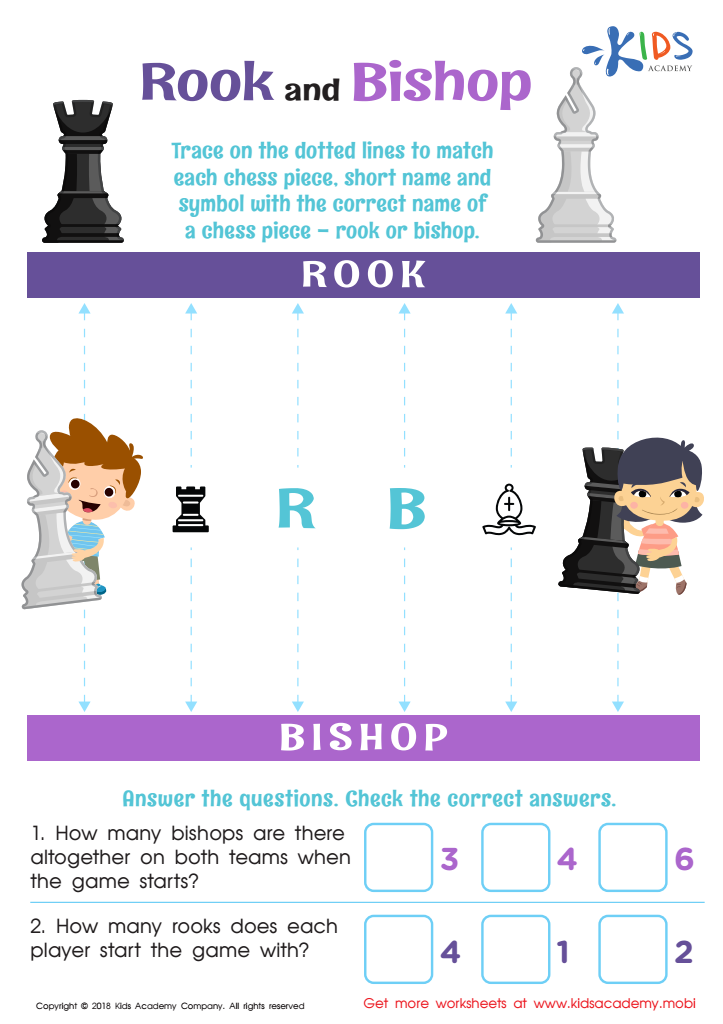
Rook and Bishop Worksheet
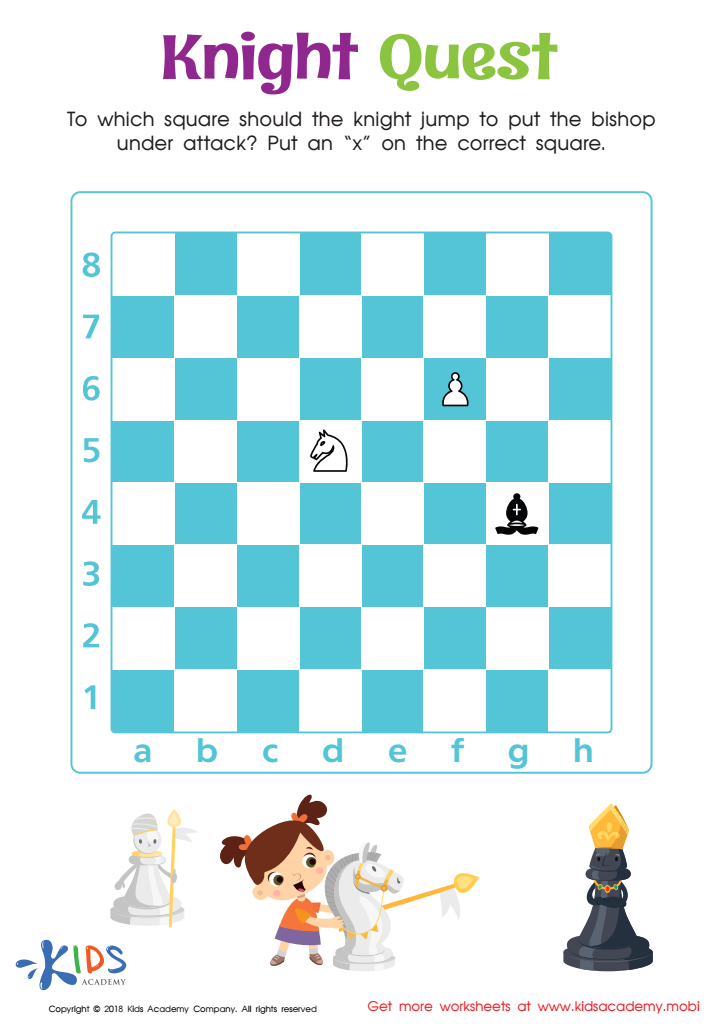
Knight Quest Worksheet
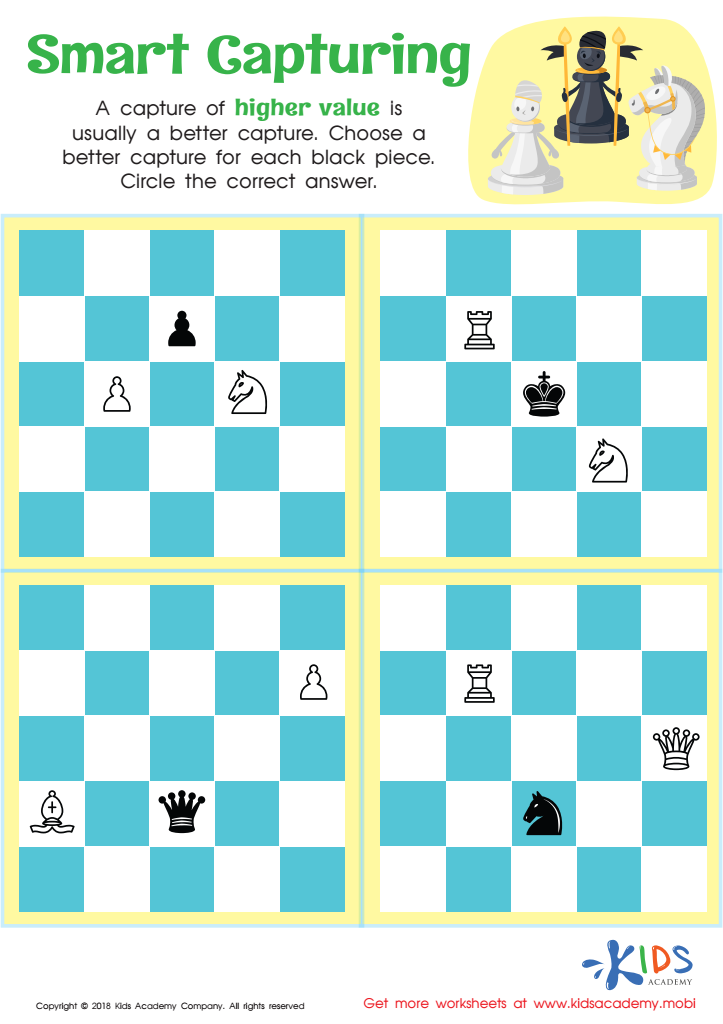
Smart Capturing Worksheet
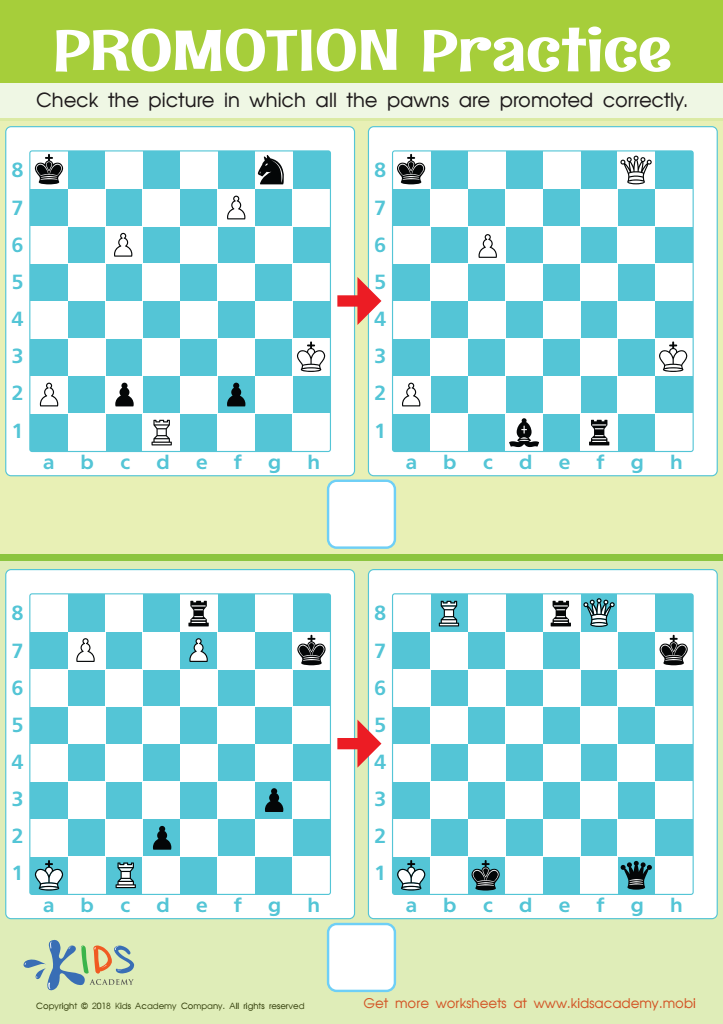
Promotion Practice Worksheet
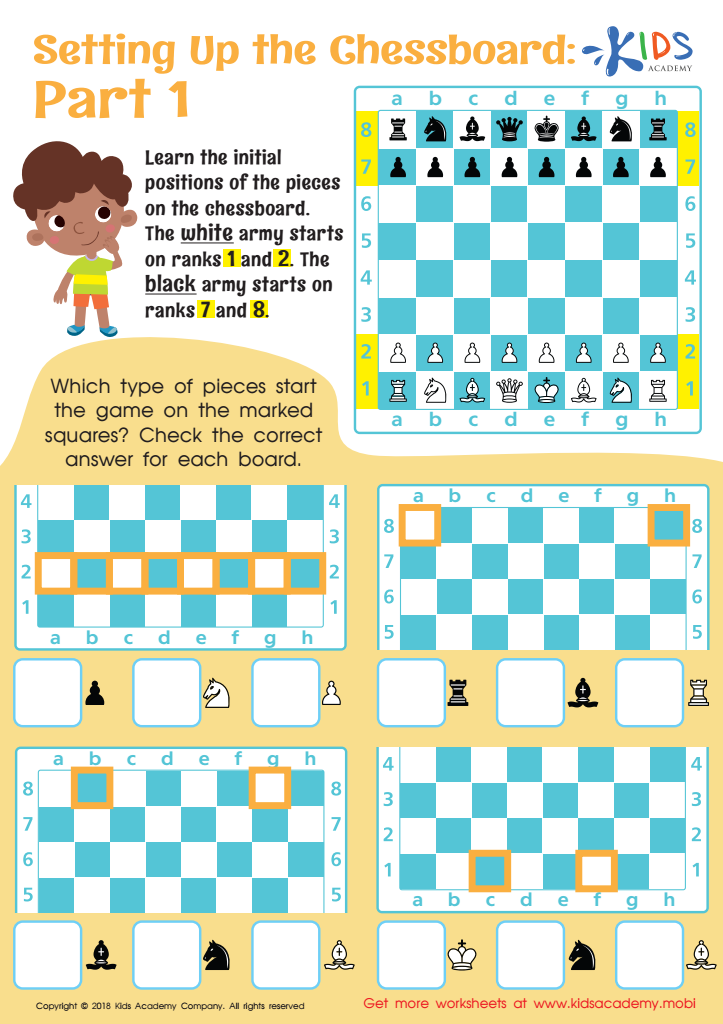
Setting up the Chessboard: Part 1 Worksheet






Introducing Normal Chess to children aged 4-6 can have a profound impact on their cognitive and social development. At this age, children are at a critical stage for developing essential skills such as critical thinking, problem-solving, and spatial awareness. Chess encourages these skills by challenging young minds to think several moves ahead, develop strategies, and anticipate their opponent's actions.
Furthermore, chess promotes patience and turn-taking, important social skills that can enhance their interactions with peers. It teaches children how to handle winning and losing gracefully, fostering resilience and sportsmanship. The structured nature of chess can also provide emotional regulation, helping children learn to manage emotions during competitive play.
In addition, engaging with chess at a young age can boost a child's confidence as they gain mastery over the game's complex rules. The game can also spark an ongoing interest in mathematics and logical reasoning, connecting skills learned in chess to academic achievement in other areas.
Overall, integrating Normal Chess into early education nurtures not only academic abilities but also fundamental life skills, making it a valuable activity that parents and teachers should wholeheartedly support.