Normal Initial and Final Consonant Blends Worksheets for Ages 4-7
4 filtered results
-
From - To
Enhance your child's reading skills with our "Normal Initial and Final Consonant Blends Worksheets," designed specifically for ages 4-7. These engaging worksheets focus on helping young learners master consonant blends, crucial for fluent reading and writing. Each worksheet features colorful illustrations and fun exercises that make learning enjoyable. Kids will practice identifying and combining initial and final consonant sounds, improving their phonemic awareness and vocabulary. Perfect for classroom activities or home practice, these worksheets provide the repetition and reinforcement needed to build confident readers. Explore our collection today and give your child a head start in literacy!
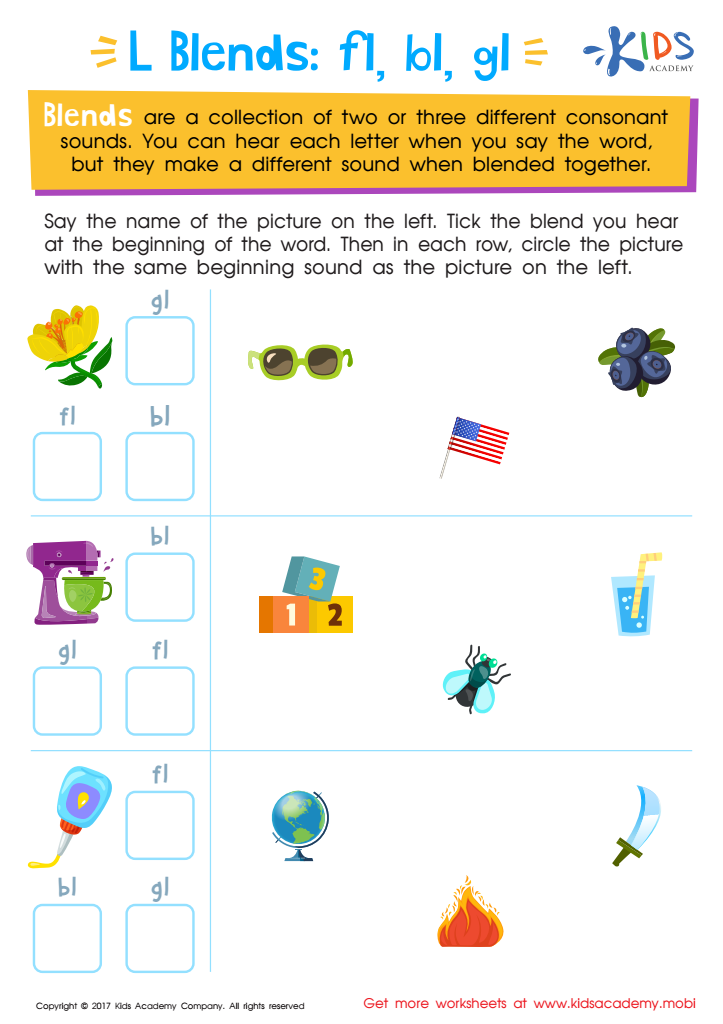
Blending Consonants: "Fl", "Bl" and "Gl" Printable
 Assign to My Students
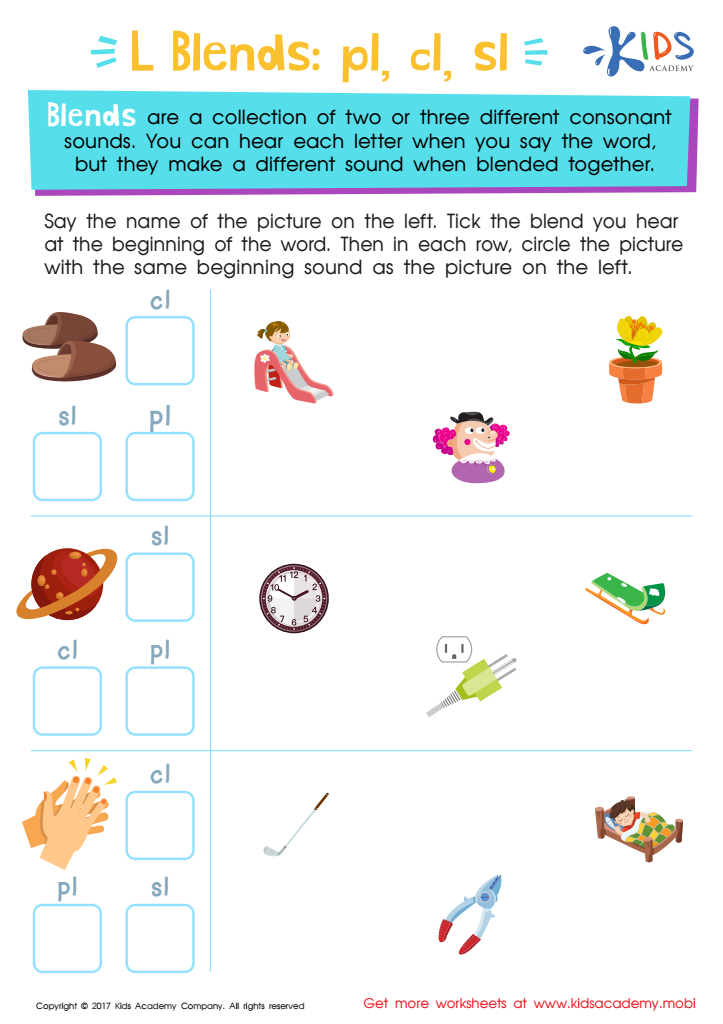
L Blends: "Pl", "Cl" and "Sl" Printable
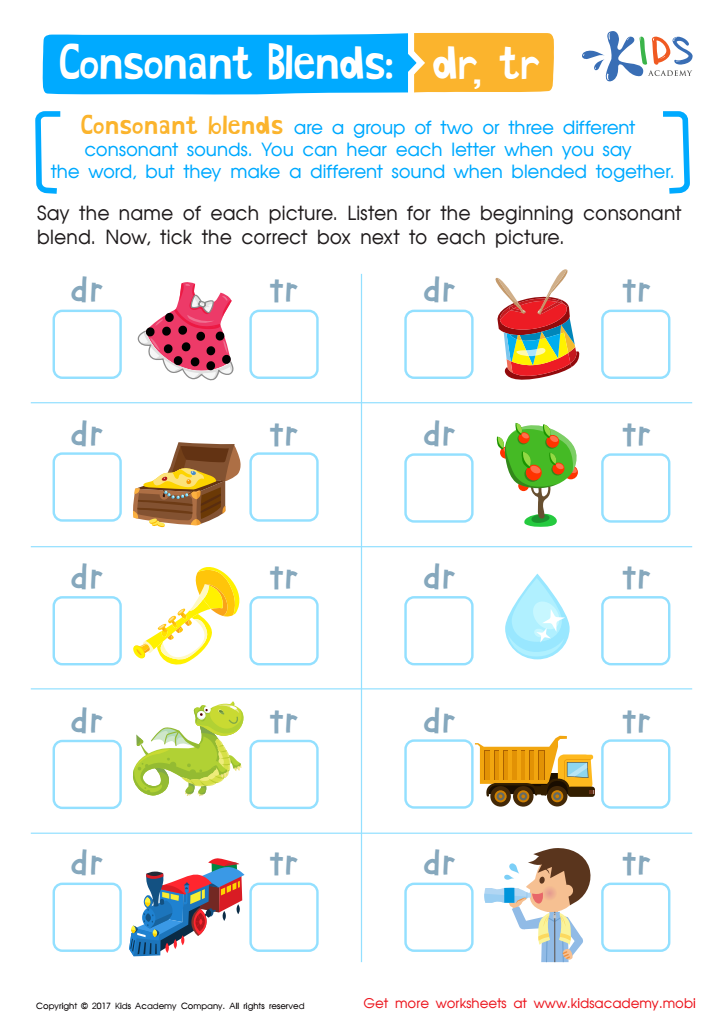
Consonant Blends: "Dr" and "Tr" Printable
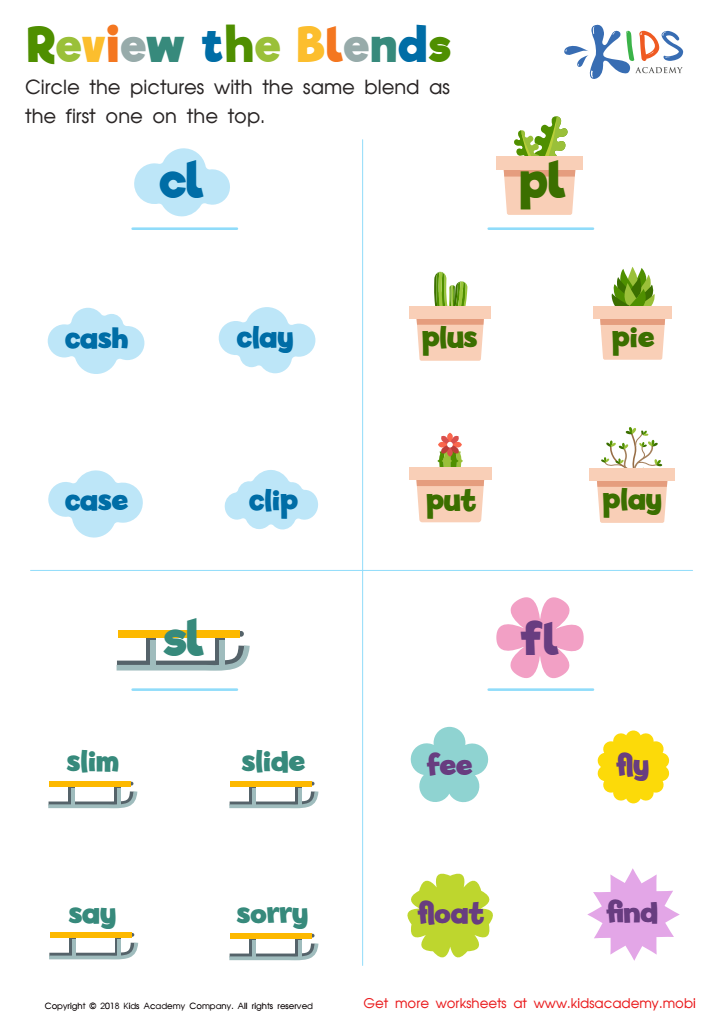
Review the Blends Worksheet


Parents and teachers should care about normal initial and final consonant blends for children aged 4-7 because they play a crucial role in early literacy development. Understanding these blends helps children decode and pronounce words more accurately, which is essential for reading fluency and comprehension. As children encounter more complex words, the ability to identify consonant blends becomes vital for their phonemic awareness—the ability to hear, identify, and manipulate the individual sounds in words.
Blending sounds lays the foundation for effective reading and writing. For example, when children can blend initial sounds like “st” in “stop” or final blends like “nd” in “find,” they can improve their vocabulary and spelling skills as they progress. Furthermore, early mastery of consonant blends boosts children's confidence, motivating them to engage more with reading activities and literacy discussions.
In addition, fostering an environment that promotes awareness of these sounds can enhance communication skills, support better overall academic performance, and aid in social interaction. Ultimately, an emphasis on consonant blends enriches children's language skills, setting them on a path to become proficient readers and successful learners. Therefore, prioritizing these aspects of literacy is beneficial for both parents and teachers in shaping confident, capable readers.








