Normal Patterns Worksheets for Ages 4-7
5 filtered results
-
From - To
Explore our Normal Patterns Worksheets for Ages 4-7, designed to make learning fun and interactive for early learners. These vibrant, engaging worksheets help children understand and recognize various patterns, strengthening their logical thinking and problem-solving skills. Perfectly tailored for young minds, these worksheets offer a range of activities from simple repetition sequences to more complex patterns, promoting cognitive development and mathematical foundation. Ideal for both classroom and home use, our worksheets provide a hands-on approach to learning, ensuring children stay motivated and excited about discovering new patterns. Empower your child’s learning journey with our educational resources.
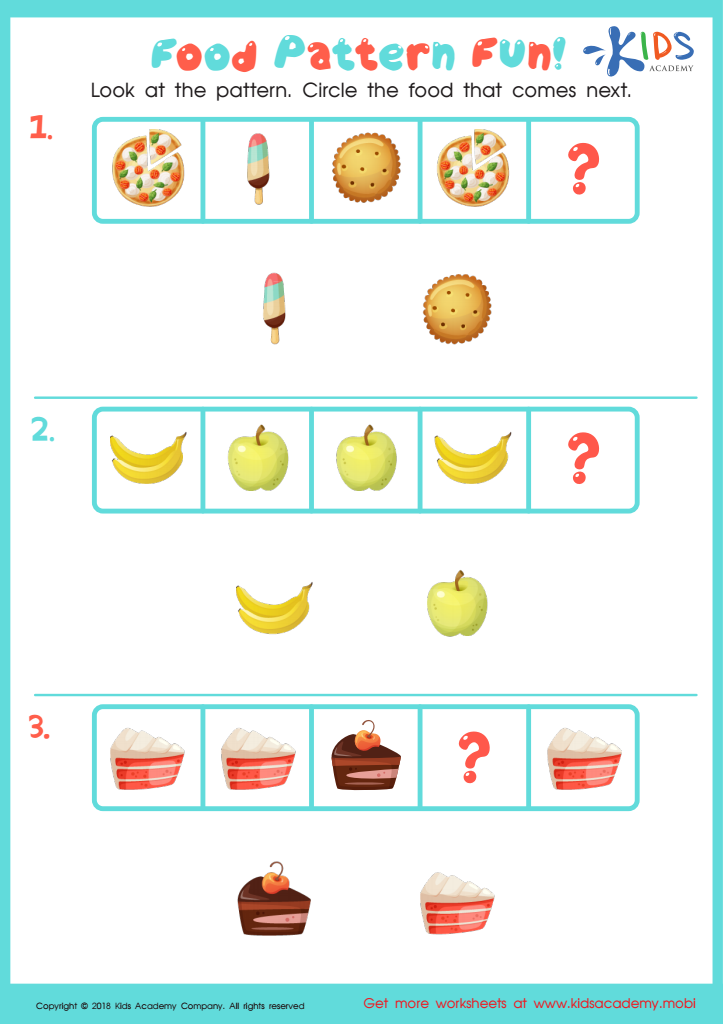
Food Pattern Fun Worksheet
 Assign to My Students
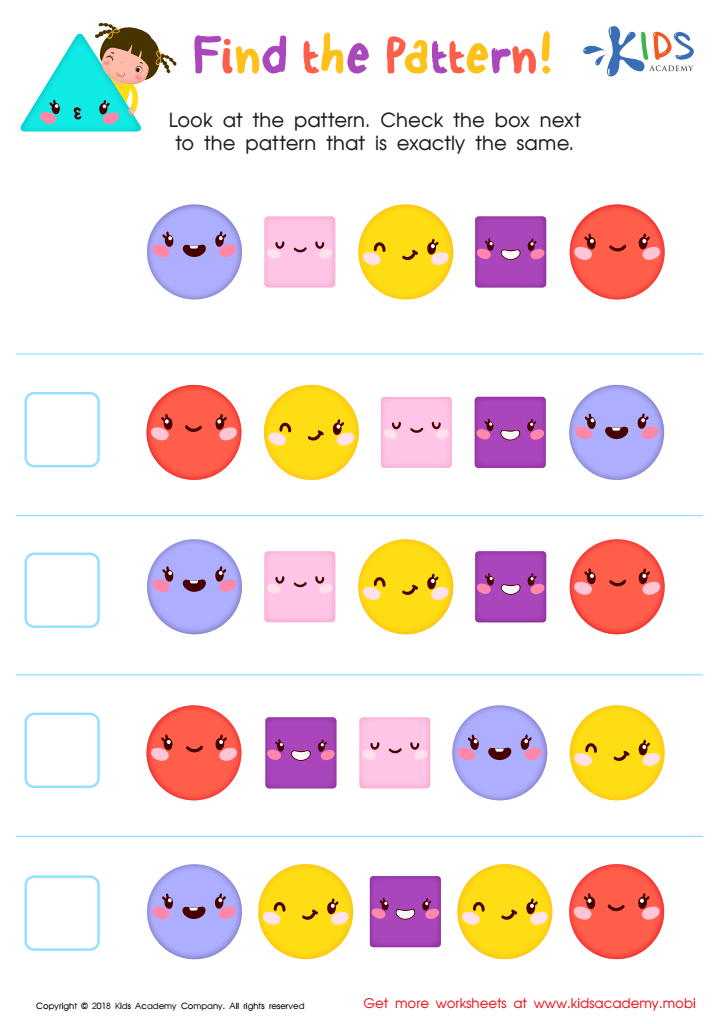
Find the Pattern Worksheet
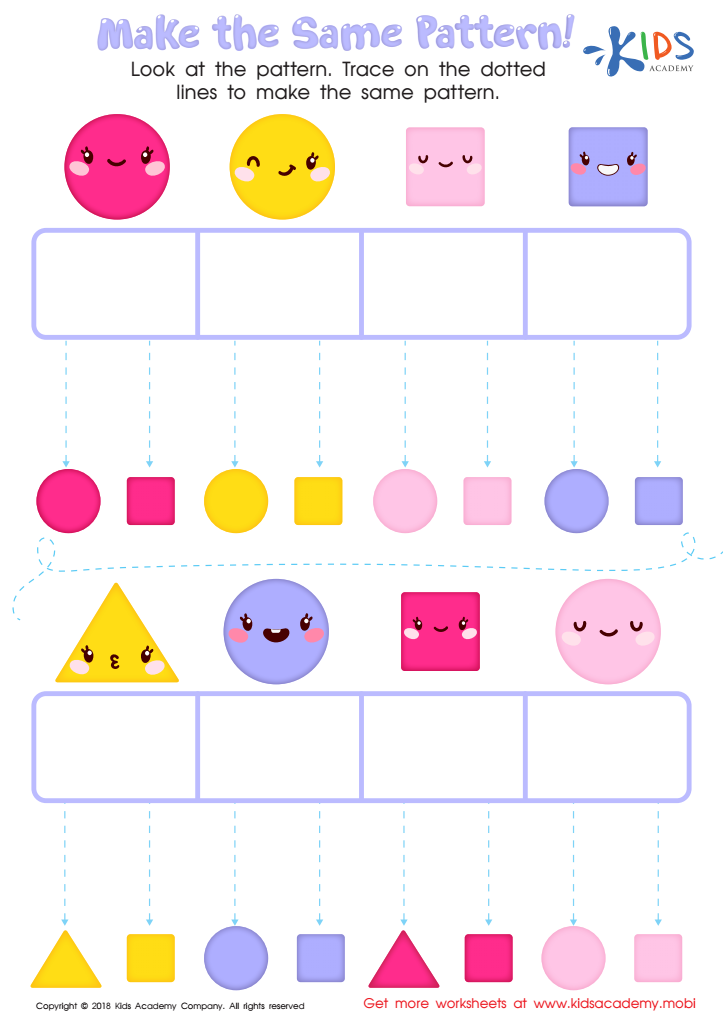
Make the Same Pattern Worksheet
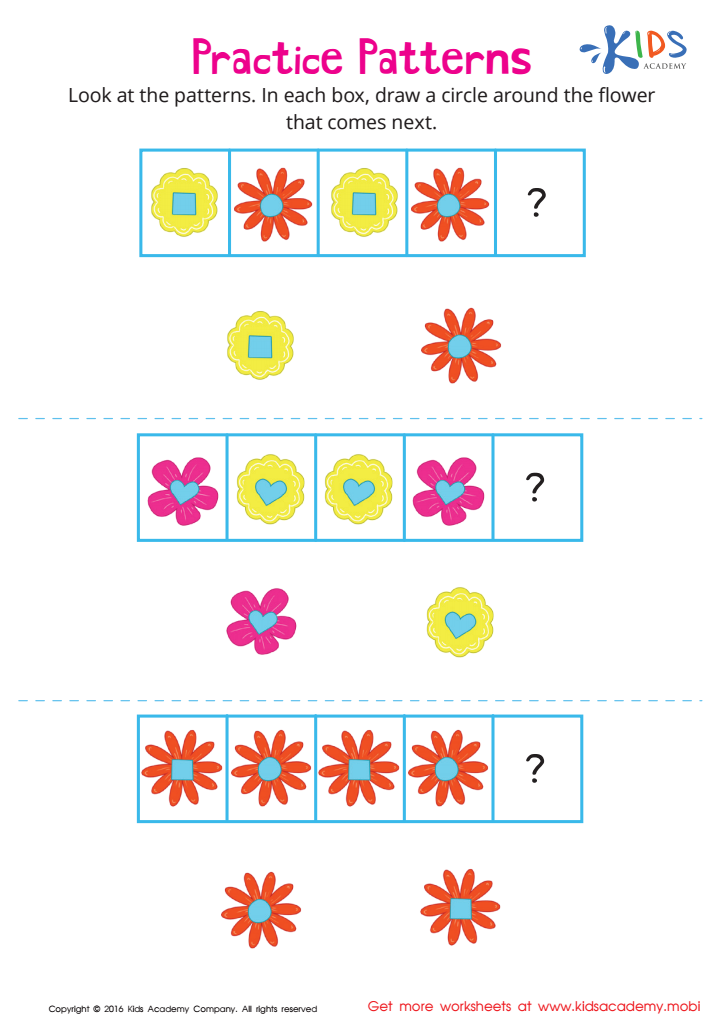
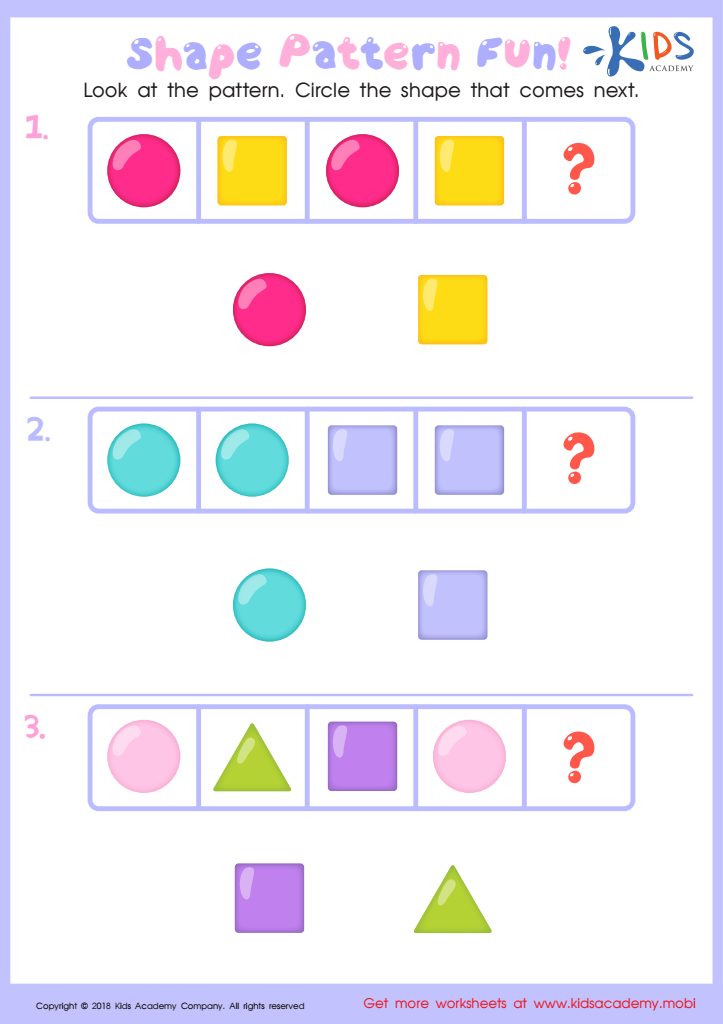
Shape Pattern Fun Worksheet








Understanding normal developmental patterns for children aged 4-7 is crucial for both parents and teachers because it provides a benchmark for ensuring a child's healthy growth and identifying potential concerns early on. During these formative years, children undergo significant physical, emotional, cognitive, and social transformations.
Cognitively, this period is marked by bursts in language acquisition, problem-solving abilities, and foundational literacy and numeracy skills. Recognizing normal development helps parents and teachers tailor the learning environment to nurture these growing capabilities appropriately. Emotionally and socially, children begin to form crucial relationships and learn essential skills for interacting with others. Awareness of normal social milestones ensures children are developing empathy, cooperation, and self-regulation.
Physically, knowing what typical growth patterns and motor skill developments look like enables adults to provide suitable physical activities that support muscle development, coordination, and overall health.
Additionally, having a clear understanding of these milestones helps in the early identification of potential developmental delays or challenges. Early intervention is key to addressing concerns effectively, whether they pertain to speech, behavior, learning difficulties, or social interactions.
In summary, an awareness of normal development ensures that parents and teachers can provide supportive, enriching environments aiding in the healthy overall development of children aged 4-7, setting a strong foundation for their future success.








