Normal Geometry Worksheets for Ages 4-9 - Page 4
75 filtered results
-
From - To
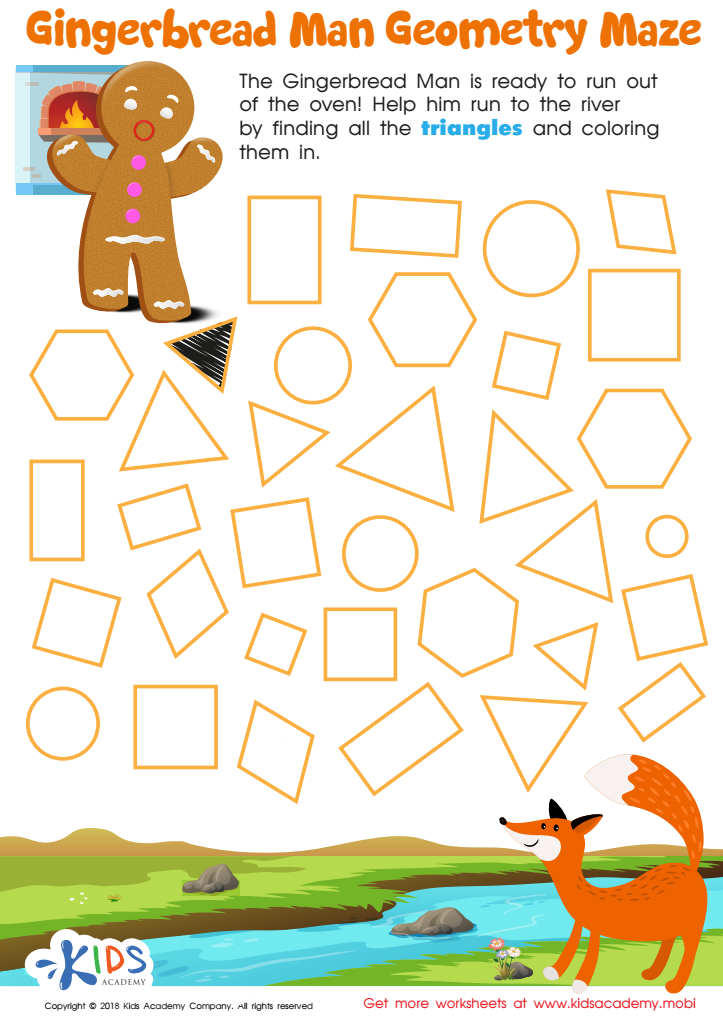
Gingerbread Man Geometry Maze Worksheet
 Assign to My Students











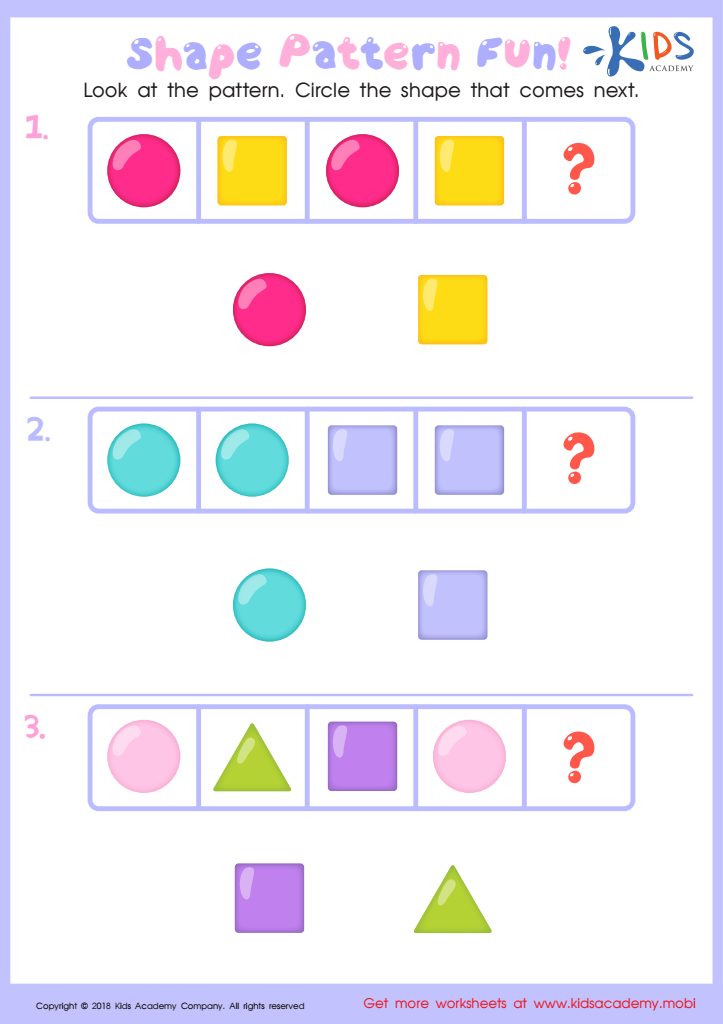
Shape Pattern Fun Worksheet
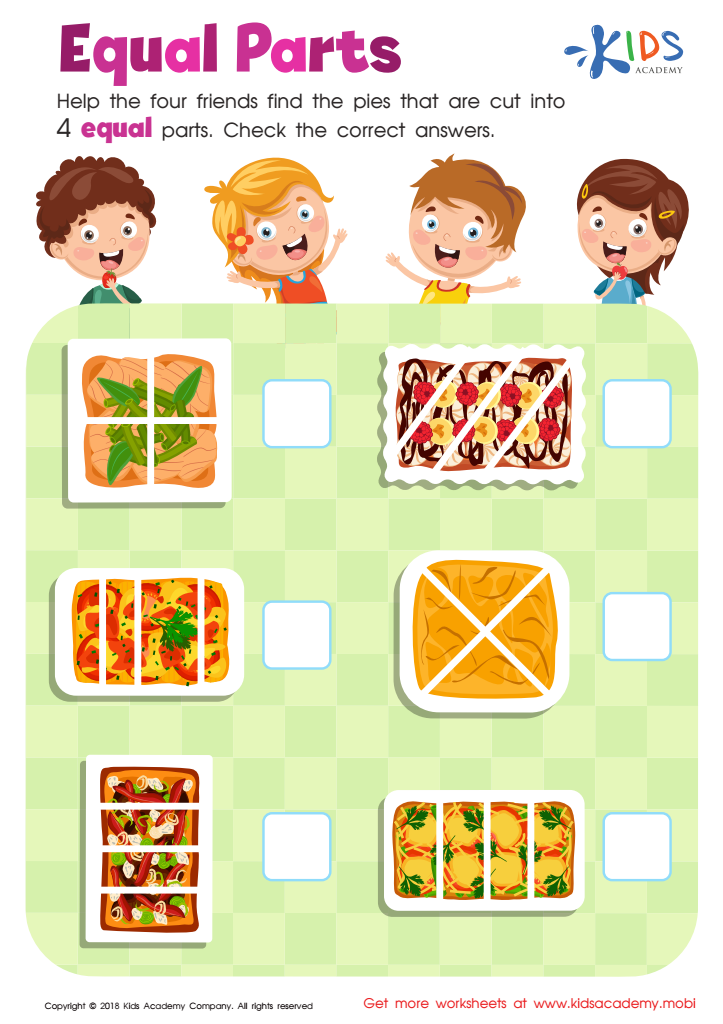
Equal Parts: Food Worksheet








Parents and teachers should care about Normal Geometry for Ages 4-9 because it lays the foundation for critical mathematical skills and cognitive development. Early geometry education helps children recognize shapes, understand spatial relationships, and develop problem-solving abilities that are essential for everyday life. By engaging with geometry at a young age, children learn to classify and compare objects, paving the way for future concepts in mathematics.
Moreover, incorporating geometry into early learning fosters curiosity and exploration. Activities such as building with blocks, drawing shapes, and solving puzzles stimulate creativity while reinforcing mathematical concepts. These hands-on experiences encourage children to think analytically, enhancing their ability to observe, describe, and reason about the world around them.
Additionally, geometry skills are linked to success in various academic disciplines and real-life applications, from engineering to art. When parents and teachers prioritize early geometry learning, they equip children with tools for logical thinking, critical analysis, and decision-making that extend far beyond the classroom. Ultimately, nurturing an early understanding of geometry can inspire a lifelong interest in mathematics and science, cultivating confident learners who are prepared for future academic challenges.








