
Normal Division Worksheets for Ages 6-7
6 filtered results
Difficulty Level
Grade
Age
-
From - To
Subject
Activity
Standards
Discover our engaging Normal Division Worksheets designed specifically for children aged 6-7. These interactive worksheets provide a solid foundation in division, featuring age-appropriate problems that encourage learning through fun and creativity. With a variety of exercises, your child will practice basic division concepts, develop problem-solving skills, and boost their mathematical confidence. Our worksheets are perfect for homeschooling or classroom activities, offering clear instructions and colorful visuals to keep young learners motivated. Help your child master division with these essential worksheets that enhance their understanding and pave the way for future mathematical success! Start their learning journey today!
Favorites
With answer key
Interactive
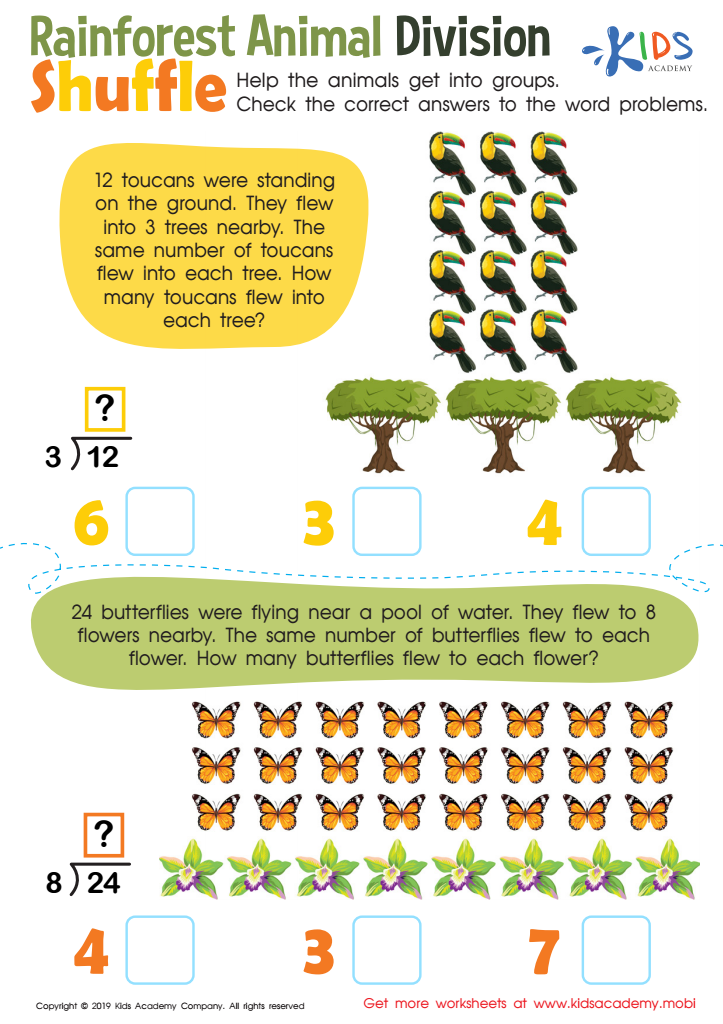
Rainforest Animal Division Worksheet
Children can save the rainforest and learn about division with this worksheet! It helps kids understand that division involves creating equal groups of specific numbers, and with its visual representation, they can grasp the concept more easily. They'll have fun learning about their place in the world and their role in protecting the environment.
 Assign to My Students
Rainforest Animal Division Worksheet
Worksheet
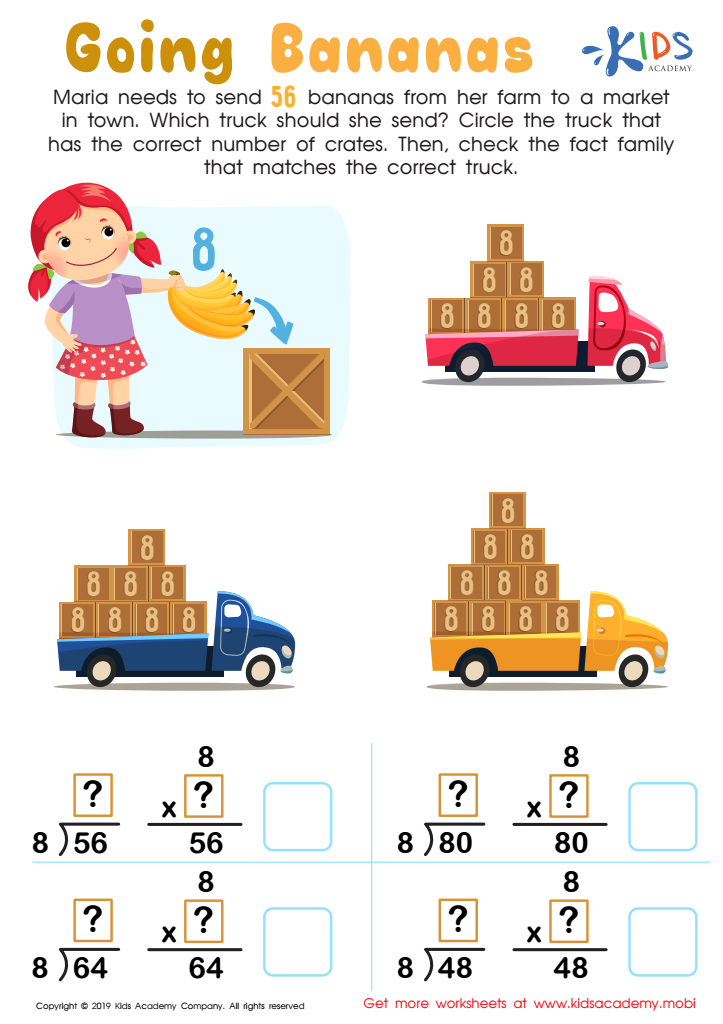
Going Bananas Worksheet
Marla needs to send 56 bananas in batches of 8. Help your child practice division and learn about fact families with this free worksheet. It'll help boost their multiplication skills and increase speed when solving problems.
Going Bananas Worksheet
Worksheet
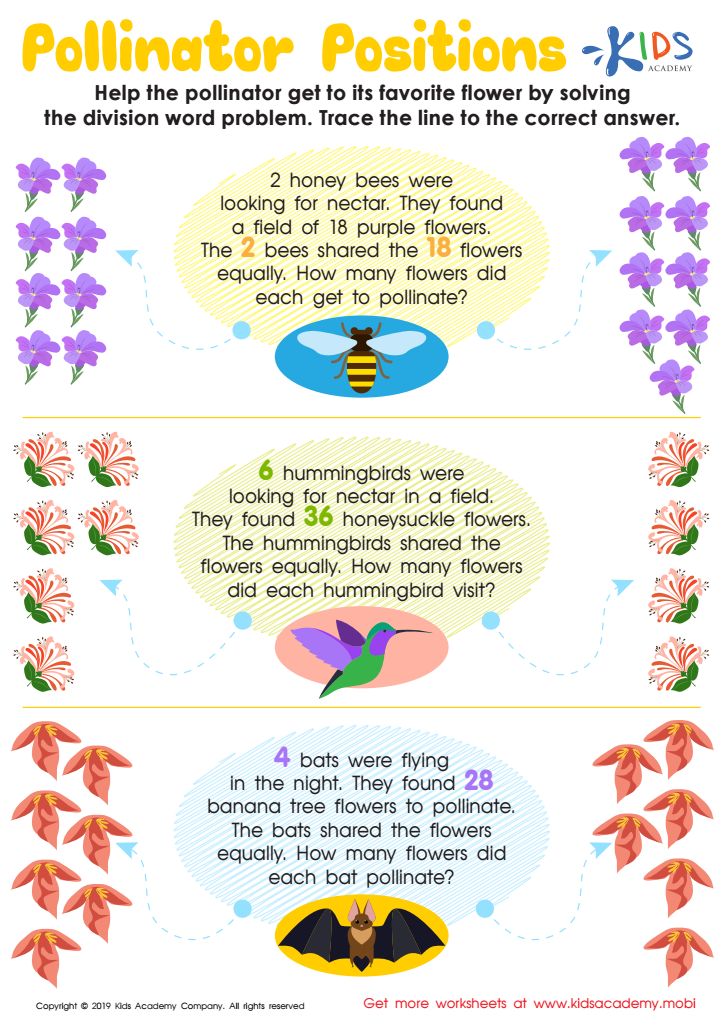
Pollinator Positions Worksheet
Kids will love learning about pollinators and how vital they are. Help their favorite friends get to the right flowers with this fun PDF. Children can solve the problems without even knowing they're doing division; just read the word problems and use the highlighted numbers. Finish by tracing the lines to the correct quotient!
Pollinator Positions Worksheet
Worksheet
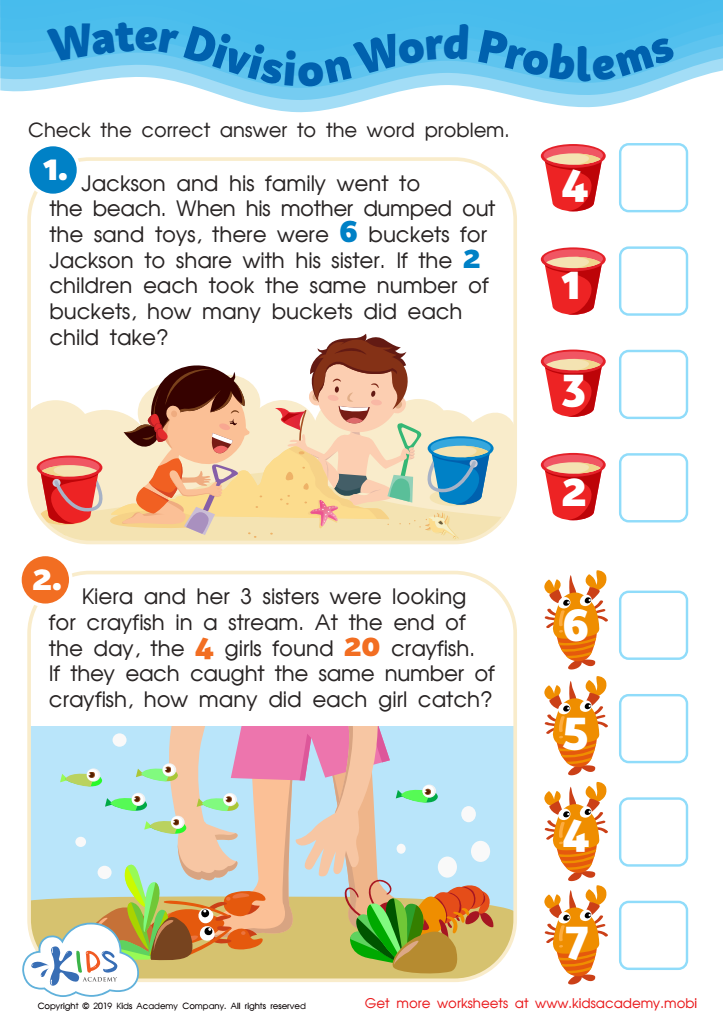
Water Division Word Problems Worksheet
Kids can sharpen their math skills with this fun PDF! They'll see pictures of friends at the beach, plus bold numbers and colorful pictures. All they need to do is read and understand the problem to find the answer - without even realizing they're doing division. A great way to make math enjoyable!
Water Division Word Problems Worksheet
Worksheet
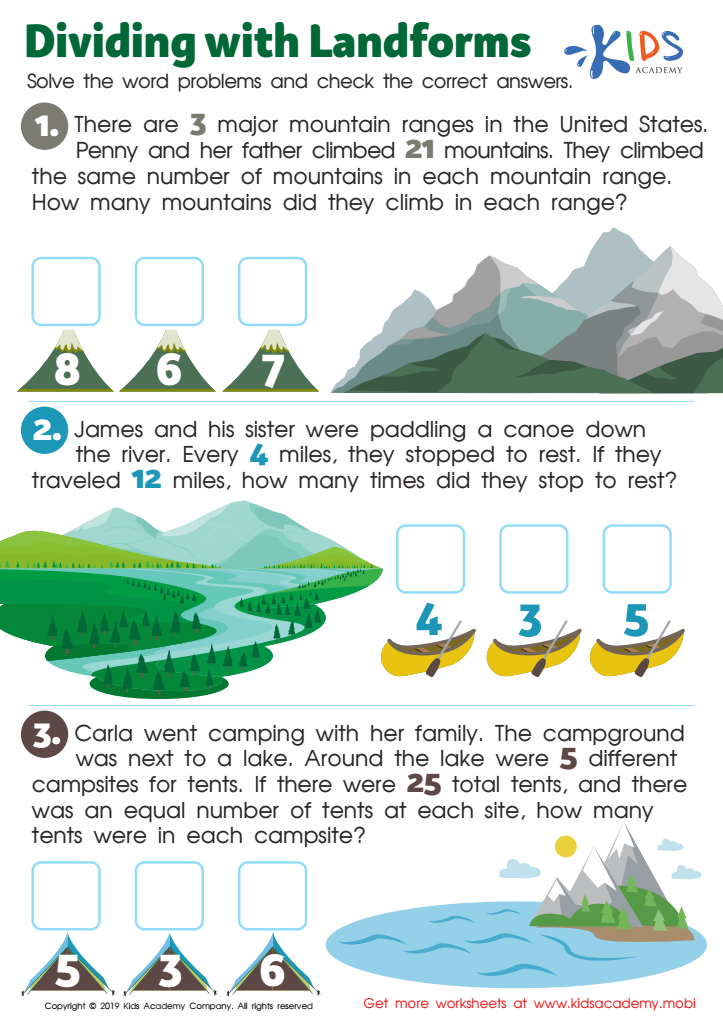
Dividing with Landforms
Mixing subjects to help your child learn is always nice. This worksheet combines landforms, problem-solving and division. The PDF highlights numbers, uses bold colors and provides pictures to help your child understand the questions and answer choices, making them feel empowered, not intimidated.
Dividing with Landforms
Worksheet
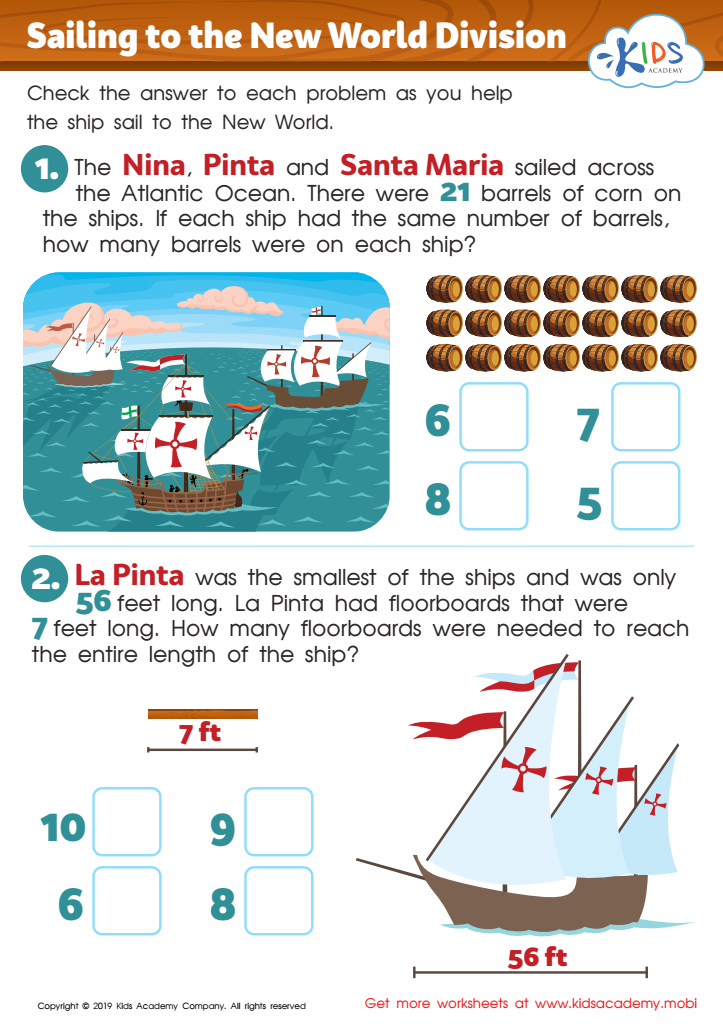
Sailing to the New World Division Worksheet
This worksheet combines history and math, helping kids make sense of problem-solving. Christopher Columbus sailing the ocean blue is combined with picture representations of division word problems in bold colors and highlighted numbers. Kids can learn while having fun figuring out the problems, regardless of whether it's math or history.
Sailing to the New World Division Worksheet
Worksheet
Join Kids Academy for Free
Who is primarily going to use this learning content?







Normal Division is an essential mathematical concept for children aged 6-7 as it lays the foundation for more advanced arithmetic skills. At this developmental stage, children are beginning to make sense of numbers and explore the relationships between them. Understanding division fosters critical thinking, problem-solving, and logical reasoning—skills they will use throughout their lives.
Parents and teachers should care about Normal Division because it empowers children to comprehend how quantities can be shared or grouped. This understanding is not only relevant in math but also applicable in everyday situations, such as sharing toys or dividing snacks. By mastering division early, children gain confidence and the ability to tackle more complex problems in future grades.
Moreover, early exposure to division helps bridge the gap between addition and multiplication, reinforcing the understanding of inverse operations. This can stimulate a child's mathematical journey and cultivate a positive attitude toward mathematics as a whole.
Supporting children in learning Normal Division also allows teachers and parents to identify any misconceptions early on, providing the opportunity for targeted interventions and helping ensure a solid mathematical foundation for lifelong learning. Ultimately, investing time and resources into these early skills enriches the educational experience and fosters success in future math endeavors.








