Normal Geometry Worksheets for Ages 7-9 - Page 2
27 filtered results
-
From - To
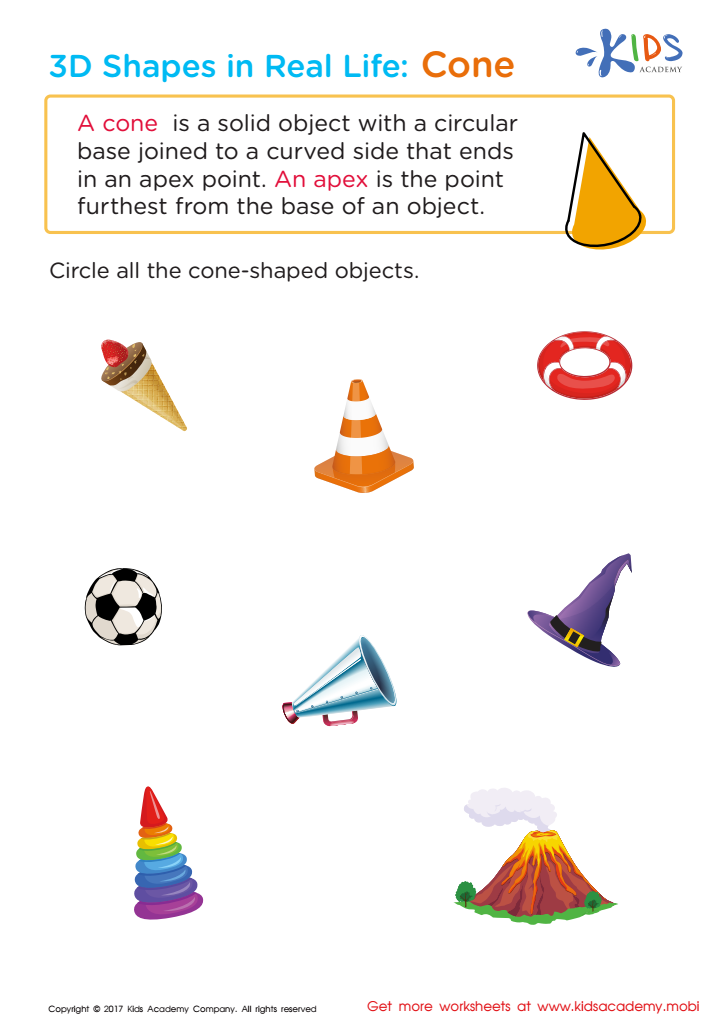
Shapes in Real Life: Cone Worksheet
 Assign to My Students











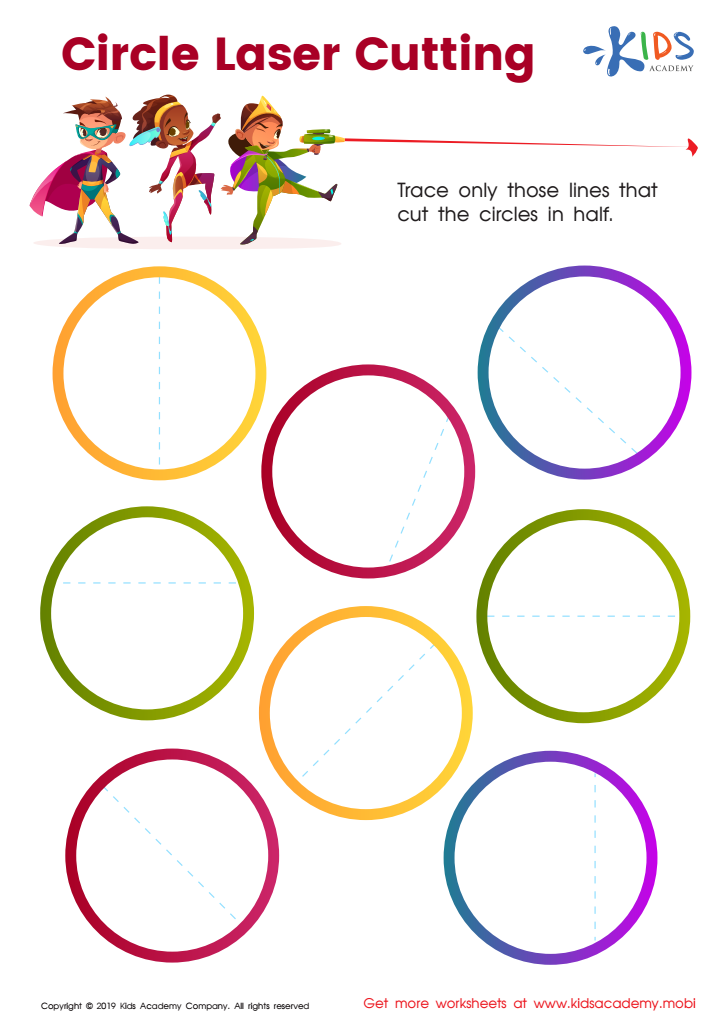
Circle Laser Cutting Worksheet
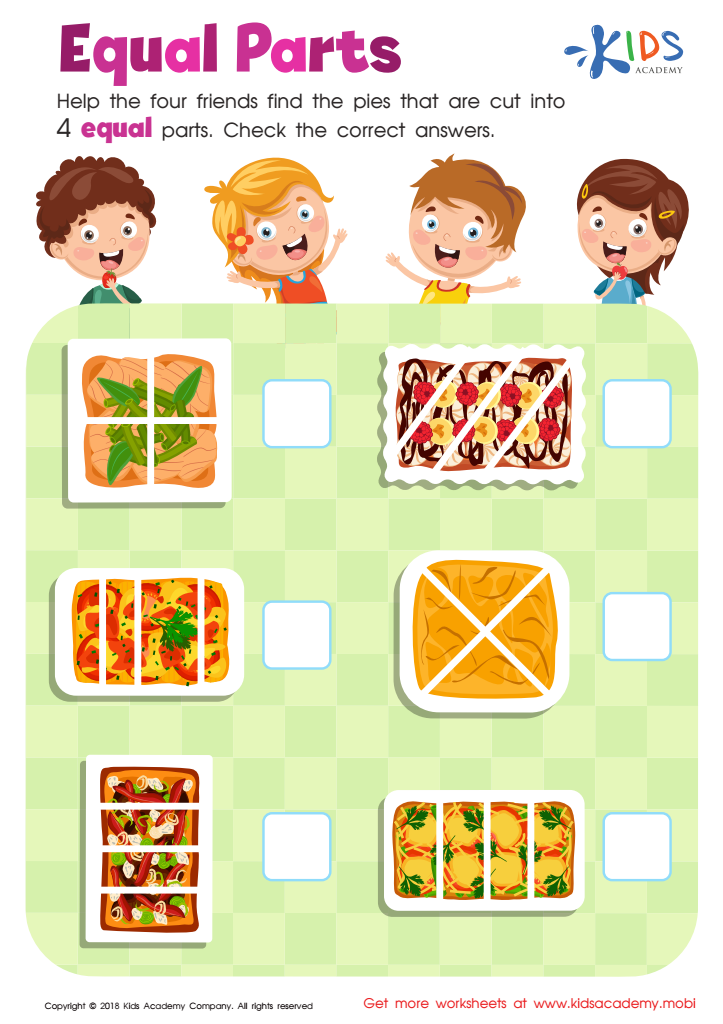
Equal Parts: Food Worksheet








Parents and teachers should care about normal geometry for ages 7-9 because it builds foundational skills critical for future academic and real-world success. At this formative stage, children's brains are remarkably receptive to spatial thinking and visual learning, making it the perfect time to introduce basic geometric concepts. These early lessons help students understand and analyze the world around them, from recognizing shapes and patterns to grasping concepts of size, area, and volume.
Geometry also improves problem-solving and reasoning abilities. When children learn to identify and understand the properties of geometric shapes, they are engaging in a form of logical thinking that will aid them in subjects across the curriculum, including mathematics, science, and even art and design. Furthermore, grasping geometric concepts early fosters confidence in tackling more complex subjects later on.
Additionally, integrating geometry into early education helps cater to diverse learning styles. Some children excel in visual and kinesthetic learning environments, and geometry provides an excellent way to make math tangible and enjoyable for them. Engaging activities like drawing shapes, building models, or solving puzzles can inspire a love for learning.
Overall, introducing geometry to young children not only enhances essential cognitive skills but also lays a groundwork for lifelong mathematical literacy, making it a crucial aspect of early education.








