Filters

34 filtered results

Clear all filters
Favorites
With answer key
Interactive

34 filtered results

Difficulty Level

Grade


Check out this FREE Trial Lesson on Multiplication for age 7-9!

Multiplication Arrays

Favorites
With answer key
Interactive
  • 7-9
  • With answer key
  • Multiplication
  • Normal
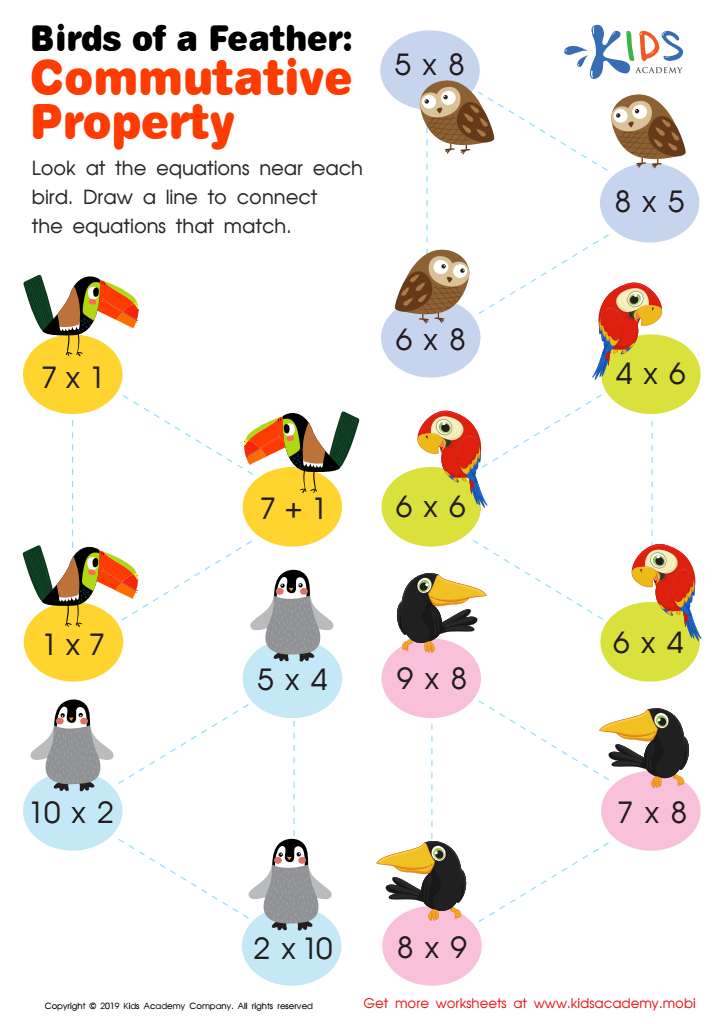
Birds of a Feather: Commutative Property Worksheet

Birds of a Feather: Commutative Property Worksheet

The commutative property states that order of factors doesn't affect the product. Use it to help your kids solve simple problems. If they love birds, they'll love the colorful worksheet to identify exotic ones. Practicing is the best way to understand difficult topics. Look at the equations in this tracing sheet; help them draw a line to connect equations that match.
Birds of a Feather: Commutative Property Worksheet
Worksheet
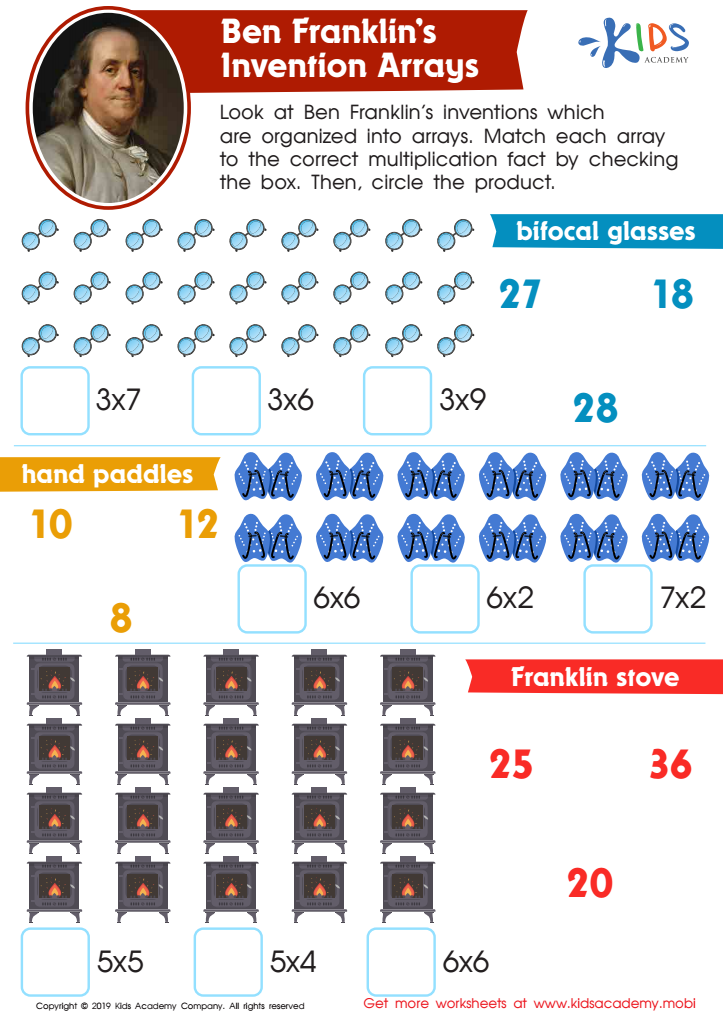
Ben Franklin’s Invention Arrays Worksheet

Ben Franklin’s Invention Arrays Worksheet

Have your child guess some of the inventors of the popular items we use today. For instance, the light bulb was invented by Thomas Edison. Look at Ben Franklin's inventions and help your kids match the arrays to the correct multiplication fact. Check the box and circle the product.
Ben Franklin’s Invention Arrays Worksheet
Worksheet
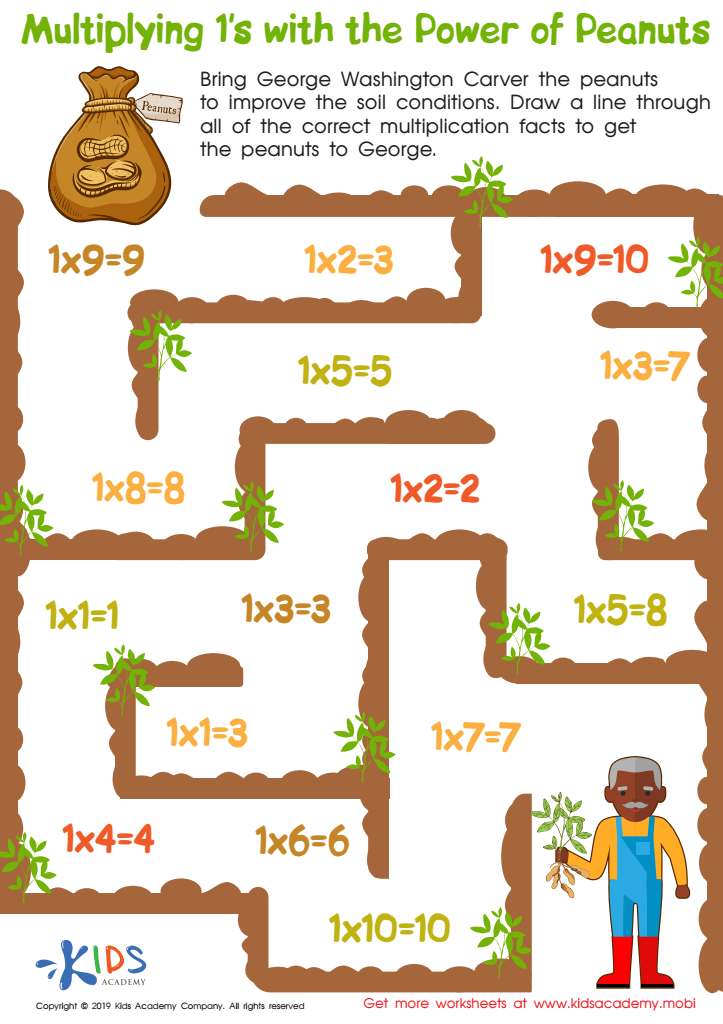
Multiplying 1’s With the Power of Peanuts Worksheet

Multiplying 1’s With the Power of Peanuts Worksheet

Help your kids learn about George Washington Carver with this fun worksheet! Assist them in bringing peanuts to Carver by drawing a line through the correct multiplication facts. Introduce them to Carver's genius creations and show them how he used peanuts to improve the soil condition.
Multiplying 1’s With the Power of Peanuts Worksheet
Worksheet
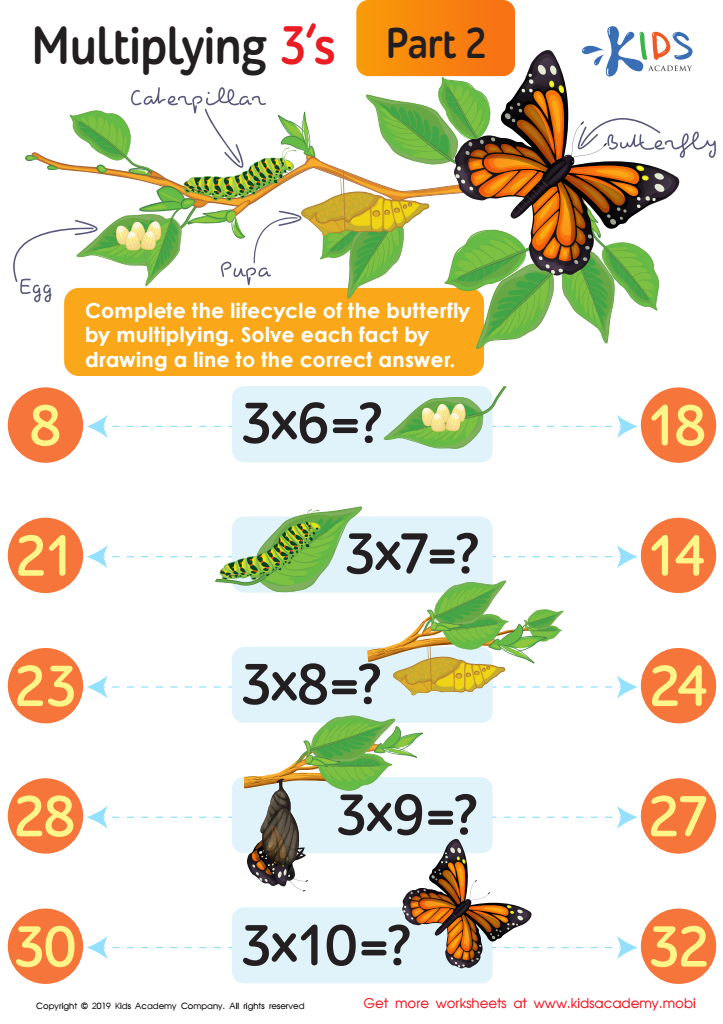
Multiplying 3s Part 2 Worksheet

Multiplying 3s Part 2 Worksheet

Once a tiny egg, a butterfly goes through its life cycle. From egg to caterpillar to cocoon to beautiful winged creature! Ask your kids to complete the lifecycle by solving the facts on the worksheet. Help them draw a line to the right answer and let them marvel at the butterfly's amazing transformation!
Multiplying 3s Part 2 Worksheet
Worksheet
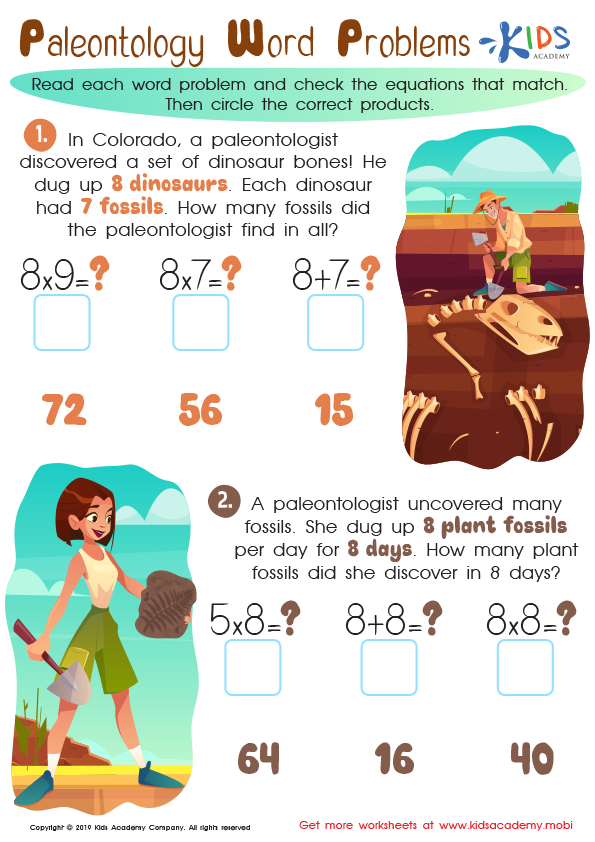
Archeology Word Problems Worksheet

Archeology Word Problems Worksheet

Encourage your child to explore their career options! Show them an archeologist's job with this worksheet - featuring a picture of a dinosaur bone discovery. Read the accompanying text, then solve the word problems. Help your kids circle the correct answers to better understand this profession.
Archeology Word Problems Worksheet
Worksheet
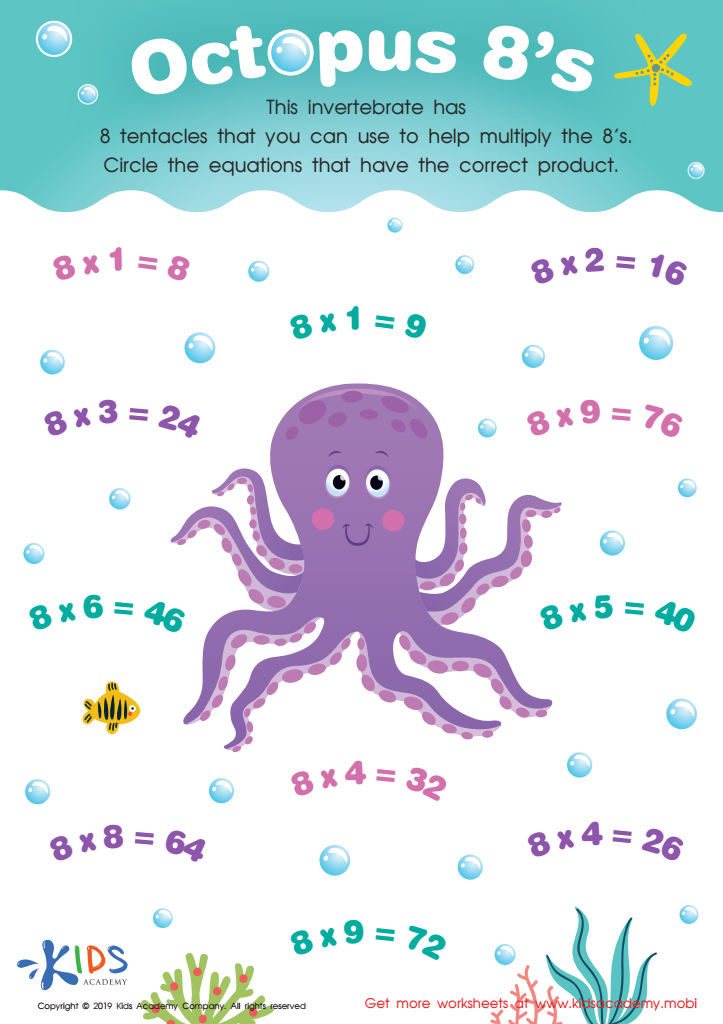
Octopus 8’s Worksheet

Octopus 8’s Worksheet

Can your child identify the octopus in the worksheet? It's an invertebrate with 8 tentacles. Have your child circle the equations with the correct products, and see if they can tell you some other features of the octopus too.
Octopus 8’s Worksheet
Worksheet
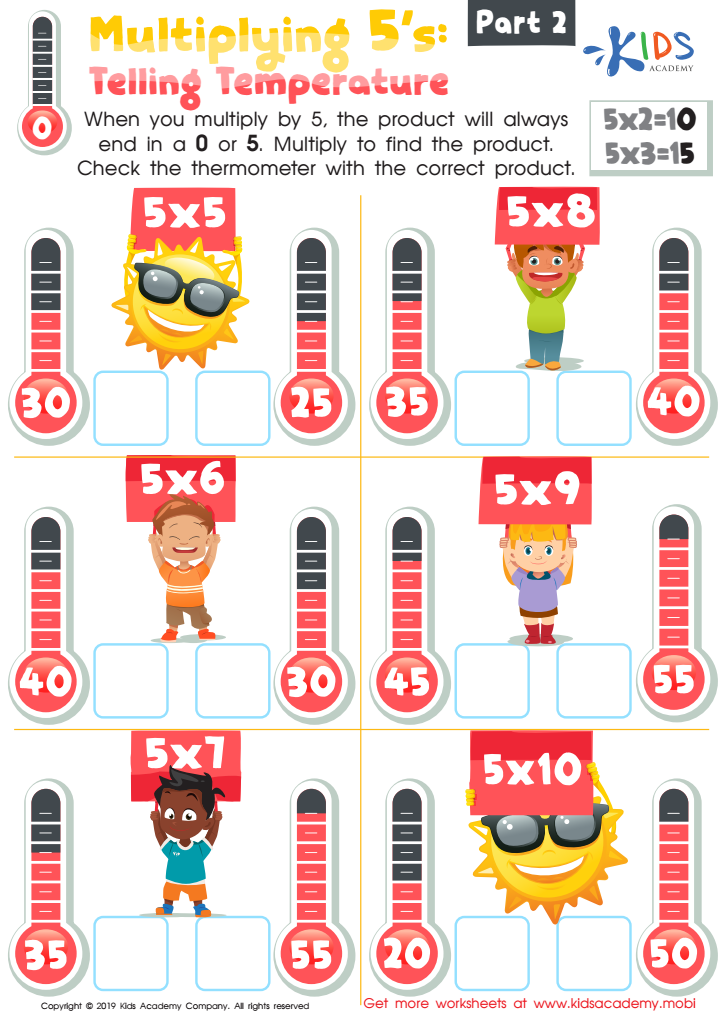
Multiplying 5’s: Telling Temperature Part 2 Worksheet

Multiplying 5’s: Telling Temperature Part 2 Worksheet

To help your child with multiplication, teach them some simple tricks. For example, when multiplying 10's the product always ends in a 0, and when multiplying by 5, the product will end in 0 or 5. Look at the problems in this worksheet and help your child find the product. Then, check the thermometer with the correct answer.
Multiplying 5’s: Telling Temperature Part 2 Worksheet
Worksheet
Bugs and Legs Fact Families Worksheet

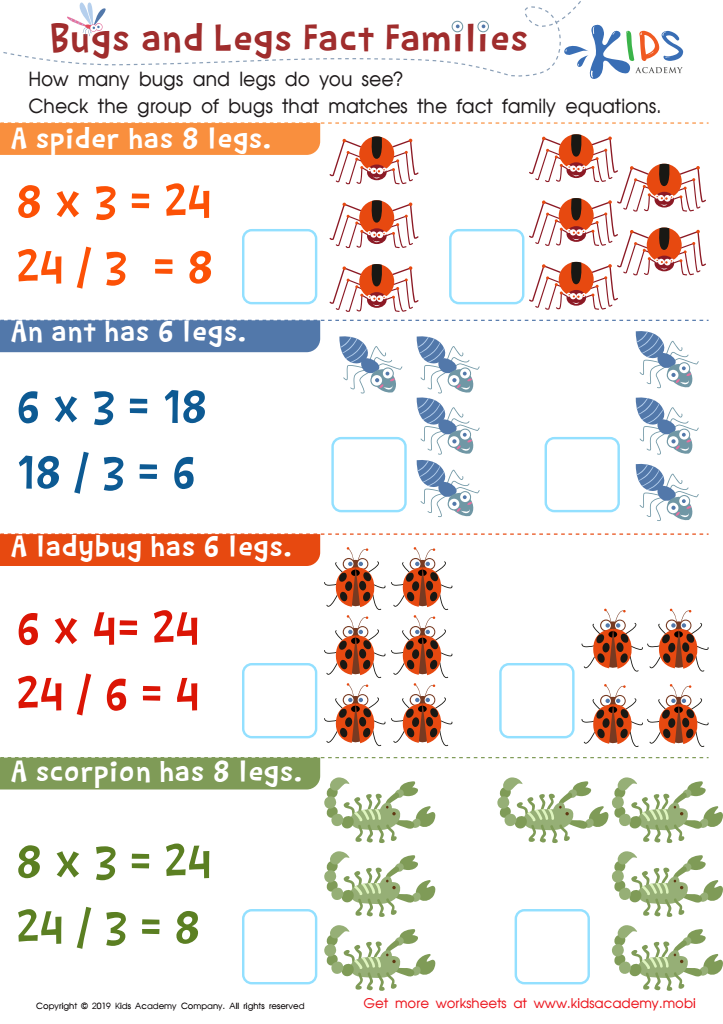
Bugs and Legs Fact Families Worksheet

This free worksheet uses bugs and insects to help young math students learn about fact families and recognize patterns in multiplication and division. It's a fun and colorful way to gain automaticity and efficiency in computation skills, without even realizing it's math!
Bugs and Legs Fact Families Worksheet
Worksheet
Multiplication and Division Fact Families Assessment 1 Worksheet

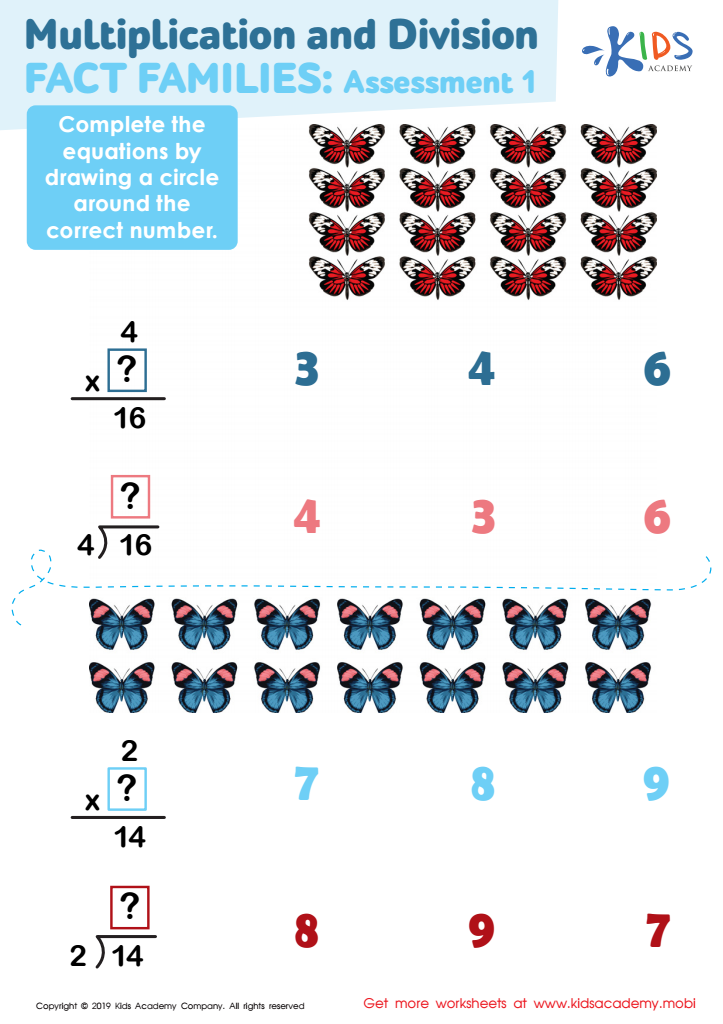
Multiplication and Division Fact Families Assessment 1 Worksheet

When it comes to multiplication and division, automaticity and efficiency are key. Test your child's understanding of fact families with this free butterfly worksheet. They'll practice equations, picture concepts and fact families to arrive at the correct number. Repetition will help them develop strong skills and confidence.
Multiplication and Division Fact Families Assessment 1 Worksheet
Worksheet
Multiplying 9’s Montgomery Bus Boycott Worksheet


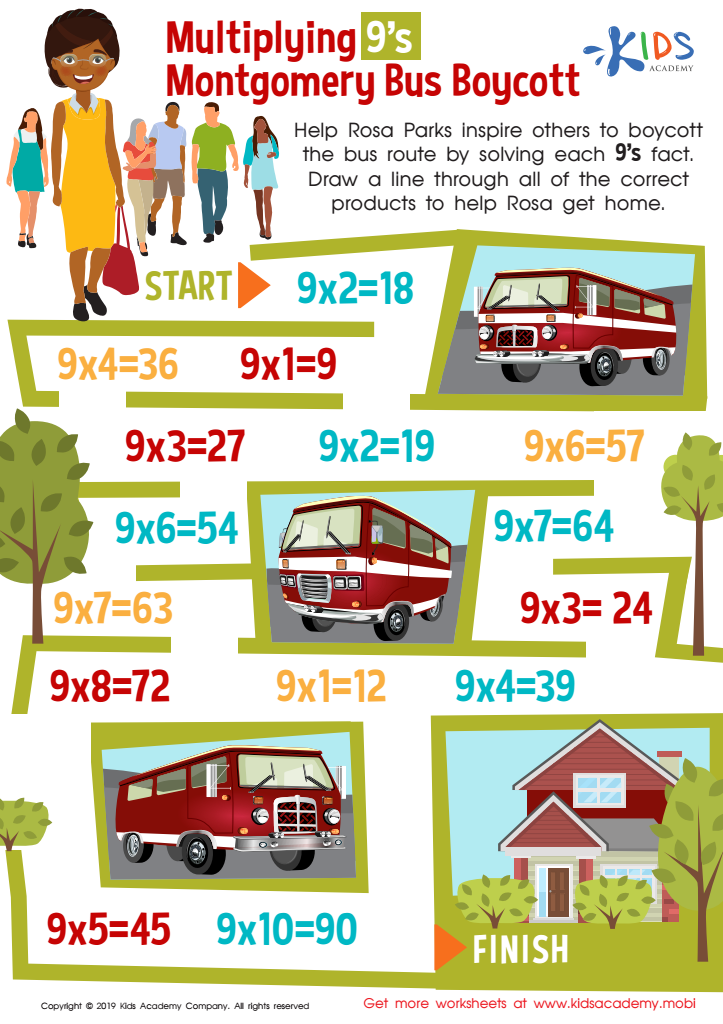
Multiplying 9’s Montgomery Bus Boycott Worksheet

As your students learn math, the numbers get bigger. This worksheet is great for learning the nine times table. Help Rosa Park get home - ask them to solve each multiplication fact, then draw a line through the correct products. Encourage your students to stand up for what's right!
Multiplying 9’s Montgomery Bus Boycott Worksheet

Worksheet


Normal multiplication, or traditional multiplication, is a foundational math skill for children ages 7-9, and understanding it is crucial for their overall academic development. At this age, children are transitioning from basic arithmetic to more complex mathematical concepts. Mastering multiplication lays the groundwork for future learning, including division, fractions, and algebra. It promotes number sense and enhances critical thinking skills, helping students to see relationships between numbers.

Moreover, multiplication is not only important in math class; it has real-world applications in everyday life. Whether it's calculating the cost of multiple items while shopping or understanding time by calculating hours, strong multiplication skills equip children to handle practical situations confidently.

By focusing on normal multiplication, parents and teachers encourage a love for mathematics and build problem-solving skills. Encouraging children to explain their thought process fosters deeper understanding and retention. Additionally, children with a solid grasp of multiplication are more likely to feel confident in their abilities, reducing math anxiety and promoting a positive attitude toward learning.

In conclusion, attending to normal multiplication at this developmental stage sets the path for academic success, nurtures independence, and cultivates essential life skills.