Filters

952 filtered results

Clear all filters
Favorites
With answer key
Interactive

952 filtered results

Difficulty Level

Grade


Check out this FREE Grade 2 Math Trial Lesson!

Introduction to Arrays

Favorites
With answer key
Interactive
  • Math
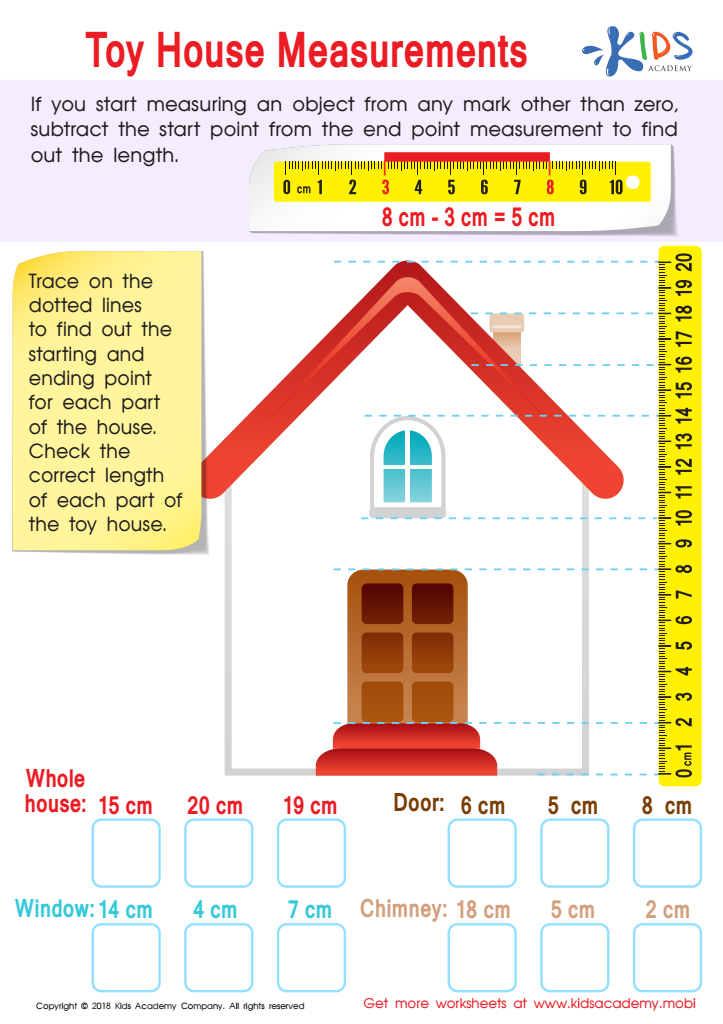
Toy House Measurements Worksheet

Toy House Measurements Worksheet

This worksheet requires math and measuring skills. When measuring an object from a non-zero starting point, subtract the start point from the end point to get the correct length. Kids must trace the dotted lines to get the right length for each part of the house.
Toy House Measurements Worksheet
Worksheet
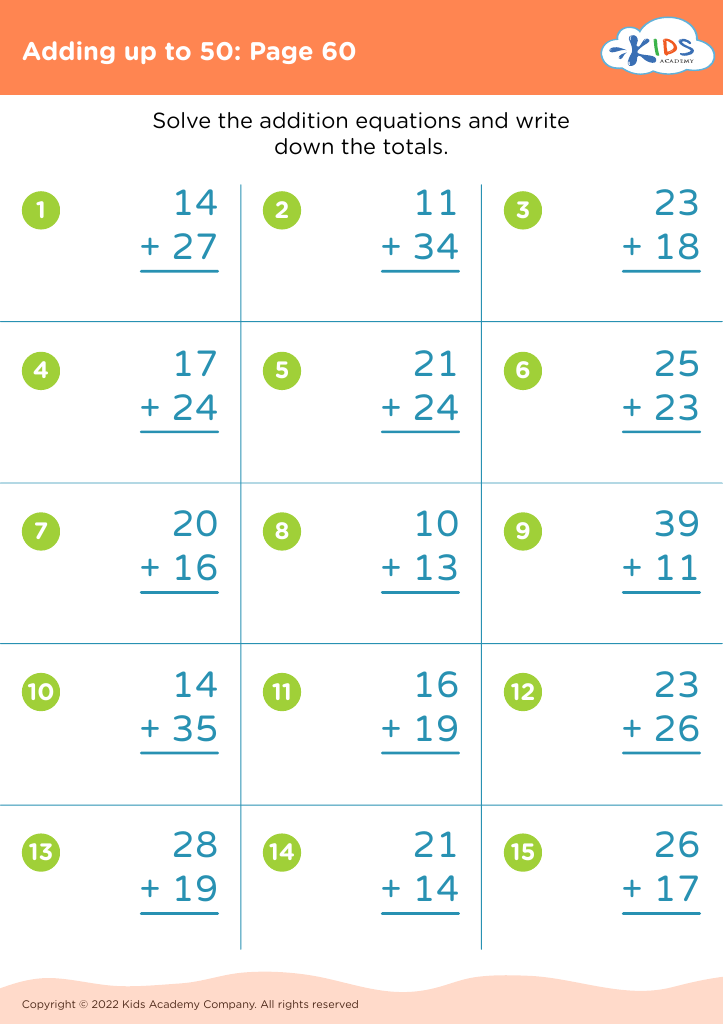
Adding up to 50: Page 60

Adding up to 50: Page 60

Adding up to 50: Page 60
Worksheet
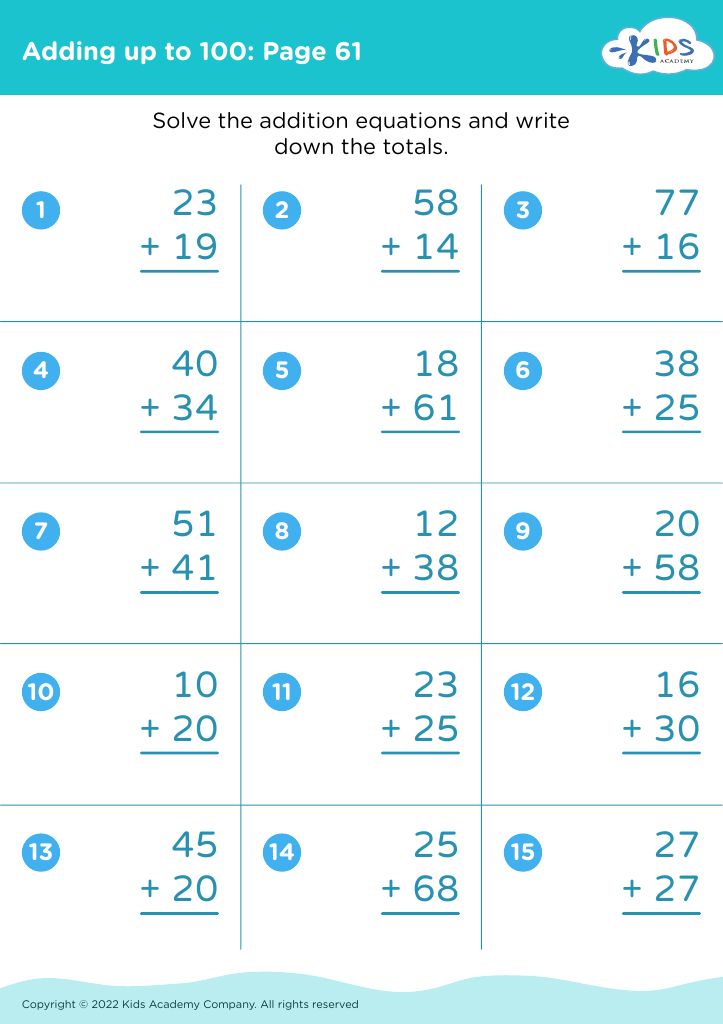
Adding up to 100: Page 61

Adding up to 100: Page 61

Adding up to 100: Page 61
Worksheet
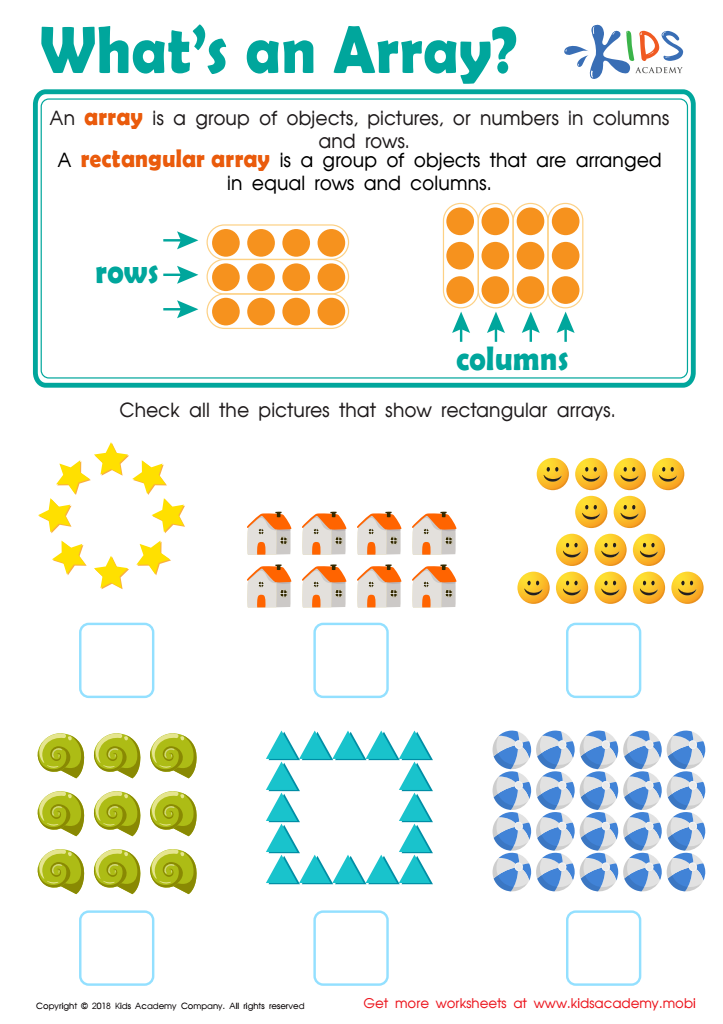
What's an Array? Worksheet

What's an Array? Worksheet

Explain to your child that an array is a group of objects, pictures, or numbers in columns and rows. Show them a rectangular array is a group of objects in equal rows and columns. Guide them to check the pictures in the worksheet to spot any rectangular arrays. Help them remember this concept.
What's an Array? Worksheet
Worksheet
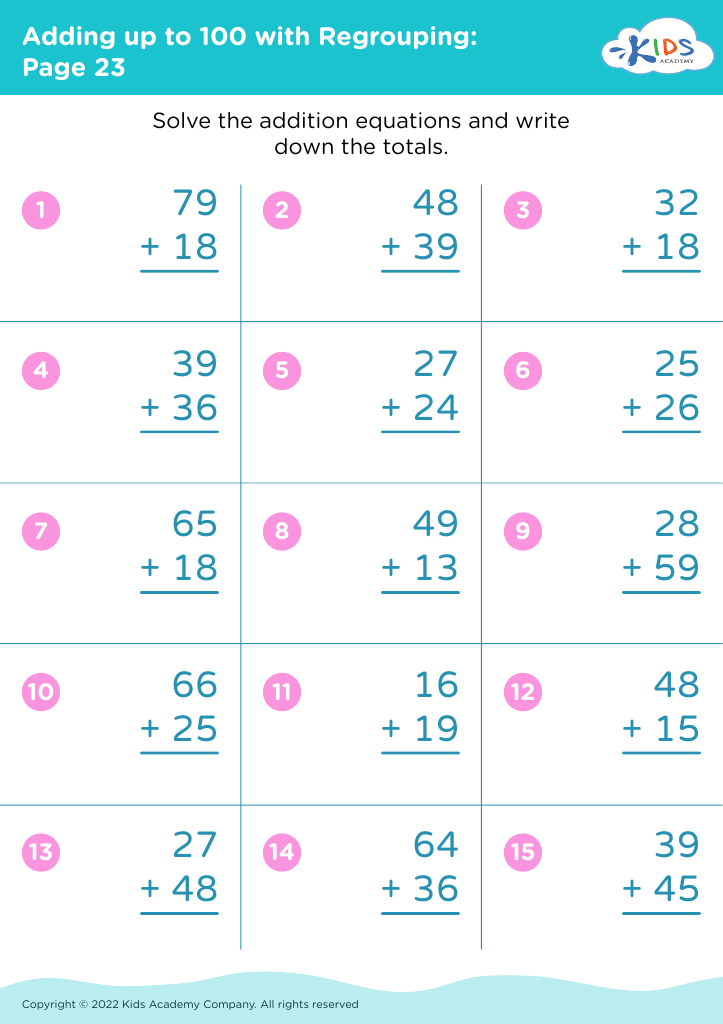
Adding up to 100 with Regrouping: Page 23
Worksheet
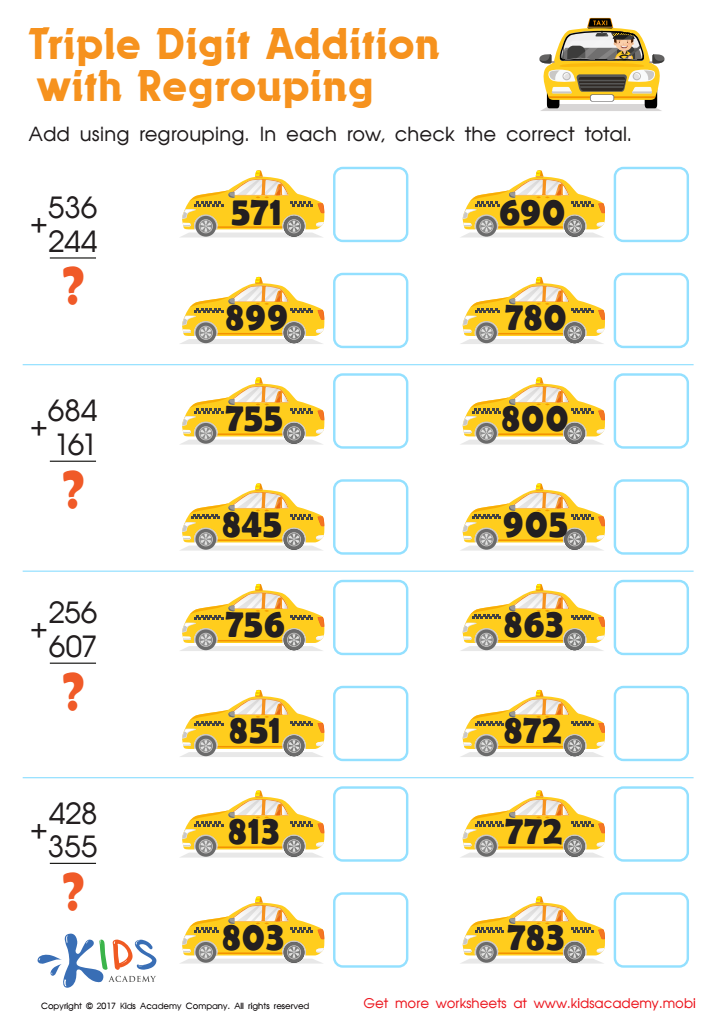
3 Digit addition with regrouping worksheet

Triple Digit Addition with Regrouping Worksheet
Kids will love the bright visuals as they transport their child to the correct answer after completing each 3-digit addition problem.
Triple Digit Addition with Regrouping Worksheet
Worksheet
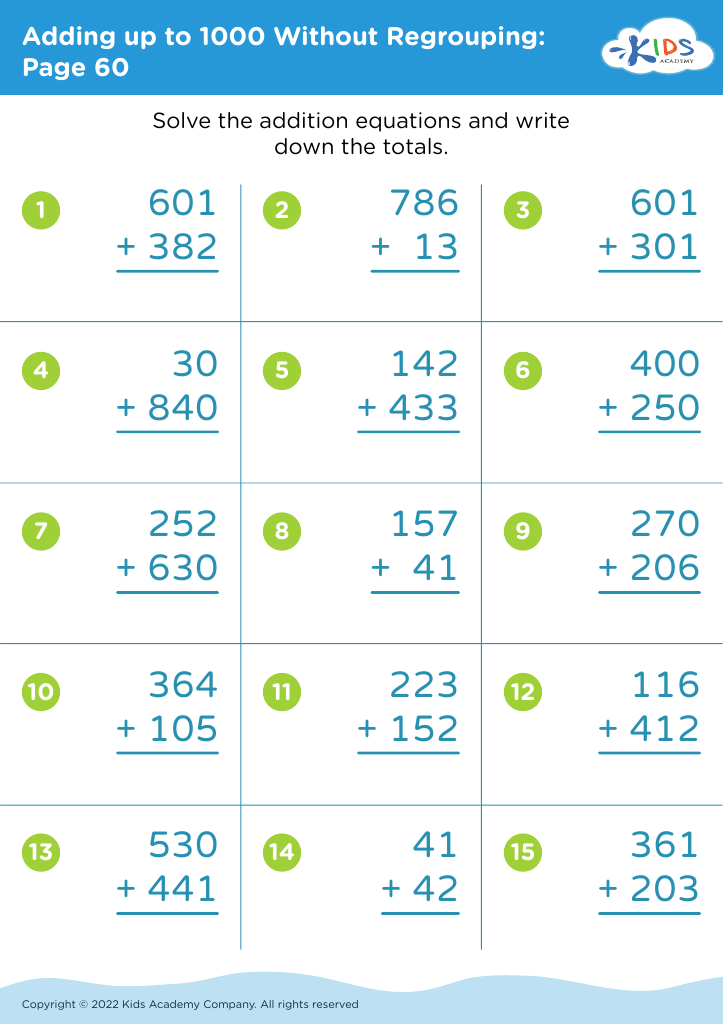
Adding up to 1000 Without Regrouping: Page 60
Worksheet
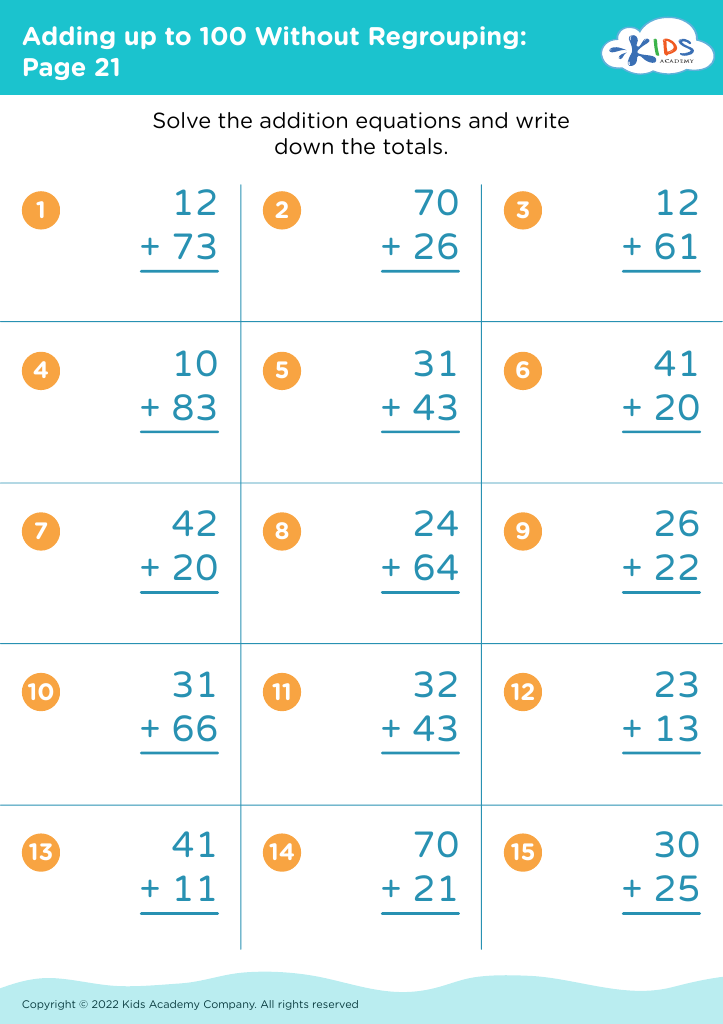
Adding up to 100 Without Regrouping: Page 21
Worksheet
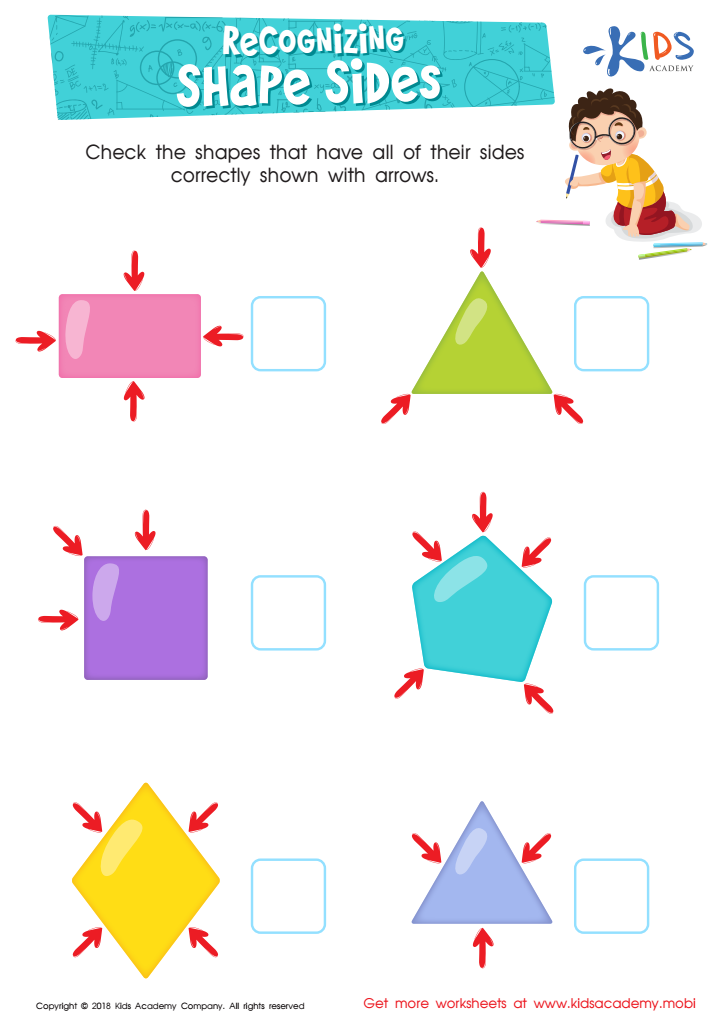
Recognizing Shape Sides Worksheet
Recognizing Shape Sides Worksheet
This exercise will help your child recognize shape sides. Go over the difference between sides and angles first, then have them check the shapes with arrows to show the sides. They'll quickly get the hang of it and find it much easier after completing the colorful worksheet.
Recognizing Shape Sides Worksheet
Worksheet
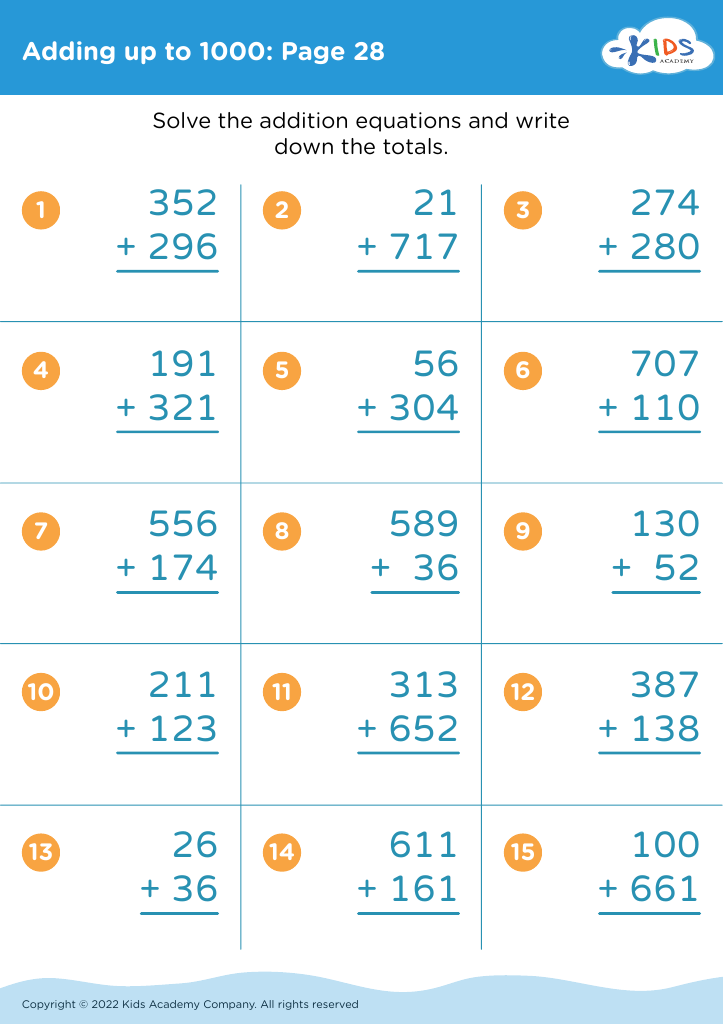
Adding up to 1000: Page 28

Adding up to 1000: Page 28

Adding up to 1000: Page 28
Worksheet
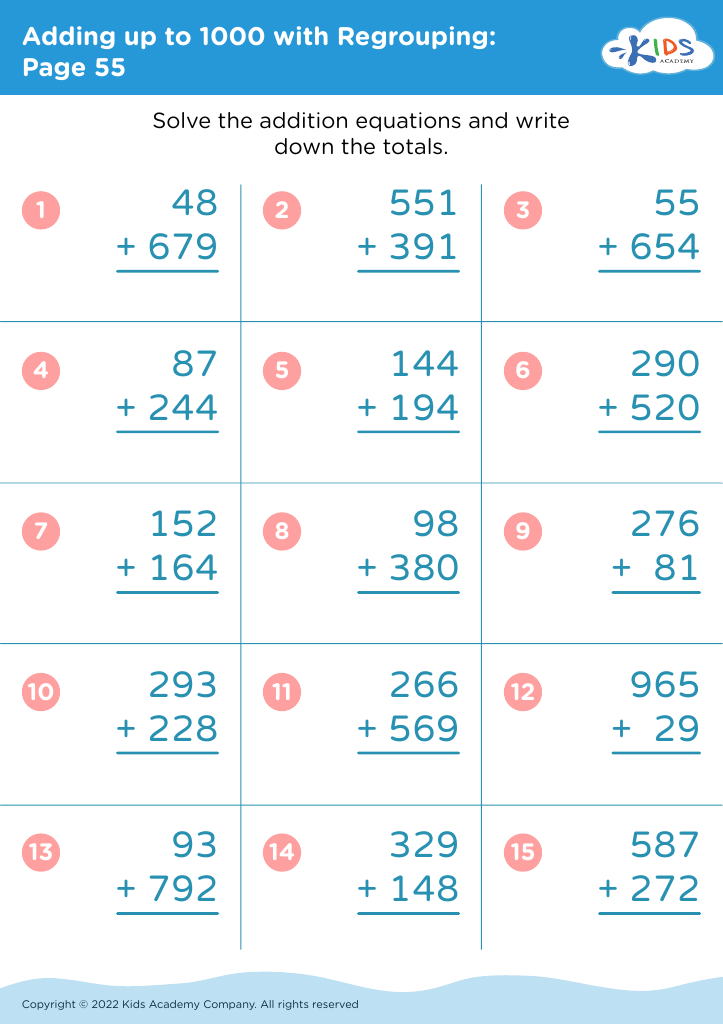
Adding up to 1000 with Regrouping: Page 55
Worksheet
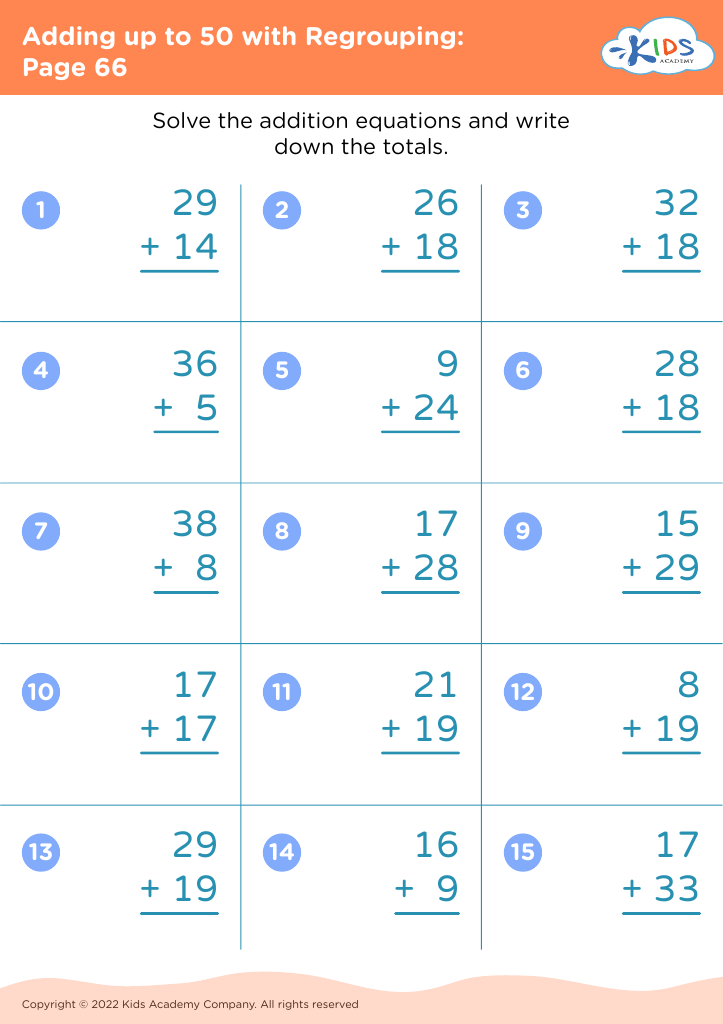
Adding up to 50 with Regrouping: Page 66
Worksheet
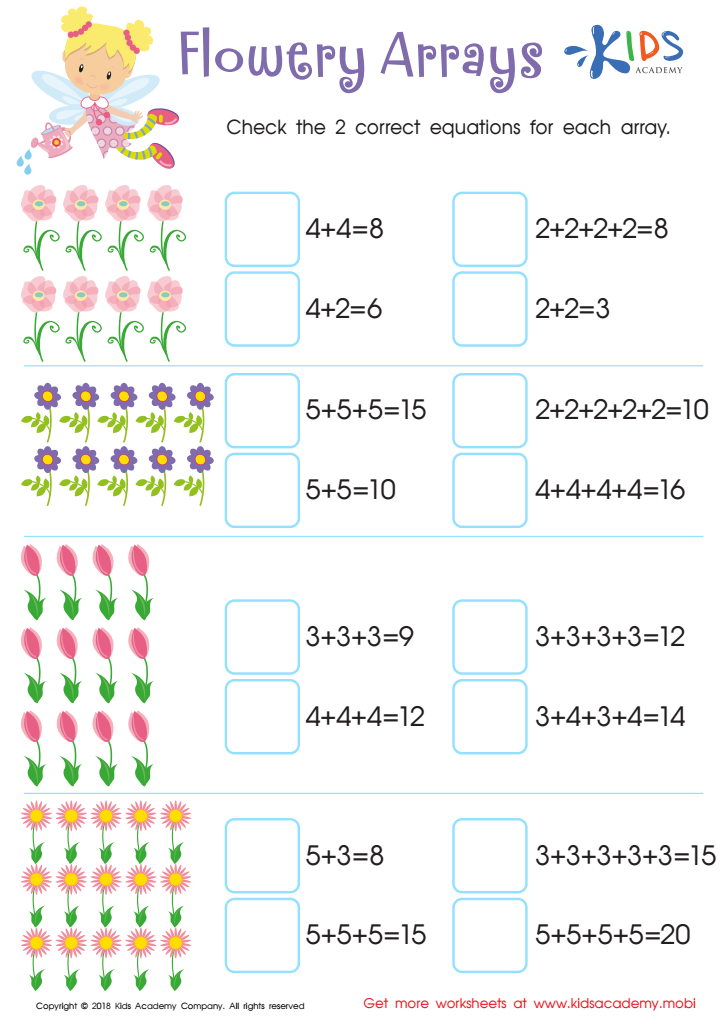
Flowery Arrays Worksheet

Flowery Arrays Worksheet

This worksheet helps your child learn to identify and represent arrays. For example, both 3+3+3+3=12 and 4+4+4=12 are arrays but the first is arranged in rows and the second in columns. Let your child use this knowledge to answer the four questions in this pdf and check the two correct equations.
Flowery Arrays Worksheet
Worksheet
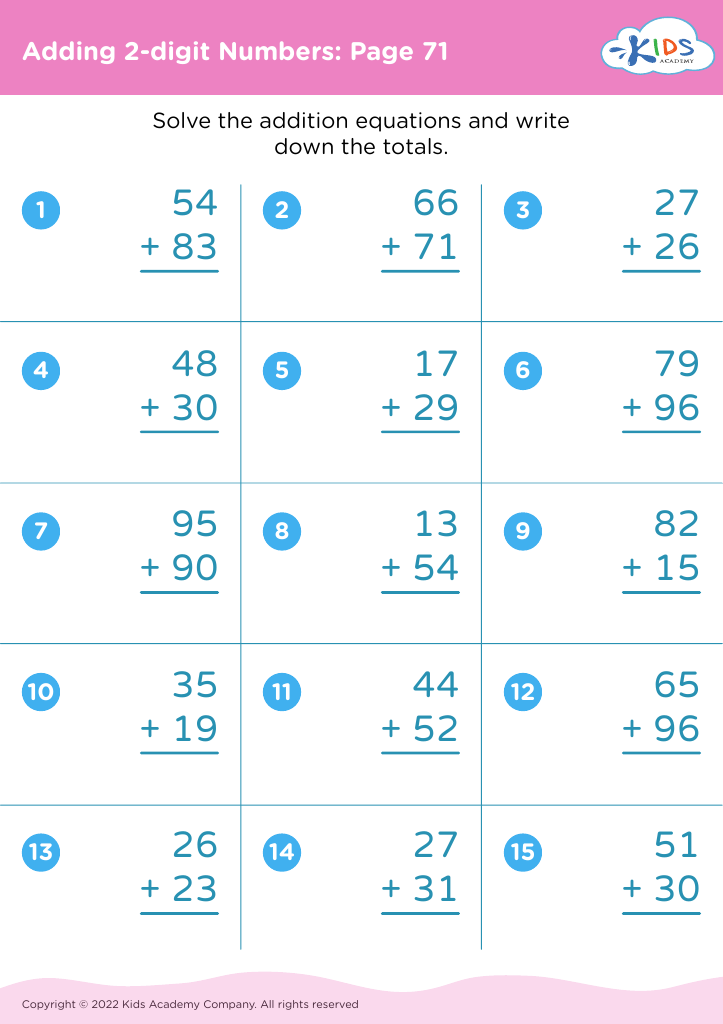
Adding 2-digit Numbers: Page 71

Adding 2-digit Numbers: Page 71

Adding 2-digit Numbers: Page 71
Worksheet
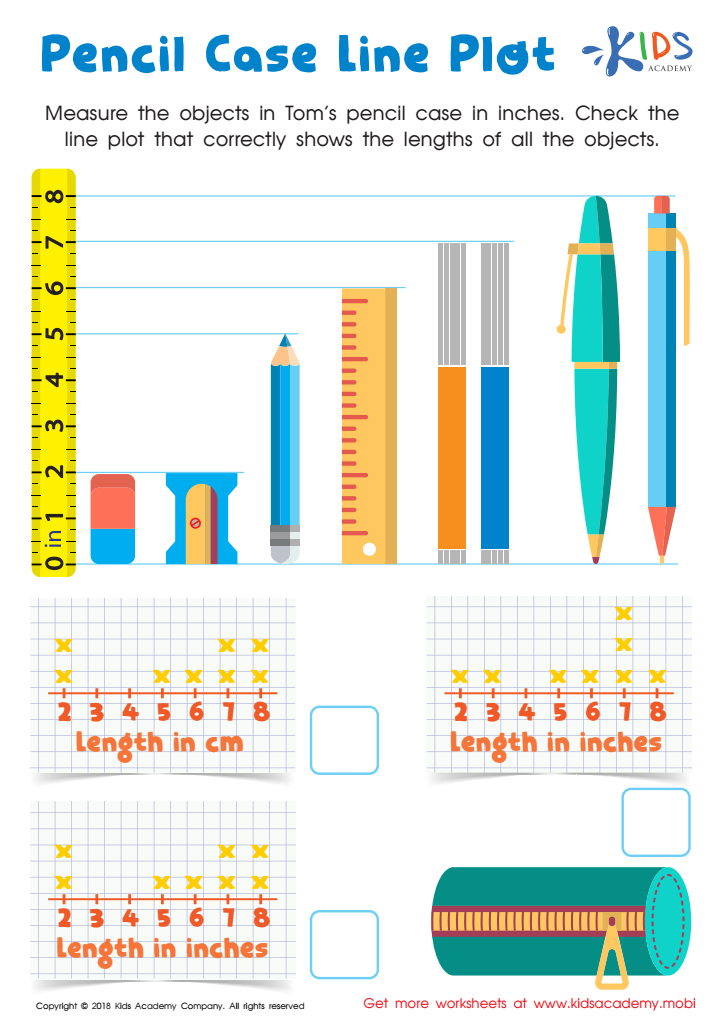
Pencil Case Line Plot Worksheet
Pencil Case Line Plot Worksheet

Explain to your child that a line plot is a way to organize information. For example, if they need to arrange objects, they should draw a line plot. Now, have them help Tom measure the objects in his pencil case in inches. Then, have them check the line plot that accurately shows the length.
Pencil Case Line Plot Worksheet
Worksheet
Subtractions words problems free printable

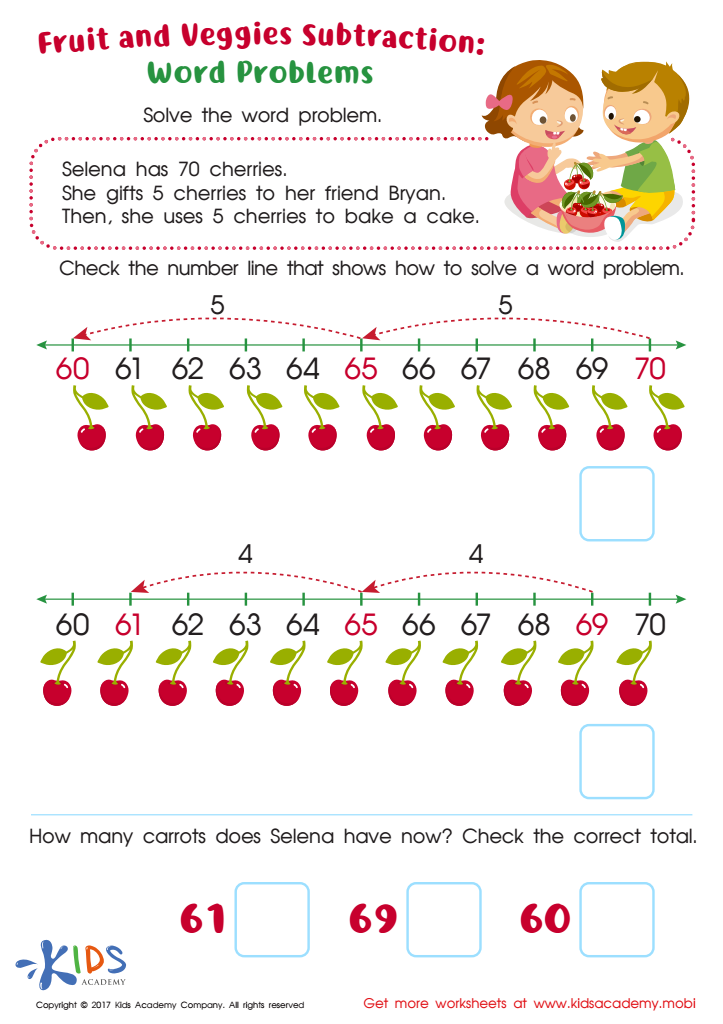
Subtraction Word Problems Free Printable
Try out this free printable subtraction worksheet! Your child can use number lines to solve challenging word problems – it's a great way to boost their problem-solving skills.
Subtraction Word Problems Free Printable
Worksheet
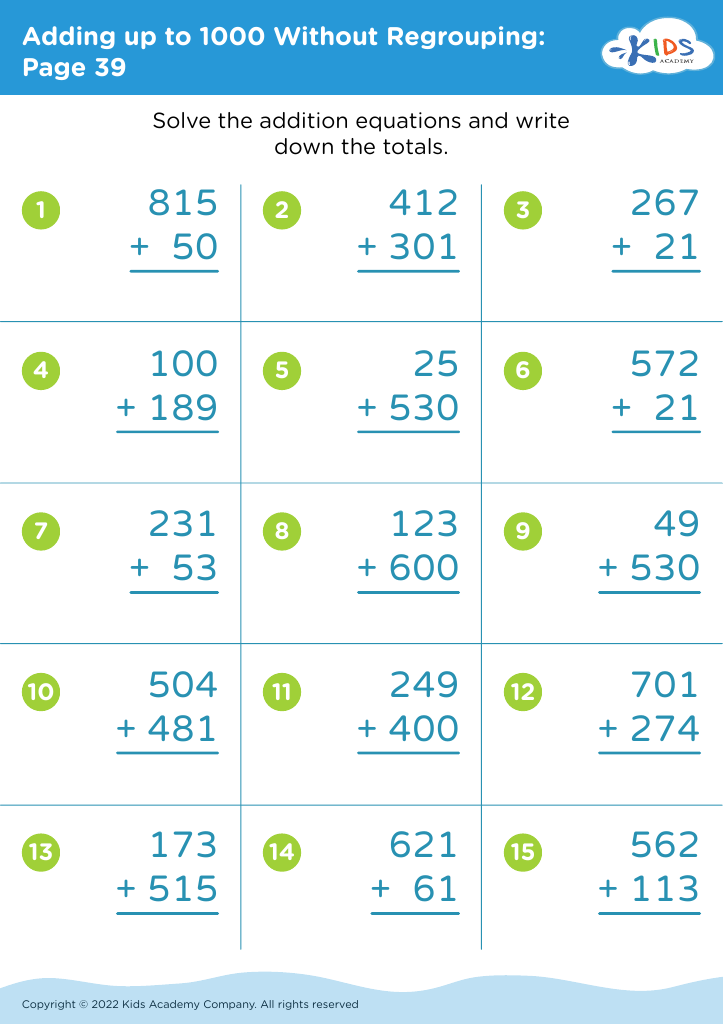
Adding up to 1000 Without Regrouping: Page 39
Worksheet
How Many More to Add Worksheet

How Many More to Add Worksheet

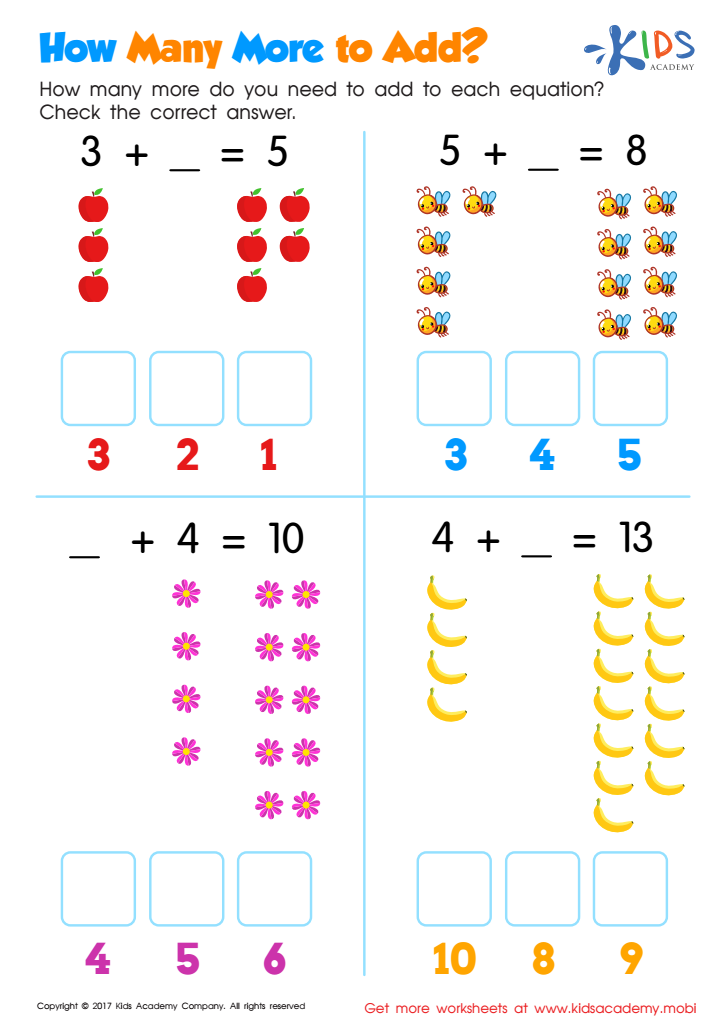
Sharpen your child's math skills with this pdf worksheet. Help them figure out how many apples, bees, flowers and bananas are needed to reach the answer given. The possible answers are provided at the bottom of the boxes. Have some fun doing some addition and subtraction magic together and get those math skills sharpened!
How Many More to Add Worksheet
Worksheet
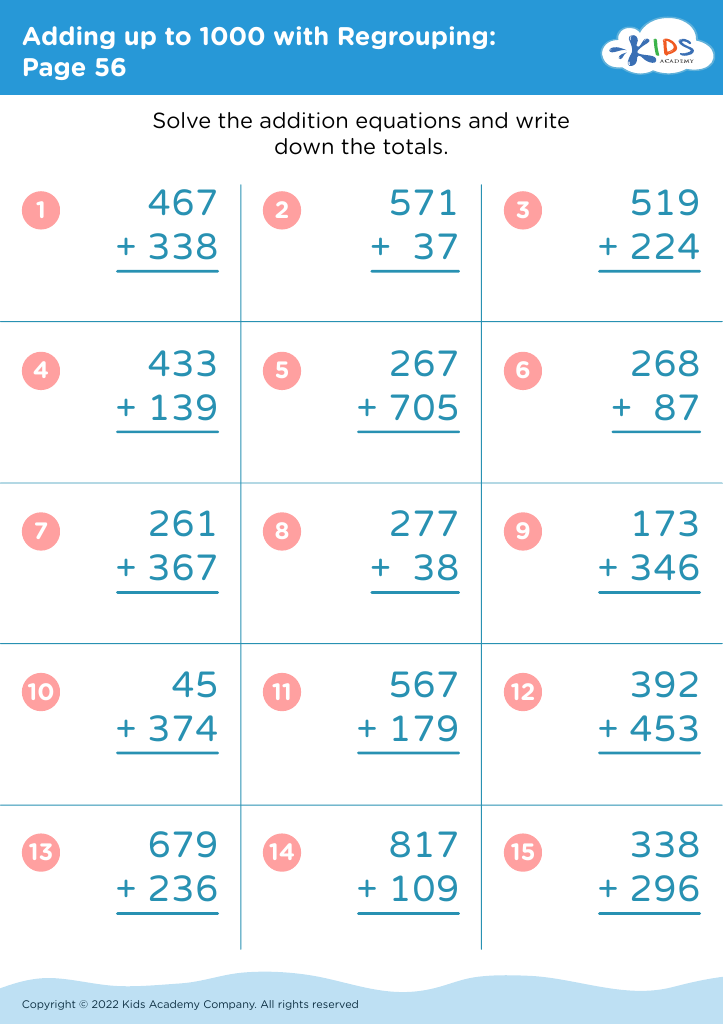
Adding up to 1000 with Regrouping: Page 56
Worksheet
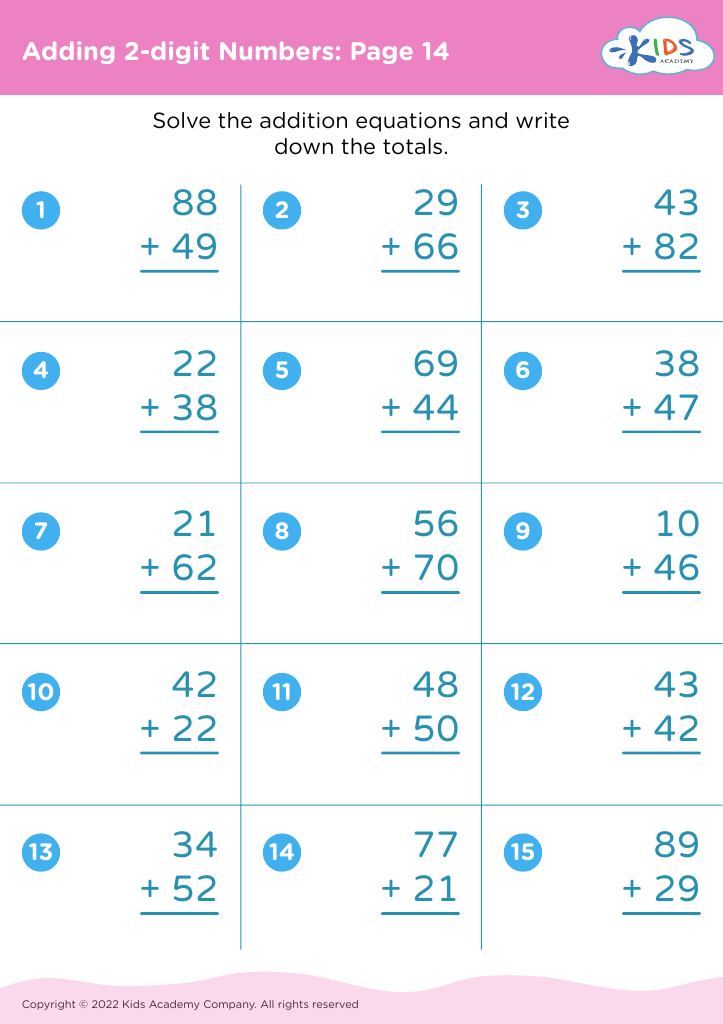
Adding 2-digit Numbers: Page 14

Adding 2-digit Numbers: Page 14

Adding 2-digit Numbers: Page 14
Worksheet
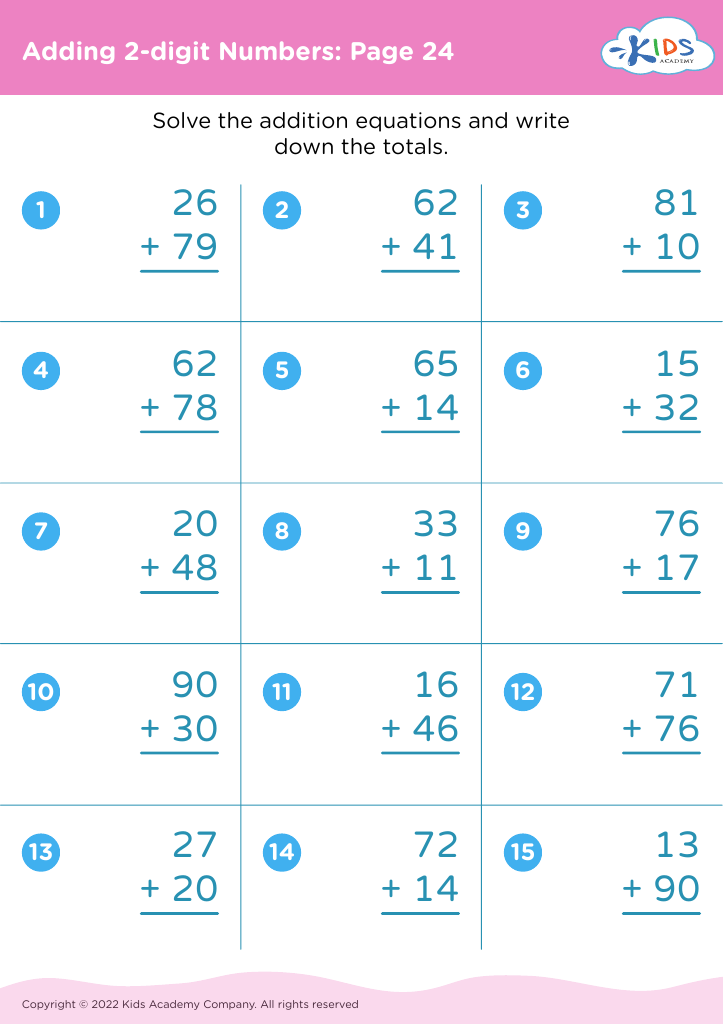
Adding 2-digit Numbers: Page 24

Adding 2-digit Numbers: Page 24

Adding 2-digit Numbers: Page 24
Worksheet
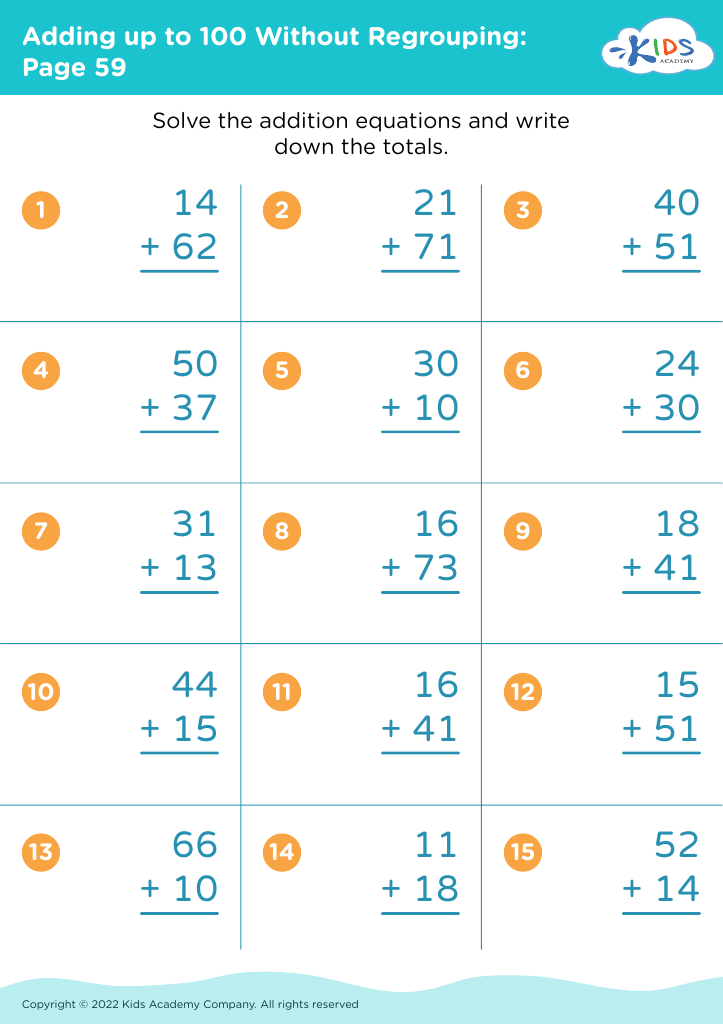
Adding up to 100 Without Regrouping: Page 59
Worksheet
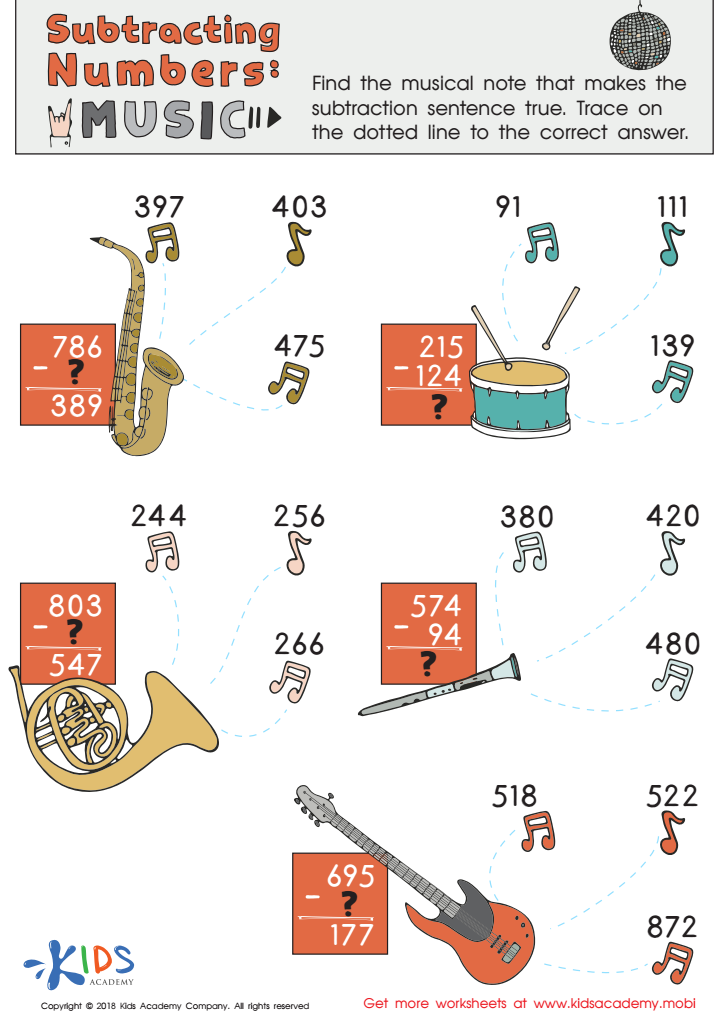
Subtracting Numbers: Music Worksheet
Subtracting Numbers: Music Worksheet

Enroll your kids in a music class and let them express their feelings via music! This worksheet challenges them to identify the musical note that makes the subtraction sentence true. Help them solve the problem and trace the dotted line to the correct answer. Let their appreciation for music grow!
Subtracting Numbers: Music Worksheet

Worksheet
Adding up to 50 Without Regrouping: Page 29
Worksheet


Math is a crucial subject for Grade 2 students as it lays the foundations for future learning and critical thinking skills. In this formative stage, children begin to develop their understanding of numbers, patterns, and problem-solving strategies, all of which are essential not only in mathematics but across various subjects and real-life situations.

By prioritizing math education, parents and teachers foster a mindset of curiosity and exploration. Engaging students with hands-on activities—like measuring ingredients for cooking or counting objects in their environment—makes learning relevant and enjoyable. This approach can boost a child's confidence, leading to a more positive attitude toward math as they progress through their education.

Additionally, strong math skills are linked to improved performance in other academic areas. Researchers have found that arithmetic skills are predictive of later academic achievement. Therefore, encouraging math literacy early helps to create a strong academic foundation.

Lastly, supporting math learning helps children develop essential life skills, such as logical reasoning, decision-making, and analytical thinking. In today’s data-driven world, these competencies are invaluable, making math education a priority for both parents and teachers in nurturing well-rounded individuals.