Geometry worksheets for Grade 2 - Page 3
51 filtered results
-
From - To
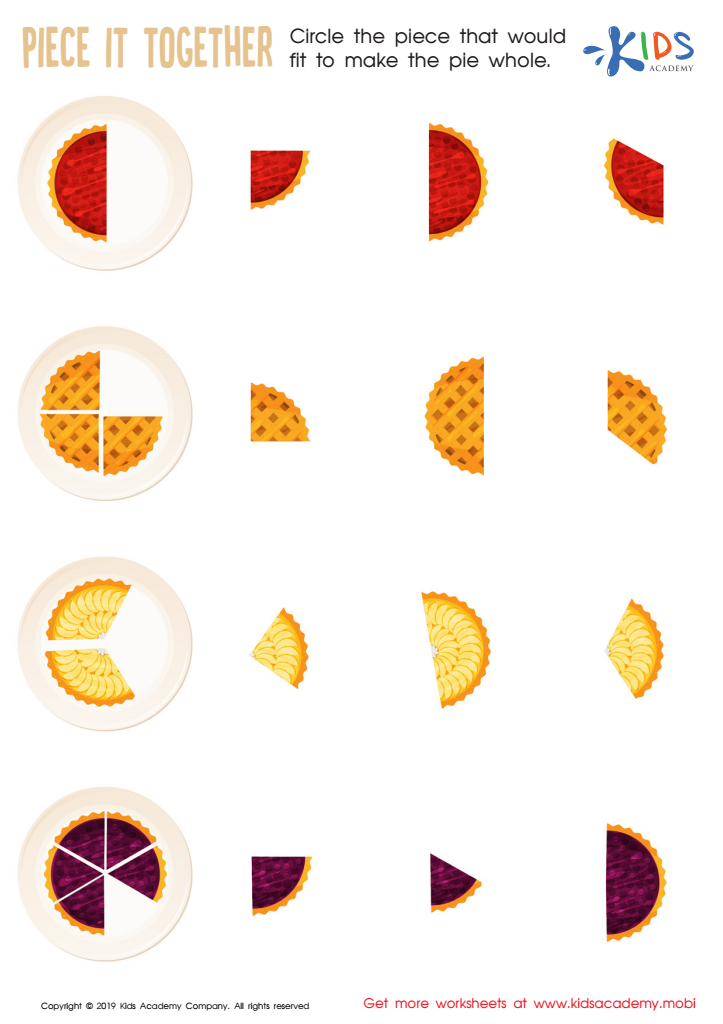
Piece it together Worksheet
 Assign to My Students
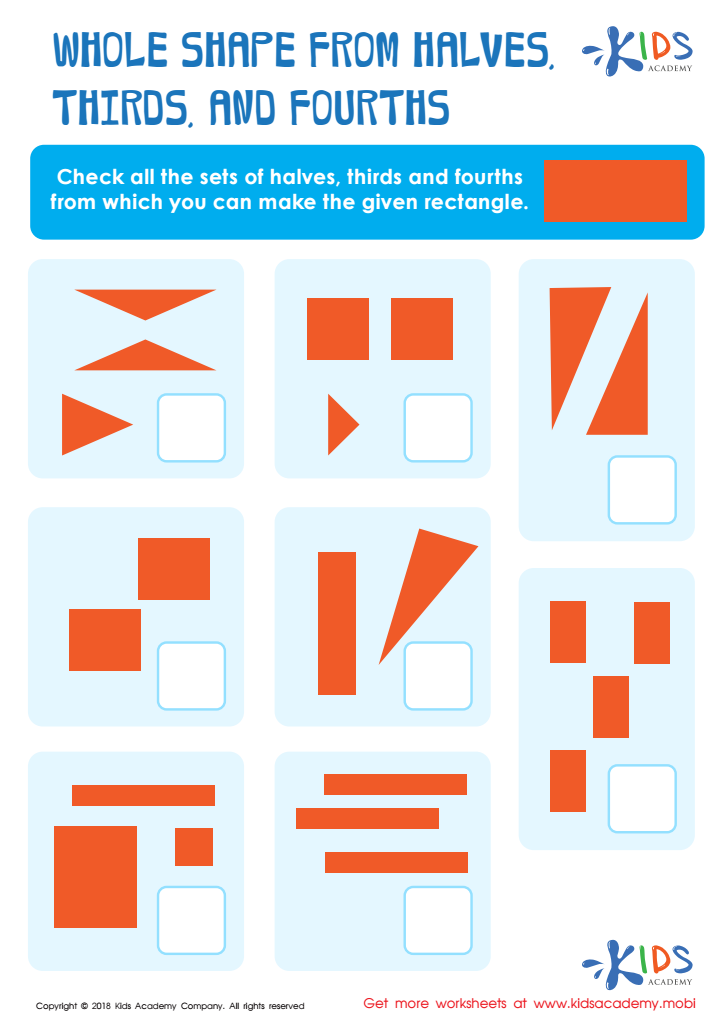
Whole Shape from Halves, Thirds and Fourths Worksheet
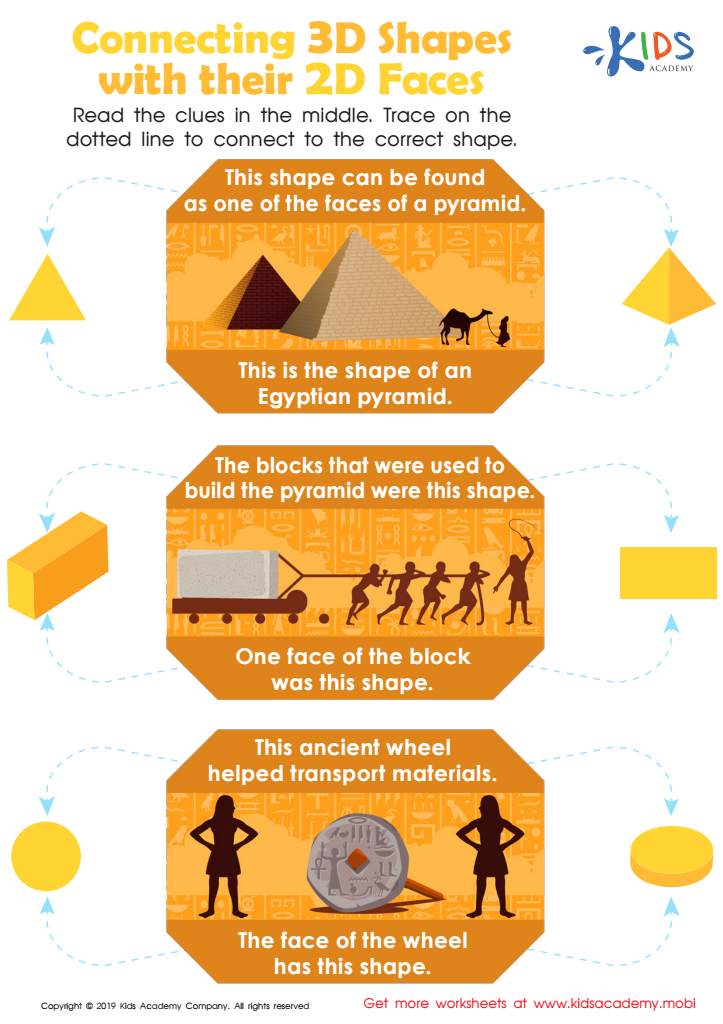
Connecting 3D Shapes with Their 2d Faces Worksheet







Geometry is a crucial area of mathematics that shapes children’s understanding of the world around them. In Grade 2, students are introduced to fundamental geometric concepts such as shapes, spatial relationships, and measurements, making it an essential aspect of their education. Parents and teachers should care about Geometry because it lays the foundation for critical thinking and problem-solving skills.
By engaging with geometric shapes and their properties, children develop spatial awareness, which is vital for many everyday activities, from crafting to navigating through their environments. Understanding geometry also encourages creativity and innovation as children learn to visualize and manipulate forms.
Moreover, this subject fosters math literacy, empowering students to make connections between geometry and real-life scenarios. As they identify shapes in architecture, art, and nature, learners gain appreciation for mathematics as a part of their daily lives. Additionally, solidifying these geometric concepts early on sets the stage for more advanced mathematical skills in later grades, including algebra and calculus.
In brief, Geometry for Grade 2 enhances cognitive development, boosts problem-solving abilities, and nurtures a lifelong interest in mathematics, underscoring its significance in a well-rounded education.