Visual Perception Skills Easy Worksheets for Ages 6-8
5 filtered results
-
From - To
Enhance your child's visual perception skills with our engaging and easy worksheets, designed specifically for ages 6-8! These interactive activities help children develop crucial abilities such as pattern recognition, spatial awareness, and visual discrimination. Our worksheets cater to different skill levels, ensuring that each child can progress at their own pace. With colorful images and fun themes, learning becomes an enjoyable experience. Parents and teachers can easily integrate these resources into home or classroom settings to support visual learning. Boost your child's confidence and cognitive development today by exploring our exciting collection of visual perception worksheets! Perfect for advancing early grade learning!
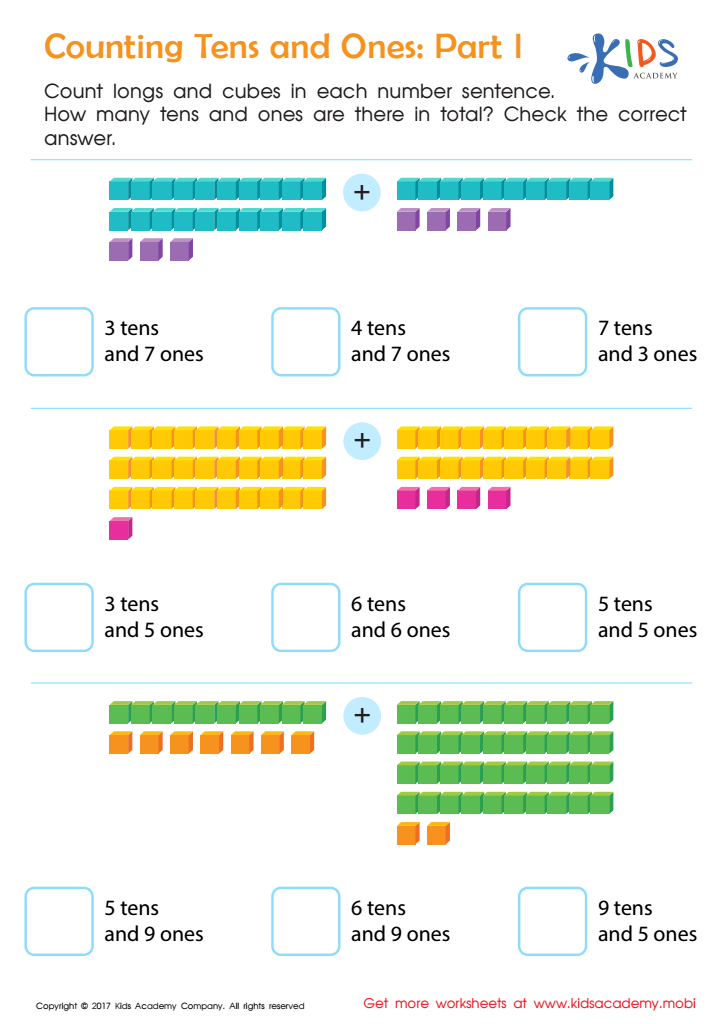
Counting Tens and Ones: Part 1 Worksheet
 Assign to My Students
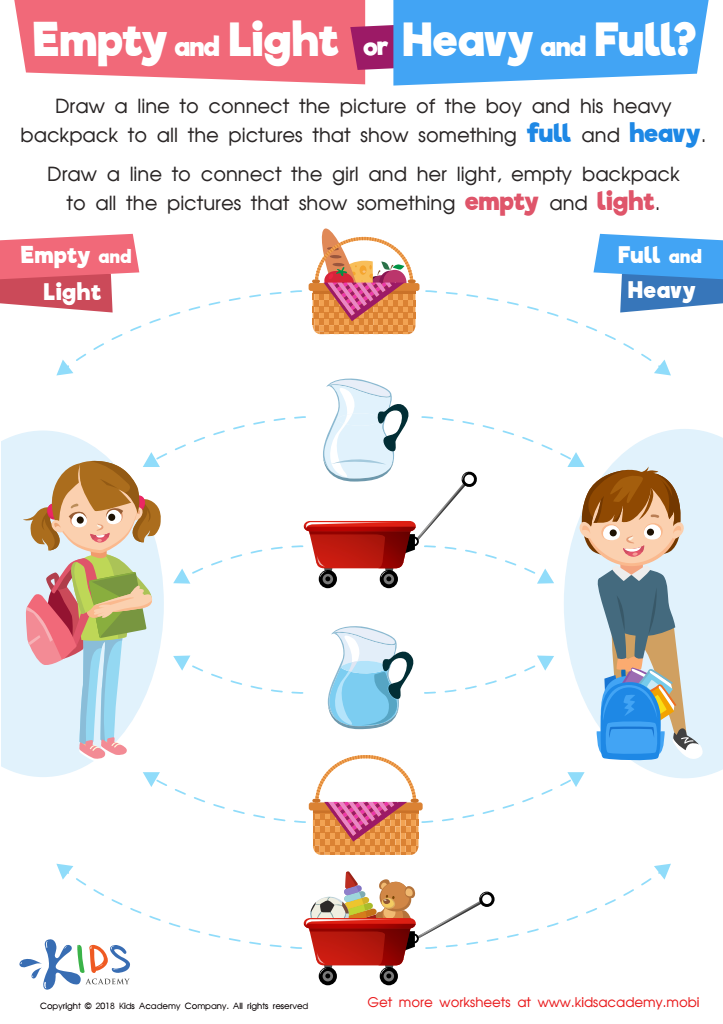
Empty and Light or Heavy and Full? Worksheet
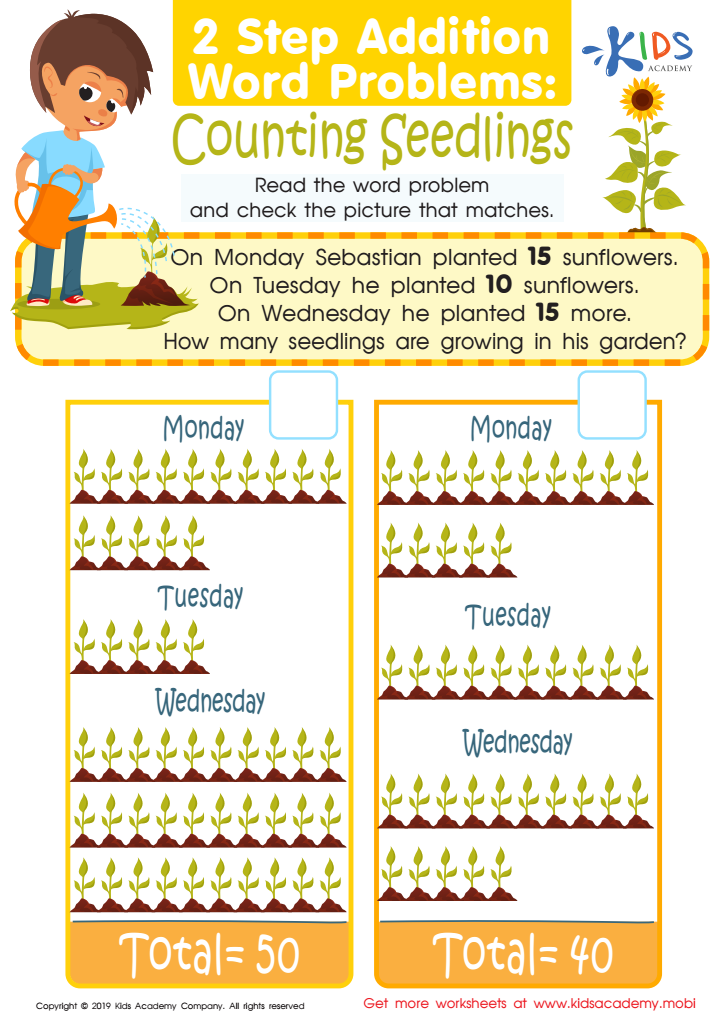
Counting Seedlings Worksheet
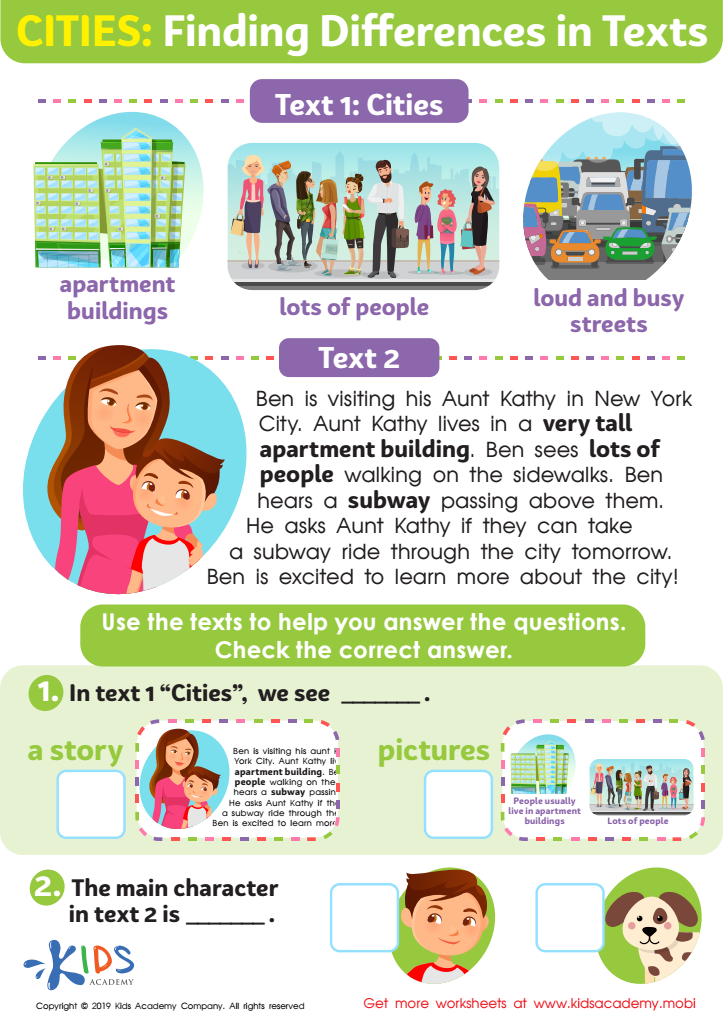
Cities: Finding Differences Worksheet
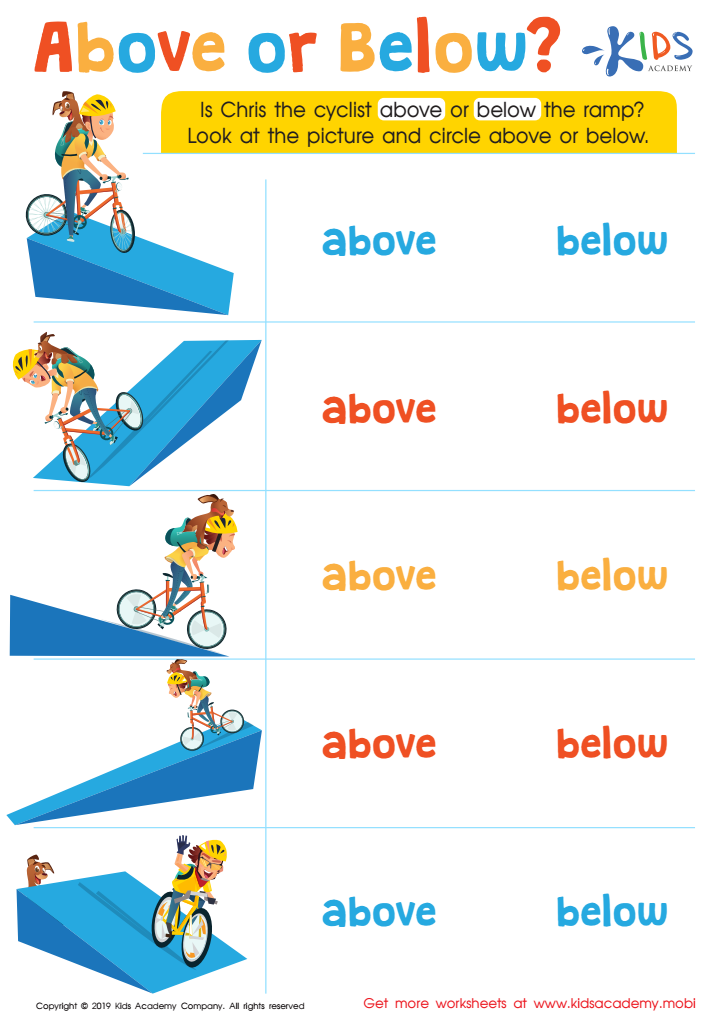
Above or Below? Worksheet





Visual perception skills are vital for children ages 6-8 as they directly influence learning, decision-making, and physical activities. At this developmental stage, children increasingly rely on their ability to interpret visual information. Strong visual perception skills enable them to recognize letters and numbers, which is crucial for reading and math. Additionally, these skills aid in understanding spatial relationships, helping children gauge distances, and navigate their environment effectively.
Parents and teachers play a crucial role in nurturing these abilities. By supporting activities that foster visual perception, such as puzzles, sorting games, and reading initiatives, they can enhance children's cognitive development. Engaging in these skills also lays the groundwork for future academic success, meaning better performance in school and increased confidence.
Furthermore, developing visual perceptual skills impacts social interactions and motor skills. Children learn to interpret body language and spatial awareness, which are essential for collaboration in play and teamwork. Thus, caregivers and educators should prioritize visual perception exercises and activities, aware that the skills they build now will serve as a foundation for lifelong learning, problem-solving, and strong interpersonal skills. Investing time and resources into these areas enriches children's educational experiences and prepares them for future challenges.








