Filters

28 filtered results

Clear all filters
Favorites
With answer key
Interactive

28 filtered results

Difficulty Level

Grade


Check out this FREE Trial Lesson on Reading Fiction for age 6-8!

Identify Basic Similarities and Differences Between Two Texts on the Same Topic

Favorites
With answer key
Interactive
  • 6-8
  • Reading Fiction
  • Easy
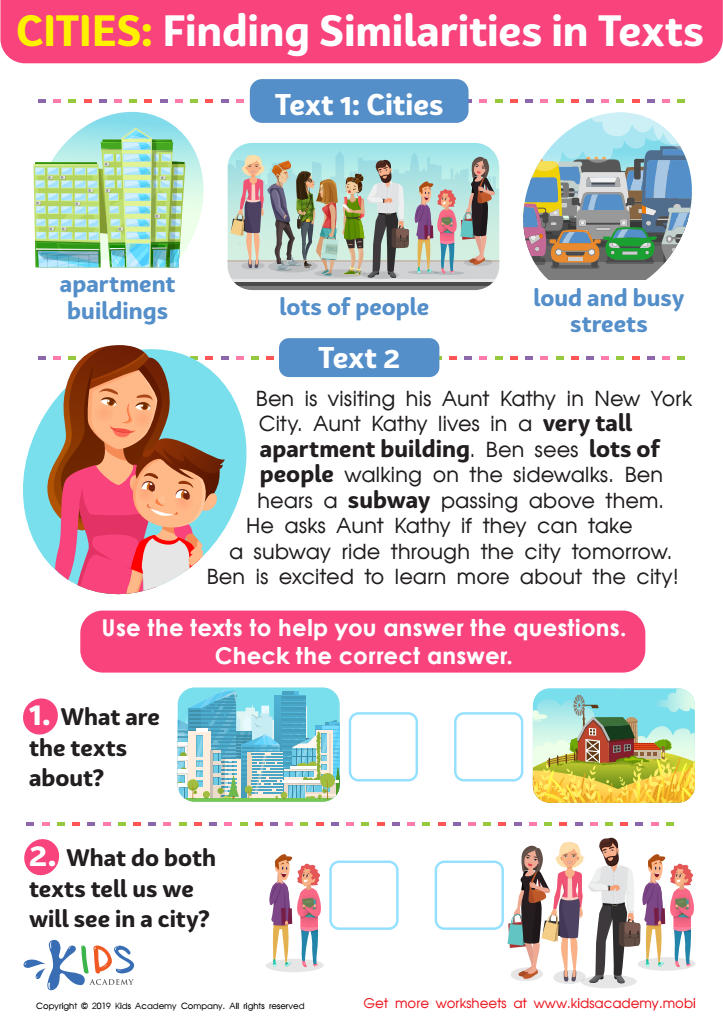
Cities: Finding Similarities Worksheet

Cities: Finding Similarities Worksheet

This worksheet offers kids a chance to explore how information can be presented differently but still contain similar facts. They'll compare two texts and look for similarities, honing their reading comprehension and critical thinking skills.
Cities: Finding Similarities Worksheet
Worksheet
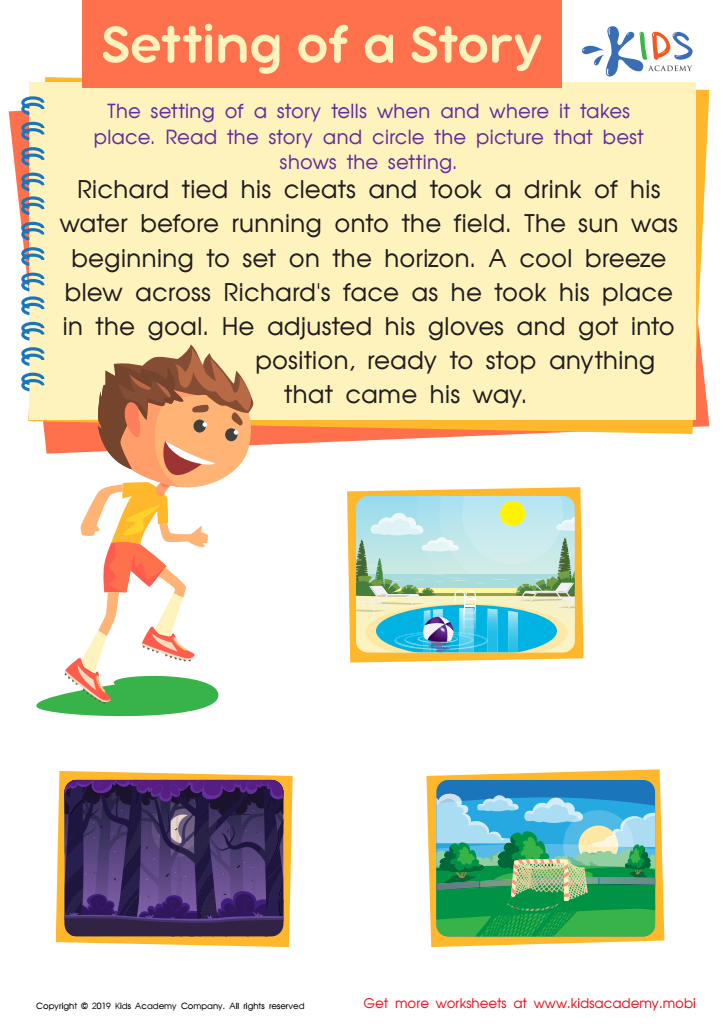
Setting of a Story Worksheet

Setting of a Story Worksheet

You need characters, theme, POV, plot and setting to tell a good story. Ask your kids to explain them and use this worksheet with a story to teach them about setting. Read the story with your kids, then have them circle the picture that best shows the setting.
Setting of a Story Worksheet
Worksheet
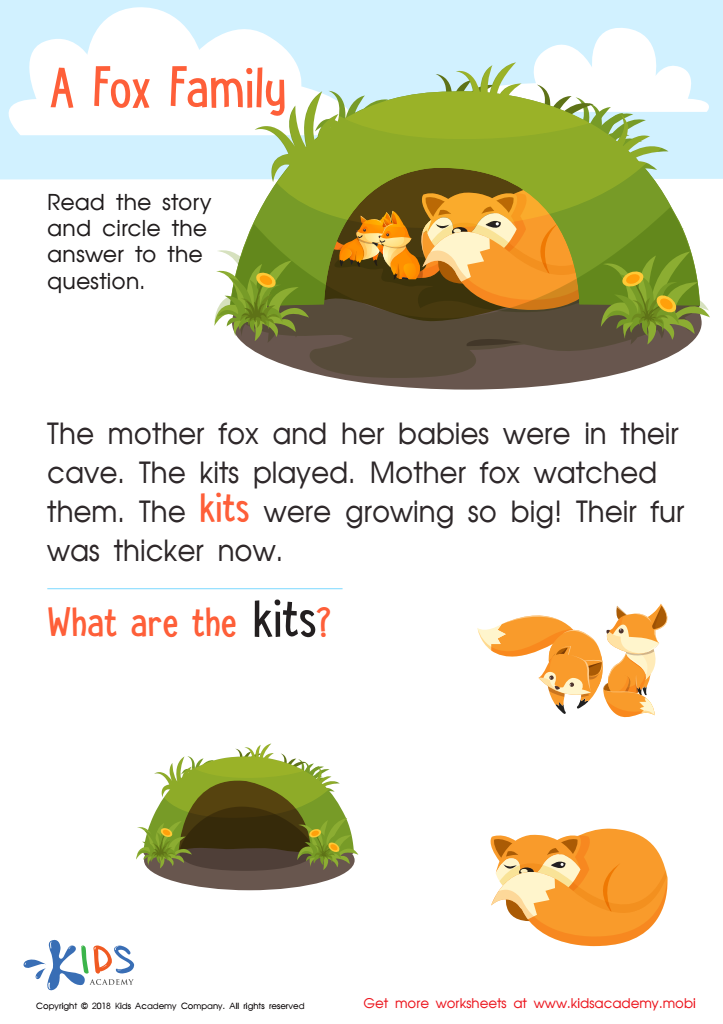
A Fox Family Worksheet

A Fox Family Worksheet

Reading is an easy way to learn new words. This worksheet introduces an interesting story about a fox family, teaching your child that "kits" refers to baby foxes. Read the text together and circle the picture to answer the question.
A Fox Family Worksheet
Worksheet
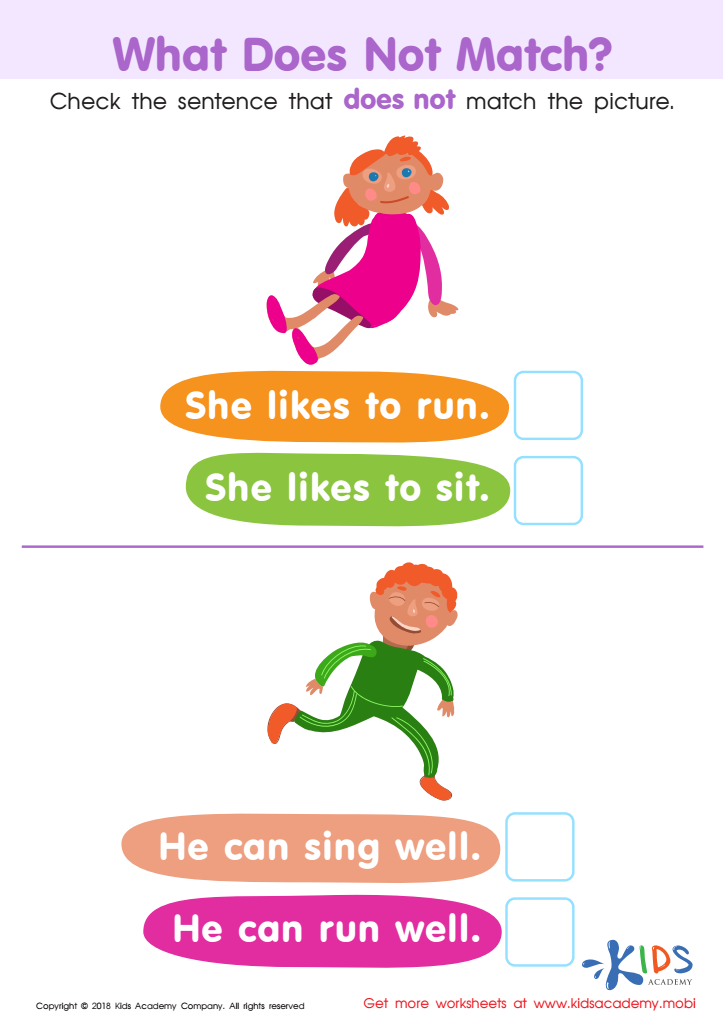
What Does Not Match? Worksheet


What Does Not Match? Worksheet

Emerging readers need to practice using visual cues and repetitive text. This colorful PDF provides them with an opportunity to look at pictures, use discrimination and discern which phrase does not match. It also enables them to gain familiarity with high-frequency words to aid decoding longer sentences.
What Does Not Match? Worksheet

Worksheet


Parents and teachers should care deeply about Easy Reading Fiction for ages 6-8 because it plays a crucial role in developing a child's literacy skills and fostering a lifelong love for reading. At this formative stage, children are building foundational reading skills, and engaging stories tailored to their level enrich their vocabulary, comprehension, and critical thinking abilities. Easy reading fiction introduces them to various genres and themes, helping to broaden their understanding of the world.

Furthermore, stories in this category often present relatable characters and experiences, encouraging empathy and emotional intelligence. Young readers learn to navigate friendships, challenges, and moral dilemmas, which enhances their social skills. Additionally, these books often incorporate humor and adventure, making reading enjoyable and motivating children to read independently.

Also, engaging fiction can help children become more confident readers, reducing anxiety around challenges they may face as literacy demands increase in later grades. As they connect with characters and narratives, children develop a sense of belonging and imagination. Thus, providing access to age-appropriate easy reading fiction unlocks numerous educational and emotional benefits, setting the stage for academic success and personal growth.