Easy Numbers 11–20 Worksheets for Ages 6-9
9 filtered results
Difficulty Level
Grade
Age
-
From - To
Subject
Activity
Standards
Discover our "Easy Numbers 11–20 Worksheets" designed for children ages 6-9. These engaging worksheets help young learners master counting, number recognition, and basic math skills with fun exercises. Perfect for classrooms or at-home practice, our activities include colorful number charts, fill-in-the-blank sequences, and simple addition and subtraction problems. Build your child’s numerical confidence with interactive tasks aimed at strengthening foundational math concepts. Whether your child is just starting to learn or needs extra practice, our easy-to-use printables make learning numbers 11-20 enjoyable and effective. Explore now and boost your child's math proficiency!
Favorites
With answer key
Interactive
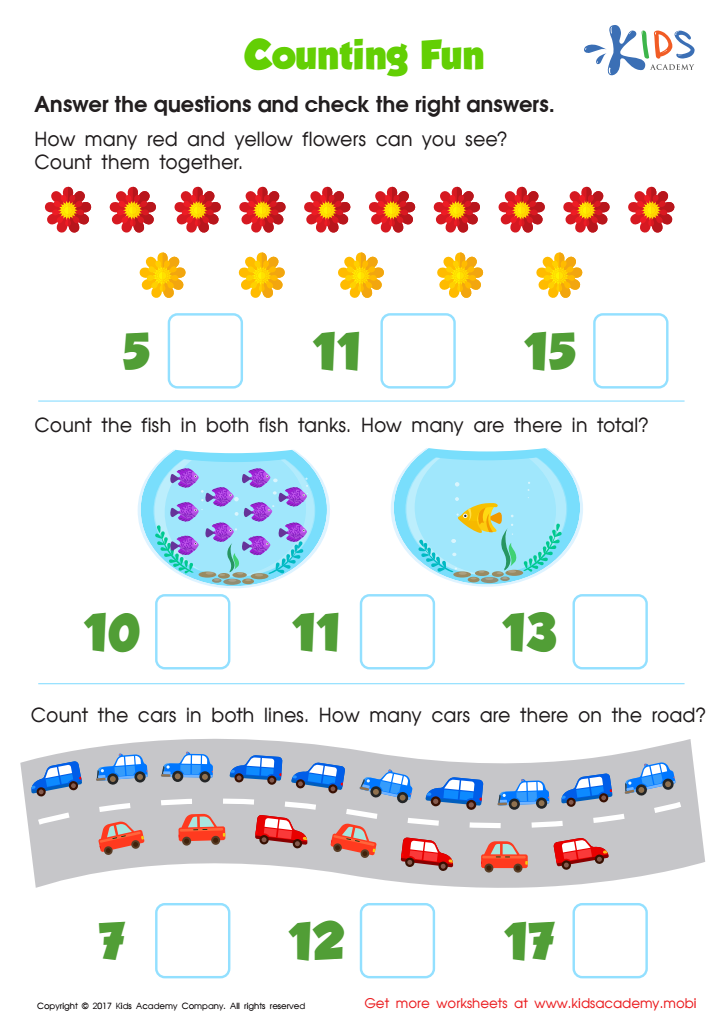
Counting Fun Worksheet
Math and fun can go hand-in-hand with this free PDF worksheet! Bright, colourful illustrations will activate your child's brain, as they count the red and yellow flowers. How many can you see? Count together and write down the total. Make learning and counting fun for your little ones!
Counting Fun Worksheet
Worksheet
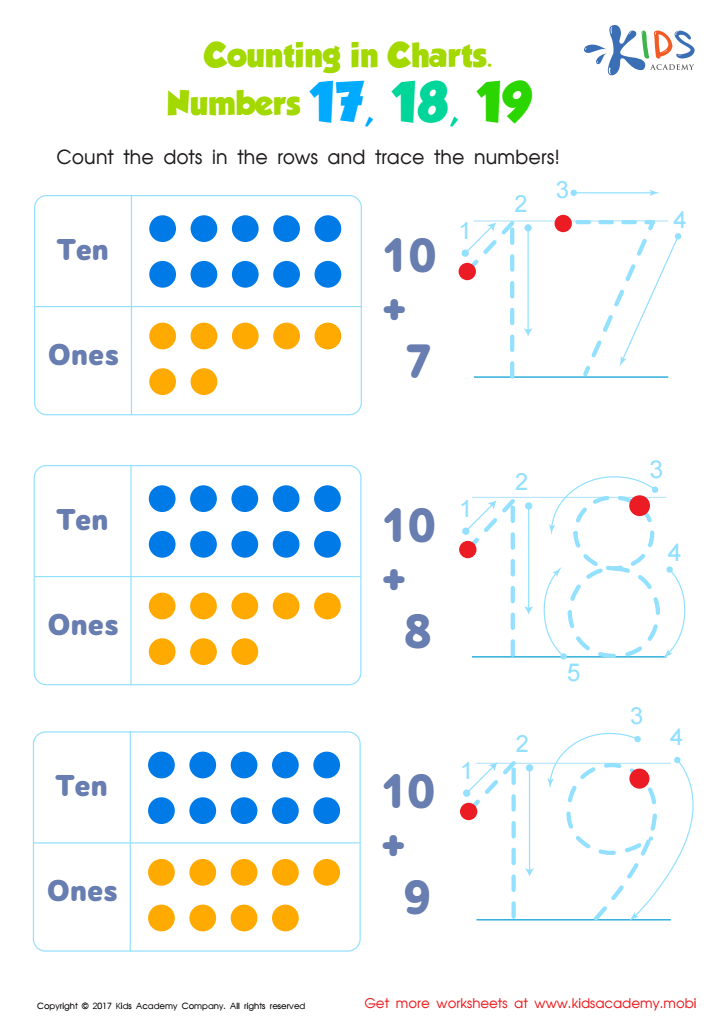
Kindergarten Number Tracing: Counting in Charts Worksheet
Little learners can find big numbers tricky! Help them practice counting and build early math skills, like place value and addition, with this kindergarten number tracing PDF worksheet. Count the dots to solve the problem and trace each answer!
Kindergarten Number Tracing: Counting in Charts Worksheet
Worksheet
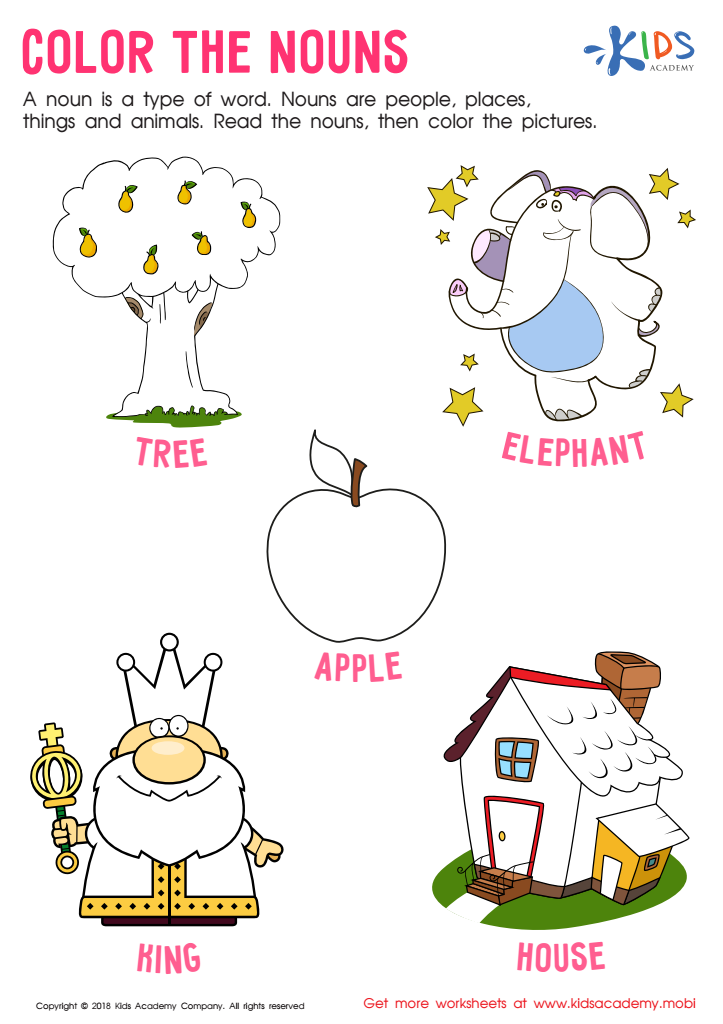
Color the Nouns Worksheet
Test your child's understanding of nouns with this downloadable worksheet. Explain that nouns are words for people, places, animals and things. With the coloring sheet, read each word and color the corresponding picture. By the end of it, your child should be able to recognize common nouns.
Download (PDF)
 Assign to My Students
Assign to My Students
Color the Nouns Worksheet
Worksheet
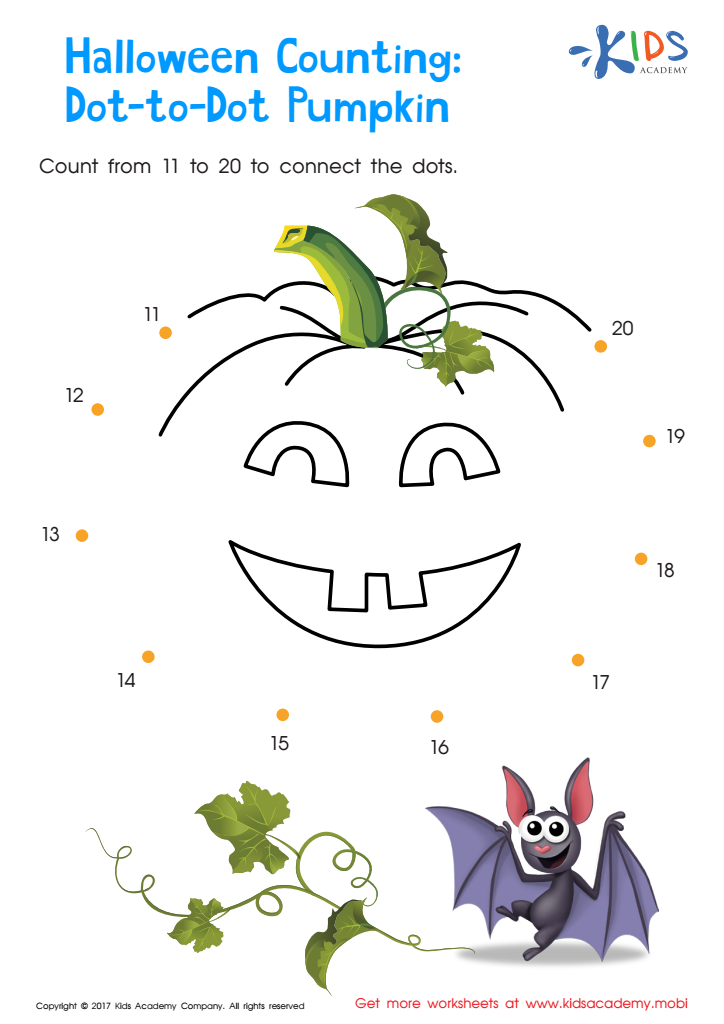
Ordering 11–20: Halloween Counting Worksheet
No matter the time of year, help your child get ready for Halloween with this worksheet. They'll practice counting from 11 to 20, recognizing numbers, and using a pencil to draw. By connecting the dots, they'll create a pumpkin picture, while unknowingly strengthening their early math skills. Print it today for an educational and fun experience!
Ordering 11–20: Halloween Counting Worksheet
Worksheet
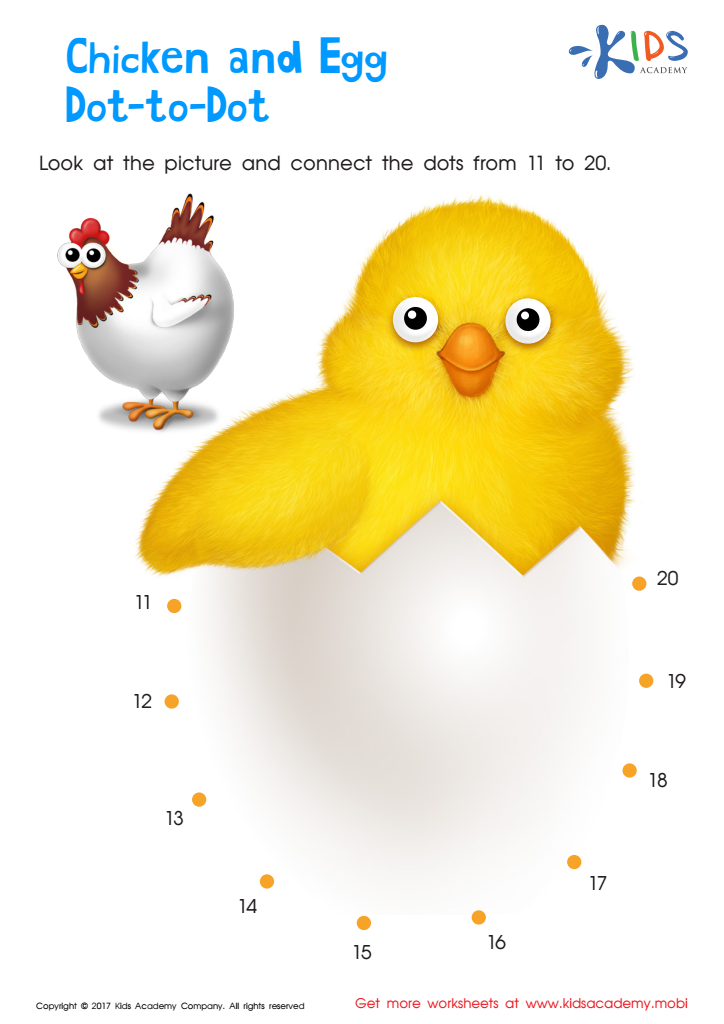
Ordering 11–20: Chicken & Egg Dot–to–dot Worksheet
Help your child hatch the chick and practice their counting skills with this dot to dot worksheet – the chicken came first! Connect the dots 11-20 to have fun and learn at the same time. Experience meaningful practice and gain confidence while drawing great pictures.
Ordering 11–20: Chicken & Egg Dot–to–dot Worksheet
Worksheet
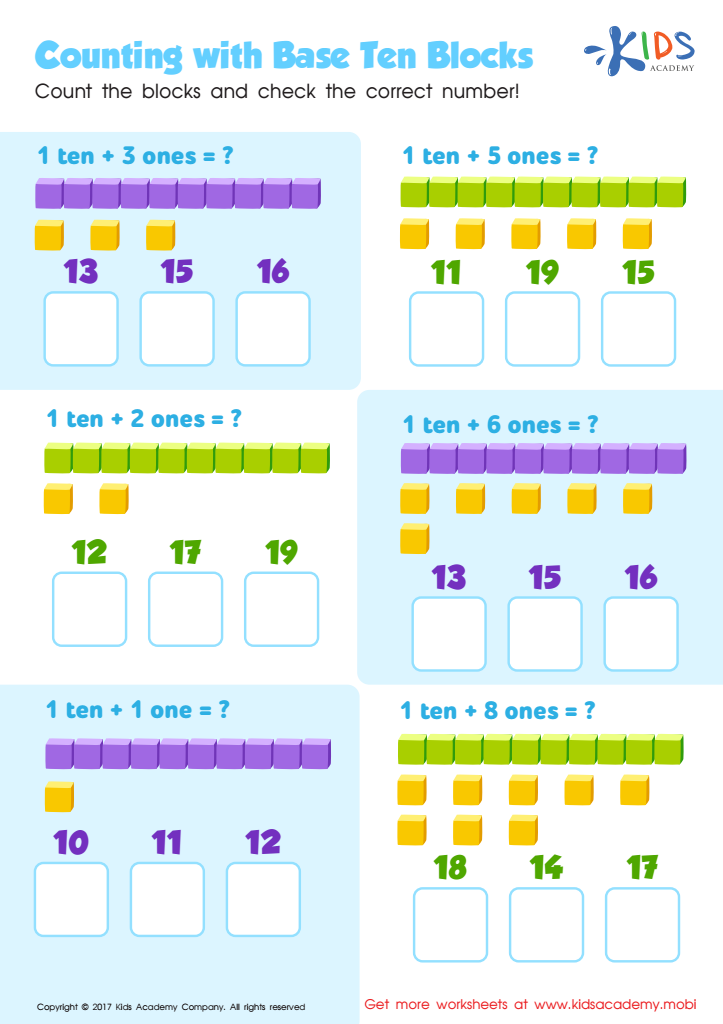
Counting with Base Ten Blocks Worksheet
Math has different levels and gets harder as your child progresses. Don't be surprised when they bring home an algebra worksheet! In this one, they will add 1 tens to varying numbers and fill in the total. This builds their understanding of base tens.
Counting with Base Ten Blocks Worksheet
Worksheet
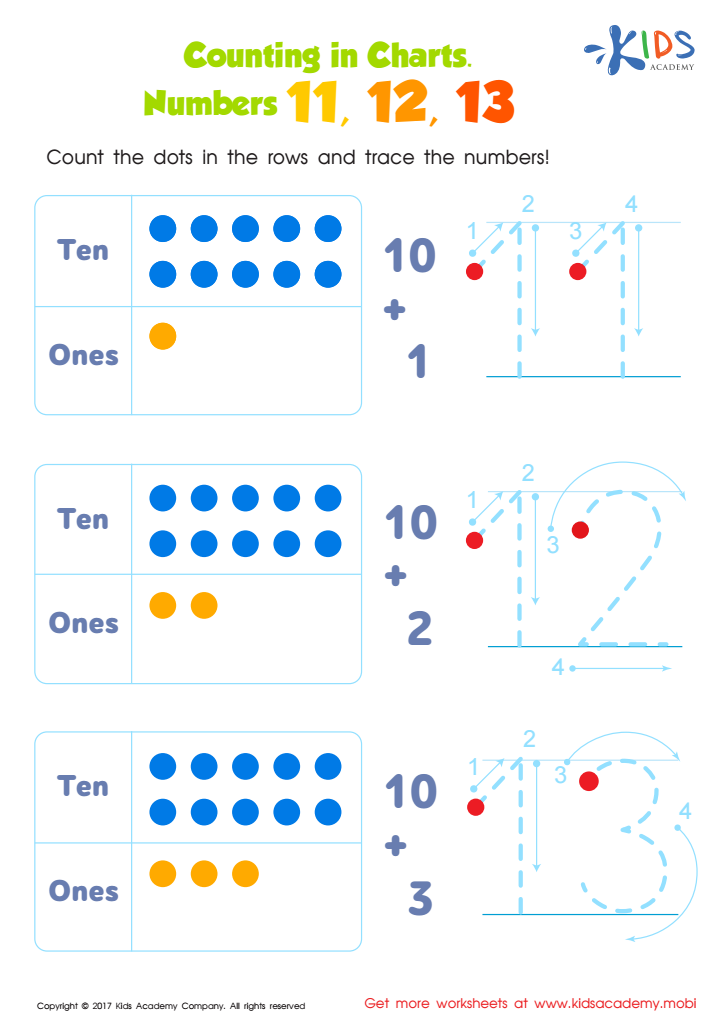
Number Tracing Worksheet For Kindergarten
Help your child develop addition skills and improve number recognition with this easy-to-use worksheet. Have them count the dots and add to solve each problem. Then, trace over the number to complete each row! It's a fun and simple way for kindergarteners to practice their math skills.
Number Tracing Worksheet For Kindergarten
Worksheet
Number Tracing Worksheet
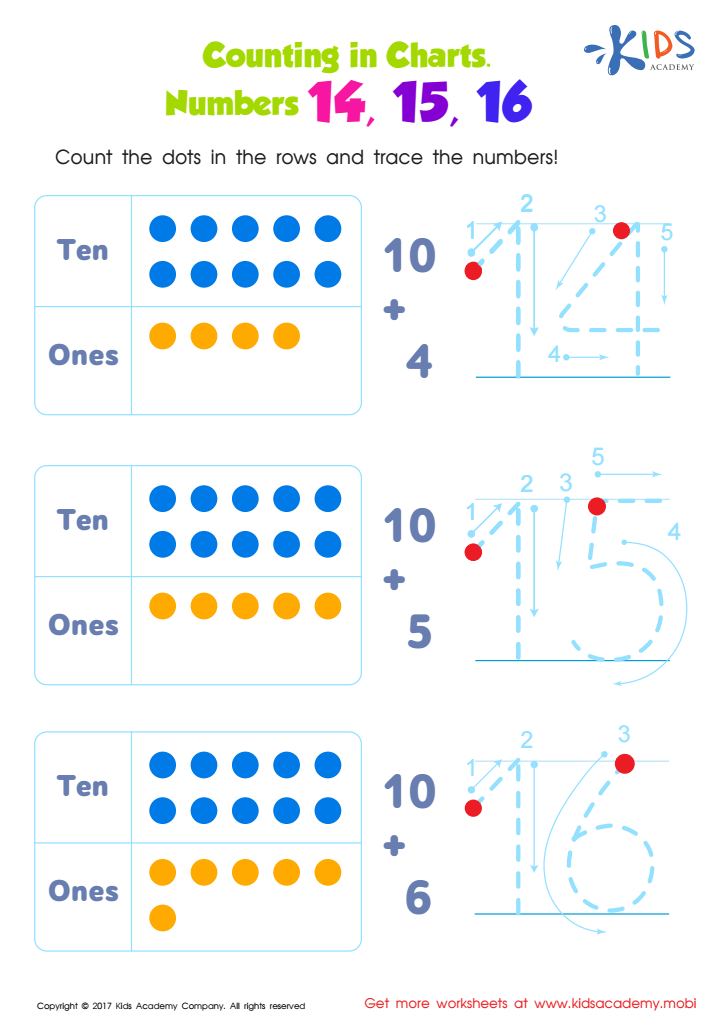
Kids learn math with counters and place value! This handy worksheet helps form a foundation for math skills and number sense! Have your child count the dots and trace the answers to the addition problems. It's a great way to support their math skills!
Number Tracing Worksheet
Worksheet
Ordering 11–20: Dot–to–dot Seashell Printable
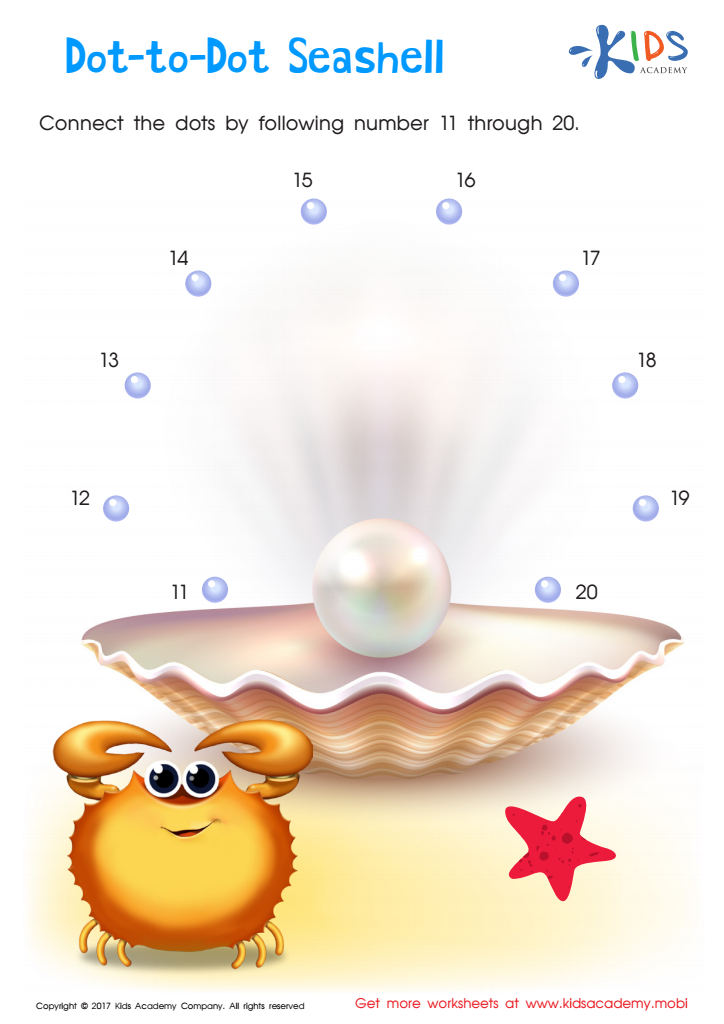
Connecting the dots 11 to 20 is rewarding for kids, helping them practice counting, identifying numbers and gain cognitive and logical skills. Our worksheet features a vibrant image of a seashell, crab and sea star, and your child will feel rewarded creating it while honing their counting skills!
Ordering 11–20: Dot–to–dot Seashell Printable
Worksheet
Join Kids Academy for Free
Who is primarily going to use this learning content?



Learning numbers 11-20 is a fundamental step in early childhood education for children aged 6-9. This stage sets the foundation for more advanced mathematical concepts. Understanding these numbers helps kids develop basic counting skills and introduces them to the idea of place value, which is crucial when they progress to addition, subtraction, and beyond.
For educators, focusing on numbers 11-20 improves students' confidence and ensures they grasp the shift from single-digit to two-digit numbers, an essential skill for arithmetic operations. Methods such as using visual aids, number lines, or simple math games can make learning engaging and memorable. Mastery of these numbers also aids children in understanding numerical patterns and sequences, establishing a smooth transition into higher math concepts.
For parents, supporting their child’s learning process can create a positive learning environment both at home and school. Simple activities like counting household objects, playing counting games, or using educational apps can reinforce learning. Parental involvement demonstrates to the child that learning is important and enjoyable, thereby fostering a lifelong love of learning.
Therefore, a strong grasp of numbers 11-20 during this age range sets the stage for future academic success and supports the development of both quantitative and problem-solving skills.