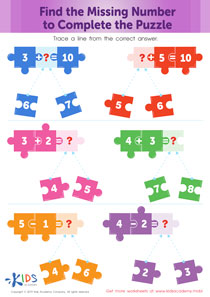
Extra Challenge Addition Worksheets for Ages 7-9
6 filtered results
-
From - To
Give your young learners a boost in their math skills with our Extra Challenge Addition Worksheets for Ages 7-9. Designed to develop the critical thinking and problem-solving abilities of 2nd and 3rd graders, our worksheets offer engaging exercises to master addition beyond basic sums. These challenging tasks cater to various learning styles, providing both fun and educational content. Perfect for teachers and parents seeking to enhance their children's addition fluency and confidence. Dive into a world of numbers and watch your child's math proficiency grow! Download now from Kids Academy and make math exciting.
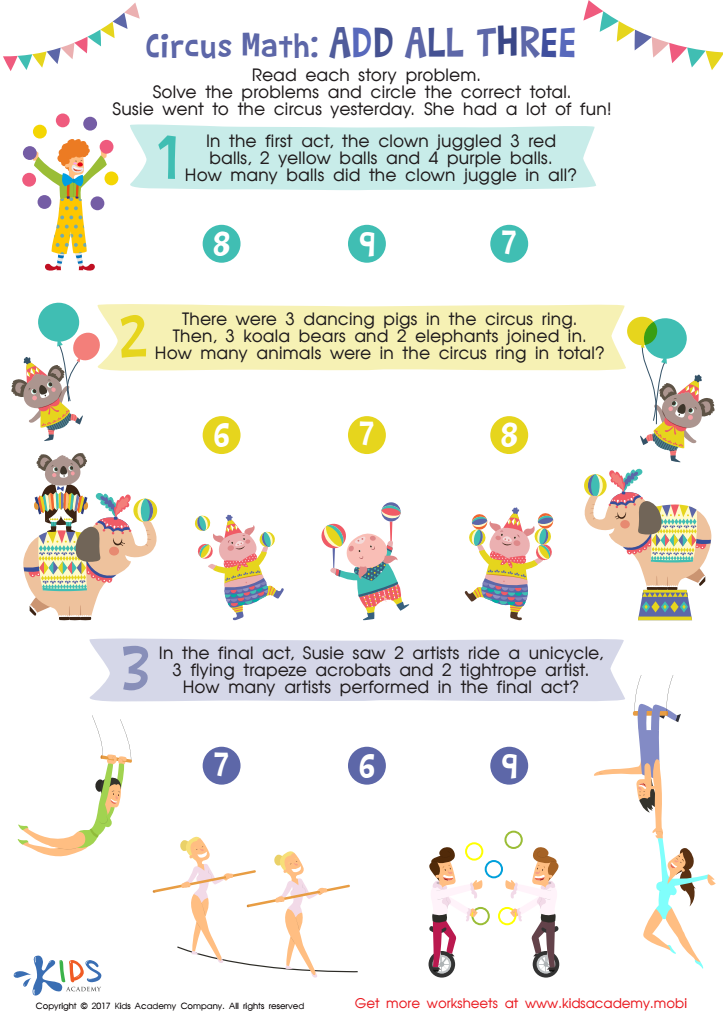
Circus Math Printable
 Assign to My Students
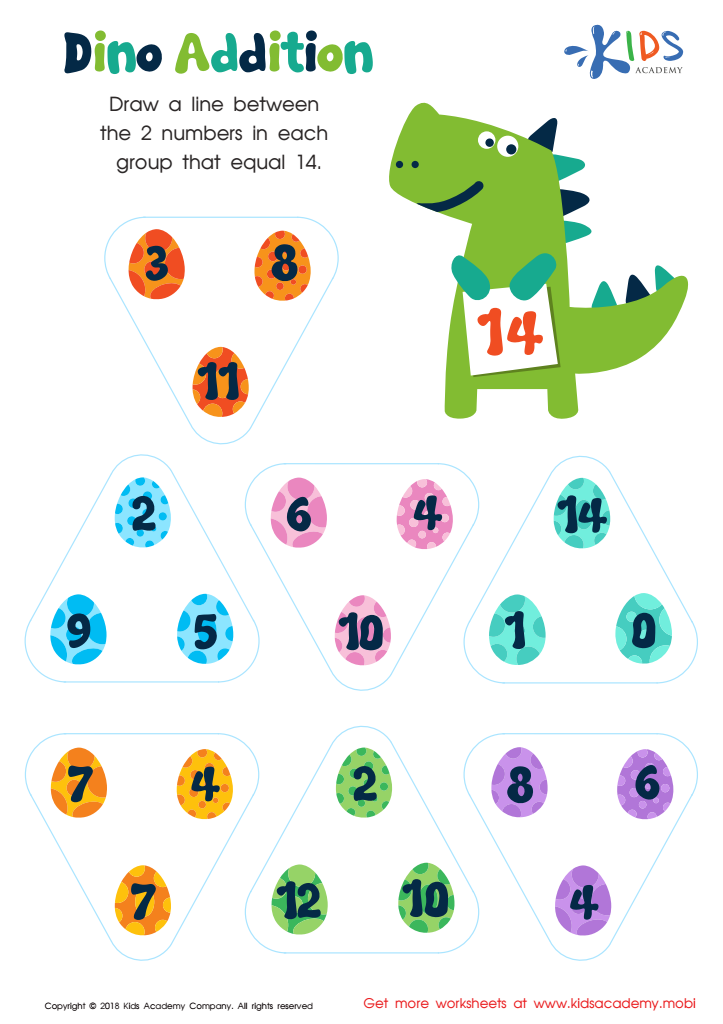
Dino Addition Worksheet
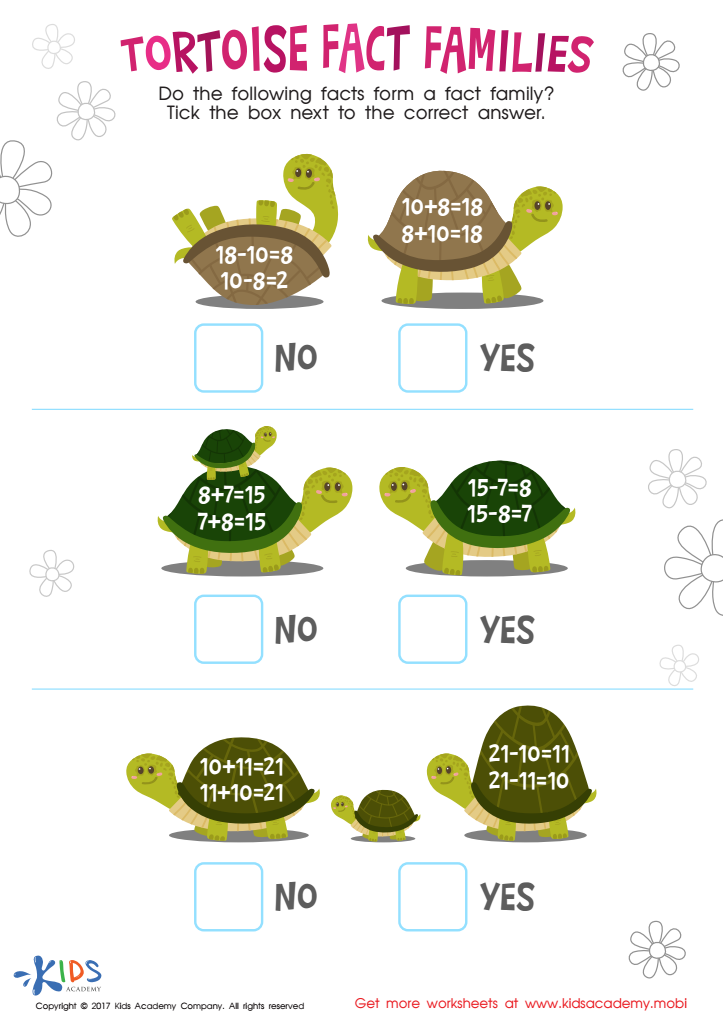
Tortoise Fact Families Printable
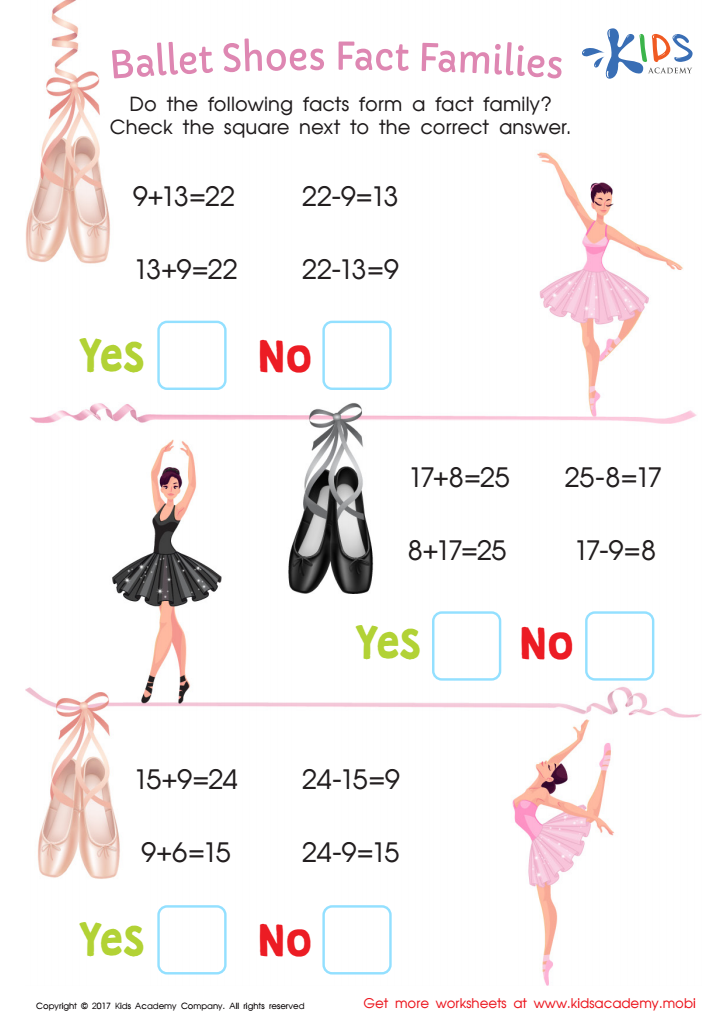
Ballet Shoes Fact Family Printable
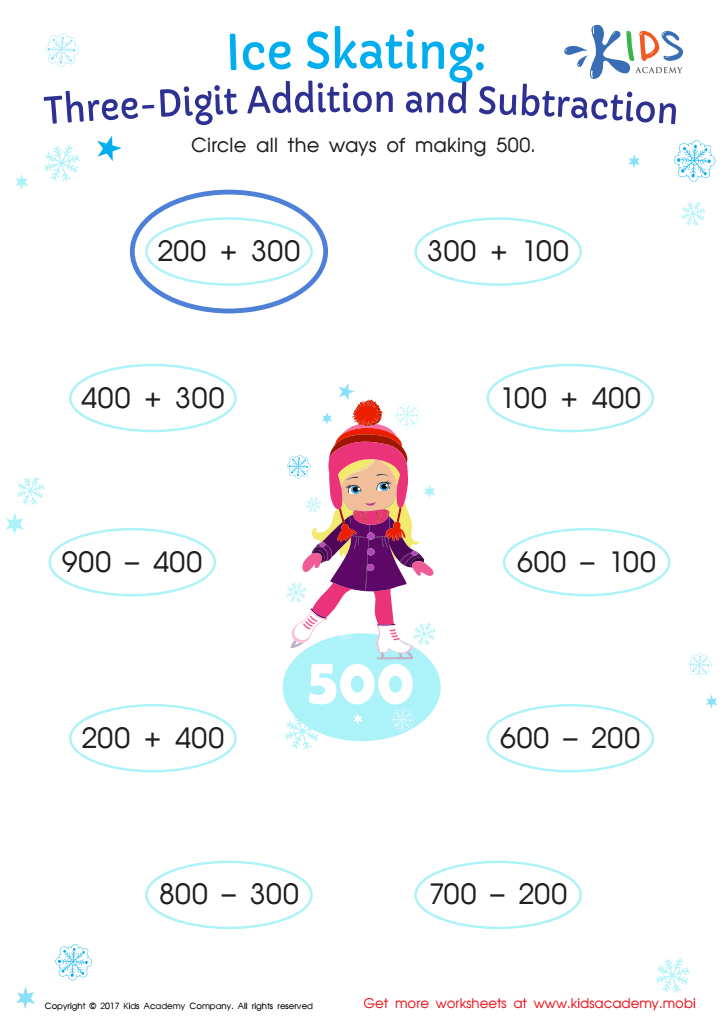
Three Digit Addition and Subtraction Worksheet
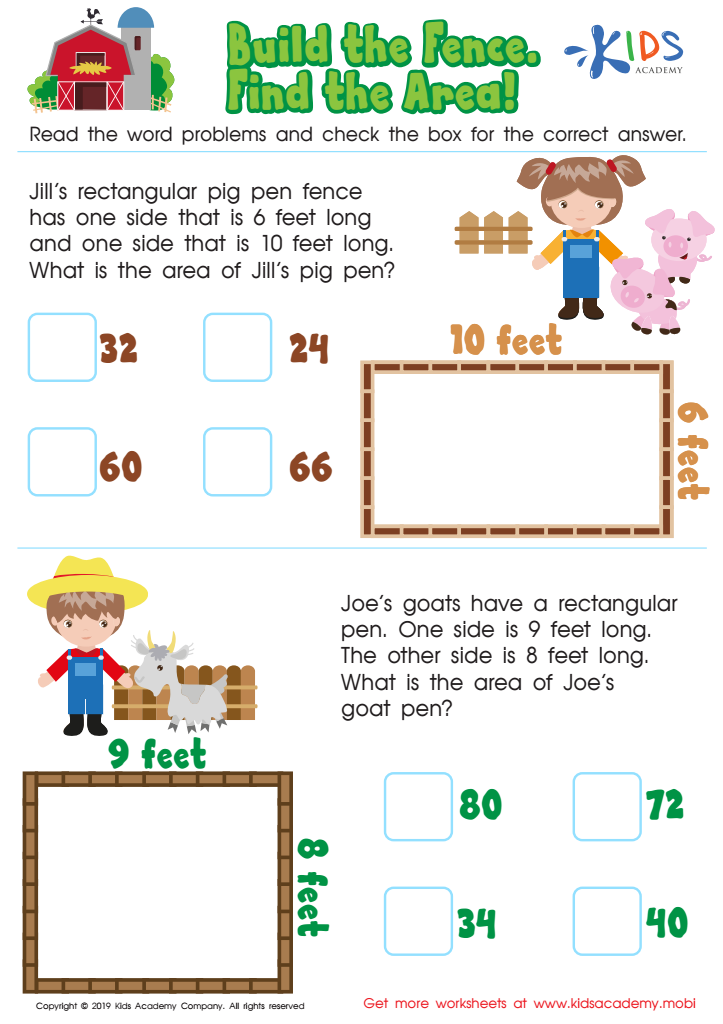
Build the Fence, Find the Area Worksheet








Extra Challenge Addition exercises are essential for both parents and teachers when catering to children aged 7-9, as they play a crucial role in the development of foundational math skills. This age range is a pivotal period where children transition from understanding basic numerical concepts to mastering more complex arithmetic. Incorporating extra challenge exercises not only reinforces their existing knowledge but also pushes them to think critically and solve problems efficiently.
For parents, engaging their children in these activities at home can create a positive and encouraging learning environment. It sets a precedent that learning doesn't only happen in the classroom but is a continuous process. Moreover, it provides valuable opportunities for parents to connect with their children, monitor their progress, and help where necessary, fostering a partnership in their educational journey.
For teachers, challenging addition tasks in the classroom can help identify and support students at different skill levels. Teachers can use these exercises to differentiate instruction, allowing advanced learners to explore more complex problems while giving others the practice they need to master basic concepts. This differentiated approach ensures that all students grow at their pace, ultimately promoting confidence and improving overall math proficiency.
In both cases, these extra challenges stimulate curiosity, boost problem-solving skills, and build resilience, all of which are crucial for academic success and lifelong learning.