Fine Motor Skills 2D Shapes Worksheets
12 filtered results
-
From - To
Enhance your child’s learning with our "Fine Motor Skills 2D Shapes Worksheets." Perfectly designed for young learners, these printable activities help children develop essential fine motor skills through engaging tracing, coloring, and cutting exercises. Each worksheet features clear, kid-friendly instructions that guide students in recognizing and drawing a variety of 2D shapes. By combining geometric understanding with hands-on activities, our worksheets not only bolster math skills but also improve hand-eye coordination and dexterity. Ideal for early grade teachers and parents, these fun and educational printables make shape learning a delightful, interactive experience.
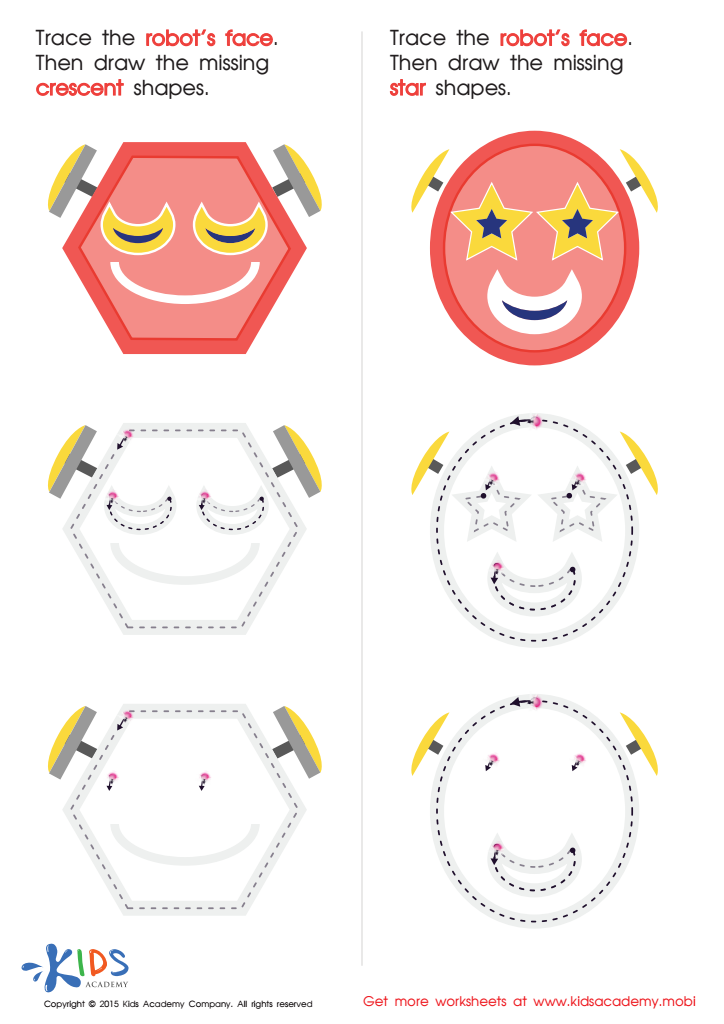
Composing a Robot's Face of Crescents And Stars Worksheet
 Assign to My Students











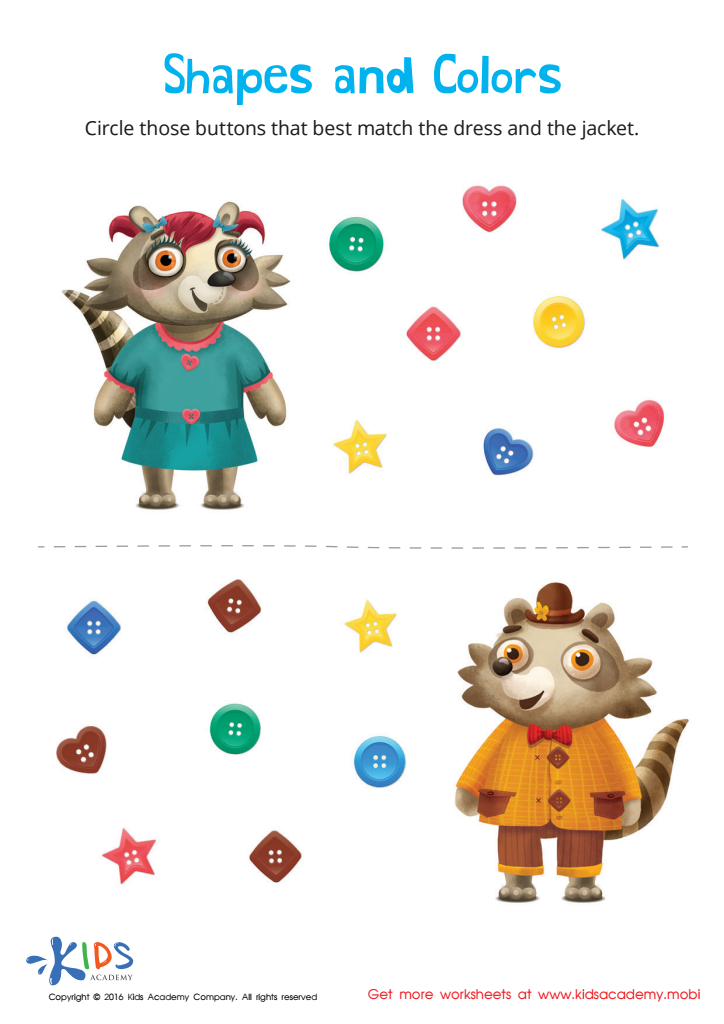
Matching: Shapes and Colors Worksheet
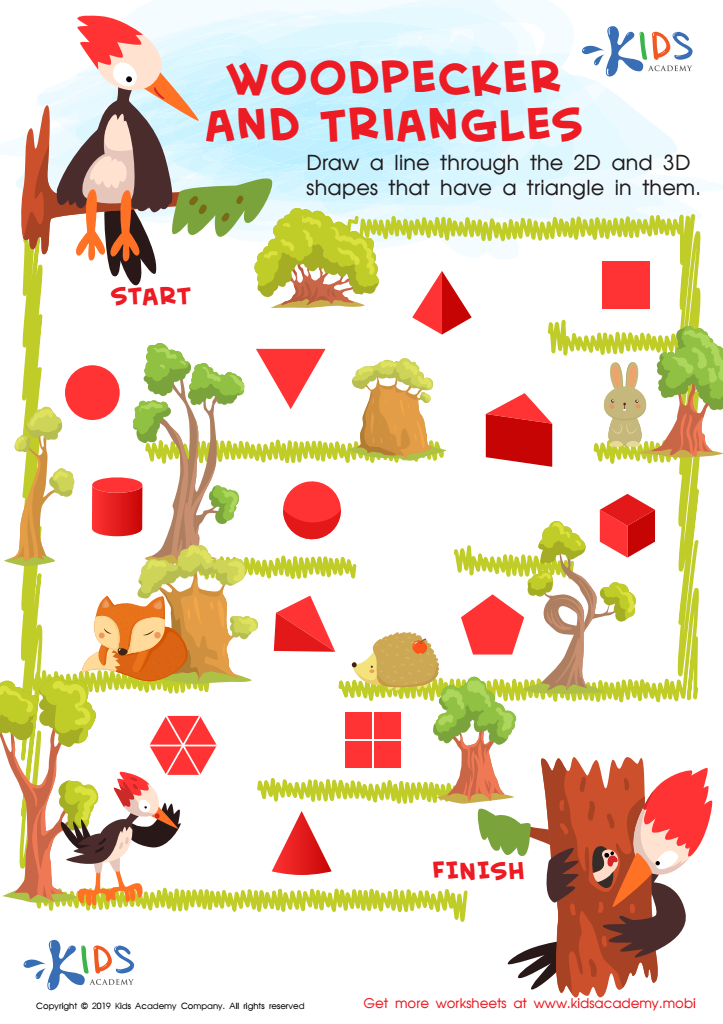
Woodpecker and Triangles Worksheet
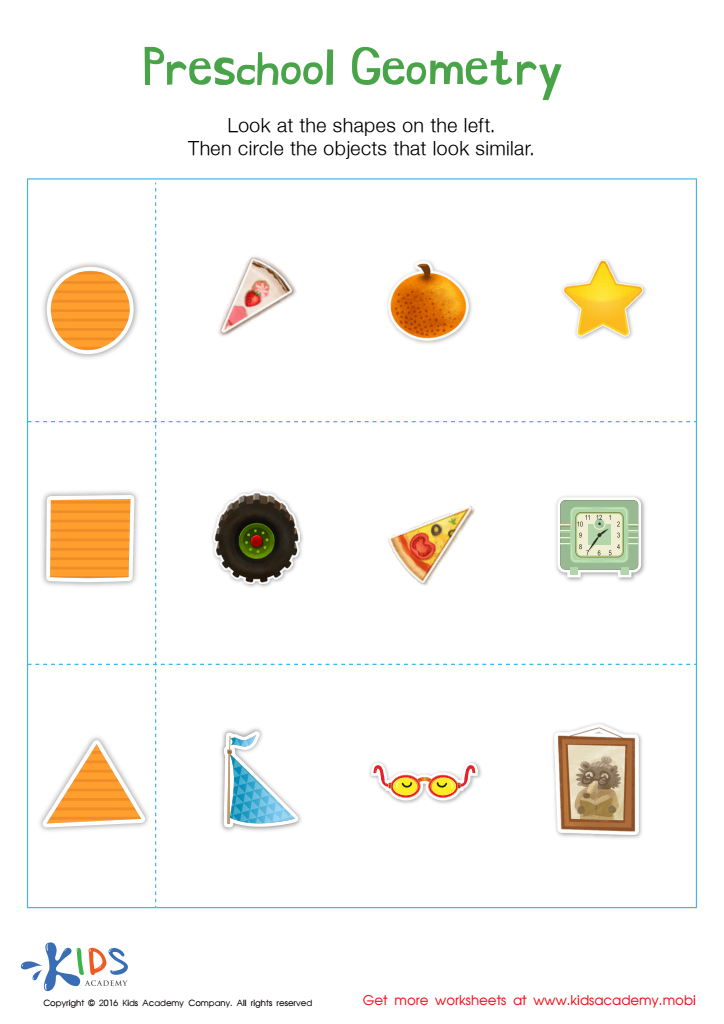
Preschool Geometry Match Up Worksheet
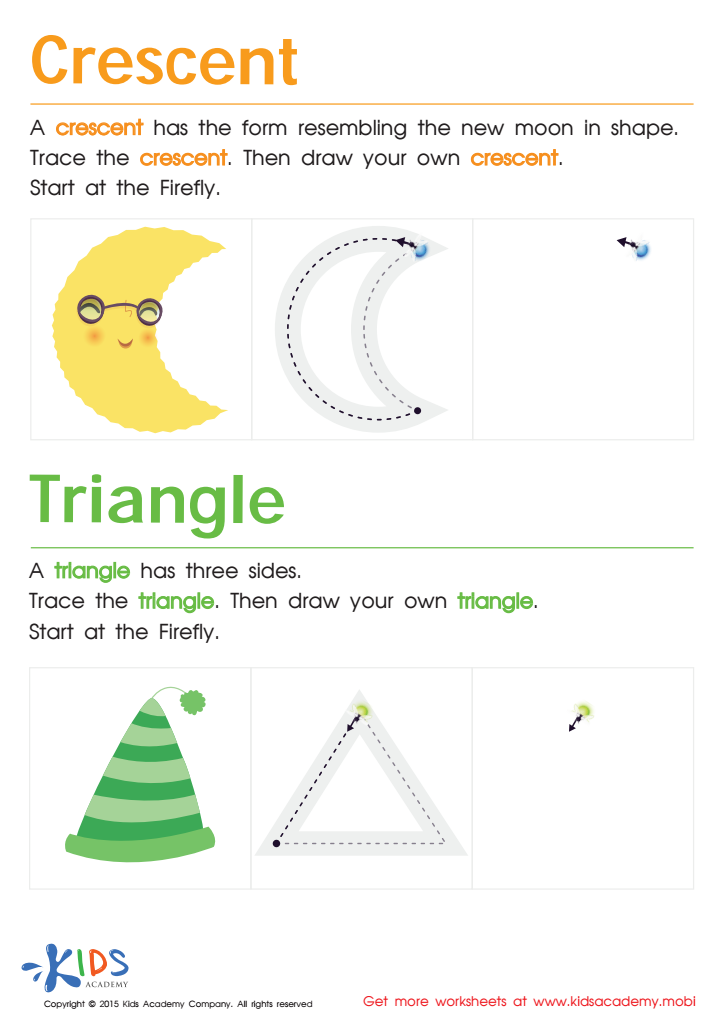
Learning to Draw Crescents And Triangles Worksheet
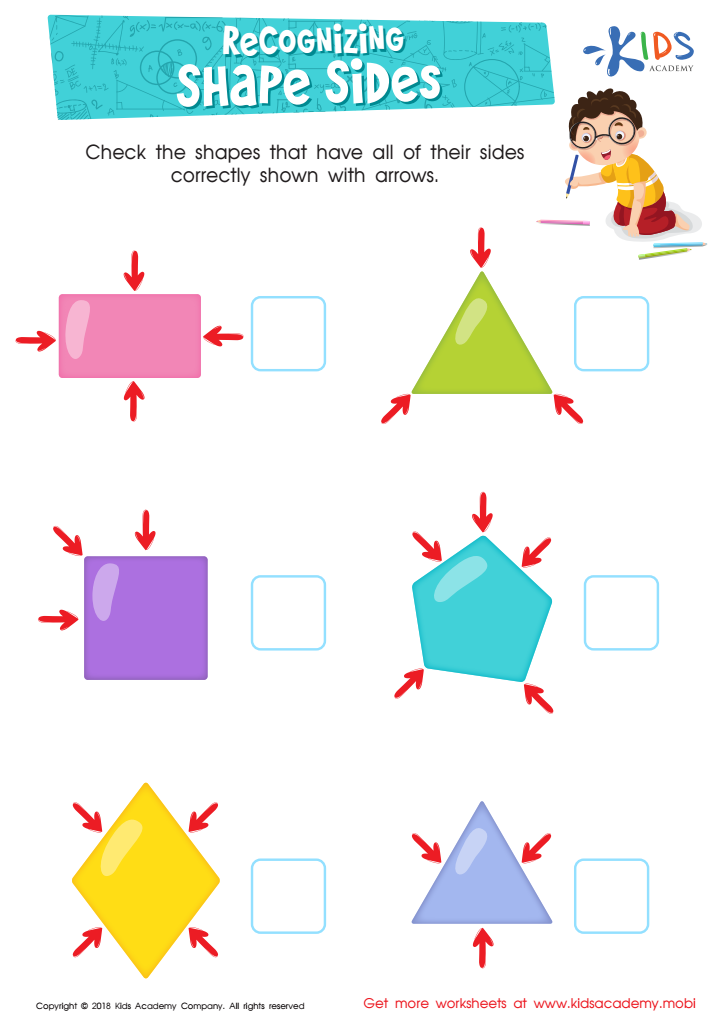
Recognizing Shape Sides Worksheet
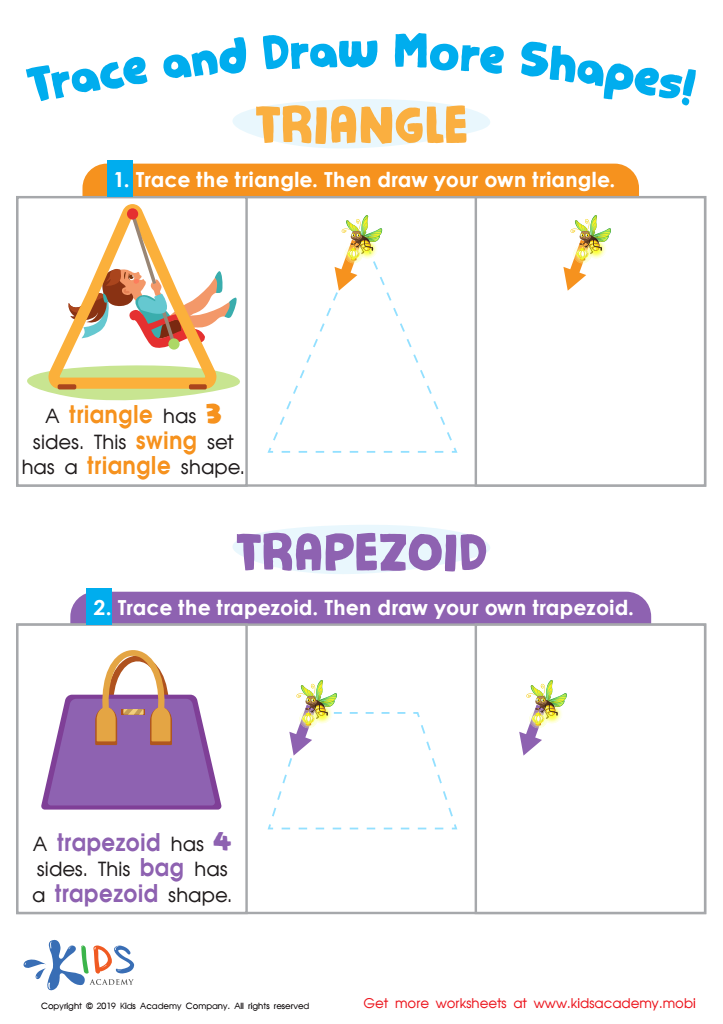
Trace and Draw More Shapes Worksheet
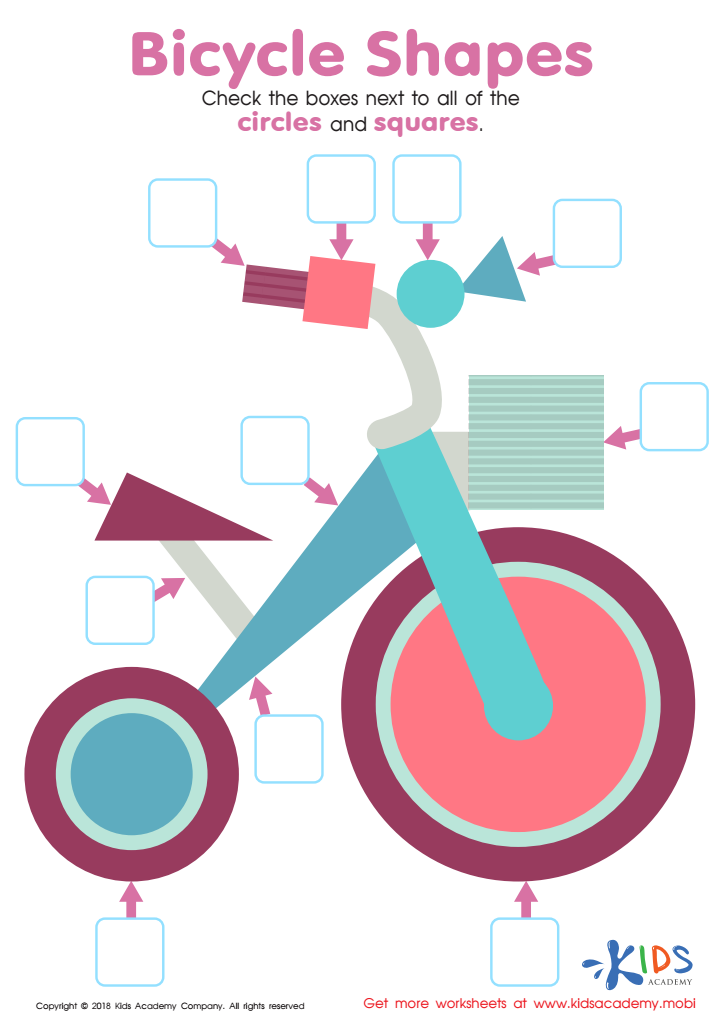
Bicycle Shapes Worksheet
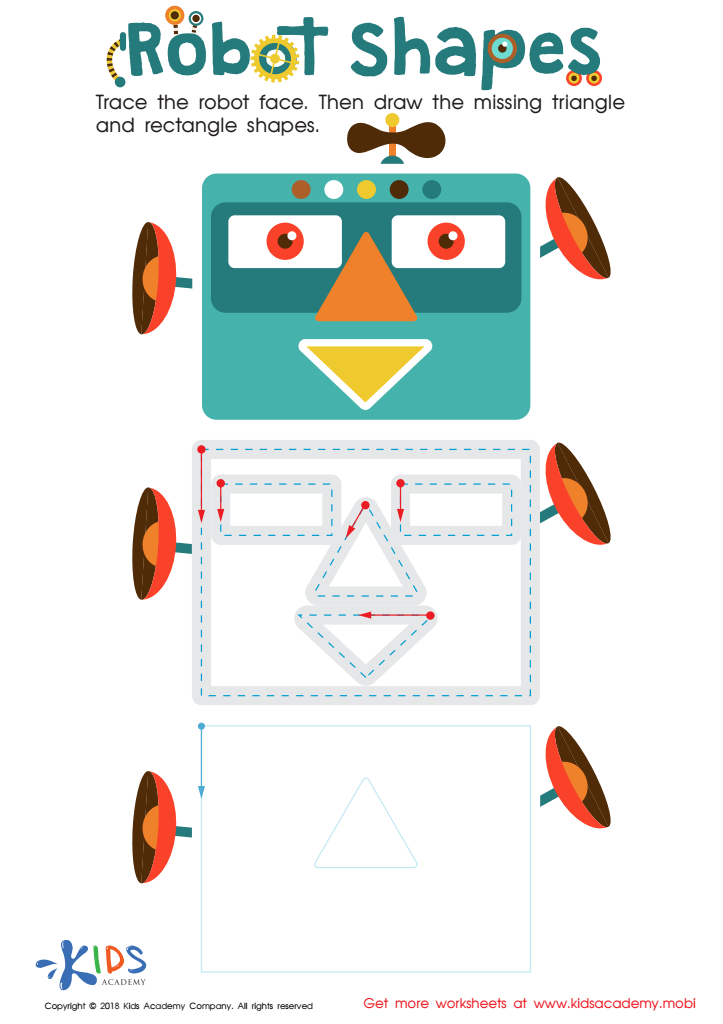
Robot Shapes Worksheet
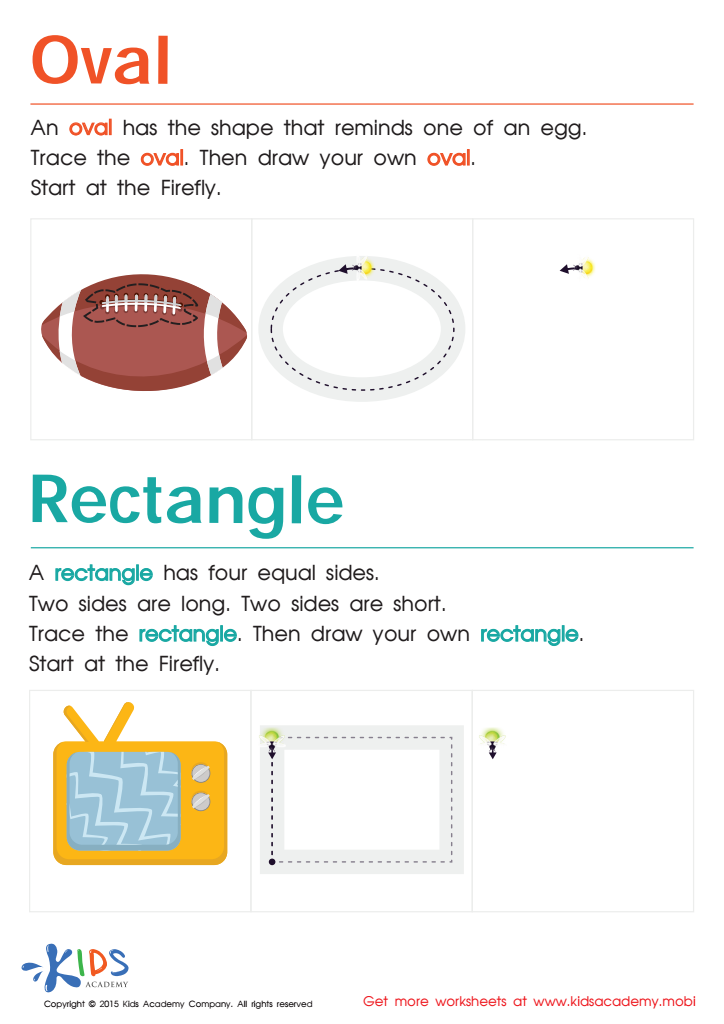
Easy Drawing of Ovals And Rectangles Worksheet
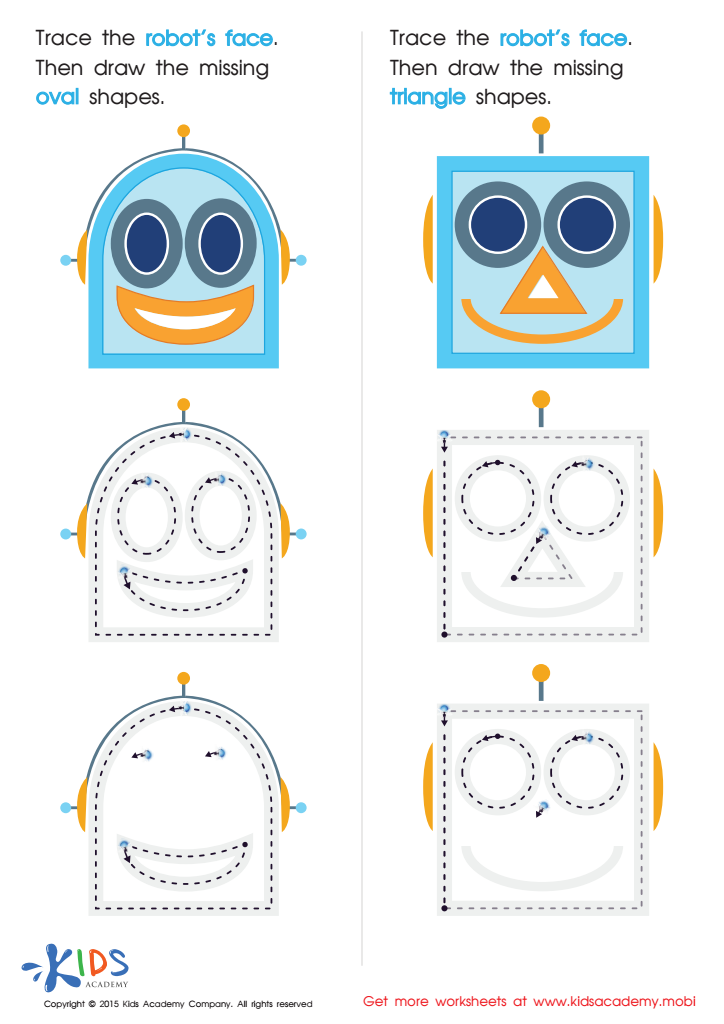
Drawing Ovals And Triangles with Fun Printable
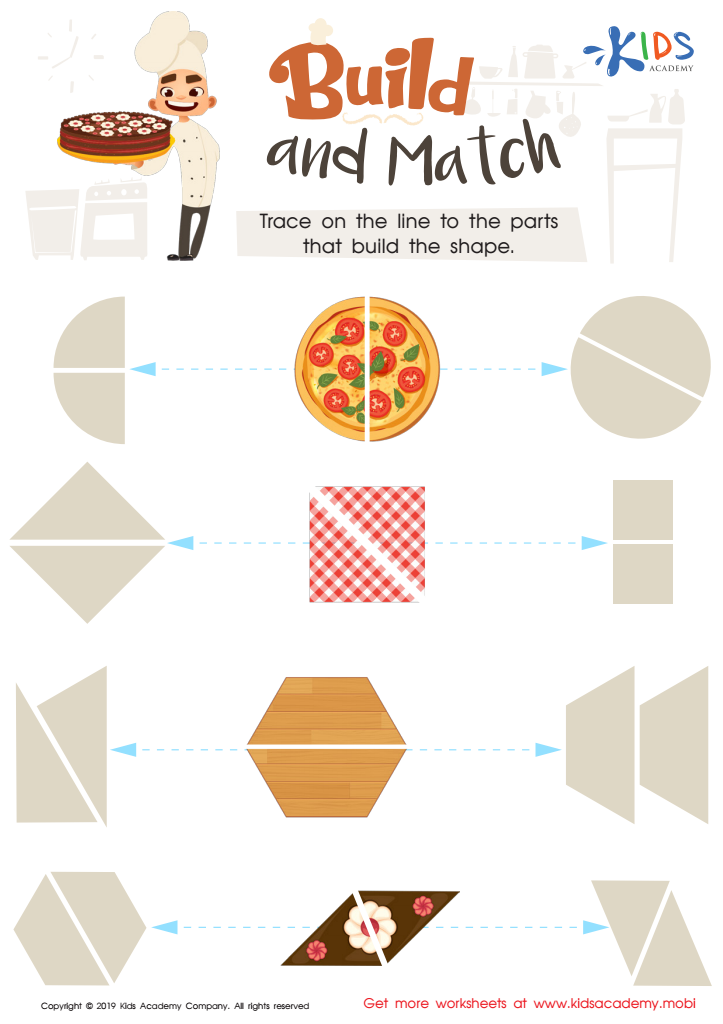
Build and Match Worksheet








Fine motor skills and understanding 2D shapes are crucial components of early childhood development, and parents and teachers should certainly care about fostering these abilities in young children. Fine motor skills involve the coordination of small muscles, particularly in the hands and fingers, enabling children to perform essential tasks such as writing, buttoning clothes, and using scissors. Mastery of these skills directly impacts a child's ability to perform self-care tasks independently and with confidence.
Introducing 2D shapes while simultaneously developing fine motor skills has significant academic and cognitive benefits. Identifying and manipulating shapes helps children grasp basic geometric concepts, which lay the foundation for higher-level math learning. Activities like drawing, cutting shapes, and assembling puzzles enhance hand-eye coordination and spatial awareness while making learning engaging and interactive.
Furthermore, integrating 2D shapes into fine motor skill activities supports language development and critical thinking. As children describe shapes, sizes, and their positions relative to each other, their vocabulary expands. Problem-solving skills are refined as they experiment with fitting shapes together in various configurations.
In conclusion, prioritizing the development of fine motor skills and comprehension of 2D shapes equips children with the tools necessary for academic success, practical life skills, and comprehensive cognitive growth. Parents and teachers play a vital role in providing the opportunities and resources that support this essential aspect of early education.








