
Basic geometry understanding Math Worksheets
12 filtered results
Difficulty Level
Grade
Age
-
From - To
Subject
Activity
Standards
Explore our "Basic Geometry Understanding Math Worksheets," designed to build foundational skills in geometry for early learners. These engaging worksheets introduce essential concepts such as shapes, angles, and measurements through a variety of activities tailored to spark curiosity and foster comprehension. Perfect for preschool and early elementary students, our resources help children recognize and classify geometric shapes, understand their properties, and apply these concepts in real-world scenarios. Teachers and parents can seamlessly incorporate these worksheets into lesson plans or at-home practice. Enhance your child’s math journey with fun, educational, and interactive geometry activities that make learning an enjoyable adventure!
Favorites
With answer key
Interactive
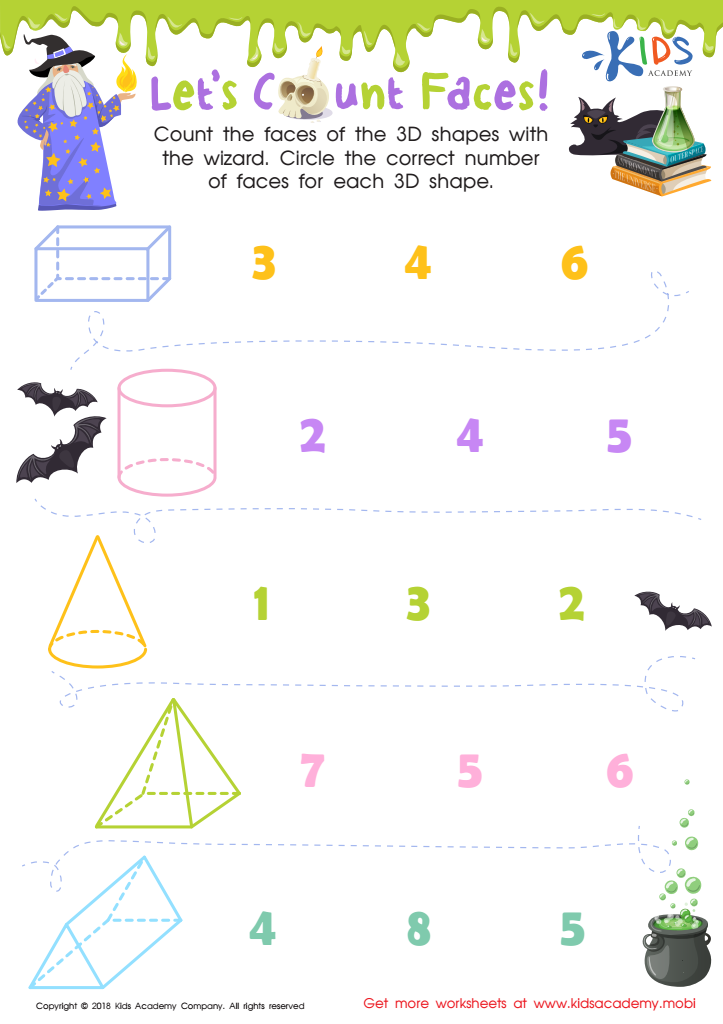
Let's Count Faces! Worksheet
Help the wizard count the faces of 3D shapes! Ask your kids to identify the shapes before beginning, then have them circle the correct number of faces. Enjoy this fun wizard-themed worksheet with your kids!
 Assign to My Students
Let's Count Faces! Worksheet
Worksheet
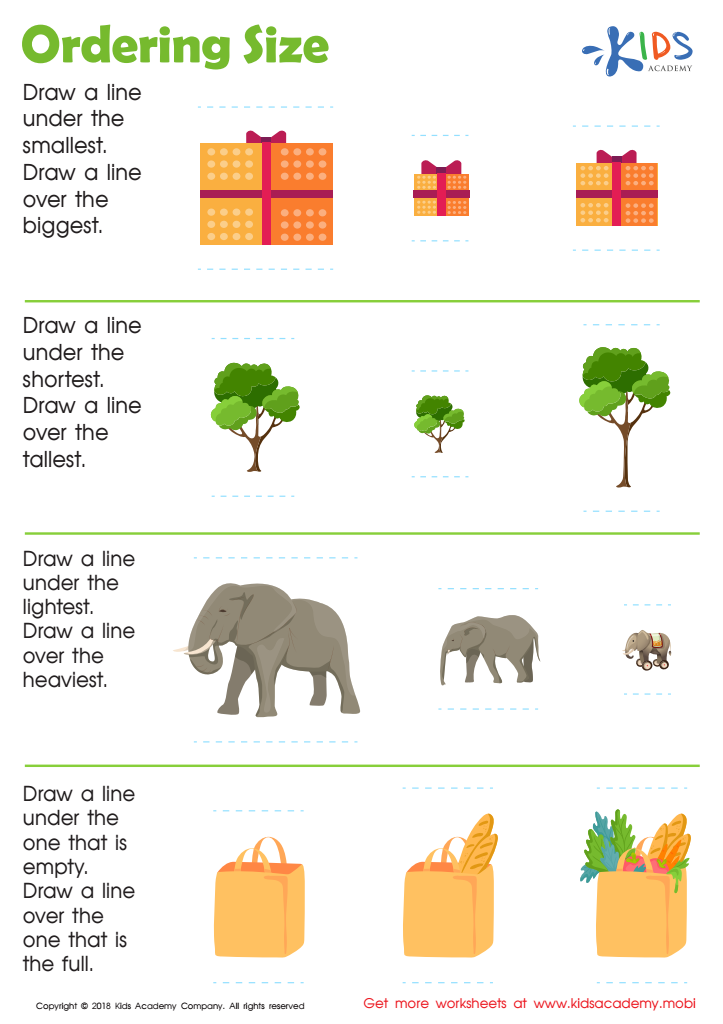
Ordering Size Worksheet
This worksheet helps students practice mathematical vocabulary related to size and quantity. Children look at pictures and draw a line to the objects that are taller, shorter, big, small, light, heavy, empty or full. The teacher can quickly check students' understanding of these measurement terms and then ask for examples of their own.
Ordering Size Worksheet
Worksheet
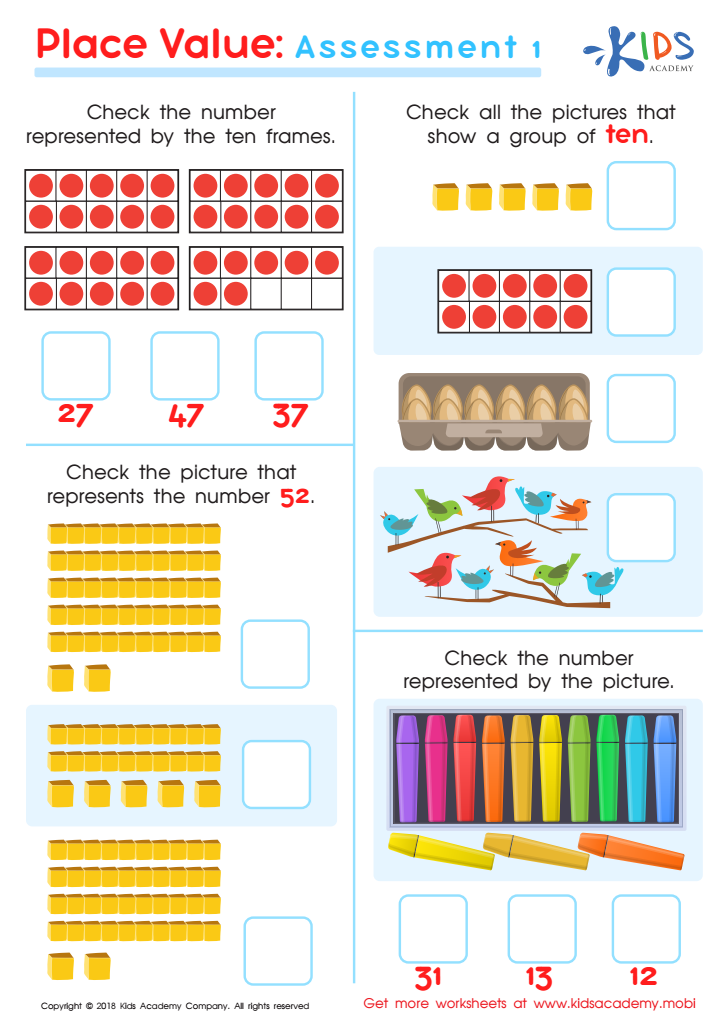
Place Value: Assessment 1 Worksheet
Assess your child's place value and number representation with this PDF worksheet. It lets them count and compare numbers and practice chiseling numbers into groups of ten. It's a great way to identify any concepts that need to be reinforced.
Place Value: Assessment 1 Worksheet
Worksheet
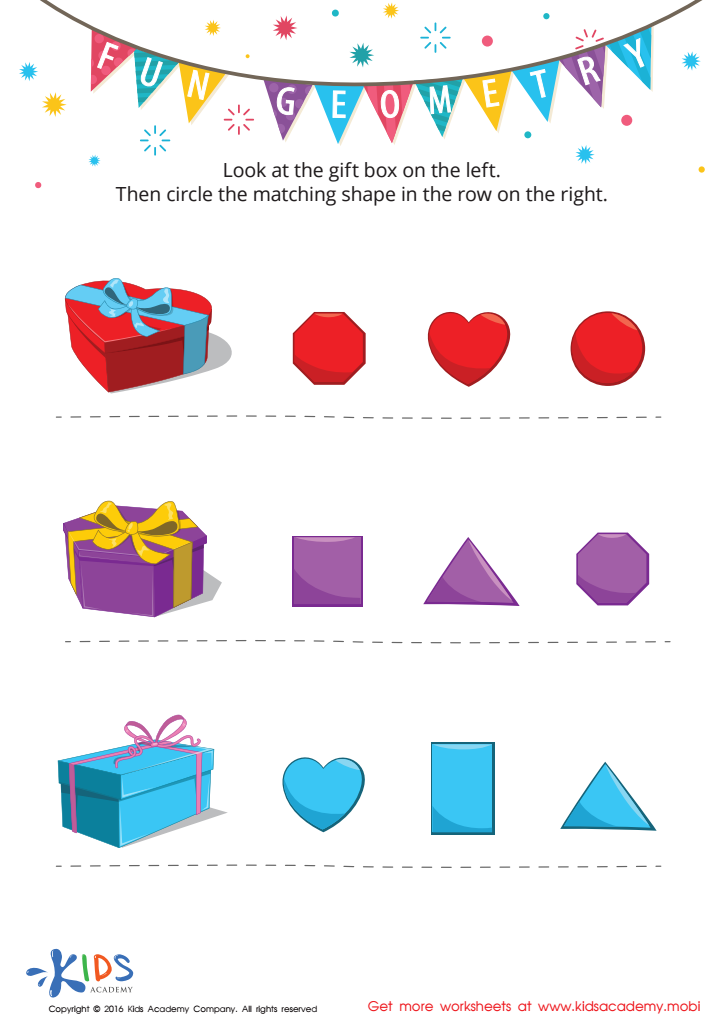
Fun Geometry Worksheet
Give your child the gift of learning with this fun and educational geometry matching worksheet! It'll help them develop essential matching and problem-solving skills while having fun. Vibrant pictures will excite them to complete it and get a better grasp of the world around them.
Fun Geometry Worksheet
Worksheet
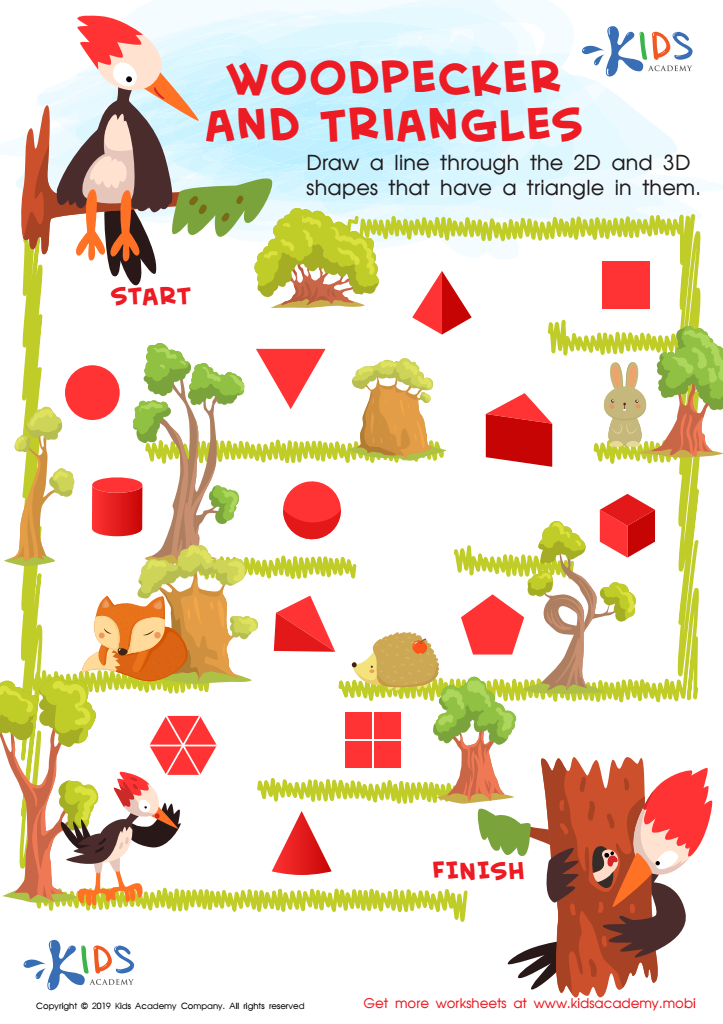
Woodpecker and Triangles Worksheet
Woodpeckers peck wood, and this printout helps kids learn about triangles. Ask your kindergartners to draw a triangle, then draw a line through the shapes that have a triangle in them to help the woodpecker get out of the maze.
Woodpecker and Triangles Worksheet
Worksheet
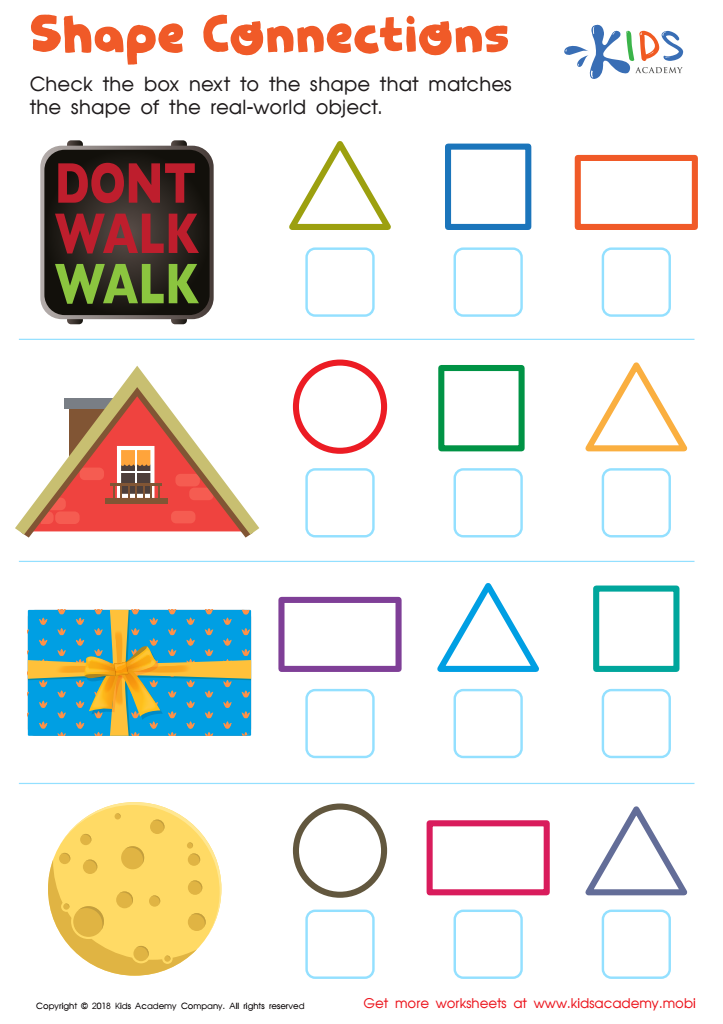
Shape Connections Worksheet
Geometric shapes are all around us and this fun worksheet brings it to life. Kids will match real-world pictures with the corresponding basic shapes, connecting how math is used in various aspects of daily life. A great way to reinforce these concepts!
Shape Connections Worksheet
Worksheet
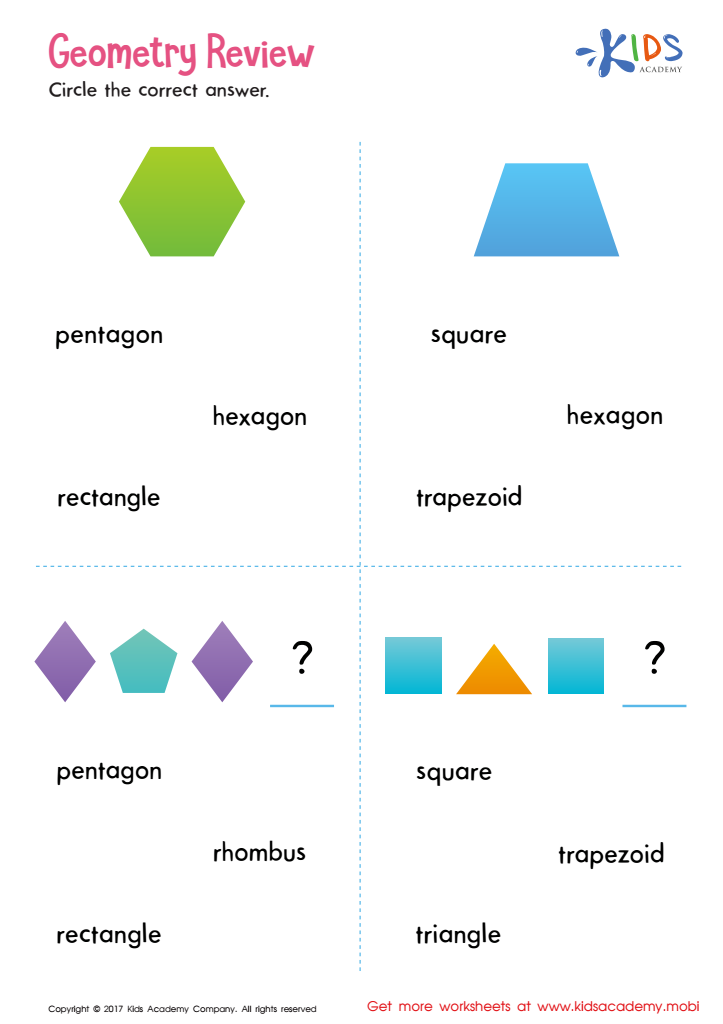
Geometry Review Printable
Repetition is key to success; give your child the practice they need with this geometry worksheet.
Geometry Review Printable
Worksheet
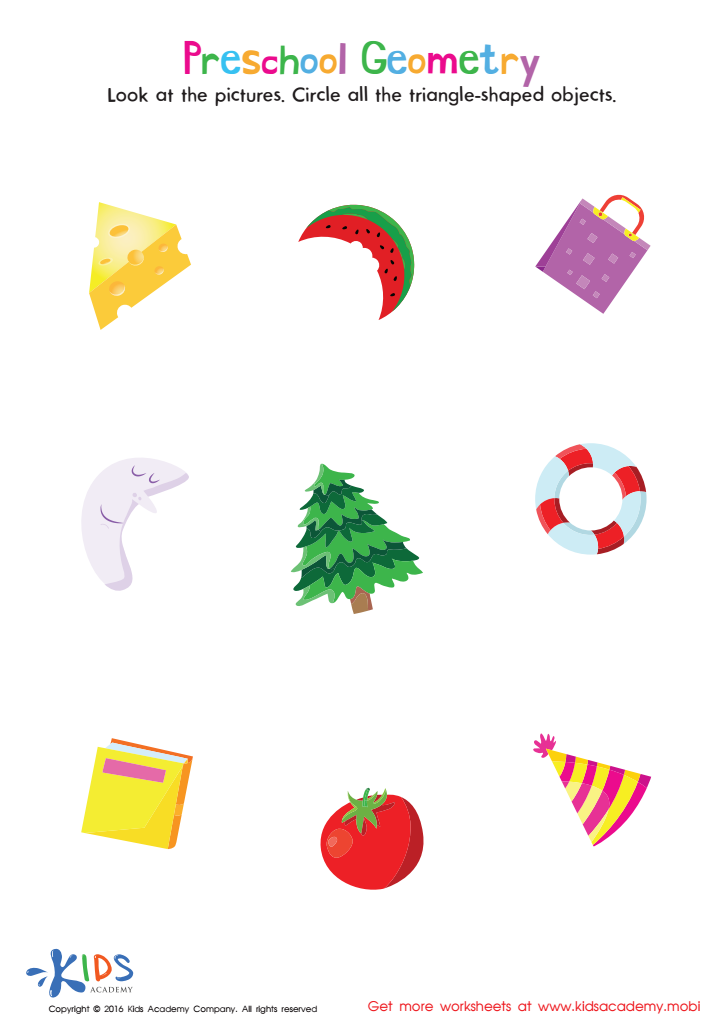
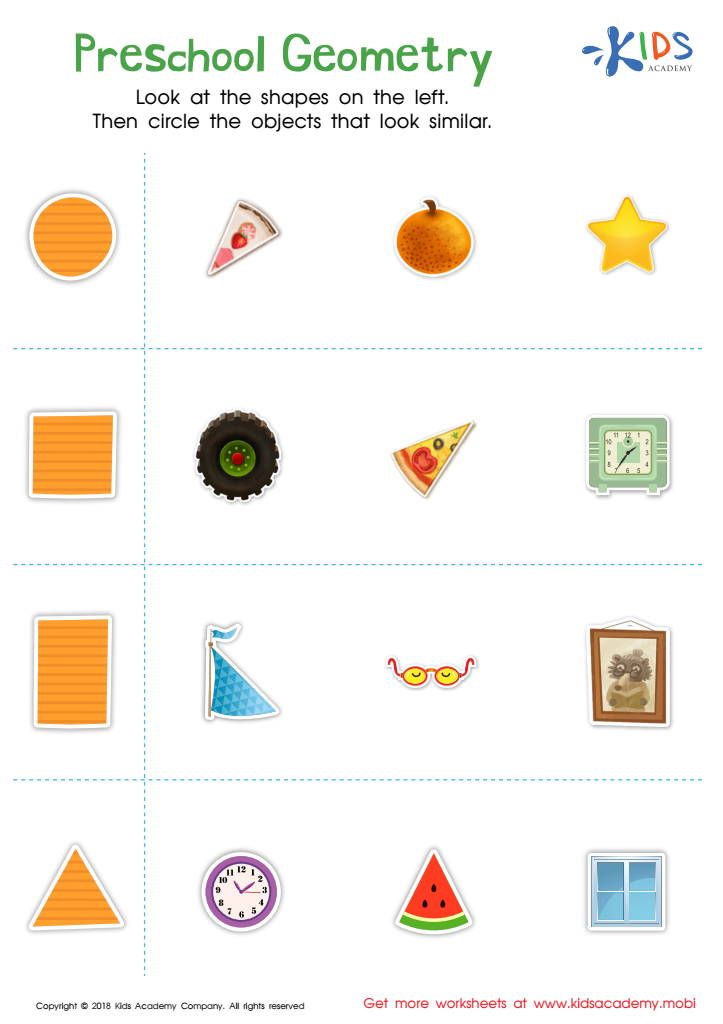
Preschool Geometry Worksheet
This worksheet gives 3rd graders the basics of geometry. Kids match everyday objects to shapes they know, e.g. an orange to a circle, a square to a slice of watermelon and a rectangle to a picture frame. It's a fun way to give them confidence to tackle more complex geometry in the future.
Preschool Geometry Worksheet
Worksheet
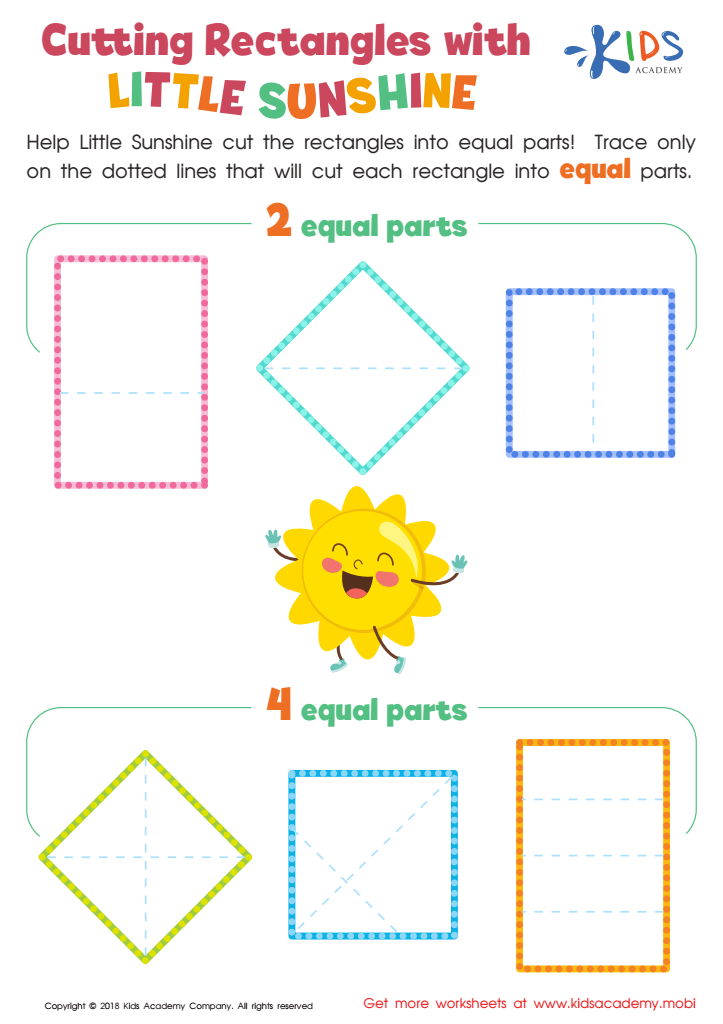
Cutting Rectangles with Little Sunshine Worksheet
Introduce Little Sunshine to your students. Help them to cut rectangles into two or four equal parts by tracing the dotted lines. It's easy - the lines divide them evenly. Encourage your students to help Little Sunshine complete the task!
Cutting Rectangles with Little Sunshine Worksheet
Worksheet
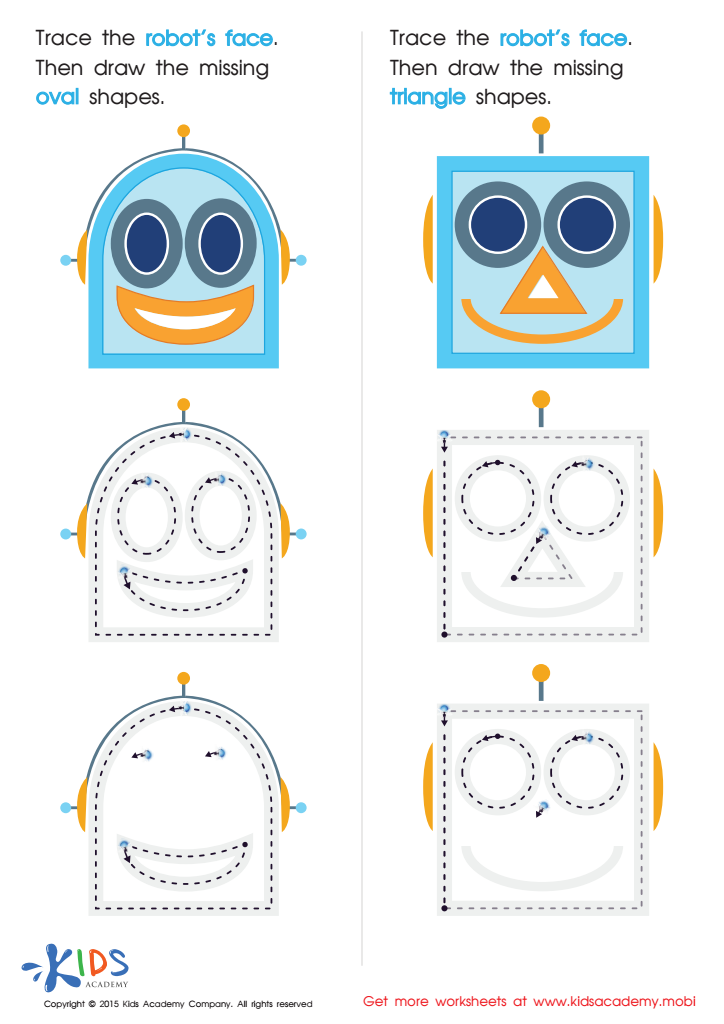
Drawing Ovals And Triangles with Fun Printable
Trace the face and draw missing ovals and triangles. Test your memory and recall shapes' names. Check if you remember how to draw them!
Drawing Ovals And Triangles with Fun Printable
Worksheet
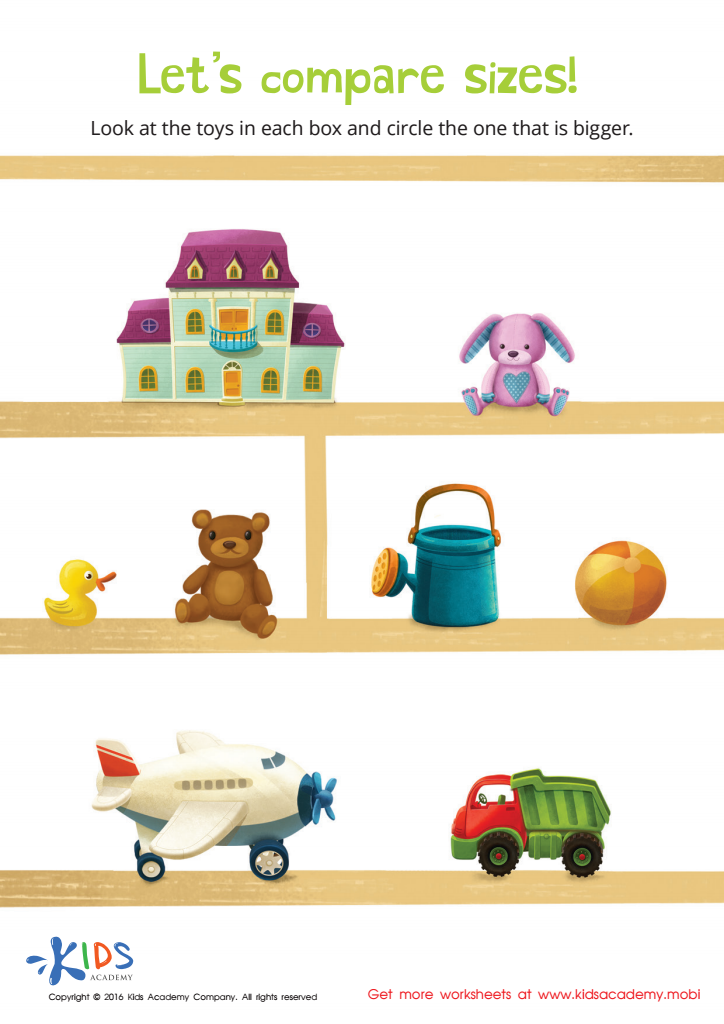
Classifying by Size Sorting Worksheet
Help your preschooler recognize differences in size using this fun worksheet! Your child will engage in important spatial recognition and problem-solving skills while talking with you about objects that can be small or large. Enjoy the vibrant pictures together!
Classifying by Size Sorting Worksheet
Worksheet
Join Kids Academy for Free
Who is primarily going to use this learning content?




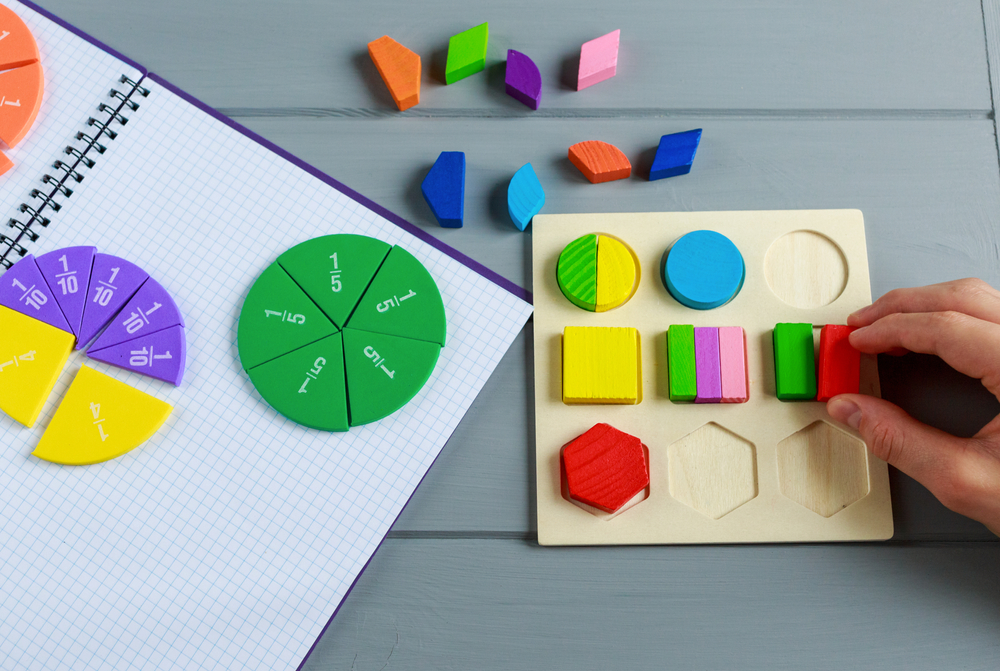

Basic geometry understanding is crucial for both parents and teachers as it lays the foundation for critical thinking and problem-solving skills in children. Geometry not only sharpens spatial reasoning but also helps students comprehend and relate to the world around them. Through geometry, children learn to identify shapes, measure dimensions, and understand the relationships between different geometric figures, which is fundamental in everyday life.
Being proficient in basic geometry enhances a child's ability to tackle more advanced mathematical concepts in later grades, as geometry often serves as the backbone for various math disciplines, including algebra and trigonometry. Moreover, fiscal decisions, architecture, art, and various science fields, all involve geometry, making it essential for real-world applications.
For teachers, fostering basic geometric understanding ensures a well-rounded curriculum that encourages inquiry and creativity. Encouraging a hands-on approach through the use of manipulatives and visual aids can spark students’ interest and imagination in math. Parents can reinforce these lessons at home by incorporating geometry in daily activities, such as cooking or home improvement projects, making learning a continuous and engaging process. Ultimately, strong geometric foundations equip children with necessary skills that foster lifelong learning and adaptability in an ever-evolving society.








