Shape Recognition Tracing Shapes Worksheets
13 filtered results
-
From - To
Enhance your child’s early math skills with our Shape Recognition Tracing Shapes Worksheets! These engaging worksheets provide a fun and interactive way for preschoolers and kindergarteners to recognize and trace various shapes. By engaging in tracing activities, children not only improve their fine motor skills but also build a strong foundation in shape identification. Each worksheet features clear outlines of geometric shapes, allowing kids to practice repeatedly. With colorful designs and straightforward instructions, these resources are perfect for home or classroom settings. Foster your child's learning journey and boost their confidence in mathematics with our shape recognition tracing worksheets!
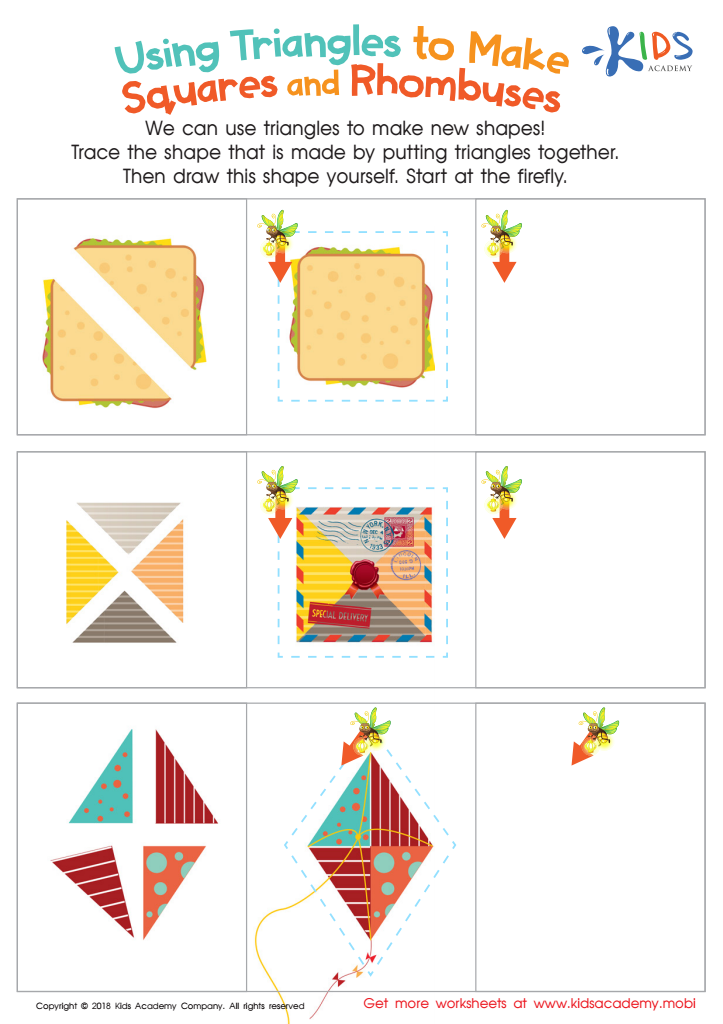
Using Triangles to Make Squares and Rhombuses Worksheet
 Assign to My Students
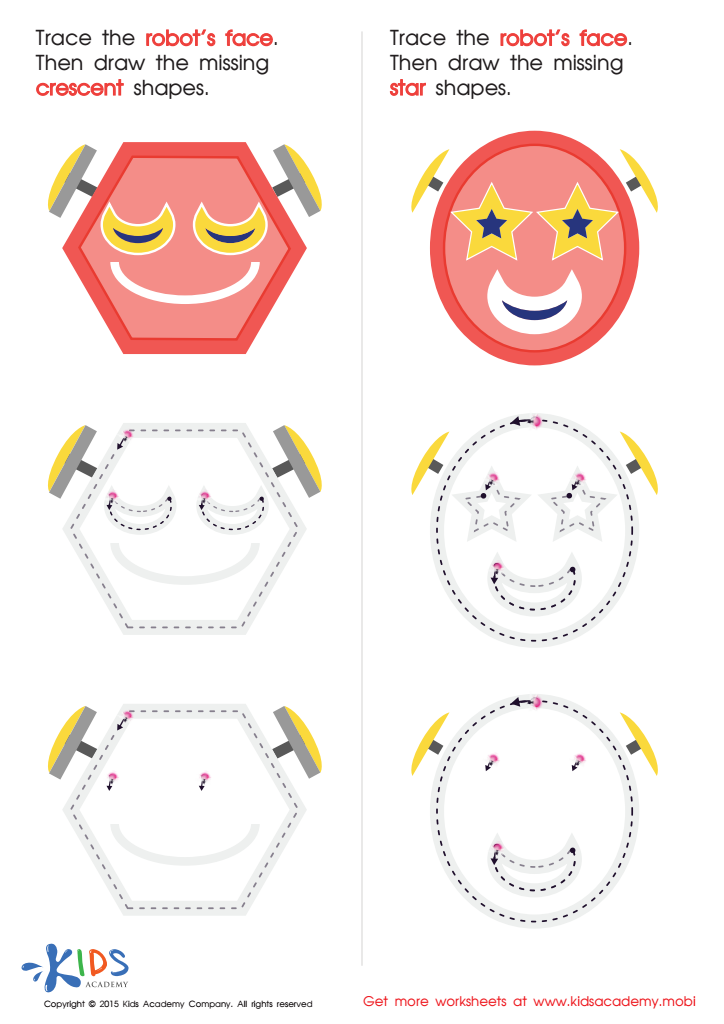
Composing a Robot's Face of Crescents And Stars Worksheet
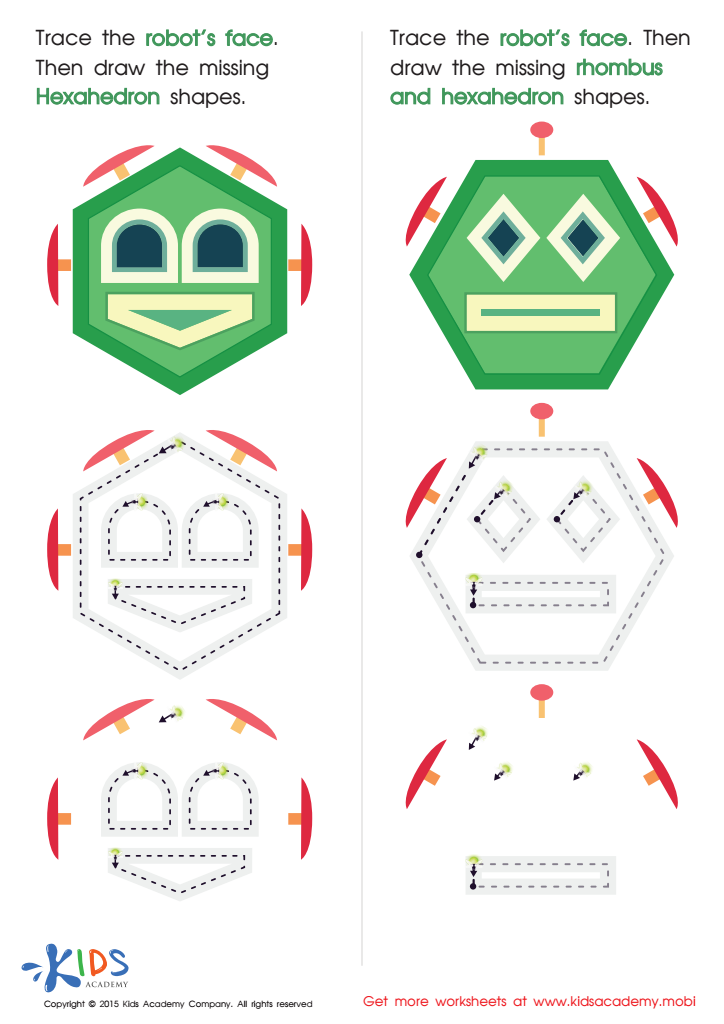
Practice Drawing Hexahedrons And a Rhombus Worksheet
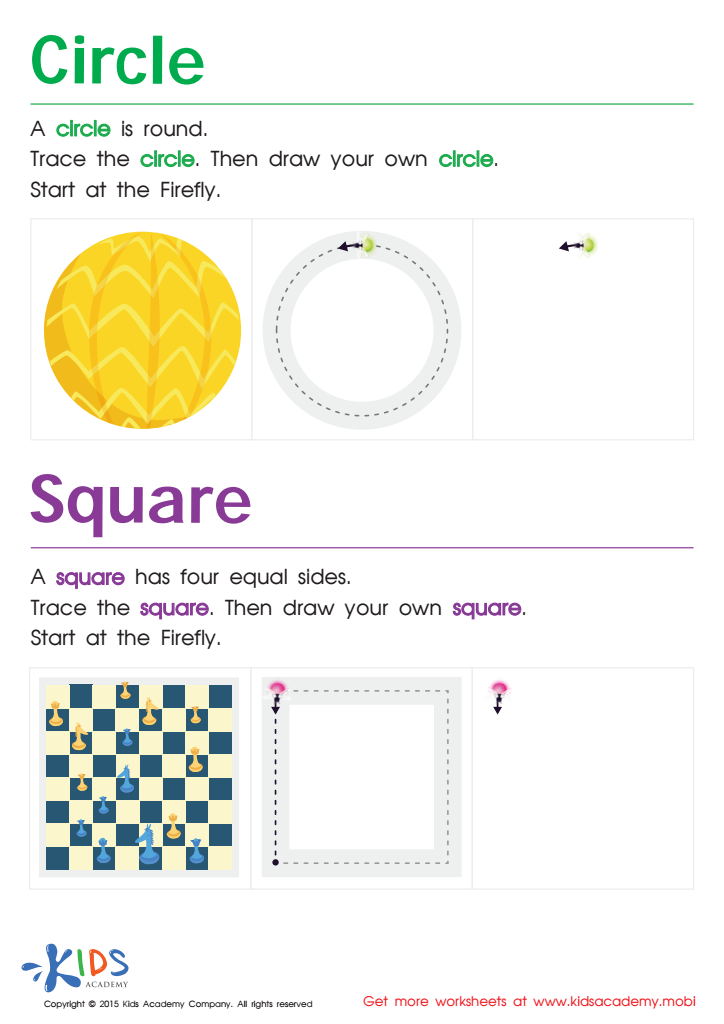
Trace And Draw a Circle And a Square Worksheet
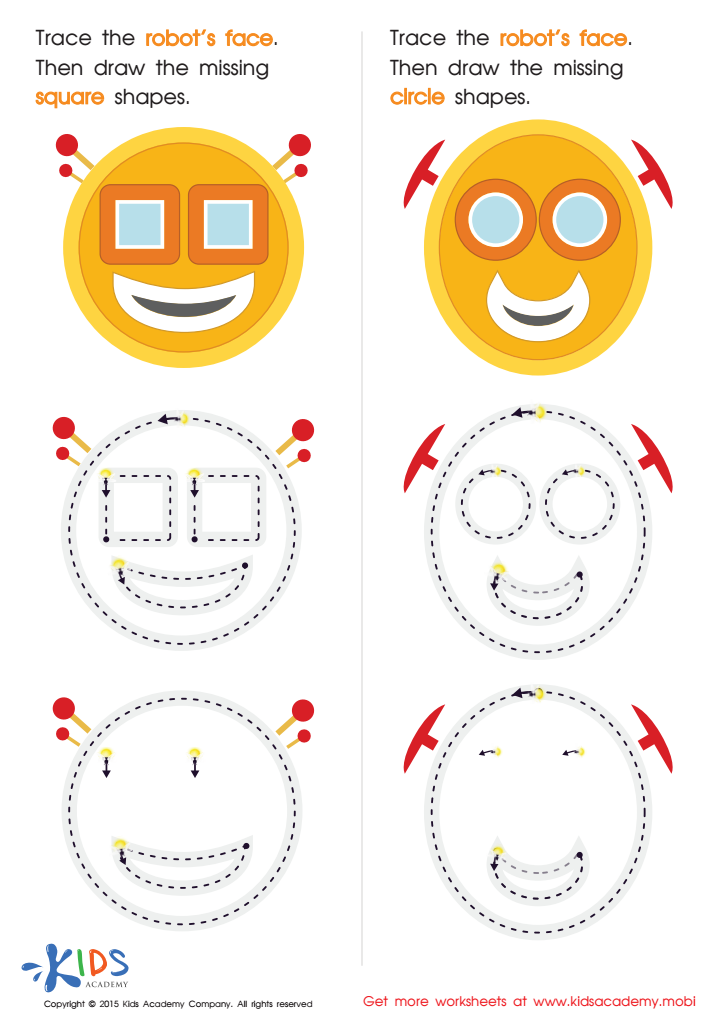
Practicing to Draw Circles And Squares Printable
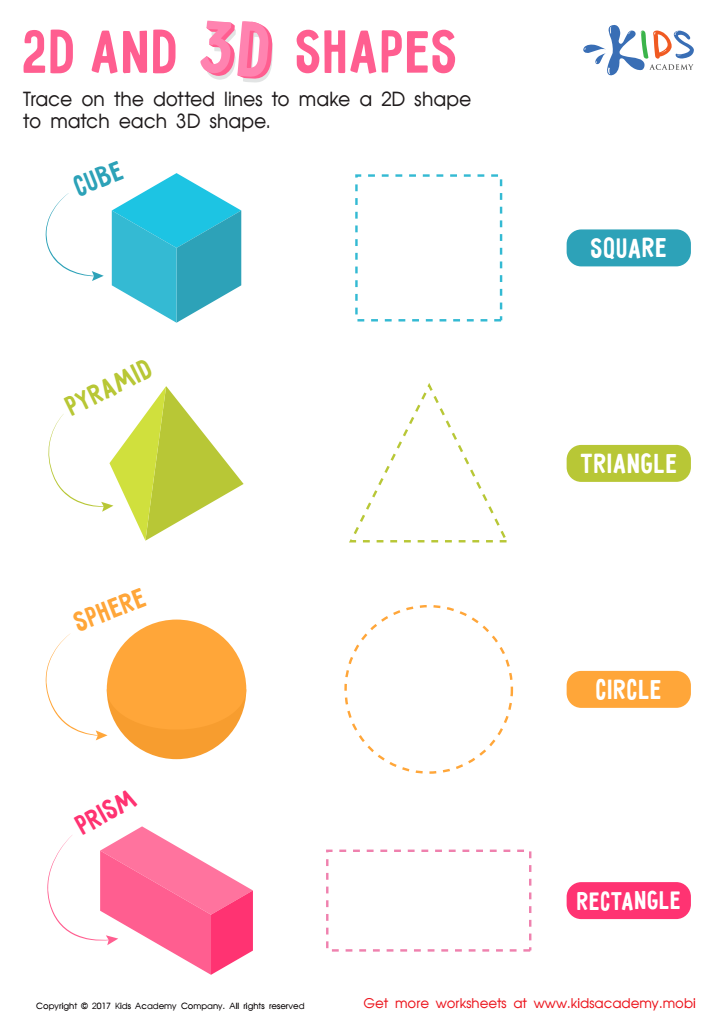
2D and 3D Shapes Worksheet
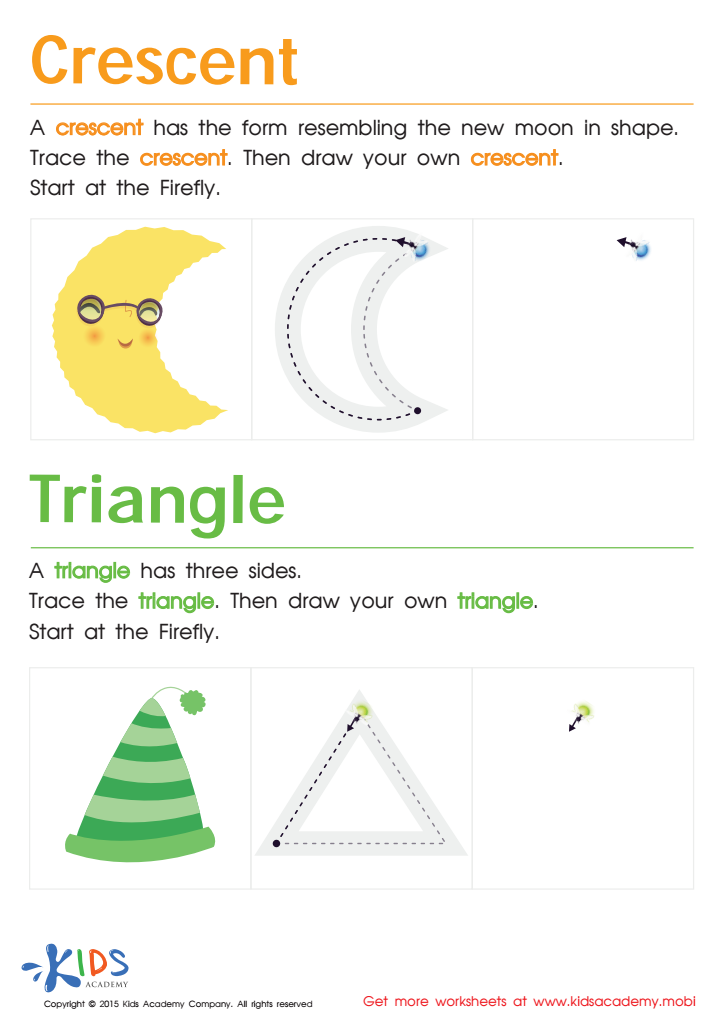
Learning to Draw Crescents And Triangles Worksheet
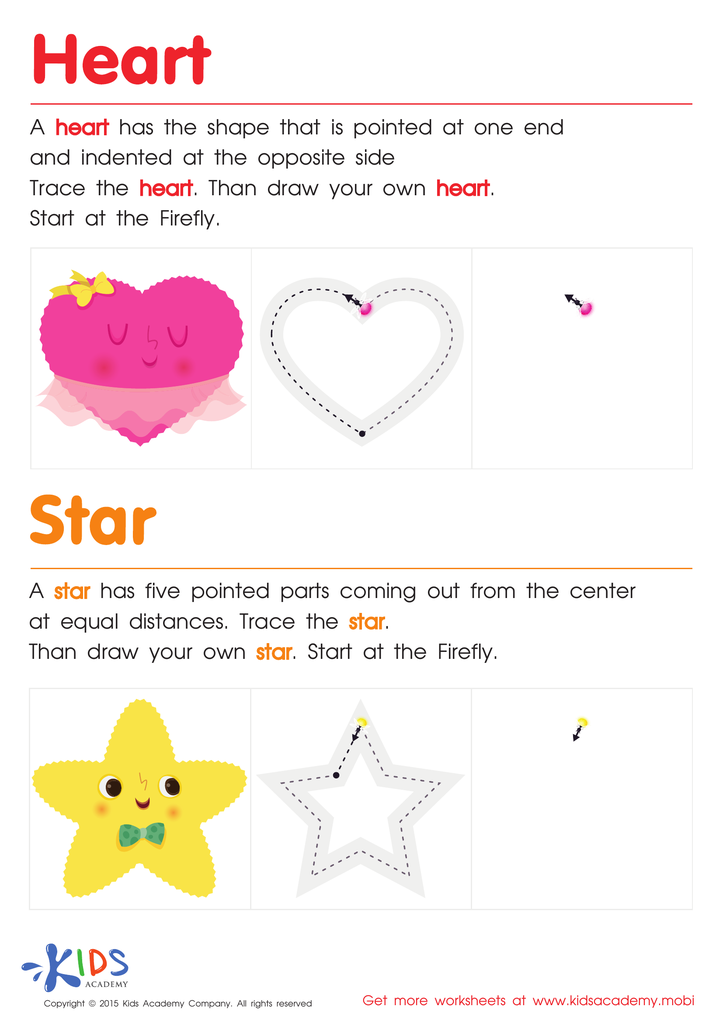
Let's Learn to Draw Hearts And Stars Printable
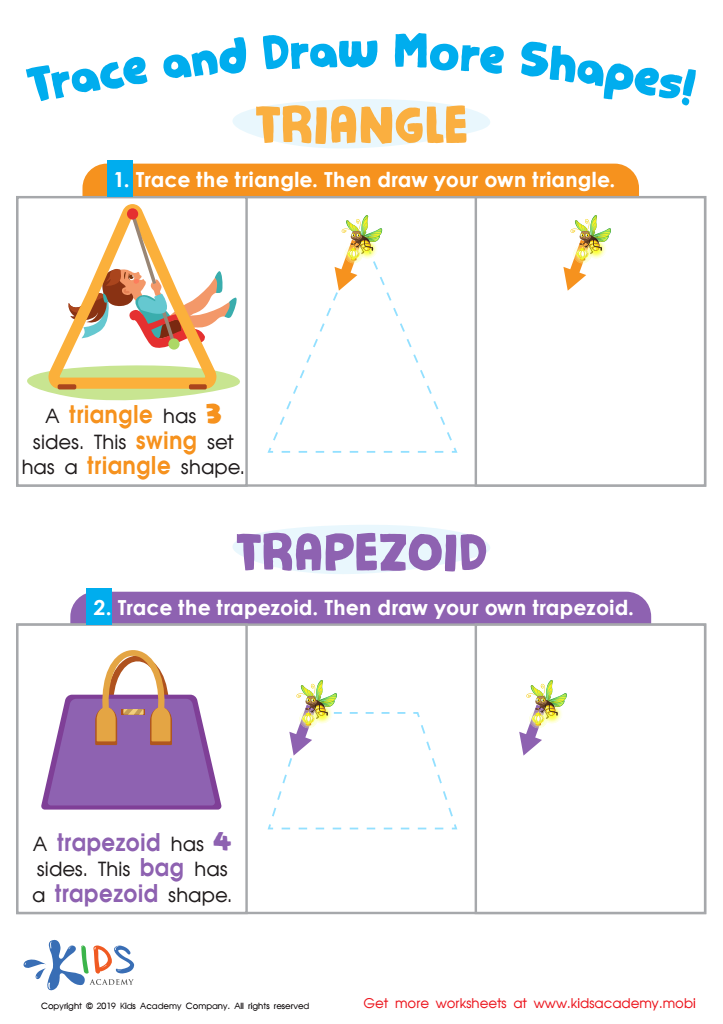
Trace and Draw More Shapes Worksheet
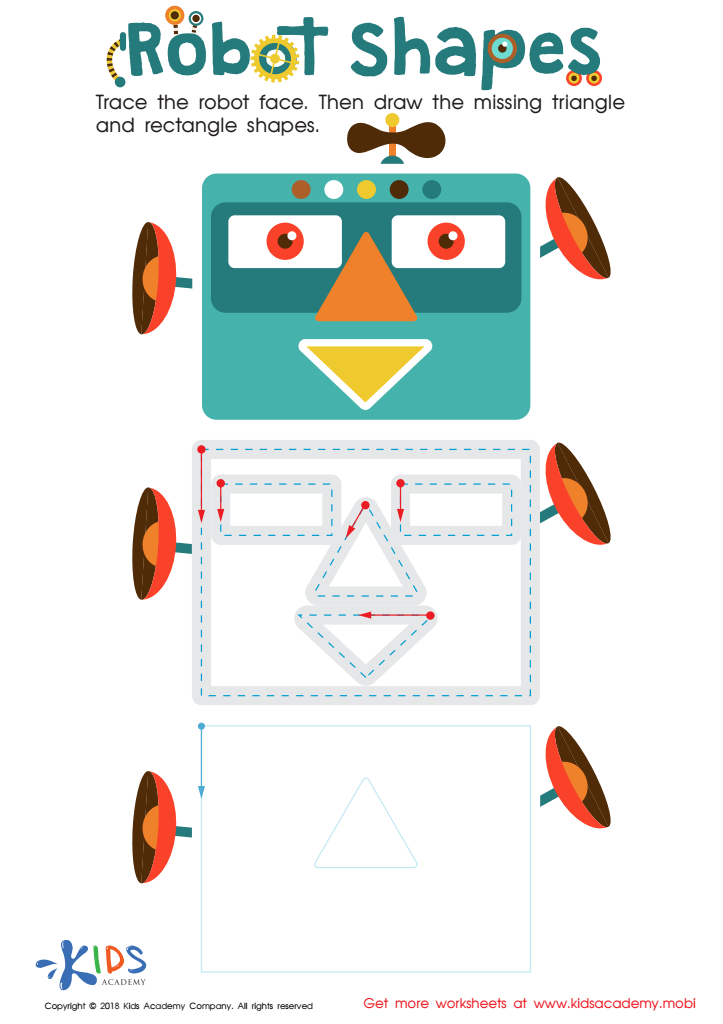
Robot Shapes Worksheet
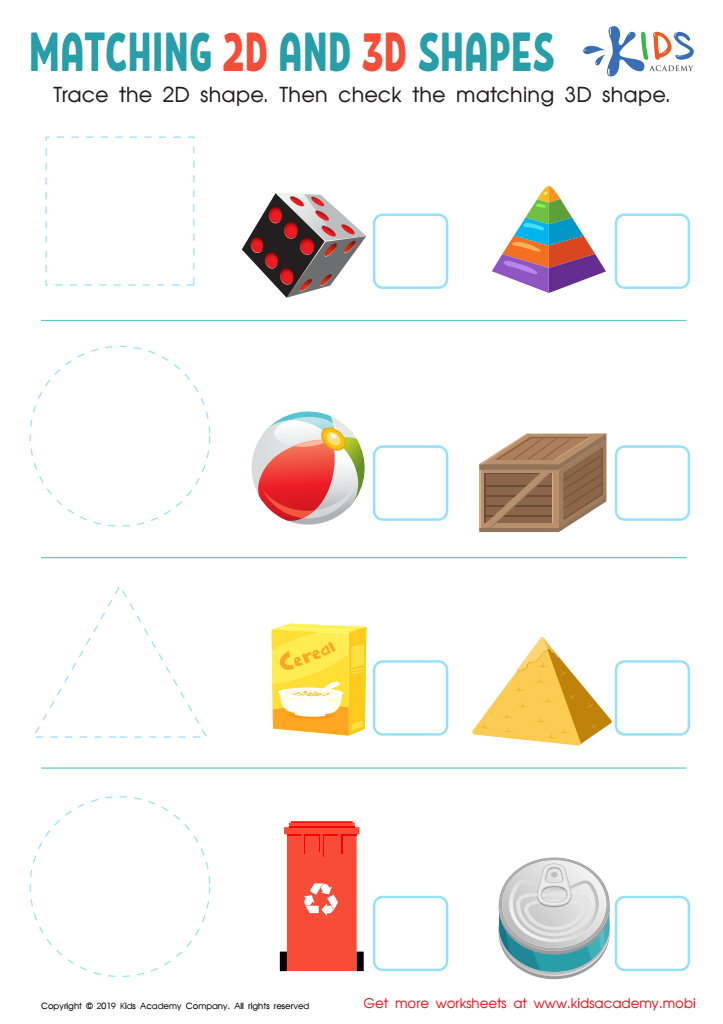
Matching 2D and 3D Shapes Worksheet
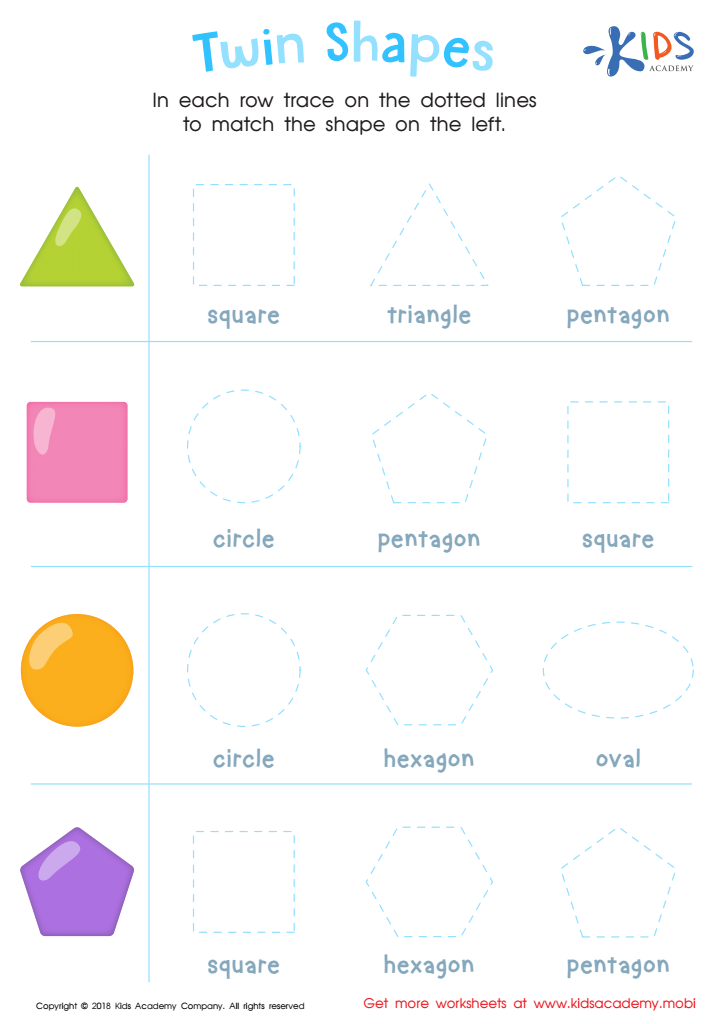
Twin Shapes Dot-to-Dot Worksheet
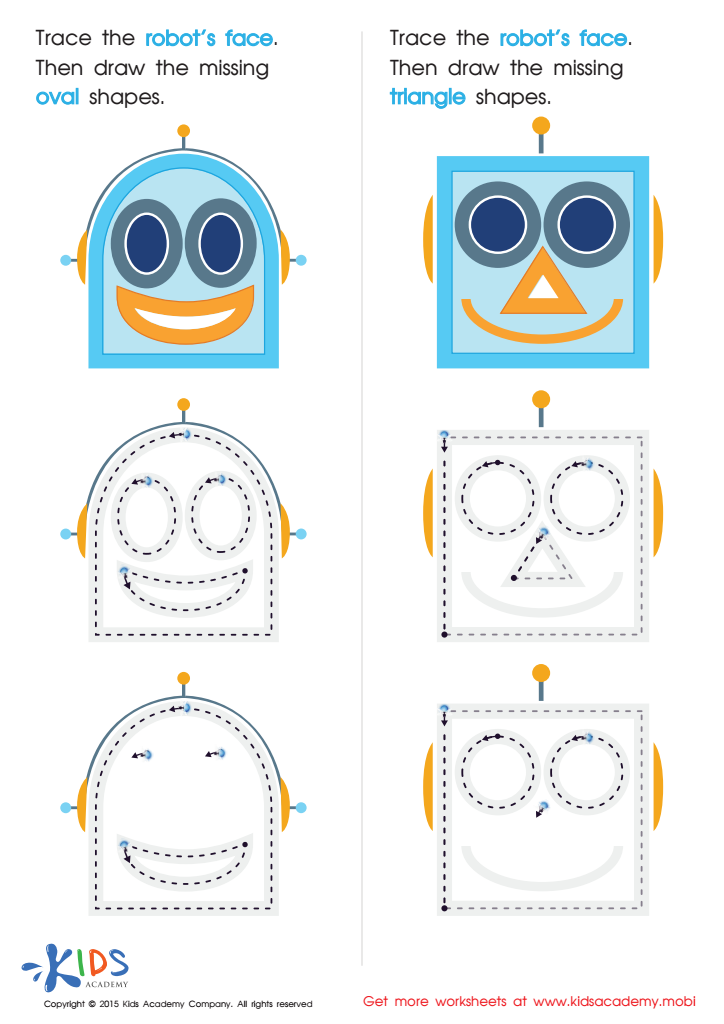
Drawing Ovals And Triangles with Fun Printable








Shape recognition and tracing shapes are fundamental skills that support early childhood development and learning in various ways. Firstly, these activities lay the groundwork for spatial awareness, helping children understand the world around them. Recognizing and reproducing shapes enhances cognitive abilities, including memory and problem-solving skills, as children learn to identify and categorize objects.
Furthermore, tracing shapes develops fine motor skills, crucial for later writing and other hands-on activities. By manipulating tools like pencils or crayons, children gain control over hand movements, which is essential for their writing readiness. Additionally, engaging in shape recognition fosters creativity, as children explore how shapes combine to form objects, contributing to artistic expression.
From a mathematical perspective, understanding shapes is vital for incorporating concepts of geometry, measurement, and symmetry in future learning. It also promotes early math readiness, as recognizing and sorting shapes lays the foundation for more advanced mathematical concepts.
Lastly, involving parents or teachers in shape recognition activities nurtures a child's enthusiasm for learning through interactive play. Overall, recognizing and tracing shapes are essential for a child's holistic development, positioning them for success in academic endeavors and everyday life.