Normal Silent Vowels Worksheets for Ages 3-9
5 filtered results
-
From - To
Welcome to our engaging "Normal Silent Vowels Worksheets" designed for kids aged 3 to 9! These interactive resources help young learners master the concept of silent vowels in a fun and educational way. Our worksheets feature colorful illustrations and age-appropriate activities, making learning both enjoyable and effective. Children will practice identifying silent vowels in various words, enhancing their reading and spelling skills. Whether at home or in the classroom, these worksheets are perfect for reinforcing phonics education. Empower your child's literacy journey today with our thoughtfully crafted worksheets that make mastering silent vowels a breeze!
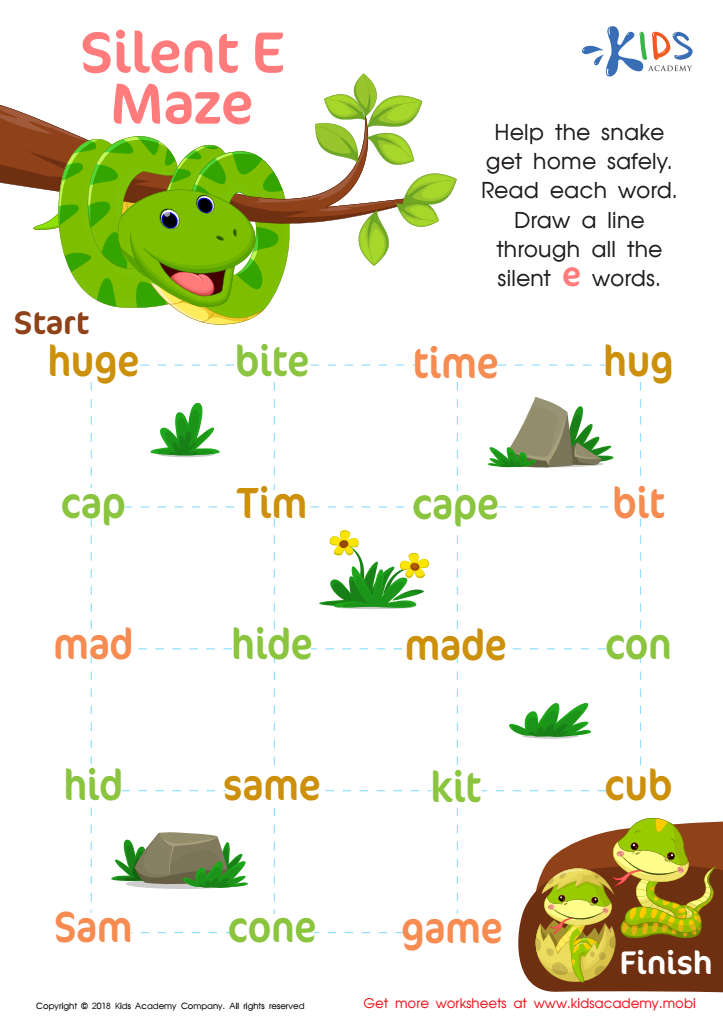
Silent E Maze Worksheet
 Assign to My Students
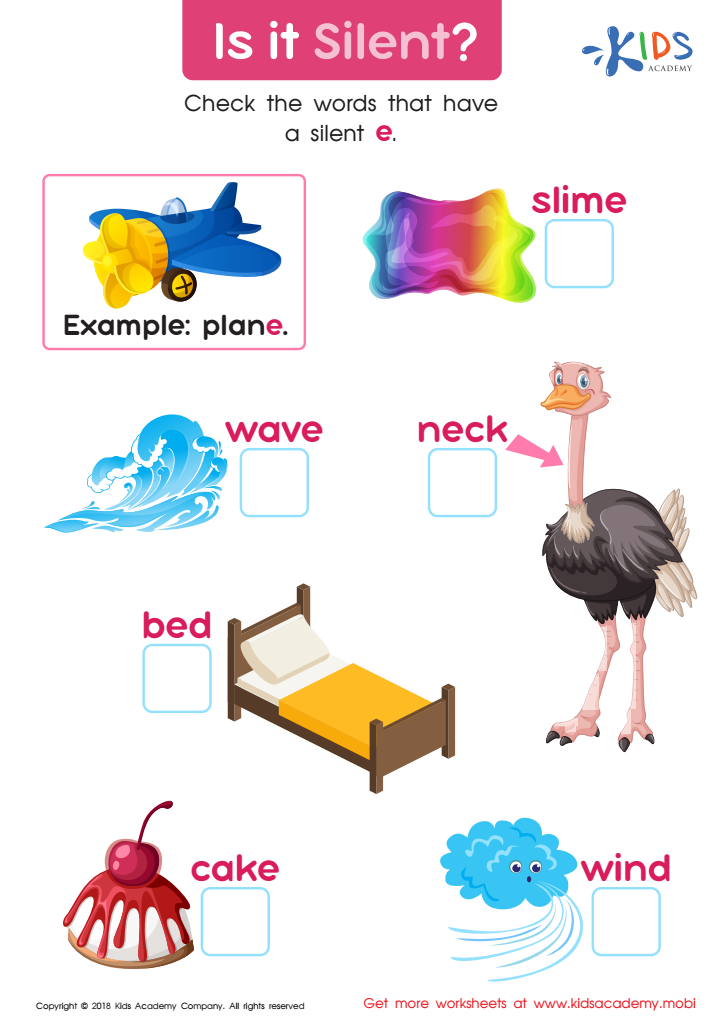
Is It Silent? Worksheet
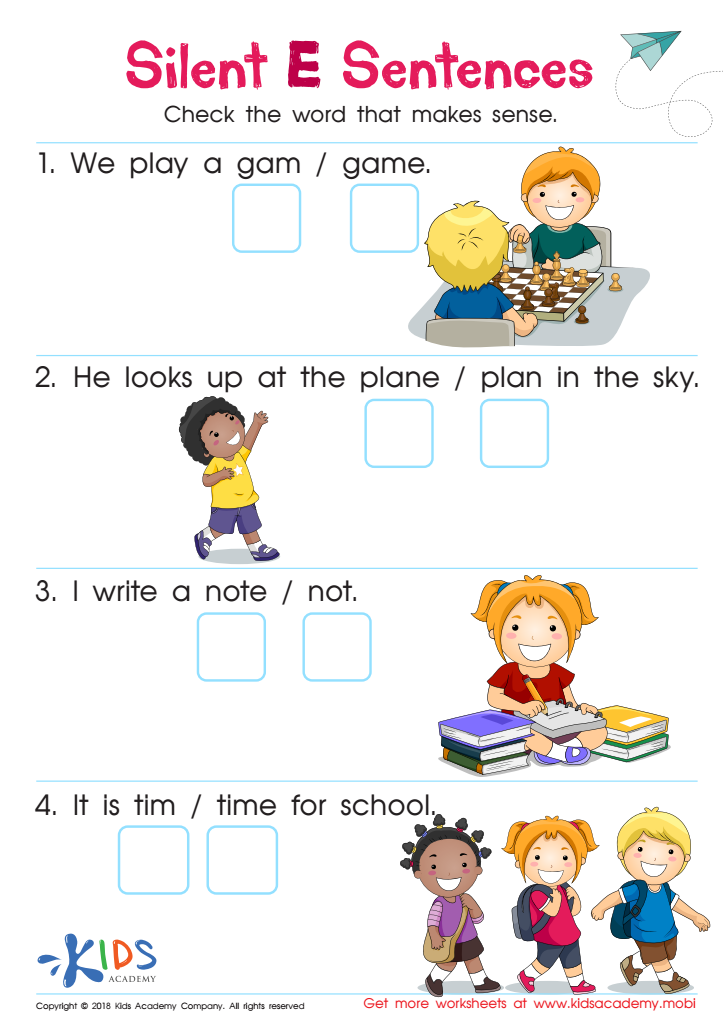
Silent E Sentences Worksheet
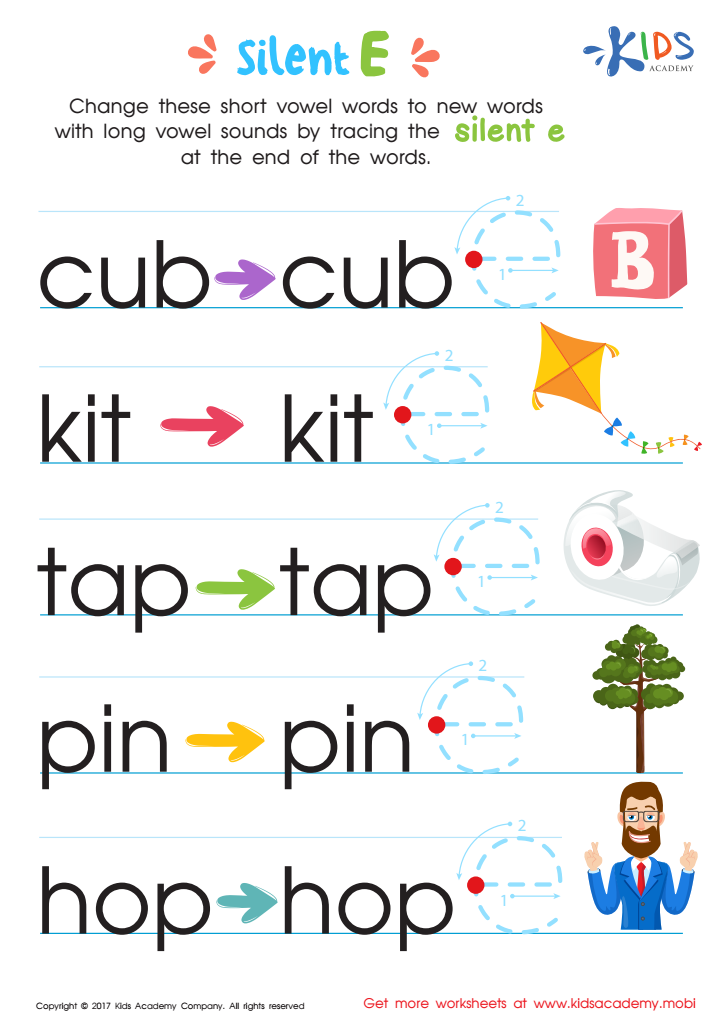
Silent E Words Worksheet
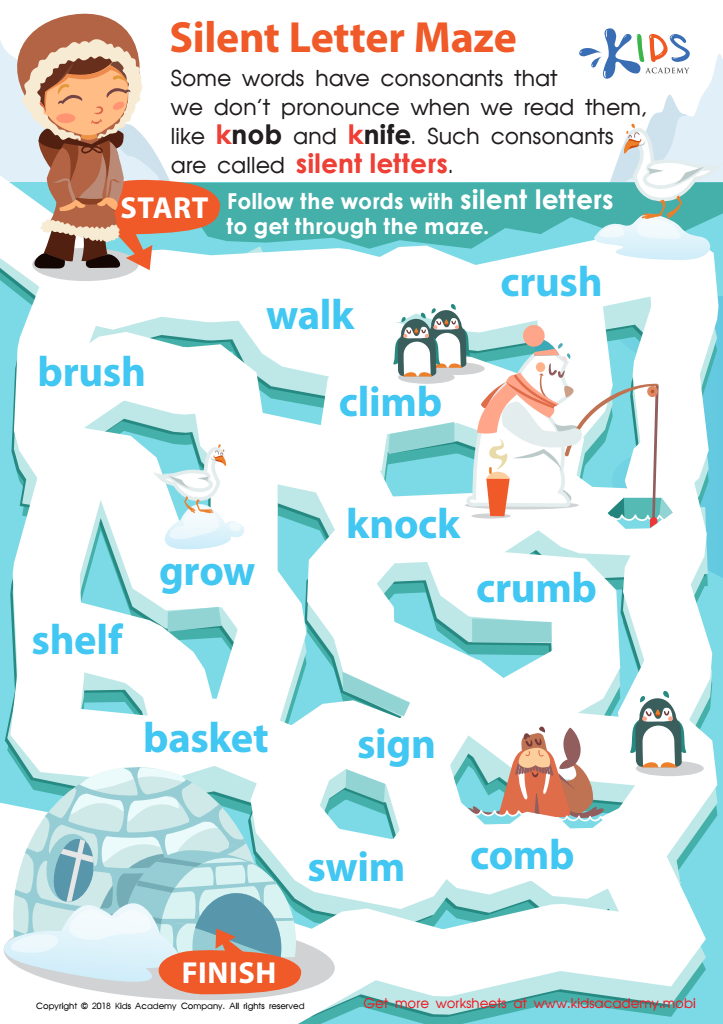
Silent Letter Maze Worksheet


Normal Silent Vowels, a concept prevalent in language development, refers to letters that are commonly silent within words, impacting spelling and pronunciation. For parents and teachers of children aged 3-9, understanding this concept is essential for fostering reading and writing skills.
Silent vowels like 'e' in "cake" or 'u' in "guilt" can significantly alter a word's sound and meaning. Recognizing their role helps children grasp the complexities of English pronunciation, enabling them to decode unfamiliar words more effectively. This skill is vital during early literacy development, where phonemic awareness forms the foundation of reading.
Moreover, teaching about silent vowels can enhance vocabulary. As children become aware of silent letters, they begin to see patterns within words, which reinforces spelling and reading strategies. This knowledge is particularly valuable for ESL learners, who often struggle with pronunciation nuances.
Ultimately, enabling young learners to navigate the intricacies of silent vowels promotes confidence in their reading abilities and fosters a deeper appreciation for the English language. By integrating this knowledge into early education, parents and teachers empower children with essential linguistic tools that support their long-term academic success.