Filters

7 filtered results

Clear all filters
Favorites
With answer key
Interactive

7 filtered results

Difficulty Level

Grade


Subject

    Welcome to our engaging Normal Area and Perimeter Worksheets designed for children ages 3-9! These fun and interactive resources provide a fantastic way for young learners to explore the concepts of area and perimeter through colorful illustrations and hands-on activities. Each worksheet fosters developmental skills, encouraging children to practice measuring and calculating in a playful environment. With easy-to-follow instructions and age-appropriate challenges, our worksheets are perfect for home or classroom use. Help your child build a strong foundation in math while nurturing their creativity and problem-solving abilities. Start exploring area and perimeter today!

    Check out this FREE Trial Lesson on Area and Perimeter for age 3-9!

    Understanding Perimeter

    Favorites
    With answer key
    Interactive
    • 3-9
    • Area and Perimeter
    • Normal
    Sports Area Worksheet
    Sports Area Worksheet

    Sports Area Worksheet

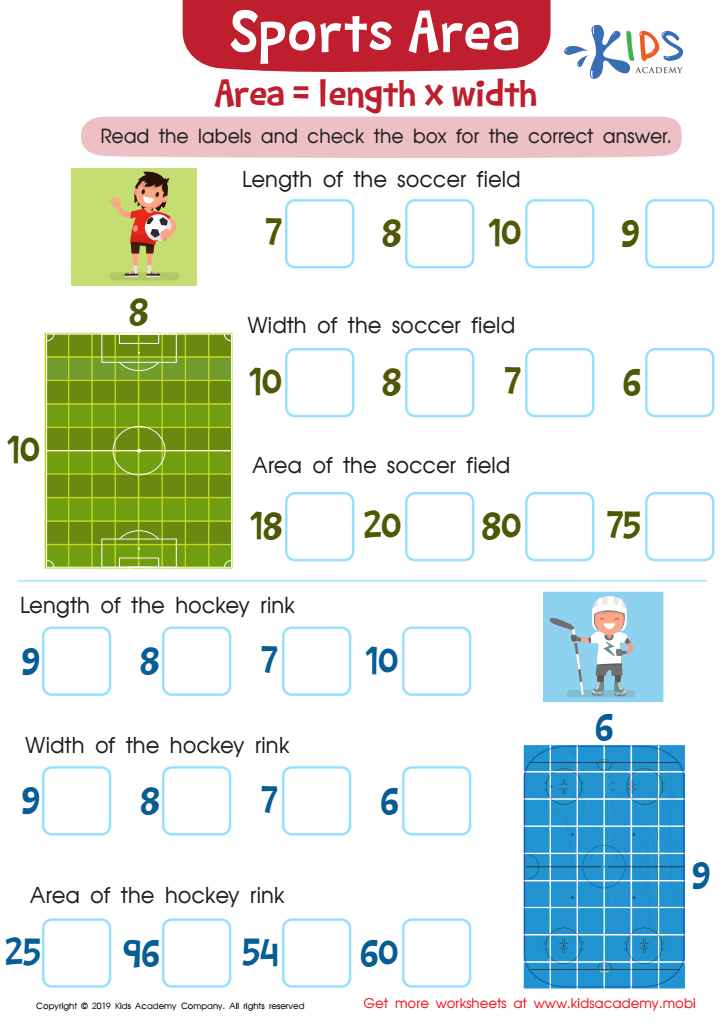
    Help your preschoolers understand area by showing them it's just length x width. Point to the picture in the worksheet, get them to read the labels and select the right answer. Encourage them that calculating areas of shapes, objects and places isn't too hard!
    Sports Area Worksheet
    Worksheet
    Flag Area Worksheet
    Flag Area Worksheet

    Flag Area Worksheet

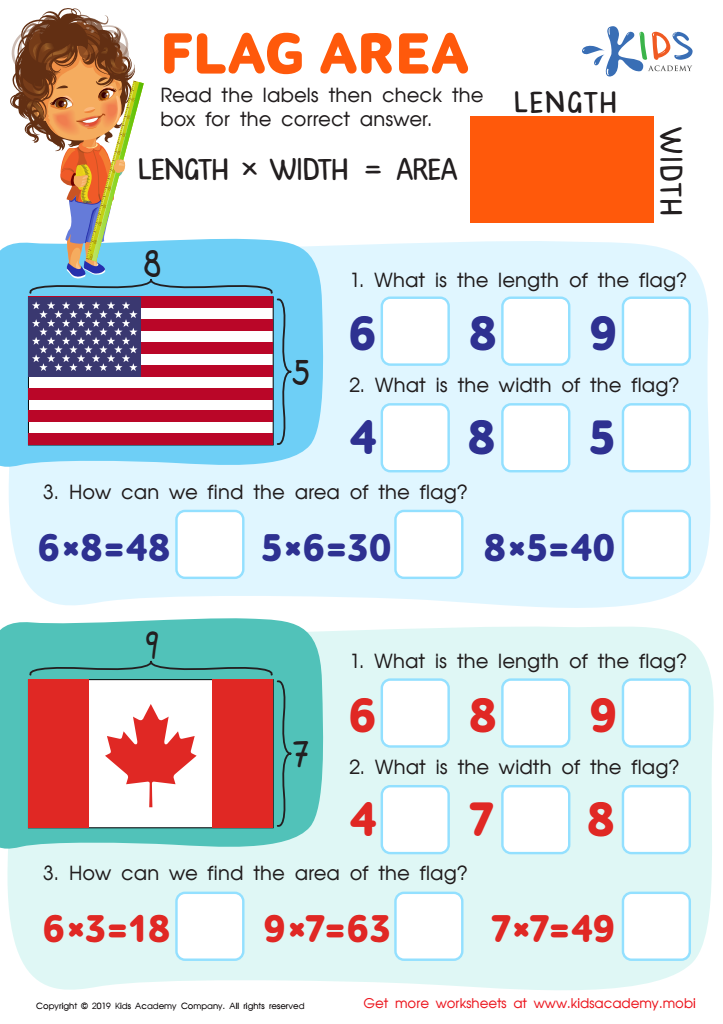
    Test your child's knowledge of flags by asking which ones they can identify in the image. Then, study the worksheet together. There are 6 questions with labels. Have them read each label and check the box for the correct answer.
    Flag Area Worksheet
    Worksheet
    Calculating Perimeter Worksheet Grade 3
    Calculating Perimeter Worksheet Grade 3

    Calculating Perimeter Worksheet

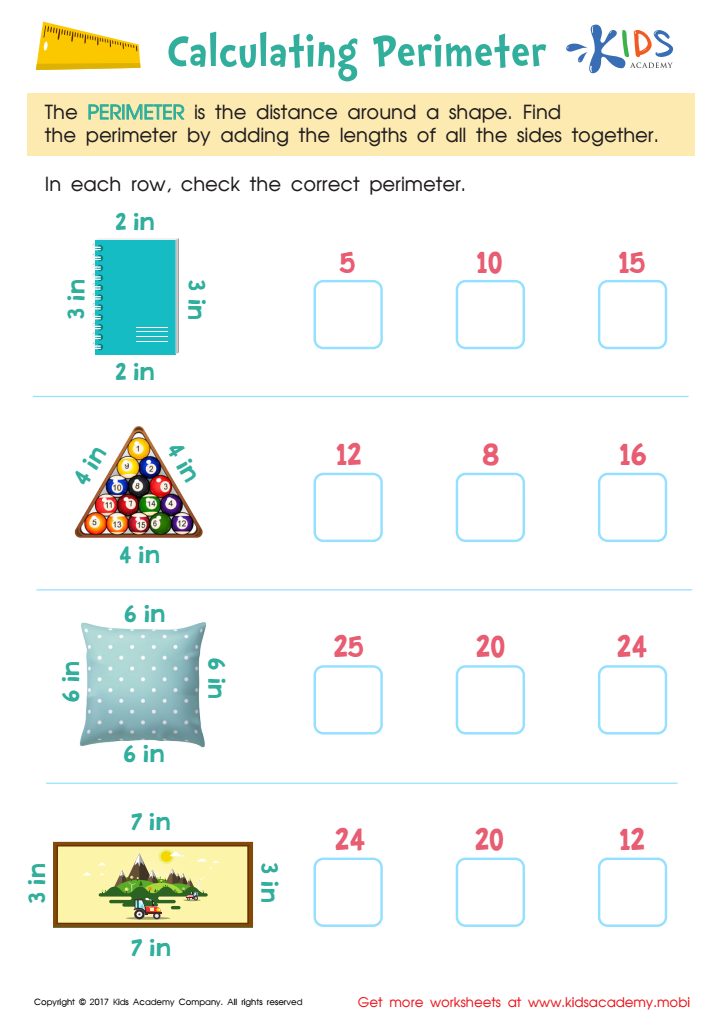
    Check out this worksheet to help kids calculate perimeter! Kids can use it to practice important math skills such as geometry. With everyday objects pictured, they'll find the perimeter and master this useful skill.
    Calculating Perimeter Worksheet
    Worksheet
    What's the Missing Side Worksheet
    What's the Missing Side Worksheet

    What's the Missing Side Worksheet

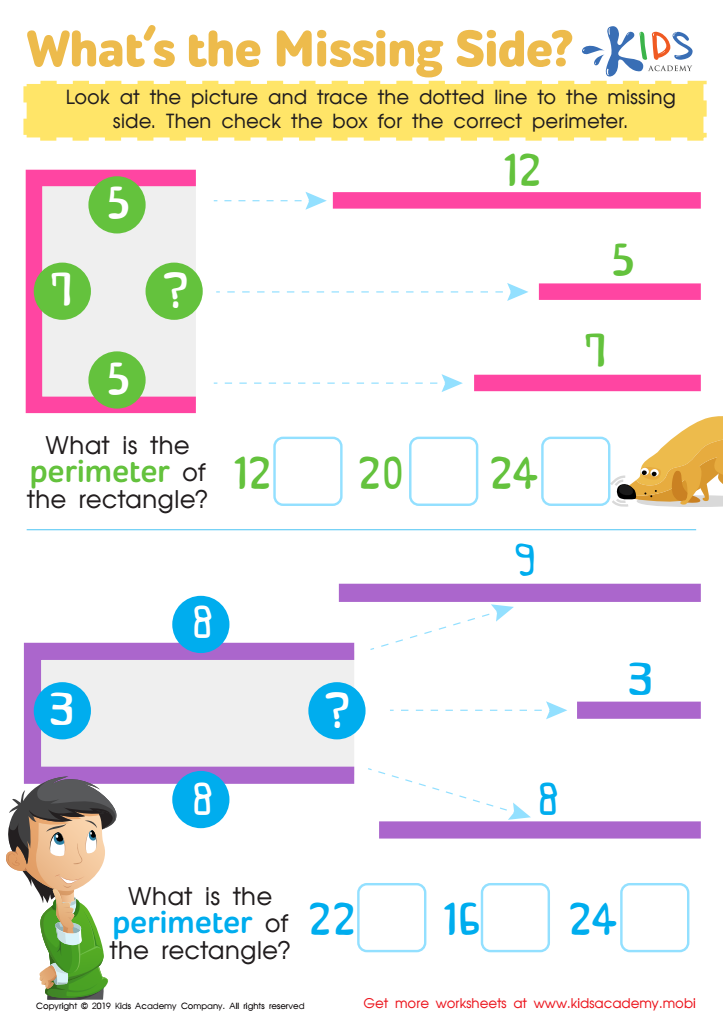
    Assist your pupils in improving math skills with fun exercises like the tracing sheet. Show them the picture and guide them to trace the missing side. Ask them to check the box of the right perimeter afterwards. Doing this regularly can help them to enjoy and appreciate the subject more.
    What's the Missing Side Worksheet
    Worksheet
    Build the Fence, Find the Perimeter Worksheet
    Build the Fence, Find the Perimeter Worksheet

    Build the Fence, Find the Perimeter Worksheet

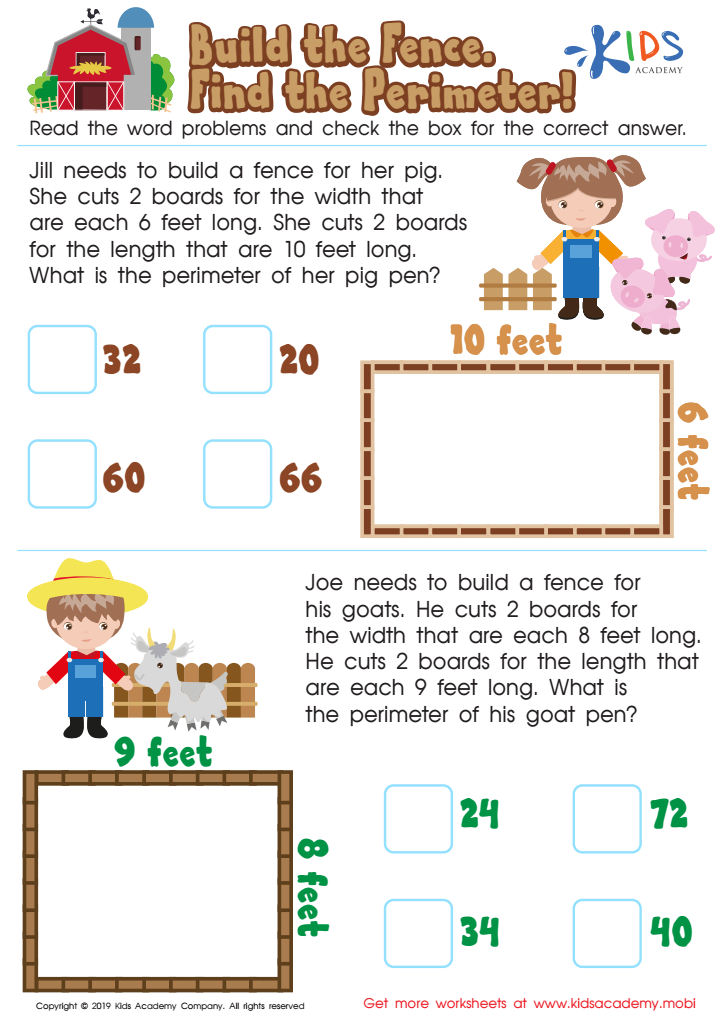
    This worksheet is great for kids needing extra help with geometry and maths. Read the problems to your kids and assist them in answering them correctly by ticking the box. This way, they'll be combining their addition and subtraction skills with literacy to help them learn.
    Build the Fence, Find the Perimeter Worksheet
    Worksheet
    Tile Area Worksheet
    Tile Area Worksheet

    Tile Area Worksheet

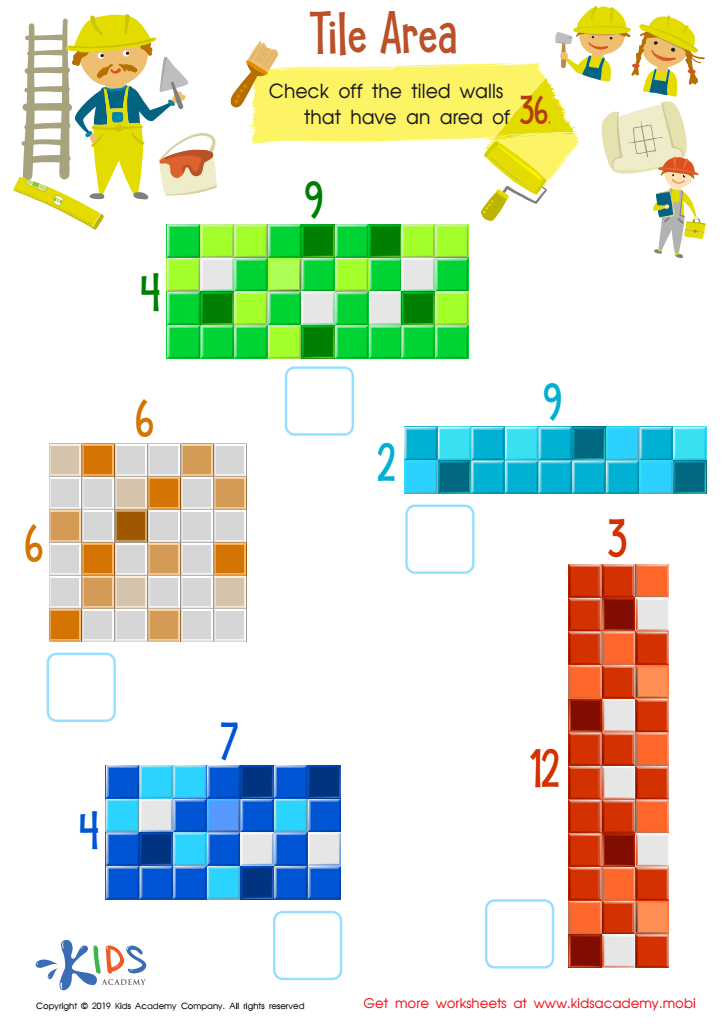
    Help kindergartners become experts in solving simple math problems. Teach them about measuring, the parts to measure, and how to measure the area of tiled walls. Use the worksheet to check off the walls with an area of 36. This can help them understand the concepts and make measuring objects less intimidating.
    Tile Area Worksheet
    Worksheet
    Perimeter Parking Worksheet

    Perimeter Parking Worksheet

    Perimeter Parking Worksheet

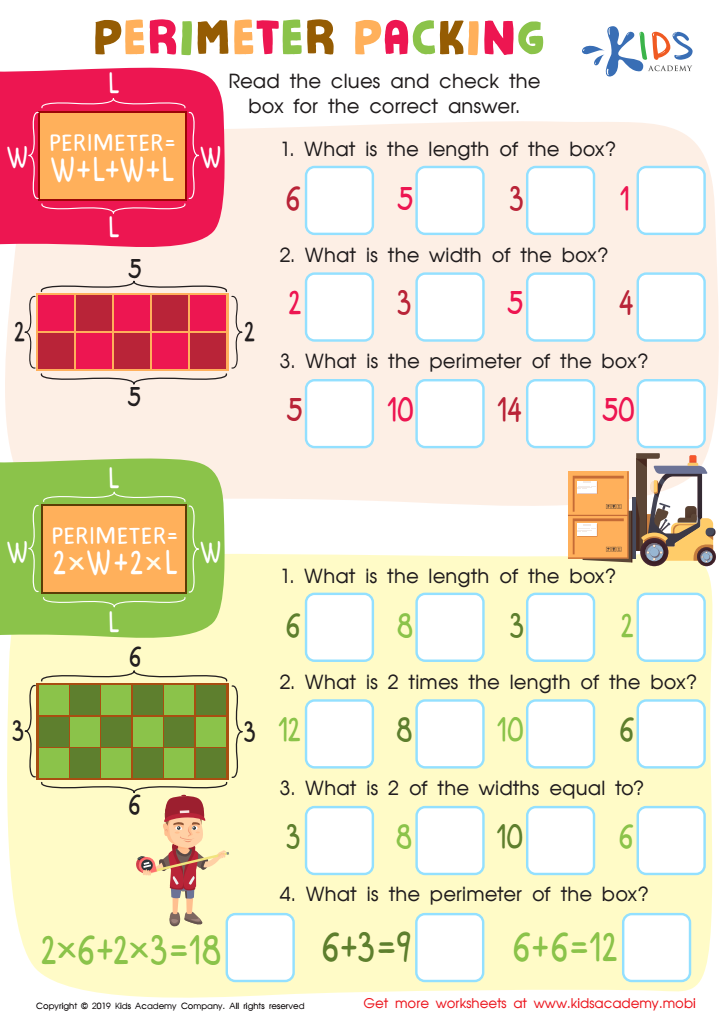
    Geometry can be daunting for kids, but you can make it easy with simple exercises and familiar objects. Check out this worksheet with two sections of questions. Guide your kids to read clues and check the correct answer box. Help them become better at solving geometry problems.
    Perimeter Parking Worksheet
    Worksheet


    Understanding area and perimeter is vital for children aged 3-9 as it lays the foundation for mathematical reasoning and spatial awareness. Parents and teachers should care about these concepts because they are not just abstract numbers; they are tangible ideas that children encounter in everyday life. Recognizing the space an object occupies (area) or the boundary around it (perimeter) helps children develop critical thinking and problem-solving skills.

    Introducing area and perimeter through playful activities—such as measuring classroom objects, gardening patches, or building projects—engages young learners in hands-on exploration. This practical application fosters a love for math by showing its relevance in real-world contexts. It also enhances fine motor skills as children measure and create, blending physical activity with cognitive development.

    Moreover, grasping area and perimeter can improve children's understanding of geometry and measurement, easing their transition to more advanced mathematical concepts later in school. Teaching these fundamentals encourages collaboration and communication among peers, as they discuss their findings and methods. By caring about area and perimeter, parents and teachers are investing in a child's cognitive growth while sparking curiosity, confidence, and a lifelong appreciation for learning.