Normal Animals Worksheets for Ages 3-9 - Page 3
49 filtered results
-
From - To
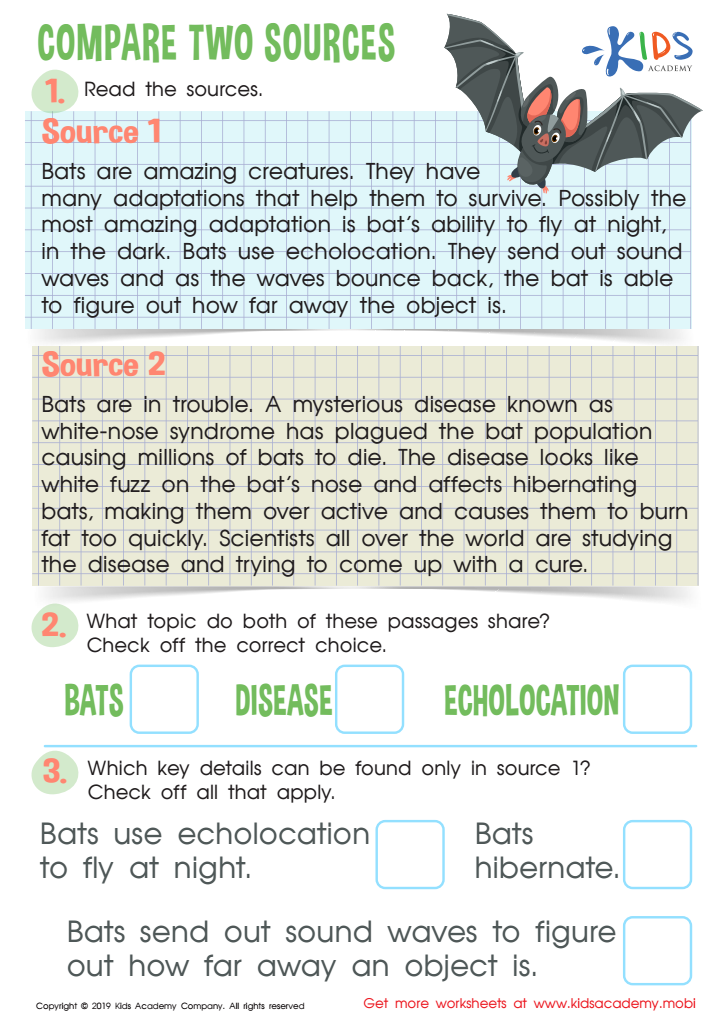
Compare Two Sources Worksheet
 Assign to My Students








Parents and teachers should care about introducing "normal" or everyday animals to children ages 3-9 because it plays a crucial role in their early cognitive development, empathy, and understanding of the world. Familiar animals such as dogs, cats, rabbits, and birds provide a tangible way for young children to learn about biology, anatomy, and basic life cycles. Through stories, pictures, and real-life observations, children can relate to these animals, fostering curiosity and a sense of connection to the natural world.
Engaging with normal animals also cultivates empathy and social skills in children. For instance, taking care of a pet can teach responsibility, kindness, and the importance of nurturing relationships. These experiences are easily transferable to interactions with their peers and family members.
Furthermore, normal animals frequently appear in various educational materials, including books, cartoons, and school projects. When children are familiar with these animals, it aids in their comprehension and retention of information. They become better listeners and readers and can easily connect new knowledge to familiar references, enhancing their overall learning experience.
In summary, familiar animals serve as critical educational tools that enrich children's emotional intelligence, academic understanding, and social skills, setting a solid foundation for well-rounded development.








