Fine Motor Skills Normal Geometry Worksheets for Ages 4-7
11 filtered results
-
From - To
Enhance your child's learning with our "Fine Motor Skills Normal Geometry Worksheets for Ages 4-7." These engaging worksheets help young learners master geometry concepts while developing crucial fine motor skills. Crafted to blend fun with education, each activity guides children through drawing shapes, tracing patterns, and solving puzzles. Ideal for preschool to first grade, our worksheets stimulate cognitive growth, hand-eye coordination, and precision. As your child measures, sorts, and identifies shapes, they gain confidence and a solid foundation in both geometry and fine motor skills. Make learning both enjoyable and meaningful with our expertly designed resources.
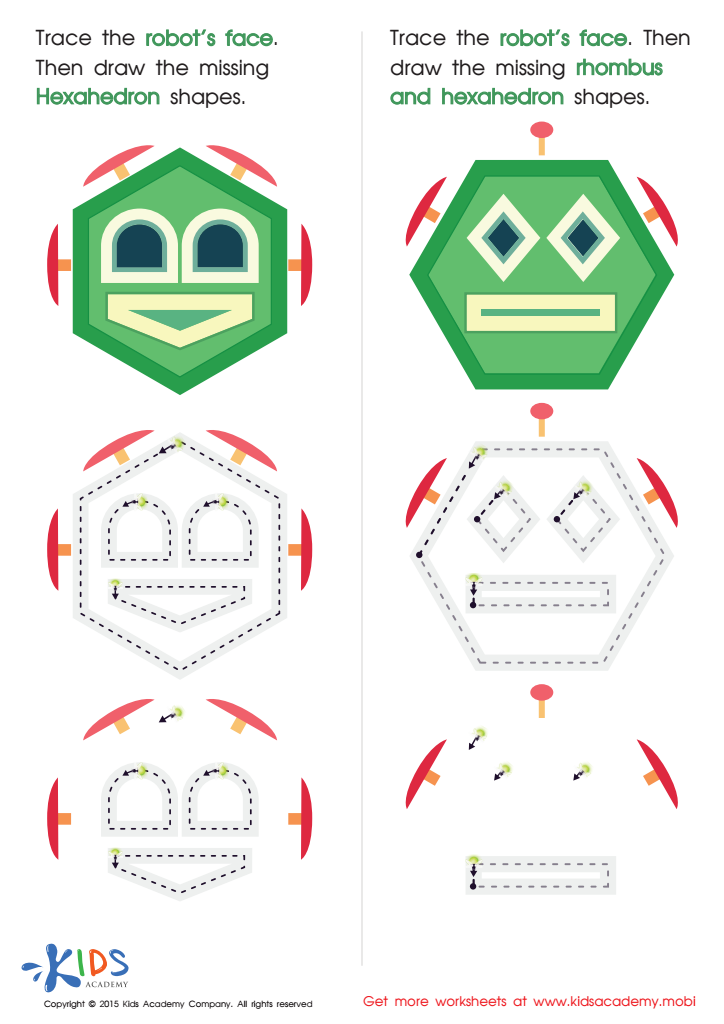
Practice Drawing Hexahedrons And a Rhombus Worksheet
 Assign to My Students











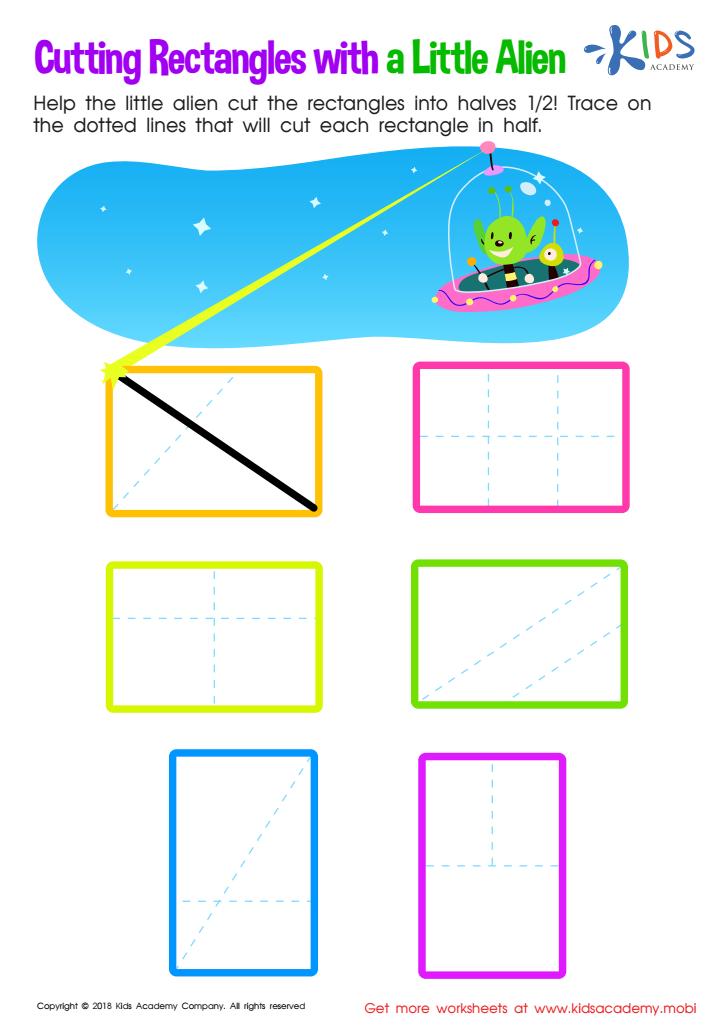
Cutting Rectangles with Alien Worksheet
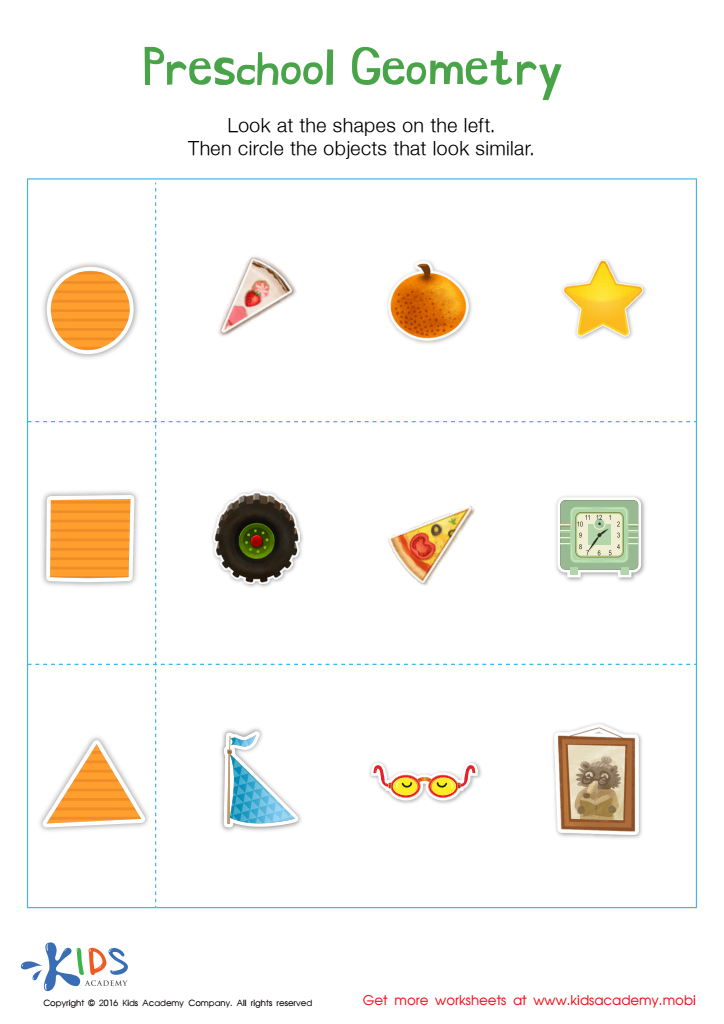
Preschool Geometry Match Up Worksheet

Learning to Draw Crescents And Triangles Worksheet
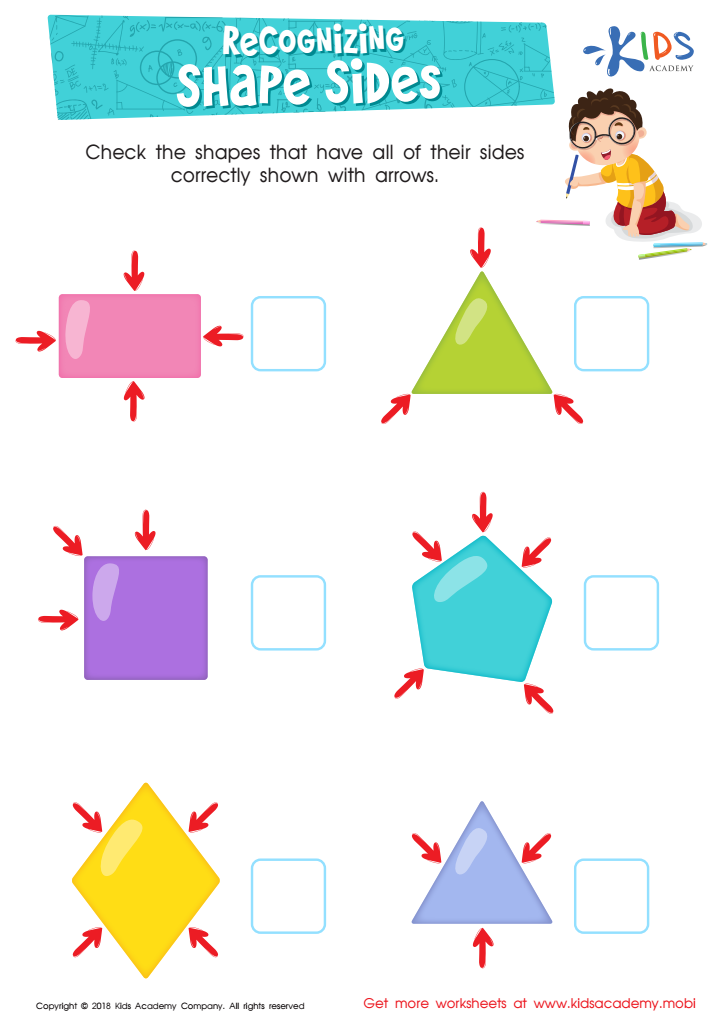
Recognizing Shape Sides Worksheet
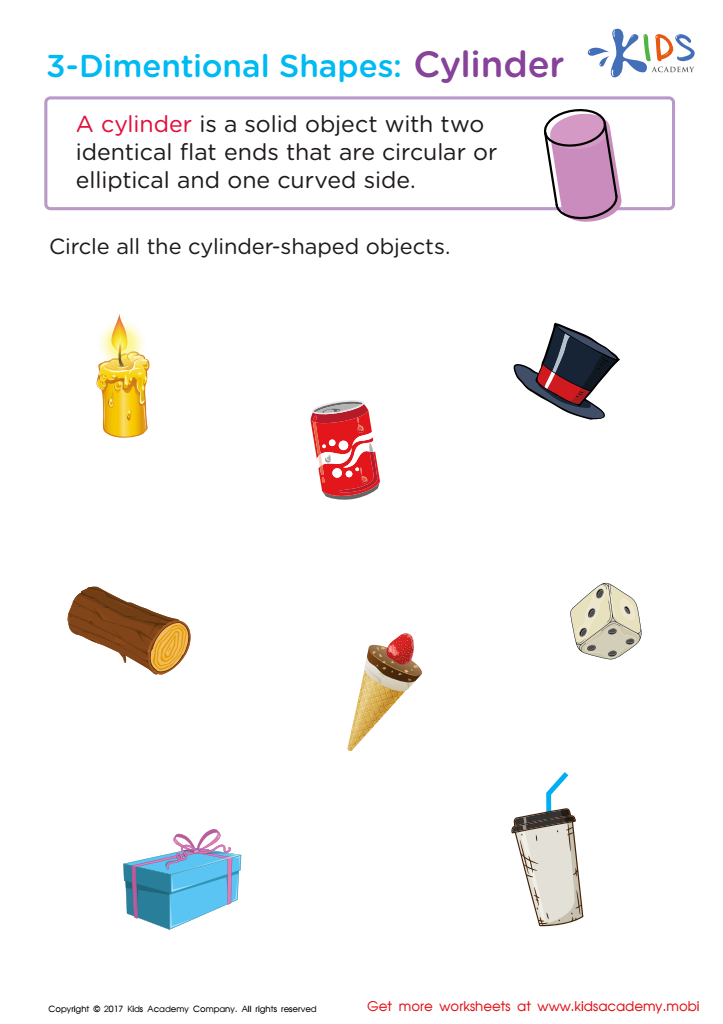
Three–Dimensional Shapes: Cylinder Worksheet
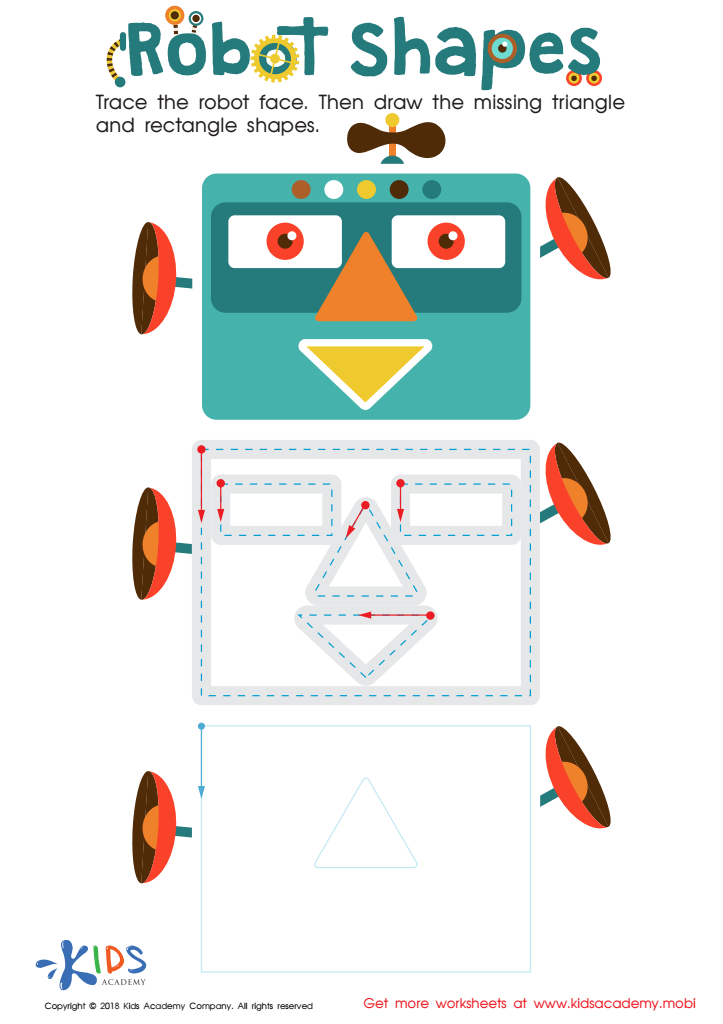
Robot Shapes Worksheet
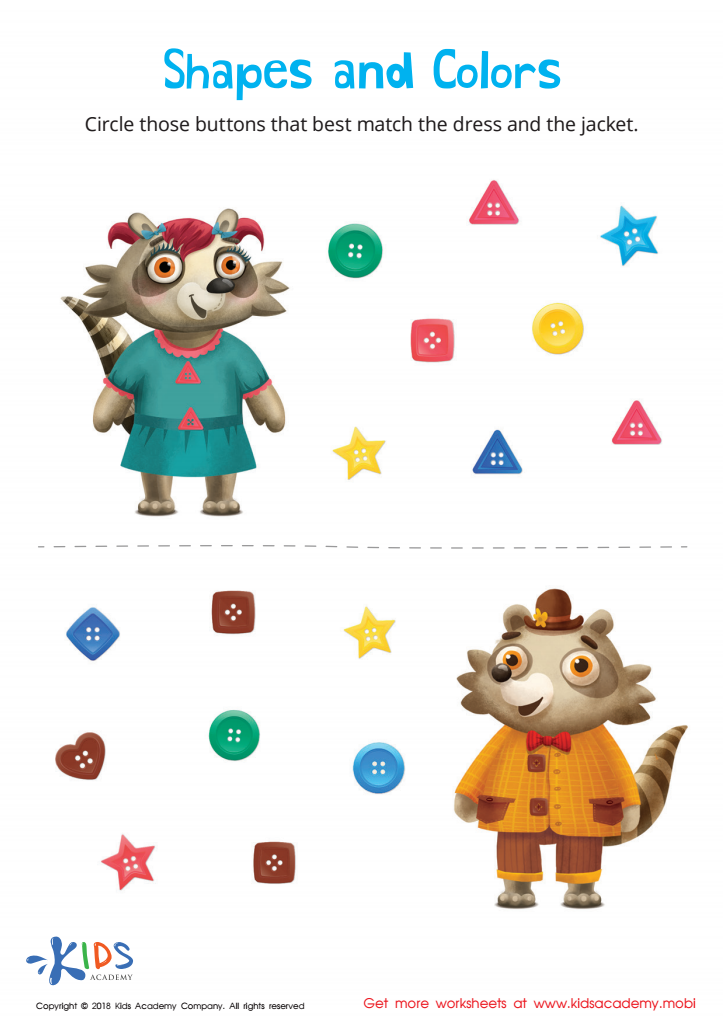
Shapes and Colors Worksheet
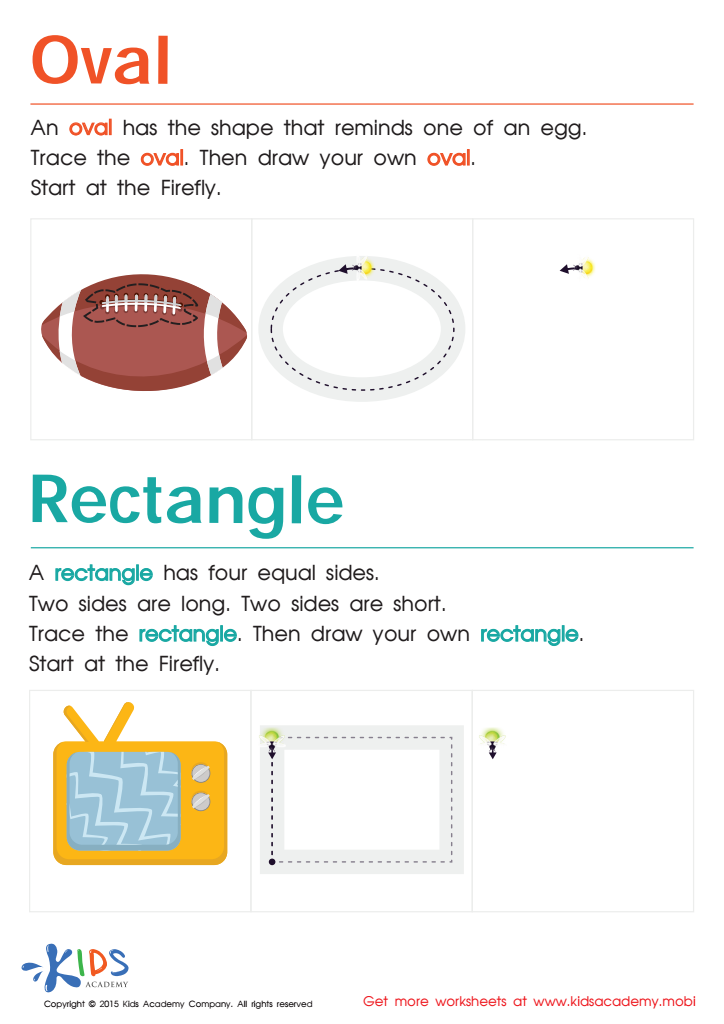
Easy Drawing of Ovals And Rectangles Worksheet
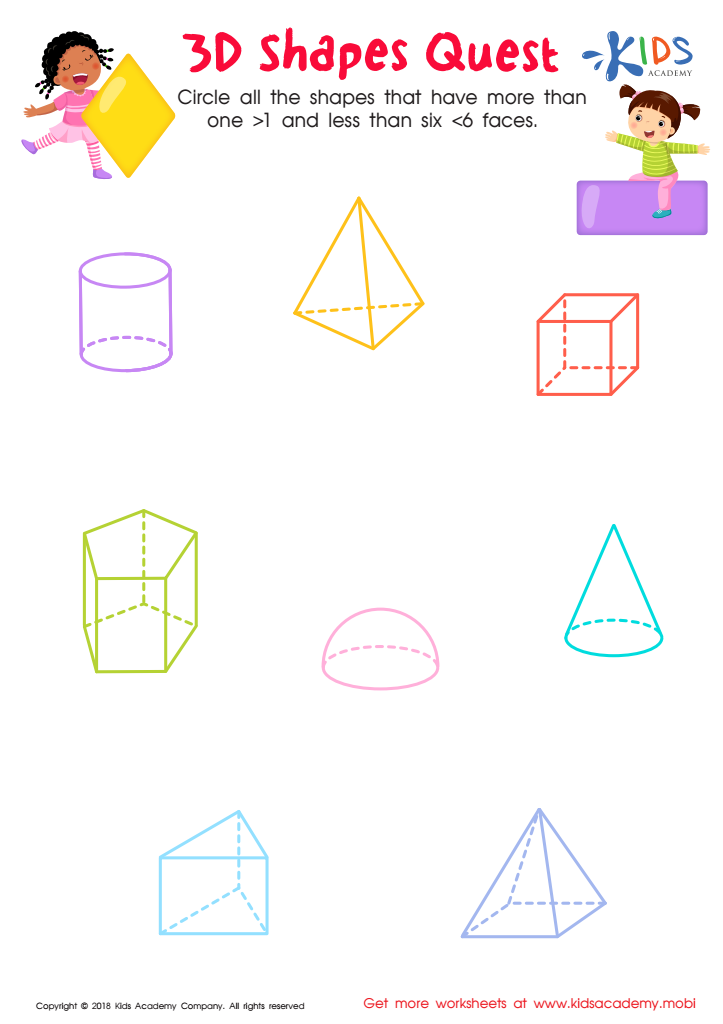
3D Shapes Quest Worksheet
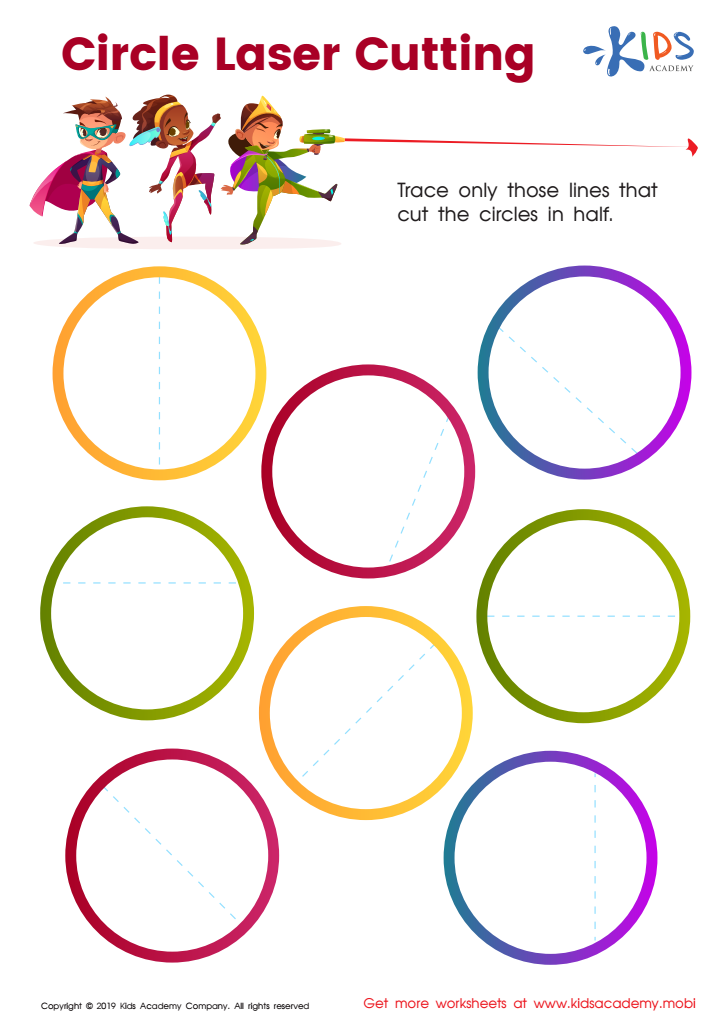
Circle Laser Cutting Worksheet








Fine motor skills and normal geometry are crucial components of early childhood development, particularly for children ages 4 to 7. Fine motor skills involve the coordination of small muscle movements, such as those in the hands and fingers, to perform tasks like buttoning a shirt or writing. At this age, children’s brains and bodies are growing rapidly, making it an optimal time to nurture these abilities.
Focusing on fine motor skills helps children develop dexterity, hand-eye coordination, and spatial awareness, which are foundational for academic and everyday tasks. For example, good fine motor control is essential for writing letters, cutting with scissors, and manipulating small objects, activities that are integral parts of the kindergarten and early primary school curriculum. Poor development in this area can lead to frustration and a lack of confidence, potentially hampering a child's overall academic progress.
Incorporating normal geometry through puzzle-building, block-stacking, and playing with shapes helps children grasp basic mathematical and spatial concepts. These activities also naturally encourage the use of fine motor skills, providing a two-fold benefit. Understanding shapes and spatial relations enhances cognitive development and sets the stage for more complex mathematical thinking in later years.
Parents and teachers should prioritize these skills to ensure a well-rounded foundation, encourage problem-solving, and pave the way for future academic success and independence in daily life tasks.








